

Why is it called Black Friday? The name came from the Philadelphia Police Department, whose traffic officers used it for the crowds and gridlock that choked Center City on the day after Thanksgiving. It had nothing to do with stores turning a profit. That explanation arrived decades later, after the police nickname had already escaped into newspapers.
The phrase itself is older than the shopping day. The first famous Black Friday was a Wall Street gold crash on September 24, 1869, so the label already meant a day of trouble when Philadelphia’s traffic squad picked it up. Black Friday always falls the day after Thanksgiving, which Congress fixed to the fourth Thursday of November in 1941; this list of Thanksgiving dates for the next 10 years shows where it lands each year.
Why Is It Called Black Friday?
It is called Black Friday because Philadelphia police coined the term, most likely in the late 1950s or early 1960s, for the worst traffic day of their year. Shoppers poured downtown after Thanksgiving, football fans arrived for the Army-Navy game, and no traffic officer could take the day off. To them the day was black, not big.
The word carried a clear meaning by then. Wall Street had suffered its Black Friday in 1869 and its Black Thursday in October 1929, so calling the post-Thanksgiving crush Black Friday was a sour joke any newspaper reader could follow. The police were not praising the day. They were complaining about it.
Inside the Philadelphia Traffic Squad’s Worst Day of the Year
Joseph P. Barrett, a longtime Philadelphia newspaperman, described the day in a Philadelphia Daily News guest column on November 25, 1994. In his telling, the term came out of the old police department’s traffic squad, which used it for the jams that hit Center City every year on the Friday after Thanksgiving. Several things landed on that one day:
- Santa Claus took his chair in the department stores, and the Christmas shopping season opened.
- Schools were closed, so whole families headed downtown together.
- Late in the day, out-of-town visitors began arriving for the Army-Navy football game, played in Philadelphia that Saturday.
- Every traffic officer had to work. Even the police band was ordered to Center City, and a trombone player directing traffic was not an unusual sight.
- Shoplifters used the bedlam in the stores to walk off with merchandise.
Barrett joined the Evening Bulletin’s police administration beat at City Hall in 1959. In the early 1960s he and Nathan Kleger, the paper’s Center City police reporter, wrote a front-page Thanksgiving story and borrowed the police term to describe the traffic. Center City merchants complained loudly to Police Commissioner Albert N. Brown that the coverage kept customers away. The following year Brown put out a press release calling the day Big Friday, but the two reporters kept writing Black Friday year after year, and television eventually picked it up.
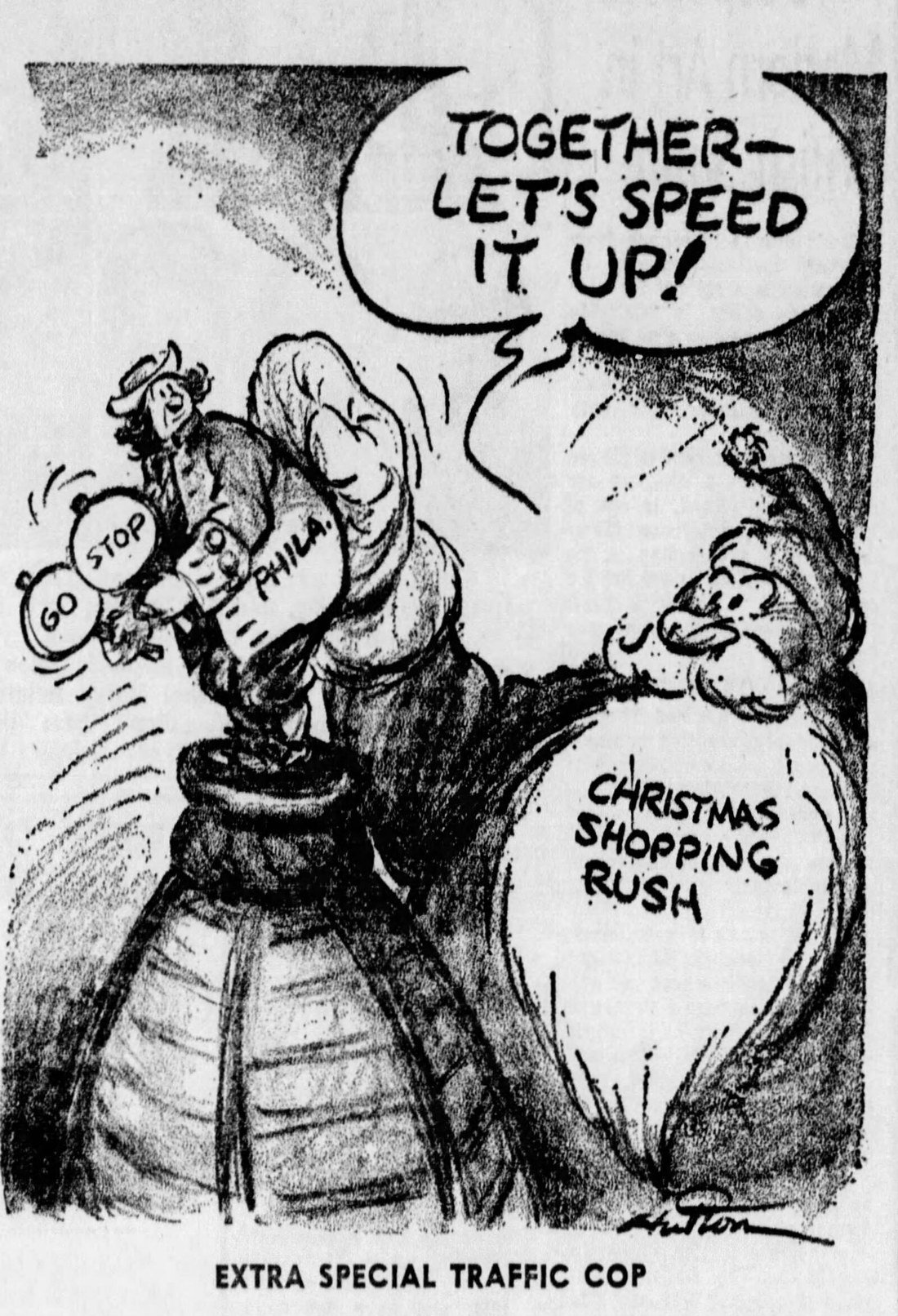
The Inquirer cartoon above first ran on November 24, 1961. Captioned Extra Special Traffic Cop, it turns the Christmas shopping rush into a figure waving the city’s traffic along, a sign of how much the downtown crush dominated Philadelphia’s holiday season.
Why Is It Called Black Friday: A Timeline of the Name
The printed record of the phrase runs from a Wall Street panic to a retail survey. Each entry below marks a moment when the name was used, explained or changed.
| Date | What happened | What it shows |
|---|---|---|
| September 24, 1869 | Jay Gould and Jim Fisk’s attempt to corner the gold market collapses on Wall Street | The first famous Black Friday was a financial disaster |
| November 1951 | Editor M. J. Murphy uses Black Friday in Factory Management & Maintenance for workers who call in sick after Thanksgiving | An apparently one-off use about absenteeism, not shopping |
| 1950s | Philadelphia traffic police use the name for the post-Thanksgiving crush | The start of the shopping meaning |
| November 28, 1960 | Women’s Wear Daily reports police forecasts of record traffic jams for “black Friday” in Philadelphia | The first known print use tied to shopping |
| November 24, 1961 | The Inquirer runs its Extra Special Traffic Cop cartoon | Downtown holiday traffic as a local talking point |
| December 18, 1961 | Public Relations News reports a plan to turn Black Friday and Black Saturday into Big Friday and Big Saturday | Merchants try to rebrand the day |
| January 1966 | The American Philatelist (vol. 79, no. 4, p. 239) prints a Philadelphia dealer’s note that the police gave the day its name | The police origin stated plainly in print |
| 1970s | The term is common around Philadelphia | Still a regional word |
| Late 1970s | A first attempt to explain the name as the day stores move into profit | A positive spin is invented |
| 1985 | An Inquirer story notes retailers in Cincinnati and Los Angeles still did not know the term | Not yet national |
| Late 1980s | Retailers adopt the red-to-black profit story | The marketing version spreads |
| Late 1980s to early 1990s | Black Friday enters national use | The nickname goes nationwide |
| November 25, 1994 | Barrett publishes his first-hand account of the traffic squad origin | A reporter’s memory of the 1960s coverage |
| December 2, 2025 | The National Retail Federation calls Black Friday the top shopping day for both in-store and online shoppers | The modern meaning, measured by shopper numbers |
The 1966 entry is the clearest early statement. Martin L. Apfelbaum of Earl P.L. Apfelbaum Inc., a Philadelphia firm, wrote that Black Friday “is the name which the Philadelphia Police Department has given to the Friday following Thanksgiving Day,” adding that it was not a term of endearment to them.
The 1869 Gold Crash That Gave the Phrase Its First Meaning
Long before shoppers, Black Friday meant ruin. Jay Gould, president of the Erie Railroad, and “Jubilee” Jim Fisk, his vice president, set out in 1869 to corner the gold market. At the time the Treasury, headed by Secretary George Boutwell, sold gold every week in exchange for greenbacks, the paper currency issued to fund the Civil War. Gould and Fisk wanted President Ulysses S. Grant to halt those sales, and they reached him socially through his brother-in-law, Abel Corbin.
How the Corner Fell Apart on September 24
Grant eventually wrote to Boutwell doubting the gold sales, and Boutwell paused them. Tipped off by an assistant treasurer they had bribed, Gould and Fisk sped up their buying. As prices climbed, Grant grew suspicious and had the First Lady, Julia Grant, write to Corbin’s wife telling her the president was annoyed by the speculation. On the evening of Thursday, September 23, Grant gave Boutwell permission to sell $4 million in gold, a large amount against an overall market of about $15 million.
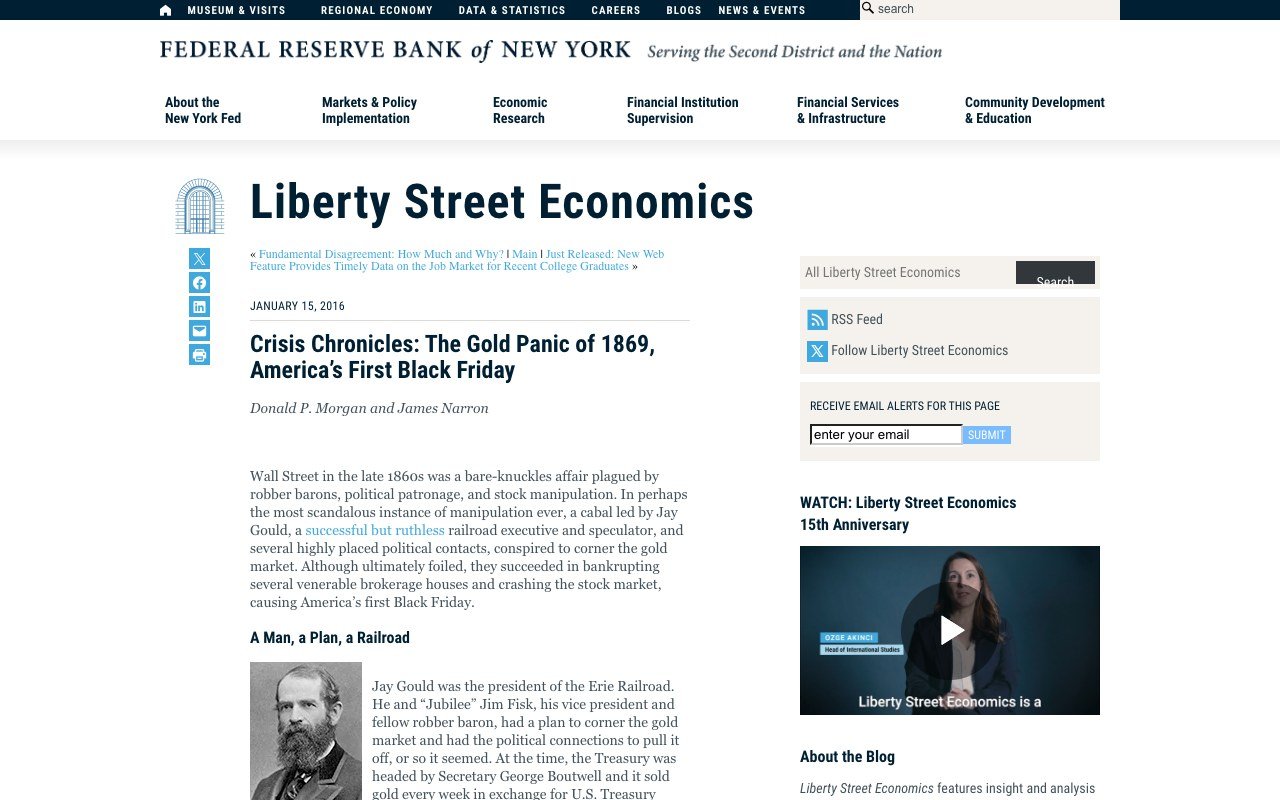
Gold opened at $145 on Friday morning and quickly spiked to $160. Gould caught wind of the coming Treasury sale and began quietly selling without telling Fisk. When the news reached the other traders, the price fell to $133. The Federal Reserve Bank of New York’s history of the 1869 gold panic lists what followed:
- The stock market fell about 20 percent as speculators sold other securities to cover their losses.
- Several long-established brokerage houses went bankrupt.
- The Gold Room closed for several days while clerks matched the week’s trades.
- Gould paid off William “Boss” Tweed and some New York judges to delay settling unfavorable trades.
- Neither Gould nor Fisk ever spent a day in jail.
Gould kept his wealth intact, one more chapter in the Gilded Age story told in this ranking of the richest people in history.
The Cartoons That Mocked the Gold Ring
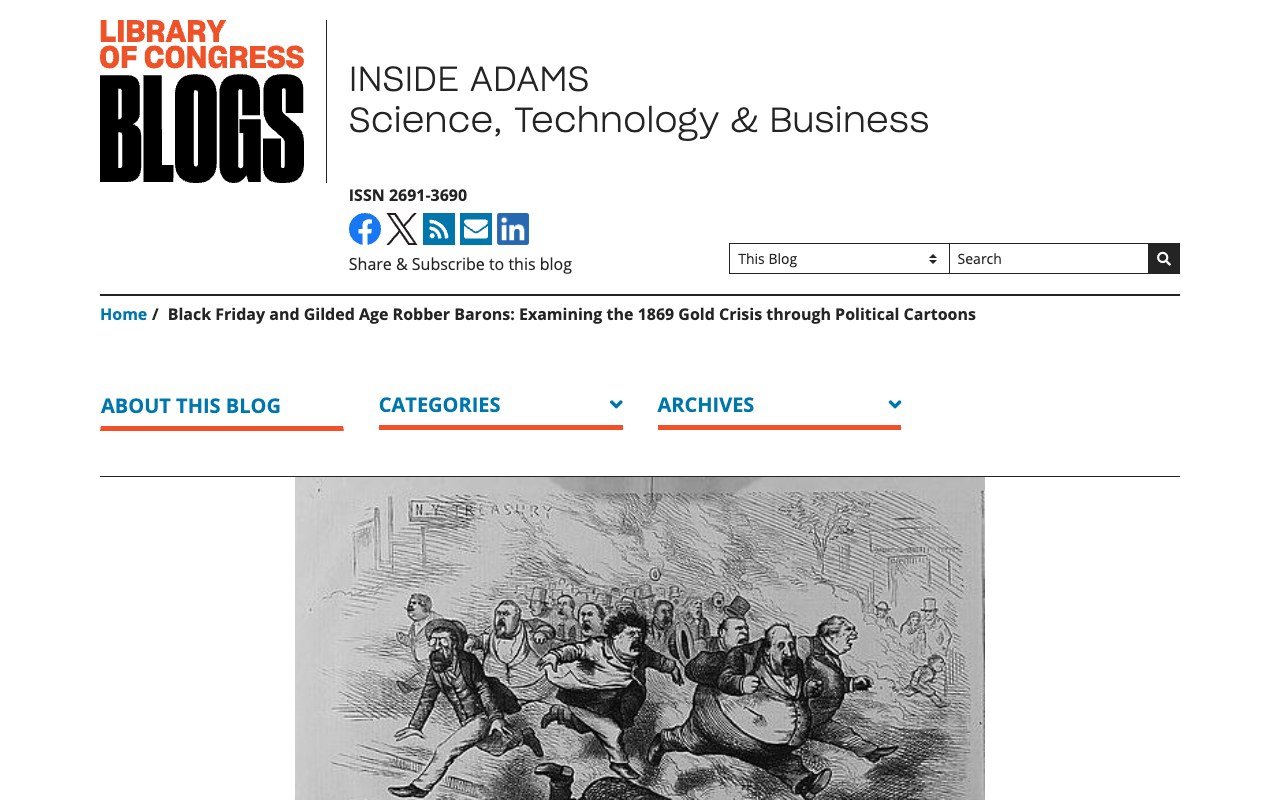
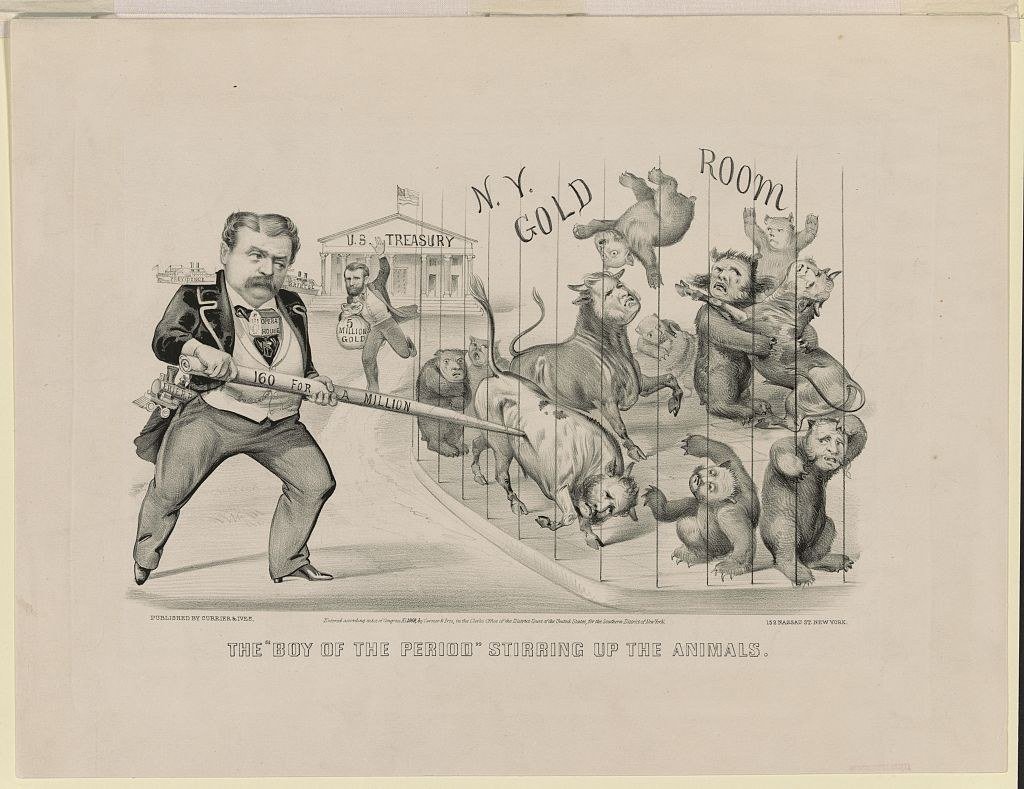
Currier and Ives answered the scandal with prints. The Boy of the Period Stirring Up the Animals, shown at the top of this section, has a speculator prodding caged bulls and bears with a stick marked 160 for a million, while Grant runs from the Treasury with a bag labeled $5 million in gold. The real release was $4 million. Another Currier and Ives print, The Boss of the Ring, drew Fisk as a bulldog, and an 1882 Puck cartoon placed Grant under a poisonous tree with the words Black Friday.
Where the Red-to-Black Profit Story Came From
The most repeated explanation says stores run at a loss, in the red, for most of the year and finally move into profit, in the black, on the day after Thanksgiving. Bookkeepers did once record profits in black ink and losses in red, which makes the story sound plausible. It is still wrong. Bonnie Taylor-Blake, a member of the American Dialect Society who traced the phrase, calls it an invented explanation, a positive spin first attempted in the late 1970s. Retailers took it up in the late 1980s.
The dates alone rule it out:
- The police name was in print by November 28, 1960, almost two decades before anyone tied it to profit.
- In 1961 Philadelphia merchants wanted to replace Black Friday with Big Friday. Nobody tries to rename a day that stands for record profits.
- Retailers adopted the red-to-black version only after the term was spreading on its own.
The Slavery Story Has No Basis in Fact
A viral claim says Black Friday began with plantation owners buying enslaved people at a discount on the day after Thanksgiving. There is no record of that. The photo that usually travels with the claim shows Aboriginal prisoners in Western Australia accused of killing cattle near Wyndham, first published in February 1905, four decades after slavery ended in the United States.
The real history is documented year by year, from the 1960 trade-paper story to the 1966 stamp journal. None of it involves slavery, and the earliest shopping use is about traffic.
How a Philadelphia Nickname Became a National Shopping Day
For two decades the name barely left the Philadelphia area. It was common there in the 1970s, yet a 1985 Inquirer story found retailers in Cincinnati and Los Angeles still did not recognize it. National use followed in the late 1980s and early 1990s, helped along by television and by retailers who now had a cheerful profit story to attach to it.
The sales eventually crossed borders too. Stores in Toronto run Black Friday sales on the day after American Thanksgiving, even though Canada celebrates its own Thanksgiving in October. At home, the National Retail Federation’s survey of the 2025 holiday weekend counted 80.3 million in-store shoppers and 85.7 million online shoppers on Black Friday, making it the top shopping day by both measures. That ranking is about how many people shopped, not how much they spent.
How to Test Any Black Friday Origin Claim
Origin stories for the name circulate every November. A few quick questions sort the real one from the rest:
- Ask for a date in print. The shopping sense appears on November 28, 1960, so any story that needs an earlier shopping use has to show it.
- Check the city. The earliest shopping uses all point to Philadelphia and its police.
- Look at the tone. Early users treated the name as an insult; merchants spent 1961 trying to get rid of it.
- Be wary of profit explanations. They first show up in the late 1970s, long after the police term.
- Inspect any old photo. The picture attached to the slavery claim comes from Western Australia in 1905.
- Keep the two Black Fridays apart. The 1869 gold crash and the shopping day share a label, not a cause.
Frequently Asked Questions
Who first called it Black Friday?
Philadelphia police, most likely in the late 1950s or early 1960s. Traffic officers used it for the post-Thanksgiving gridlock, and Evening Bulletin reporters carried it into print. Barrett’s 1994 account places it with the department’s traffic squad.
Did Black Friday start because stores went into the black?
No. The profit explanation was invented in the late 1970s and adopted by retailers in the late 1980s. The police name was already in print in 1960.
What happened on the first Black Friday in 1869?
Jay Gould and Jim Fisk tried to corner the gold market. On September 24, 1869, the Treasury sold $4 million in gold, the price collapsed from $160 to $133, the stock market fell about 20 percent and several brokerage houses failed.
Why did Philadelphia want to call it Big Friday?
Downtown merchants believed Black Friday scared shoppers away. In the early 1960s the city promoted Big Friday instead, but reporters kept using the old name and it stuck.
Related Articles

Get the Fox Bulletin briefing
The stories that matter, in your inbox. No spam, unsubscribe anytime.
Newsletter signup will be available soon.
Related stories

Types of Christmas Trees: 12 Species Ranked by Retention
Types of christmas trees ranked by needle retention, scent and branch strength: Fraser, Noble, Balsam and nine more, plus where each grows and how to water it.

Elf on the Shelf Ideas: Funny Scenes From Things You Own
Elf on the Shelf ideas for 2026: 19 funny scenes with photos, supplies and setup steps, from a coffee pod refueling station to a toilet paper snowman.
Merry Christmas in Different Languages: Say It Like a Local
Merry Christmas in different languages by region, with each greeting in its own script, a say-it-like guide and the countries where each is used.