

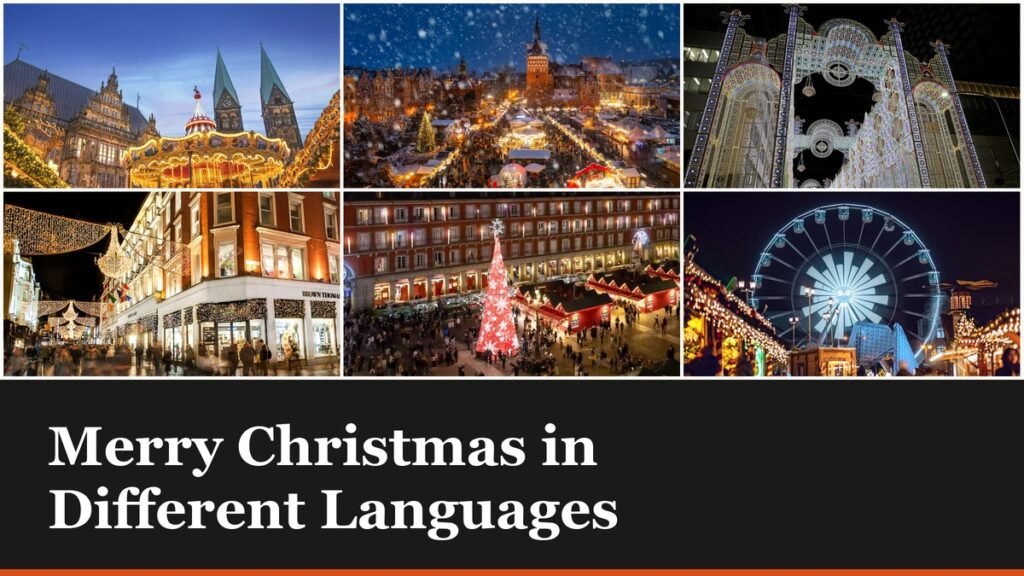
Merry Christmas in different languages begins with Feliz Navidad in Spanish, Joyeux Noël in French and Frohe Weihnachten in German, and it carries on through Buon Natale in Italian, Veselé Vánoce in Czech, 圣诞快乐 in Mandarin and Nollaig Shona duit in Irish. Each one wishes something slightly different, from the happy Christmas of Ireland to the glorious birth feast of the Arabic greeting.
Many languages offer more than one form, and the right one depends on who is being wished well and when. Pronunciations written as say-it-like spellings are approximate guides for English speakers, not official respellings.
How Do You Say Merry Christmas in Different Languages?
Merry Christmas is Feliz Navidad in Spanish, Joyeux Noël in French, Frohe Weihnachten in German, Buon Natale in Italian, Feliz Natal in Portuguese, 圣诞快乐 (Shèngdàn kuàilè) in Mandarin and メリークリスマス in Japanese. Spanish and Portuguese share the word Feliz, so one greeting makes its neighbour easy to learn.
Merry Christmas Greetings by Region: Language, Spelling and Where It Is Spoken
| Region | Language | Greeting | Say it like | Where it is spoken |
|---|---|---|---|---|
| Western and Southern Europe | Spanish | Feliz Navidad | feh-LEES nah-vee-DAHD | Spain, Mexico, most of Latin America |
| Western and Southern Europe | French | Joyeux Noël | zhwah-YUH no-EL | France, Belgium, Quebec, Switzerland, West and Central Africa |
| Western and Southern Europe | German | Frohe Weihnachten | FROH-uh VY-nakh-ten | Germany, Austria, Switzerland |
| Western and Southern Europe | Italian | Buon Natale | bwon nah-TAH-leh | Italy, Switzerland (Ticino), San Marino |
| Western and Southern Europe | Portuguese | Feliz Natal | feh-LEEZ nah-TAHL | Portugal, Brazil, Angola, Mozambique |
| Western and Southern Europe | Irish | Nollaig Shona duit | NO-lihg HO-nuh ghwich | Ireland |
| Western and Southern Europe | Welsh | Nadolig Llawen | na-DOH-lig LLA-when | Wales |
| Eastern Europe | Polish | Wesołych Świąt | veh-SOH-wikh SHVYONT | Poland |
| Eastern Europe | Czech | Veselé Vánoce | VEH-seh-leh VAH-no-tseh | Czechia |
| Eastern Europe | Romanian | Crăciun fericit | kruh-CHOON feh-ree-CHEET | Romania, Moldova |
| Eastern Europe | Russian | С Рождеством (Христовым) (S Rozhdestvom) | s razh-dest-VOM | Russia and much of the former USSR |
| Eastern Europe | Greek | Καλά Χριστούγεννα (Kalá Christoúgenna) | kah-LAH hris-TOO-yen-ah | Greece, Cyprus |
| Eastern Europe | Croatian | Sretan Božić | SRE-tahn BOH-zheech | Croatia, Bosnia |
| Asia | Mandarin Chinese | 圣诞快乐 (Shèngdàn kuàilè) | shung-dahn kwy-LUH | China, Singapore, and Taiwan (written 聖誕快樂) |
| Asia | Japanese | メリークリスマス (Merī kurisumasu) | MEH-ree koo-ree-soo-mah-soo | Japan |
| Asia | Hindi | क्रिसमस की शुभकामनाएं (Krismas kī shubhkāmnāeṃ) | KRIS-mus kee shoobh-KAHM-nah-ayn | India |
| Asia | Thai | สุขสันต์วันคริสต์มาส (Sukhsan wan Khritmat) | sook-SAHN wahn kris-MAHT | Thailand |
| Africa and the Middle East | Arabic | عيد ميلاد مجيد (ʿĪd mīlād majīd) | eed mee-LAHD mah-JEED | Lebanon, Egypt, Jordan, Palestine, Iraq and the wider Arab world |
| Africa and the Middle East | Swahili | Krismasi njema | KRIS-mah-see N-JEH-mah | Tanzania, Kenya, East Africa |
| Africa and the Middle East | Amharic | መልካም ገና (Melkam Gena) | MEL-kam GEH-na | Ethiopia |
| The Americas | Quechua | Kusikuy Navidad | koo-see-KOO-ee nah-vee-DAHD | Peru, Bolivia, Ecuador |
Western and Southern Europe: Markets, Carousels and Celtic Wishes

Spanish, French, Italian and Portuguese produce four close greetings: Feliz Navidad, Joyeux Noël, Buon Natale and Feliz Natal. French reaches well beyond France, with Belgium, Quebec, Switzerland and West and Central Africa on its map. Portuguese does the same through Brazil, Angola and Mozambique, and Italian reaches Switzerland’s Ticino region and San Marino along with Italy itself.
German speakers use Frohe Weihnachten, and Germany gives the greeting plenty to attach to. The oldest German Christmas market is the Striezelmarkt in Dresden, which dates back to 1434. The Advent wreath has a tradition of almost 200 years in Germany, and children wait for the Christkind or Father Christmas to deliver presents on Christmas Eve. The German National Tourist Board feature on Advent walks through the markets and the customs around them.

In Spain the greeting is the same Feliz Navidad heard across Latin America, and the Plaza Mayor in Madrid fills with a Christmas market under a lit tree.
Irish and Welsh: two Celtic greetings
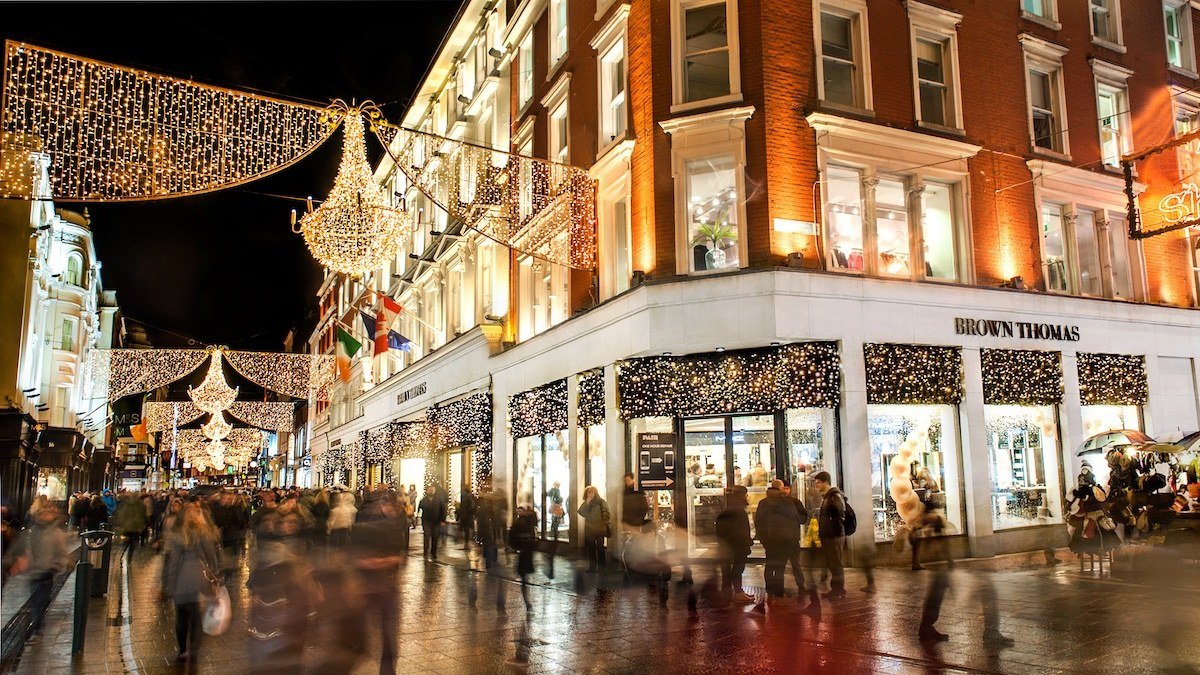
Irish has a greeting that changes with the audience. Nollaig Shona duit goes to one person, and daoibh replaces duit when the wish goes to several. The phrase translates roughly as Happy Christmas to you, and in Ulster Scots the words are Blythe Yuletide. The Irish dictionary entry for Nollaig shona gives the phrase on its own.
Ireland brings its own customs to the greeting. Hundreds of swimmers take to the sea on Christmas morning at places such as the Forty Foot in Dublin, often for charity. December 26 is a public holiday in both Northern Ireland and the Republic, where it goes by two names: Boxing Day in the north and St Stephen’s Day in the republic.
Welsh speakers use Nadolig Llawen, the joyful Welsh greeting, and the figure who delivers the gifts is Siôn Corn. The double L sounds like lla-when in the usual English respelling.
Eastern Europe: Vánoce, Božić and the Orthodox Calendar

Polish uses Wesołych Świąt, a general happy-holidays wish. Romanian is Crăciun fericit, and Croatian is Sretan Božić, a greeting that also reaches Bosnia.
Czech has several options, all common:
- Veselé Vánoce is the standard greeting.
- Krásné Vánoce is also used.
- Hezké Vánoce is also used.
Greek and Russian carry the wish in their own scripts, Καλά Χριστούγεννα and С Рождеством. The full Russian form ends with Христовым. Greek is used in Greece and Cyprus, so one greeting covers both. Orthodox Christmas falls on January 7, and our guide to when Christmas falls each year covers why the Julian calendar sets it later for the churches that still use it, including the Russian Orthodox Church.
Asia: Mandarin, Japanese, Hindi and Thai
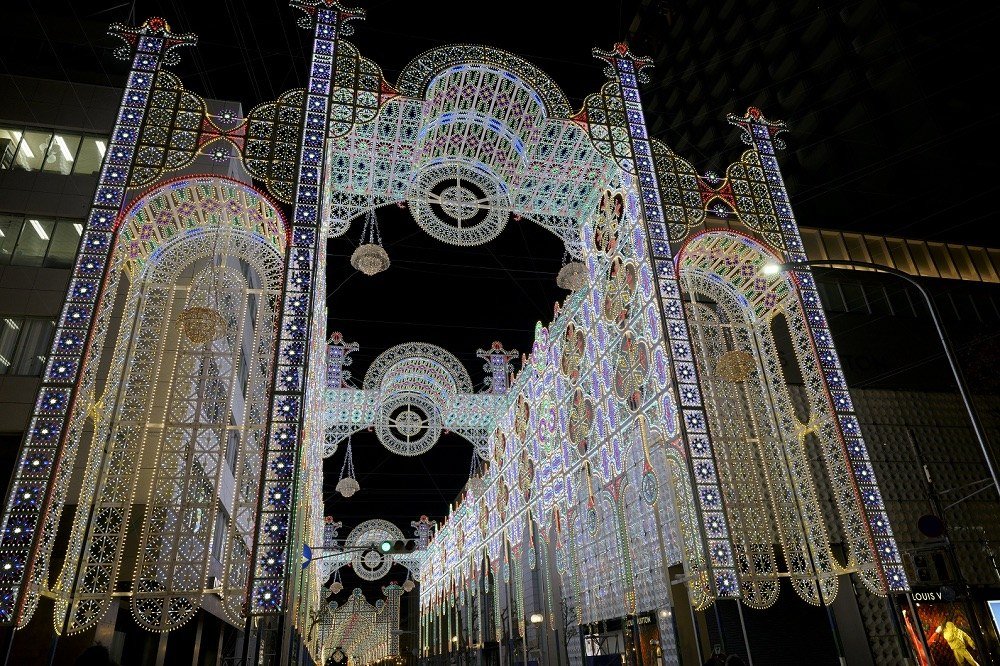
Mandarin speakers wish each other 圣诞快乐, pronounced Shèngdàn kuàilè, which reads literally as Christmas-happy. Taiwan prints the same greeting in Traditional characters as 聖誕快樂. Hindi uses क्रिसमस की शुभकामनाएं, a Christmas wish written in Devanagari, and Thai uses สุขสันต์วันคริสต์มาส. Singapore shares the Mandarin greeting with China and Taiwan, so one phrase covers three places on the map.
Japanese borrows the English phrase outright, as メリークリスマス. Christianity has deep roots in Japan, and although only 1% of the country practices the religion today, Christmas has taken strong hold. December 24 or 25 is celebrated mostly by exchanging presents between couples on romantic dates, while friends gather for dinner parties. Fried chicken is the most popular dish, and different varieties of Christmas cake fill the dessert tables. The Japan National Tourism Organization guide to Christmas in Japan covers the city lights as well.
Africa and the Middle East: Swahili, Arabic and Amharic
Swahili uses Krismasi njema across Tanzania, Kenya and the rest of East Africa. Arabic uses عيد ميلاد مجيد, which translates literally as glorious birth feast. In Egypt the longer official form is عيد الميلاد المجيد, with the article attached to the noun.
Amharic uses መልካም ገና, Melkam Gena, in Ethiopia, which follows the Julian calendar. French is a Christmas language here too, since Joyeux Noël is used across West and Central Africa.
The Americas: Spanish in Mexico and Quechua in the Andes
Latin America celebrates in Spanish. In Mexico Christmas is celebrated on December 25, but the festivities begin with the posadas, which run from December 16 to 25. Hosts play the innkeepers while guests carry lit candles and sing carols, and the party includes star-shaped piñatas with seven points. The Christmas Eve supper on December 24 features ponche, the drink of the season, and turkey as the most traditional dish.
Quechua, spoken in Peru, Bolivia and Ecuador, comes in regional varieties. The Chanka variety uses Kusikuy Navidad, and in Cusco the wish is Kusi p’unchaw Navidad. Both carry the Spanish word Navidad.
How to Pick the Right Greeting for the Person You Are Writing To
- Start with the language the person speaks at home, not the country they live in. Quechua alone has regional forms, and the Cusco wish differs from the Chanka one.
- Check who is on the receiving end. Irish uses duit for one person and daoibh for a group.
- Choose the short form for a card and the full form for a letter. Russian shortens to С Рождеством, and Czech offers Veselé, Krásné or Hezké Vánoce.
- Write the greeting in the original script when you can, and keep the Latin spelling beside it for readers who do not know the script.
- Mind the calendar. Orthodox Christmas falls on January 7 in churches on the Julian calendar, so a greeting to a Russian Orthodox family can arrive after December 25.
- Say the spelling out loud before sending. The respellings are approximate, and a native speaker will fine-tune the sound.
A greeting also makes a good opener for a quiz night, and the questions in our Christmas trivia pair well with it. The traditions behind the colors of Christmas can give a card a theme.
Frequently Asked Questions
How do you say Merry Christmas in Spanish?
Feliz Navidad is the standard Spanish greeting, pronounced roughly feh-LEES nah-vee-DAHD. It is used in Spain, Mexico and most of Latin America. In Mexico the season opens earlier than most places, with the posadas starting on December 16.
Is it always merry in other languages?
No. Irish wishes a happy Christmas, Welsh a joyful one, Arabic a glorious birth feast, and Mandarin reads Christmas-happy. Japanese skips translation altogether and borrows the English phrase. The Japanese version keeps the sounds close to English, MEH-ree koo-ree-soo-mah-soo, and 圣诞快乐 is the Mandarin alternative.
What is the difference between the Irish greeting for one person and for many?
Nollaig Shona duit goes to one person, and Nollaig Shona daoibh goes to several. Both mean roughly Happy Christmas to you.
Do Russian and Greek speakers say Merry Christmas on December 25?
The greeting is the same all season, but Orthodox Christmas falls on January 7 for churches that follow the Julian calendar. Ethiopia follows the Julian calendar as well.
Related Articles

Get the Fox Bulletin briefing
The stories that matter, in your inbox. No spam, unsubscribe anytime.
Newsletter signup will be available soon.
Related stories

What Stores Are Open on Christmas Day? Chain by Chain
What stores are open on Christmas Day? Walmart, Target, Home Depot and Lowe's are closed Friday, December 25, 2026, while Denny's and Waffle House stay open.

Is Starbucks Open on Christmas? Dec 24 and 25 Answers
Is Starbucks open on Christmas? Some coffeehouses open on Friday, December 25, 2026 and others close. See why hours vary and how many stores are licensed.

Is McDonald’s Open on Christmas? Hours, Delivery and Apps
Is McDonald's open on Christmas? Friday, December 25, 2026 hours are not set nationally, and about 95% of US restaurants are franchised. How to check yours.