


The best types of Christmas trees in 2026 for needle retention are Fraser fir, Noble fir, Concolor fir, Balsam fir, Nordmann fir and Scotch pine, and all six rate excellent. Douglas fir and Colorado blue spruce sit one step lower, at very good.
The common species range from firs that hold needles for weeks to pines and cypress that need more care. They differ in color, scent, branch strength and growing region, so the right pick depends on what hangs on it and who lives in the house.
What Are the Types of Christmas Trees?
The types of Christmas trees sold in the US are firs such as Fraser, Balsam, Noble and Douglas, the Colorado blue spruce, pines such as Scotch, White and Virginia, and Leyland cypress. Firs usually keep needles longest and smell best. Pines have long needles and lighter branches, and spruce has sharp needles.
Types of Christmas Trees by Needle Retention, Color and Region
| # | Tree | Needles and Retention | Color | Where Grown |
|---|---|---|---|---|
| 1 | Fraser Fir | Excellent | Dark blue-green | Appalachians, North Carolina |
| 2 | Noble Fir | Excellent | Bluish-green, silvery | Pacific Northwest |
| 3 | Concolor Fir | Excellent | Dull bluish-green | Native to the western US |
| 4 | Balsam Fir | Excellent | Dark green | Canada, northeast, upper Great Lakes |
| 5 | Nordmann Fir | Excellent | Glossy dark green | Pacific Northwest |
| 6 | Scotch Pine | Excellent, stays on when dry | Bright to dark green | Great Lakes, Midwest |
| 7 | Douglas Fir | Very good | Dark green to blue-green | Pacific Northwest |
| 8 | Colorado Blue Spruce | Very good if never dry | Bluish-gray to silvery blue | Upper Great Lakes, Midwest |
| 9 | Grand Fir | Display within two weeks of Christmas | Shiny dark green | Pacific Northwest, Idaho, Montana |
| 10 | White Pine | Good to excellent | Bluish-green | Native from Newfoundland to Manitoba |
| 11 | Virginia Pine | Twisted pairs, 1 1/2 to 3 in | Light green to yellow in late fall | Native from Pennsylvania to Georgia |
| 12 | Leyland Cypress | Dries quickly after cutting | Dark green-gray | Grown from cuttings |
The 12 Christmas Tree Species, Ranked
1. Fraser Fir: The All-Round Leader
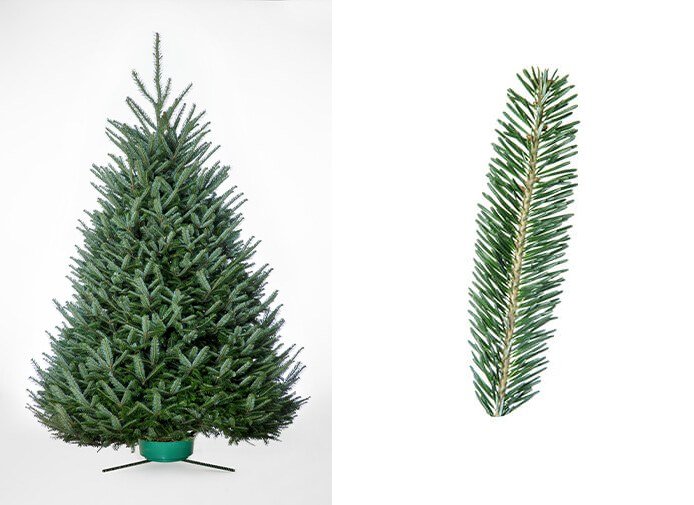
Needle retention: Excellent | Fragrance: Very good | Branches: Strong, turned slightly upward | Color: Dark blue-green | Grown: Appalachians, North Carolina leads
Fraser fir pairs top marks in nearly every category with a classic look: dark blue-green needles half an inch to an inch long, silvery bands underneath and a pleasant, very good scent. Its needles hold on well enough that it ships long distances.
The branches are strong and turn slightly upward, so strings of glass baubles and heavier ornaments stay where they are hung. A 6 to 7 foot tree needs 7 to 10 years in the field, and North Carolina grows the majority of Fraser firs, so a tall one is rarely a quick crop.
2. Noble Fir: Stiff Branches, Silver Undersides

Needle retention: Excellent | Fragrance: Very good | Branches: Stiff | Color: Bluish-green with a silver look | Grown: Pacific Northwest
Noble fir needles are about an inch long and bluish-green, and they turn upward to show the pale underside of each branch. That gives the whole tree a silver cast under white lights. Needle retention is among the best of any Christmas tree species.
Stiff branches carry heavy ornaments without drooping, and the same strength is why the species is a favorite for wreaths and garland. It supplies 25 to 30 percent of the fresh tree market in the Pacific Northwest and is sold widely west of the Rockies.
3. Concolor Fir: Citrus Scent, Long Needles

Needle retention: Excellent | Fragrance: Very good, citrus-like | Branches: Hold ornaments well | Color: Dull bluish-green | Native to: Rocky Mountains west to the California and Oregon coast ranges
Concolor fir, also called white fir, wears a dull bluish-green and has some of the longest needles among the firs, 1 to 1 1/2 inches, so the texture is coarser than Fraser or Balsam. Needle retention is excellent and the scent runs to citrus or orange.
Its needles are softer than a Colorado blue spruce of similar color, which makes it gentler to handle while decorating. Wild stands sit high in the Rockies, and a tree can live about 350 years.
4. Balsam Fir: The Most Fragrant Fir

Needle retention: Excellent | Fragrance: Excellent | Branches: Moderate | Color: Dark green | Grown: Canada, the northeast, upper Great Lakes, Pennsylvania
Balsam fir has the strongest scent of the common Christmas trees and keeps its needles well, both rated excellent. The needles are dark green and 3/4 to 1 1/2 inches long. If the scent of fir is half the reason for buying a real tree, this is the one to pick.
Branches are moderate rather than strong, so it suits ornaments of ordinary weight better than the heaviest ones. It has the widest range of any North American fir, from northern Alberta to Labrador and south to Pennsylvania, and takes 9 to 10 years to reach 6 to 7 feet.
5. Nordmann Fir: Glossy and Nearly Scentless

Needle retention: Excellent | Fragrance: Very little | Branches: Sturdy and layered | Color: Glossy dark green | Grown: Pacific Northwest
Nordmann fir is darker than almost any other fir, with glossy dark green needles that run 3/4 to 1 1/2 inches and silvery-blue undersides. Its needle retention is excellent, and its tiered branches are sturdy enough for a full set of decorations.
Fragrance is very little to almost none, which suits households that dislike a strong fir smell. It is popular in the United Kingdom and grows in the Pacific Northwest, where retail lots west of the Rockies stock it.
6. Scotch Pine: Needles That Stay On

Needle retention: Excellent, needles stay on when dry | Fragrance: Good, a clean pine scent | Branches: Stiff | Color: Bright to dark green | Grown: Great Lakes and Midwest
Scotch pine keeps needles on even after it dries, and retention is rated excellent. The needles come in bundles of two and give off a clean pine fragrance. Its stiff branches hold both light and heavy ornaments.
It is a budget-friendly choice and a traditionalist favorite, grown mostly in the Great Lakes and Midwest. The species is native to Europe and Asia and arrived in North America with European settlers.
7. Douglas Fir: Soft, Sweet and Budget-Friendly
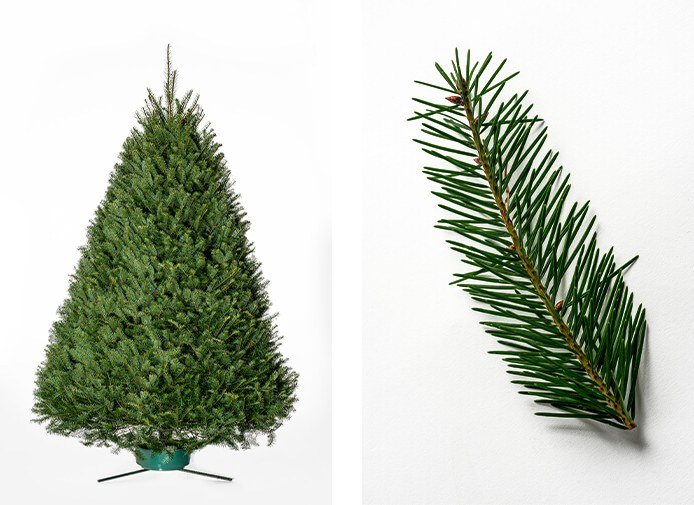
Needle retention: Very good | Fragrance: Very good, sweet | Branches: Moderately stiff, can bend under heavy ornaments | Color: Dark green to blue-green | Grown: Pacific Northwest plantations, shipped to most of the US
Douglas fir is not a true fir, but its soft, flat needles, 1 to 1 1/2 inches long, radiate in all directions and smell sweet and slightly citrusy when crushed. Retention is very good, a step under the top firs, and it is a budget-friendly choice.
The branches are moderately stiff and can bend under heavy ornaments, so lightweight decorations sit best. Pacific Northwest plantations have supplied it since the 1950s, and trees ship to most of the country and to Hawaii, Guam and some Asian markets.
8. Colorado Blue Spruce: Silver-Blue and Sharp
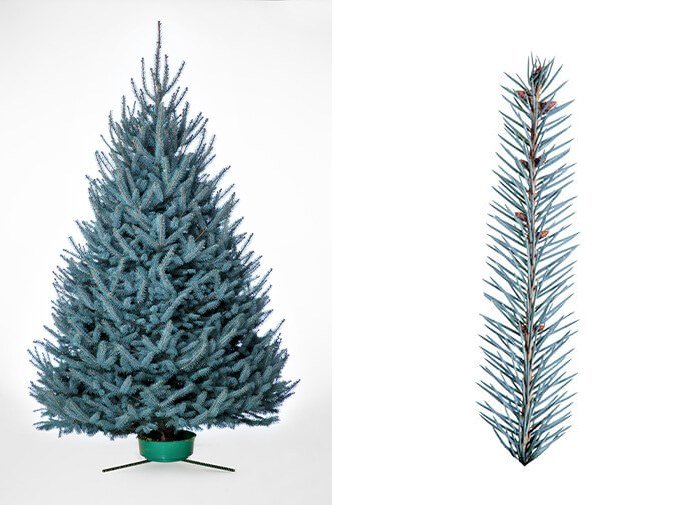
Needle retention: Very good while it never runs dry | Fragrance: Mild, resinous when crushed | Branches: Stiff | Color: Bluish-gray to silvery blue | Grown: Upper Great Lakes and Midwest
Colorado blue spruce is the silver-blue tree, with 4-sided needles that are 1 to 1 1/2 inches long and very sharp. The species name pungens means sharp. Retention is very good, but only while the stand never runs out of water, and once it dries even once many needles drop.
Stiff branches hold heavy ornaments well. Wear gloves when decorating, and skip it in homes with small children. Display it for two to three weeks, and note it is the official state tree of Colorado and Utah.
9. Grand Fir: Feather-Like and Strongly Scented

Needle retention: Best displayed within two weeks of Christmas | Fragrance: Strong and citrusy | Color: Shiny dark green | Needles: 1 to 1 1/2 in, in two flat rows | Grown: Pacific Northwest, with Idaho and Montana as major sources
Grand fir carries shiny dark green needles, 1 to 1 1/2 inches long, in two flat rows that look feather-like. It has a strong citrusy fragrance when the needles are crushed.
Needle retention is a notch below the top firs, so it works best when bought close to Christmas and displayed within two weeks of the day. It is a minor species in Washington and Oregon and a major one in Idaho and Montana, with 8 to 10 years to a marketable tree.
10. White Pine: Soft Needles for Light Decor

Needle retention: Good to excellent | Fragrance: Little | Branches: Soft, light ornaments only | Color: Bluish-green | Grown: Native from Newfoundland to Manitoba, south along the Appalachians
White pine has long, soft, flexible needles of 2 1/2 to 5 inches in bundles of five, in a bluish-green. It is the largest pine in the US. Retention is good to excellent, and the scent is faint.
Branches cannot carry heavy ornaments, so keep to light decor, and it is also a strong source of wreaths and roping. Because it gives off little scent, it is linked to fewer allergic reactions than more aromatic species. On good ground a 6-footer needs 6 to 8 years.
11. Virginia Pine: The Choose-and-Cut Pine

Needles: Twisted pairs, 1 1/2 to 3 in | Branches: Stout and woody | Color: Light green to yellow in late fall | Growing time: 4 to 6 years possible | Native to: Central Pennsylvania south to Mississippi, Alabama and Georgia
Virginia pine has twisted needles in pairs, 1 1/2 to 3 inches long, on stout woody branches that hold ornaments well. It responds well to shearing, which gives dense foliage, and the color can turn light green to yellow in late fall.
It is the most popular species with choose-and-cut growers in eastern North Carolina, where rotations of 4 to 6 years are possible, a shorter wait than the 7 to 10 years a Fraser fir takes.
12. Leyland Cypress: Fast to Dry, Feathery to Look At

Needle retention: Dries quickly after cutting | Fragrance: Very little | Branches: Upright, light ornaments only | Color: Dark green-gray, feathery | Origin: A hybrid with no natural range, grown from cuttings
Leyland cypress has feathery dark green-gray foliage and very little scent. It is a sterile hybrid of Monterey cypress and Alaska cedar, first found as six seedlings at Leighton Hall in Wales in 1888, and growers propagate it by cuttings.
It dries quickly after cutting, so it suits choose-and-cut farms best and needs frequent watering in a warm room. Upright branches take only lightweight ornaments. It is often suggested for people sensitive to pine and fir scent, but anyone with allergies should check with a doctor.
How to Tell Firs, Spruces and Pines Apart
A quick check of the needles sorts any tree on a lot into one of three groups:
- Firs: soft, flat needles attached singly to the branch, as on Fraser, Balsam, Noble, Grand, Concolor and Nordmann
- Spruces: sharp, square needles attached singly, as on Colorado blue spruce
- Pines: needles in bundles, two per bundle on Scotch and Virginia pine and five on White pine
Douglas fir is the exception to the name: it is not a true fir, though its soft, flat needles behave like one.
How Long Each Type of Christmas Tree Takes to Grow
Growing time sets how soon a farm can replace a tree. These field times apply for a tree of about 6 to 7 feet:
- Fraser fir: 7 to 10 years
- Balsam fir: 9 to 10 years
- Grand fir: 8 to 10 years to a marketable tree
- Douglas fir: 7 to over 10 years on a plantation
- White pine: 6 to 8 years for a 6-foot tree on good sites
- Virginia pine: rotations of 4 to 6 years are possible
Across all species the average is about 7 years, with a range of 4 to 15 years for a 6 to 7 foot tree.
How to Care for a Fresh-Cut Christmas Tree
More than half of a cut tree’s weight is water, and keeping that moisture in is the single most important factor in stopping needle loss. These steps apply to any species:
- Fresh cut: if the trunk was cut within the past 12 hours, no recut is needed. Otherwise saw off a thin disk, about 1/4 to 1/2 inch, straight across and not at an angle or in a V.
- Water per inch: allow 1 quart of water for every inch of trunk diameter, and choose a stand that holds at least 1 gallon for most trees.
- First week: a freshly cut tree drinks a surprising amount, so check the stand and refill every day.
- Water level: never let it drop below the base of the trunk.
- Placement: keep the tree away from fireplaces, vents and other heat sources.
Several popular habits do nothing. Whittling the sides of the trunk removes the outer wood that takes up water best, drilling a hole in the base does not help, and water temperature makes no difference. Preservatives, sugar, bleach, aspirin, water-holding gels and flame-retardant sprays are not beneficial either.
How to Choose Among the Types of Christmas Trees
Match the species to what the tree has to do in your home:
- Heavy or glass ornaments: Fraser fir, Noble fir, Concolor fir, Scotch pine, Virginia pine and Colorado blue spruce all have stiff or strong branches.
- Light decorations only: White pine, Leyland cypress and Douglas fir carry lightweight ornaments best.
- Strong scent: Balsam fir leads, with Grand fir, Fraser fir, Noble fir and Concolor fir close behind.
- Little or no scent: Nordmann fir, White pine and Leyland cypress. White pine is linked to fewer allergic reactions than more aromatic species, and anyone with allergies should check with a doctor first.
- Small children: avoid Colorado blue spruce, whose needles are very sharp.
- Tighter budget: Douglas fir and Scotch pine are both budget-friendly.
Colors matter as much as species when the decorating starts. The meanings of red, green, gold and white pair well with the dark green of a Fraser or the silver of a Noble fir, and the date to plan around is in when Christmas falls and who gets the day off.
Before buying, run a branch through an enclosed hand: needles should not come off easily, and outer branches should bend rather than snap. Most farm trees are trimmed to an 80 percent taper, so a 10-foot tree is 8 feet wide at the base.
Frequently Asked Questions
Which type of Christmas tree lasts the longest?
Fraser, Noble, Concolor, Balsam and Nordmann firs and Scotch pine all rate excellent for needle retention. Scotch pine keeps its needles even when dry, but every species lasts longer when the stand never empties.
Which Christmas tree smells the best?
Balsam fir rates excellent for fragrance and is among the most fragrant of all species. Fraser, Noble, Concolor and Douglas firs are rated very good, and Grand fir is strongly citrusy.
Is a Douglas fir a real fir?
No. Douglas fir is not a true fir, though its soft needles and sweet scent look and smell like one. It grows from central California to Alaska and has been a major Pacific Northwest Christmas tree since the 1920s.
How much water does a Christmas tree need?
Give it 1 quart for every inch of trunk diameter, in a stand that holds at least 1 gallon. A freshly cut tree drinks the most in its first week, so refill it daily.
Related Articles

Get the Fox Bulletin briefing
The stories that matter, in your inbox. No spam, unsubscribe anytime.
Newsletter signup will be available soon.
Related stories

Elf on the Shelf Ideas: Funny Scenes From Things You Own
Elf on the Shelf ideas for 2026: 19 funny scenes with photos, supplies and setup steps, from a coffee pod refueling station to a toilet paper snowman.

Merry Christmas in Different Languages: Say It Like a Local
Merry Christmas in different languages by region, with each greeting in its own script, a say-it-like guide and the countries where each is used.

What Stores Are Open on Christmas Day? Chain by Chain
What stores are open on Christmas Day? Walmart, Target, Home Depot and Lowe's are closed Friday, December 25, 2026, while Denny's and Waffle House stay open.