

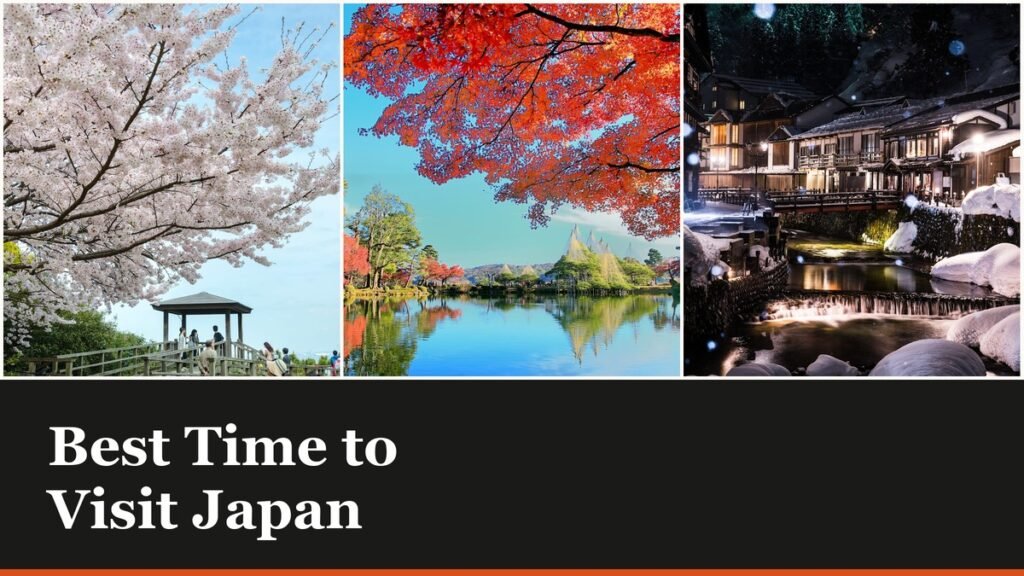
The best time to visit Japan in 2026 is late March to early April, when cherry blossoms open, and October to November, when the leaves turn. Tokyo’s daily highs sit between 14 and 22 C across those windows, and most of the country is comfortable to walk around in.
The other months have their own case. Skiers want January, festival fans want August, and travelers who dislike crowds can plan around the Golden Week holidays at the start of May. Hokkaido and Okinawa run on different weather calendars from Tokyo and Kyoto.
When Is the Best Time to Visit Japan?
Late March to early April and October to November are the best times to visit Japan. Blossoms and autumn color arrive then, and Tokyo highs run from 14.2 C in March to 22.0 C in October. October is also Tokyo’s wettest month at 234.8 mm, while November drops to 96.3 mm.
Best Time to Visit Japan by Month: Tokyo Weather and What Happens
| # | Month | Tokyo high / low | Tokyo rainfall | What happens |
|---|---|---|---|---|
| 1 | January | 9.8 / 1.2 C (50 / 34 F) | 59.7 mm | Ski season in Hakuba, Niseko and Rusutsu; shrine visits at New Year, with most other attractions closed around Jan 1 |
| 2 | February | 10.9 / 2.1 C (52 / 36 F) | 56.5 mm | Sapporo Snow Festival; early cherry blossoms in Naha (full bloom Feb 3 in 2026) |
| 3 | March | 14.2 / 5.0 C (58 / 41 F) | 116.0 mm | First cherry blossoms in the south; vernal equinox holiday (Mar 20 in 2026, Mar 21 and 22 in 2027) |
| 4 | April | 19.4 / 9.8 C (67 / 50 F) | 133.7 mm | Peak cherry blossom weeks in Honshu; Showa Day on Apr 29 starts Golden Week |
| 5 | May | 23.6 / 14.6 C (74 / 58 F) | 139.7 mm | Golden Week; wisteria, moss phlox and nemophila; Okinawa rainy season starts around May 10 |
| 6 | June | 26.1 / 18.5 C (79 / 65 F) | 167.8 mm | Rainy season starts around Jun 6 to 7 in Kyoto and Tokyo; hydrangeas |
| 7 | July | 29.9 / 22.4 C (86 / 72 F) | 156.2 mm | Rainy season ends around Jul 19; Mt Fuji climbing opens in early July; fireworks begin |
| 8 | August | 31.3 / 23.5 C (88 / 74 F) | 154.7 mm | Hottest month; Obon in mid-August; Mountain Day on Aug 11; typhoon approaches at their peak |
| 9 | September | 27.5 / 20.3 C (82 / 69 F) | 224.9 mm | Typhoon landfalls at their peak; Fuji climbing season ends around the first week of the month |
| 10 | October | 22.0 / 14.8 C (72 / 59 F) | 234.8 mm | Wettest month in Tokyo; first autumn color in Hokkaido; Sports Day on Oct 12 in 2026 and Oct 11 in 2027 |
| 11 | November | 16.7 / 8.8 C (62 / 48 F) | 96.3 mm | Drier days; autumn leaves reach Tokyo late in the month; Culture Day on Nov 3 |
| 12 | December | 12.0 / 3.8 C (54 / 39 F) | 57.9 mm | Peak leaves in Osaka around Dec 1 in 2026; late-month New Year holiday begins |
Figures are 30-year averages for 1991 to 2020. Kyoto, Sapporo and Naha follow different curves.
March and April: Cherry Blossoms and Mild Days
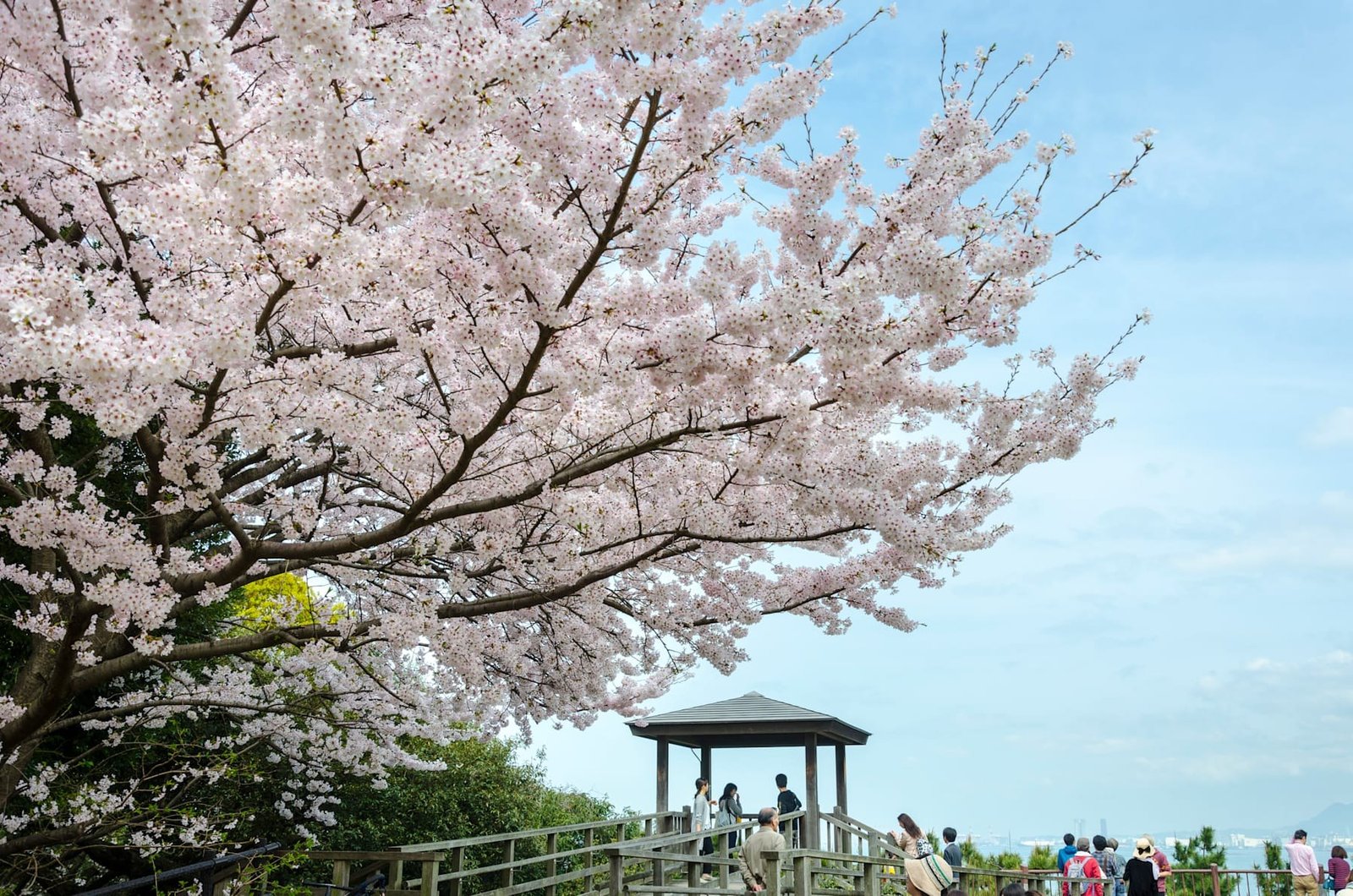
Blooms start at the southern tip of Kyushu in late March and move north through Honshu and Hokkaido during April. Tokyo’s best-known spots include Shinjuku Gyoen, Ueno Park, Nakameguro and Chidori-ga-fuchi, and Kyoto and Nara have hillside temples that frame the trees.
Bloom dates move every year, so a booking made months ahead is a bet on the calendar. In 2026 Tokyo’s first flowers opened on March 19 and reached full bloom on March 28, five and three days ahead of the usual dates. Kyoto bloomed on March 23 with full bloom on March 30, Osaka on March 26 and April 3, and Sapporo on April 18 and April 24, which was 13 and 12 days early. Tokyo averages 14.2 C in the daytime in March and 19.4 C in April.
May: Golden Week and the Last Blossoms
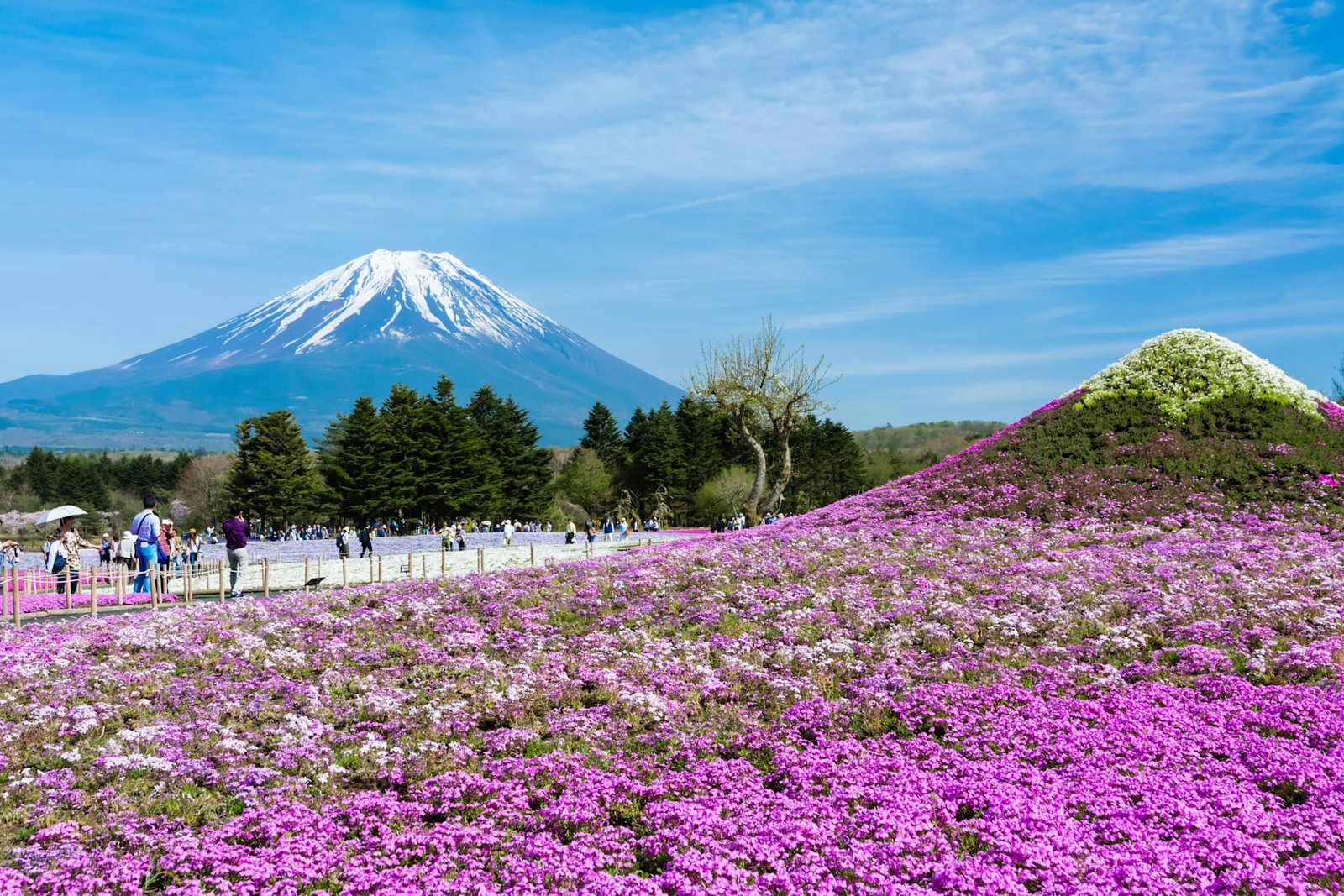
Blossoms have thinned or gone by the start of May everywhere except Hokkaido and northern Tohoku, where they last until mid-May, and Hakodate holds on to mid-May as well. Flowers take over: wisteria, shibazakura (moss phlox) and nemophila fields fill the month. Tokyo reaches a 23.6 C high with 139.7 mm of rain.
Golden Week stacks national holidays at the end of April and start of May, so trains, hotels and major sights fill with domestic travelers. Okinawa’s rainy season is the first to arrive, with a normal start around May 10 and an end around June 21.
June and July: Rainy Season and Mt Fuji

Rainy season reaches Tokyo around June 7 and Kyoto around June 6, and ends around July 19 in both. Kyoto is the wetter of the two, with 199.7 mm in June and 223.6 mm in July against Tokyo’s 167.8 mm and 156.2 mm. Hydrangea gardens peak in the damp, and Kamakura’s temple stairs are a good example.
Hokkaido does not appear in the national rainy-season calendar. Sapporo records 60.4 mm in June, a 21.8 C high and 17.0 C mean, which makes it the easy choice for travelers who want to skip the wet weeks. Mt Fuji’s climbing season opens in early July and runs to about the first week of September. July 2025 brought 3,437,118 foreign visitors.
August and September: Heat, Fireworks and Typhoons
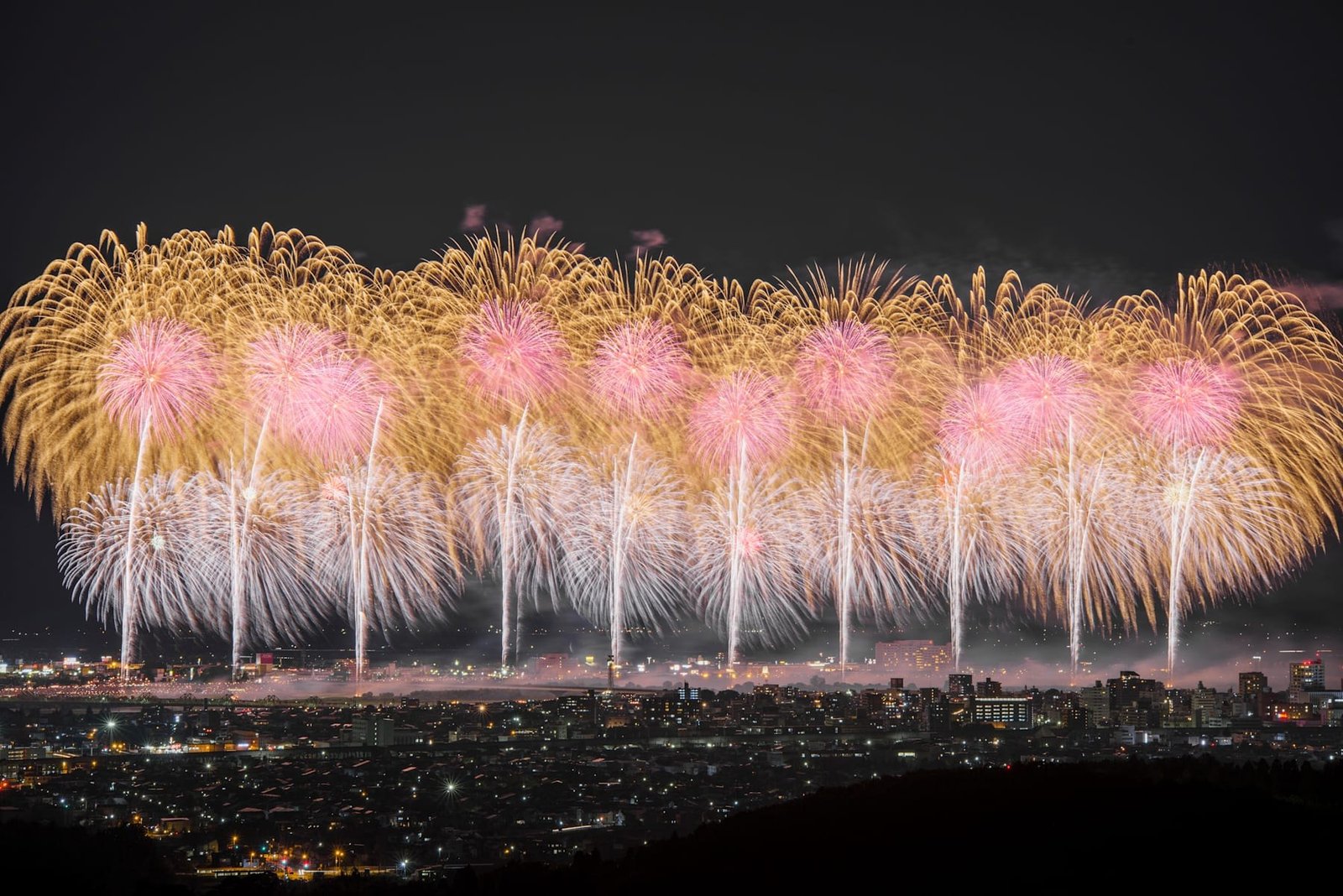
August is the hottest month, with Tokyo at a 31.3 C high and Kyoto at 33.7 C, and humidity stays high across much of the country. Fireworks run from July through August, and Nagaoka’s show in the first week of August draws about 20,000 fireworks in a typical year. Mid-August is Obon, when many Japanese families return to their home towns.
Typhoons peak in the same weeks. On average 3.3 typhoons a month come within 300 km of a Japanese weather station in both August and September, and September also has the highest landfall rate at 1.0. Tokyo gets 224.9 mm of rain in September, its second-wettest month.
October and November: Autumn Leaves

Leaves can be viewed from late September to early December, starting in northern Hokkaido and moving south. Estimated peak color for 2026 is October 28 in Sapporo, November 12 in Nagano, November 28 in Tokyo and December 1 in Osaka. Kyoto’s Kiyomizudera and Tokyo’s Rikugien are two classic places to see the trees turn red, orange and yellow.
October 2025 set an October record with 3,896,300 foreign visitors, with autumn leaves among the draws. Weather splits the two months: October averages 234.8 mm of rain in Tokyo and 143.2 mm in Kyoto, against 96.3 mm and 73.9 mm in November. Highs fall from 22.0 C to 16.7 C in Tokyo over the same stretch.
December to February: Snow, Skiing and New Year
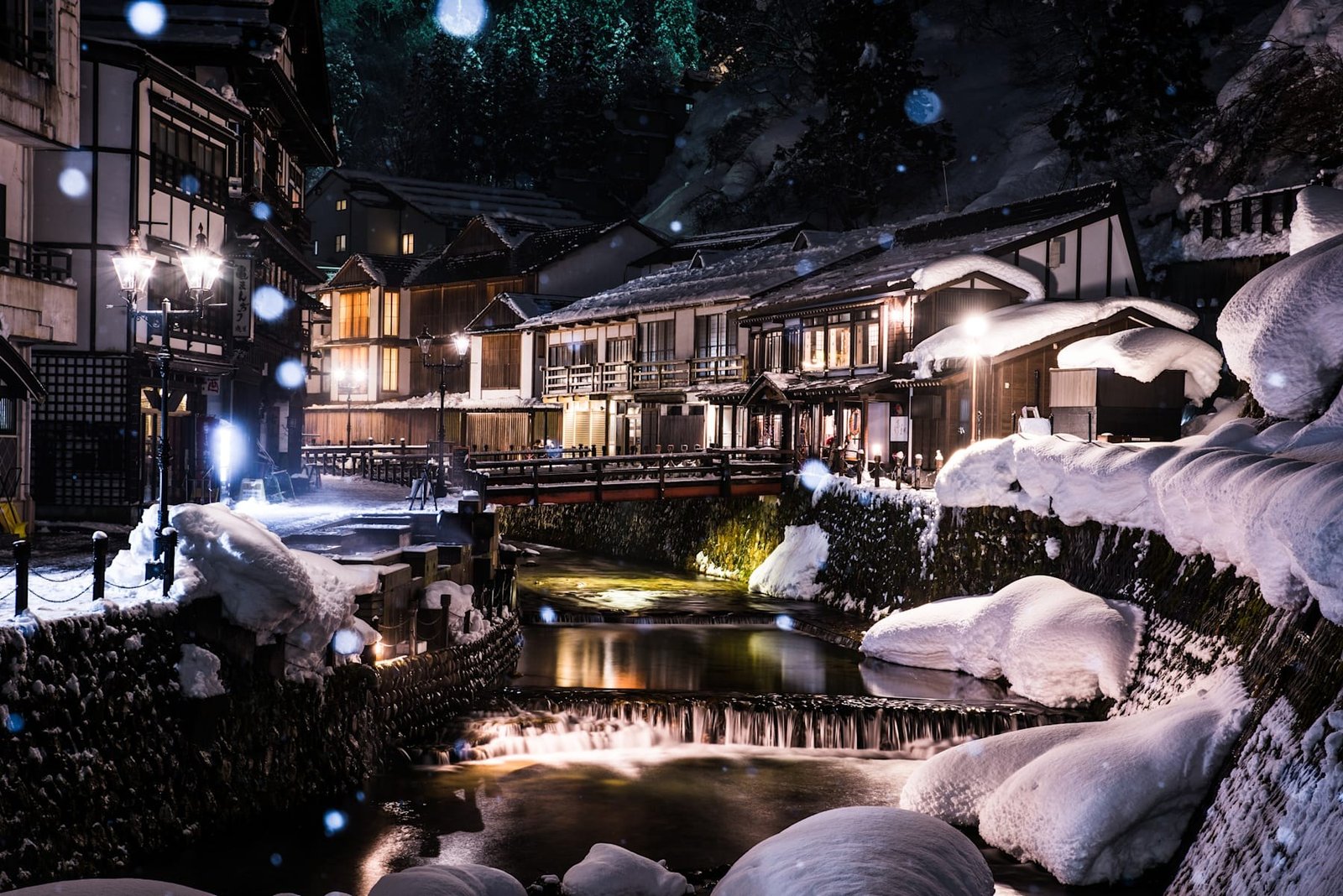
Snow is rare in the big Pacific-side cities and regular in the mountains and the north. Hakuba in Nagano and Niseko and Rusutsu in Hokkaido are the best-known ski areas, and Ginzan Onsen in Yamagata is a snow-covered hot spring town that photographs well. Tokyo is dry and cold, with highs of 9.8 to 12.0 C and 56.5 to 59.7 mm of rain a month from December to February.
Around the New Year holiday, shrine visits fill the calendar and most other attractions close, so plan sightseeing before or after. Sapporo’s Snow Festival, in February, welcomes upwards of two million people.
Best Time to Visit Japan by City and Region
Japan stretches far enough that the same month feels different from Hokkaido to Okinawa. Daily highs and monthly rainfall for four cities show the spread:
| # | Month | Tokyo | Kyoto | Sapporo | Naha |
|---|---|---|---|---|---|
| 1 | January | 9.8 C, 59.7 mm | 9.1 C, 53.3 mm | -0.4 C, 108.4 mm | 19.8 C, 101.6 mm |
| 4 | April | 19.4 C, 133.7 mm | 20.1 C, 117.0 mm | 11.7 C, 54.6 mm | 24.3 C, 161.0 mm |
| 7 | July | 29.9 C, 156.2 mm | 32.0 C, 223.6 mm | 25.4 C, 90.7 mm | 31.9 C, 188.1 mm |
| 10 | October | 22.0 C, 234.8 mm | 23.4 C, 143.2 mm | 16.4 C, 109.9 mm | 28.1 C, 179.2 mm |
Tokyo: Spring and Autumn Both Work
Tokyo has a 15.8 C yearly mean and 1,598.2 mm of rain. The driest stretch is December to February at 56 to 60 mm a month, and the wettest months are September and October.
Kyoto: Avoid the June and July Rain
Kyoto’s yearly mean is 16.2 C with 1,522.9 mm of rain. Its wet peak is June and July, and August is hotter than Tokyo with a 33.7 C high. November is the pick for leaves and the driest of the autumn months, at 73.9 mm.
Sapporo: Cool in Summer, Snowy in Winter
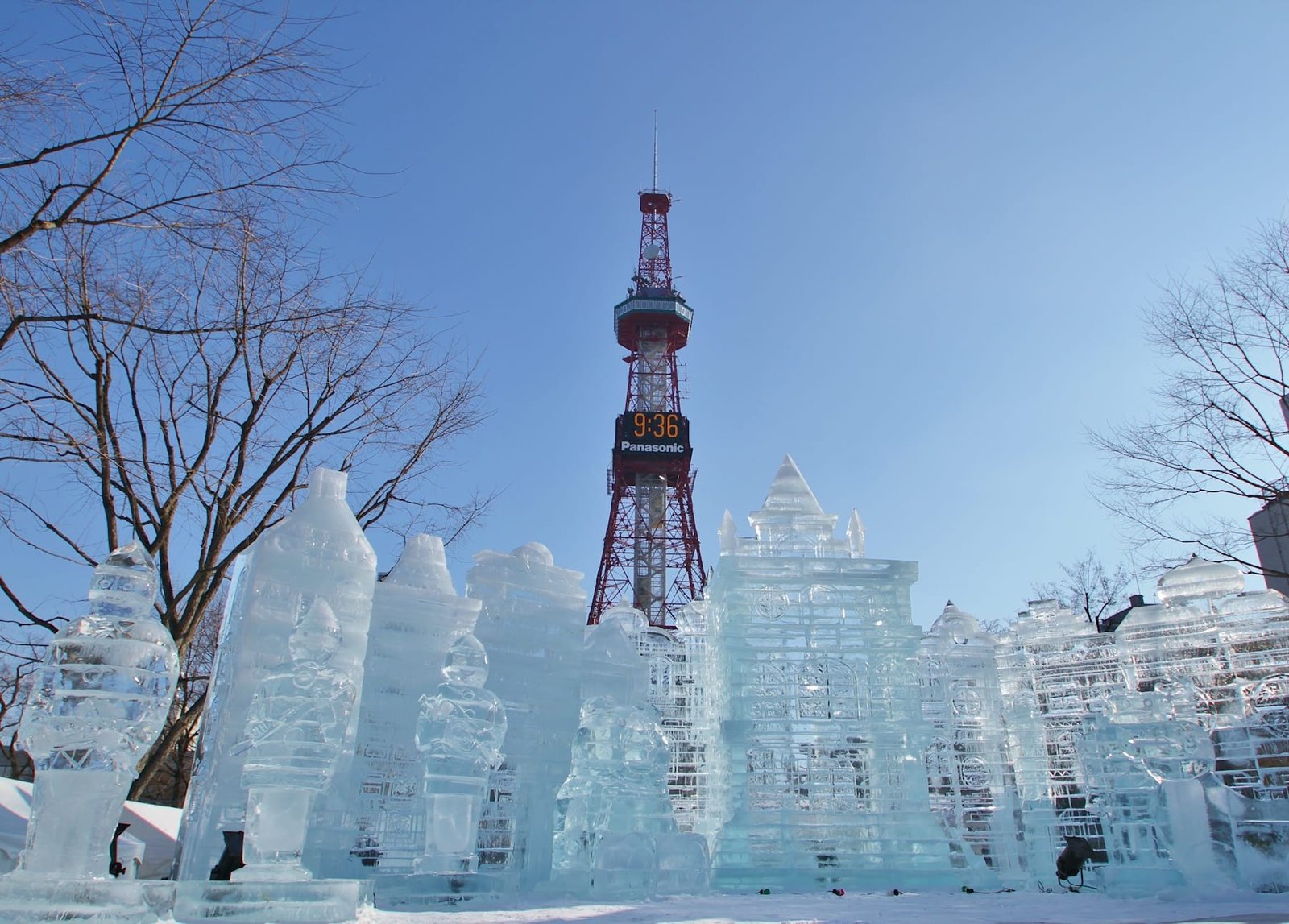
Sapporo averages 9.2 C for the year, with January at a mean of -3.2 C and a 26.4 C August high that is nearly 5 C cooler than Tokyo. Cherry blossoms arrive in late April, and the Snow Festival is the winter draw.
Okinawa: Warm Year-Round

Naha’s mean never drops below 17.3 C, and it receives 2,161.0 mm of rain a year, the most of the four cities. June is its wettest month at 284.4 mm, and May and September are also heavy at 245.3 mm and 275.2 mm. January and February are cool but mild, with highs of 19.8 and 20.2 C.
Dates to Plan Around in 2026 and 2027
- Golden Week: Apr 29 and May 3 to 6 in 2026, including an extra substitute holiday on May 6; Apr 29 and May 3, 4 and 5 in 2027
- Summer holidays: Marine Day on Jul 20 in 2026 and Jul 19 in 2027, then Mountain Day on Aug 11 in both years
- Autumn holidays: Respect for the Aged Day on Sep 21 in 2026 and Sep 20 in 2027, Sports Day on Oct 12 in 2026 and Oct 11 in 2027, Culture Day on Nov 3 and Labour Thanksgiving on Nov 23 in both years
- Rainy season: about June 6 to July 19 in Kyoto and June 7 to July 19 in Tokyo; Okinawa May 10 to June 21
- Typhoons: 25.1 form in an average year and 11.7 pass within 300 km of a weather station, with landfalls on the main islands averaging 3.0 a year
Obon falls in mid-August, and the New Year holiday brings closures around January 1. Cherry blossom dates for 2027 have not been published, so check the Japan Weather Association forecast method in December and January for a first estimate. Rainy-season dates are on the national rainy-season calendar, and holiday dates are on the Cabinet Office holiday page.
How to Choose Your Month in Japan
- First visit: go in late March to early April or in November, and aim to see Tokyo and Kyoto
- Cherry blossoms: pick the week by region and watch the forecast, since 2026 bloomed 1 to 13 days early across four cities
- Autumn leaves: late October for Hokkaido, mid-November for Nagano and Tohoku, late November for Tokyo
- Skiing: January and February, at Hakuba, Niseko or Rusutsu
- Beaches and heat: Okinawa from May to October, with Naha at 24.2 to 29.1 C means; expect typhoon risk in late summer
- Fewer holiday crowds: avoid Golden Week, mid-August and the New Year break
Flights are a large part of the budget, and the cheap flights guide covers how to find the lowest fares. Travelers who connect through a hub can check the busiest airports in the world to see which ones run at the highest volume.
Frequently Asked Questions
When is cherry blossom season in Japan?
Blossoms begin in late March in the south and travel north through April, and most have thinned by the start of May outside Hokkaido and northern Tohoku. The exact weeks move each year. In 2026 Tokyo’s full bloom was March 28 and Sapporo’s was April 24.
What is the rainiest month in Tokyo?
October is the wettest at 234.8 mm, followed by September at 224.9 mm. Rainy season months of June and July bring 167.8 mm and 156.2 mm, so the late-summer typhoon months are wetter than the official rainy season.
When is Golden Week in 2027?
Golden Week 2027 covers April 29 and May 3, 4 and 5, with no substitute holiday scheduled. In 2026 an extra day on May 6 stretched the break to Apr 29 and May 3 to 6.
Does it snow in Tokyo?
Snow is rare in Tokyo and other big Pacific-side cities. Tokyo’s average January low is 1.2 C, and regular snow falls in the mountains and the north, including Hakuba and Hokkaido.
Related Articles

Get the Fox Bulletin briefing
The stories that matter, in your inbox. No spam, unsubscribe anytime.
Newsletter signup will be available soon.