

The periodic table has 18 numbered groups, which are its vertical columns, and six of them carry family names approved by IUPAC: the alkali metals (1), alkaline earth metals (2), pnictogens (15), chalcogens (16), halogens (17) and noble gases (18). These periodic table groups hold elements whose atoms share the same outer-shell pattern, which is why the members of a column behave alike. Every element from hydrogen to oganesson, 118 in all, sits in one of the 18 columns or in the two detached rows beneath them.
Group numbers and members here follow the IUPAC periodic table dated 4 May 2022. Below are the full chart, a section for each family, and the points that trip people up: groups against periods, the lanthanoid and actinoid rows, hydrogen and the older labels.
The 18 Periodic Table Groups: Name, Members and Valence Pattern
| Group | Name | Members | Valence pattern or defining feature |
|---|---|---|---|
| 1 | Alkali metals (IUPAC-approved) | H (placed here, not an alkali metal), Li, Na, K, Rb, Cs, Fr | ns1; lowest electronegativity of any group |
| 2 | Alkaline earth metals (IUPAC-approved) | Be, Mg, Ca, Sr, Ba, Ra | ns2; lose two electrons to form +2 compounds |
| 3 | Scandium group (first-element name) | Sc, Y | Transition-metal column; chemistry dominated by +3 |
| 4 | Titanium group (first-element name) | Ti, Zr, Hf, Rf | Transition-metal column; oxide ores with the metal in the +4 state |
| 5 | Vanadium group (first-element name) | V, Nb, Ta, Db | Transition-metal column; oxide ores in the +5 state |
| 6 | Chromium group (first-element name) | Cr, Mo, W, Sg | Transition-metal column; +6 in molybdenum and tungsten |
| 7 | Manganese group (first-element name) | Mn, Tc, Re, Bh | Transition-metal column; +7 compounds form but are readily reduced |
| 8 | Iron group (first-element name) | Fe, Ru, Os, Hs | Transition-metal column; chemistry dominated by iron |
| 9 | Cobalt group (first-element name) | Co, Rh, Ir, Mt | Transition-metal column; heavier members are rare |
| 10 | Nickel group (first-element name) | Ni, Pd, Pt, Ds | Transition-metal column; tarnish-resistant, ductile metals |
| 11 | Coinage metals (informal name) | Cu, Ag, Au, Rg | Transition-metal column; +1 is the key state, reactivity falls from Cu to Au |
| 12 | Zinc group (first-element name) | Zn, Cd, Hg, Cn | Filled d subshell; not always counted as transition metals; low melting points |
| 13 | Boron group (first-element name) | B, Al, Ga, In, Tl, Nh | ns2np1; 3 valence electrons |
| 14 | Carbon group (first-element name) | C, Si, Ge, Sn, Pb, Fl | ns2np2; 4 valence electrons |
| 15 | Pnictogens (IUPAC-approved) | N, P, As, Sb, Bi, Mc | ns2np3; 5 valence electrons |
| 16 | Chalcogens (IUPAC-approved) | O, S, Se, Te, Po, Lv | ns2np4; 6 valence electrons |
| 17 | Halogens (IUPAC-approved) | F, Cl, Br, I, At, Ts | ns2np5; 7 valence electrons |
| 18 | Noble gases (IUPAC-approved) | He, Ne, Ar, Kr, Xe, Rn, Og | ns2np6; 8 valence electrons (helium has 2) |
Only the six approved names are formal collective names. For the other columns IUPAC’s Red Book allows a group to be named after its first element, as in the titanium group and the boron group, so those names are conventions and not separate titles. Coinage metals is an informal label. The d-block columns, 3 to 12, are described by their chemistry and not by a single valence count.
Periodic Table Groups, Family by Family
Alkali Metals: One Outer Electron in Group 1
The alkali metals have a single s electron beyond a noble-gas core and the lowest electronegativity of any group, so they give that electron up readily and form +1 compounds. Hydrogen sits in the same column of the IUPAC table but is not an alkali metal, because it rarely behaves like one.
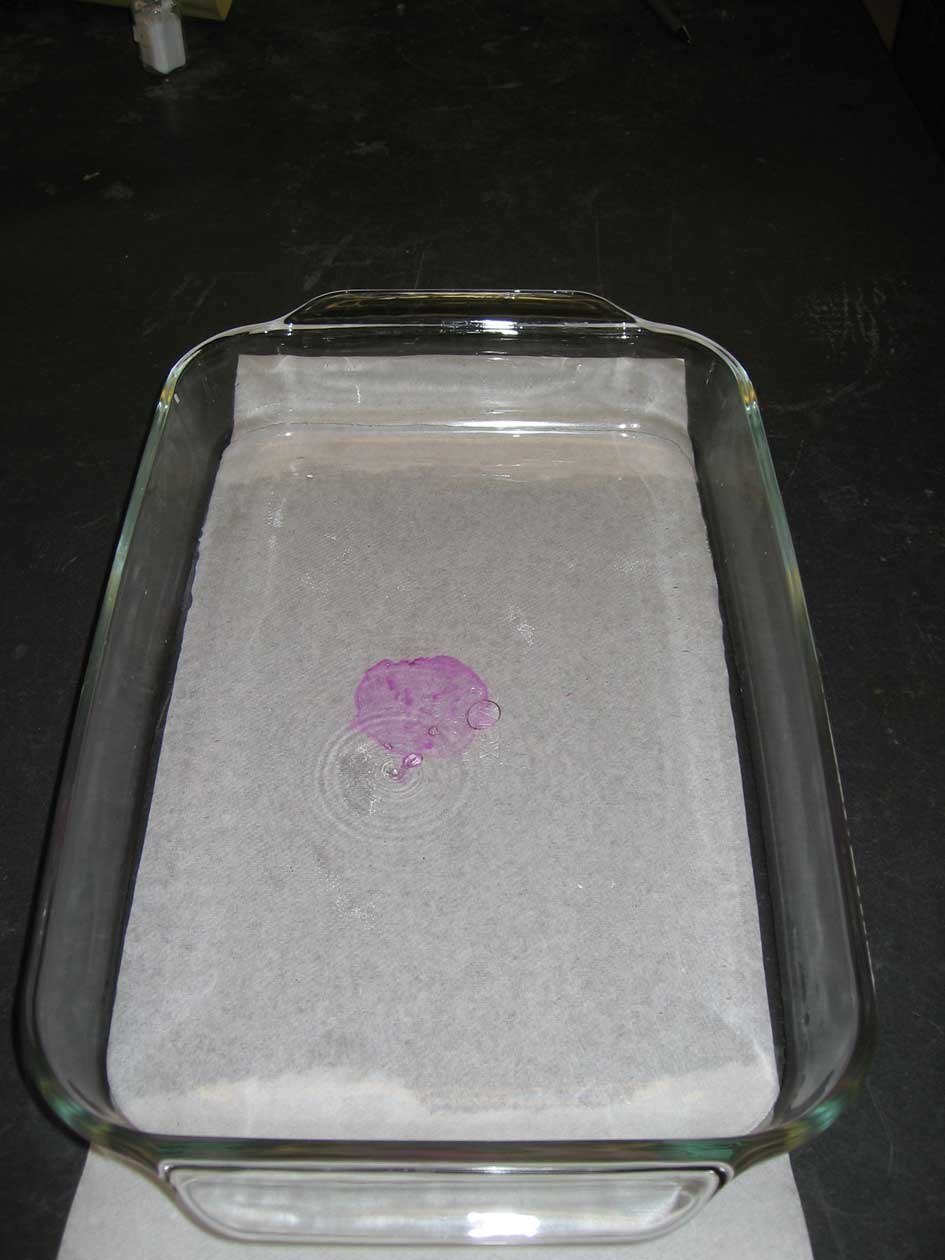
All of them react with water to give hydroxide ions and an alkaline solution with a pH above 7, and the reaction gets fiercer down the group. Sodium on water with phenolphthalein leaves a pink trail and flammable hydrogen, potassium reacts much more violently, and caesium reacts explosively. Rubidium melts at 39 C, and francium’s longest-lived isotope lasts 22 minutes. If you need to type the degree sign in a melting point, the degree symbol guide covers the keystrokes.
Alkaline Earth Metals: The Soft Metals of Group 2
Every alkaline earth metal has an ns2 outer pair, an electronegativity below 1.6, and loses both electrons to form +2 compounds such as the dihalides EX2 and the oxides EO. Beryllium, the lightest, is relatively unreactive and forms many covalent compounds.
Calcium, strontium, barium and radium are almost as reactive as the alkali metals. Strontium and barium salts colour fireworks red and green, and calcium and magnesium matter in bone and chlorophyll.
Groups 3 to 12: The Transition-Metal Columns
Groups 3 to 12 make up the d block, the transition elements, though IUPAC notes that group 12 is not always included. Scandium and yttrium head group 3, where +3 dominates. The titanium group (Ti, Zr, Hf, Rf) has a high affinity for oxygen and occurs as +4 oxide ores. Hafnium escaped discovery until 1923 because it hides with zirconium. Niobium and tantalum are so alike that they turn up in the same ores.
In group 6, chromium’s commonest state is +3 while molybdenum and tungsten favour +6, and those two are essentially the same size. Iron’s melting point of 1538 C delayed its use until the Hittites developed iron working before 2000 BC. Cobalt oxide ores give cobalt blue to glass and pottery. Copper, silver and gold, the coinage metals, favour +1, and mercury in group 12 also forms the Hg2 2+ ion.
Groups 13 and 14: The Boron and Carbon Groups
The boron group has ns2np1 outer shells, and +3 is overwhelmingly its common state, with +1 appearing in heavy thallium through the inert pair effect. Boron is a semimetal and aluminium, gallium, indium and thallium are metals. Aluminium is the third most abundant element in Earth’s crust.
The carbon group has ns2np2 shells and oxidation states of -4, +2 and +4. Carbon is a nonmetal, silicon and germanium are semimetals, and tin and lead are metals, so this column crosses the metal and nonmetal line. Only tin and lead form extensive +2 chemistry, while every member forms +4 compounds, from CO2 to PbO2 and from CCl4 to PbCl4. Carbon has at least four room-temperature allotropes, among them graphite and diamond.
Pnictogens: Nitrogen and Its Heavier Neighbours in Group 15
IUPAC approves the name pnictogens for nitrogen, phosphorus, arsenic, antimony and bismuth, and notes pnicogen as an alternative spelling. The approved list predates moscovium, which sits in the column by position. All of them have ns2np3 outer shells and show -3, +3 and +5 states.
The column runs from a gas to a metal. Nitrogen is the diatomic gas N2, and phosphorus has white, red and black allotropes. Arsenic and antimony are semimetals, and bismuth is a metal.
Chalcogens: Oxygen, Sulfur and Group 16
The name chalcogen comes from Greek for copper-producing, because copper ores are rich in sulfur, selenium and tellurium. IUPAC approves it for oxygen, sulfur, selenium, tellurium and polonium. All have ns2np4 shells and the states -2, +4 and +6, though oxygen is almost always -2 and sulfur is the member that shows all three.
Oxygen is the diatomic gas O2. Sulfur is a volatile solid built from S8 rings, selenium and tellurium are grey or silver chain solids, and polonium is a radioactive silvery metal.
Halogens: The Salt-Producing Group 17
Halogen means salt-producing in Greek. The approved members are fluorine, chlorine, bromine, iodine and astatine, each with an ns2np5 shell that reaches a noble-gas configuration by gaining one electron, giving the -1 state. Fluorine is the most reactive and never takes a positive oxidation state.
The column spans three states of matter at room temperature. Fluorine is a pale yellow-green gas and chlorine a pale green gas, bromine is a red liquid, and iodine is a purple solid. Astatine is radioactive but behaves like iodine.
Noble Gases: The Filled Shells of Group 18
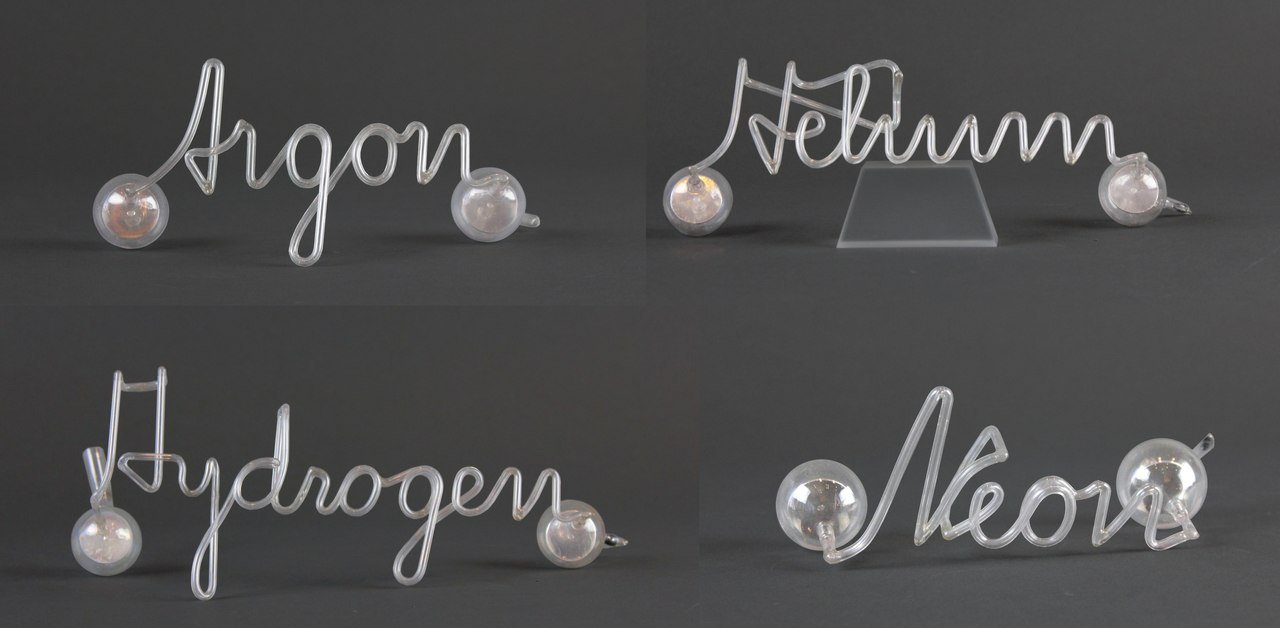
Noble gases have filled valence shells and exist as monatomic gases. The name misleads in two ways, since they are neither rare nor inert: argon makes up about 1 percent of the atmosphere, and krypton, xenon and radon do form compounds. Only xenon has an extensive series, bonded to fluorine or oxygen, as in XeF2, XeF4 and XeF6. The tubes in the photo are unlit.
Helium is the one member that breaks the pattern. Its outermost shell is the first shell, which holds only 2 electrons, so helium has a 1s2 configuration instead of ns2np6. IUPAC approves the collective name for helium, neon, argon, krypton, xenon and radon, and oganesson closes the column at element 118.
Groups vs Periods: Columns, Rows and Why the Table Is Shaped This Way
Groups are the columns, also called families, and periods are the rows. There are 7 periods, and elements in a group have similar chemistry because they share the same valence-shell configuration, such as ns1 for all of group 1.
Period lengths explain the table’s outline. The first period holds 2 elements, H and He, the second and third hold 8 each, and the fourth and fifth hold 18 each. Later periods are so long that a segment from each is removed and placed beneath the main body. Count those segments back in and periods 6 and 7 hold 32 elements each, which brings the total to 118.
Lanthanoids and Actinoids: Why 30 Elements Sit Outside the 18 Groups
IUPAC’s 2022 table prints the lanthanoids and actinoids in two detached rows beneath the main body, labelled 57-71 and 89-103. The Red Book names the lanthanoids as lanthanum to lutetium and the actinoids as actinium to lawrencium, 15 elements in each series. Lanthanum is included by common usage.
These elements are part of periods 6 and 7. Inserting 15 elements into each of those rows would stretch the table very wide, so the segments are lifted out and set below. The most important oxidation state in both series is +3, and all the actinoids are radioactive.
Hydrogen Sits in Group 1 but Is Not an Alkali Metal
The IUPAC 2022 table prints hydrogen in the group 1 column of period 1. The Red Book counts groups 1, 2 and 13 to 18 as main-group elements except hydrogen, and in IUPAC element ordering only hydrogen has a unique position. It sits beside the alkali metals because its valence shell is 1s1, but it is a gas and not a reactive metal.
Hydrogen forms covalent compounds and salt-like hydrides, as the halogens do. Kaesz and Atkins argued in a 2003 forum piece in IUPAC’s Chemistry International that hydrogen should appear once, centred in period 1 and assigned to no group. That is a proposal and not an IUPAC decision.
From IA to VIIIA: How the Older Roman Numeral Labels Became 1 to 18
Before the 1 to 18 scheme, the groups carried older roman numeral labels. A US convention from a 1923 textbook by Deming used A for the first two and last five main groups and B for the middle groups, and European usage ran differently, so the letters were applied arbitrarily across the literature. The main-group mapping is steady: potassium is IA (group 1), calcium IIA (2), aluminium IIIA (13), silicon IVA (14), sulfur VIA (16), chlorine VIIA (17) and helium VIIIA (18).
Ulander’s 1964 scheme numbered the groups 0 to 17, with the noble gases as 0. IUPAC’s commission circulated the 1 to 18 proposal in 1985 and made the noble gases group 18. The New York State Education Department adopted it in September 1986. The change also ended the old lumping of three columns under a single number VIII, which are now groups 8, 9 and 10.
What the Group Assignments and Names Rest On
Membership comes from the IUPAC periodic table of 4 May 2022, which prints all 118 elements through oganesson, and the approved collective names come from IUPAC’s Red Book of 2005. The Red Book lists predate nihonium, moscovium, tennessine and oganesson, so those four appear by their position in the 2022 table. The table itself is on the IUPAC periodic table page.
Only six group names are formal: alkali metals, alkaline earth metals, pnictogens, chalcogens, halogens and noble gases. The Red Book also approves lanthanoids and actinoids, which are not groups. Names such as titanium group and boron group follow a naming convention, and coinage metals and carbon group are informal.
How to Read a Group Number and Predict an Element
For main-group elements, take the last digit of the group number to find the valence electrons. Group 15 has 5, group 17 has 7 and group 2 has 2, and only helium breaks the rule.
Chemistry is most alike within groups 1, 2, 13, 16, 17 and 18. In groups 14 and 15 the lightest and heaviest members differ, because the column crosses from nonmetal to metal, and in every main group except group 18 the first two elements are called typical elements.
Other fixed lookup charts on the site include the Morse code chart and the military alphabet.
Frequently Asked Questions
How many groups are in the periodic table?
There are 18 groups, numbered 1 to 18 by IUPAC. Six of them have approved collective names, groups 1, 2, 15, 16, 17 and 18, and the rest go by number or by a first-element name.
What is the difference between a group and a period?
A group is a column of elements with the same valence-shell pattern and similar chemistry, and a period is a row. There are 18 groups and 7 periods.
Which periodic table groups have IUPAC-approved names?
The alkali metals (group 1), alkaline earth metals (2), pnictogens (15), chalcogens (16), halogens (17) and noble gases (18). IUPAC also approves lanthanoids and actinoids, 15 elements each, for the two rows beneath the table.
Why are the lanthanides and actinides below the table?
They belong to periods 6 and 7. Placing 15 extra elements in each row would make the table very wide, so the segments are removed and set under the main body. With them counted, periods 6 and 7 hold 32 elements each.
Related Articles

Get the Fox Bulletin briefing
The stories that matter, in your inbox. No spam, unsubscribe anytime.
Newsletter signup will be available soon.
Related stories

Cheese Types: 7 Classes and How to Spot Each One
Every cheese at the counter belongs to one of seven classes: fresh, soft-ripened, semi-soft, semi-hard, hard, blue or processed. This guide shows how to recognise each by feel, rind and age, with milk, moisture limits and ageing times for 16 familiar cheeses.
How Many Bones in the Human Body: 206, Region by Region
The adult human skeleton has 206 bones, and this page counts every one by region in a single chart. It then walks through the skull, spine, ribs, arms and legs, explains why babies have roughly 270 to 300 bones, and covers the longest and smallest bones and the extra bones some adults carry.
A4 Paper Size: 210 x 297 mm, 8.27 x 11.69 Inches
A4 measures 210 x 297 millimetres, or 8.27 x 11.69 inches. This page gives the size in cm and in pixels at 72, 150 and 300 DPI, compares it with US Letter, and walks the A series from A0 to A6. It also covers which countries use which sheet and what changes when a document crosses between them.