

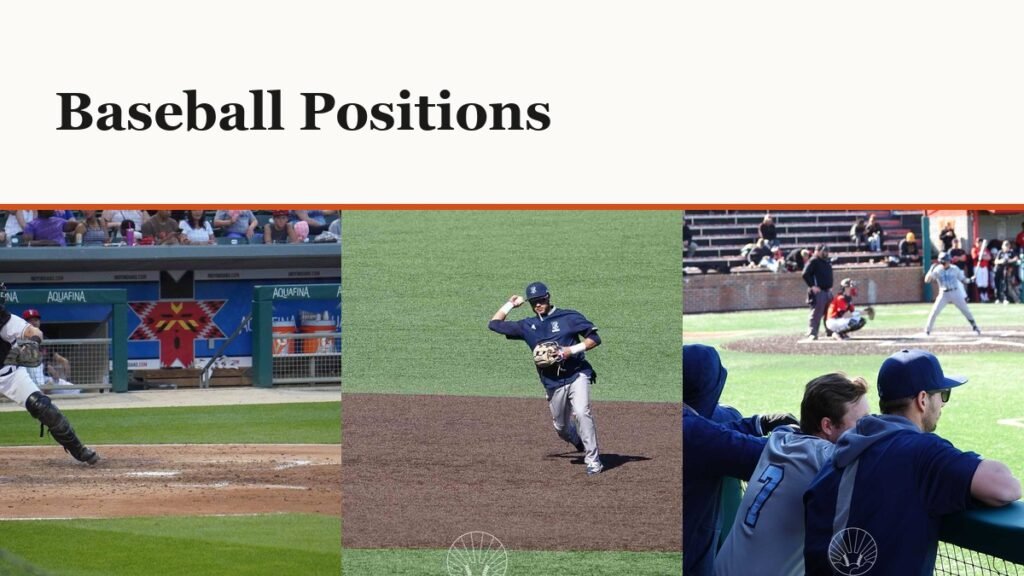
There are nine baseball positions on defense, and each one carries a number from 1 to 9 that never changes: pitcher 1, catcher 2, first base 3, second base 4, third base 5, shortstop 6, left field 7, center field 8, right field 9. Learn those nine numbers and every scorecard ever kept becomes readable.
The numbering is scorekeeping convention rather than law. The Official Baseball Rules do not print a numbered table anywhere. What the rules do set is who must stand where, and since 2023 that has included a real limit on how four of the nine may be arranged. This guide covers every position, the number behind it, and the rule that changed infield defense.
Baseball Positions by Number: All Nine on One Card
MLB publishes the numbering through its scorekeeping glossary. The order runs pitcher, catcher, then the bases in sequence from first to third, then the shortstop, then the outfield from left to right.
| # | Position | Abbr | Where they stand | What the job demands |
|---|---|---|---|---|
| 1 | Pitcher | P | The mound, 60 ft 6 in from the plate | Delivers every pitch, fields bunts and weak grounders |
| 2 | Catcher | C | Directly behind home plate | Receives every pitch, calls the game, throws out base stealers |
| 3 | First baseman | 1B | Right of the bag, back of the dirt | Takes throws from the infield, digs low ones out of the dirt |
| 4 | Second baseman | 2B | Between first and second, nearer second | Quick lateral range, turns the double play from the blind side |
| 5 | Third baseman | 3B | Near the third-base bag | Hard-hit balls and bunts, needs the strongest infield arm after short |
| 6 | Shortstop | SS | Between third and second base | Most range of any infielder, directs the infield, anchors double plays |
| 7 | Left fielder | LF | Left third of the outfield grass | Shorter throws than right, least range demanded of the three |
| 8 | Center fielder | CF | Middle of the outfield | Covers the most ground, calls off both corner outfielders |
| 9 | Right fielder | RF | Right third of the outfield grass | Often the strongest outfield arm, for the throw to third |
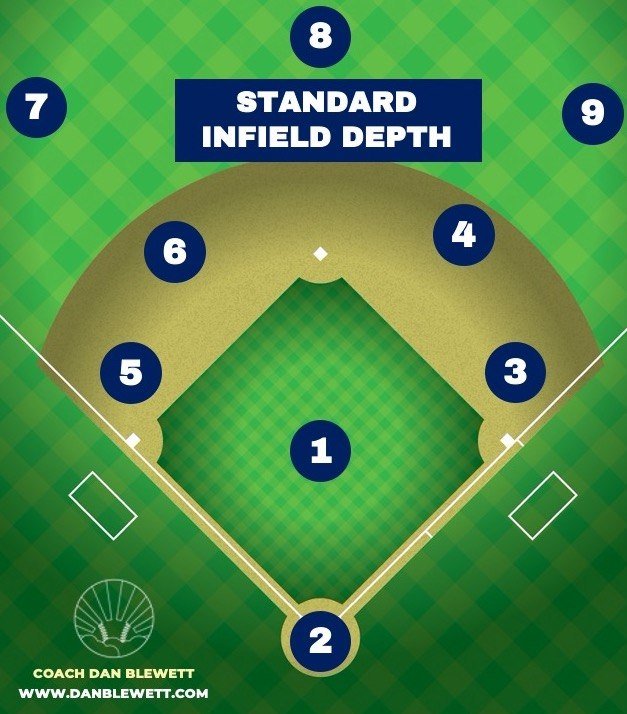
The one that trips people up is the shortstop at 6, sitting between the third baseman at 5 and the left fielder at 7 despite playing closer to second. No primary source explains why the sequence works out that way, so treat the origin as convention nobody wrote down.
The Battery: Pitcher and Catcher
The rules define these two as a unit. The Definitions of Terms in the rulebook states plainly that the battery is the pitcher and catcher, and Rule 5.02 treats them separately from everyone else: when the ball is put in play, all fielders other than the catcher must be in fair territory.
Pitcher (1). Works from the mound, 60 feet 6 inches from home plate, at the center of the infield. Starters usually sit in a five-man rotation with four or five days between outings and a pitch count often around 100. They field few batted balls, and infielders normally call them off pop-ups.
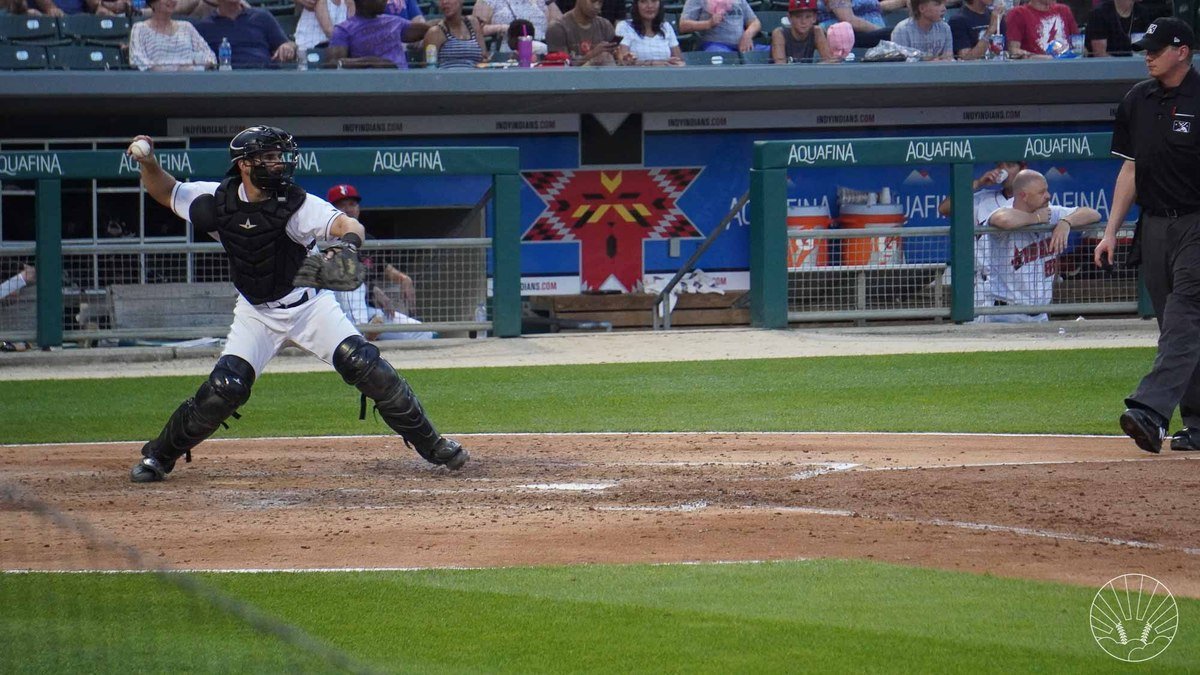
Catcher (2). Rule 5.02(a) requires the catcher to station himself directly back of the plate. On an intentional walk both feet must stay in the catcher’s box until the ball leaves the pitcher’s hand, and the penalty for breaking that is a balk. Beyond the rule, the job is signalling pitches, blocking balls in the dirt, framing, and throwing to second and third to stop steals.
Infield Positions 3 to 6: Corners, Middle and the Captain
The infield is a square 90 feet on each side. Four fielders cover it, and they split naturally into the corners at first and third and the middle pair at second and short.
- First baseman (3): plays to the right of the bag toward the back of the dirt with the bases empty, holds the runner on once a batter reaches, and has to scoop one-hop throws out of the dirt
- Second baseman (4): stationed close to first, so the throws are short and arm strength matters less than quick lateral movement and a clean pivot
- Third baseman (5): closest to the hitter, so reactions and a strong accurate arm matter more than range, and bunts come with the territory
- Shortstop (6): the most ground to cover in the infield, calls off the third baseman on balls in the air, and sits at the center of most double plays
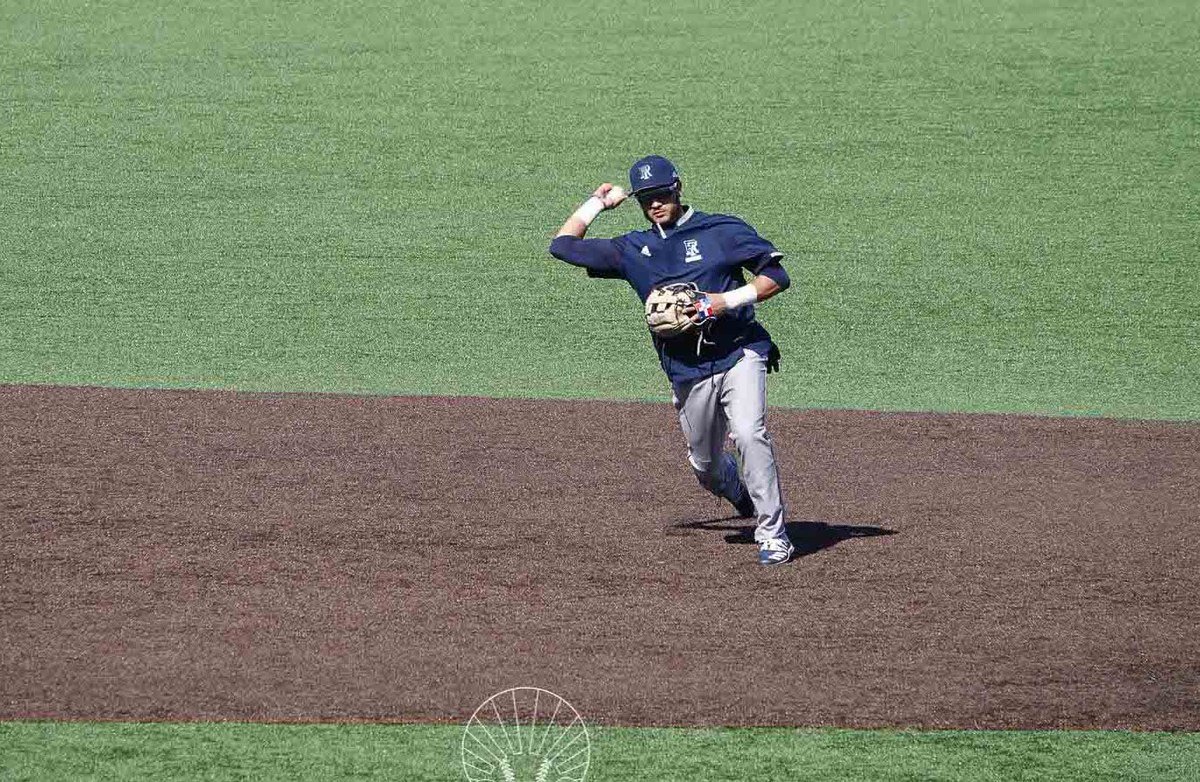
MLB describes the shortstop as the most valuable defensive position in the infield, if not on the entire field of play, which is why the best young infielder on almost any team starts there and moves only if someone better arrives. Turning a double play from second base is the harder physical act: the fielder takes the feed facing away from the runner and has to receive, pivot and throw without seeing the slide.
Outfield Positions 7, 8 and 9
The outfield is everything between the two foul lines beyond that 90-foot square. Three fielders split it, and the middle one is in charge.
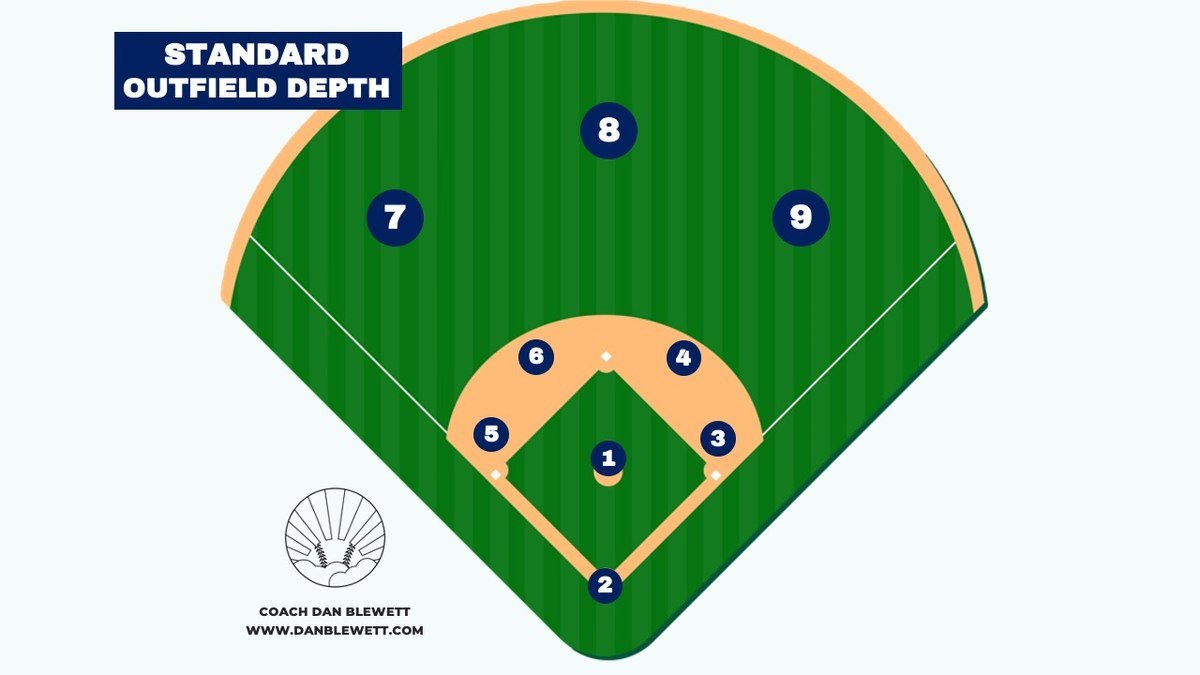
Center field (8) has the most ground to cover, so range is the first requirement, backed by an arm good enough to throw to home, third and second. MLB’s own description gives the center fielder precedence over a corner outfielder on any ball two players could reach.
Left field (7) needs less speed and a weaker arm will do, because the throw to third is short. Right field (9) is the opposite: it often takes the strongest outfield arm on the roster, because the long throw to third on a runner going first to third starts there. None of this is in the rulebook; the three outfielders are unrestricted by the positioning rule that binds the infield.
Reading 6-4-3 on a Scorecard
Once the numbers are fixed, a play becomes a string of them in the order the ball was handled. A ground out to short is written 6-3: the shortstop fielded it and threw to the first baseman. A fly out to left is just 7.
So 6-4-3 is the classic double play. The shortstop fields the ball, throws to the second baseman covering the bag for the first out, and he relays to first for the second. Reverse the first two numbers and you get 4-6-3, the same double play started by the second baseman. The notation also feeds the counting behind fielding statistics such as fielding percentage.
Rule 5.02(c): Where Four Infielders Must Stand
Until 2023 a defense could put three infielders on one side of second base against a pull hitter. That is now illegal. The rule change took effect for the 2023 season and the current wording sits in Rule 5.02(c).
- When the pitcher begins the natural movement of the delivery, four players other than the pitcher and catcher must have both feet completely in front of the outer boundary of the infield dirt
- At the moment the pitcher releases the ball, at least two of those four must be positioned with both feet entirely on each side of second base
- Those two on each side may not swap sides for the rest of the inning once the first pitch has been thrown, unless a substitution is made
The rulebook comment states the purpose outright: to prevent the defense from having more than two infielders on either side of second base. If the offending fielder is the first to touch the ball, the batter is awarded first base and runners move up; otherwise the pitch is called a ball. The batting team can decline and take the result of the play instead. Four-outfielder alignments are out too, though an infielder moved to shallow outfield grass is still scored at his own position.
The Designated Hitter and Who Actually Dresses
A tenth player bats without fielding. The American League adopted the designated hitter in 1973 and the National League followed as part of the 2022 to 2026 collective bargaining agreement, after a one-season universal DH in 2020. The DH carries no fielding number because the DH plays no defense.
Roster rules decide how many of each position a team can carry. The active roster is 26 players from Opening Day through August 31 and in the postseason, with a maximum of 13 pitchers, rising to 28 players and 14 pitchers from September 1. Position players may pitch only in extra innings or when the score gap is more than six runs, which is the rule that keeps blowout innings honest.
The field itself is what fixes most of this: the dirt boundary in Rule 5.02(c) only works as a rule because the infield is a defined shape. The same split between a fixed playing area and flexible roles turns up in football positions and in volleyball positions, where rotation order is law and everything else is coaching.
Defensive value is also what the market pays for, and it shows up at the top of the sport: see the most valuable sports teams for where baseball franchises sit against the rest.
Frequently Asked Questions
What are the 9 baseball positions in order?
By number: pitcher 1, catcher 2, first baseman 3, second baseman 4, third baseman 5, shortstop 6, left fielder 7, center fielder 8, right fielder 9. The order runs battery first, then the bases, then shortstop, then outfield left to right.
Why is the shortstop number 6 and not 5?
No official source explains it. The numbers were settled early in the sport’s history and the sequence runs through the three base positions before reaching shortstop. MLB publishes the numbering but not its origin, so any explanation you read is reconstruction.
Which baseball position is the most important defensively?
MLB calls shortstop the most valuable defensive position in the infield, if not on the whole field, because of the range the job demands and its role in double plays. Catcher is the other common answer, on workload rather than range, though that is opinion rather than a measurement.
Are defensive shifts banned in baseball?
Extreme ones are. Since 2023 four infielders must be on the infield dirt with two on each side of second base when the pitch is released, and they cannot switch sides mid-inning. Normal positioning adjustments within those limits are still allowed.
Related Articles

Get the Fox Bulletin briefing
The stories that matter, in your inbox. No spam, unsubscribe anytime.
Newsletter signup will be available soon.
Related stories
Basketball Court Dimensions: Every Level Compared
A full-size court is 94 by 50 feet in the NBA and 28 by 15 meters under FIBA. Every measurement by level, and the one line that actually changes.

Hockey Positions: All 6 Roles on the Ice Explained
Center, two wingers, two defensemen and a goaltender. What each of the six hockey positions does, and which parts of the job the rulebook sets.

Most Centuries in Cricket: Top 10 Batters Ranked
Sachin Tendulkar has the most centuries in cricket at international level, with 100 across formats. The split is 51 in Tests and 49 in one-day internationals, and he reached the hundredth in…