

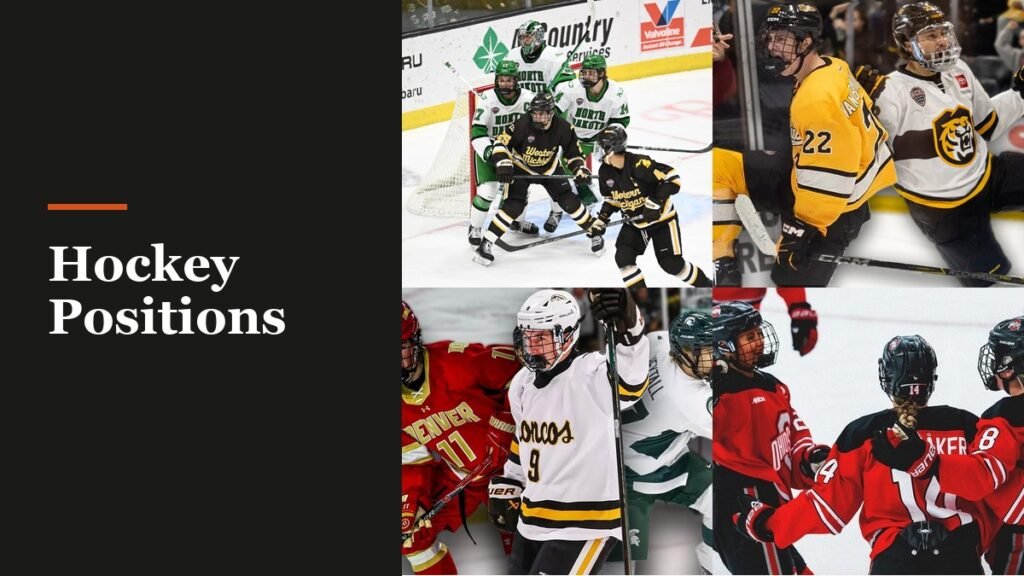
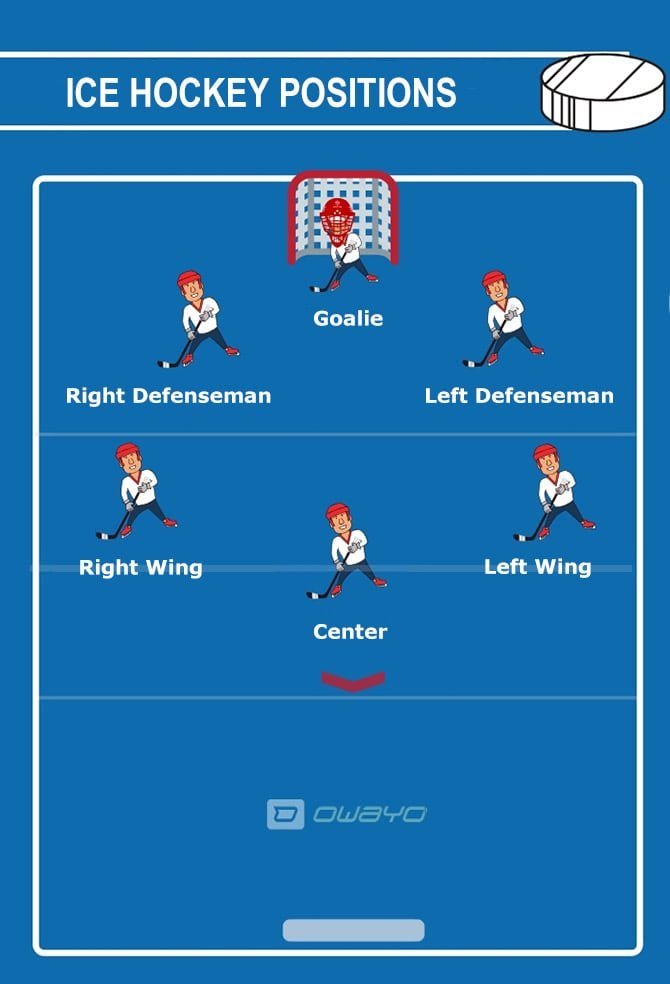
Six players a side are on the ice at even strength, and the hockey positions they fill are one center, a left wing, a right wing, two defensemen and a goaltender. Five of them skate. One of them is the only player on the sheet whose movement the rulebook restricts by area.
Most of what separates these roles is convention rather than law. The NHL rulebook names the goaltender, tells you who lines up for a faceoff and limits where the goalie may touch the puck. Everything else, the lines, the pairs and the lanes, is coaching built on top of that. This guide covers all six jobs, the rules that genuinely bind them, and where the rulebook simply stays quiet.
Hockey Positions Chart: Zone, Abbreviation and Core Job for All Six
Every role below is on the ice together at even strength. Pull the goaltender for an extra attacker and the sixth slot becomes a forward, which is why the count stays at six either way.
| Position | Abbr | Group | Where they live | Core job |
|---|---|---|---|---|
| Center | C | Forward | Middle of all three zones | Takes the faceoffs, supports both wingers, first forward back on defense |
| Left wing | LW | Forward | Left lane, end to end | Attacks down the left boards, pressures the puck carrier, covers the point on that side |
| Right wing | RW | Forward | Right lane, end to end | Mirrors the left wing on the right side, usually the other half of the forecheck |
| Left defenseman | LD | Defense | Own blue line to the net front | Kills plays at the blue line, clears the front of the net, makes the first breakout pass |
| Right defenseman | RD | Defense | Own blue line to the net front | Partners the left defenseman, covers the opposite side of the ice on the retreat |
| Goaltender | G | Goal | Crease, plus the marked area behind the net | Stops the puck, controls rebounds, handles it only inside the restricted area behind the goal line |
Center: The Skater Who Takes the Faceoff
The center plays the middle lane in all three zones and covers more ground than anyone else on the sheet. On the attack the job is to drive the middle and feed the wingers. On the retreat the center is normally the first forward back, supporting the defensemen down low.
Faceoffs are the one duty the rulebook attaches to the position by name. Rule 76.4 is headed “Procedure – Centers” and sets out how the draw works: the two centers face each other roughly a stick length apart with their sticks on the ice. At the eight spots outside center ice the defending player puts his stick down first; at center ice the visiting player goes first.
Teams get five seconds to line up after a change, and an official may throw a center out of the circle for not taking position, not putting the stick down or encroaching. The replacement can be any teammate already on the ice, which is why the rulebook gives no reason why the center takes the draw at all. It is a habit the sport settled on, not a requirement.
Left Wing and Right Wing: One Lane Each, End to End
The two wingers take the outside lanes and generally stay on their side of the ice through the full length of a shift. Going forward they carry the puck up the boards, get to the net for rebounds and keep the puck alive in the corners. Coming back they pick up an opposing defenseman near the blue line so the puck cannot be walked in from the point.
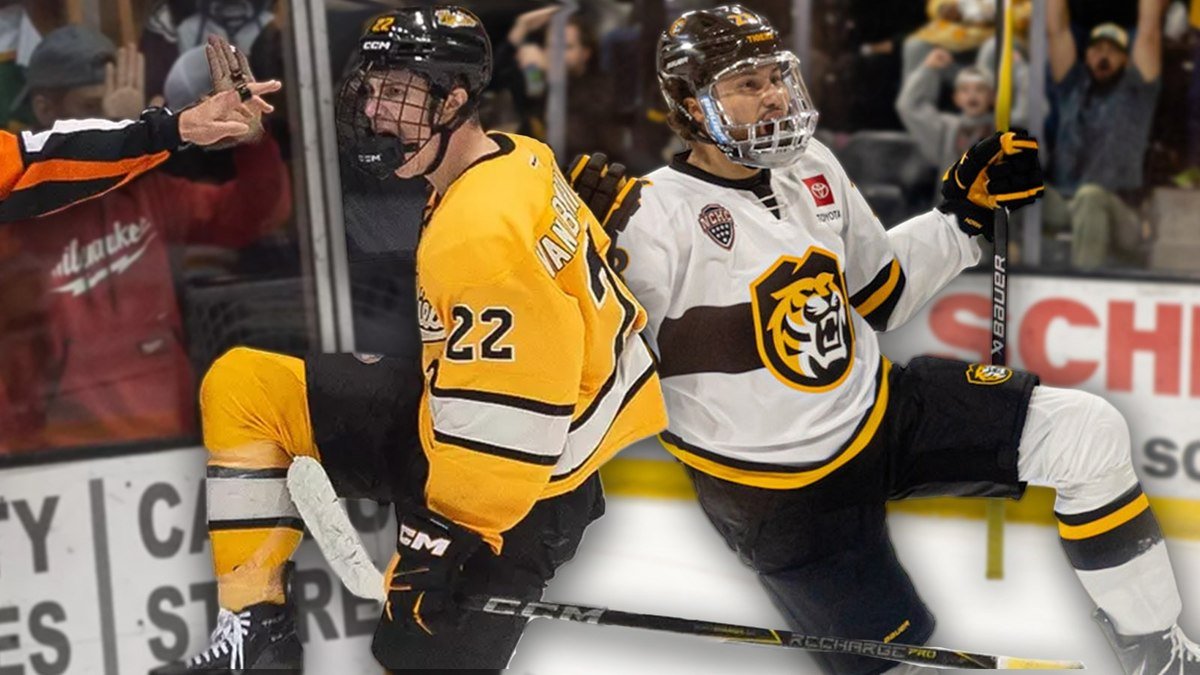
A winger and a center together make a forward line, which is why the three are usually spoken of as one unit rather than three jobs. Which specific opponent a winger picks up in the defensive zone varies by system, and coaching pages disagree about it, so treat it as a team instruction rather than a fixed rule.
Defensemen: The Pair That Starts Every Breakout
Defensemen work as a pair and stay as a pair, changing together. Their zone runs from their own blue line to the goalmouth, and the work splits into two halves: stopping the play, then starting one. Killing an entry at the blue line, boxing out the front of the net and retrieving dumped pucks is the first half. The first pass out of the zone is the second, and it is the one that decides whether a team spends the next thirty seconds attacking or defending.
The rink gives them the dimensions to work with. Rule 1.2 sets the surface at 200 feet by 85 feet with corners on a 28-foot radius, and Rule 1.5 puts the blue lines 64 feet from the goal lines, with each goal line 11 feet off the end boards. That strip behind the net is where a defenseman and a forechecker meet on almost every dump-in. For how that compares with the venues themselves, see our list of the biggest stadiums in the world.
Goaltender: The Only Position the Rules Limit by Area
The goaltender is the one position the rulebook treats as a distinct player rather than a coaching label. Rule 5.3 allows one goalkeeper on the ice at a time and requires a fully equipped substitute at the bench. Rule 76.1 bars the goalkeeper from taking part in a faceoff. The crease is a semicircle of six-foot radius under Rule 1.7.
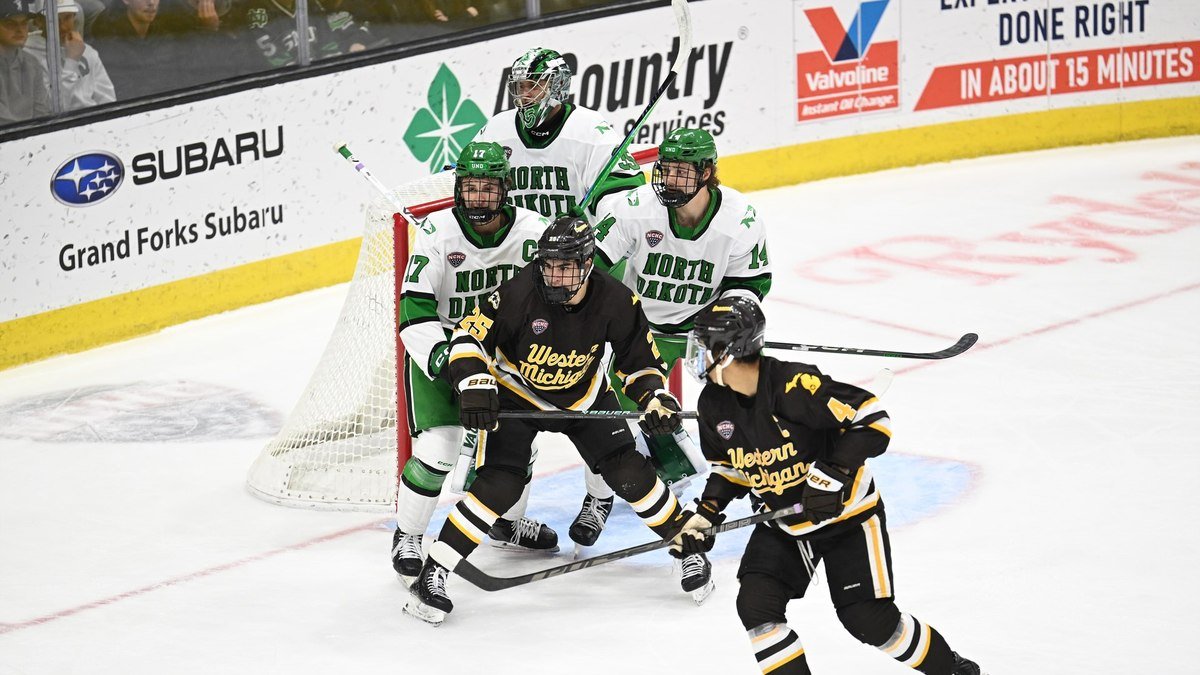
Behind the net the goalie is boxed in. Rule 27.8 defines a restricted area marked by two lines running from near the posts out to the end boards, where they sit 28 feet apart, and the goalkeeper may not play the puck outside it behind the goal line. The penalty is a minor for delay of game, and there is no penalty if the goalie keeps a skate in contact with the crease.
Equipment is capped too, which no skater position has to think about. Leg pads may not exceed 11 inches in width on the leg under Rule 11.2, and the catching glove is limited to a 45-inch perimeter under Rule 11.6. A skater stick runs to 63 inches from heel to the end of the shaft with a blade up to 12.5 inches, under Rule 10.1.
Lines and Pairs: How 18 Skaters Fill the Six Slots
Rule 5.1 puts 20 players under contract in uniform for a game, made up of 18 skaters and two goalkeepers. A standard night divides those 18 into four forward lines of three and three defensive pairs of two.
- Top six forwards: the first two lines, who take the most ice time
- Third line: usually the checking line, sent out against the opponent’s best
- Fourth line: the energy line, roughly half the minutes of the top two
- Three defensive pairs: a left and a right defenseman who change together
The split in workload is wide. Writing for the Seattle Kraken, NHL.com put a team’s leading scorers at 30 to 40 shifts a game and its top players above 25 minutes of ice time, while the fourth line spells the stars for six to 10 minutes. The per-player ice time behind that gap is the raw material for stats like plus-minus, which only makes sense once you know who was on the ice.
Changing on the Fly and the Five-Foot Rule
Hockey is the only one of the major team sports where players substitute while the puck is live. Rule 74.1 makes a change legal at any time during play provided the player leaving the ice is within five feet of his bench and out of the play. Break that and the team takes a bench minor for too many men.
Shifts are short because of it. NHL.com’s Kraken coverage describes an ideal shift of 30 to 45 seconds, with forwards usually shorter than defensemen, and notes that coaches change in groups: three forwards together, then a defensive pair. That is why the positions are organised into lines in the first place.
Overtime strips the alignment back. Under Rule 84 each side plays three skaters and a goalkeeper, so a coach has to choose which three of the five skating positions to keep on the ice.
What the Rulebook Fixes and What Coaches Invent
Reading the NHL Official Rules makes the split obvious. The book names the goalkeeper, the centers at a faceoff and the number of skaters in overtime. It does not contain a list of the six positions, it does not say a winger must stay on one side, and it does not define a forward line.
So the positions sit in two layers. Underneath is the rink and a short list of hard rules, the same for everyone: 200 by 85 feet, nine faceoff spots under Rule 1.9, a six-foot crease, one goalie. On top is the system, which changes from team to team and season to season. The same two-layer pattern shows up in other sports: see how it works in football positions and in soccer positions, where the rules fix the headcount and the coaches do the rest.
If you want the dimensions that frame all of it, the rink itself is worth a look before the next game you watch.
Frequently Asked Questions
How many hockey positions are there?
Six are on the ice at even strength: center, left wing, right wing, two defensemen and a goaltender. Only the goaltender is treated as a separate kind of player by the rulebook. The rest are coaching roles built on five skaters.
Which hockey position is the hardest to play?
Goaltender is the specialist job, with its own equipment rules and its own restricted area behind the net. Among skaters the center covers the most ice, taking the faceoffs, supporting both wingers and backchecking first. Which is hardest is an argument, not a measurement.
Can a goalie leave the crease?
Yes. The crease is a six-foot semicircle, not a boundary. The limit is behind the goal line, where Rule 27.8 keeps the goalie inside a marked area 28 feet wide at the end boards. Playing the puck outside it there is a minor penalty for delay of game.
Why do centers take faceoffs?
Convention. Rule 76.4 is written for “Centers” and describes the procedure, but gives no reason, and an official may replace a center in the circle with any teammate already on the ice. Teams use the center because the position starts in the middle anyway.
Related Articles

Get the Fox Bulletin briefing
The stories that matter, in your inbox. No spam, unsubscribe anytime.
Newsletter signup will be available soon.
Related stories
Basketball Court Dimensions: Every Level Compared
A full-size court is 94 by 50 feet in the NBA and 28 by 15 meters under FIBA. Every measurement by level, and the one line that actually changes.
Baseball Positions: All 9 Roles and Their Numbers
Pitcher is 1 and shortstop is 6. The nine baseball positions, the numbering behind every scorecard, and the rule that limits where infielders can set up.

Most Centuries in Cricket: Top 10 Batters Ranked
Sachin Tendulkar has the most centuries in cricket at international level, with 100 across formats. The split is 51 in Tests and 49 in one-day internationals, and he reached the hundredth in…