

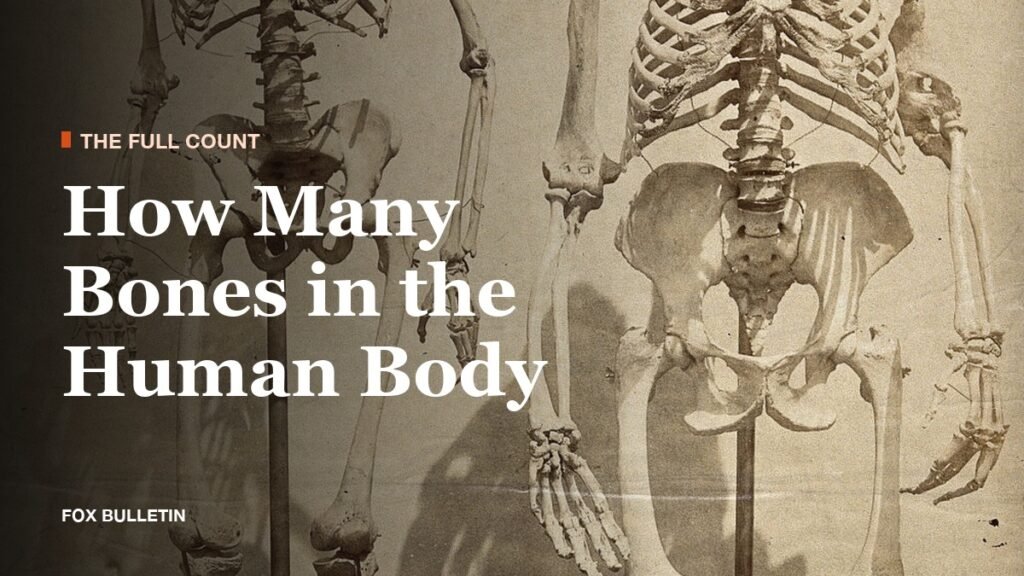
The adult human body has 206 bones, and that is the answer to how many bones in the human body for anyone past their teenage years. The total is built from seven regions: the skull, the middle ear, the hyoid in the neck, the spine, the rib cage, the upper limbs and the lower limbs. Those regions come to 22, 6, 1, 26, 25, 64 and 62, which adds up to 206 with nothing left over.
The counts here follow the National Cancer Institute’s SEER anatomy training modules. The ear bones are counted separately from the 22-bone skull, and the shoulder and hip girdles are counted with the arms and legs. Below is the full chart, then a short section on each region, then the reasons the count is higher in babies and can be higher in some adults.
Human Bones by Region: All 206 Adult Bones in One Chart
| Region | Bones | Notable members |
|---|---|---|
| Skull | 22 | Frontal, parietal, temporal, occipital, sphenoid, ethmoid, maxilla, zygomatic, mandible, vomer |
| Ear ossicles | 6 | Malleus (hammer), incus (anvil) and stapes (stirrup), three in each ear |
| Hyoid | 1 | A single U-shaped bone in the neck |
| Vertebral column | 26 | 7 cervical, 12 thoracic and 5 lumbar vertebrae, plus the sacrum and coccyx |
| Thoracic cage | 25 | 12 pairs of ribs (24) and the sternum |
| Upper limbs (with shoulder girdles) | 64 | Clavicle, scapula, humerus, radius, ulna, carpals, metacarpals, finger bones |
| Lower limbs (with hip bones) | 62 | Hip bone, femur, patella, tibia, fibula, tarsals, metatarsals, toe bones |
| Total | 206 | The adult skeleton |
The same 206 bones can be split into two divisions. The axial skeleton is the skull, ear bones, hyoid, spine and rib cage, and the appendicular skeleton is everything that hangs from it.
| Division | Regions included | Bones |
|---|---|---|
| Axial skeleton | Skull 22, ear ossicles 6, hyoid 1, spine 26, thoracic cage 25 | 80 |
| Appendicular skeleton | Upper limbs 64, lower limbs 62 | 126 |
| Total | All seven regions | 206 |
Because the girdles are counted with the limbs, an upper limb in this chart is 32 bones on each side: 30 in the arm and hand plus the clavicle and scapula. A lower limb is 31 on each side: 30 in the leg and foot plus one hip bone.
How Many Bones in the Human Body, Region by Region
Each region below gets the same treatment: its count, what it is made of and the detail that explains the number. They run from the head down the body, the way an anatomy textbook does.

Skull: 22 Bones, and Only One Moves
The adult skull is 22 separate bones. Eight form the cranium: two parietal, two temporal, and one each of frontal, occipital, ethmoid and sphenoid. The other 14 form the face: two maxillae, two zygomatics, two nasal bones, two palatines, two inferior nasal conchae, two lacrimals, one mandible and one vomer.
Twenty-one of the 22 are immobile and joined to one another. The 22nd is the mandible, the lower jaw, which is the only movable bone in the skull. At birth the mandible is a pair of bones, right and left, that fuse during the first year of life into the single adult bone.
Ear Ossicles: 6 Bones Smaller Than a Fingertip
Each middle ear holds three bones, the malleus, the incus and the stapes, so the body has six in total. They are named for a hammer, an anvil and a stirrup. The malleus connects to the eardrum, passes vibrations to the incus, and the incus passes them to the stapes.
The stapes then connects to the oval window of the inner ear. The ossicles are fully formed and ossified at birth, which is why the stapes has been called the most adult bone in an embryo.
Hyoid: 1 Bone in the Neck
The hyoid is a single U-shaped bone in the neck. It belongs to the axial skeleton and is counted on its own, which is why the chart gives it a row of one.
Some textbooks combine it with the ear ossicles and describe seven bones associated with the head in addition to the 22-bone skull. That is the same seven made up here of the hyoid plus six ossicles, so the total does not move.
Vertebral Column: 26 Bones From Neck to Tailbone
The spine has 7 cervical vertebrae in the neck, 12 thoracic vertebrae in the upper and mid back, and 5 lumbar vertebrae in the lower back. That makes 24 individual vertebrae. Below them sit the sacrum and the coccyx, and each of those counts as one bone.
The sacrum is five sacral vertebrae fused into a single bone, and the coccyx is four small coccygeal vertebrae fused together. Those fusions do not start until about age 20 and are not complete until middle age, so the spine is one of the last places where the count settles at its adult figure.
Thoracic Cage: 25 Bones That Frame the Chest
The rib cage is 12 pairs of ribs, 24 bones, and the sternum, which brings it to 25. Each rib anchors at the back to one of the 12 thoracic vertebrae. The sternum is built from three parts: the manubrium at the top, the body in the middle and the xiphoid process at the bottom.
Ribs 1 to 7 are the true ribs, and ribs 8 to 12 are the false ribs. The 24 ribs and the sternum together make up the 25 bones of the chest frame.
Upper Limbs: 64 Bones From Shoulder to Fingertip
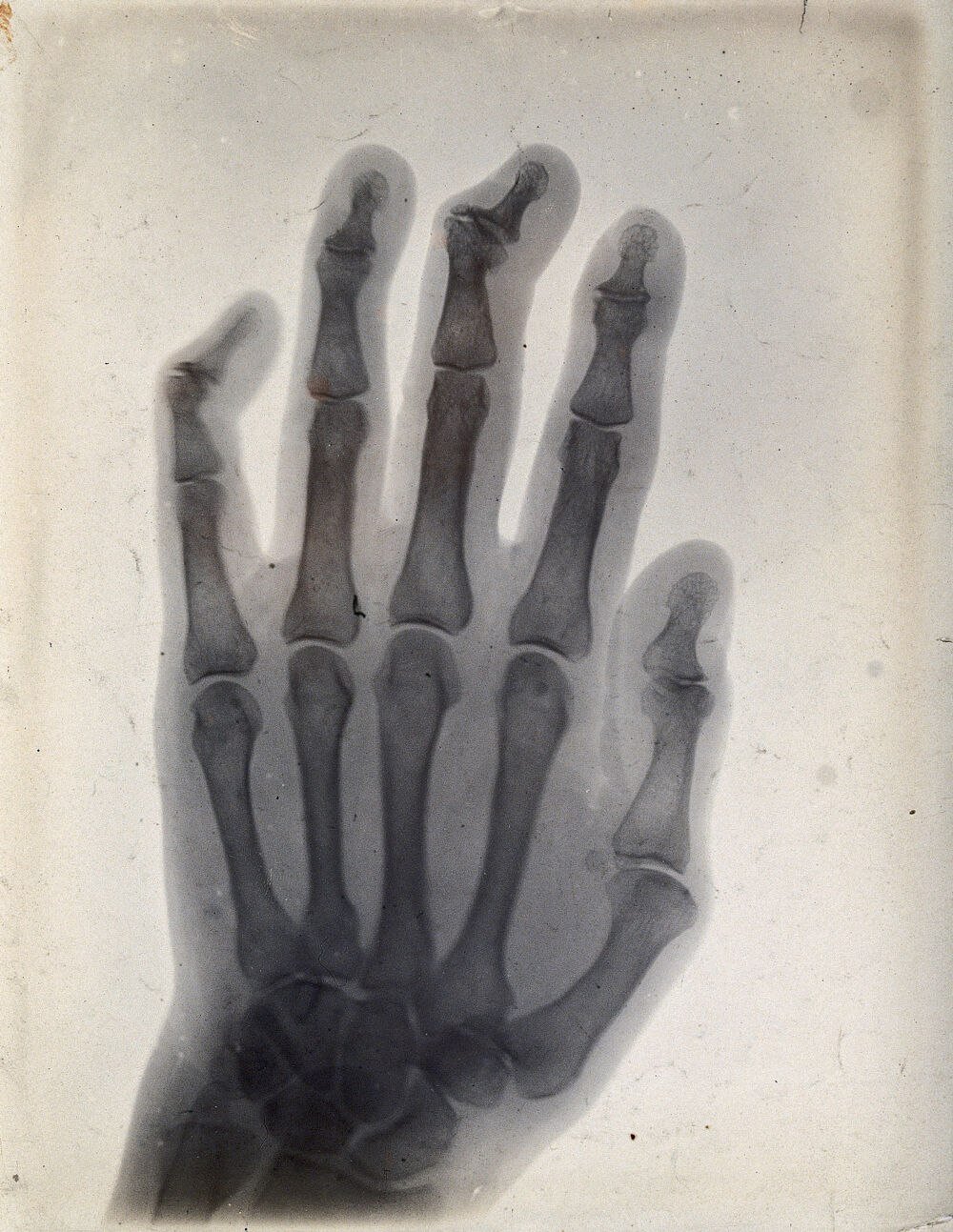
Each shoulder girdle contributes a clavicle and a scapula, so four bones across both sides. The arms add a humerus, a radius and an ulna on each side, which is six more. The wrists hold 16 carpals, 8 per wrist, the palms hold 10 metacarpals, and the fingers and thumbs hold 28 phalanges, 14 per hand.
Add it up and you get 4 + 6 + 16 + 10 + 28 = 64. A single hand has 27 bones, made of 8 carpals, 5 metacarpals and 14 phalanges, so the two hands alone account for 54 bones.
Lower Limbs: 62 Bones From Hip to Toe

The lower limbs start with the two hip bones, which form the pelvic girdle. Each leg adds a femur, a tibia, a fibula and a patella, for eight across both legs. The ankles and feet hold 14 tarsals, 10 metatarsals and 28 toe phalanges, which brings the total to 2 + 8 + 14 + 10 + 28 = 62.
A single foot has 26 bones: 7 tarsals, 5 metatarsals and 14 phalanges. Each hip bone is itself the product of fusion, because the ilium, ischium and pubis begin as three separate bones and join in the late teenage years.
Babies Have Roughly 270 to 300 Bones: What Fuses by Adulthood
A newborn has more bones than an adult, and the published figure is roughly 270 to 300. StatPearls, the clinical reference published through the NIH, puts it at approximately 270. Developmental biology reviews give approximately 300, so the honest answer is a range and not a single number.
The count falls because separate bones join together as a child grows. Adults end up with 206 named bones, and the fusions that bring the total down are spread across about two decades:
- The two halves of the mandible join during the first year.
- The ilium, ischium and pubis fuse into each hip bone in the late teenage years.
- Five sacral vertebrae fuse into the sacrum, and four coccygeal vertebrae fuse into the coccyx, a process that begins around age 20 and runs into middle age.
Adults reach 206 only once those fusions finish, which is why the count is easier to state for adults than for infants. For another body measurement that varies from country to country, see average height by country.
Longest and Smallest Bones: The Femur and the Stapes
The femur, or thigh bone, is the longest, heaviest and strongest bone in the body, and it makes up about a quarter of a person’s height. There is no single official length for it. One study of 45 dry adult skeletons measured a mean maximum femur length of 41.61 cm, with a range of 35.8 to 47.5 cm, and that average belongs to that small sample and not to people in general.
The smallest bone is the stapes in the middle ear. Its height is about 3 mm, with a footplate of roughly 2.5 by 1.4 mm, and it weighs between 2.2 and 4 mg. A CT study of 226 ears measured a mean stapes height of 3.26 mm, which is why “about 3 mm” is the safe way to state it. The largest sesamoid, a bone that grows inside a tendon, is the kneecap, or patella.
Why Some Adults Have More Than 206 Bones
The figure of 206 is the count for a typical skeleton, and it includes the two patellae but no other sesamoids. Small bones embedded in tendons usually sit near the joints of the hand, foot and knee. Their number and position vary from person to person, and the patellae are the only sesamoids found in everyone. Up to 42 sesamoids have been reported in a single individual.
Other variants add bones that the standard count leaves out. The percentages below come from specific studies of specific groups, so they describe those groups and should not be read as national rates:
- Accessory foot bones in a collection of 486 Portuguese skeletons: os trigonum in 9.9 percent (48 of 485), calcaneus secundarium in 6.0 percent (29 of 486) and os sustentaculum in 0.4 percent (2 of 486).
- Cervical ribs, extra ribs that grow from the lowest neck vertebra, appeared in 1.1 percent of healthy individuals in a meta-analysis of 141 studies covering 77,924 people.
- Wormian bones, small irregular bones in the seams of the skull, were found in 190 of 200 adult dry skulls of Indian origin, and how often they occur differs between populations.
None of these are counted in the 206, which is why a person can have 207 or more bones and still have an ordinary skeleton. The same human variation shows up in other body statistics, such as the share of people with each blood group in the rarest blood type.
What the 206 Counts, and What It Leaves Out
The 206 is a count of named bones in a typical adult skeleton, and the SEER modules and the OpenStax textbook agree on that total. The way it is divided depends on a choice of grouping. SEER lists the shoulder and hip girdles as separate groups and counts the skull as 28 by placing the ear ossicles inside it, while OpenStax keeps the skull at 22 and adds the hyoid and ossicles as seven extra head bones. The chart above uses the 22-bone skull and folds the girdles into the limbs, and every route arrives at 206.
The count excludes cartilage, ligaments and tendons. The skeletal system as a whole, including those tissues, makes up about 20 percent of body weight. It also excludes variants such as sutural bones, accessory foot bones, cervical ribs and extra sesamoids, which belong to individuals and not to the standard anatomy.
Reading a Bone Count Without Getting Tripped Up
Three checks make a quoted bone count easy to place. Each one explains a number that looks different from 206 without being wrong.
- Check the age. A figure of roughly 270 to 300 describes a newborn, and 206 describes an adult.
- Check what the skull includes. A skull of 22 leaves the ear bones in a separate group, and a skull of 28 includes the six ossicles.
- Check whether girdles sit with the limbs. An upper limb of 64 across both sides includes the shoulder girdles, and a figure of 60 leaves them out.
Hands and feet carry more of the total than their size suggests. With 27 bones per hand and 26 per foot, the four together hold 106 of the 206 bones, slightly more than half of the skeleton.
Frequently Asked Questions
How many bones does an adult have?
An adult has 206 named bones. Of those, 80 belong to the axial skeleton and 126 to the appendicular skeleton. The count is for a typical skeleton, so individuals with extra sesamoids or accessory bones can have more.
How many bones does a baby have?
A baby has roughly 270 to 300 bones. The lower end of that range comes from a clinical reference and the upper end from developmental biology reviews, so the safe statement is a range. The number drops toward 206 as bones such as the two halves of the jaw, the three parts of each hip bone and the vertebrae of the sacrum and coccyx fuse.
What are the largest and smallest bones in the human body?
The femur is the longest, heaviest and strongest bone and is about a quarter of a person’s height. The stapes in the middle ear is the smallest, at about 3 mm tall and between 2.2 and 4 mg in weight.
Which part of the body has the most bones?
The hands and feet. Each hand has 27 bones and each foot has 26, so together they hold 106 of the 206, which is slightly more than half of the adult skeleton.
Related Articles

Get the Fox Bulletin briefing
The stories that matter, in your inbox. No spam, unsubscribe anytime.
Newsletter signup will be available soon.
Related stories

Cheese Types: 7 Classes and How to Spot Each One
Every cheese at the counter belongs to one of seven classes: fresh, soft-ripened, semi-soft, semi-hard, hard, blue or processed. This guide shows how to recognise each by feel, rind and age, with milk, moisture limits and ageing times for 16 familiar cheeses.
Periodic Table Groups: All 18 With Names and Members
The periodic table has 18 numbered groups, and six of them carry family names approved by IUPAC. This page lists every group with its members and valence pattern, then walks through the families one at a time. It also explains groups against periods, the lanthanoid and actinoid rows, hydrogen and the older roman numeral labels.
A4 Paper Size: 210 x 297 mm, 8.27 x 11.69 Inches
A4 measures 210 x 297 millimetres, or 8.27 x 11.69 inches. This page gives the size in cm and in pixels at 72, 150 and 300 DPI, compares it with US Letter, and walks the A series from A0 to A6. It also covers which countries use which sheet and what changes when a document crosses between them.