

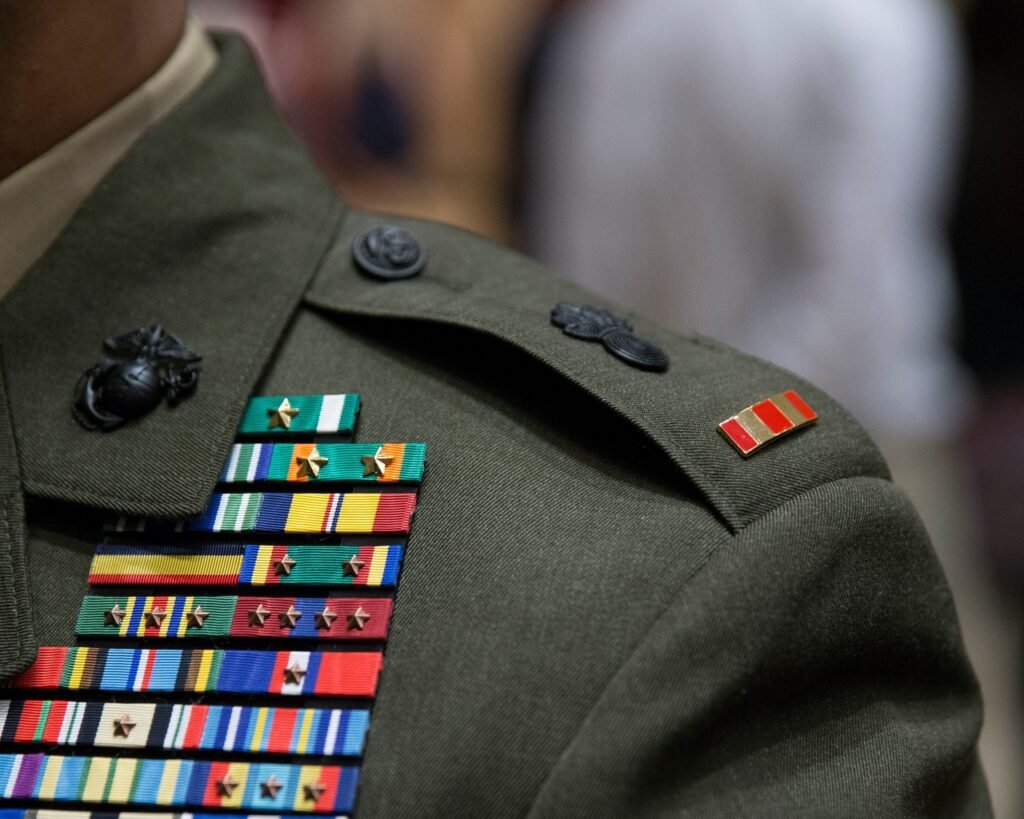
Military ranks across the six United States armed services all sit on one shared spine: the pay grade. Enlisted grades run E-1 to E-9, warrant officers W-1 to W-5 and commissioned officers O-1 to O-10. The grade is the same everywhere, and only the title attached to it changes between services.
That is the key to reading any rank. A Navy Chief Petty Officer and an Air Force Master Sergeant look nothing alike and sound nothing alike, but both are E-7 and both sit at the same point in the structure. Below are the full tables, branch by branch, plus the two titles that trip up almost everyone.
Pay Grade and Rank Are Not the Same Thing
A pay grade is an administrative level shared across the whole Department of War. A rank is the title a particular service gives to that level. One is standardised; the other is tradition.
- E grades are enlisted, from recruits through to the most senior noncommissioned officers who advise commanders.
- W grades are warrant officers, technical specialists who sit above every enlisted grade and below every commissioned one.
- O grades are commissioned officers, who hold a commission from the President and carry command authority.
- One grade can carry several titles inside the same branch. The Army fills E-8 with both Master Sergeant and First Sergeant, which are the same grade in different jobs.
E-1 is the one grade with no insignia at all in most services. An Army private at E-1 wears a bare sleeve, and E-2 is the first grade at which a soldier wears rank. The same logic spells out letters on a radio, where a shared system beats six local ones, as our guide to the military alphabet sets out.
Enlisted Ranks: Army, Marine Corps and Air Force
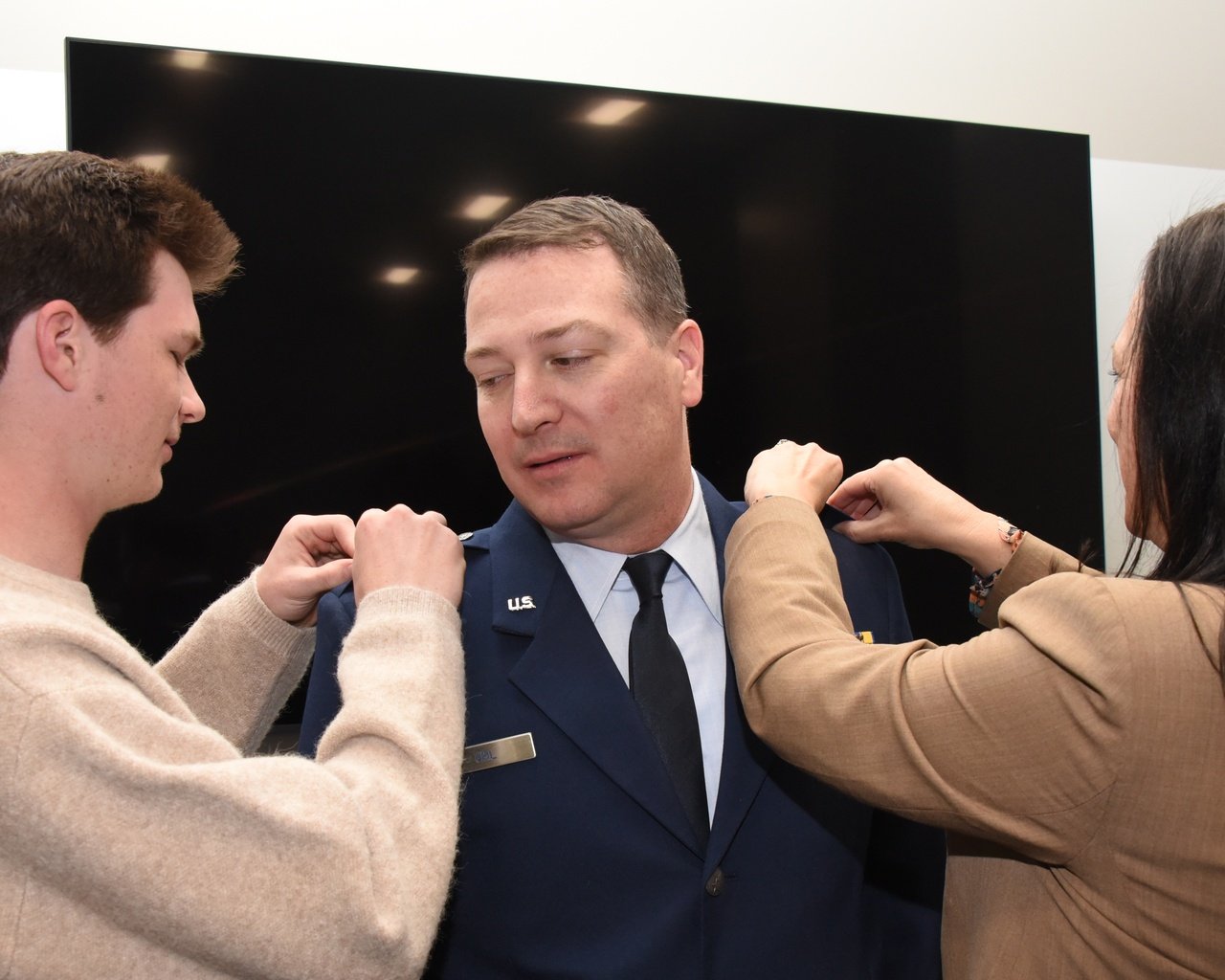
These three services use sergeant titles, but they attach them to different grades. An Air Force Staff Sergeant is E-5 while an Army Staff Sergeant is E-6, so the same two words describe different levels of responsibility.
| Pay grade | Army | Marine Corps | Air Force |
|---|---|---|---|
| E-1 | Private | Private | Airman Basic |
| E-2 | Private Second Class | Private First Class | Airman |
| E-3 | Private First Class | Lance Corporal | Airman First Class |
| E-4 | Specialist or Corporal | Corporal | Senior Airman |
| E-5 | Sergeant | Sergeant | Staff Sergeant |
| E-6 | Staff Sergeant | Staff Sergeant | Technical Sergeant |
| E-7 | Sergeant First Class | Gunnery Sergeant | Master Sergeant |
| E-8 | Master Sergeant or First Sergeant | Master Sergeant or First Sergeant | Senior Master Sergeant |
| E-9 | Sergeant Major or Command Sergeant Major | Master Gunnery Sergeant or Sergeant Major | Chief Master Sergeant |
The Marine Corps is the most compressed of the three at the junior end, reaching Corporal at E-4 where the Army usually fills that grade with Specialist. It also keeps two separate E-9 tracks, one technical and one command, in Master Gunnery Sergeant and Sergeant Major.
Enlisted Ranks: Navy, Coast Guard and Space Force
The Navy and the Coast Guard share an identical enlisted ladder from E-1 to E-9. The Space Force is the newest system of all and renamed its junior grades outright.
| Pay grade | Navy and Coast Guard | Space Force |
|---|---|---|
| E-1 | Seaman Recruit | Specialist 1 |
| E-2 | Seaman Apprentice | Specialist 2 |
| E-3 | Seaman | Specialist 3 |
| E-4 | Petty Officer Third Class | Specialist 4 |
| E-5 | Petty Officer Second Class | Sergeant |
| E-6 | Petty Officer First Class | Technical Sergeant |
| E-7 | Chief Petty Officer | Master Sergeant |
| E-8 | Senior Chief Petty Officer | Senior Master Sergeant |
| E-9 | Master Chief Petty Officer | Chief Master Sergeant |
Space Force titles diverge from the Air Force only at the bottom. E-1 to E-4 are Specialist 1 through Specialist 4, and from E-5 upwards the Space Force uses the same sergeant titles as the Air Force it was carved out of.
The sea services label the junior grades by trade rather than by seniority alone. Seaman Recruit, Seaman Apprentice and Seaman are E-1 to E-3, and Petty Officer Third Class at E-4 is the point at which a sailor becomes a noncommissioned officer.
Warrant Officers Sit Between the Two
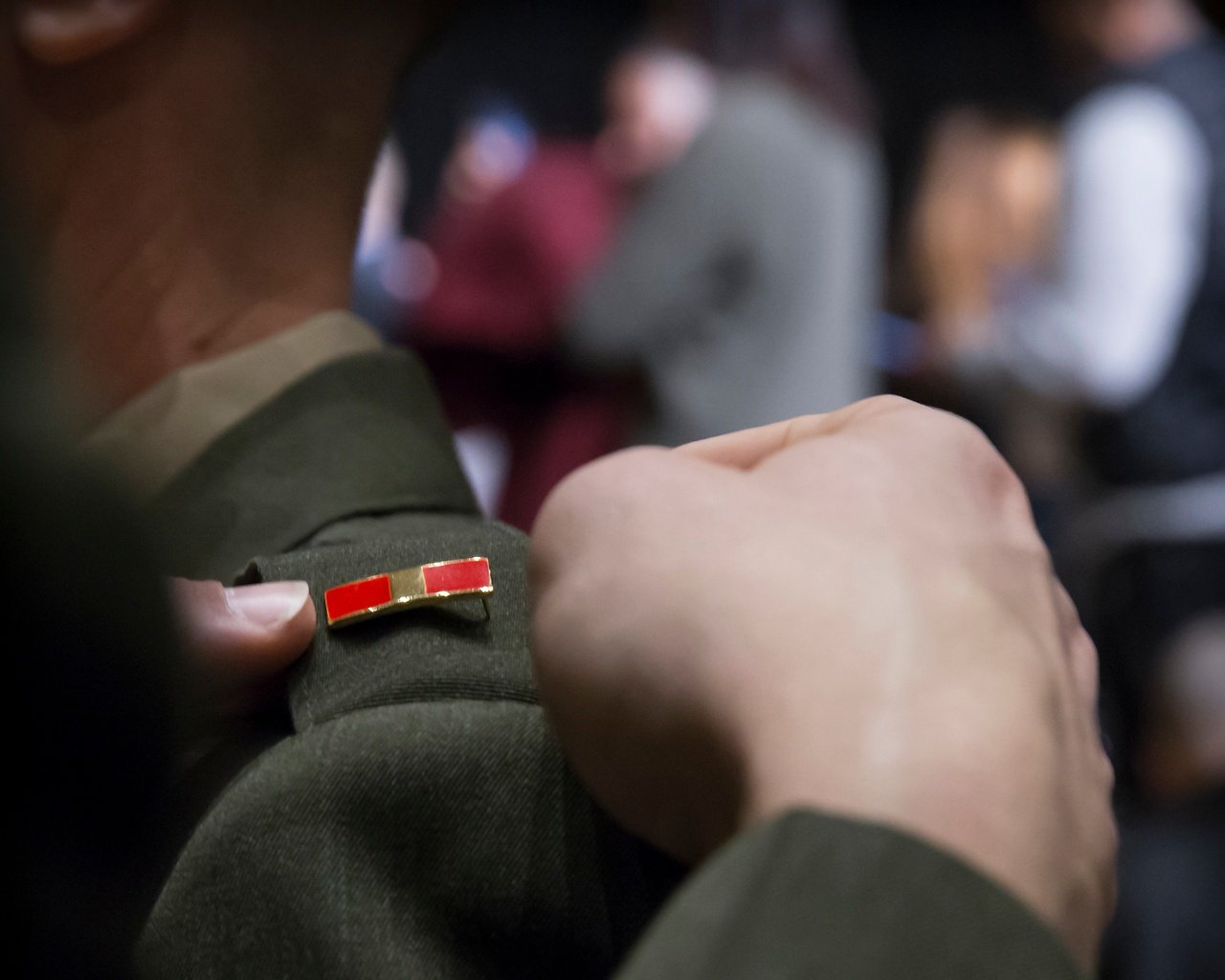
Warrant officers are the smallest group in the structure and the least understood. They are technical experts in one field rather than generalist leaders, and they outrank every enlisted grade while remaining below every commissioned one.
| Grade | Title | What the grade means |
|---|---|---|
| W-1 | Warrant Officer 1 | Appointed by warrant rather than commissioned |
| W-2 | Chief Warrant Officer 2 | Commissioned, and the first grade the Navy uses |
| W-3 | Chief Warrant Officer 3 | Advanced technical and tactical expert |
| W-4 | Chief Warrant Officer 4 | Senior expert supporting brigade level and above |
| W-5 | Chief Warrant Officer 5 | Master-level expert at major command level |
Not every service uses them. The Army and the Marine Corps appoint at W-1, and the Navy’s warrant grades begin at W-2. The Space Force has no warrant officers at all, having decided its enlisted career paths were already technical enough to make them unnecessary.
Their expertise is narrow and deep rather than broad. A warrant officer may spend a whole career on one aircraft, one weapon system or one signals discipline, which is the same reason manual Morse code is still taught in the services long after it left commercial use.
The appointment itself differs from a commission. A Warrant Officer 1 holds a warrant from the service secretary; at W-2 and above, warrant officers are commissioned by the President in the same way other officers are.
Officer Ranks Across Every Branch
Commissioned officers split cleanly into two naming systems. The Army, Marine Corps, Air Force and Space Force share one set of titles; the Navy and Coast Guard share the other.
| Pay grade | Army, Marine Corps, Air Force, Space Force | Navy and Coast Guard |
|---|---|---|
| O-1 | Second Lieutenant | Ensign |
| O-2 | First Lieutenant | Lieutenant Junior Grade |
| O-3 | Captain | Lieutenant |
| O-4 | Major | Lieutenant Commander |
| O-5 | Lieutenant Colonel | Commander |
| O-6 | Colonel | Captain |
| O-7 | Brigadier General | Rear Admiral, Lower Half |
| O-8 | Major General | Rear Admiral |
| O-9 | Lieutenant General | Vice Admiral |
| O-10 | General | Admiral |
The grouping inside that table matters as much as the titles. O-1 to O-3 are company grade officers, O-4 to O-6 are field grade, and O-7 upwards are general or flag officers. The star count follows the grade exactly: one star at O-7, four at O-10.
Why a Captain Outranks a Captain
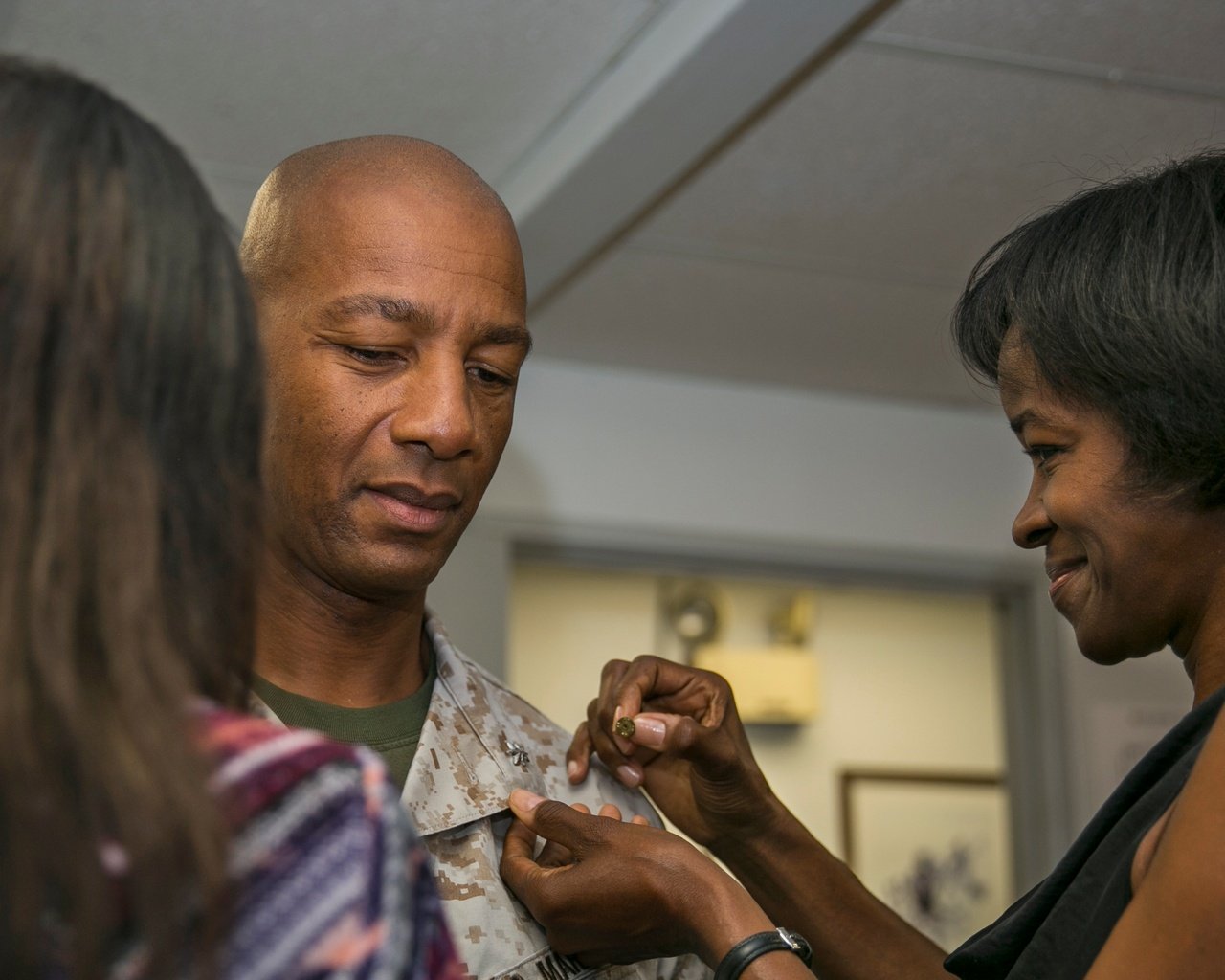
Two titles appear in both naming systems at completely different levels, and they are the source of nearly every mix-up in the table above.
- Captain. In the Army, Marine Corps and Air Force it is O-3, a company commander. In the Navy and Coast Guard it is O-6, three grades higher, equivalent to a Colonel.
- Lieutenant. In the Navy and Coast Guard it is O-3. In the land and air services it is O-1 or O-2, the most junior officer grades there are.
- Sergeant. E-5 in the Army, Marine Corps and Space Force, but the Air Force has no plain Sergeant at all.
- Master Sergeant. E-8 in the Army and Marine Corps, E-7 in the Air Force and Space Force.
- The pay grade settles it every time. When a title is ambiguous, the grade is not.
There is a third Captain to be aware of. Aboard a ship, the officer in command is addressed as captain whatever their actual rank, because it is the position rather than the grade.
The Five-Star Ranks Nobody Currently Holds
Three services keep a grade above O-10 on the books: General of the Army, General of the Air Force and Fleet Admiral. All three are five-star ranks, and none is currently held by anyone.
The grade exists for a specific wartime problem. It allows an American commander to be equal to or senior to allied officers commanding their own national armies in a combined command, which ordinary four-star rank could not always guarantee.
Five officers have held the 1944 version of General of the Army: George C. Marshall, Douglas MacArthur, Dwight D. Eisenhower, Henry H. Arnold and Omar N. Bradley. The last holders served during and immediately after the Second World War, and the rank has not been filled since.
What Each Rank Actually Commands
Rank maps onto unit size, which is the clearest way to understand what a grade means in practice. The Army structure below is the most documented, and the other services follow the same shape under different unit names.
| Unit | Size | Normally led by |
|---|---|---|
| Team | 4 soldiers | Sergeant |
| Squad | 8 to 16 soldiers | Staff Sergeant |
| Platoon | 16 to 44 soldiers | Lieutenant, with a Sergeant First Class |
| Company | 60 to 200 soldiers | Captain, with a First Sergeant |
| Battalion | 300 to 1,000 soldiers | Lieutenant Colonel, with a Command Sergeant Major |
| Brigade | 1,500 to 3,200 soldiers | Colonel, with a Command Sergeant Major |
| Division | 10,000 to 16,000 soldiers | Major General |
| Corps | 20,000 to 40,000 soldiers | Lieutenant General |
Every one of those units pairs an officer with a senior enlisted adviser. A battalion is commanded by a Lieutenant Colonel with a Command Sergeant Major alongside, and a company by a Captain with a First Sergeant. The pairing is the structure, not an optional extra.
Naming shifts by branch within the Army as well. Cavalry units call a company a troop and a battalion a squadron, while artillery units call a company a battery, which is worth knowing before reading a unit designation as a size.
Frequently Asked Questions
What are the military ranks in order?
By pay grade: E-1 to E-9 for enlisted, W-1 to W-5 for warrant officers, then O-1 to O-10 for commissioned officers. A warrant officer outranks every enlisted grade, and an O-1 outranks every warrant officer.
Which military rank is the highest?
O-10, held as General in the Army, Marine Corps, Air Force and Space Force, and as Admiral in the Navy and Coast Guard. Above it sit the five-star wartime grades, which are currently unfilled.
Is a captain in the Navy the same as a captain in the Army?
No. A Navy or Coast Guard captain is O-6, the equivalent of a Colonel. An Army, Marine Corps or Air Force captain is O-3, three grades lower.
Do all branches have warrant officers?
No. The Army and Marine Corps appoint from W-1, the Navy from W-2, and the Space Force has none at all.
Related Articles

Get the Fox Bulletin briefing
The stories that matter, in your inbox. No spam, unsubscribe anytime.
Newsletter signup will be available soon.
Related stories
Cloud Types: All Ten and How to Tell Them Apart
All ten basic cloud types, the three altitude bands they divide into, what each looks like overhead, and which ones actually produce precipitation.

Ring Size Chart: Every US Size in Millimetres
Every US ring size from 3 to 13 with its inside diameter and circumference, two ways to measure at home, and the reasons the same finger measures differently.

Birth Flowers by Month: All 12 and What They Mean
Every month has a birth flower, and most have two. Here are all twelve photographed, the meanings attached to them, and why the pairings were never standardised.