

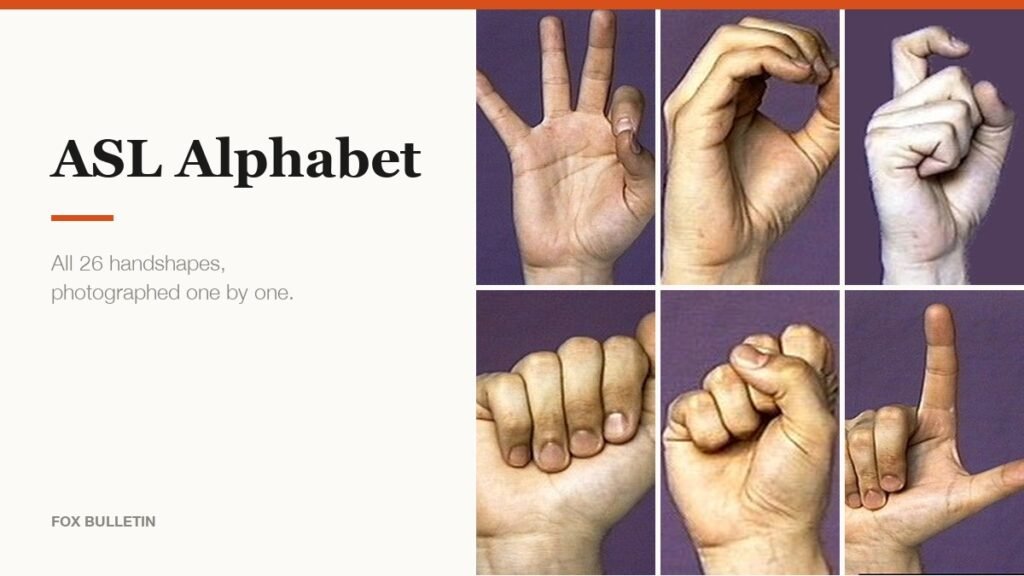
The ASL alphabet is a set of 26 handshapes, one for each letter of the English alphabet, made with a single hand. Signers use it to fingerspell words that have no sign of their own: names of people and places, brands, titles and technical terms. It is the first part of American Sign Language most learners pick up, and the one that stays useful even if you learn nothing else.
Every handshape is photographed below with a plain description of how the fingers sit. Hold your dominant hand at about chest height with the palm facing whoever is reading, and keep it still: in fingerspelling the hand stays in one place and only the fingers change.
The ASL Alphabet, A to Z
Work down the list in order the first time, then go back and drill the groups further down this page. Twenty-four of the twenty-six are a single fixed shape; only J and Z involve movement, and both are drawn in the air rather than held.
A
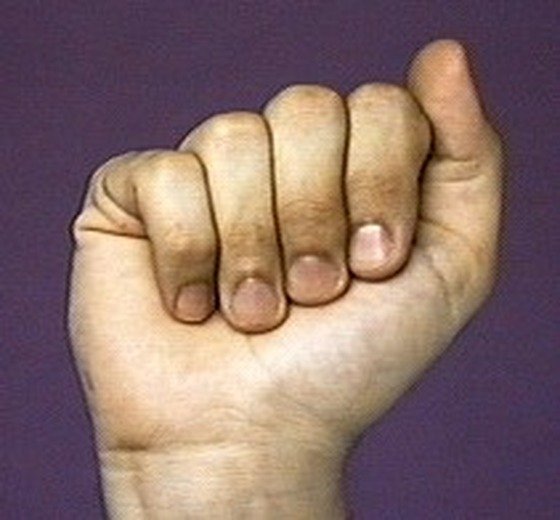
Closed fist with the thumb lying flat against the side of the index finger. Not across the front, which is S.
B
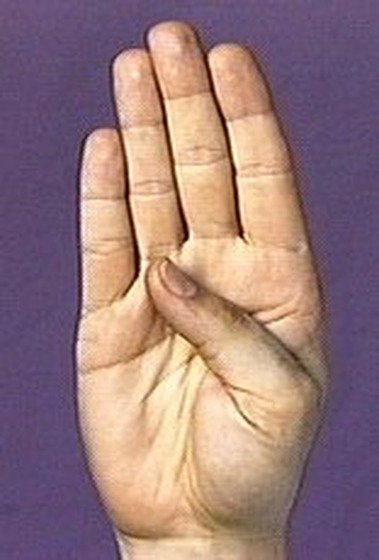
Flat hand, four fingers straight up and held together, thumb folded across the palm.
C
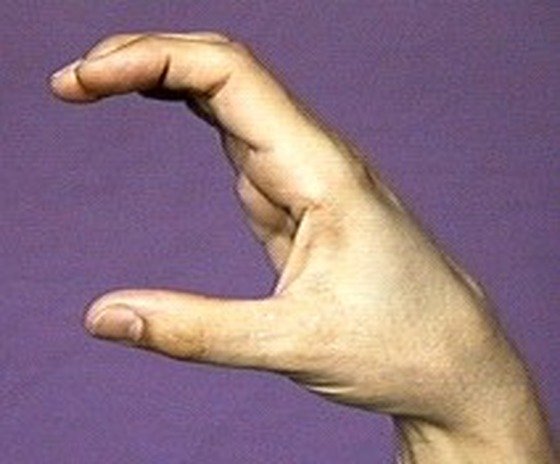
The whole hand curved into the shape of the letter, fingers together and thumb opposite.
D
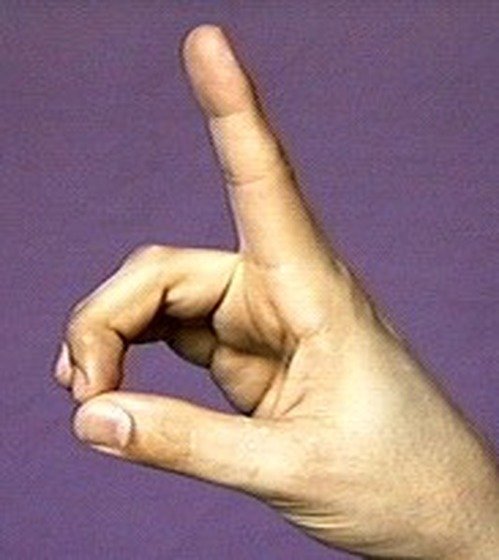
Index finger straight up with the other three fingertips meeting the thumb to make a circle below it.
E
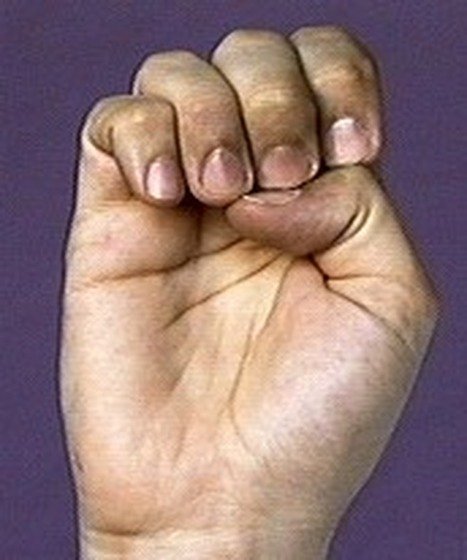
Fingers curled down so the fingertips rest on top of the thumb, which is tucked across the palm.
F
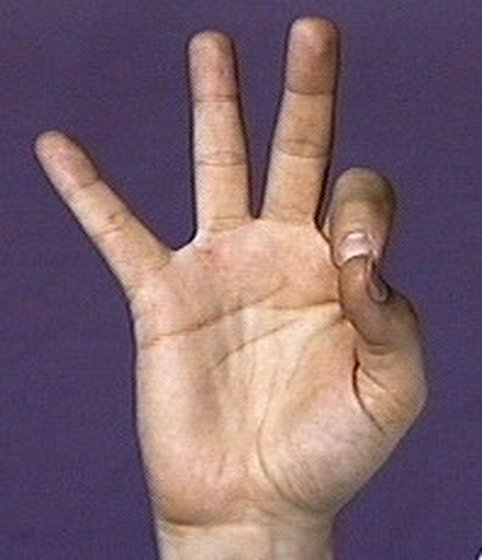
Index finger and thumb touch to make a circle, the other three fingers straight up and spread.
G

Index finger and thumb extended parallel to each other, the hand turned to point sideways.
H

Index and middle fingers extended together, held flat, the hand turned to point sideways.
I
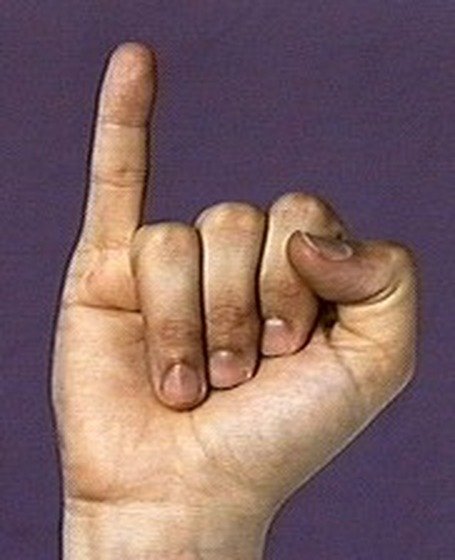
Little finger straight up, the rest of the hand closed into a fist with the thumb across it.
J
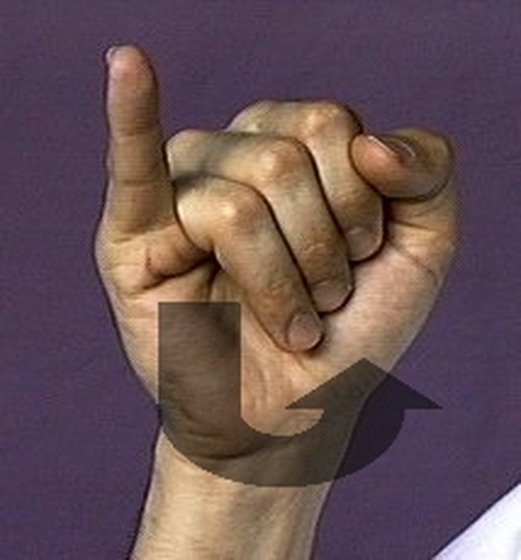
Start in I, then trace the little finger downwards and hook it to your left, drawing the letter.
K
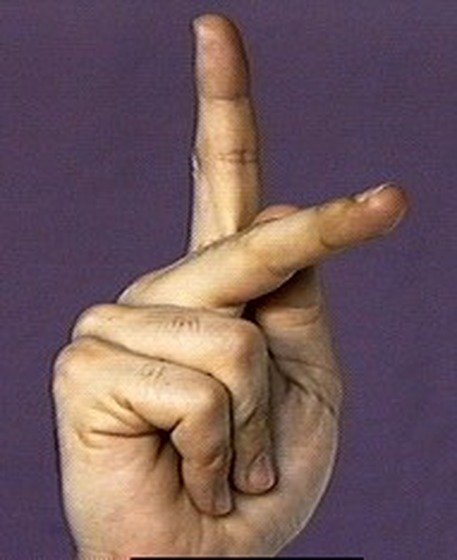
Index finger up, middle finger angled out, thumb pressed into the V between the two.
L
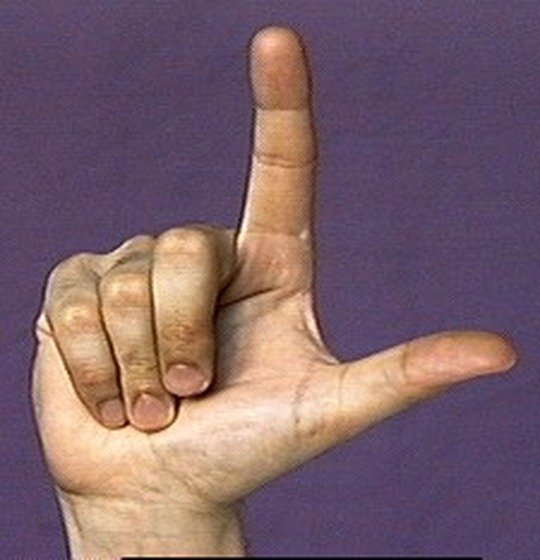
Index finger up and thumb out at a right angle, making the letter shape directly.
M
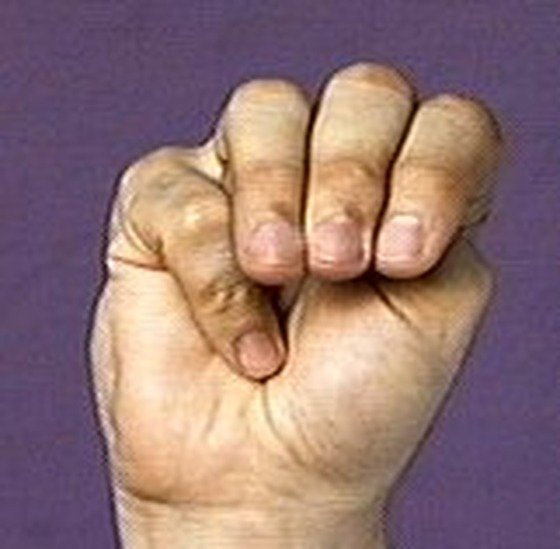
Thumb tucked under the index, middle and ring fingers. Three fingers over the thumb.
N
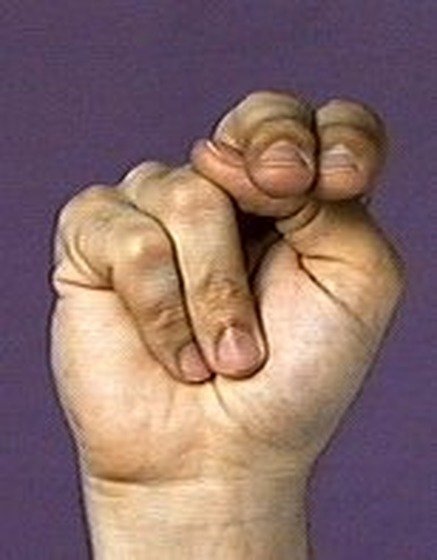
Thumb tucked under the index and middle fingers only. Two fingers over the thumb.
O
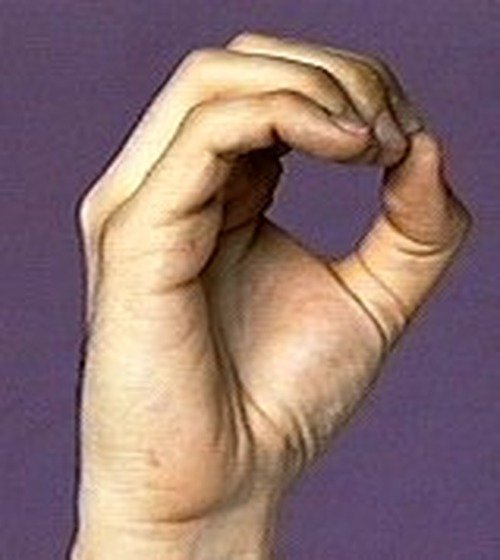
Fingers and thumb curve together until the fingertips meet, closing a round shape.
P
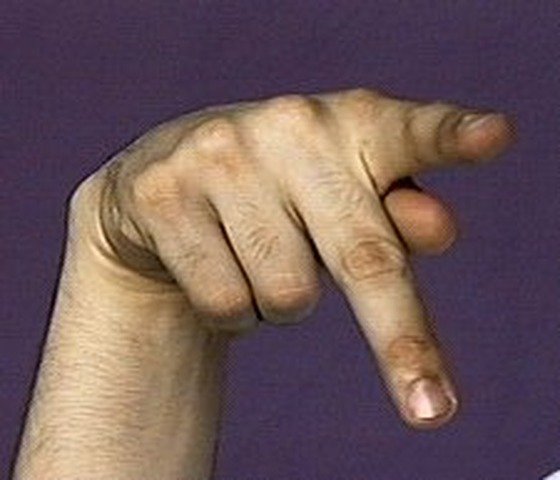
The K handshape rotated so the middle finger points at the floor.
Q

The G handshape rotated so the index finger and thumb point at the floor.
R

Index and middle fingers crossed over each other, the rest of the hand closed.
S
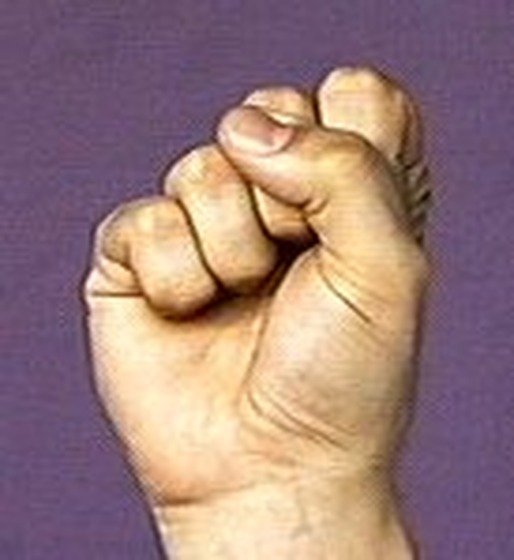
Closed fist with the thumb crossing the front of the folded fingers.
T
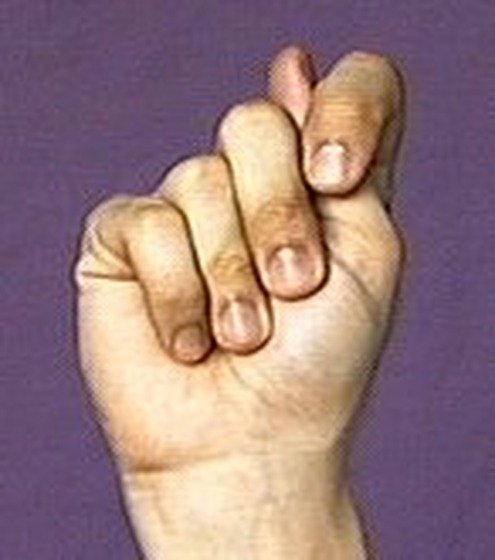
Fist with the thumb pushed up between the index and middle fingers.
U
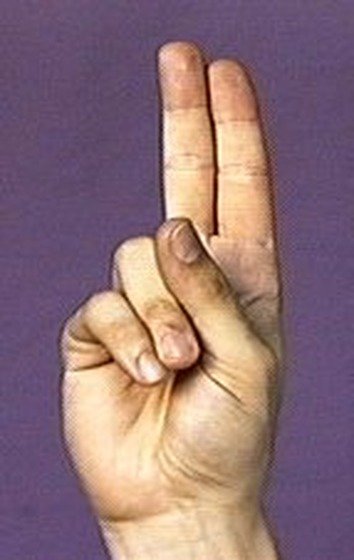
Index and middle fingers straight up and held together, touching along their length.
V
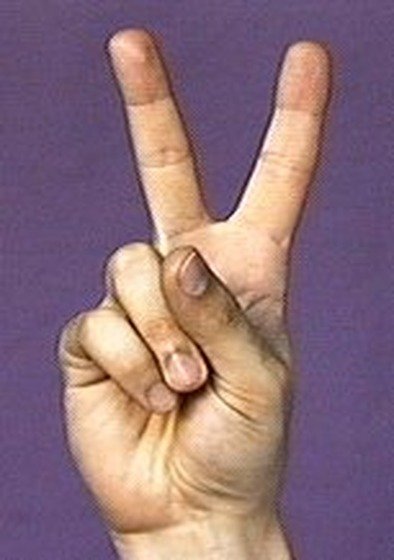
Index and middle fingers straight up and spread apart into a V.
W
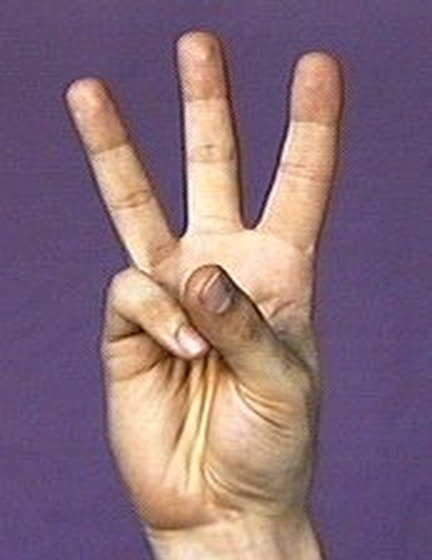
Index, middle and ring fingers up and spread, thumb holding the little finger down.
X

Index finger raised and bent into a hook, the rest of the hand closed.
Y

Thumb and little finger extended, the three middle fingers folded down.
Z
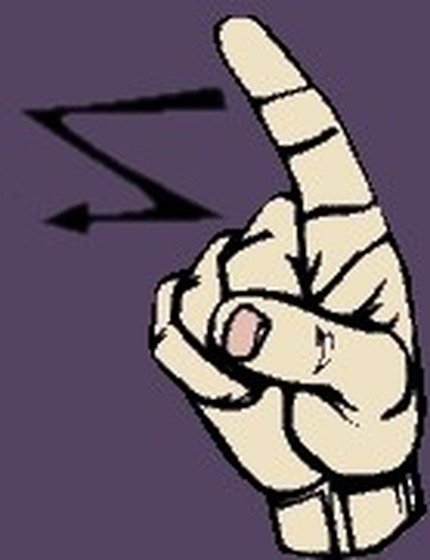
Index finger extended, then drawn through the three strokes of a Z in the air.
J and Z, the Only Letters That Move
Every other handshape is static, which is why those two are the ones a still photograph cannot fully capture. J starts in the I shape and traces the little finger down and to the signer left, following the curve of the letter. Z starts with the index finger extended and draws the three strokes of a Z moving away from the body.
Because they take longer than the other letters, J and Z are where a fast fingerspelled word visibly slows down. That is a useful cue when you are reading rather than signing, since it gives you a moment to catch up with the rest of the word.
Six Letters That Are All a Closed Fist
A, S, T, M, N and E all start from a closed hand, and the thumb is the only thing that separates them. That is why beginners read them as the same letter and why experienced signers make the thumb deliberately visible by turning the hand slightly outward.
- A. Thumb flat along the outside of the index finger.
- S. Thumb crosses the front of the closed fingers.
- T. Thumb pushes up between the index and middle fingers.
- M. Thumb tucked under three fingers.
- N. Thumb tucked under two fingers.
- E. Fingers curl down and rest on top of the thumb.
Letter Pairs That Get Mixed Up
Most reading mistakes come from six pairs. Orientation does the work in half of them, so if a letter looks wrong, check which way the fingers are pointing before deciding you misread the shape.
| Pair | What tells them apart |
|---|---|
| G and Q | Same handshape. G points sideways, Q points down at the floor. |
| K and P | Same handshape. K points up, P points down. |
| U and V | Both are two fingers up. U keeps them touching, V spreads them. |
| D and F | D has one finger up and three down. F has three up and a circle below. |
| I and Y | I is the little finger alone. Y adds the thumb. |
| M and N | Count the fingers over the thumb: three for M, two for N. |
When Signers Actually Fingerspell
Fingerspelling is part of ASL rather than a substitute for it. The National Institute on Deafness and Other Communication Disorders describes it as the part of the language used to spell out English words, with each letter matched to a distinct handshape, used mostly for proper names or to give the English word for something.
- Names of people and places. There is no sign for a stranger’s surname, so it gets spelled, which is why learners practise on common last names first.
- Brands and titles. Company names, film titles and product names are spelled out.
- Words with no established sign. New technical vocabulary arrives spelled before a sign settles on it.
- Lexicalised signs. Some spelled words have worn down into signs of their own, keeping a few letters and dropping the rest.
A regular ASL conversation is not spelled. Fingerspelling is threaded through signing in short bursts, in the way a speaker might spell an unusual name aloud mid-sentence, or the way the military alphabet is used on a radio.
How to Practise Without a Partner
- Learn the fist group first. A, S, T, M, N and E together, so the differences are obvious from the start rather than confusing later.
- Add the pointing pairs. G with Q, K with P, U with V.
- Spell what is in front of you. Street signs, book spines, number plates.
- Spell your own name until it is automatic. It is the first thing anyone asks for.
- Practise reading, not just signing. Reading someone else’s hand is the harder half and the one people skip.
The ASL Alphabet Is Not Universal
There is no single worldwide sign language. British Sign Language is a different language from ASL and its alphabet is two-handed rather than one-handed, so an American signer and a British signer cannot simply fingerspell at each other.
ASL was not invented by any one person or committee. It is thought to have emerged more than 200 years ago from local sign languages mixing with French Sign Language, and the two are now distinct enough that their users cannot understand each other. It is a complete natural language with its own grammar, word order and regional accents, which is worth keeping in mind when comparing it against the most spoken languages in the world.
Nine out of ten children born deaf are born to parents who hear, so for most families ASL is learned rather than inherited, often by the parents alongside the child. That is one reason the alphabet is taught first: it is the part a beginner can use correctly within a week.
Frequently Asked Questions
How long does it take to learn the ASL alphabet?
Most people can form all 26 handshapes within a few days and spell slowly within a week. Reading someone else fingerspelling at conversational speed takes considerably longer, usually months.
Which hand should you use for the ASL alphabet?
Your dominant hand, and the same one every time. Right-handed signers use the right, left-handed signers the left. Swapping mid-word is what makes spelling hard to read.
Is the ASL alphabet the same as British Sign Language?
No. ASL fingerspelling uses one hand and BSL uses two, and the two languages are unrelated. Someone fluent in ASL will not understand BSL fingerspelling without learning it separately.
Do you need facial expressions when fingerspelling?
Facial expression carries grammar in ASL, including how questions are marked, but the alphabet itself is made entirely with the hand. A neutral face while spelling is fine.
Related Articles

Get the Fox Bulletin briefing
The stories that matter, in your inbox. No spam, unsubscribe anytime.
Newsletter signup will be available soon.
Related stories

Best Hair Dryers: 7 Picks for Fine, Thick and Curly Hair
The best hair dryer for you depends on heat control, weight and attachments, not wattage. Seven picks compared for fine, thick, curly and travel use.
Thanksgiving Games: 18 Ideas Timed to Parade and Kickoff
Thanksgiving games for Thursday, November 26, 2026: 18 ideas with players and minutes, timed to the 8:30 a.m. parade, the 20-minute turkey stand and kickoff.
Thanksgiving Trivia: 43 Questions With Answers by Round
Thanksgiving trivia with every answer shown: 43 questions in eight rounds, from the 1621 harvest and Lincoln to the 100th Macy's parade on November 26.