

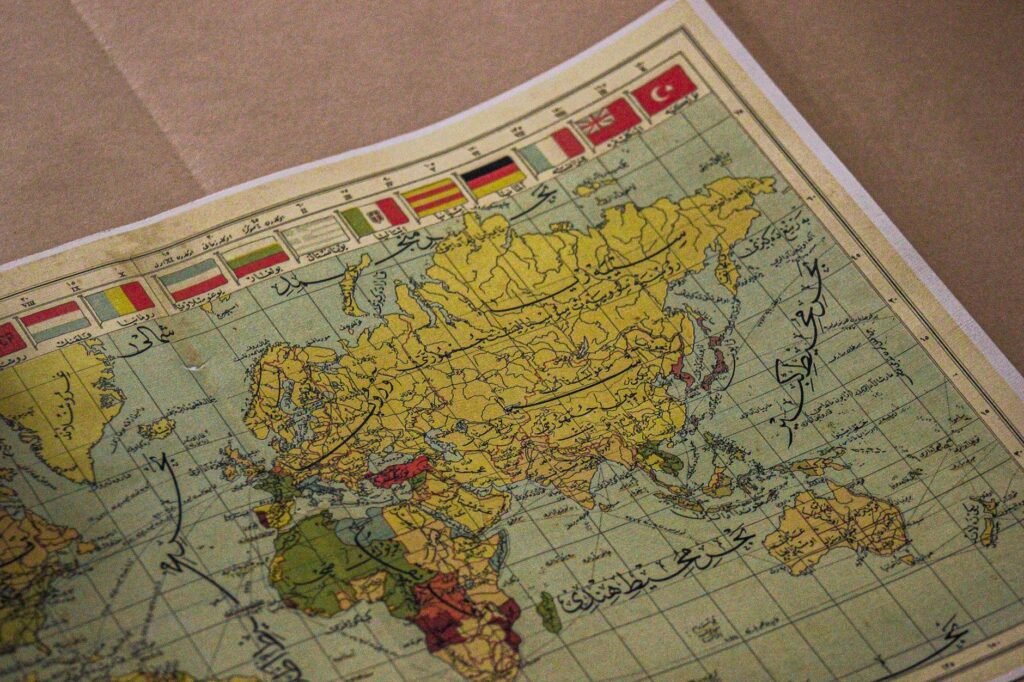
English is the most spoken language in the world, with about 1.49 billion speakers. Only around a quarter of them speak it as a first language, which is the single most revealing fact about this ranking.
Rank the same languages by native speakers instead and English drops well behind Mandarin Chinese, which nearly a billion people speak from birth. Below are the 10 most spoken languages by total speakers, using Ethnologue’s 2026 figures, with the native count shown alongside each.
| Rank | Language | Total Speakers | Native (L1) | Family |
|---|---|---|---|---|
| 1 | English | 1,493 million | 372 million | Indo-European |
| 2 | Mandarin Chinese | 1,183 million | 988 million | Sino-Tibetan |
| 3 | Spanish | 636 million | 519 million | Indo-European |
| 4 | Hindi | 611 million | 347 million | Indo-European |
| 5 | French | 506 million | 110 million | Indo-European |
| 6 | Modern Standard Arabic | 335 million | 0 | Afro-Asiatic |
| 7 | Bengali | 274 million | 234 million | Indo-European |
| 8 | Portuguese | 269 million | 252 million | Indo-European |
| 9 | Indonesian | 255 million | 78 million | Austronesian |
| 10 | Urdu | 246 million | 78 million | Indo-European |
The 10 Most Spoken Languages
1. English: 1,493 Million
Native speakers: 372 million | Family: Indo-European
English leads by more than 300 million speakers, yet only 372 million of them are native. It is the default language of science, aviation, international business, and the internet, which is why so many people learn it as a second language.
No language in history has ever had this many second-language speakers. English owes its position less to the countries where it is native than to its role as the world’s shared working language.
2. Mandarin Chinese: 1,183 Million
Native speakers: 988 million | Family: Sino-Tibetan
Mandarin has the most native speakers of any language on Earth, close to a billion, more than two and a half times the native total for English. Almost everyone who speaks it learned it from birth.
That is the mirror image of English. Mandarin’s strength is concentration inside one enormous country rather than spread across many, which is why it ranks second by total despite leading by native speakers.
3. Spanish: 636 Million
Native speakers: 519 million | Family: Indo-European
Spanish is the second-most native-spoken language in the world, ahead of English on that measure. It is an official language across most of Latin America as well as Spain.
Unlike English or French, most of its speakers use it as a mother tongue, giving it one of the highest native shares of any global language.
4. Hindi: 611 Million
Native speakers: 347 million | Family: Indo-European
Hindi is the most spoken language in India and the fourth most spoken worldwide. Its total is boosted by the many Indians who speak it as a second language alongside a regional first language.
It is closely related to Urdu, tenth on this list, so closely that their spoken forms are largely mutually intelligible despite different scripts and separate national identities.
5. French: 506 Million
Native speakers: 110 million | Family: Indo-European
French has the lowest native share of any true language on this list, with only 110 million of its 506 million speakers using it as a first language. The rest learned it, overwhelmingly in Africa.
Its growth is now driven almost entirely by sub-Saharan Africa, where rising populations in former French colonies are projected to make French one of the fastest-growing major languages this century.
6. Modern Standard Arabic: 335 Million
Native speakers: 0 | Family: Afro-Asiatic
Modern Standard Arabic is the one language here that nobody speaks as a mother tongue. It is the formal, written standard used across the Arab world, learned through schooling rather than at home.
People raised in Arabic-speaking countries grow up speaking regional varieties such as Egyptian or Levantine Arabic, which differ enough to be considered separate spoken languages, and acquire the standard form later. That is why its native count is zero.
7. Bengali: 274 Million
Native speakers: 234 million | Family: Indo-European
Bengali is the official language of Bangladesh and several Indian states, and one of the most native-dominant languages on this list. The vast majority of its speakers grew up with it.
It is spoken by more people than French or Portuguese as a first language, a scale that reflects the enormous population of the Bengal region.
8. Portuguese: 269 Million
Native speakers: 252 million | Family: Indo-European
Portuguese has the highest native share of any language in the top ten, with 252 million of its 269 million speakers using it from birth. Brazil accounts for the overwhelming majority.
It is the most spoken language in the Southern Hemisphere, a legacy of Portuguese colonisation that took the language to Brazil, Angola, and Mozambique.
9. Indonesian: 255 Million
Native speakers: 78 million | Family: Austronesian
Indonesian is the only Austronesian language in the top ten and, like English and French, is spoken far more as a second language than a first. Only 78 million people speak it natively.
It was deliberately promoted as a unifying national language across an archipelago of more than 700 local tongues, which is why so many Indonesians speak it as an additional language rather than their first.
10. Urdu: 246 Million
Native speakers: 78 million | Family: Indo-European
Urdu is the national language of Pakistan and closely related to Hindi, sharing much of its everyday vocabulary and grammar. It completes the top ten with 246 million total speakers.
Like Hindi, its total far exceeds its native base because it serves as a second language for millions who grew up speaking something else.
Total Speakers and Native Speakers Are Different Rankings
Every language here carries two very different numbers, and which one matters depends on the question. Total speakers count everyone who can use the language, native and learned. Native speakers count only those who grew up with it.
The two rankings disagree sharply at the top. English leads by total speakers but sits fifth or lower by native speakers, while Mandarin and Spanish lead the native count. These figures come from Ethnologue‘s 2026 edition, the most widely cited source for global language data, and this list is ordered by total speakers with the native figure shown so the gap is visible.
English Has More Second-Language Speakers Than Any Language Has Ever Had
Subtract native speakers from the total and English has roughly 1.12 billion second-language speakers, a figure no other language approaches. It is spoken as a learned language by more people than speak Mandarin natively.
This is what makes English unusual. Its power comes not from the countries where it is a mother tongue but from its adoption everywhere else as the language of trade, science, and the internet. A language that reaches this far through learning rather than birth is historically unprecedented, and it is why English tops a list its native speakers do not dominate.
One Language on the List Has No Native Speakers at All
Modern Standard Arabic is spoken by 335 million people and is nobody’s first language. It exists as a shared formal standard across a region where the everyday spoken varieties differ enough to be mutually difficult.
An Egyptian and a Moroccan may struggle to understand each other’s dialect but can both read and write the same standard Arabic, learned in school. Ethnologue therefore records its native count as zero, an unusual entry that shows how a language can be enormously important without anyone growing up speaking it. It is the clearest example of the gap between how a language is used and how it is acquired.
Seven of the Ten Belong to One Family
Seven of these languages are Indo-European: English, Spanish, Hindi, French, Bengali, Portuguese, and Urdu. The others are Mandarin from the Sino-Tibetan family, Arabic from Afro-Asiatic, and Indonesian from Austronesian.
That dominance is not because Indo-European languages are inherently more useful. It reflects history, since European colonial expansion carried English, Spanish, French, and Portuguese across the globe, while the sheer population of the Indian subcontinent accounts for Hindi, Bengali, and Urdu. The spread mirrors the reach of past empires more than anything about the languages themselves.
Why You Cannot Add These Numbers Together
It is tempting to sum the totals and claim these 10 languages cover some share of humanity, but that would be wrong. The counts overlap heavily, because a person who speaks English and Hindi is counted once in each.
Someone in Mumbai might speak Hindi natively, Marathi at home, and English at work, appearing in three different rows. Because multilingual people are counted in every language they use, the totals cannot be added into a number of unique people. The figures measure the reach of each language separately, not slices of a single global population, which is a different kind of statistic from the ones in our ranking of the most populous countries, where every person is counted exactly once.
The Map Follows Old Empires and Big Populations
Two forces put a language on this list. One is colonial history, which explains why English, Spanish, French, and Portuguese are spoken far beyond their home countries. The other is population, which explains Mandarin, Hindi, Bengali, and Urdu.
The languages driven by empire tend to have low native shares, since most of their speakers learned them. The languages driven by population tend to have high native shares, concentrated in one country or region. That divide, spread versus concentration, is the real structure beneath the ranking, and it tracks closely with the economic reach measured in our look at the largest economies in the world.
Frequently Asked Questions
What is the most spoken language in the world?
English, with about 1.49 billion total speakers. Only around 372 million speak it as a first language, so most of its speakers learned it as a second language.
Which language has the most native speakers?
Mandarin Chinese, with roughly 988 million native speakers, more than two and a half times as many as English. It ranks second by total speakers because most of its speakers are concentrated in one country.
Why does Modern Standard Arabic have no native speakers?
It is a formal standard learned through schooling, not at home. People in Arabic-speaking countries grow up with regional varieties like Egyptian or Levantine Arabic and acquire the standard form later, so nobody speaks it as a first language.
Can you add these speaker numbers together?
No. The counts overlap because multilingual people are counted in every language they speak, so the totals cannot be summed into a share of the world’s population.
Which language family dominates the list?
Indo-European, with seven of the ten languages. That reflects European colonial expansion and the large populations of the Indian subcontinent rather than anything inherent to the family.
Related Articles

Get the Fox Bulletin briefing
The stories that matter, in your inbox. No spam, unsubscribe anytime.
Newsletter signup will be available soon.
Related stories
Amazon Business Prime: What Each Plan Costs and Who Needs One
Amazon Business Prime runs from free to $10,099 a year across five plans. What each tier costs, how it differs from the free Amazon Business account, and when the shipping alone pays for it.
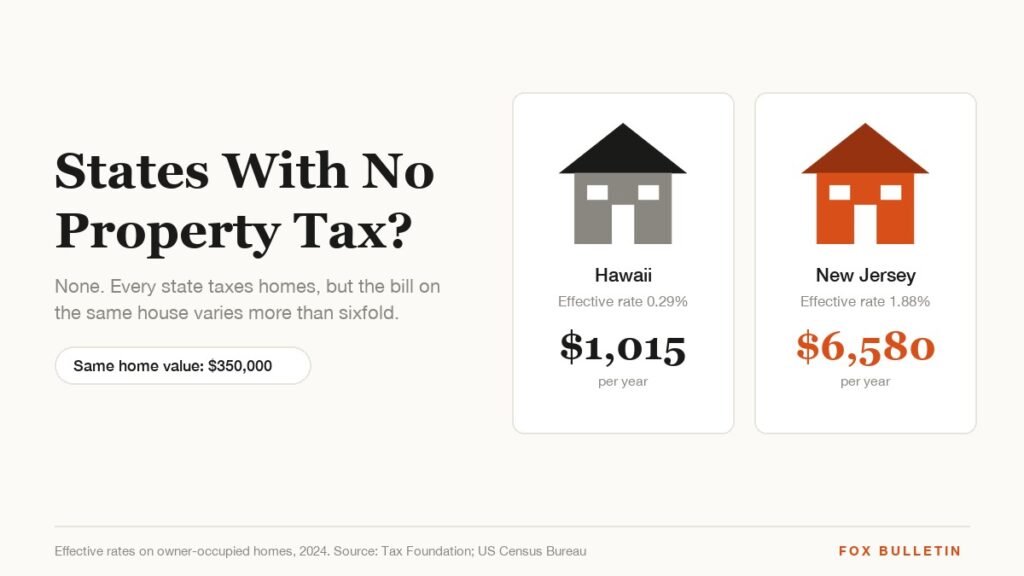
States With No Property Tax: Why None Exist, Plus Property Tax by State
There are no states with no property tax. Effective rates run from 0.29% in Hawaii to 1.88% in New Jersey and Illinois. Every state's rate, and the exemptions that can cut a bill to zero.
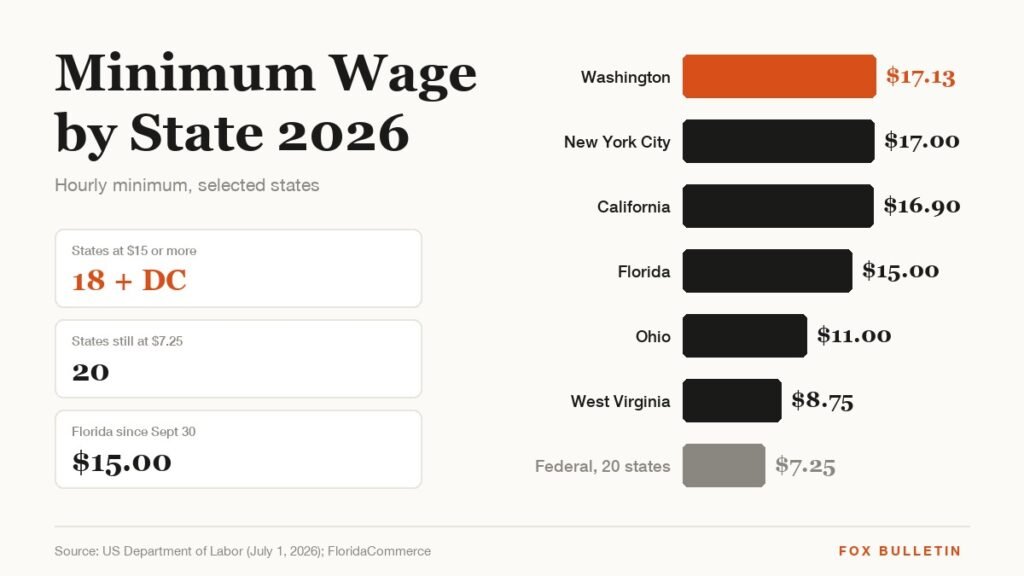
Minimum Wage by State 2026: Every State’s Rate, Plus Tipped Wages
The federal minimum wage is still $7.25, but 30 states and DC set higher rates, from $8.75 in West Virginia to $17.13 in Washington. Every state's rate and tipped wage for 2026.