

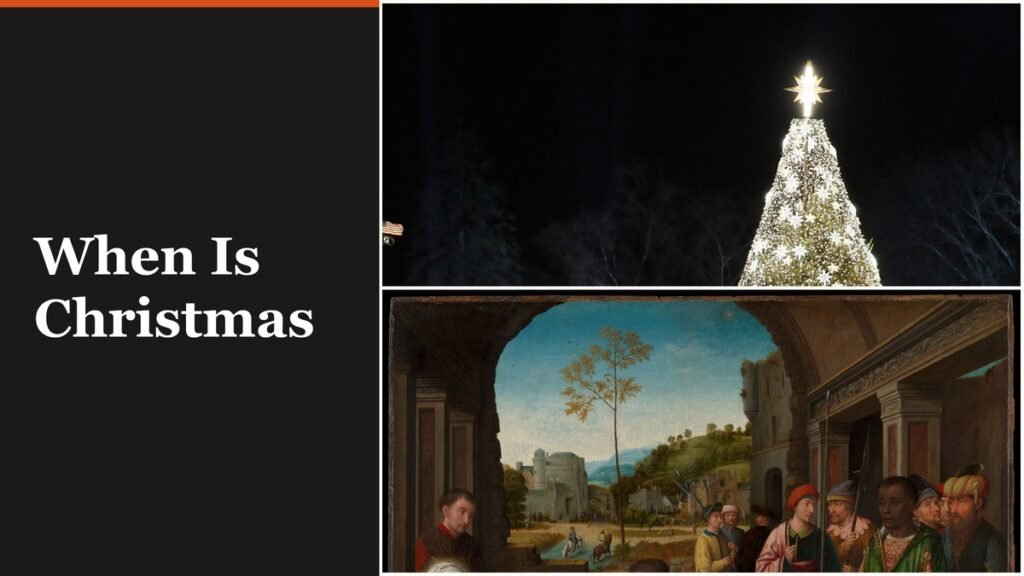
When is Christmas this year? Christmas Day 2026 falls on Friday, December 25, and Christmas Eve is Thursday, December 24. It is the only federal holiday between Thanksgiving and New Year’s Day, and it lands on a weekday, so the day off needs no weekend rule.
The date never changes, but the weekday does, and a weekend Christmas moves the federal day off. The holiday reached the law books in 1870, the reasons for the date are still debated, and Hanukkah, Kwanzaa and Orthodox Christmas cluster around it. Anyone planning a film marathon can start with the best Christmas movies.
When Is Christmas in 2026?
Christmas is on Friday, December 25, 2026. Christmas Eve is Thursday, December 24, and New Year’s Day follows exactly a week after Christmas on Friday, January 1, 2027. The gap from Thanksgiving, Thursday, November 26, to Christmas Day is 29 days. Christmas Day is the last holiday on the federal schedule for 2026.
Thanksgiving is the fourth Thursday of November, and our guide to when Thanksgiving falls shows how that date is set.
When Is Christmas Each Year? Weekday Table Through 2035
Christmas never moves on the calendar, only across the week. A fixed date slips one weekday later each year and two after a leap year, which is why Christmas Day goes from Saturday in 2027 to Monday in 2028. The last column converts December 25 on the old Julian calendar into the Gregorian date, a point covered further down.
| Year | Christmas Eve | Christmas Day | Federal day off | Orthodox Christmas (Julian calendar) |
|---|---|---|---|---|
| 2026 | Thu, Dec 24 | Fri, Dec 25 | Fri, Dec 25 | Thu, Jan 7, 2027 |
| 2027 | Fri, Dec 24 | Sat, Dec 25 | Fri, Dec 24 | Fri, Jan 7, 2028 |
| 2028 | Sun, Dec 24 | Mon, Dec 25 | Mon, Dec 25 | Sun, Jan 7, 2029 |
| 2029 | Mon, Dec 24 | Tue, Dec 25 | Tue, Dec 25 | Mon, Jan 7, 2030 |
| 2030 | Tue, Dec 24 | Wed, Dec 25 | Wed, Dec 25 | Tue, Jan 7, 2031 |
| 2031 | Wed, Dec 24 | Thu, Dec 25 | Thu, Dec 25 | Wed, Jan 7, 2032 |
| 2032 | Fri, Dec 24 | Sat, Dec 25 | Fri, Dec 24 | Fri, Jan 7, 2033 |
| 2033 | Sat, Dec 24 | Sun, Dec 25 | Mon, Dec 26 | Sat, Jan 7, 2034 |
| 2034 | Sun, Dec 24 | Mon, Dec 25 | Mon, Dec 25 | Sun, Jan 7, 2035 |
| 2035 | Mon, Dec 24 | Tue, Dec 25 | Tue, Dec 25 | Mon, Jan 7, 2036 |
Reading the table, three things stand out:
- Christmas Day falls on a Saturday in 2027 and 2032, and on a Sunday in 2033.
- Monday Christmases arrive in 2028 and 2034, which gives federal workers a three-day weekend from Saturday to Monday.
- Three years in a row, 2029 to 2031, place Christmas Day on Tuesday, Wednesday and Thursday, in the middle of the week.
Is Christmas a Federal Holiday? The Weekend Rule
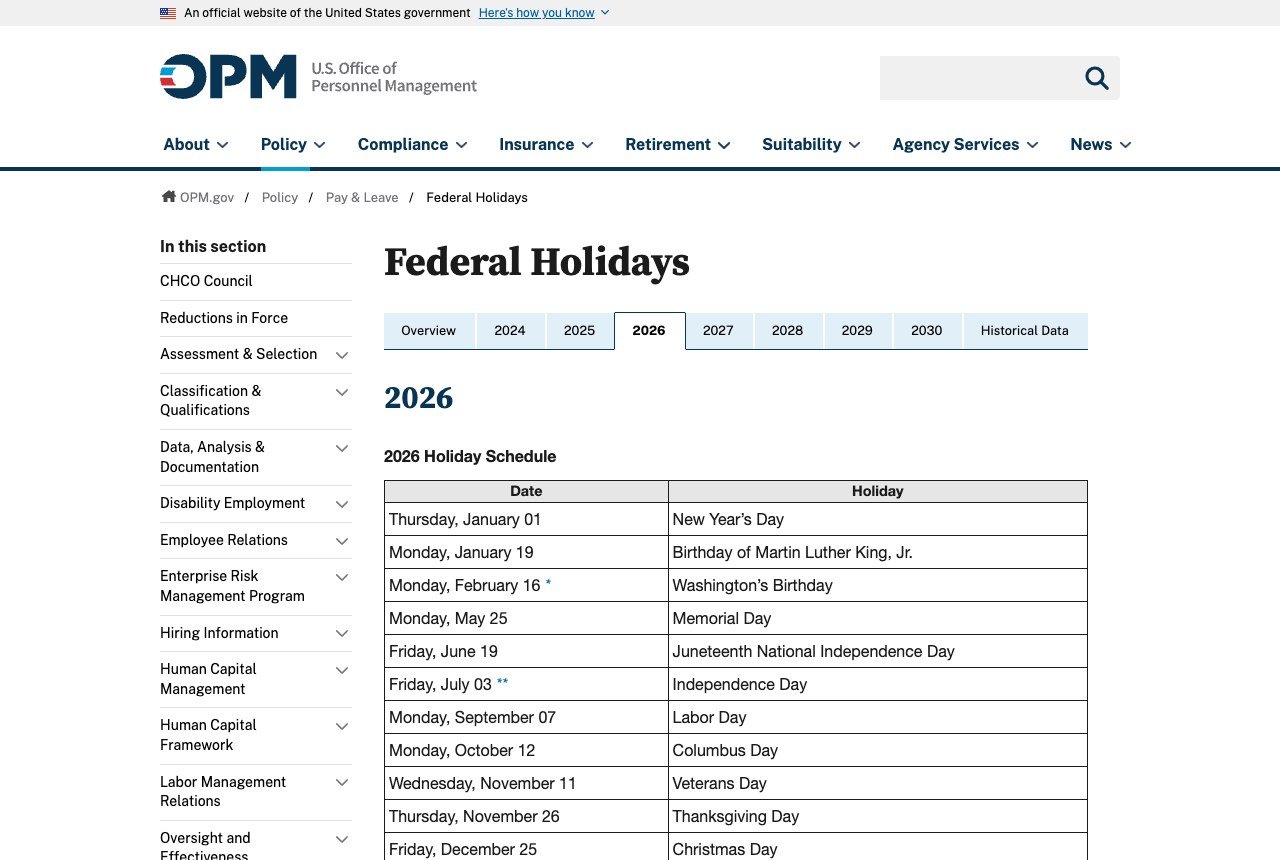
Yes. Christmas Day is one of the public holidays that federal law, 5 U.S.C. 6103, sets for federal employees, and in 2026 it is Friday, December 25. Christmas Eve is not a federal holiday, and neither is Saturday, December 26. The Office of Personnel Management holiday schedule carries the dates for each year through 2030.
When a holiday lands on a weekend, OPM moves it for most federal employees with two rules:
- Saturday holidays are treated as the preceding Friday for pay and leave.
- Sunday holidays are treated as the following Monday.
The first rule applies next year: December 25, 2027 is a Saturday, so the Christmas Day holiday is Friday, December 24, 2027. In 2028, 2029 and 2030 the holiday is the 25th itself, on Monday, Tuesday and Wednesday. By the same rules, 2032 moves to Friday, December 24 and 2033 moves to Monday, December 26.
These rules cover federal employees only. Private employers, banks and state governments set their own schedules. Rhode Island, for example, observes its state holiday on Monday, December 27 in 2027. For 2026, no federal day off has been announced beyond Friday, December 25 itself.
How Christmas Became a Federal Holiday in 1870
Congress passed the first federal holiday law on June 28, 1870. It gave paid time off to federal workers in the District of Columbia on New Year’s Day, Independence Day, Christmas Day and any day the president named for fasting or thanksgiving. Bankers and business men in the city had sent Congress a memorial, and the act appears to have answered it. President Ulysses S. Grant signed it.
The 1870 law did not reach the rest of the country. Federal employees outside Washington did not receive holiday benefits until 1885, when an act of January 6 covered per diem workers on duty at Washington or elsewhere in the country. For the longer story, see the Congressional Research Service report on federal holidays on how the list grew from the first four days.
Why Is Christmas on December 25?
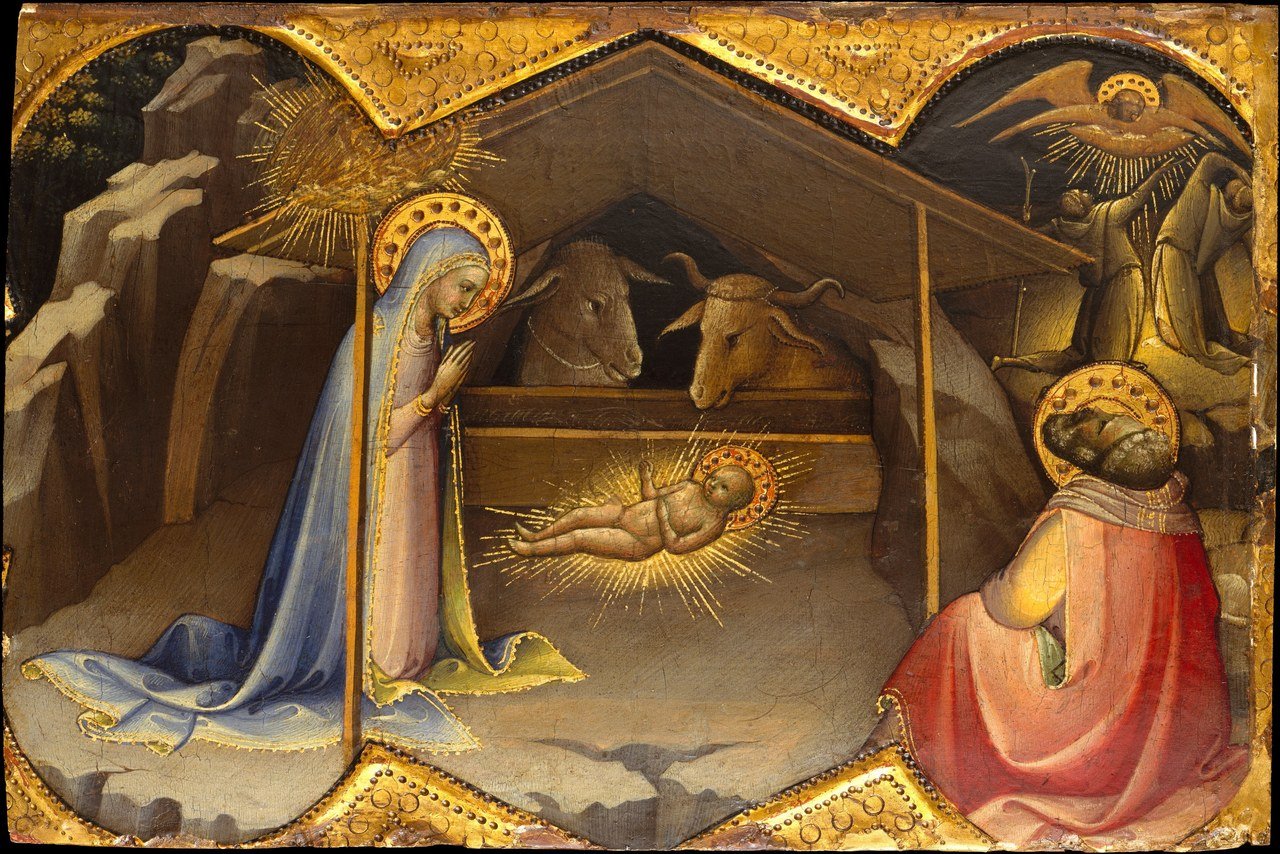
Nobody knows the day Jesus was born, and the New Testament gives no date. There are at least three possible origins for December 25:
- A calculation by the Roman Christian historian Sextus Julius Africanus in the third century, who dated the conception to March 25 and so the birth nine months later.
- The Roman festival of the Unconquered Sun on December 25, which followed Saturnalia and marked the return of longer days.
- A decision by the church in Rome, which began formally celebrating Christmas on December 25 in 336, during the reign of Emperor Constantine.
Historians disagree about how much weight the Roman festival deserves. Some argue the Christian date was chosen to compete with it, while others say the festival cannot be documented before the Christian date. Some scholars place the actual birth in early spring. A longer Britannica explanation of the December date walks through the competing views.
The date did not win overnight. The Eastern Empire favored January 6 for roughly another half-century, and Christmas did not become a major Christian festival until the ninth century. For a long time the birth was marked together with the baptism on January 6.
When Is Orthodox Christmas? Why It Falls on January 7
Orthodox Christmas falls on January 7 for the churches that still use the Julian calendar for worship. They celebrate on December 25 as well, but their December 25 corresponds to January 7 on the Gregorian calendar used elsewhere, a 13-day gap. In 2027 that is Thursday, January 7, the day shown in the last column of the table.
Not every Orthodox church follows this. Only those that keep the Julian calendar fall on January 7, the Armenian Apostolic Church honors the birth on January 6, and the Ethiopian Orthodox Tewahedo Church celebrates on January 7. Pope Gregory XIII mandated the corrected calendar in the Roman Church in 1582, and many Orthodox Christians celebrate on December 25 too. For more on why the Julian dates arrive later, see the Orthodox Church in America reflection on the calendar change.
The Twelve Days of Christmas and Epiphany
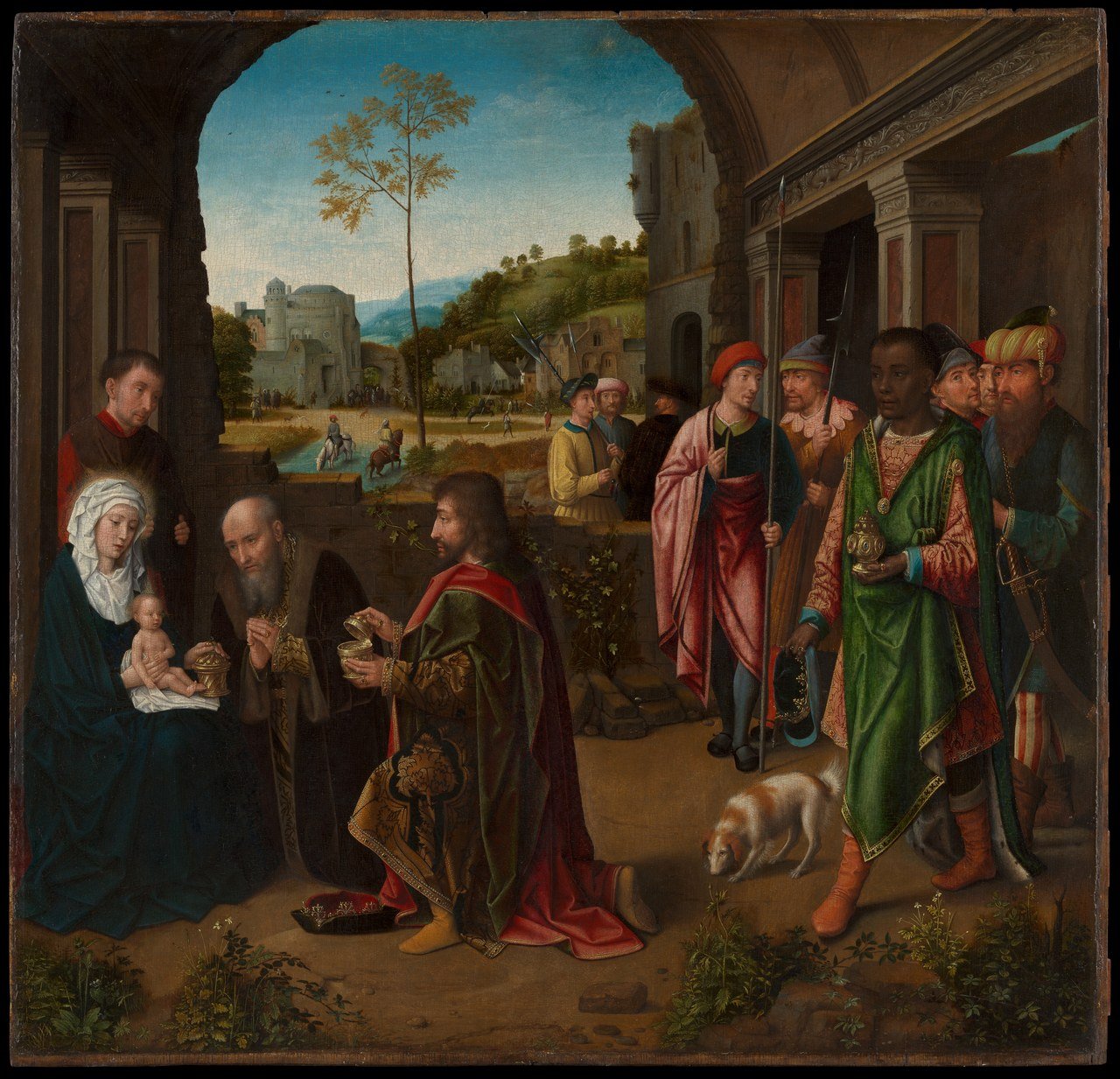
Christmas Day starts a season rather than ending one. The twelve days run between the Nativity on December 25 and Epiphany on January 6, a season that carries the feasts of Stephen on December 26, John the evangelist on December 27 and the Holy Innocents on December 28. The carol itself comes from 16th-century Europe.
Counting differs by tradition. Many run the twelve days from Christmas Day to the eve of Epiphany, while others count December 26 through January 6. Epiphany marks the arrival of the Magi in the Western church, and it falls on Wednesday, January 6 in 2027.
Other Dates Around Christmas 2026
Several holidays and traditions fill the weeks around December 25. In 2026 the calendar looks like this:
- Thursday, December 3: the National Christmas Tree Lighting on the Ellipse in Washington, D.C.
- Friday, December 4 at sundown to nightfall on Saturday, December 12: Hanukkah.
- Sunday, December 6: St. Nicholas Day.
- Saturday, December 26 to Friday, January 1: Kwanzaa, created in 1966 by Dr. Maulana Karenga.
- Friday, January 1, 2027: New Year’s Day, a federal holiday.
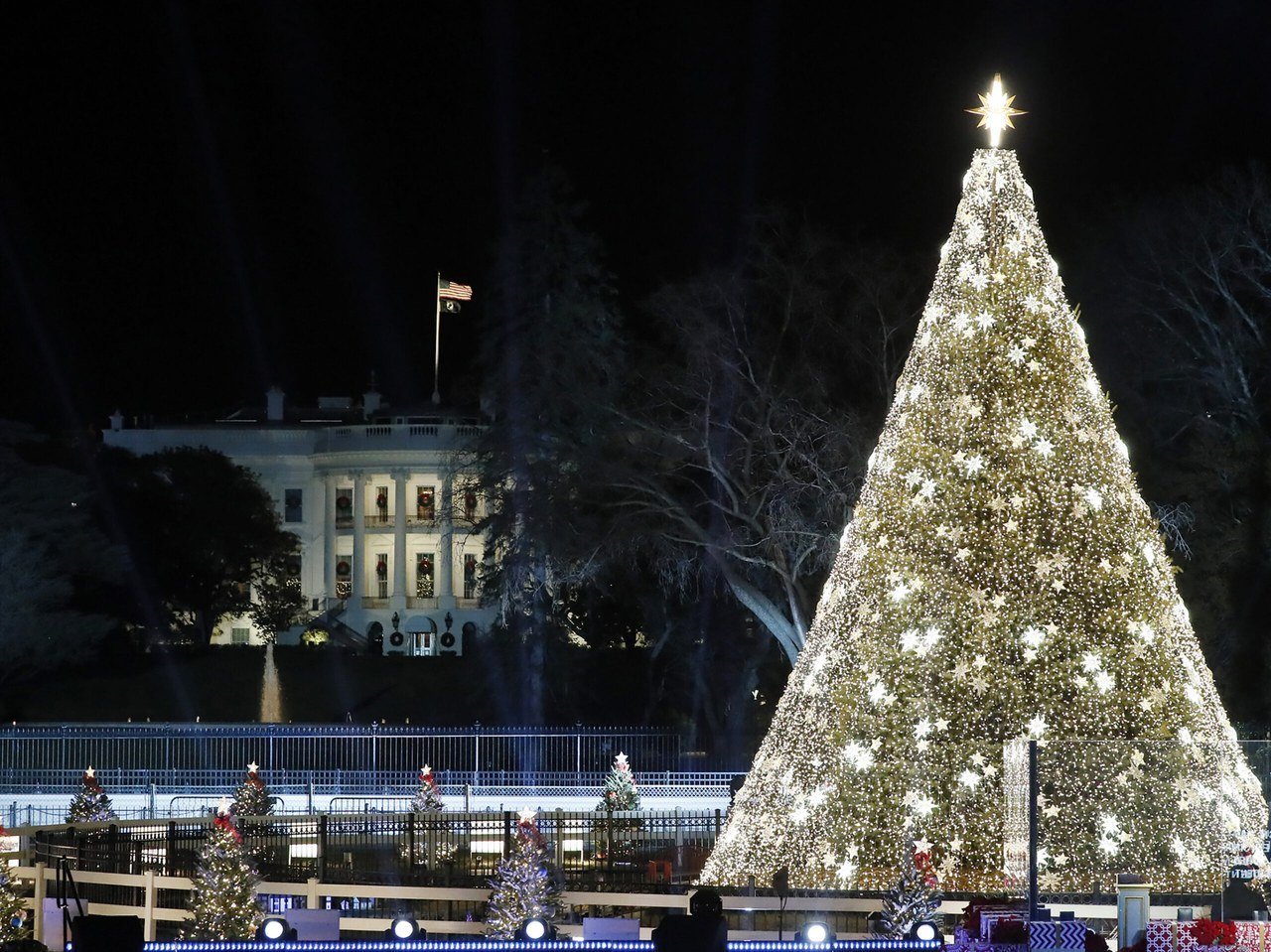
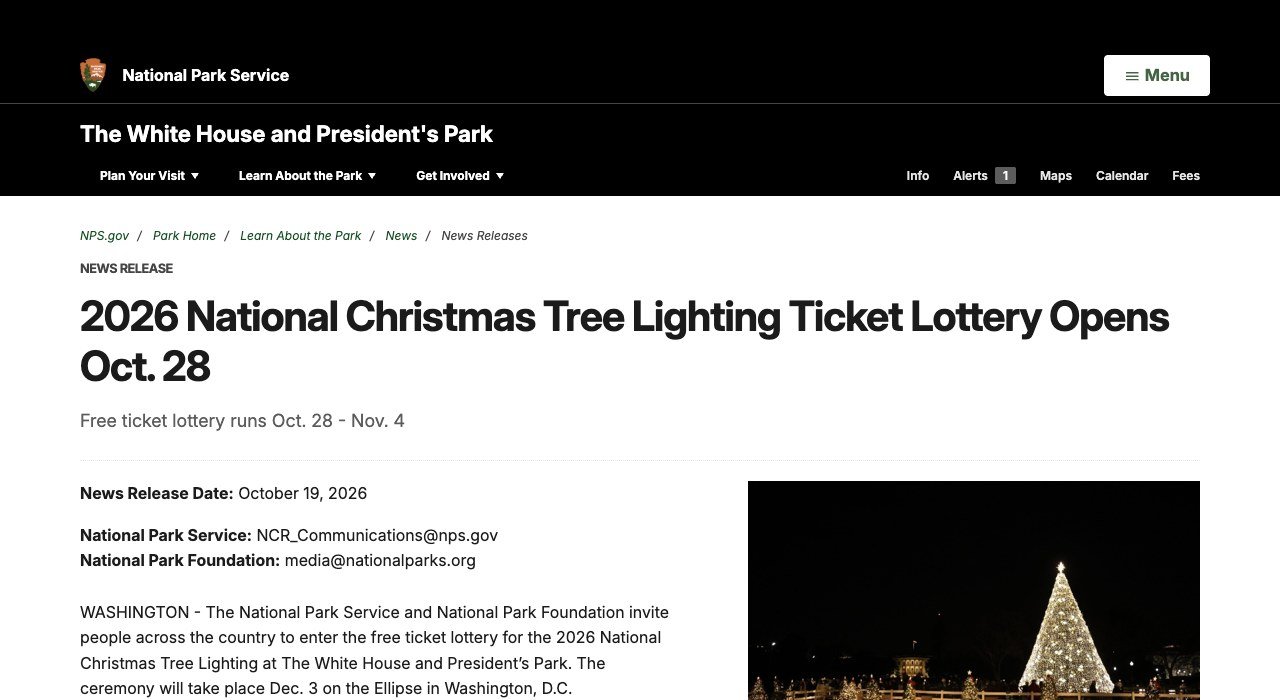
The tree lighting began in 1923, when President Calvin Coolidge lit the first National Christmas Tree at 5:00 p.m. on Christmas Eve. The ticket lottery for the 2026 ceremony closed on November 4, and winners were notified on November 12.
Hanukkah overlaps Christmas in some years but not this one. It runs from Friday, December 4 to Saturday, December 12, 2026, and its 2027 dates, December 24 to January 1, do sit on top of Christmas.
How to Plan Around the Christmas Calendar
- Put Thursday, December 24 and Friday, December 25 on the calendar first. Friday is the federal holiday, and Thursday is not on the federal list.
- Check your own employer’s schedule for Christmas Eve and Saturday, December 26. Neither is on the federal list.
- Plan travel around the long weekend that runs from Friday, December 25 to Sunday, December 27.
- If you celebrate Orthodox Christmas, mark Thursday, January 7, 2027, and keep Wednesday, January 6 for Epiphany.
- Add the dates you want from the earlier list, such as the tree lighting on December 3 or Hanukkah beginning at sundown on December 4.
Frequently Asked Questions
What day of the week is Christmas in 2026?
Friday. Christmas Day is December 25, 2026, and Christmas Eve is Thursday, December 24.
When is Christmas in 2027?
Christmas Day 2027 is Saturday, December 25. Because it falls on a Saturday, the federal holiday is observed on Friday, December 24, 2027 for most federal employees.
Is Christmas Eve a federal holiday?
No. Christmas Day is the only Christmas-week federal holiday. Whether Christmas Eve is a day off depends on the employer or the state.
Why do some people celebrate Christmas on January 7?
Orthodox churches that use the Julian calendar celebrate on December 25 by that calendar, which equals January 7 on the Gregorian calendar. The gap is 13 days.
Related Articles

Get the Fox Bulletin briefing
The stories that matter, in your inbox. No spam, unsubscribe anytime.
Newsletter signup will be available soon.
Related stories

Merry Christmas in Different Languages: Say It Like a Local
Merry Christmas in different languages by region, with each greeting in its own script, a say-it-like guide and the countries where each is used.

What Stores Are Open on Christmas Day? Chain by Chain
What stores are open on Christmas Day? Walmart, Target, Home Depot and Lowe's are closed Friday, December 25, 2026, while Denny's and Waffle House stay open.

Is Starbucks Open on Christmas? Dec 24 and 25 Answers
Is Starbucks open on Christmas? Some coffeehouses open on Friday, December 25, 2026 and others close. See why hours vary and how many stores are licensed.