

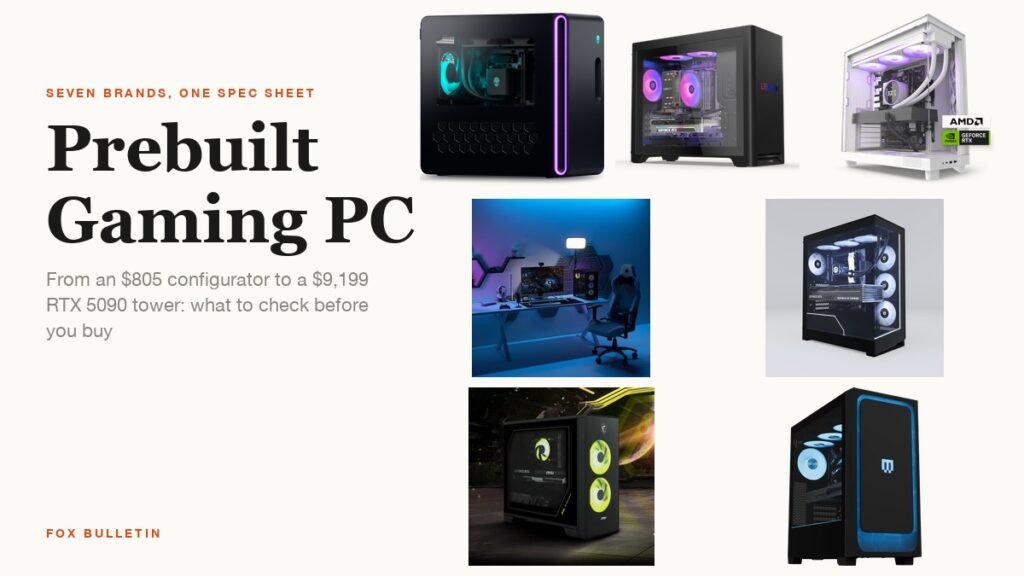
A prebuilt gaming PC is a desktop that arrives assembled, tested and covered by one warranty, and in 2026 it costs between $800 for an entry configuration and $9,000 for a flagship with an RTX 5090. The premium over the same parts bought separately ranges from small to large depending on the brand, and what you get for it is a working machine on day one and a single support line when something fails.
The spec sheet is where the money is won or lost. A prebuilt gaming PC with a good graphics card can hide a slow drive, 16 GB of single-channel memory or a proprietary motherboard that blocks upgrades. This guide covers the seven numbers to check, the compromises to watch for, and how the main brands differ in price, parts and warranty.
| # | Brand | Price range | Typical parts | What stands out |
|---|---|---|---|---|
| 1 | Alienware (Dell) | Aurora from $3,079.99; Area-51 from $5,499.99 | Up to RTX 5090, Core Ultra K or Ryzen 9000X3D | Dell support network, distinctive cases |
| 2 | Lenovo Legion | Tower 5 Gen 10 from $2,799.99 on sale | Ryzen 7 7800X3D, RTX 5070 Ti, 32 GB DDR5, 1 TB | Standard parts, tool-free panels |
| 3 | NZXT | Player One $1,489 to Player Three Prime $9,199 | RTX 5060 Ti up to RTX 5090 | Two-year warranty, retail parts |
| 4 | Corsair Vengeance a7400 | $1,799.99 to $4,099.99 | Ryzen 9600X to 9900X, 32 to 64 GB DDR5 | Two-year warranty, 80 Plus Gold PSU in every tier |
| 5 | CyberPowerPC | Configurators from $805 | Every current Intel, AMD and NVIDIA part | Build-to-order, 60-day returns |
| 6 | MSI MAG Infinite Z | Price varies by configuration | Up to Ryzen 9000, RTX 5070 Ti, 25-litre case | MIL-STD-1916 factory testing, one warranty |
| 7 | Maingear | MG-1 from $2,695; Zero from $2,599 | Up to RTX 5090 and Ryzen 9 9950X3D | Boutique builds, up to 128 GB DDR5 |
The Specs to Check on a Prebuilt Gaming PC
Intel’s prebuilt buying guide starts with the games you plan to run: list them, check their recommended requirements and compare those with the PC’s parts rather than buying the most expensive box. From there the checks are the same on every listing.
- Graphics card: match it to the monitor; Intel notes that 4K and 1440p at high refresh rates need stronger pairings while 1080p leaves the most options. The model number, not the brand of card, sets the performance.
- Processor: a current Core Ultra or Ryzen 9000 part. A K or X3D suffix signals the gaming-oriented variants.
- Memory: 16 GB is Intel’s starting point, 32 GB the comfortable choice. Check that it is two sticks, since one stick runs single-channel and costs performance.
- Storage: an NVMe SSD of at least 1 TB. Intel suggests 500 GB as a bare minimum and notes that some new games exceed 100 GB each.
- Power supply: wattage with headroom for the card and an 80 Plus rating; Corsair fits 750 W Gold units to its RTX 4070 class builds and 1,000 W to the RTX 4090 tier.
- Case and board: standard ATX parts if you intend to upgrade. Intel warns that compact systems may use proprietary parts and that not every case is designed to be opened.
- Ports and networking: enough USB on the front, DisplayPort and HDMI that match the monitor, Wi-Fi 6 or better, and gigabit Ethernet.
Memory speed matters less than capacity: Intel says RAM above 3000 MHz brings a modest benefit, smaller than a faster CPU or GPU. Lighting is cosmetic. Our guide to PC parts explains what each of the eight components does if any line on the sheet is unfamiliar.
Where Prebuilt Gaming PCs Cut Corners
The graphics card and processor are the two parts a listing leads with, so they are rarely the problem. The savings hide elsewhere. A no-name 500 W power supply under an RTX 5070 Ti leaves no headroom; a 512 GB drive fills with three games; a single 16 GB stick halves memory bandwidth; and a custom-shaped motherboard with a proprietary power connector means the case can never take a retail board.
The fix is to read the full specification rather than the headline, and to prefer brands that name their parts. NZXT and Corsair build from the retail components they sell separately, Lenovo lists the exact SSD and memory speed on each configuration, and configurators such as CyberPowerPC let you swap every line. Alienware uses custom chassis with its own cooling, which is not a flaw in itself but limits what a later upgrade can involve, while HP says its Omen 35L is built from standard ATX parts.
- Red flags: unnamed power supply, single memory stick, SATA SSD as the boot drive, proprietary motherboard, no stated warranty length
- Good signs: ATX board and PSU, two-stick DDR5, NVMe drive of 1 TB or more, retail cooler, a two-year or longer warranty
The Seven Prebuilt Gaming PC Brands Compared
1. Alienware: Dell’s Flagship Towers
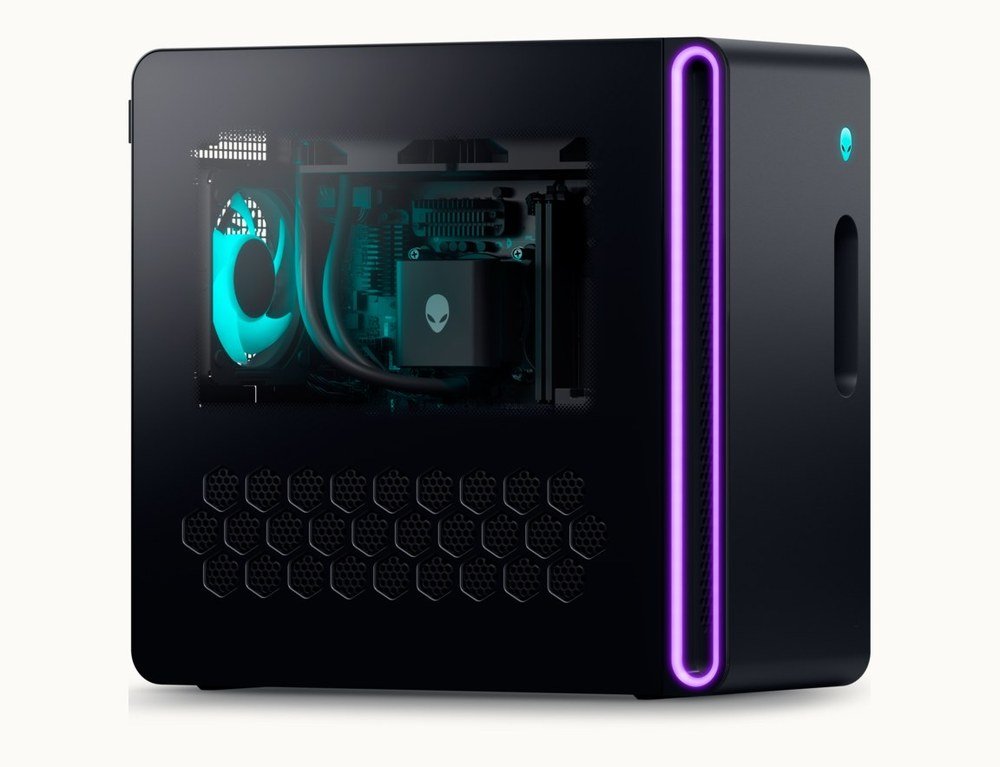
Dell’s gaming brand sells two desktop lines in the US. The Aurora starts at $3,079.99 with up to an Intel Core Ultra K processor and an RTX 5080, and the Area-51 starts at $5,499.99 in Intel form and $5,699.99 with an AMD Ryzen 9000X3D chip, both reaching the RTX 5090. Memory is sold with XMP profiles and the cases are Alienware’s own designs with large liquid coolers.
The appeal is Dell’s support footprint and the finish of the chassis. The trade-off is that the case and board are specific to Alienware, so a future upgrade is limited to the card, drives and memory rather than the platform.
2. Lenovo Legion: Standard Parts at Retail Prices
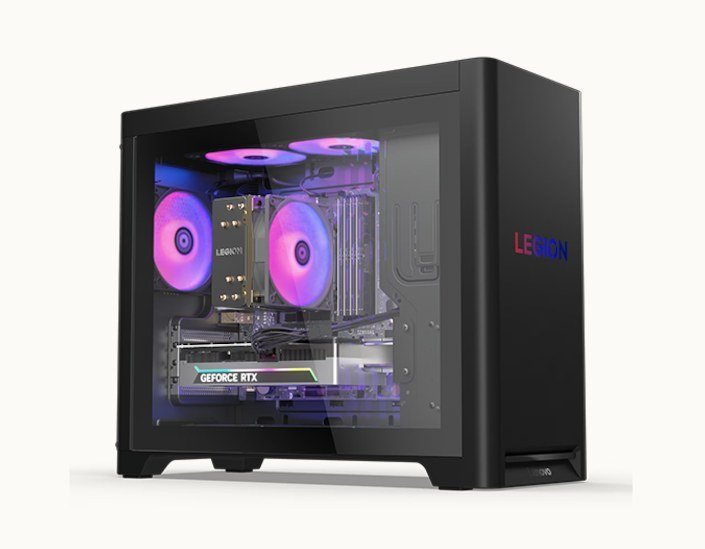
Lenovo’s Legion Tower 5 and 7 lines are among the most transparently specified prebuilts. The Tower 5 Gen 10 with a Ryzen 7 7800X3D, an RTX 5070 Ti, 32 GB of DDR5-5600 in two sticks and a 1 TB PCIe Gen4 SSD listed at $2,799.99 on sale from a $3,810.99 estimated value, and the Tower 7i Gen 10 pairs a Core Ultra 7 265K with an RTX 5080 and 2 TB of storage at $3,423.99 on sale.
Both use standard 30-litre cases with tool-free panels and Lenovo’s Legion Coldfront cooling, and the cheaper LOQ towers cover the entry tier. The pricing swings widely between sale and list, so the estimated value figure on the page is not what anyone pays.
3. NZXT: Player One to Player Three Prime
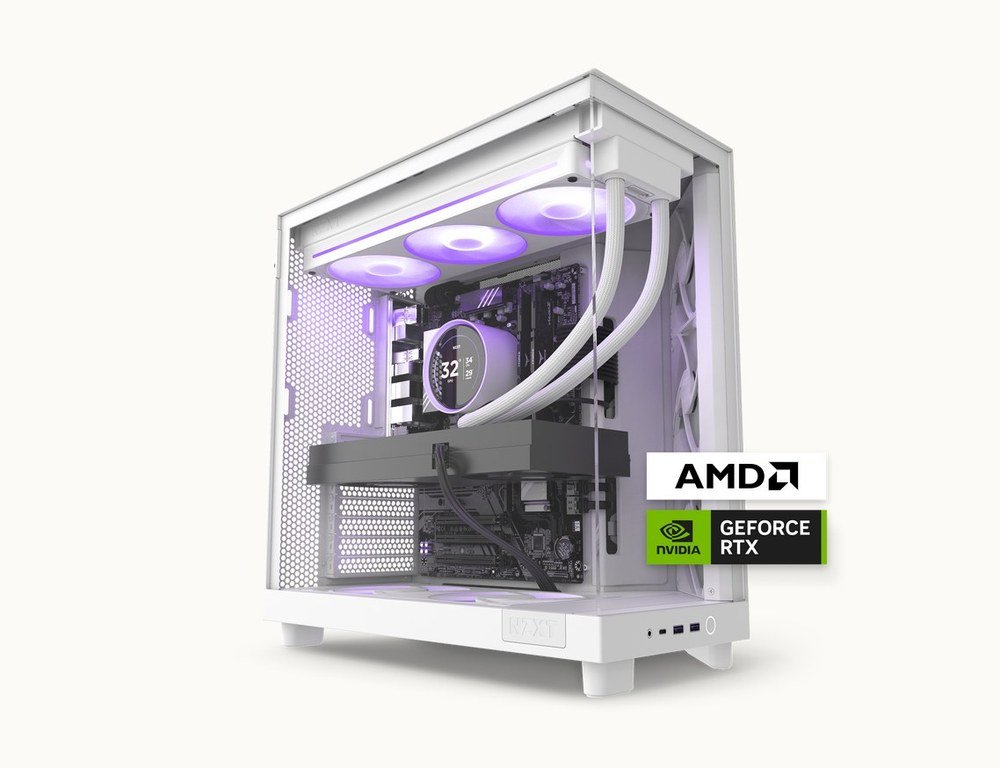
NZXT builds its six-tier Player range from the same cases, coolers and fans it sells to home builders. The Player One starts at $1,489, the Player One Prime with an RTX 5060 Ti at $1,749, the Player Two with an RTX 5070 at $2,649, the Player Three with a Ryzen 7 9800X3D and RTX 5080 at $3,949, and the Player Three Prime with up to an RTX 5090 at $9,199. The NZXT range page states a two-year warranty across the range.
NZXT also rents the same machines on monthly Flex subscriptions, which is unusual among the brands here. Because every part is retail, the systems are the easiest on this list to upgrade later.
4. Corsair Vengeance a7400: Five Tiers in One Case

Corsair’s a7400 line puts five configurations in its 4000D case, all with Ryzen 9000 processors, 32 or 64 GB of DDR5-6000, Wi-Fi 6E and a Corsair 80 Plus Gold fully modular power supply. Corsair’s own breakdown lists the tiers from $1,799.99 with a Ryzen 5 9600X and RTX 4060 to $4,099.99 with a Ryzen 9 9900X, an RTX 4090, 64 GB and a 1,000 W unit, every one covered by a two-year warranty.
The parts are Corsair’s retail components, which makes the line a reference point for what a well-specified prebuilt should contain: two memory sticks, a named power supply and a case that takes any ATX board.
5. CyberPowerPC: The Configurator Route
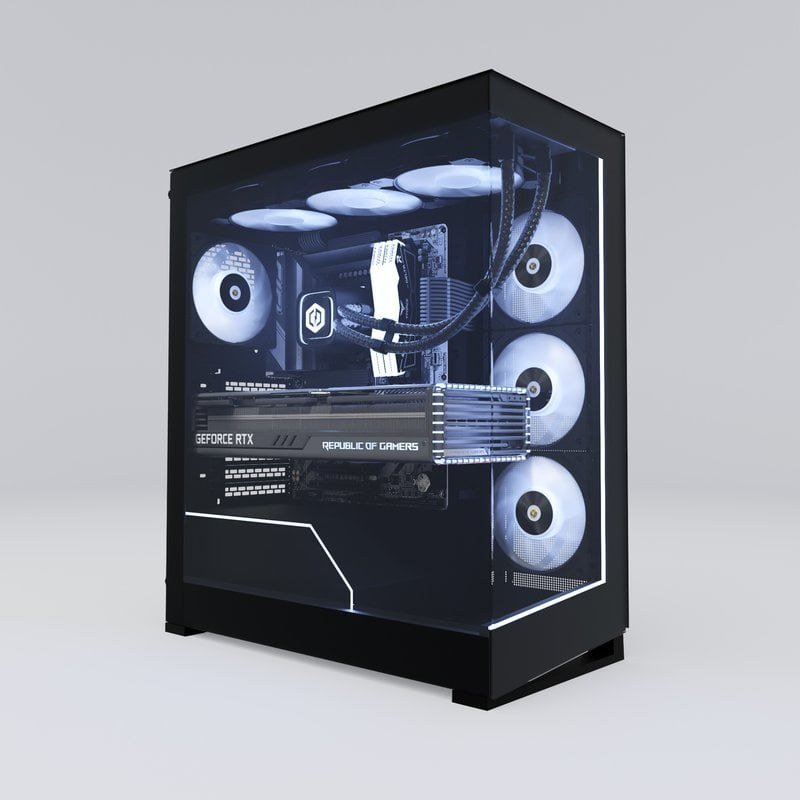
CyberPowerPC sells build-to-order systems through dozens of configurators. The cheapest entry on its gaming category page is a Syber C Core at $805 with a Ryzen 5 5500 and a 4 GB card; its GeForce Mainstream system with a Ryzen 7 8700F, an RTX 5060, 16 GB of DDR5 and a 1 TB SSD listed at $1,539, and the range runs to RTX 5090 creator builds above $9,000. Orders ship free with a 60-day return period.
Every line of the configuration can be changed, which is both the strength and the trap: the base price often pairs a strong card with a small drive or a single memory stick, and the sensible upgrades add a few hundred dollars. Check the warranty page before ordering, since terms are set per plan.
6. MSI MAG Infinite Z: Compact and Factory-Tested
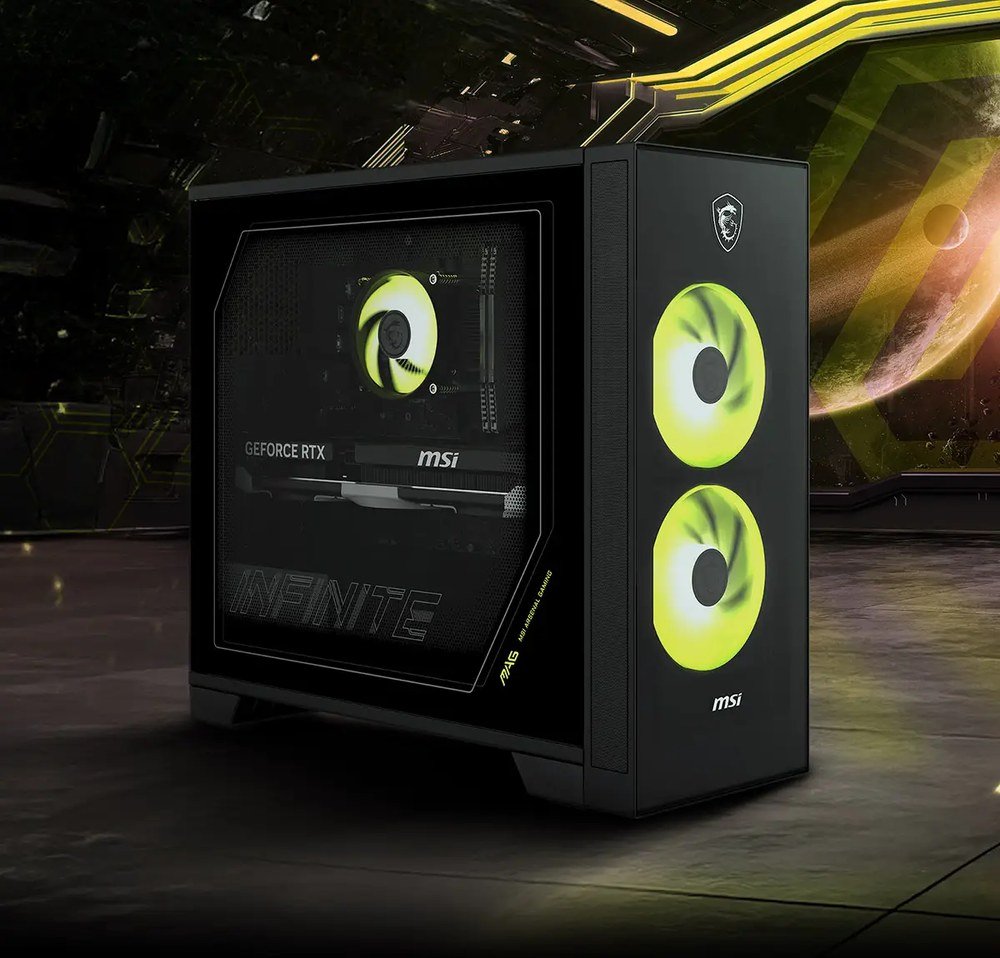
MSI’s MAG Infinite Z is a 25-litre tower with up to an AMD Ryzen 9000 processor and an RTX 5070 Ti, sold with Windows 11 Home or Pro. MSI says every unit is factory tested to the MIL-STD-1916 sampling standard and covered under a single MSI warranty, and the system ships with the company’s AI Engine software that adjusts performance, lighting and audio per application.
The compact size suits a desk rather than the floor, with the usual compact-case caveat that upgrades are tighter. Pricing depends on the retailer and configuration, so compare the exact SKU.
7. Maingear: Boutique Builds With Big Memory
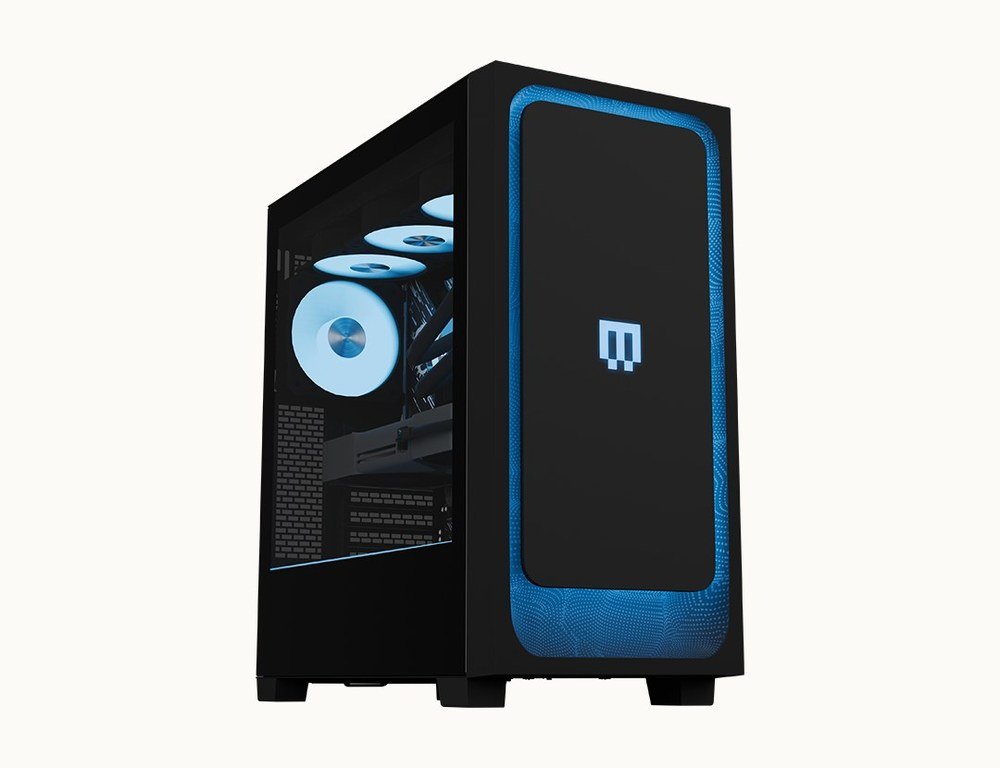
Maingear is the boutique option. Its MG-1 starts at $2,695, the Zero at $2,599, the North at $2,846 and the shroud Signature Edition reaches $9,399 with an RTX 5090, a Ryzen 9 9950X3D and 64 GB of DDR5. Across the catalogue it offers memory up to 128 GB and storage to 8 TB, which is further than most mass-market brands go.
The premium buys hand assembly and configuration depth. Warranty terms are published on a separate policy page rather than the product listing, so read them before paying boutique prices.
Prebuilt or Self-Built: The Price Gap in 2026
The gap depends on the brand. Corsair and NZXT price close to their own retail parts plus assembly, so the premium is modest and the warranty is the main gain. Alienware and boutique builders charge more for design and support. In every case the prebuilt avoids the one risk a first-time builder cannot insure against: a part that arrives dead and a board that will not post.
If you do build, our guide to the power supply unit covers the component most often undersized in a self-build, and the parts list in the PC parts guide is the checklist either way.
- Buy prebuilt if: you want one warranty, you need the machine this week, or parts such as the GPU are hard to find at retail
- Build if: you enjoy the process, you want retail parts throughout, or you are reusing a case, drives or a power supply
Frequently Asked Questions
Is a prebuilt gaming PC worth it?
For most buyers, yes. It arrives tested with one warranty and one support line, and brands that use retail parts, such as NZXT and Corsair, charge a modest premium over building. The exceptions are people who enjoy building or who already own half the parts.
How much should a prebuilt gaming PC cost?
Around $1,500 buys a mainstream system with an RTX 5060 class card, 16 to 32 GB of memory and a 1 TB SSD. RTX 5070 Ti and 5080 towers run $2,600 to $4,500, and RTX 5090 flagships start near $5,500 and reach $9,000 or more.
Can you upgrade a prebuilt gaming PC?
Usually the graphics card, memory and drives. Whether you can change the motherboard or power supply depends on the brand: systems built from standard ATX parts allow it, while custom chassis from some large makers do not. Intel also advises checking the warranty before opening the case.
What warranty does a prebuilt gaming PC come with?
It varies. NZXT and Corsair state two years, HP includes a one-year standard warranty on its Omen desktops, and configurators and boutiques set terms per plan. Check the length and whether it covers labour, parts or both before buying.
Related Articles

Get the Fox Bulletin briefing
The stories that matter, in your inbox. No spam, unsubscribe anytime.
Newsletter signup will be available soon.
Related stories
PC Parts Explained: Every Component in a Desktop Computer
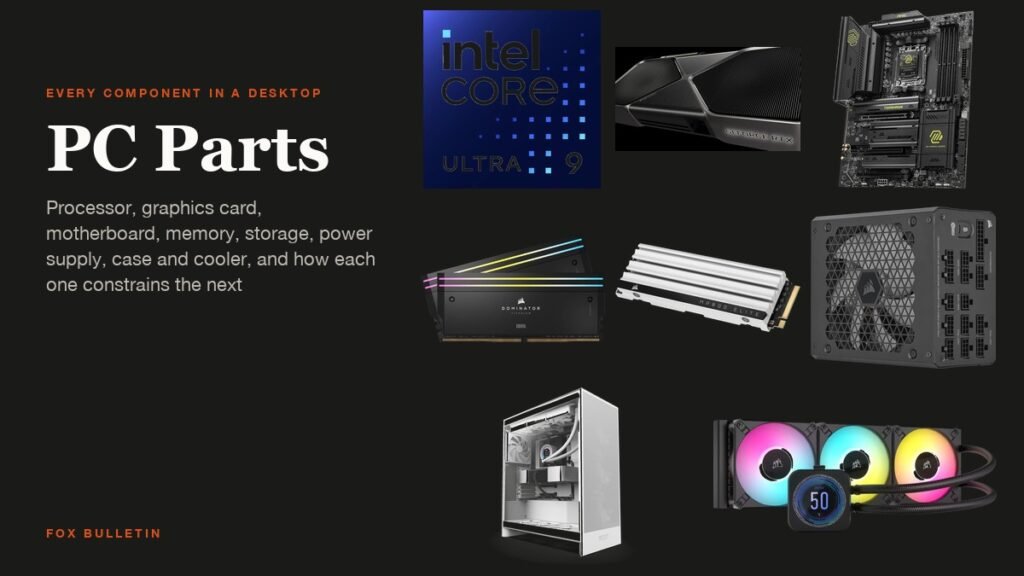
Every desktop is the same eight PC parts: a processor, a graphics card, a motherboard, memory, storage, a power supply, a case and a cooler. Here is what each one does, how they constrain each other and the spec that matters when you buy.
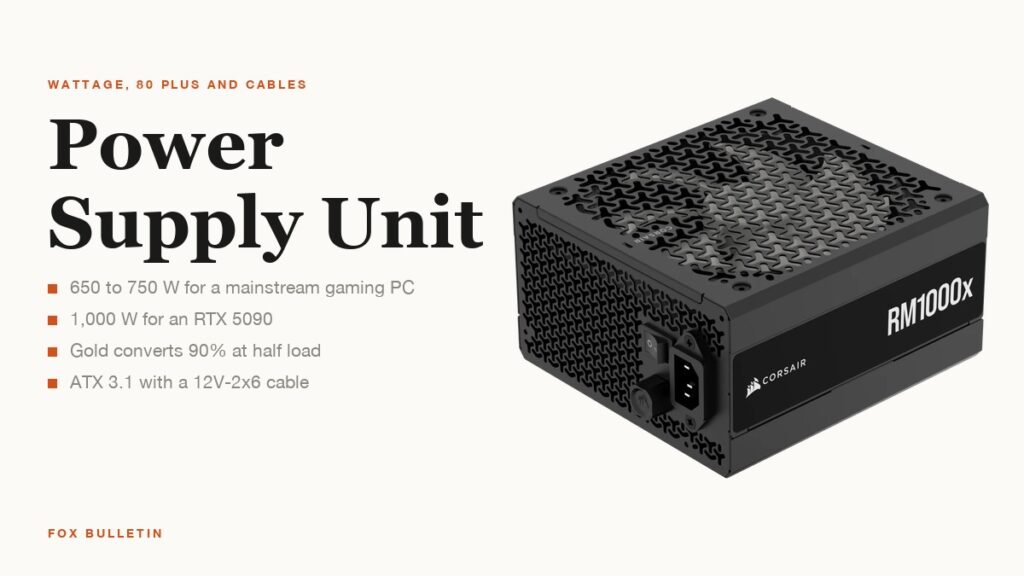
Power Supply Unit Guide: Wattage, 80 Plus Ratings and Cables
The power supply unit is the one PC part that can take everything else with it when it fails. Here is how to size the wattage from your CPU and GPU, what the 80 Plus tiers measure, and which connectors a modern graphics card needs.
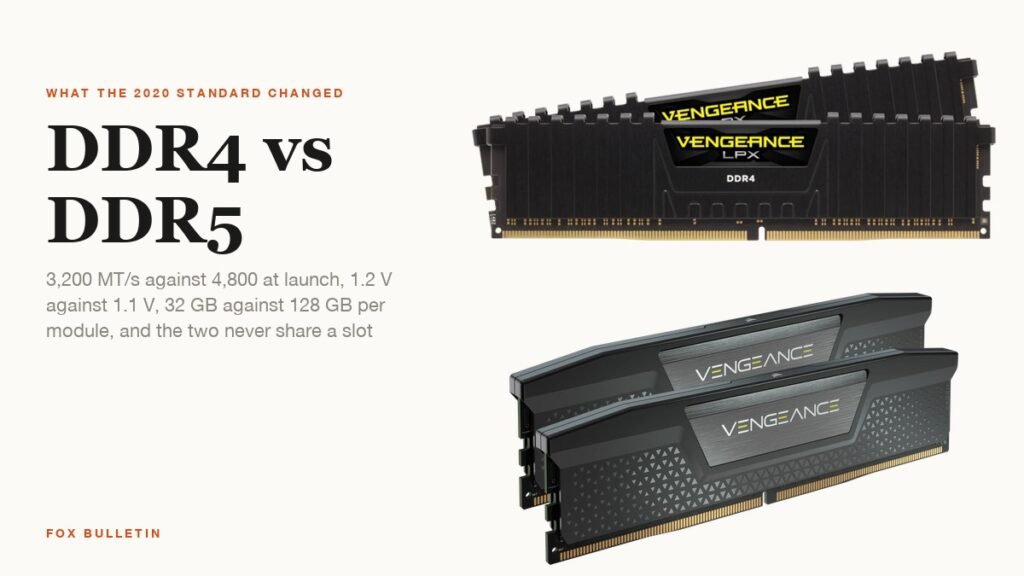
DDR4 vs DDR5 RAM: Speed, Voltage, Capacity and Compatibility
DDR5 starts where DDR4 ends: 4,800 MT/s against 3,200, 1.1 V against 1.2 V, and up to 512 GB per module in the standard. Here is what the two generations change, which platforms use each, and whether a DDR4 PC should move.