
Finding a dropshipping supplier is easy. Finding one that ships in a week, answers messages, keeps stock accurate and does not put its own invoice in the parcel is the actual job, and it is where most stores quietly fail. The supplier is the only part of this business you do not control and the only part your customer physically experiences.
There are four routes to a supplier, they cost very different amounts, and they produce very different delivery times. This guide covers where each route leads, how to vet a supplier before you list anything, the questions that separate a real wholesaler from a reseller, and the warning signs worth walking away from.
The Four Routes to a Dropshipping Supplier
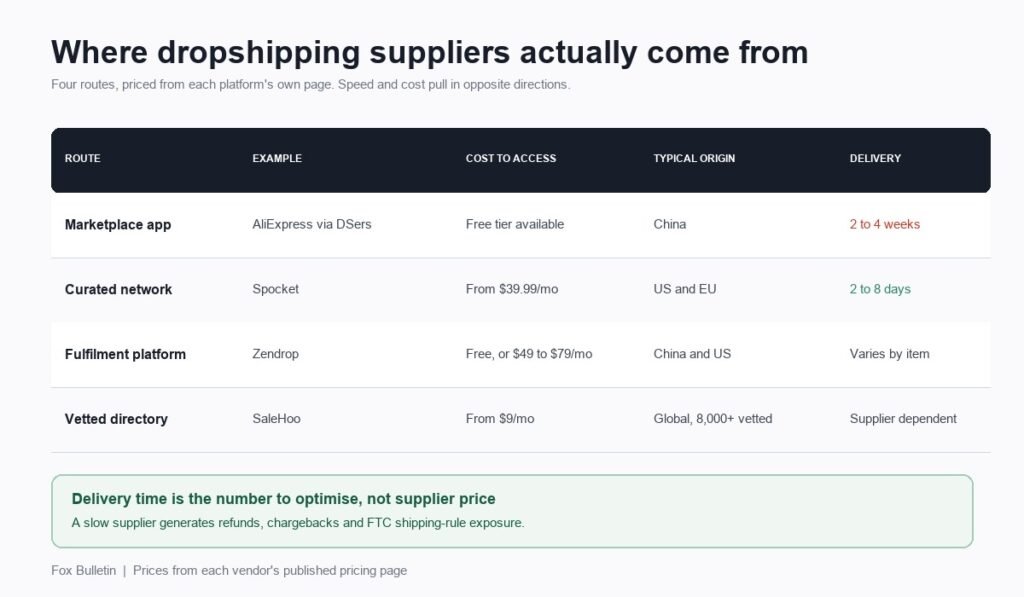
| Route | Example | Cost to access | Typical origin | Delivery |
|---|---|---|---|---|
| Marketplace app | AliExpress via DSers | Free tier available | China | 2 to 4 weeks |
| Curated network | Spocket | From $39.99 a month | US and EU | 2 to 8 days |
| Fulfilment platform | Zendrop | Free, or $49 to $79 a month | China and US | Varies by item |
| Vetted directory | SaleHoo | From $9 a month | Global, 8,000+ vetted | Supplier dependent |
Read that table as a single trade-off. Free access means marketplace suppliers and slow shipping. Paying monthly buys either faster domestic suppliers or a filter that removes the obvious frauds. Neither buys you a supplier who is automatically good, which is why the vetting section below matters more than the platform choice.
Marketplace apps
AliExpress connected through DSers is where most people start, and there is nothing wrong with that as a way to test. The free DSers plan covers three stores, 3,000 products, bulk ordering and automatic tracking sync, so the cost of finding out whether a product sells is zero. What you are accepting in exchange is two to four week delivery and a supplier who has no idea who you are.
Curated networks
Spocket exists to solve exactly one problem: the delivery time above. Its suppliers are based in the United States and Europe, plans start at $39.99 a month for Starter and run to $299.99 for Unicorn, and there is a seven-day trial. The monthly fee looks expensive next to free until you price the refunds a three-week delivery generates.
Fulfilment platforms
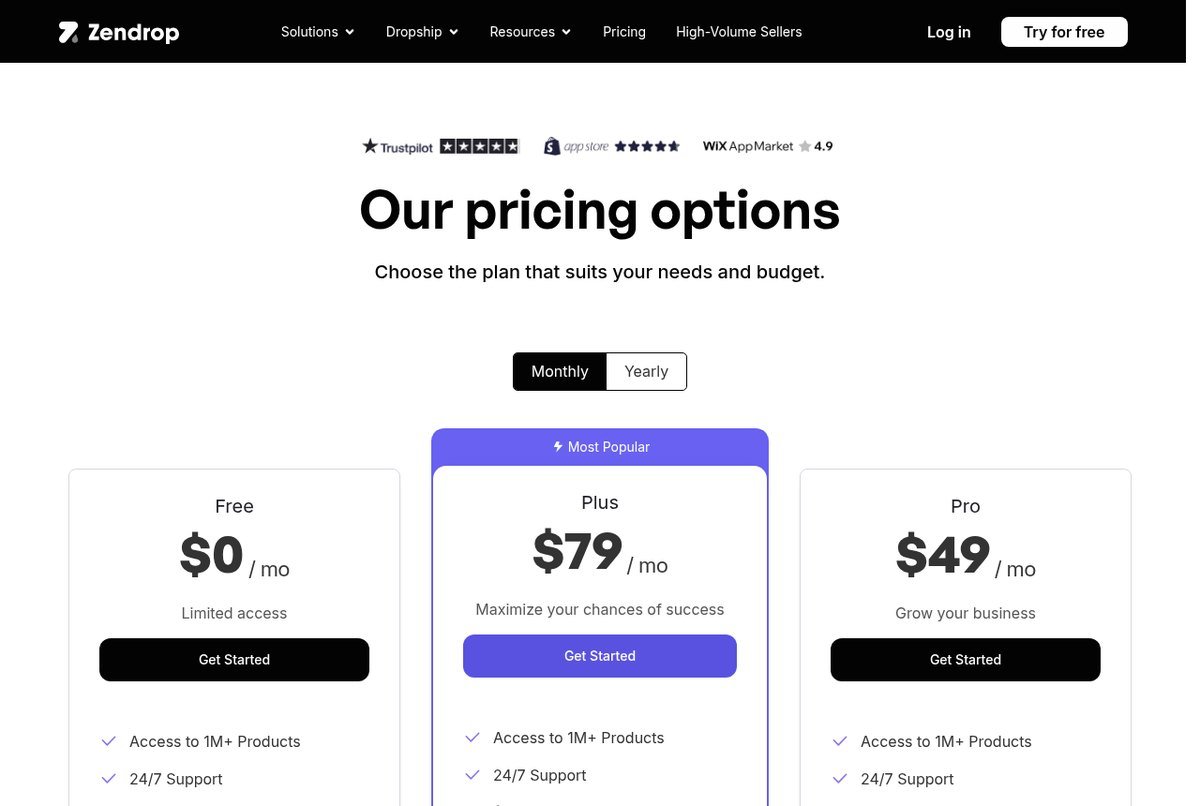
Zendrop sits between the two, sourcing products and handling fulfilment with both Chinese and US stock. Its pricing page lists a free plan with limited access, Pro at $49 a month and Plus at $79, with automated fulfilment on the paid tiers and custom branding available throughout. Custom branding is the feature worth paying attention to, because branded packaging is one of the few ways a dropshipped parcel stops looking dropshipped.
Vetted directories
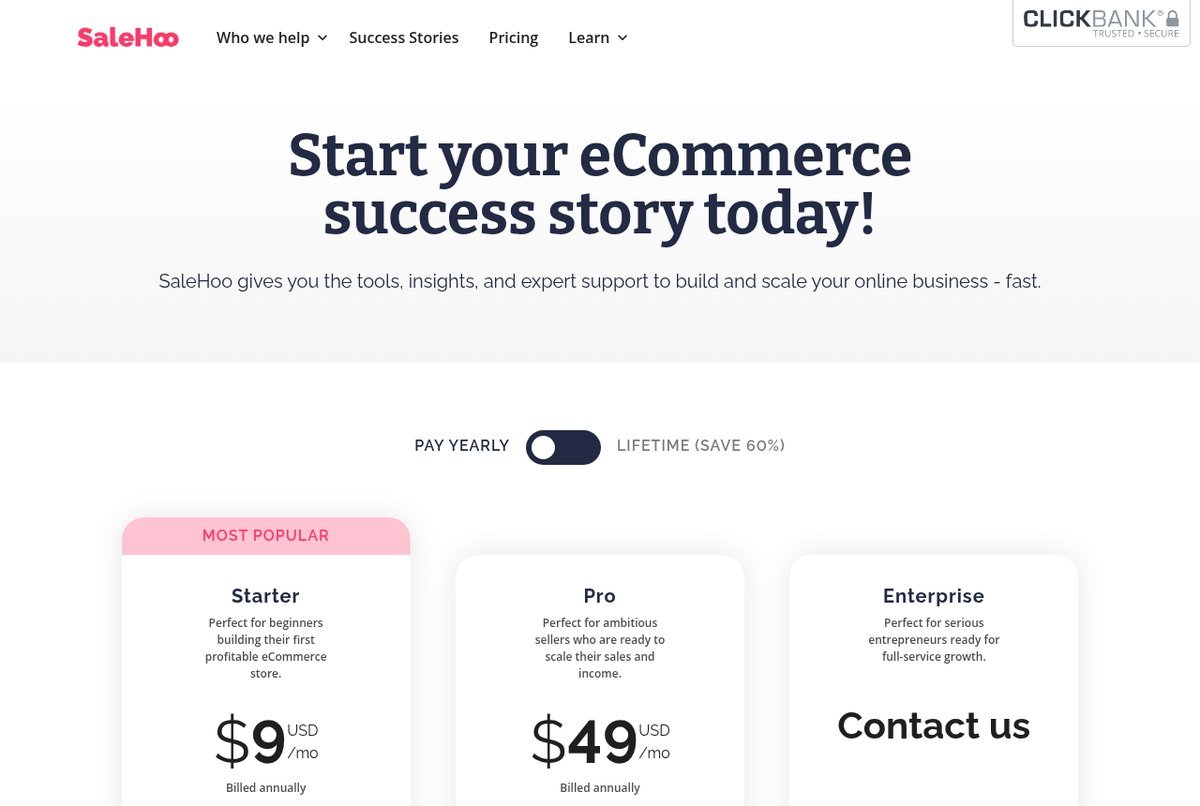
A directory does not fulfil anything. It sells you a filtered list of suppliers you then contact yourself. SaleHoo’s plans start at $9 a month for Starter, with Pro at $49 and Enterprise at $499, and it advertises more than 8,000 vetted suppliers and 2.5 million products with a 60-day money-back guarantee. The value is the vetting, not the list length, and it suits people who want a direct wholesale relationship rather than an app.
How to Vet a Supplier Before You List Anything
Do these five things in order. They take an afternoon and they prevent almost every supplier disaster.
- Order the product to yourself. Not a sample they choose. A normal order, placed the way a customer would. This tells you the real delivery time, the packaging, the quality and whether their paperwork ends up in the box.
- Time it precisely. Record the date you ordered, the date it dispatched and the date it arrived. The gap between order and dispatch is the number most people forget, and it is the one that makes your handling time honest.
- Message them with a real question before you commit. How fast they reply, and whether the answer is specific, predicts what happens when a customer’s order goes missing.
- Ask directly about blind shipping. Will they ship with no invoice, no supplier branding and your packing slip? If the answer is vague, assume no.
- Place a second order two weeks later. One good experience is luck. Consistency is what you are buying.
The Questions That Separate a Wholesaler From a Reseller
Many companies advertising themselves as dropshipping suppliers are middlemen buying from the same source you could reach directly. Six questions usually reveal which you are dealing with.
- What is your average dispatch time, not delivery time? A specific answer in hours or days is a good sign.
- Do you charge a per-order fee or a membership fee? Genuine wholesalers make money on the goods. Heavy membership fees to access “wholesale prices” are a warning.
- What happens when an item is out of stock? You want to hear about automatic notification, not silence.
- What is your returns process and who pays the shipping? Ask before you need the answer, because your customer returns to you regardless.
- Can you provide product images and specifications I am licensed to use?
- Which carriers do you use and do orders get tracking? Untracked shipping makes disputes unwinnable.
Supplier Red Flags Worth Walking Away From
- They sell to the public at the same price. If anyone can buy at your cost, there is no margin to defend.
- They charge a large fee simply to be a customer. A small account setup fee is normal. Hundreds of dollars for access is a directory pretending to be a supplier.
- No physical address or company details. You are about to route your customers’ orders and addresses through them.
- They cannot answer the blind shipping question. On Amazon this alone breaches the platform’s policy.
- Branded goods at prices that make no sense. Genuine stock does not sell at 80% below retail, and counterfeit is a legal problem rather than a bargain.
- Stock counts that never change. A supplier whose inventory never moves is not syncing real data, and you will sell items that do not exist.
Why Delivery Time Is the Metric That Matters Most
Supplier cost is the number everyone compares. Delivery time is the number that decides whether the business works, for three reasons that compound.
First, it drives refunds. A customer who expected a week and waited a month asks for their money back, and you have already paid for the advertising that brought them in. Second, it drives chargebacks, which cost more than the refund and threaten your payment processing. Third, it is a legal exposure rather than a service issue: the FTC’s shipping rule requires you to ship within the time you state, or within 30 days by default, and to offer a delay-or-refund choice if you cannot. Our guide to dropshipping rules and shipping law sets out exactly what that obligation involves.
This is why paying $39.99 a month for a domestic supplier network is often the highest-return decision in the whole business. It is not buying convenience. It is removing the single largest source of refunds, disputes and regulatory risk at once.
Turning a Supplier Into a Relationship
Most dropshippers stay anonymous customers forever and get anonymous-customer service. A small amount of effort changes what you are offered.
- Send consistent volume through one supplier rather than splitting orders across five, because volume is the only leverage you have.
- Talk to a person. Get a named contact and a direct channel rather than a support form.
- Ask for better pricing once you have order history, which is a normal request backed by numbers rather than a favour.
- Ask about branded packaging and inserts at that point, since suppliers offer it to accounts that matter to them.
- Always have a second supplier for your best product. Single supplier dependence is how a good store dies in a week.
Once supply is reliable, the constraint moves to finding products worth selling and getting traffic to them, which is where the rest of the economics live. Our explainer on how dropshipping works covers the margin side, and the Shopify setup guide covers connecting whichever supplier you choose to a store.
Frequently Asked Questions
How do you find dropshipping suppliers for free?
Connect AliExpress through the free DSers plan, which covers three stores and 3,000 products at no cost, or use Zendrop’s free tier. Both give you supplier access without a subscription. The trade-off is shipping time, since free routes almost always mean overseas suppliers and multi-week delivery.
What is the best supplier for fast shipping?
A curated network with domestic suppliers. Spocket’s suppliers are based in the United States and Europe, with plans from $39.99 a month, and Zendrop offers US products on both its free and paid tiers. The general rule is that shipping speed is a function of where the stock sits, not which app you use to order it.
Should you pay for a supplier directory?
Only if you want a direct wholesale relationship rather than an app-based one. SaleHoo starts at $9 a month and advertises over 8,000 vetted suppliers with a 60-day money-back guarantee, which is cheap insurance against contacting frauds. If you simply want products in your store this week, a supplier app gets you there faster.
How many suppliers should a dropshipping store use?
One per product to keep fulfilment simple, plus a tested backup for anything that sells well. Spreading orders across many suppliers destroys the volume leverage that gets you better pricing, while depending on a single supplier for your best seller means one stock-out can stop the business.
Related Articles
- Amazon Dropshipping: The Policy, the Fees and What Gets You Suspended
- How Much Does It Cost to Start Dropshipping?
- Best Payment Processors for Small Business
- How to Start Dropshipping: The Nine Steps in the Right Order
- Best Products to Dropship: How to Find Ones That Actually Sell
- Dropshipping Apps: What Each One Does and What It Costs

Get the Fox Bulletin briefing
The stories that matter, in your inbox. No spam, unsubscribe anytime.
Newsletter signup will be available soon.
Related stories
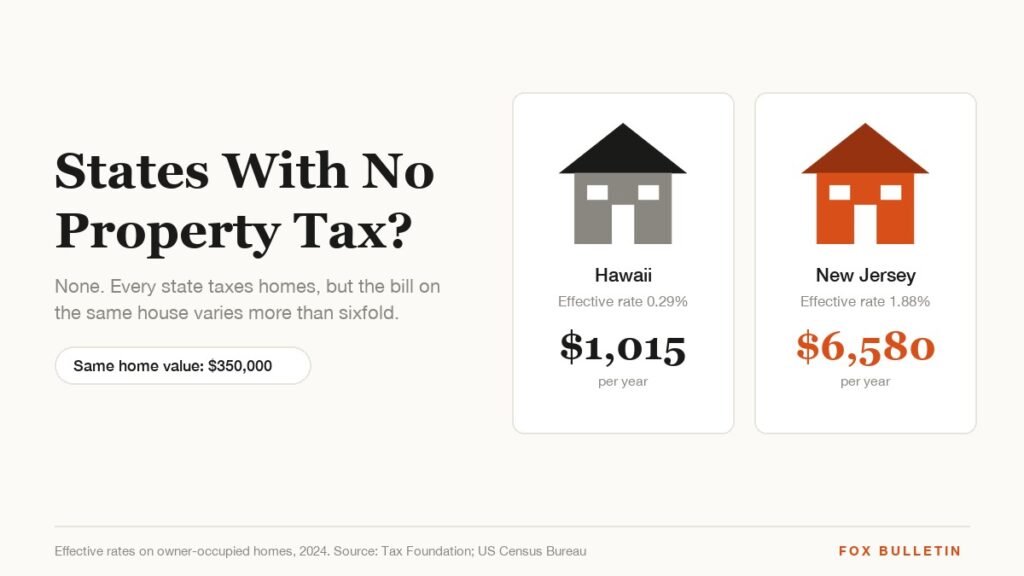
States With No Property Tax: Why None Exist, Plus Property Tax by State
There are no states with no property tax. Effective rates run from 0.29% in Hawaii to 1.88% in New Jersey and Illinois. Every state's rate, and the exemptions that can cut a bill to zero.
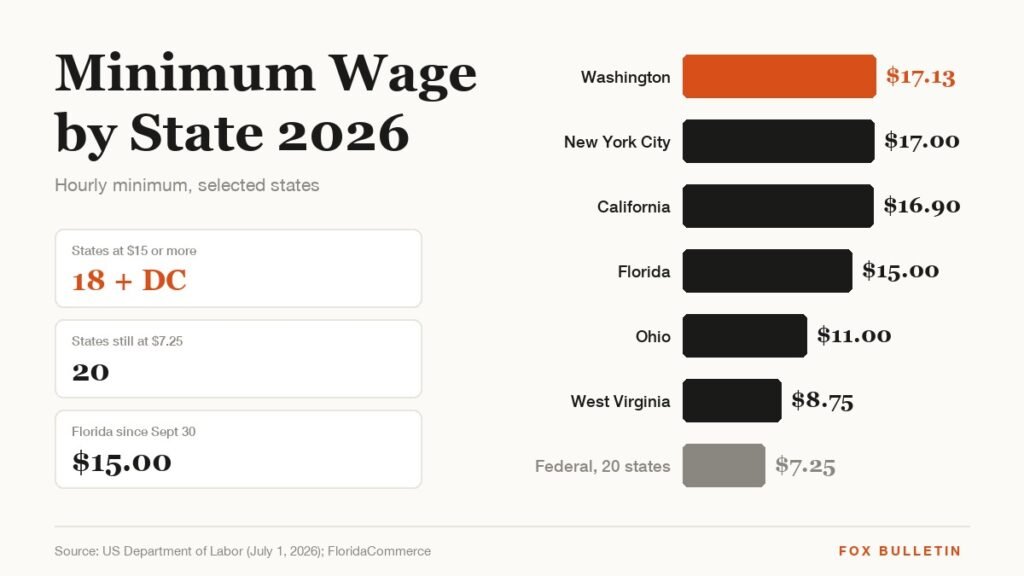
Minimum Wage by State 2026: Every State’s Rate, Plus Tipped Wages
The federal minimum wage is still $7.25, but 30 states and DC set higher rates, from $8.75 in West Virginia to $17.13 in Washington. Every state's rate and tipped wage for 2026.
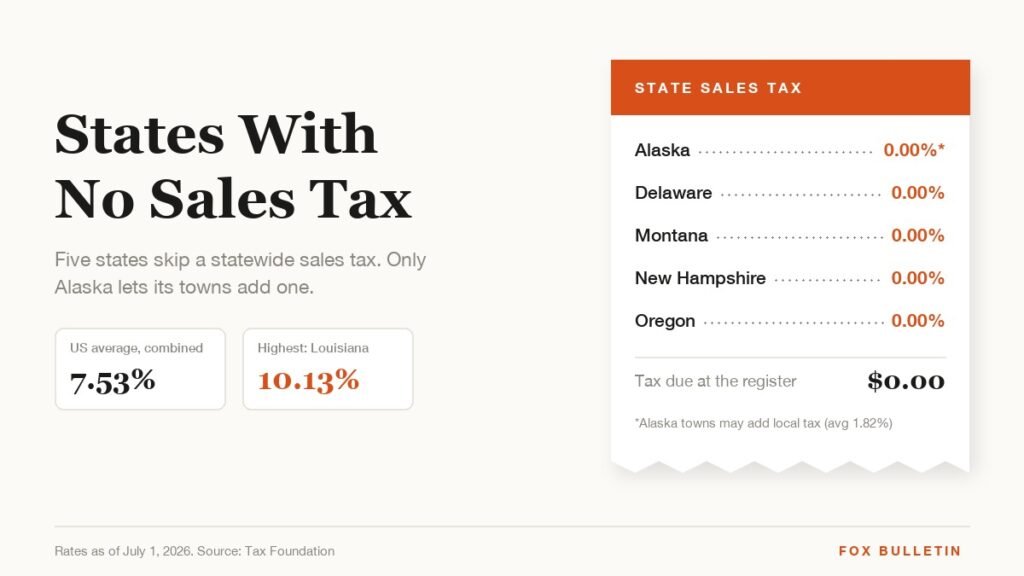
States With No Sales Tax: All 5, Plus Sales Tax by State
Alaska, Delaware, Montana, New Hampshire and Oregon have no statewide sales tax. What each one taxes instead, and the 2026 sales tax rate in every other state.