
Dropshipping apps all describe themselves the same way, which makes choosing between them harder than it should be. In practice they do four different jobs, and a store usually needs one of them rather than four. Installing several overlapping apps is the most common and most expensive mistake in this category, because subscriptions stack while the work they do does not.
The four jobs are sourcing and order automation, curated supplier access, supplier discovery, and print on demand. This guide covers five apps across those four jobs, with current pricing from each vendor’s own page, and a clear answer on how many you actually need.
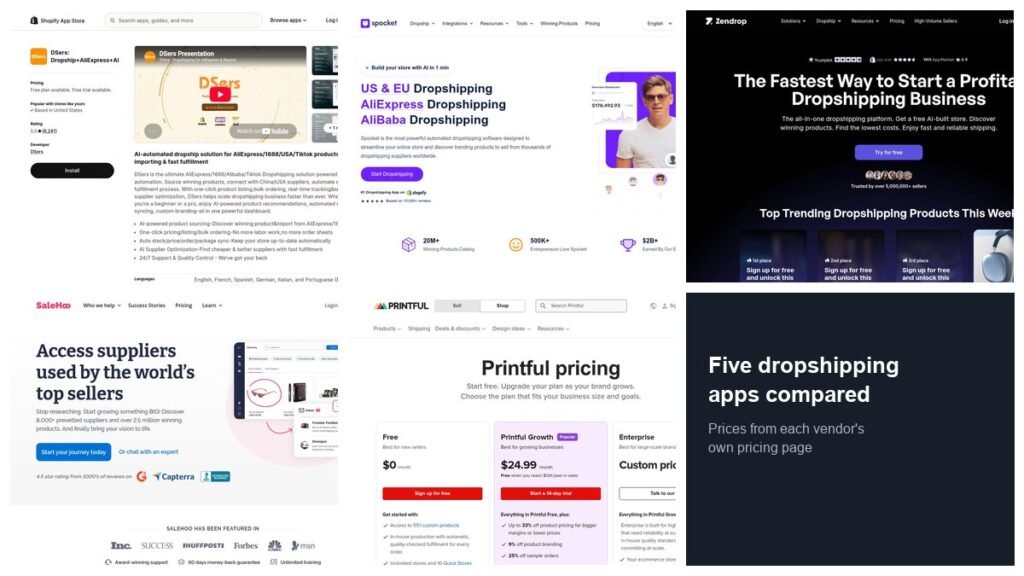
Five Dropshipping Apps Compared on Price and Job
| # | App | Job it does | Free tier | Paid plans |
|---|---|---|---|---|
| 1 | DSers | Sourcing and order automation | Yes, genuinely usable | $19.90 to $499.90 a month |
| 2 | Spocket | US and EU supplier access | 7-day trial only | $39.99 to $299.99 a month |
| 3 | Zendrop | Sourcing plus fulfilment | Yes, limited access | $49 or $79 a month |
| 4 | SaleHoo | Supplier discovery | No | $9 to $499 a month |
| 5 | Printful | Print on demand | Yes, pay per item | $24.99 a month optional |
Three of the five have a free tier you can run a real store on. That matters more than the feature lists, because the point of the first month is finding out whether you can sell anything at all, and paying $120 a month in subscriptions to answer that question is the wrong order of operations.
Apps That Source Products and Automate Orders
1. DSers
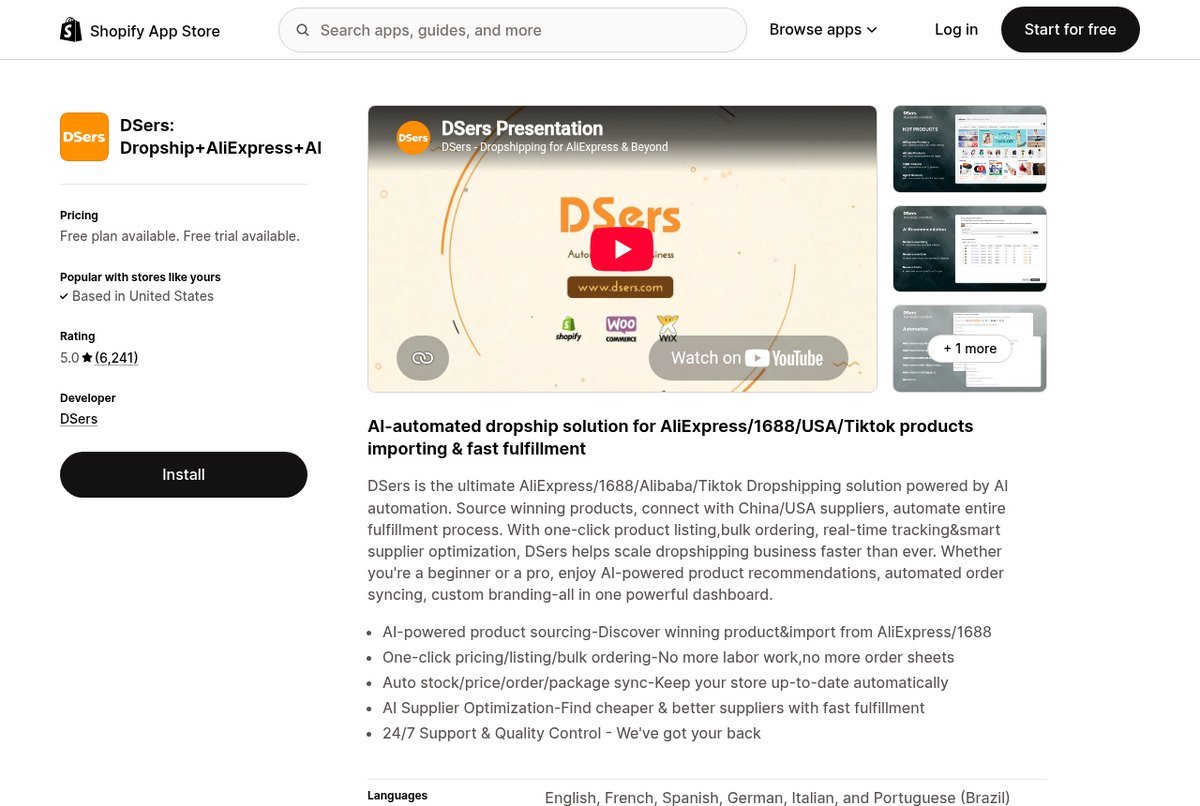
DSers is the default choice for AliExpress sourcing and the app most new stores should install first. Its job is narrow and it does it well: when an order lands on your store, DSers pushes it to the supplier, syncs the order status back, and puts the tracking number in front of the customer without you touching anything.
The free Basic plan covers three stores, 3,000 products, one supplier account, bulk ordering, address auto-fix, automatic order status sync, tracking-number sync and manual pricing tools. Paid tiers are Advanced at $19.90 a month for ten stores and 20,000 products, Pro at $49.90 for 25 stores, and Enterprise at $499.90, each with a 14-day trial and 20% off annually. On the Shopify App Store it carries a 5.0 rating from more than 6,200 reviews.
- Use it when: you are sourcing from AliExpress and want order handling to stop being manual.
- Limitation: it automates ordering, it does not improve the supplier. Shipping times stay whatever AliExpress gives you.
2. Zendrop
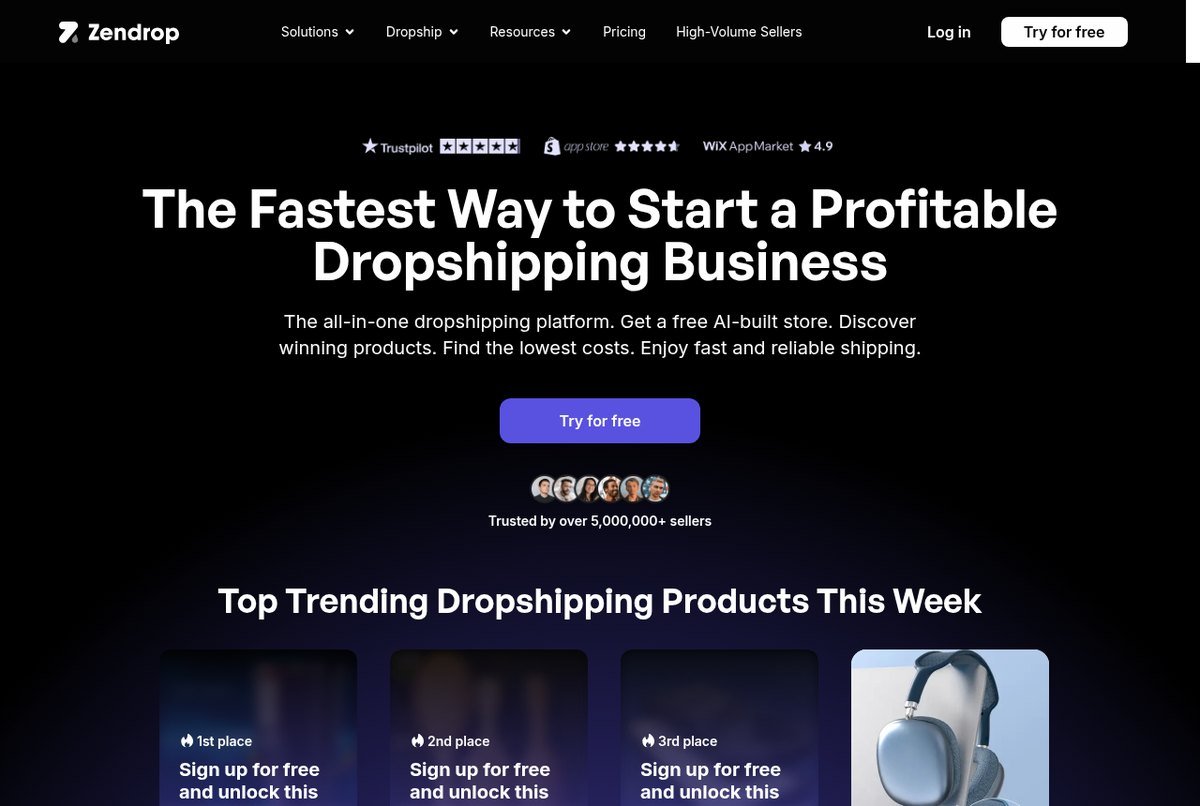
Zendrop goes a step further than DSers by sourcing and fulfilling rather than only passing orders along. Its published pricing lists a free plan with limited access, Pro at $49 a month and Plus at $79, with automated fulfilment on the paid tiers. Access to over a million products, $100 in order credits and custom branding appear across the tiers.
Custom branding is the feature worth paying for. Branded packing slips and inserts are one of the few ways a dropshipped parcel stops looking like one, and that changes both repeat purchase rates and the chance of a customer discovering what they actually bought.
- Use it when: you want sourcing, fulfilment and branding handled in one place, including some US stock.
- Limitation: automated fulfilment sits behind the paid tiers, so the free plan is more of a trial than a working setup.
Apps That Solve the Shipping Time Problem
3. Spocket
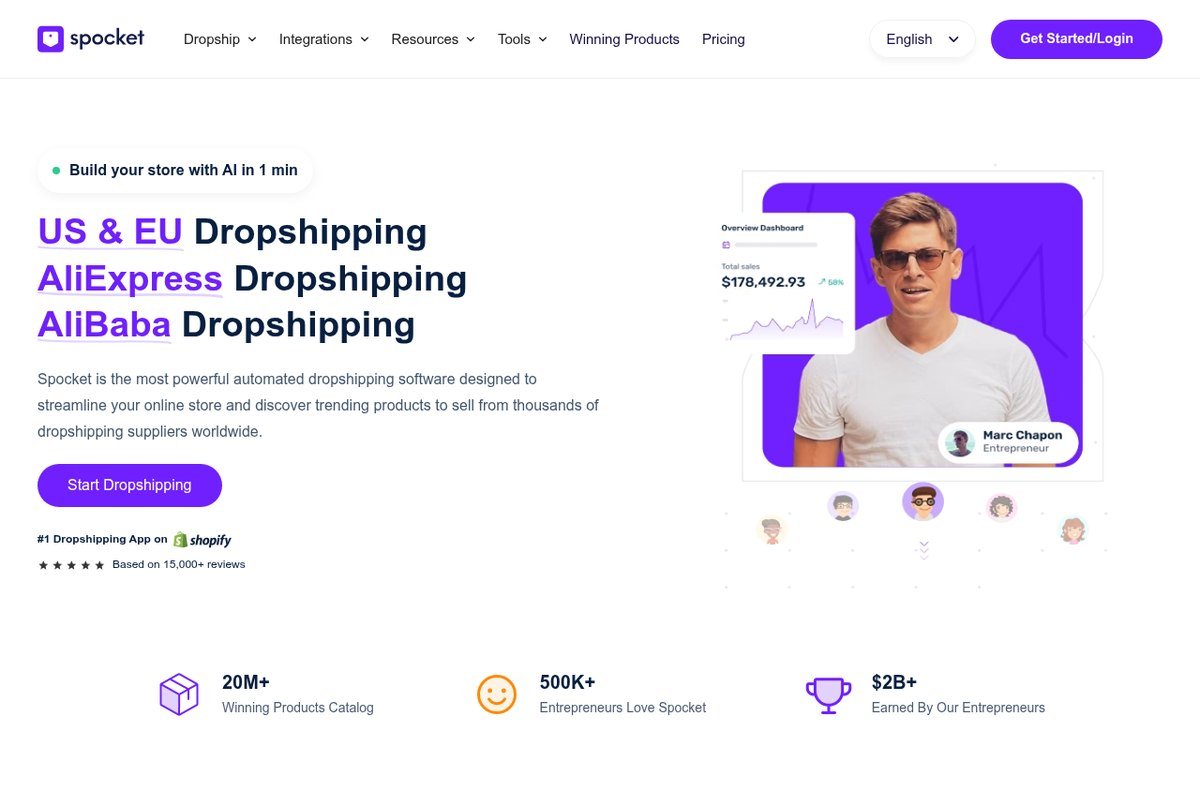
Spocket exists for one reason: its suppliers are in the United States and Europe rather than Asia, which turns a three-week delivery into a few days. Everything else it does is secondary to that.
Its plans run from $39.99 a month for Starter through Professional at $59.99, Empire at $99.99 and Unicorn at $299.99, with a seven-day trial and annual pricing that lowers the monthly rate considerably. There is no permanent free tier, which is the honest trade: you are paying for supplier location, and supplier location is not something anyone gives away.
- Use it when: your product cannot survive a multi-week delivery, or your refund rate is already telling you so.
- Limitation: the catalogue is smaller than marketplace-sourced apps, and supplier prices are higher, which the faster delivery has to justify.
4. Printful
Print on demand is dropshipping’s close relative: nothing is held in stock, but the item is manufactured after the order with your design on it. That single difference removes the competitive problem of selling a catalogue item fifty other stores also list.
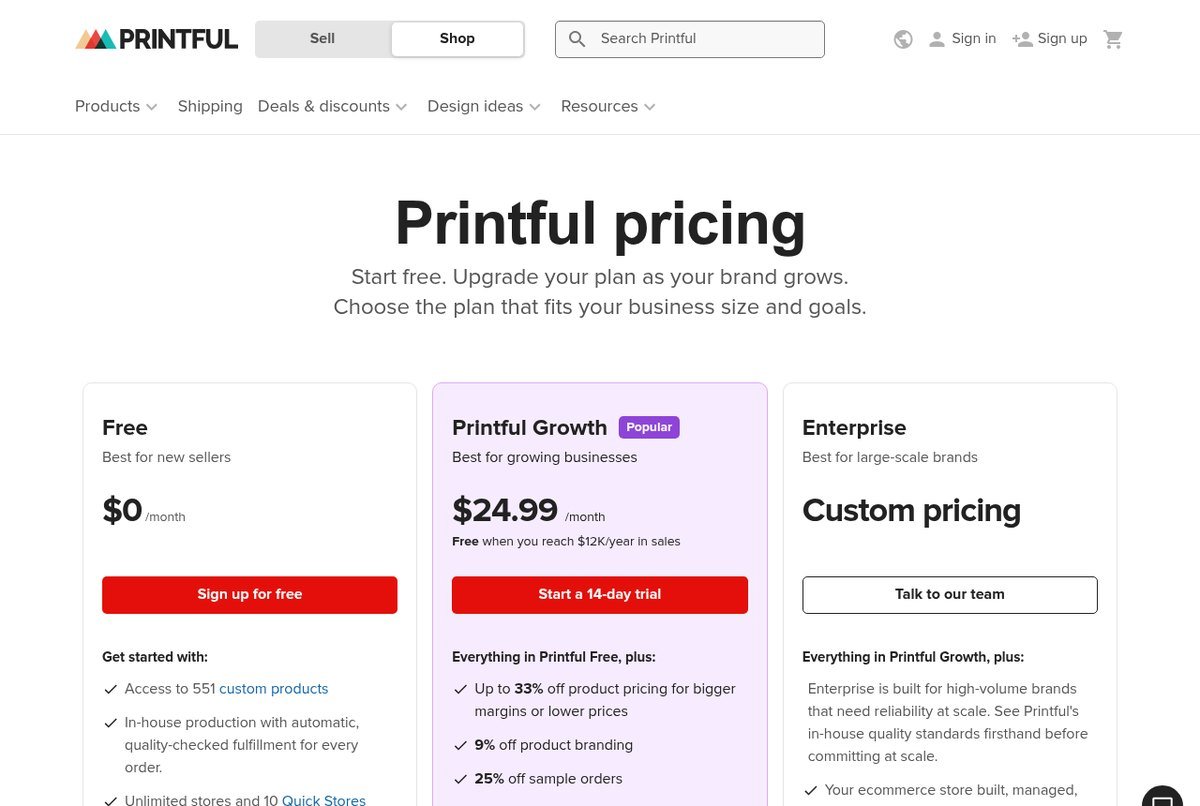
Printful’s pricing starts free, with you paying per item fulfilled rather than a subscription. A Growth membership at $24.99 a month adds discounts of up to 33% on product pricing and branding options, and Printful makes it free once a store reaches $12,000 a year in sales. Enterprise pricing is quoted for larger brands.
- Use it when: your advantage is a design or an audience rather than a product nobody else can source.
- Limitation: per-item costs are high relative to bulk manufacturing, so margins are tighter than they look until volume earns the discounts.
Apps That Are Not Apps At All
5. SaleHoo
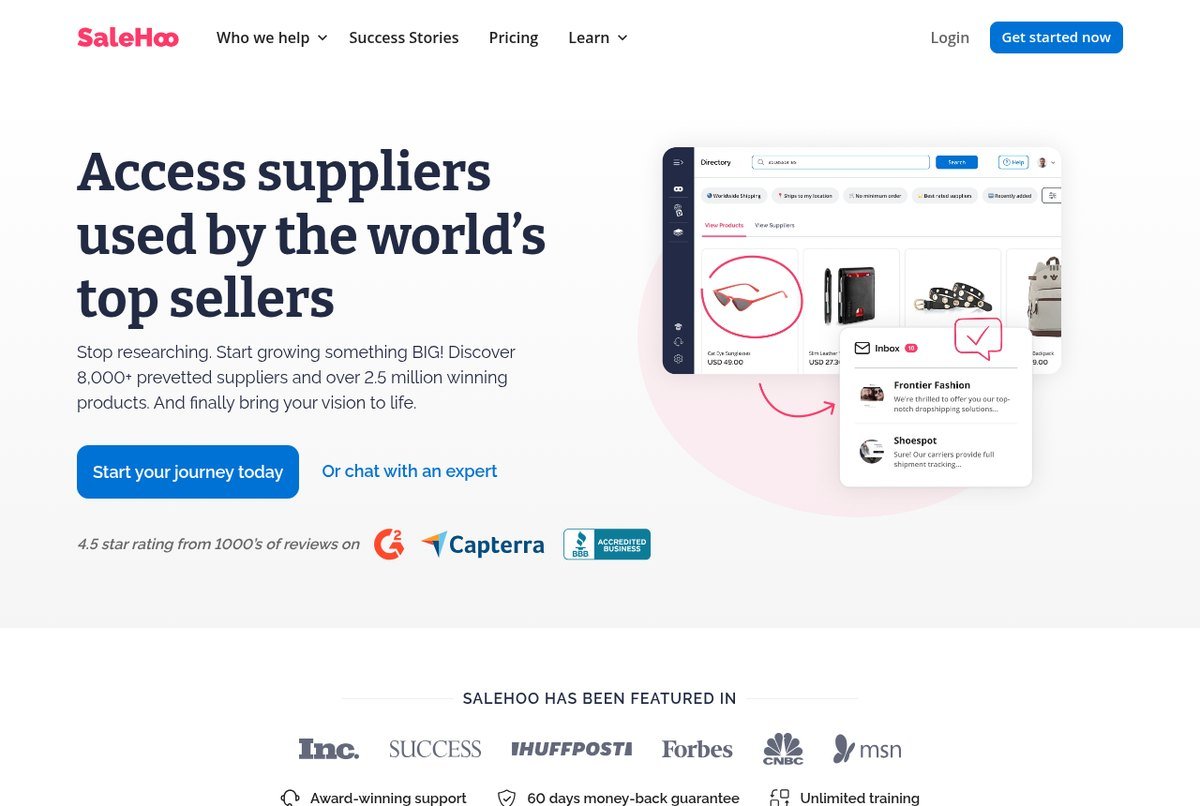
SaleHoo is a directory rather than an integration. It does not sit in your store or push orders anywhere. What it sells is a filtered list of suppliers you then contact and build a relationship with yourself.
Its published plans start at $9 a month for Starter, with Pro at $49 and Enterprise at $499, and it advertises more than 8,000 pre-vetted suppliers, over 2.5 million products and a 60-day money-back guarantee. The value is the vetting: the open web is full of companies calling themselves wholesalers that are resellers or worse.
- Use it when: you want a direct wholesale relationship, better pricing at volume, or a supplier who will ship under your name for a marketplace.
- Limitation: no automation whatsoever. You are buying contacts, and the work of turning them into a supply chain is yours.
How Many of These You Actually Need
For almost every new store, the answer is one, occasionally two.
- Testing whether you can sell: DSers free tier. Nothing else, until something converts.
- Something converts but delivery is causing refunds: add Spocket or move to Zendrop. That is a replacement, not an addition.
- Selling your own designs: Printful instead of, not alongside, a sourcing app.
- Going direct to wholesale or selling on Amazon: SaleHoo to find suppliers, plus whatever handles your orders.
Two sourcing apps connected to one store is the setup that creates duplicate orders, conflicting stock counts and a fulfilment problem you then spend evenings untangling. Pick the one that matches the job and uninstall the others properly rather than leaving them connected.
The App Costs That Creep Up on You
Subscription creep is how a store with thin margins ends up unprofitable while its sales look fine.
- Do the breakeven sum per app. At $9.54 profit an order, a $49 app needs roughly five extra orders a month purely to pay for itself.
- Count the platform too. Shopify Basic plus one paid supplier app is already about $60 a month before advertising.
- Watch trials that convert silently. Several of these start a paid plan automatically when a trial ends.
- Beware review, upsell and countdown apps. They add monthly cost and page weight, and they do not create demand that was not already there.
Our breakdown of the cost to start dropshipping puts these against the rest of the budget, and the Shopify setup guide covers connecting whichever one you pick.
Frequently Asked Questions
What is the best free dropshipping app?
DSers, because its free Basic plan is a working product rather than a trial. It covers three stores, 3,000 products, bulk ordering and automatic tracking sync at no cost, which is enough to run a small store properly. Zendrop’s free tier is also usable, though automated fulfilment requires a paid plan.
Do you need a dropshipping app at all?
Not for the first few orders. You can forward orders to a supplier manually, and doing so teaches you where the friction is. Past roughly five orders a day it becomes data entry, and the error rate on manually typed addresses starts costing more than the subscription would.
Which dropshipping app has the fastest shipping?
Shipping speed comes from where the stock sits, not from the app. Spocket’s suppliers are in the United States and Europe, and Zendrop offers US products, so both can deliver in days rather than weeks. An app sourcing from overseas marketplaces cannot be fast regardless of its features.
Can you use more than one dropshipping app together?
You can, and mostly you should not. Two sourcing apps on one store create duplicate orders and conflicting inventory counts. The combination that does make sense is a sourcing app plus a print-on-demand app when you sell both catalogue products and your own designs, because they handle entirely separate products.
Related Articles

Get the Fox Bulletin briefing
The stories that matter, in your inbox. No spam, unsubscribe anytime.
Newsletter signup will be available soon.
Related stories
States With No Property Tax: Why None Exist, Plus Property Tax by State
There are no states with no property tax. Effective rates run from 0.29% in Hawaii to 1.88% in New Jersey and Illinois. Every state's rate, and the exemptions that can cut a bill to zero.
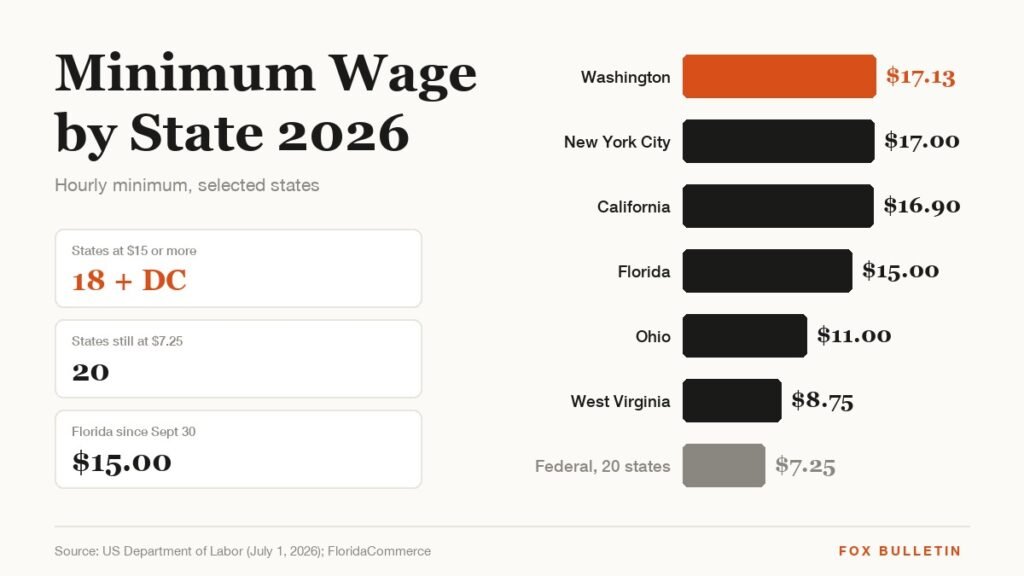
Minimum Wage by State 2026: Every State’s Rate, Plus Tipped Wages
The federal minimum wage is still $7.25, but 30 states and DC set higher rates, from $8.75 in West Virginia to $17.13 in Washington. Every state's rate and tipped wage for 2026.
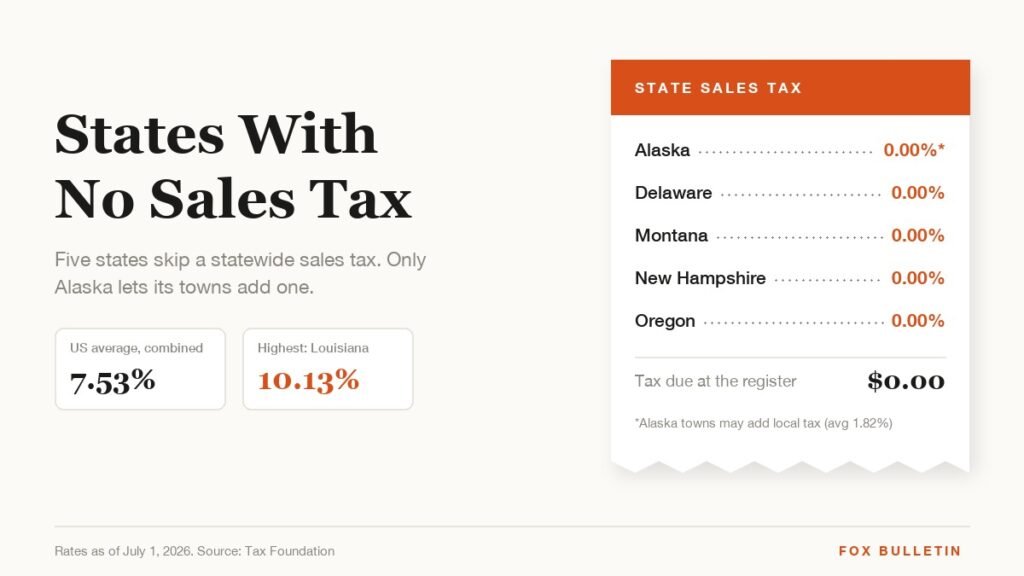
States With No Sales Tax: All 5, Plus Sales Tax by State
Alaska, Delaware, Montana, New Hampshire and Oregon have no statewide sales tax. What each one taxes instead, and the 2026 sales tax rate in every other state.