

Amazon allows dropshipping. It says so in its own seller policy, and the sellers who claim otherwise have usually run into the one specific arrangement Amazon bans rather than the practice in general. The distinction is narrow, it is written down, and getting it wrong is the fastest route to a suspended account.
The rule turns on a single question: whose name reaches the buyer. If every packing slip, invoice and label identifies you as the seller, and you handle the returns, Amazon has no objection to a supplier doing the physical shipping. If a different company’s name is anywhere on the parcel, you are in breach regardless of how the order was fulfilled. This guide covers the policy in detail, what Amazon charges, whether the margins survive those charges, and the specific behaviours that get accounts closed.
Amazon’s Drop Shipping Policy, Line by Line
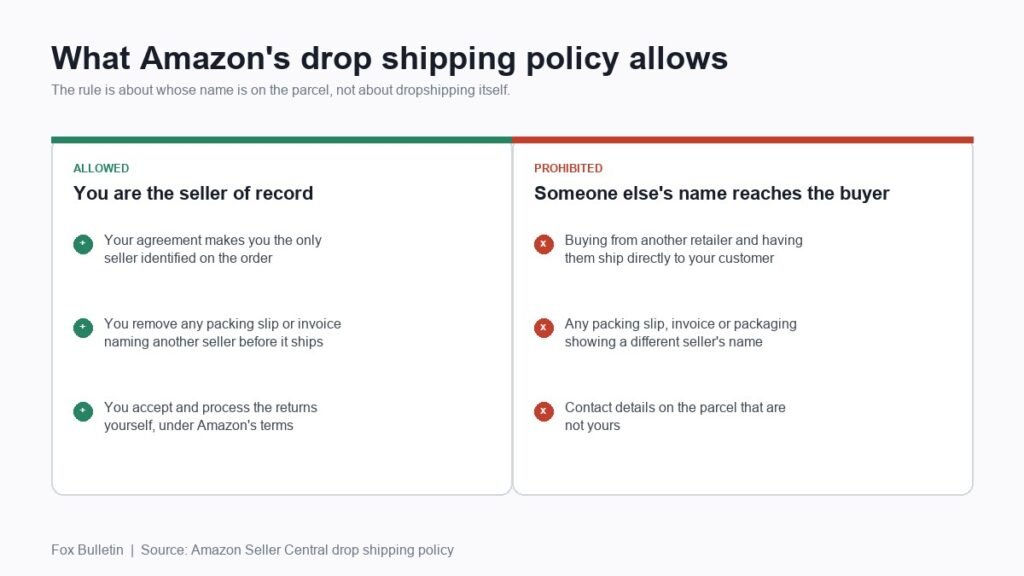
Amazon’s drop shipping policy is short, and it sets three requirements on any seller using a supplier to fulfil orders.
- You must be the only seller of record. Your agreement with the supplier has to establish that you alone are identified as the seller on packing slips, invoices, external packaging and anything else provided with the product.
- You must strip anything identifying someone else. Packing slips, invoices, packaging or inserts naming a different seller or third-party supplier have to be removed before the order ships.
- You remain responsible for returns. Accepting and processing customer returns stays with you, along with compliance with the Business Solutions Agreement and Amazon’s other policies.
It then names two things as strictly prohibited without exception: buying a product from another retailer, including another Amazon seller, and having that retailer ship straight to your customer where the shipment does not identify you as the seller of record; and shipping orders where any paperwork or packaging shows a seller name or contact details other than your own.
The Arrangement That Actually Gets Banned
Read those prohibitions carefully and the target becomes obvious. Amazon is not banning dropshipping. It is banning retail arbitrage dressed as fulfilment: listing an item on Amazon, waiting for an order, then buying it from Walmart, Target or AliExpress and having that seller post it to your customer.
That model fails the policy on every count. The parcel arrives with someone else’s branding, a receipt from a company the customer never bought from, and sometimes a price lower than the one they just paid. Amazon’s objection is straightforward: the buyer’s experience is with Amazon, and a stranger’s invoice in the box breaks it.
The compliant version requires an actual wholesale relationship. A supplier who agrees to ship under your name, uses blank or your own branded packing slips, and understands the arrangement. That supplier is unlikely to be a consumer marketplace listing, which is why compliant Amazon dropshipping is harder and less crowded than the version people try first.
What Amazon Charges a Dropshipper
The fees decide whether any of this is worth doing, and Amazon publishes them plainly.
| Fee | Amount | When it applies |
|---|---|---|
| Individual selling plan | $0.99 per item sold | Low volume, under about 40 sales a month |
| Professional selling plan | $39.99 a month | Any real volume, plus access to more tools |
| Referral fee, most categories | 15% | On the total sale price, every order |
| Referral fee, electronics and computers | 8% | Computers, consumer electronics, video game consoles |
| Referral fee, clothing | 5% to 17% | Tiered by item price |
| Referral fee, device accessories | 45% | Amazon-branded device accessories |
| Closing fee | $1.80 per item | Media categories such as books and DVDs |
The $39.99 Professional plan pays for itself at roughly 40 sales a month, since that is where the $0.99 per-item charge overtakes it. The referral fee is the number that matters more, because it is a percentage of the full sale price rather than your profit, and at 15% it is charged whether the order made you money or not.
Whether the Margins Survive Amazon’s Fees
Take the same example used across our dropshipping guides: an item sold for $40 that costs $15 delivered from the supplier.
- Sale price: $40.00
- Referral fee at 15%: $6.00
- Supplier cost: $15.00
- Share of the $39.99 monthly plan across 40 sales: $1.00
- Remaining: $18.00
That is noticeably better than the same product sold on your own store, where you would pay roughly $1.46 in card processing but then spend $14 or more acquiring the customer through ads. Amazon’s 15% is expensive, but it is buying you traffic that would otherwise cost far more, and that trade is the entire argument for selling there.
The catch is the other side of the same trade. The customer is Amazon’s, not yours. You get no email address, no retargeting, no repeat purchase you control, and no brand the buyer remembers. Our comparison of how dropshipping works on your own store covers what you gain in exchange for paying for that traffic yourself.
Setting Up Amazon Dropshipping Inside the Rules
- Register a seller account and choose the plan that matches your expected volume. Start on Individual if you are testing.
- Find a supplier who will ship under your name. This is the step that decides compliance. Ask directly whether they offer blind shipping and whether they will use your packing slips.
- Get the arrangement in writing. The policy requires an agreement making you the seller of record, so an informal understanding is not enough.
- Order a test unit to yourself first. Open the parcel and check every piece of paper in it. This single step catches most policy breaches before Amazon does.
- Check the category referral fee before you price anything, since 8% and 45% are very different businesses.
- Set handling times you can actually meet, because Amazon measures late shipment rate and acts on it.
- Plan the returns path with your supplier in advance, since the policy puts returns on you regardless of what they will accept.
Why Amazon Dropshipping Accounts Get Suspended
Suspensions follow a short list of causes, and performance metrics do more damage than policy breaches for most sellers.
- Supplier paperwork in the box. One customer complaint about a third-party invoice is enough to trigger a review.
- Late shipment rate. Amazon measures whether you ship within your stated handling time, and a supplier’s slow week becomes your metric problem.
- Order defect rate. Negative feedback, A-to-z claims and chargebacks are aggregated into one metric, and a product you have never inspected is a recurring risk to all three.
- Stock you did not know was gone. Cancelling orders because a supplier ran out counts against you, not them.
- Counterfeit or IP complaints. Sourcing branded goods through unverified channels invites rights-owner complaints, which Amazon acts on quickly.
Every item on that list has the same root cause: you are accountable to Amazon for something a third party physically controls. That is the real risk of the model on this platform, and it is not solved by reading the policy more carefully.
Amazon Compared With Selling on Your Own Store
| Factor | Amazon | Your own store |
|---|---|---|
| Traffic | Built in, no ad spend required | You buy every visitor |
| Cost per sale | 15% referral fee in most categories | Card fees plus ad spend, often 35% or more |
| Fixed monthly cost | $39.99 Professional plan | $29 to $39 platform plus apps |
| Who owns the customer | Amazon | You |
| Branding | Minimal, inside Amazon’s template | Complete |
| Rules risk | Account suspension ends the business overnight | You set the policies |
| Price competition | Direct, on the same product page | Indirect |
The honest summary is that Amazon converts a marketing problem into a compliance problem. Whichever you choose, the legal and tax obligations are the same, and our guide to dropshipping legality, sales tax and registration applies to both.
Frequently Asked Questions
Is dropshipping allowed on Amazon?
Yes, provided you are the seller of record on every document the buyer sees, you remove any paperwork naming a supplier, and you handle returns yourself. What Amazon prohibits without exception is buying from another retailer and having them ship directly to your customer under their own name.
Can you dropship from AliExpress to Amazon?
Not in the ordinary way. A standard AliExpress order arrives with the supplier’s own documentation, which breaches the policy directly. It is only compliant if you have an agreement with that supplier for blind shipping under your name, which is a different arrangement from placing a normal consumer order.
How much does it cost to dropship on Amazon?
Either $0.99 per item on the Individual plan or $39.99 a month on the Professional plan, plus a referral fee on every sale. That referral fee is 15% in most categories, 8% for computers and consumer electronics, tiered between 5% and 17% for clothing, and as high as 45% for Amazon device accessories. Media categories also carry a $1.80 closing fee.
Is Amazon dropshipping still worth doing?
It is worth doing if you have a genuine wholesale supplier who will ship under your name, and not worth doing if your plan is to resell marketplace listings. The 15% referral fee is cheaper than buying the equivalent traffic with ads, so the economics work. The risk is that a supplier’s mistakes land on your account metrics, and a suspension removes the whole business at once.
Related Articles

Get the Fox Bulletin briefing
The stories that matter, in your inbox. No spam, unsubscribe anytime.
Newsletter signup will be available soon.
Related stories
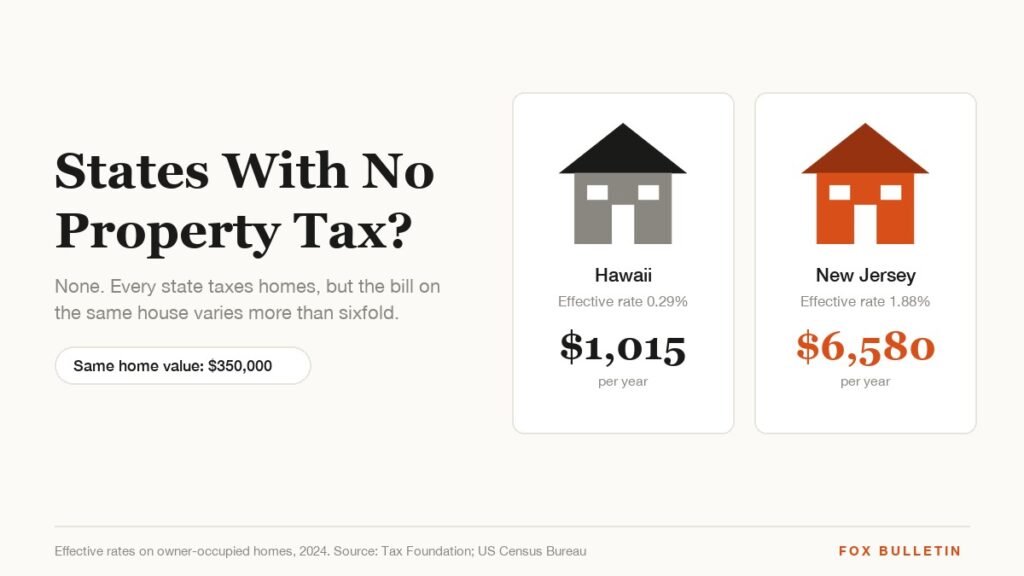
States With No Property Tax: Why None Exist, Plus Property Tax by State
There are no states with no property tax. Effective rates run from 0.29% in Hawaii to 1.88% in New Jersey and Illinois. Every state's rate, and the exemptions that can cut a bill to zero.
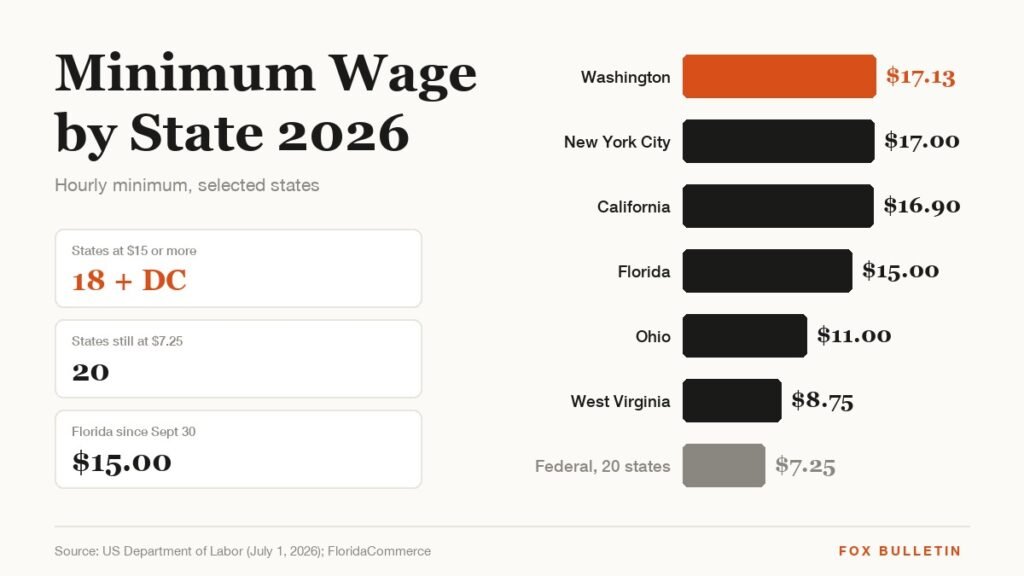
Minimum Wage by State 2026: Every State’s Rate, Plus Tipped Wages
The federal minimum wage is still $7.25, but 30 states and DC set higher rates, from $8.75 in West Virginia to $17.13 in Washington. Every state's rate and tipped wage for 2026.
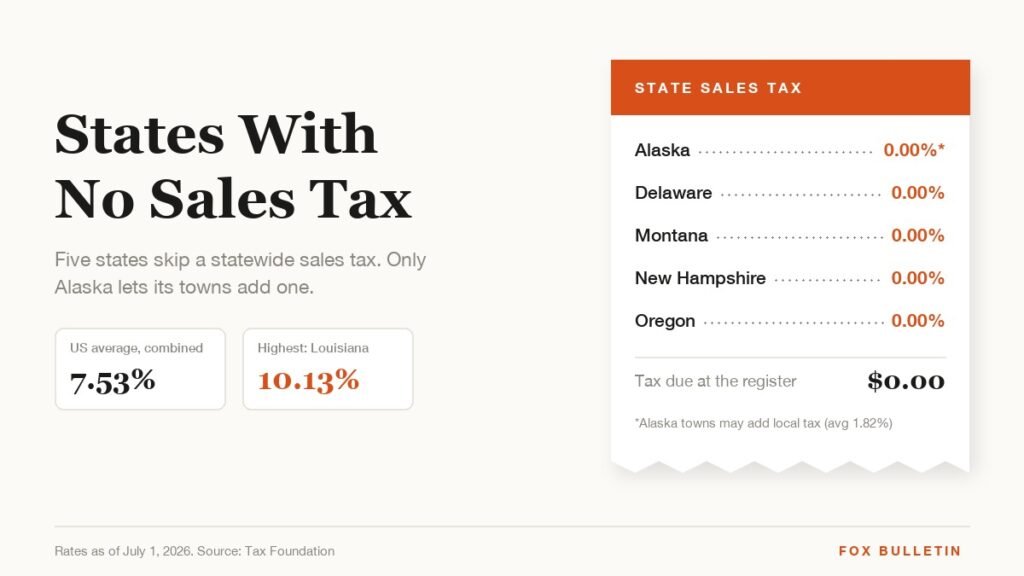
States With No Sales Tax: All 5, Plus Sales Tax by State
Alaska, Delaware, Montana, New Hampshire and Oregon have no statewide sales tax. What each one taxes instead, and the 2026 sales tax rate in every other state.