
Dropshipping is a retail arrangement in which you sell a product you have never touched. A customer buys from your store at your price, you forward the order and the wholesale price to a supplier, and the supplier ships the item directly to the customer with your branding on the parcel. You never buy stock, never rent a warehouse, and never pack a box. What you are actually selling is the shopfront and the marketing that brought the customer to it.
That is the whole model, and its simplicity is why it attracts so much noise. The mechanics take five minutes to understand. The part that decides whether it works is the arithmetic underneath, which is far less flattering than most videos about it suggest. This guide walks through the order flow, the money at each step, and the four ways the model reliably goes wrong.
The Four Steps a Dropshipping Order Goes Through
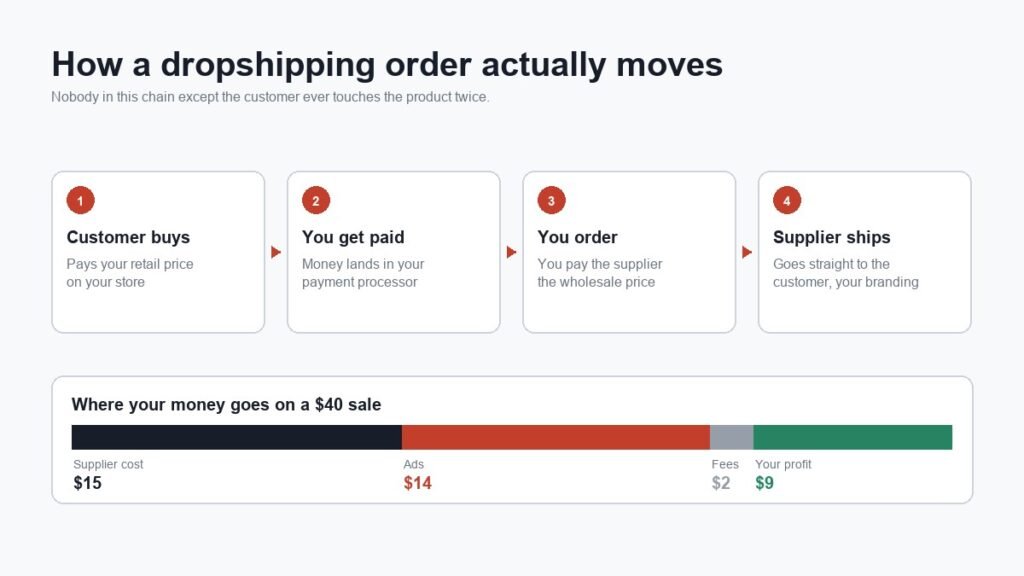
Every dropshipped sale follows the same sequence, whether the store sells one item a week or a thousand a day.
- The customer buys from you. They land on your store, see a product at your retail price, and pay. As far as they are concerned they have bought from your brand, and they have no idea a supplier exists.
- The money reaches you first. Payment goes to your processor, minus its cut. This ordering matters enormously: you are paid before you pay, so you are never funding stock out of your own pocket.
- You place the order with the supplier. Either manually or, far more often, automatically through an app that pushes the order across the moment it is placed. You pay the wholesale price plus shipping.
- The supplier ships directly to the customer. No return address pointing back to a warehouse the customer has never heard of, no supplier invoice in the box, and ideally your branding on the packing slip.
The cash-flow ordering in step two is the model’s single genuine advantage, and it is the reason dropshipping keeps attracting people with no capital. You are not buying inventory and hoping it sells. You are buying each unit only after it has already been sold.
Where the Money Actually Goes on a Dropshipped Sale
The margin is the part every honest explanation has to lead with, because it is where the model either works or quietly does not. Take a realistic example: a product you sell for $40 that costs $15 delivered from the supplier.
- Retail price: $40, paid by the customer.
- Supplier cost: $15, including their shipping.
- Payment processing: roughly $1.46 at the common 2.9% plus 30 cents rate, which is what Shopify charges on its Basic plan.
- Gross margin before advertising: about $23.54.
That looks healthy right up to the point where you ask how the customer found the store. Paid advertising is how almost all new dropshipping stores get traffic, and the cost of acquiring one customer routinely lands between $10 and $20 in competitive categories. Spend $14 to make that sale and the $23.54 becomes about $9.54. Spend $24 and you have lost money on a sale you appeared to make.
This is the arithmetic that decides everything. Dropshipping is not a business where the product margin is the problem. It is a business where the customer acquisition cost eats the product margin, and the operators who survive are the ones who either drive that cost down or raise the average order value enough to absorb it.
The Software That Makes the Model Practical
Forwarding orders by hand works until roughly the fifth order a day, at which point it stops being a business and becomes data entry. Three pieces of software do the actual work.
The storefront
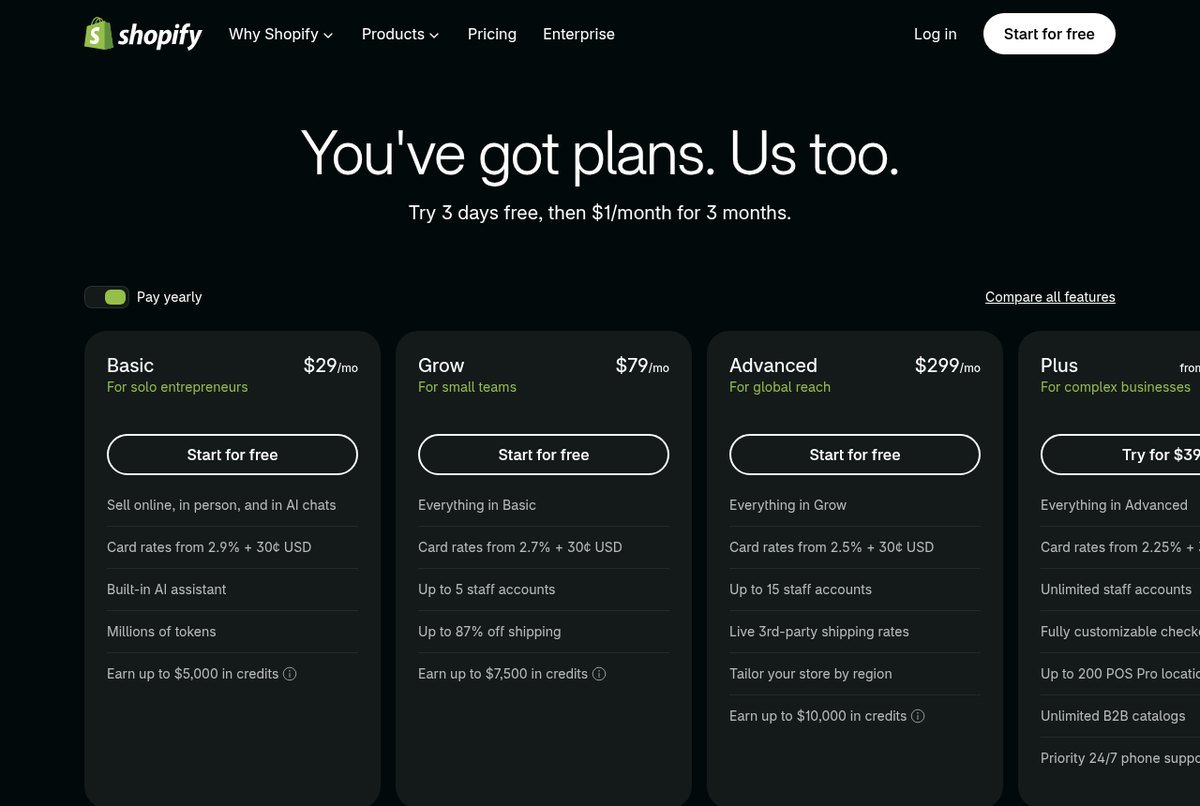
Shopify is the default, and its pricing page currently lists Basic at $29 a month billed annually or $39 billed monthly, Grow at $79 or $105, and Advanced at $299 or $399, with Plus starting at $2,300 a month. The card rate falls as the plan rises, from 2.9% plus 30 cents on Basic to 2.5% on Advanced.
The detail that catches beginners is the third-party gateway fee. Use a payment processor other than Shopify Payments and Shopify adds 2% on Basic, 1% on Grow and 0.6% on Advanced on top of whatever that processor charges. On thin dropshipping margins, 2% of revenue is not a rounding error. If you would rather build elsewhere, our comparison of the best website builders covers the alternatives.
The supplier app
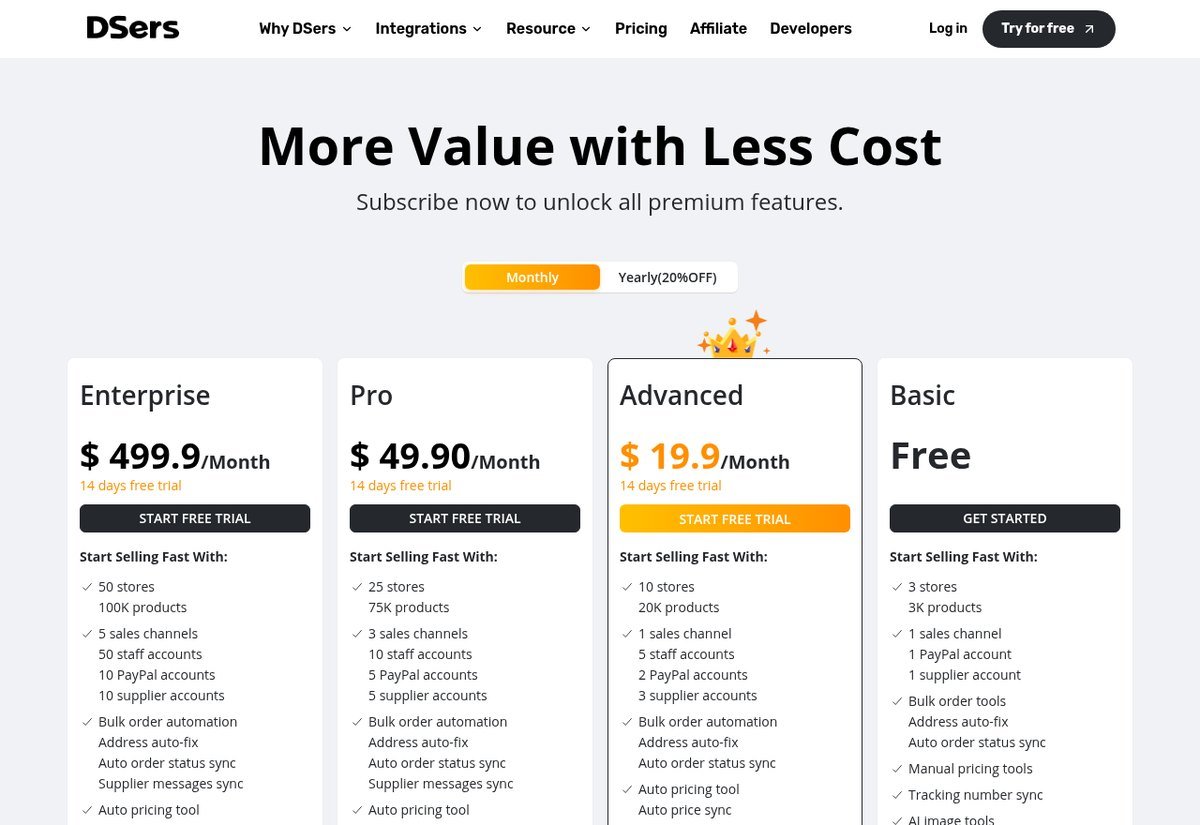
A supplier app is what turns a sale on your store into an order at the supplier without you typing anything. DSers is the most widely used for AliExpress sourcing, and its free Basic plan covers three stores, 3,000 products, one supplier account, bulk ordering, automatic order status sync and tracking-number sync. Paid tiers run $19.90 a month for Advanced, $49.90 for Pro and $499.90 for Enterprise, each with a 14-day trial.
The free tier genuinely is enough to run a small store, which matters when you are testing whether the model works at all before committing money to it.
The supplier network
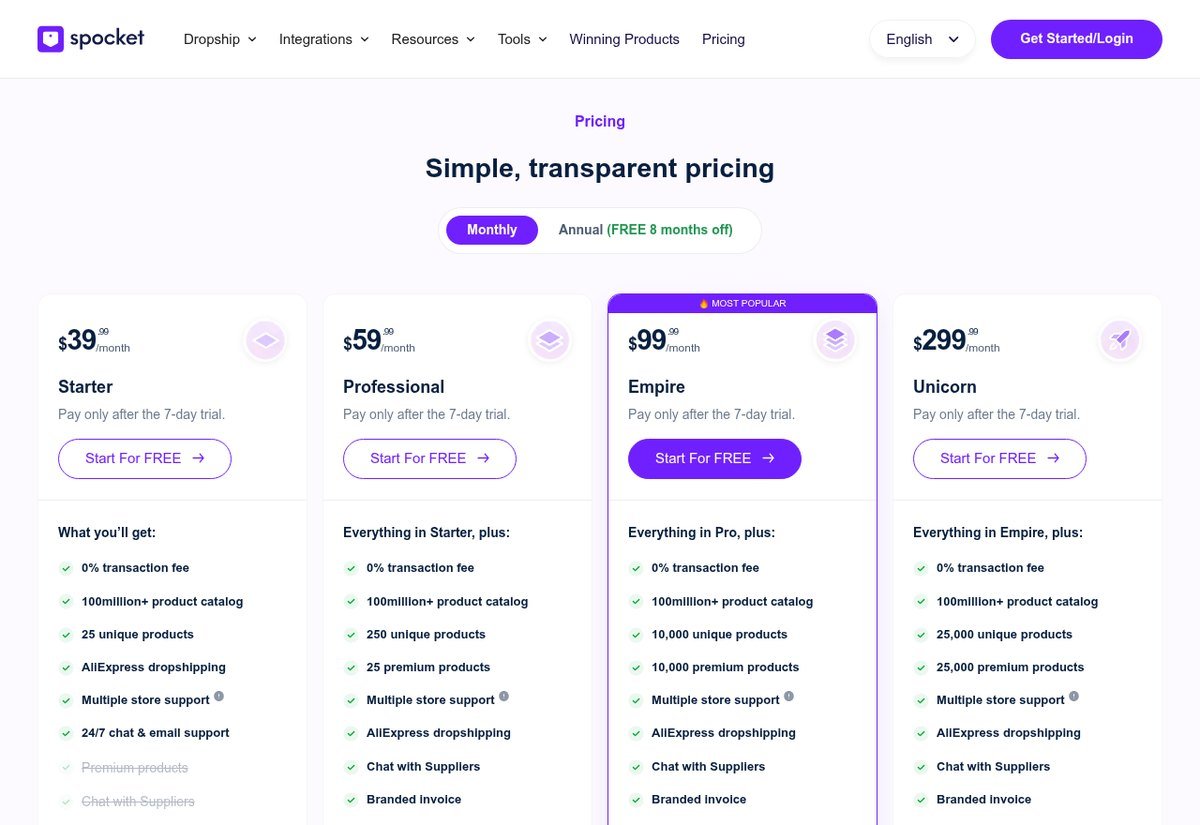
Where your supplier sits geographically decides your delivery times, and delivery times decide your refund rate. Spocket exists specifically to solve this, connecting stores to suppliers based in the United States and Europe rather than Asia. Its plans start at $39.99 a month for Starter, rising through Professional at $59.99, Empire at $99.99 and Unicorn at $299.99, with a seven-day trial.
Paying $39.99 a month to cut delivery from three weeks to three days sounds expensive until you price the alternative, which is a stream of refund requests from customers who assumed they were buying from a domestic retailer.
Dropshipping Compared With Holding Your Own Stock
| Factor | Dropshipping | Holding inventory |
|---|---|---|
| Upfront capital | Software and ads only | Stock bought before any sale |
| Risk if it fails | You stop, losing your ad spend | You own unsold stock |
| Margin | Thin, typically 15% to 30% | Wider, bulk pricing applies |
| Shipping speed | Supplier’s speed, often slow | You control it |
| Quality control | You never see the product | You inspect before it ships |
| Branding on the parcel | Limited, supplier dependent | Complete |
| Ease of scaling | Immediate, no stock ceiling | Constrained by cash and space |
Read that table as a straight trade: dropshipping swaps capital risk for control. You cannot be left with a garage full of unsold product, and you also cannot promise a delivery date, guarantee the item is not defective, or put your own insert in the box.
Who the Dropshipping Model Genuinely Suits
The model is not universally good or bad. It fits some situations precisely and others not at all.
- Testing demand before committing: its best legitimate use. Established retailers dropship new lines to see what sells before placing a bulk order.
- Anyone with marketing skill and no capital: if you can acquire customers cheaply, the lack of stock risk is a real advantage.
- Large or awkward items: furniture, equipment and machinery are expensive to warehouse, which is why dropshipping is quietly normal in those categories.
- Extending an existing catalogue: adding accessories around products you already stock, without new inventory.
It suits you badly if you want fast guaranteed delivery, tight quality control, strong physical branding, or a business you can run without becoming competent at paid advertising. That last one is the sticking point for most people who try it.
Four Things That Reliably Go Wrong
These are not edge cases. They are the standard failure modes, and every one of them is predictable.
- Shipping times nobody warned the customer about. A three-week delivery is survivable if it is stated clearly before checkout and a disaster if it is discovered afterwards.
- Selling something you have never handled. If you have not ordered a sample yourself, you are guessing about the quality, and your customers are the ones who find out.
- Returns nobody planned for. The customer returns to you, not to the supplier, and many overseas suppliers will not take the item back at all. That cost lands on you.
- Competing on a product anyone can list. If your product is a generic item from a marketplace catalogue, a hundred other stores have the identical listing and the only remaining lever is price.
Before any of that becomes your problem, treat it as a business rather than a side experiment: register properly, keep the money separate and track it. Our guides to business structures and payment processors for small business cover the two decisions that are expensive to reverse later.
Frequently Asked Questions
How does dropshipping work in simple terms?
You list a supplier’s product on your own store at your own price. When someone buys, their payment reaches you first, you then pay the supplier the wholesale price, and the supplier posts the item straight to your customer. You handle the storefront, the marketing and the customer service. The supplier handles the stock and the shipping.
Do you need money to start dropshipping?
You need less than most retail, but not nothing. You do not buy inventory, so the real costs are a store subscription from about $29 a month, a domain, and an advertising budget. The advertising is the part people underestimate: without traffic, a dropshipping store makes no sales at all, and traffic is the largest line item by a wide margin.
What profit margin is realistic in dropshipping?
Gross margins of 15% to 30% are typical, and net margins after advertising are usually in single digits. On a $40 sale with a $15 product cost, you might keep $9 or $10 once processing fees and customer acquisition are paid. Businesses that do better than that almost always sell higher-priced items or get repeat orders rather than buying every sale.
Is dropshipping the same as print on demand?
They are close relatives. Both mean a third party ships to your customer and you never hold stock. The difference is that print on demand manufactures the item after the order, applying your design to a blank garment or mug, so the product is unique to you. Standard dropshipping sells an existing catalogue item that competitors can list identically.
Related Articles
- Amazon Dropshipping: The Policy, the Fees and What Gets You Suspended
- Shopify Dropshipping: Setting Up a Store That Takes Orders
- Is Dropshipping Legal? The Rules That Actually Apply
- How to Find Dropshipping Suppliers You Can Actually Rely On
- How to Start Dropshipping: The Nine Steps in the Right Order
- Dropshipping Niches: How to Choose One You Can Actually Advertise
- Dropshipping Apps: What Each One Does and What It Costs

Get the Fox Bulletin briefing
The stories that matter, in your inbox. No spam, unsubscribe anytime.
Newsletter signup will be available soon.
Related stories
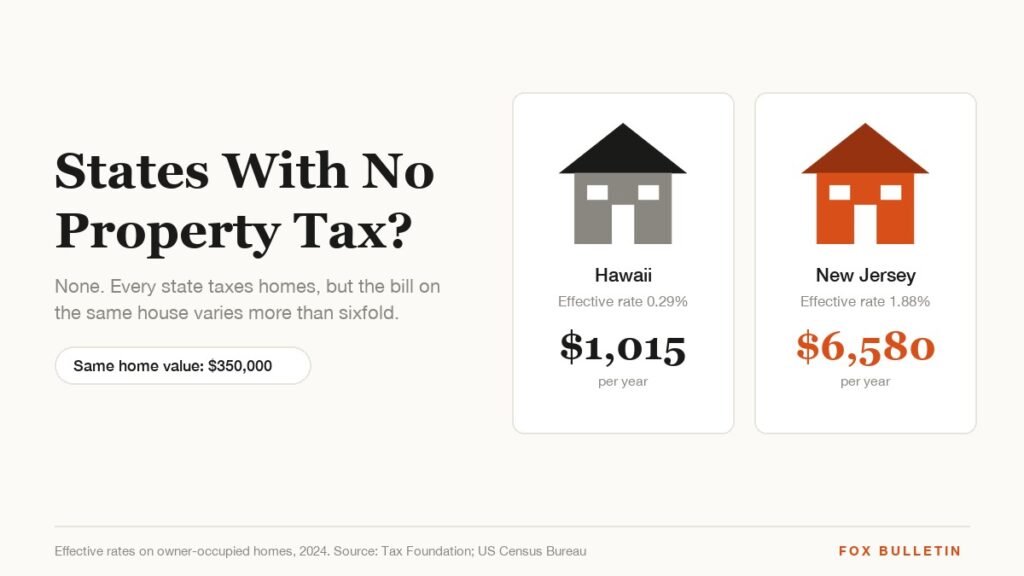
States With No Property Tax: Why None Exist, Plus Property Tax by State
There are no states with no property tax. Effective rates run from 0.29% in Hawaii to 1.88% in New Jersey and Illinois. Every state's rate, and the exemptions that can cut a bill to zero.
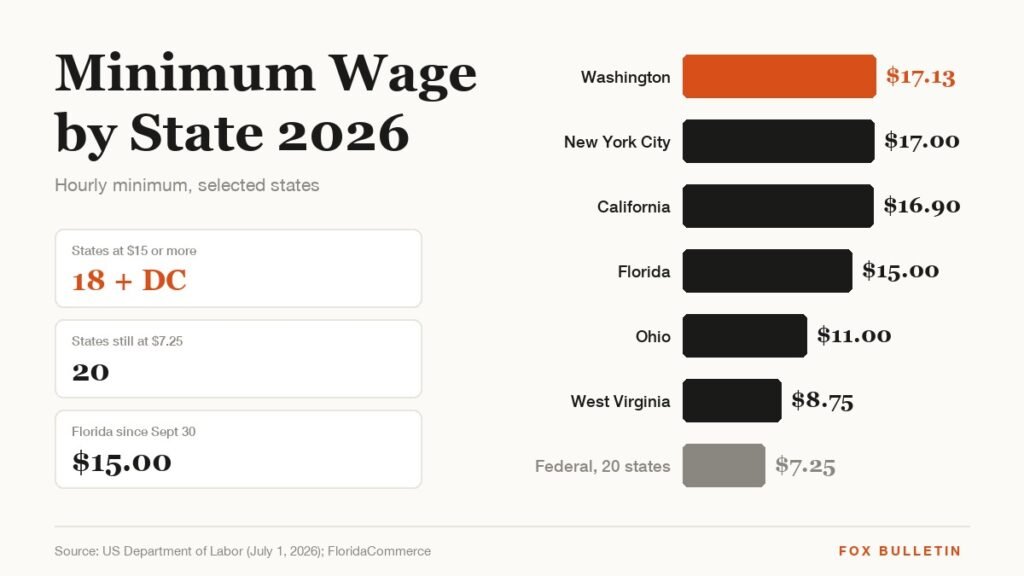
Minimum Wage by State 2026: Every State’s Rate, Plus Tipped Wages
The federal minimum wage is still $7.25, but 30 states and DC set higher rates, from $8.75 in West Virginia to $17.13 in Washington. Every state's rate and tipped wage for 2026.
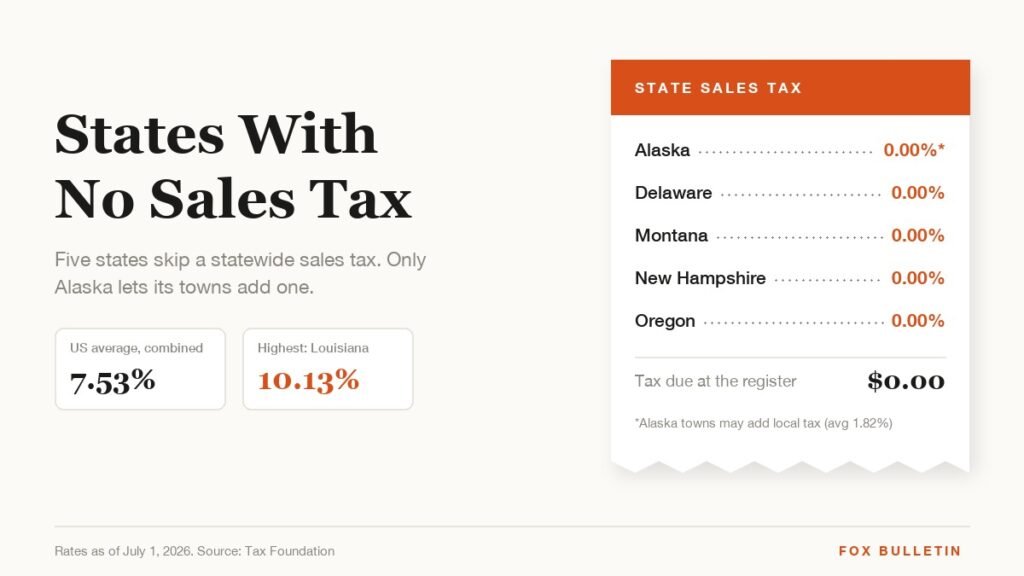
States With No Sales Tax: All 5, Plus Sales Tax by State
Alaska, Delaware, Montana, New Hampshire and Oregon have no statewide sales tax. What each one taxes instead, and the 2026 sales tax rate in every other state.