

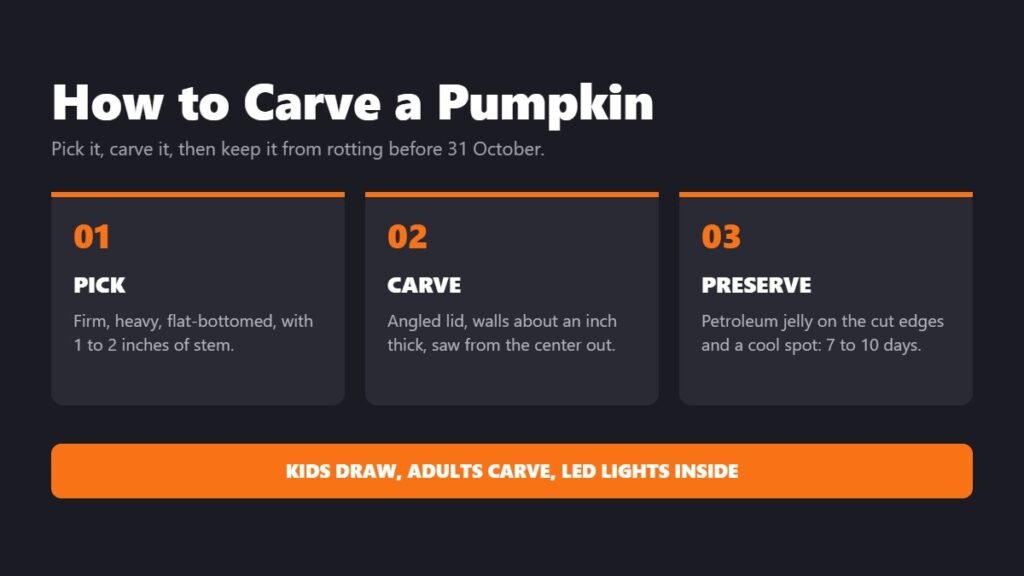
To carve a pumpkin, cut an angled lid, scoop out the seeds and strings, scrape the wall down to about an inch thick, tape a pattern near the top and poke along its lines, then saw the design out slowly from the center outward. Light it with a battery tea light rather than a candle. A carved pumpkin lasts seven to 10 days, according to University of Illinois Extension, so with Halloween on a Saturday this year, carving around 24 October gets it to the 31st in good shape.
The method below comes from the pumpkin guides published by extension services at Washington State University, Utah State and the University of Illinois, with safety advice from the American Academy of Pediatrics, the Consumer Product Safety Commission and the National Fire Protection Association. Where an extension service and internet lore differ, the extension service is the one to follow.
What Kind of Pumpkin Is Best for Carving?
Look for a pumpkin that is firm, heavy for its size and free of soft spots, holes, cuts or cracks, with 1 to 2 inches of stem still attached. Illinois Extension’s buying advice adds two checks: never carry a pumpkin by its stem, since it snaps off and lets rot in, and pick one with a flat bottom so it stands upright on the step.
- Press a thumbnail into the skin. If it scratches easily, the pumpkin is past its best.
- Match the size to the design. Washington State University’s extension master gardeners suggest medium pumpkins for most stencils, large ones for elaborate designs and small ones for a quick traditional face.
- Paler pumpkins are easier to carve because the skin is softer, but they do not keep as well.
- Look for a carving variety. Illinois Extension names smooth orange types such as Jack-O-Lantern, Happy Jack and Spooktacular, bred after World War II with sturdy stems for handles.
What Tools Do You Need to Carve a Pumpkin?
You can carve a pumpkin with a kitchen knife and a spoon, but the WSU carving guide recommends tools that are sturdy, thin and sharp:
- A boning knife for the lid and large pieces, and a paring or craft knife for detail.
- A small serrated saw for the design itself.
- A poker, such as an ice pick, nail or stylus, to transfer the pattern.
- A sturdy spoon or ice cream scoop for gutting.
- Masking tape, a pattern, and a washable marker or crayon.
- Petroleum jelly and a battery tea light to finish.
A carving kit bundles the saws, scoop, poker and patterns in one box. Its small saws cut with short strokes rather than force, which is the way WSU says a saw should be used.
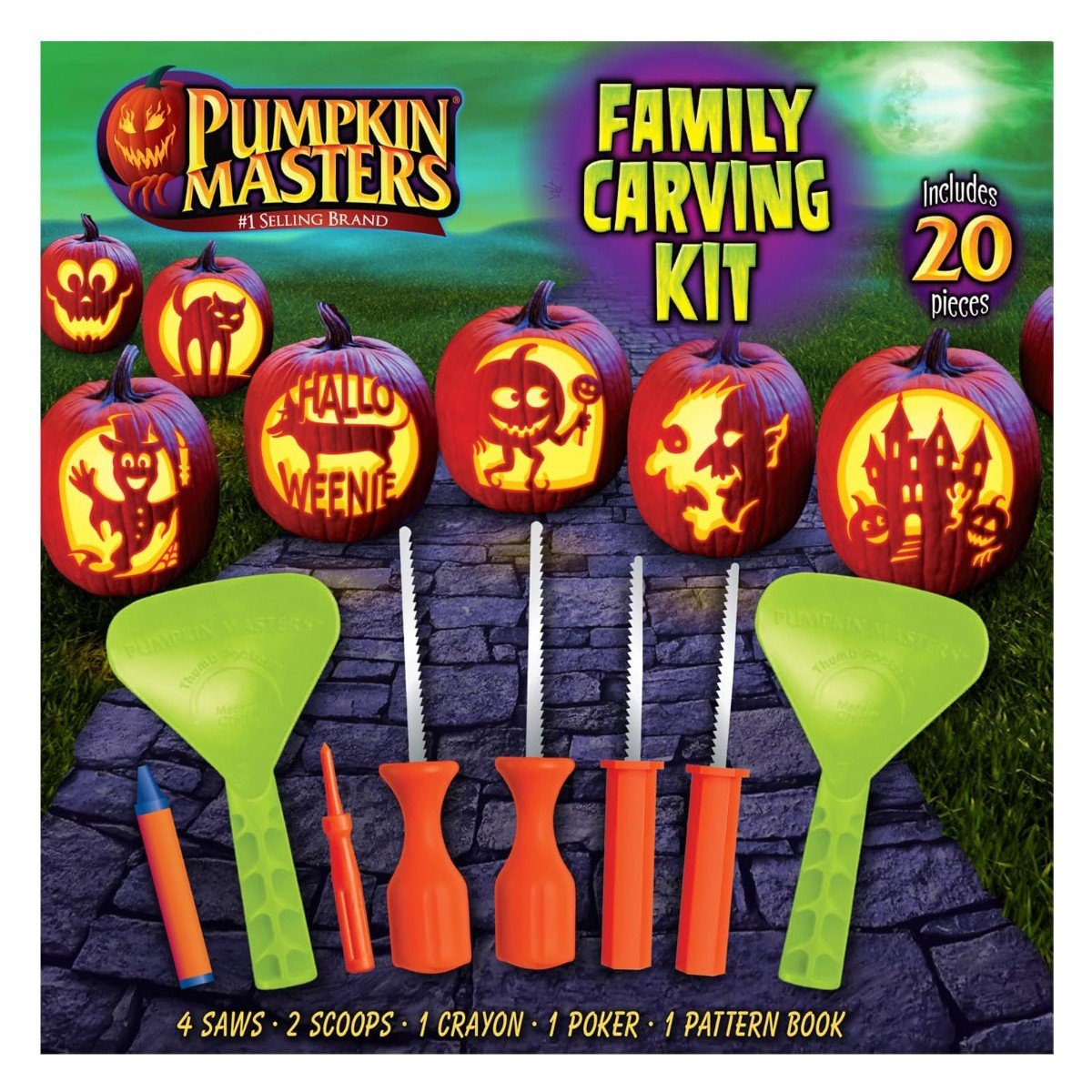
Pumpkin Masters Pumpkin Carving Kit. This kit includes four carving tools and 12 stencil patterns, enough for the whole family’s pumpkins, and the tools are reusable, so one kit covers several Halloweens.
How to Carve a Pumpkin, Step by Step
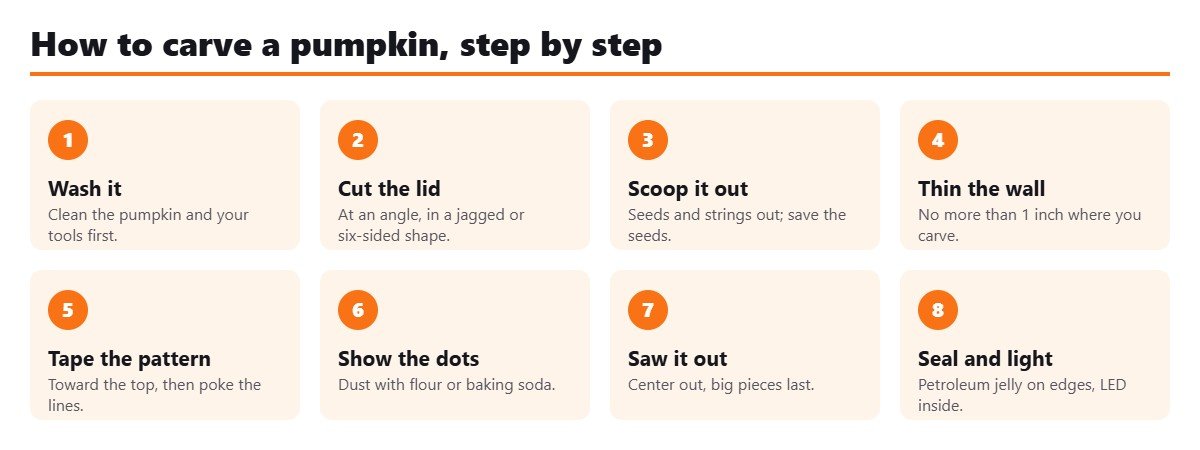
- Wash the pumpkin and your tools. Utah State University Extension says starting clean and removing all the insides gives mold less to grow on.
- Cut the lid at an angle. Hold the knife tilted toward the center and cut a jagged or six-sided shape rather than a circle, so the lid rests on a ledge instead of dropping inside.
- Scoop out the seeds and strings. Keep the seeds if you want to roast them.
- Thin the wall where you will carve. WSU says to scrape it to no more than an inch thick; very detailed designs need it thinner.
- Tape the pattern toward the top of the pumpkin, not the middle, so the light shines upward through the design. Poke along the lines about 1/8 inch apart, through the paper and just the skin.
- Peel off the pattern and dust the dots with flour or baking soda if they are hard to see.
- Saw the design out slowly. Use gentle up-and-down strokes, start at the center of the design and work outward, and cut the large pieces last. Push the pieces out from inside.
- Seal and light it. Rub petroleum jelly over the cut edges and light it with a battery tea light.
WSU’s one rule for the saw is worth repeating: it is not a knife, so do not force it. If a piece of the design snaps off, pin it back in place with a toothpick.
Should You Cut the Top or the Bottom of a Pumpkin?
The top is traditional, and it works well if the stem is sturdy enough to use as a handle. Cutting a hole in the bottom instead has two advantages, according to WSU: you can simply set the pumpkin over a light, and it is the way to go if the stem is missing. Whichever you choose, angle the cut so the piece you remove cannot fall through.
How Thick Should Pumpkin Walls Be for Carving?
About an inch, or less. WSU’s guide says to scrape the inside until the wall is no more than one inch thick where the design will go. Thinner walls let more light through and make the saw easier to control, which matters for stencils with small details. You only need to thin the side you are carving.
How Do You Transfer a Pattern Onto a Pumpkin?
Tape the paper pattern to the pumpkin, pressing it as flat against the curve as you can. Then use a poker to punch through the lines about 1/8 inch apart, going through the paper and only the skin. When you peel the paper away, the dotted outline is your cutting guide. If the dots are hard to follow, rub flour or baking soda over them. For young children, drawing the face straight onto the pumpkin with a washable marker is easier than using a pattern.
Can Kids Carve Pumpkins Safely?
Kids should draw and scoop, and adults should carve. The Consumer Product Safety Commission estimates about 3,200 Halloween-related injuries are treated in emergency rooms each year, and 55 percent of them come from pumpkin carving. More than half of those injured are adults, which is a reminder that the risk is the knife rather than the carver’s age.
The American Academy of Pediatrics recommends that small children decorate pumpkins with markers and leave the cutting to adults. Older children who want to carve should use a kit saw rather than a kitchen knife, work at a table with good light, and keep their other hand away from the line of the cut.
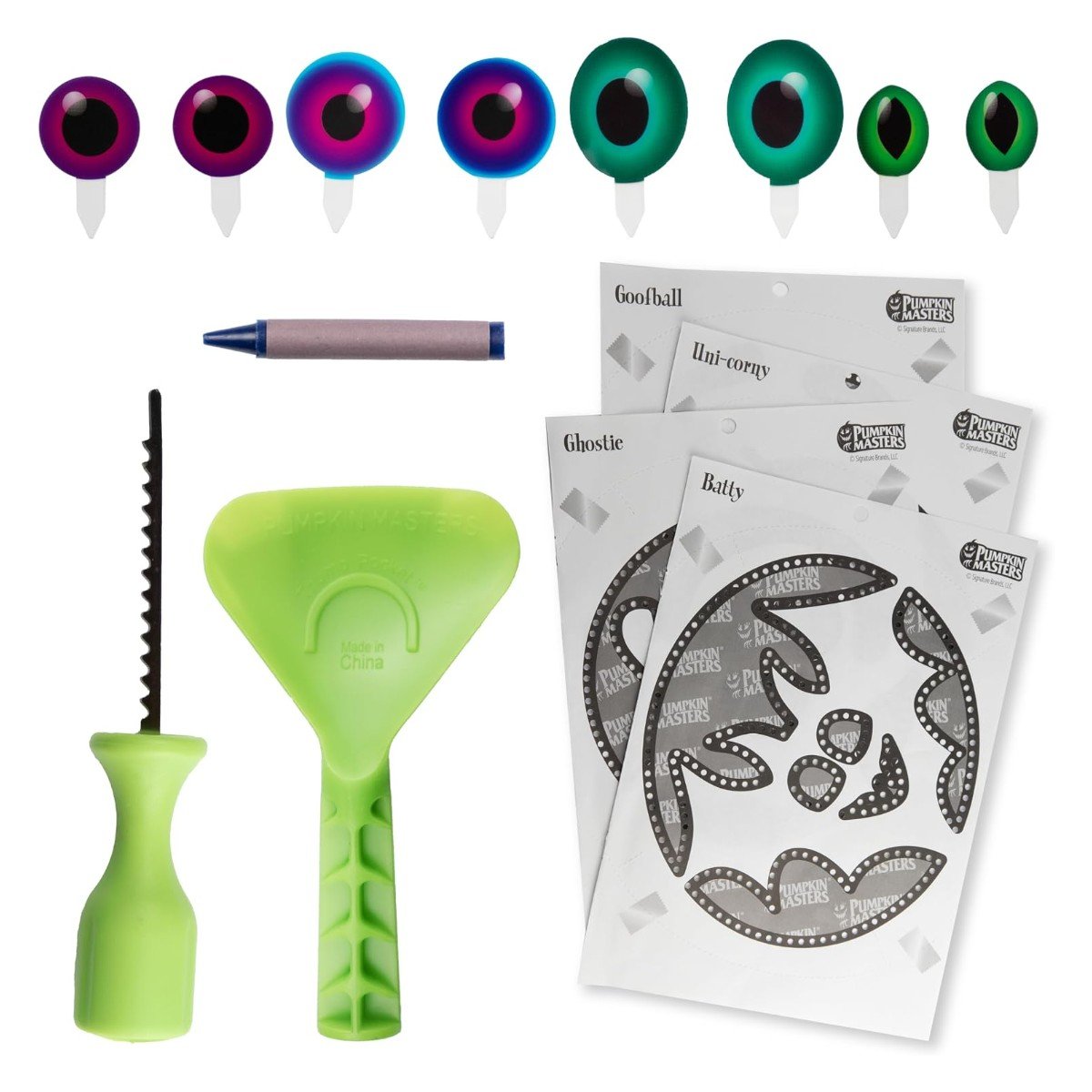
Pumpkin Masters Kids Pumpkin Carving Kit. A smaller kit built around a safety saw, with a scoop, a crayon for drawing the design, four patterns and four pairs of stick-in spooky eyes, so younger children can finish a pumpkin without much cutting at all.
Is It Safe to Put a Candle in a Jack-o’-Lantern?
It can be done safely, but a battery light is the better choice. The NFPA says decorations are the first item to ignite in more than 800 reported home fires a year, and nearly a third of those start with a candle. Its advice is to use a battery-operated candle or glow stick in jack-o’-lanterns. If you do use a real candle:
- Use a votive or a candle in a glass holder, such as a jelly jar.
- Light it with a long fireplace match or a utility lighter.
- Keep lit pumpkins away from anything that can burn, and off walkways and doorsteps where costumes brush past.
- Never leave a lit candle unattended.
- Cut a small chimney hole in the lid if it starts to blacken.
There is a second reason to skip the flame: Illinois Extension says candles cook the flesh from the inside, which shortens the pumpkin’s life.
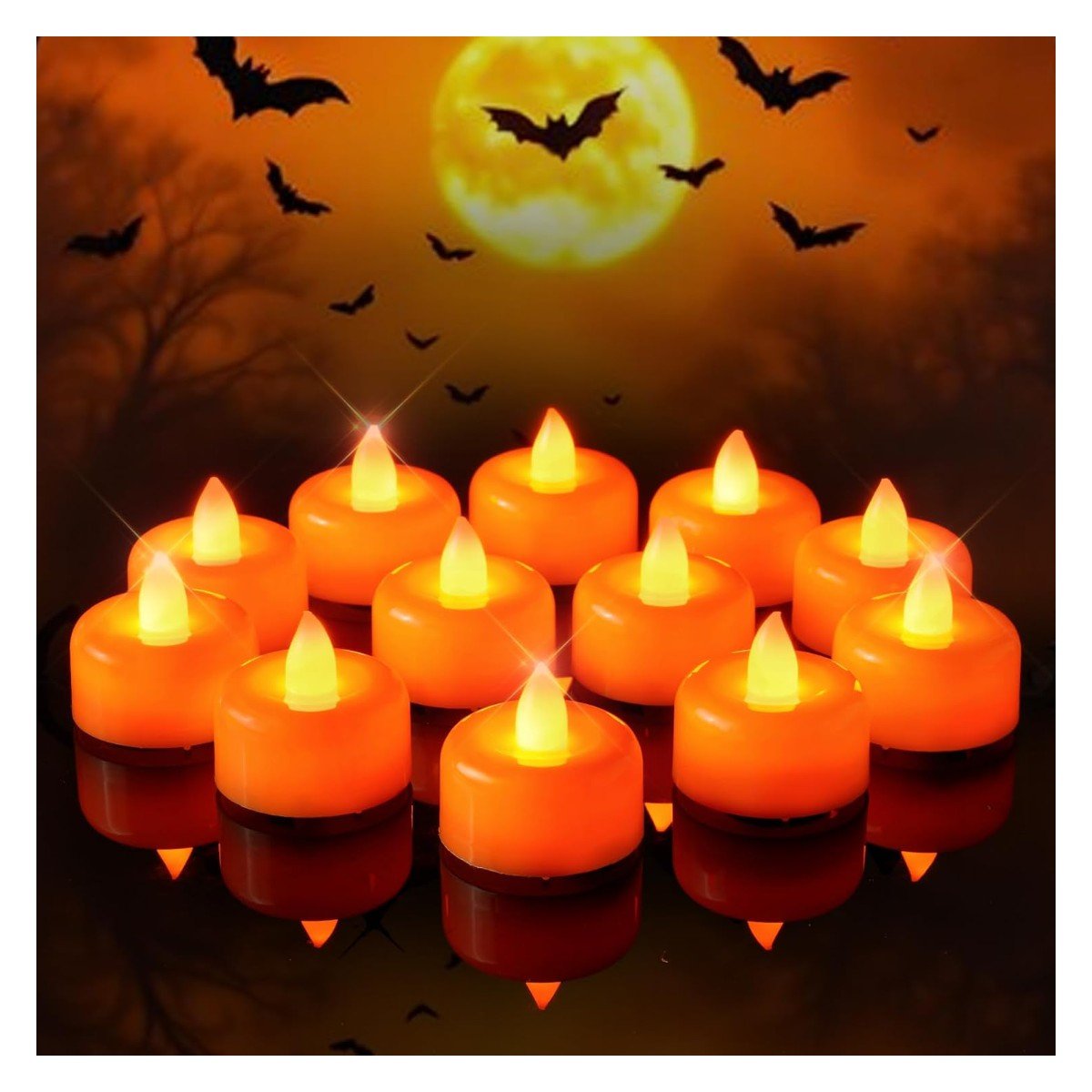
Amagic Orange LED Tea Lights. A 12-pack of battery tea lights with an orange glow, about 1.5 inches wide, with the batteries already fitted. Amagic rates them at more than 100 hours, which covers a week on the porch. The small batteries are not suitable for children under three, so keep spares out of reach.
How Do You Keep a Carved Pumpkin From Rotting?
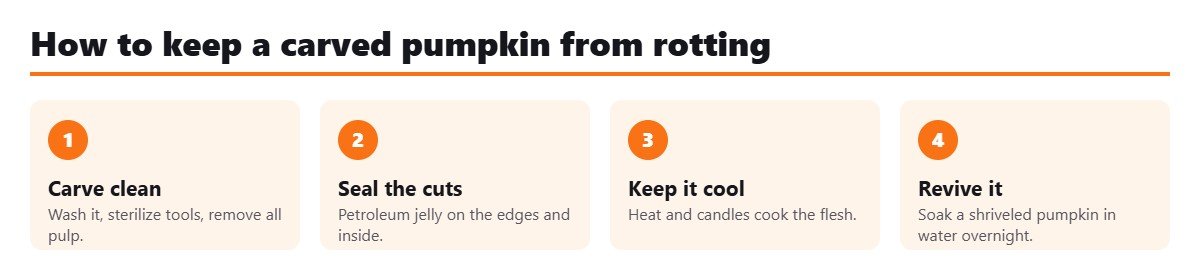
Once it is cut, a pumpkin starts to dry out and grow mold, usually common molds such as Penicillium and Aspergillus. You cannot stop that, but you can slow it down:
- Start clean. Wash the pumpkin, sterilize your tools and scrape out every bit of pulp.
- Seal the cut surfaces. Illinois Extension and WSU both recommend rubbing petroleum jelly over the inside and the cut edges straight after carving, which locks moisture in.
- Treat it against mold. Utah State suggests dipping, washing or spraying the finished carving with a 10 percent bleach solution, or roughly one part household bleach to nine parts water. Illinois Extension points out that a bleach-treated pumpkin then cannot be composted or left for animals, and suggests a white vinegar solution as a safer alternative.
- Keep it cool. A carved pumpkin lasts longer in a cool, shaded spot, and a battery light adds no heat.
- Revive a shriveled pumpkin by soaking it in water overnight, WSU says.
What Do You Do With Pumpkins After Halloween?
Compost it. Illinois Extension suggests smashing the pumpkin first so it breaks down faster, and removing candles, paint or decorations before it goes on the pile. Do not leave it in the woods for deer or squirrels: the Illinois Department of Natural Resources discourages it because of disease spread and damage complaints, and dumping pumpkins in parks or ditches counts as littering.
Eating a jack-o’-lantern is not a good idea either. NC State Extension says carving pumpkins have more strings, less flesh and less flavor than small pie pumpkins, and cut pumpkin needs to be eaten or refrigerated the same day, so one that has sat on the porch should not become pie. The seeds are a different story: scoop them out on carving day and see our guide to how to roast pumpkin seeds.
Frequently Asked Questions
How long does a carved pumpkin last?
Seven to 10 days, depending on the weather, according to University of Illinois Extension. Warm days and candles shorten that; a cool spot, petroleum jelly on the cut edges and a battery light stretch it.
When should I carve my pumpkin for Halloween?
About a week before. Working back from the seven-to-10-day figure, carving on the weekend of 24 and 25 October means your pumpkin should still look good on Saturday, 31 October. Buy it earlier if you like: an uncut pumpkin keeps far longer than a carved one.
Does petroleum jelly keep a pumpkin from rotting?
It slows it down. Petroleum jelly seals moisture into the cut surfaces so the pumpkin shrivels more slowly, and both Illinois Extension and WSU recommend it. It does not stop mold, which is why Utah State also suggests a dilute bleach spray.
Can you eat a carving pumpkin?
You can, but it will not taste like much. NC State Extension says carving pumpkins have more strings, less flesh and less flavor than pie pumpkins, so use a small sugar or pie pumpkin for cooking. Never eat a jack-o’-lantern that has been sitting out.
Can I leave my old jack-o’-lantern out for deer or squirrels?
It is better not to. Wildlife agencies such as the Illinois Department of Natural Resources discourage feeding pumpkins to wild animals because it can spread disease and cause damage complaints, and feeding deer is illegal in some states, including Illinois. Compost it instead.
Related Articles
- Best Halloween Costumes 2026: 13 Picks for Adults, Kids, Couples and Pets
- How to Season Cast Iron the Way the Foundry Says To
- Best Outdoor Halloween Decorations: 7 Compared on Size and Power
- History of Halloween: From Samhain Bonfires to Trick-or-Treat
- Pumpkin Carving Ideas: 15 Designs From Easy to Advanced
As an Amazon Associate, Fox Bulletin earns from qualifying purchases.

Get the Fox Bulletin briefing
The stories that matter, in your inbox. No spam, unsubscribe anytime.
Newsletter signup will be available soon.
Related stories

Birthstones by Month: Every Stone, Color and Meaning
Every month's birthstone, its color and Mohs hardness, where it comes from, how to care for it, and how jewelers built the list in 1912 and kept adding to it.
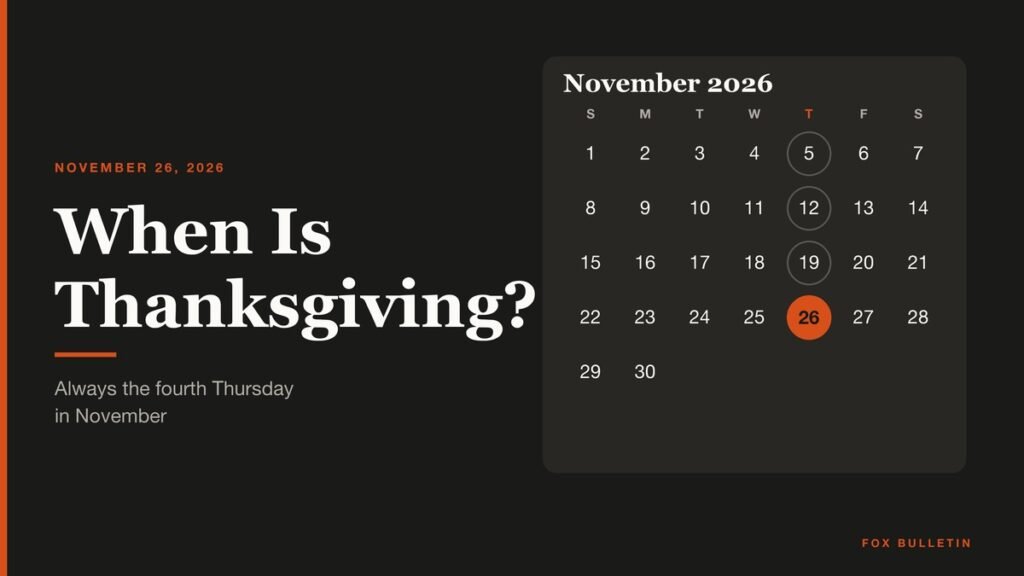
When Is Thanksgiving? This Year’s Date and the Next 10 Years
Thanksgiving 2026 falls on Thursday, November 26. Here is every date through 2035, the 1941 law behind the fourth-Thursday rule, and what happens that week.
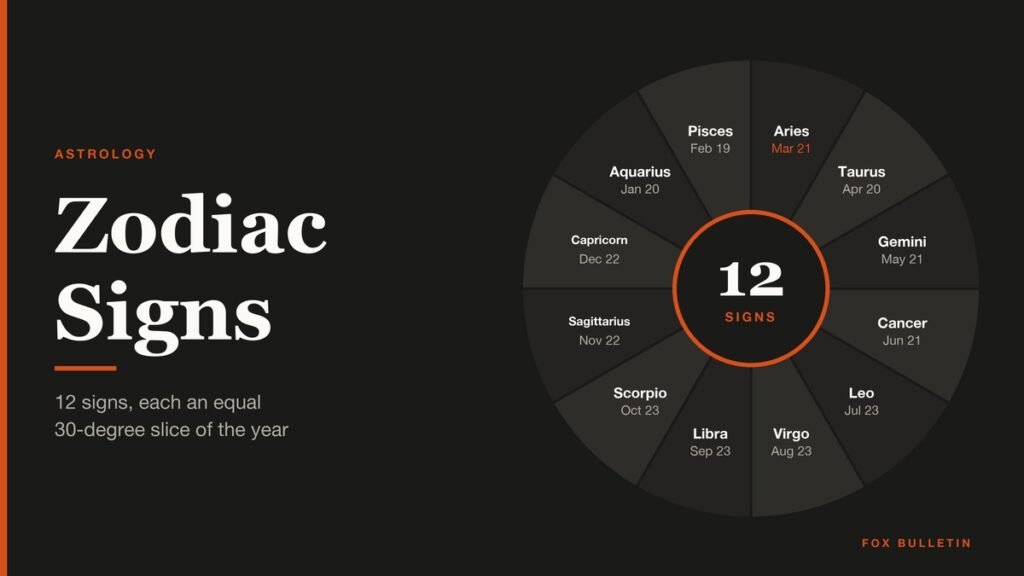
Zodiac Signs: All 12 Dates, Meanings and Constellations
The 12 zodiac signs from Aries to Pisces: dates, elements, modalities and rulers, the constellation behind each sign, and why the Sun is no longer where the signs say.