

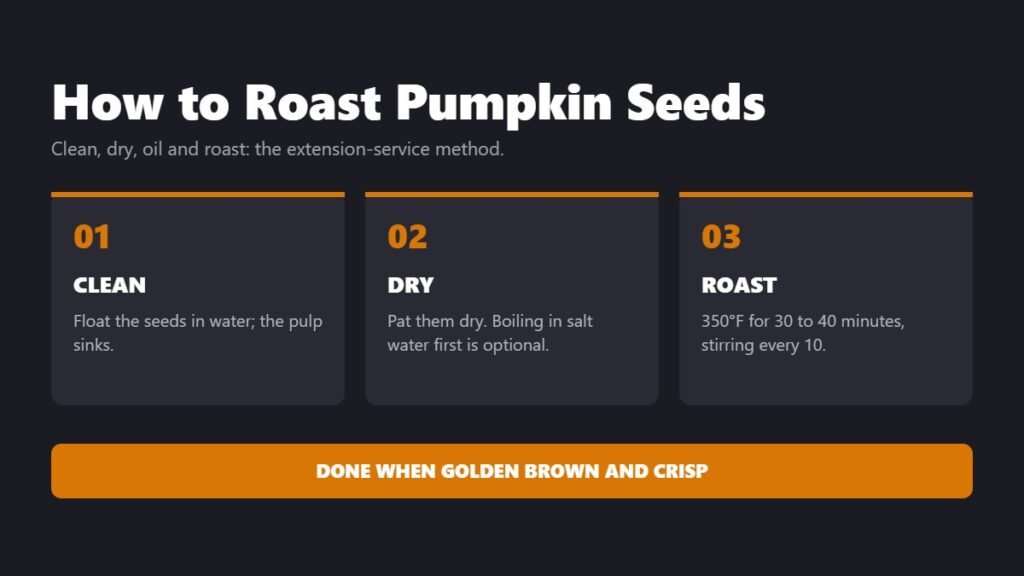
To roast pumpkin seeds, separate them from the pulp in a bowl of water, rinse and pat them dry, toss them with a tablespoon of oil per 2 cups of seeds and a pinch of salt, then spread them in a single layer and roast at 350°F for 30 to 40 minutes, stirring every 10 minutes, until they are golden brown. Let them cool on the pan and they will crisp up as they do.
That is the method in University of Illinois Extension’s recipe, and it is close to what Utah State, UConn and the University of Alaska Fairbanks publish. The steps, times and seasoning mixes below come from those extension services, and the nutrition figures come from the USDA’s FoodData Central database. If you are carving this week, our guide to how to carve a pumpkin covers the part before the seeds.
How Do You Clean Pumpkin Seeds?
Water does most of the work. Tip the seeds and stringy pulp into a large bowl of cool water and swish them around: UConn Extension notes the pulp sinks while the seeds float, so you can skim the seeds off the top.
- Loosen seeds that cling to the fibers with your fingers or a paper towel.
- Pick out any seeds you cut while scooping, and as much of the stringy fiber as you can.
- Drain the seeds in a colander and rinse off anything still stuck to them.
- Pat them dry with a paper towel or clean kitchen towel. Wet seeds steam instead of roasting.
Should You Boil Pumpkin Seeds Before Roasting?
You do not have to, but it helps. Illinois Extension’s optional first step is to boil 2 cups of seeds for 10 minutes in a quart of water with 2 tablespoons of salt, then drain and pat them dry. Its recipe says boiling in salt water helps the seeds roast more evenly. The University of Alaska Fairbanks uses the same brine but boils the seeds for 30 minutes before roasting them at a lower 300°F.
If you are short on time, skip it: the seeds still roast well straight from the towel, and you can salt them with the oil instead.
How to Roast Pumpkin Seeds in the Oven, Step by Step
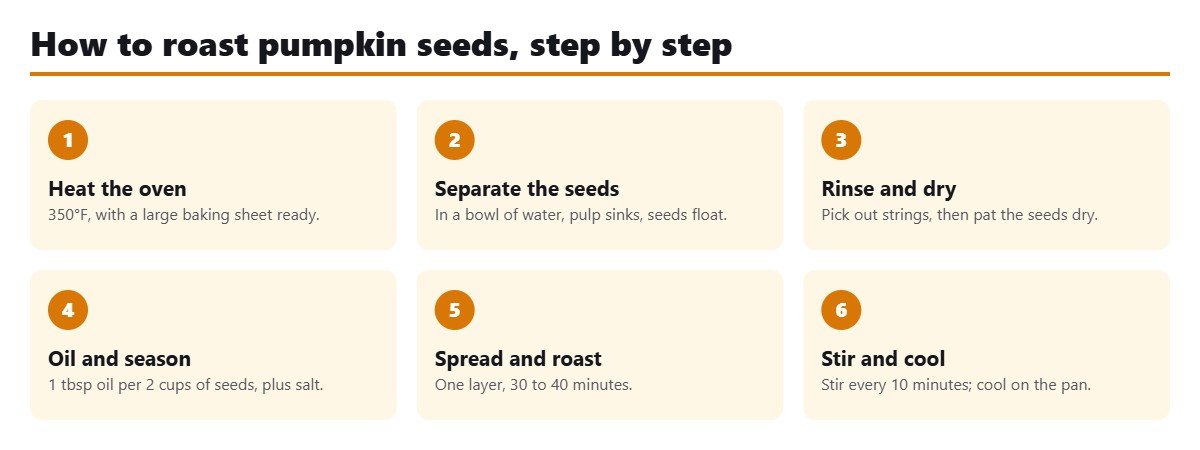
- Heat the oven to 350°F and get out a large rimmed baking sheet.
- Clean and dry the seeds as above, boiling them in salt water first if you like.
- Toss with oil and seasoning. Illinois uses 1 tablespoon of olive or canola oil for every 2 cups of seeds, tossed in a bowl so every seed is coated. Add salt or one of the seasoning mixes below.
- Spread them in a single layer. Crowded seeds steam; use two pans for a big batch.
- Roast for 30 to 40 minutes, stirring about every 10 minutes so they brown evenly.
- Cool them on the pan before you taste-test or store them. They finish crisping as they cool.
What Temperature Do You Roast Pumpkin Seeds At, and for How Long?
Most extension recipes roast at 350°F for 30 to 40 minutes. Lower temperatures take a little longer but are more forgiving if your oven runs hot. Here is what each source recommends:
| Source | Oven temperature | Time | Stir |
|---|---|---|---|
| University of Illinois Extension | 350°F | 30 to 40 minutes | About every 10 minutes |
| Utah State University Extension | 350°F | 35 to 40 minutes | Occasionally |
| University of Alaska Fairbanks (after boiling) | 300°F | 30 to 40 minutes | Every 10 minutes |
| UConn Extension | 275°F | 30 to 35 minutes | Every 15 minutes |
| Nebraska Extension (seeds dried first) | 250°F | 10 to 15 minutes | Not stated |
The Nebraska method is the odd one out because it dries the seeds first, either in a dehydrator at 115 to 120°F for one to two hours or in a 150°F oven for three to four hours, then gives them a short, low roast with oil and seasoning. It takes longer overall, so save it for a day when you are home anyway.
How Do You Know When Pumpkin Seeds Are Done?
Go by color and sound rather than the clock. The seeds are done when they turn golden or light brown and the shells look dry. Take one out, let it cool for a minute and bite it: it should crunch, not bend. If it is still chewy, give the pan another five minutes and check again. Seeds darken fast at the end, and a burnt batch tastes bitter, so start checking at the low end of the time range.
Pumpkin Seed Seasoning Ideas: Sweet and Savory
Salt is the classic, but Utah State University Extension publishes five mixes that go further. Toss the seeds with the oil or butter and seasoning before roasting:
| Flavor | What to mix in |
|---|---|
| Cinnamon toast | 1 tsp cinnamon, 2 tbsp sugar, ¼ tsp salt, 3 tbsp melted butter or olive oil |
| Chili | 1 tbsp chili powder, 1 tbsp tamari, 2 tsp garlic powder, 1 tbsp olive oil, salt to taste |
| Spicy | ½ tsp paprika, ¼ tsp cayenne, 1 tbsp red pepper flakes, 2 tbsp melted butter or oil |
| Ginger zest | 2 tbsp ground ginger, 2 tbsp sugar, ½ tsp orange zest, 2 tbsp melted butter or oil |
| Parmesan | ¼ cup Parmesan, 1 tsp black pepper, 2 tbsp melted butter or oil |
UConn Extension keeps it simpler: equal parts cinnamon, nutmeg and cloves for a sweet batch, or equal parts salt, pepper, garlic and cumin for a savory one. Sugary mixes brown faster, so keep a closer eye on them in the last 10 minutes.
Can You Roast Pumpkin Seeds on the Stove or in the Microwave?
Yes to both, according to the University of Alaska Fairbanks:
- On the stove: toast the dried, oiled seeds in a skillet over medium-low heat, stirring often. They are ready when they start to pop and smell nutty.
- In the microwave: cook them on high for seven to eight minutes, stirring every two minutes.
We did not find an extension service that publishes tested air fryer times for pumpkin seeds. If you try it, cook a small batch in one layer, shake the basket often and check them early, because the fan can blow light seeds around and brown them quickly. Our air fryer guide covers how basket and oven-style models differ.
Are Roasted Pumpkin Seeds Good for You?
They are one of the better snacks you can make from a Halloween leftover, especially for magnesium. These figures are per ounce (28 grams), roasted without salt, from USDA FoodData Central’s entries for whole seeds and hulled kernels, with Daily Values from the FDA:
| Per 1 oz (28 g) | Whole seeds, shell on | Hulled kernels (pepitas) |
|---|---|---|
| Calories | 125 | 161 |
| Protein | 5.2 g | 8.3 g |
| Fat | 5.4 g | 13.7 g |
| Fiber | 5.2 g | 1.8 g |
| Magnesium | 73 mg (17% DV) | 154 mg (37% DV) |
| Zinc | 2.9 mg (26% DV) | 2.1 mg (19% DV) |
| Iron | 0.9 mg (5% DV) | 2.3 mg (13% DV) |
The shells account for the difference in fiber: seeds you roast from your own pumpkin, eaten whole, have nearly three times the fiber of shelled kernels. Watch the salt, though. USDA lists salted whole roasted seeds at about 711 mg of sodium per ounce, close to a third of the daily limit, so go easy on the salt if you are eating a big handful.
Pumpkin Seeds vs. Pepitas: What’s the Difference?
Pepitas are pumpkin seeds without the shell. The seeds you scoop from a carving pumpkin come in a white or cream hull, and you can eat them shell and all. The flat green kernels sold as pepitas are the seed inside that hull. Some pumpkin varieties are grown for hull-less seeds, which the University of Alaska Fairbanks notes are often preferred for snacking, but it adds that any pumpkin seed is edible. Utah State suggests the hulled green kernels for breads and muffins, where a crunchy shell would get in the way.
How Long Do Roasted Pumpkin Seeds Last?
Up to about two weeks. Utah State says cooled roasted seeds keep for up to two weeks at room temperature in an airtight container, and the University of Alaska Fairbanks gives 10 to 14 days in the fridge. For longer storage, freeze them in a sealed bag or container. Make sure the seeds are completely cool and dry before you seal them, or trapped moisture will soften them.
Frequently Asked Questions
Can you eat pumpkin seeds with the shell on?
Yes. Roasted whole seeds from a carving pumpkin are edible shell and all, and the shell is where most of their fiber comes from. Chew them well; if you find the shells too tough, crack them open and eat the kernel inside.
Do you have to wash pumpkin seeds before roasting?
You should rinse off the pulp and strings, which burn before the seeds are done. A bowl of water makes it easy because the seeds float and the pulp sinks. Then dry them well.
Can you roast seeds from butternut or other winter squash?
Yes. Utah State University Extension’s recipe covers both pumpkin and winter squash seeds. Smaller seeds roast faster, so start checking them a few minutes early.
How many calories are in an ounce of roasted pumpkin seeds?
About 125 calories for whole seeds in the shell and about 161 for hulled kernels, according to USDA FoodData Central, both roasted without salt.
Why are my roasted pumpkin seeds chewy?
Usually because they were still damp when they went in the oven or came out too early. Dry them thoroughly, spread them in one layer, roast until golden brown, and let them cool completely on the pan, which is when they finish crisping.
Related Articles
- How to Season Cast Iron the Way the Foundry Says To
- Best Halloween Costumes 2026: 13 Picks for Adults, Kids, Couples and Pets
- Most Popular Halloween Candy 2026: The Top Pick in Every State
- History of Halloween: From Samhain Bonfires to Trick-or-Treat
- Day of the Dead (Día de los Muertos): Dates, Traditions and Meaning
- Pumpkin Carving Ideas: 15 Designs From Easy to Advanced
- How to Get Rid of Fruit Flies: 5 Steps That Actually Work

Get the Fox Bulletin briefing
The stories that matter, in your inbox. No spam, unsubscribe anytime.
Newsletter signup will be available soon.
Related stories

Birthstones by Month: Every Stone, Color and Meaning
Every month's birthstone, its color and Mohs hardness, where it comes from, how to care for it, and how jewelers built the list in 1912 and kept adding to it.
When Is Thanksgiving? This Year’s Date and the Next 10 Years
Thanksgiving 2026 falls on Thursday, November 26. Here is every date through 2035, the 1941 law behind the fourth-Thursday rule, and what happens that week.

Zodiac Signs: All 12 Dates, Meanings and Constellations
The 12 zodiac signs from Aries to Pisces: dates, elements, modalities and rulers, the constellation behind each sign, and why the Sun is no longer where the signs say.