

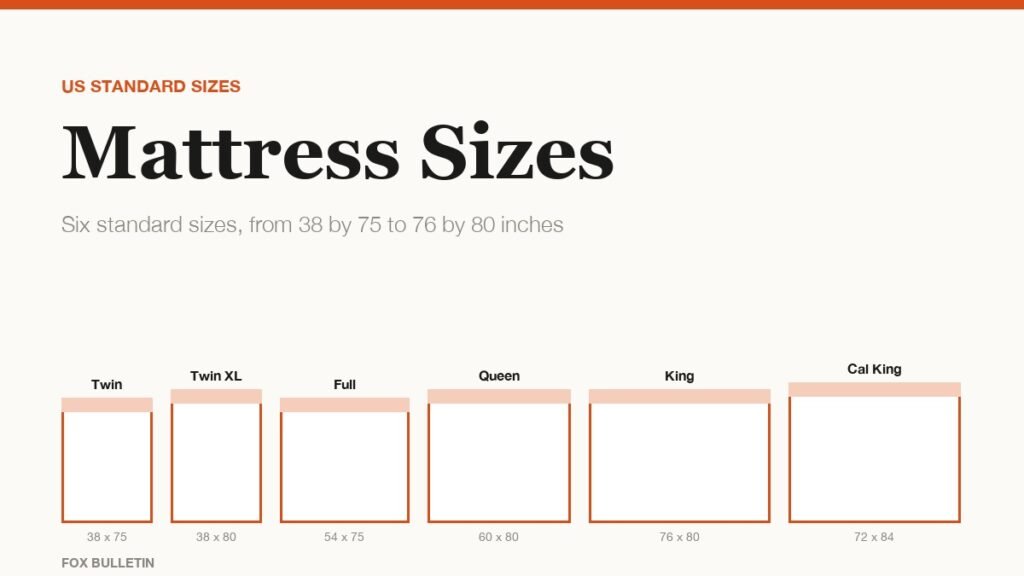
There are six standard mattress sizes sold in the United States: Twin at 38 by 75 inches, Twin XL at 38 by 80, Full at 54 by 75, Queen at 60 by 80, King at 76 by 80 and California King at 72 by 84. Those are nominal figures. The mattress that arrives is usually an inch or so under them, which matters when a bed frame is already in the room.
Below is every size drawn at the same scale, the square footage each one occupies, the bedroom each needs once you allow space to walk around it, and the differences that actually change how a bed feels to sleep on rather than how it reads on a label.
Every Mattress Size, Measured
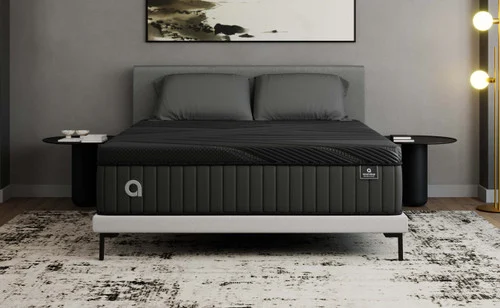
Width comes first in every US mattress measurement, length second. The jump that surprises people is from Queen to King: the length does not change at all, only the width, by 16 inches.
| Size | Inches (W x L) | Square feet | Suits | Notes |
|---|---|---|---|---|
| Twin | 38 x 75 | 19.8 | One child or adult | Smallest standard adult size |
| Twin XL | 38 x 80 | 21.1 | Taller single sleeper | Same width as a twin, 5 inches longer |
| Full | 54 x 75 | 28.1 | One adult with room to spread | Also sold as a double |
| Queen | 60 x 80 | 33.3 | Two adults | The most common size in US bedrooms |
| King | 76 x 80 | 42.2 | Two adults plus a child or pet | 38 inches each, the width of a twin |
| California King | 72 x 84 | 42.0 | Sleepers over 6 feet tall | The longest standard mattress |
A King and a California King are within two square feet of each other. They are not two sizes of the same bed so much as the same area arranged differently, one wider and one longer.
The Size on the Label and the Mattress You Get
Standard sizes are an industry convention rather than a legal specification, so manufacturers build to their own tolerances within them. Sealy, for example, publishes 53 by 74 inches for a full in its Posturepedic Hybrid line and 76 by 79 for a king, against nominal figures of 54 by 75 and 76 by 80.
| Size | Nominal | Example manufactured size |
|---|---|---|
| Twin | 38 x 75 | 38 x 74 |
| Twin XL | 38 x 80 | 38 x 79 |
| Full | 54 x 75 | 53 x 74 |
| Queen | 60 x 80 | 60 x 79 |
| King | 76 x 80 | 76 x 79 |
| California King | 72 x 84 | 72 x 83 |
An inch is invisible in use and very visible in a fitted sheet or a tight bed frame. If you are replacing a mattress inside an existing frame, the figure to measure against is the one on that specific model’s spec sheet, not the category name.
Depth is the other number people forget. Mattress height is not standardised at all and runs from about 6 inches for a thin foam bed to 15 or more for a pillow-top hybrid, which is what decides whether a standard fitted sheet will stay on.
Queen, King and California King Compared
Divide the width by two and the differences become concrete. A queen gives each of two sleepers 30 inches, which is narrower than a crib. A king gives each sleeper 38 inches, exactly the width of a whole twin mattress.
- Queen, 60 x 80. 30 inches per sleeper. Fits most bedrooms and most bed frames, which is why it is the default.
- King, 76 x 80. 38 inches per sleeper. The upgrade that couples notice immediately, and the one that needs the most floor.
- California King, 72 x 84. 36 inches per sleeper and four extra inches of length. Worth it only if someone in the bed is tall enough to need them.
Height is the deciding question between the last two. At 6 feet 2 inches, a sleeper has two inches of clearance on an 80-inch mattress and six on an 84-inch one. Below about six feet, the California King trades width you will feel for length you will not. Our picks at each size are in the guide to the best mattresses.
Twin and Twin XL: Five Inches That Matter
Both are 38 inches wide. The only difference is length, 75 inches against 80, and that five inches is the reason Twin XL is the size used in almost every US college dormitory.
Twin XL also matters for couples. Two Twin XL mattresses placed side by side measure 76 by 80 inches, which is exactly a King, and that pairing is sold as a split king.
Split King and Split California King
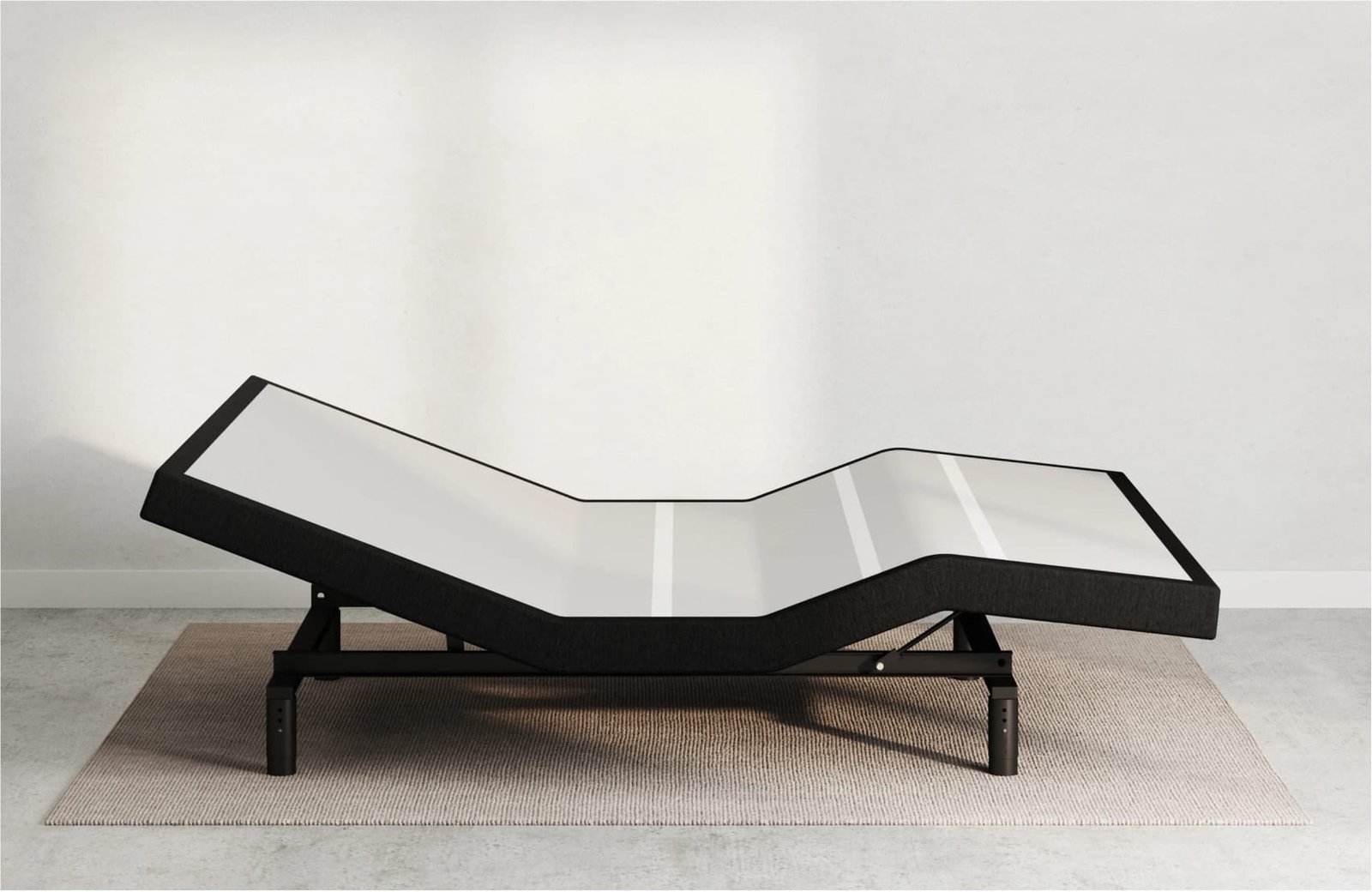
A split king is one bed made of two separate mattresses, each 38 by 80 inches nominal. The point is that an adjustable base can raise one side without moving the other, and that two sleepers can choose different firmness on the same bed.
- Split King. Two pieces at 38 inches wide each, 76 by 80 together.
- Split California King. Two pieces at 36 inches wide each, 72 by 84 together.
- Bedding. Fitted sheets are bought per half, in Twin XL for a split king. Flat sheets and duvets are bought for the full king.
- The gap. Two mattresses meet in a seam down the middle, which a foam filler strip covers but does not remove.
Crib Mattresses Are the Only Regulated Size
Adult mattress sizes are convention. Crib mattresses are law. The Consumer Product Safety Commission defines a full-size crib as having dimensions of 52 and three-eighths inches by 28 inches, each with a tolerance of five-eighths of an inch, and crib mattresses must meet the mandatory standard ASTM F2933 under 16 CFR part 1241.
That is why a crib mattress fits a crib with almost no gap, and why aftermarket mattresses carry compatibility requirements that no adult size has. The full requirements, including firmness and thickness testing, are set out in the CPSC guidance for crib mattress manufacturers.
How Much Floor Space Each Size Needs
A mattress is not the footprint of a bed. Allow roughly 30 inches on each side you need to walk down and 30 inches at the foot, and the room sizes come out like this.
| Size | Mattress | Room with walking space | Roughly |
|---|---|---|---|
| Twin | 38 x 75 | 98 x 105 | 9 x 9 ft |
| Twin XL | 38 x 80 | 98 x 110 | 9 x 10 ft |
| Full | 54 x 75 | 114 x 105 | 10 x 9 ft |
| Queen | 60 x 80 | 120 x 110 | 10 x 10 ft |
| King | 76 x 80 | 136 x 110 | 12 x 10 ft |
| California King | 72 x 84 | 132 x 114 | 11 x 10 ft |
These assume access on three sides. A bed pushed into a corner needs far less, at the cost of one person climbing over the other. The other thing to measure before buying is the route in: a king mattress is 76 inches across and will not bend around a tight stair turn unless it ships compressed in a box.
Choosing Between Them
- Measure the room first, then subtract 60 inches from the width for walking space. What is left is the widest mattress that will work.
- Measure the tallest sleeper. Anyone over 6 feet should be looking at an 80-inch length as the minimum, and 84 if the budget allows.
- Count everyone who actually sleeps in it, including children and dogs. They take width, not length.
- Check the frame you already own. Replacing a queen mattress with a king means a new frame, a new base and new bedding.
- Check the doorways and the stairs before ordering anything that does not arrive compressed.
Size does more for sleep quality than most of the features that get advertised. A couple cramped onto a full are woken by each other’s movement regardless of what the mattress is made of, which also shows up clearly if you track sleep on an Apple Watch.
Sizes You Will See That Are Not Standard
Beyond the six, retailers sell a handful of sizes that exist in some catalogues and not others. None is wrong, but each one narrows what bedding and frames you can buy later.
- Full XL. A full stretched to 80 inches long. Useful for a tall single sleeper in a narrow room, awkward to buy sheets for.
- Olympic Queen. A queen widened by six inches. Frames are scarce.
- RV and short queen. Shortened to fit a motorhome bedroom, so standard queen bedding will not sit flat.
- Oversized kings. Several makers sell beds far wider than a king under their own names. They are built to order, and so is everything that goes on them.
The rule with any of these is to confirm the exact figures on the product page before buying, and to check that sheets in that size are actually sold, because a mattress with no bedding behind it is a recurring problem rather than a one-off purchase.
Frequently Asked Questions
What is the most common mattress size?
Queen, at 60 by 80 inches. It fits two adults in a bedroom of about 10 by 10 feet, which describes most primary bedrooms, and almost every frame and bedding line is made for it.
Is a King or a California King bigger?
A King is bigger by area, 42.2 square feet against 42.0, and four inches wider. A California King is four inches longer. Choose by whether you need width or height.
What is the difference between a full and a double?
Nothing. They are two names for the same 54 by 75 inch mattress. Double is the older term and is still used by some retailers and most bedding manufacturers.
Can two twin XL mattresses make a king?
Yes. Two Twin XL mattresses side by side measure 76 by 80 inches, identical to a standard King, which is how split king beds are built.
Related Articles

Get the Fox Bulletin briefing
The stories that matter, in your inbox. No spam, unsubscribe anytime.
Newsletter signup will be available soon.
Related stories

Cloud Types: All Ten and How to Tell Them Apart
All ten basic cloud types, the three altitude bands they divide into, what each looks like overhead, and which ones actually produce precipitation.

Military Ranks: Every Pay Grade in All Six Branches
Every US military rank by pay grade, across the Army, Marine Corps, Navy, Air Force, Space Force and Coast Guard, and the title traps that catch people out.

Ring Size Chart: Every US Size in Millimetres
Every US ring size from 3 to 13 with its inside diameter and circumference, two ways to measure at home, and the reasons the same finger measures differently.