

Mailchimp alternatives are chosen badly when the comparison is a monthly price. Mailchimp bills on contacts stored, applies overages when a contact or send limit is passed, and pauses sending if you exceed it. The free plan stops under 250 contacts.
That one design decision is why bills grow without the sending growing. Four of the ten below meter emails sent instead, one is self-hosted with no ceiling at all, and one gives away a list of 10,000.
What Mailchimp Actually Charges For
Mailchimp sells four plans and prices each by a contact bracket: 0 to 500, 501 to 1,500, 1,501 to 2,500 and upward in steps to a million and beyond. The plan you choose sets the features; the bracket sets the bill.
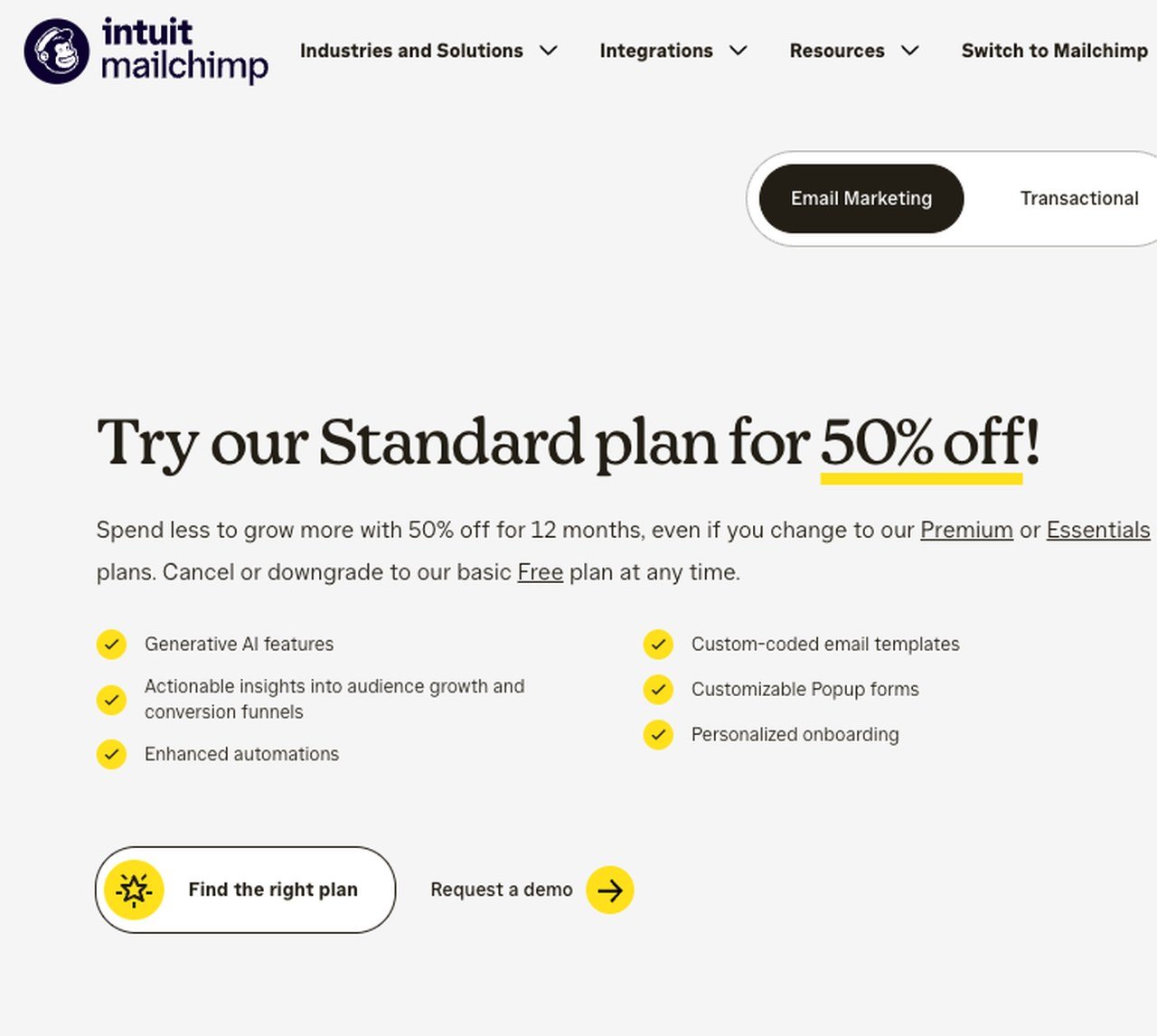
Two mechanics matter more than the headline. Overages apply if a contact or email send limit is exceeded, so a good month costs extra rather than being absorbed. And sending is paused when limits are passed, which turns a billing question into an operational one at the worst moment.
The practical consequence is that unsubscribed and inactive addresses can sit in a bracket and cost money without generating anything. List hygiene stops being good practice and becomes a line item, which is the specific frustration most of these alternatives are sold against. Monthly prices are shown in the currency of the country you buy from.
Mailchimp Alternatives Compared on Price and What They Meter
All ten, cheapest first, with the unit each one counts. The metered-by column is what decides whether your bill follows your list or your sending.
| # | Platform | Best for | Entry price | Free tier | Metered by |
|---|---|---|---|---|---|
| 1 | Listmonk | Self-hosted sending at no licence cost | $0, self-hosted | Yes, open source | Your own server |
| 2 | Moosend | The cheapest hosted entry price | $7 a month billed annually | No, free trial | Subscribers |
| 3 | Sender | A free tier that is not a trial | $9 a month | Yes, Free Forever | Subscribers and emails |
| 4 | Mailjet | Paying for emails rather than contacts | $9 a month | Yes, 6,000 emails a month | Emails sent |
| 5 | EmailOctopus | Plain sending without the suite | $9 a month billed yearly | Yes | Subscribers |
| 6 | Omnisend | Email and SMS for online stores | $11.20 a month | Yes, 500 emails a month | Contacts and sends |
| 7 | ActiveCampaign | Automation depth above all | $15 a month at 1,000 contacts | No, free trial | Contacts |
| 8 | Brevo | Unlimited contacts, metered sending | $0, then by send volume | Yes, 300 emails a day | Emails sent |
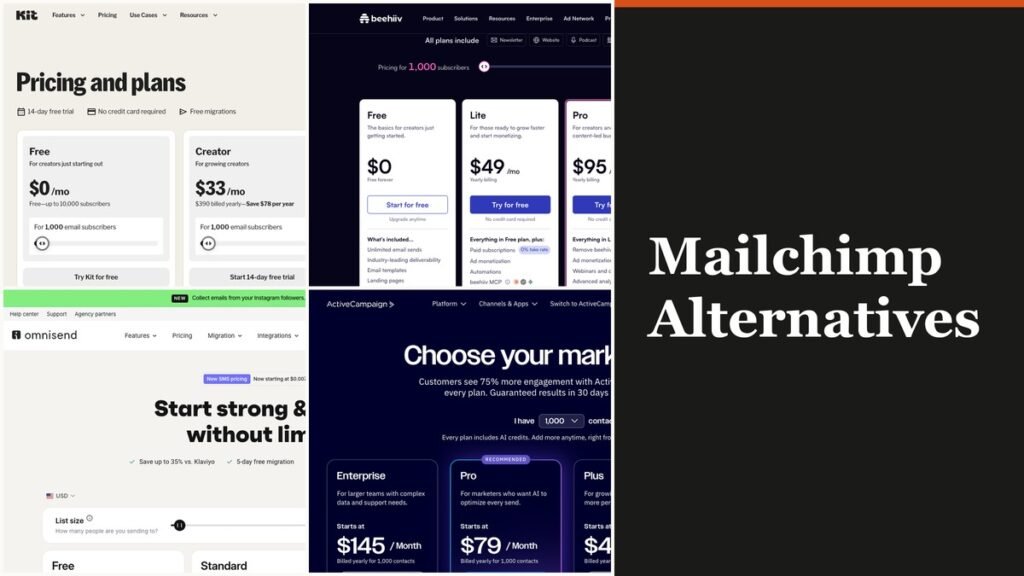
| 9 | Kit | Creators with a large free list | $33 a month at 1,000 subscribers | Yes, to 10,000 subscribers | Subscribers |
| 10 | beehiiv | Newsletters built to earn money | $49 a month billed yearly | Yes, free forever | Subscribers |
The Ten Platforms in Detail
1. Listmonk: Self-hosted sending at no licence cost
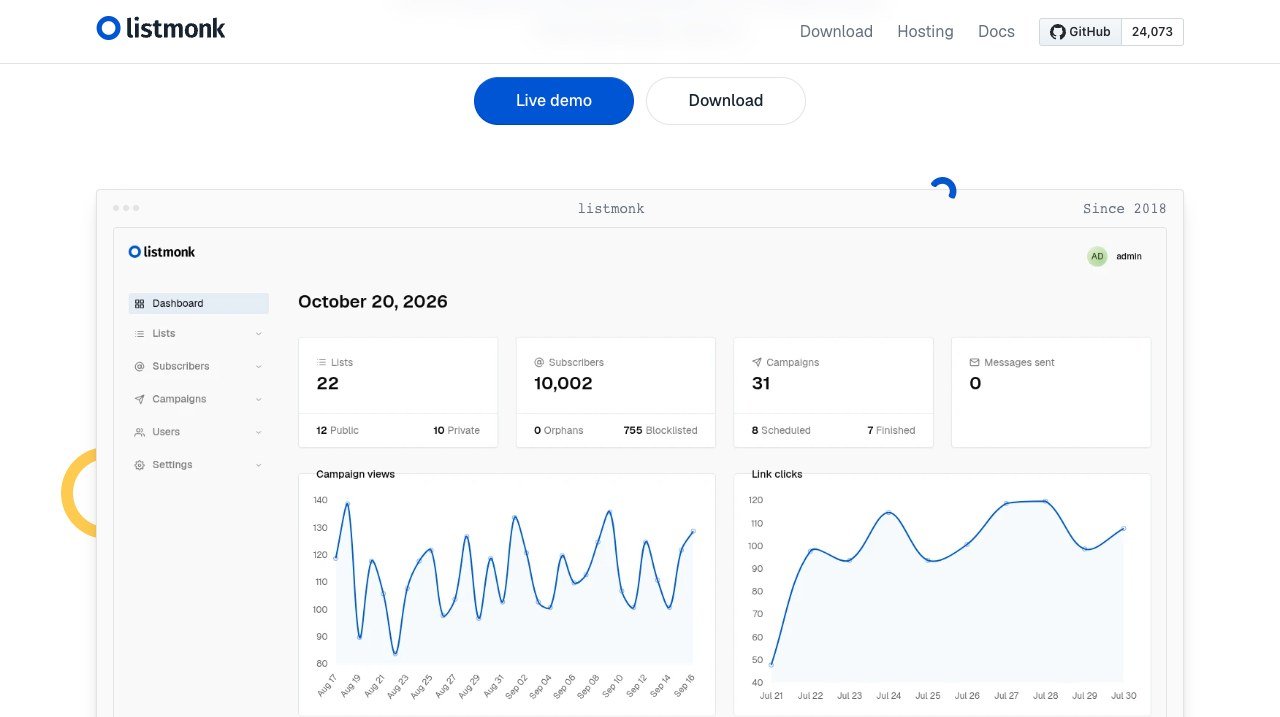
Entry price: $0, self-hosted. Free tier: Yes, open source. Metered by: Your own server.
Listmonk is open source and self-hosted, so there is no licence fee and no subscriber ceiling. You run it on your own server and pay a sending provider separately for the delivery itself.
That split is the point: storage of a million addresses costs nothing, and you only pay to send. It needs somebody comfortable with a server and a sending domain, and deliverability becomes your responsibility rather than a vendor’s.
2. Moosend: The cheapest hosted entry price
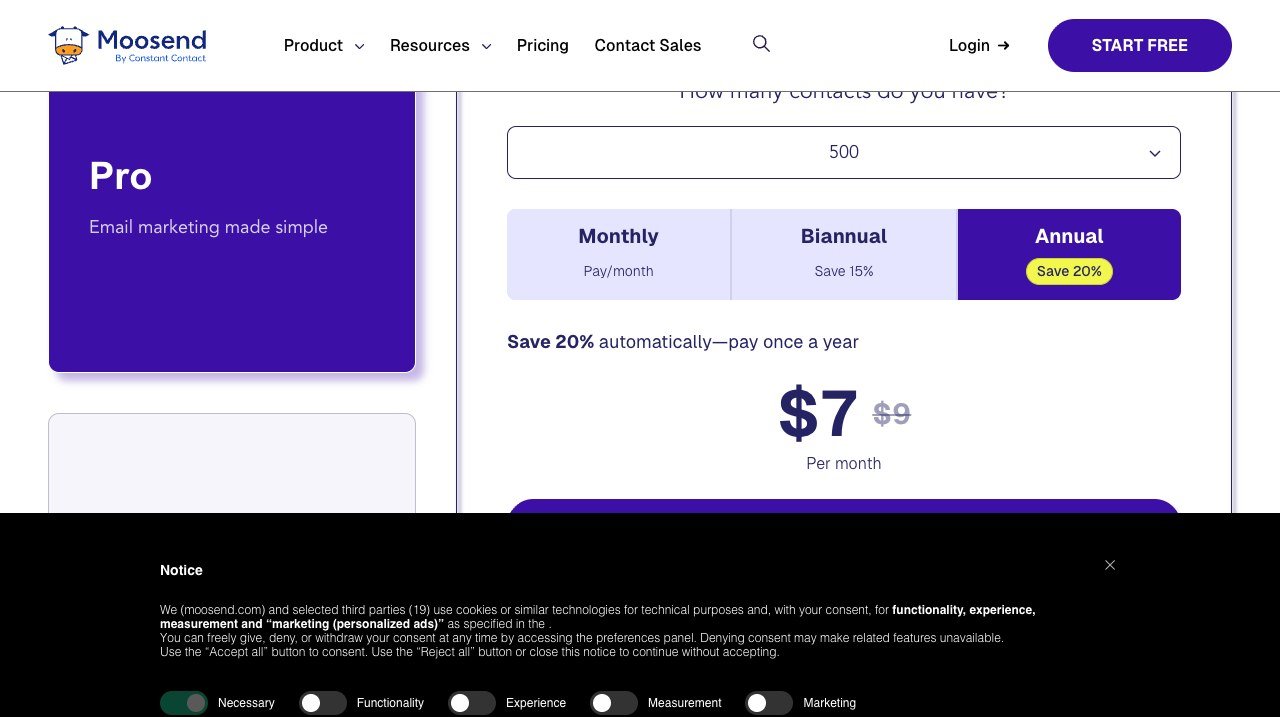
Entry price: $7 a month billed annually. Free tier: No, free trial. Metered by: Subscribers.
Moosend has the lowest hosted entry price here at $7 a month on annual billing, rising to $9 paid monthly. Automation, landing pages and segmentation are included rather than reserved for a higher tier.
It is priced like a budget tool and specified like a mid-range one, which makes it the default recommendation for a small list that still needs real automation. There is no permanent free plan, only a trial.
3. Sender: A free tier that is not a trial
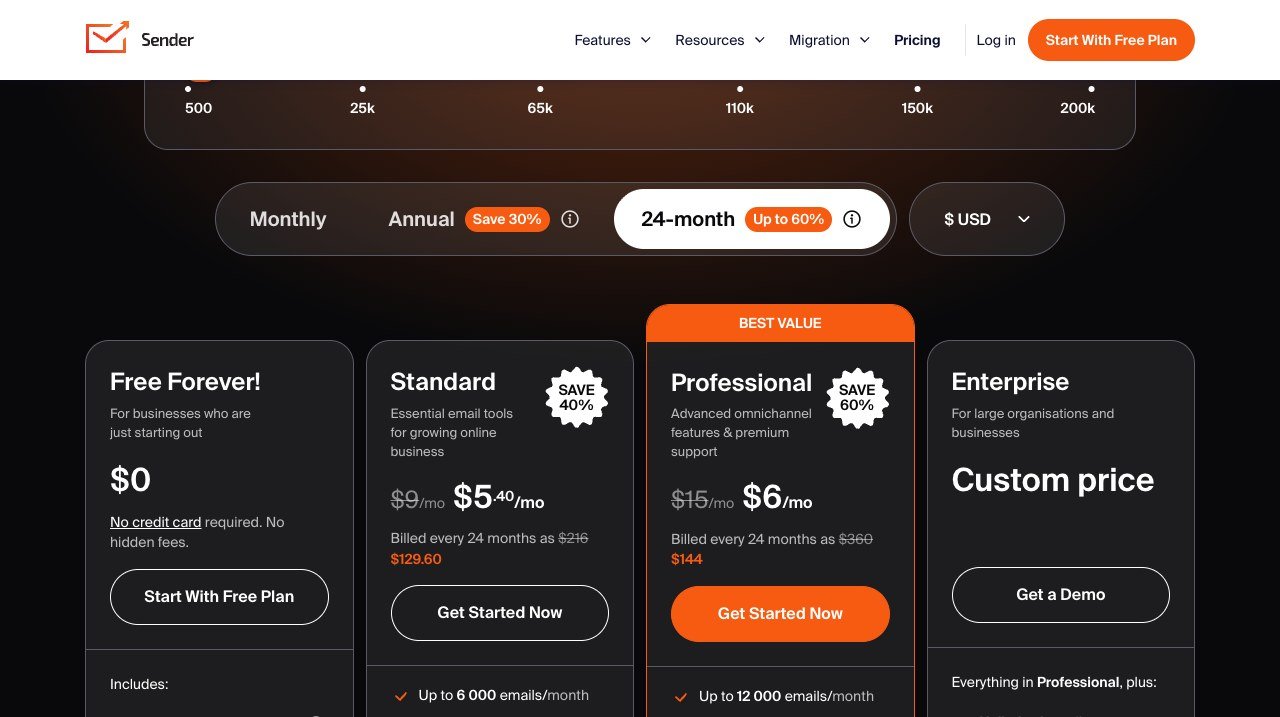
Entry price: $9 a month. Free tier: Yes, Free Forever. Metered by: Subscribers and emails.
Sender runs a Free Forever plan that is a working product rather than a countdown, and its paid tier starts at $9 a month. Long billing commitments cut that further.
Both subscribers and monthly emails are capped, so check the pair against your own list before comparing it with a contacts-only competitor. For a business sending weekly to a few thousand people, the free tier often covers the whole requirement.
4. Mailjet: Paying for emails rather than contacts
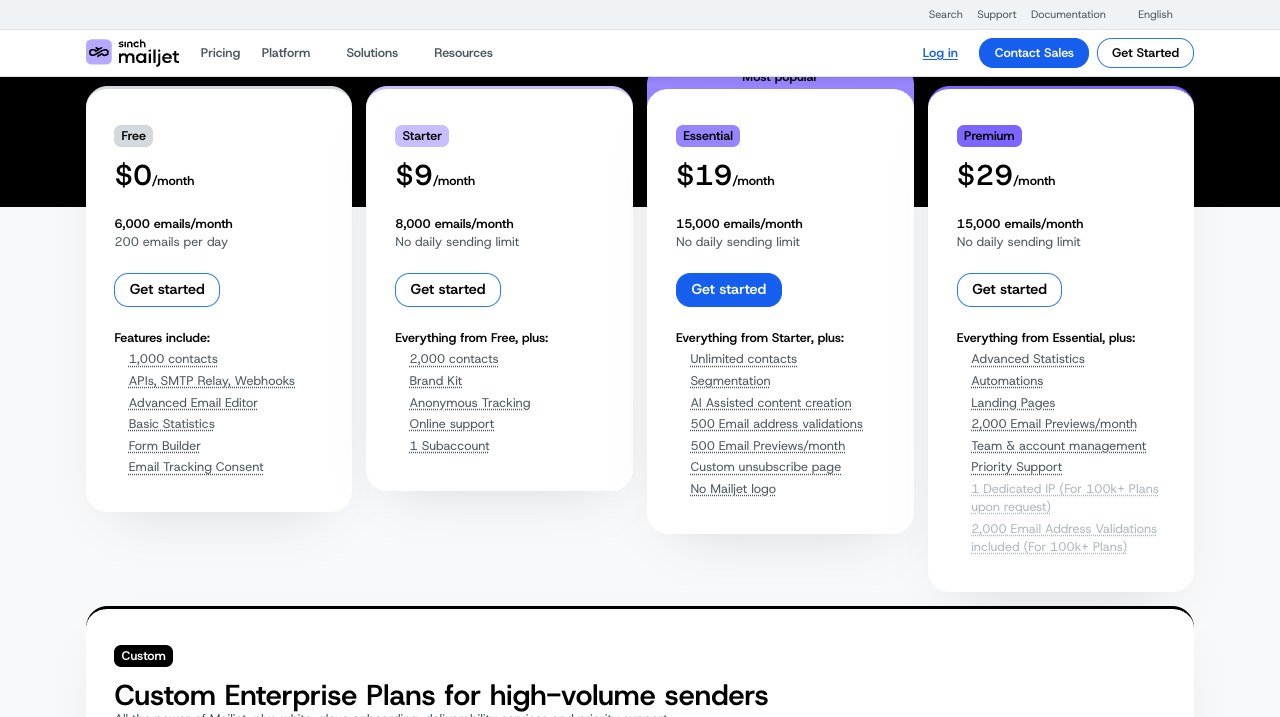
Entry price: $9 a month. Free tier: Yes, 6,000 emails a month. Metered by: Emails sent.
Mailjet bills on emails sent rather than contacts stored, which is the opposite of Mailchimp. The free plan carries 6,000 emails a month with a 200 a day ceiling, Starter is $9 for 8,000 and Essential $19 for 15,000.
Storing a large dormant list costs nothing here. That suits a business with 50,000 addresses it emails four times a year, which is precisely the shape that makes a contact-priced tool expensive for no return.
5. EmailOctopus: Plain sending without the suite
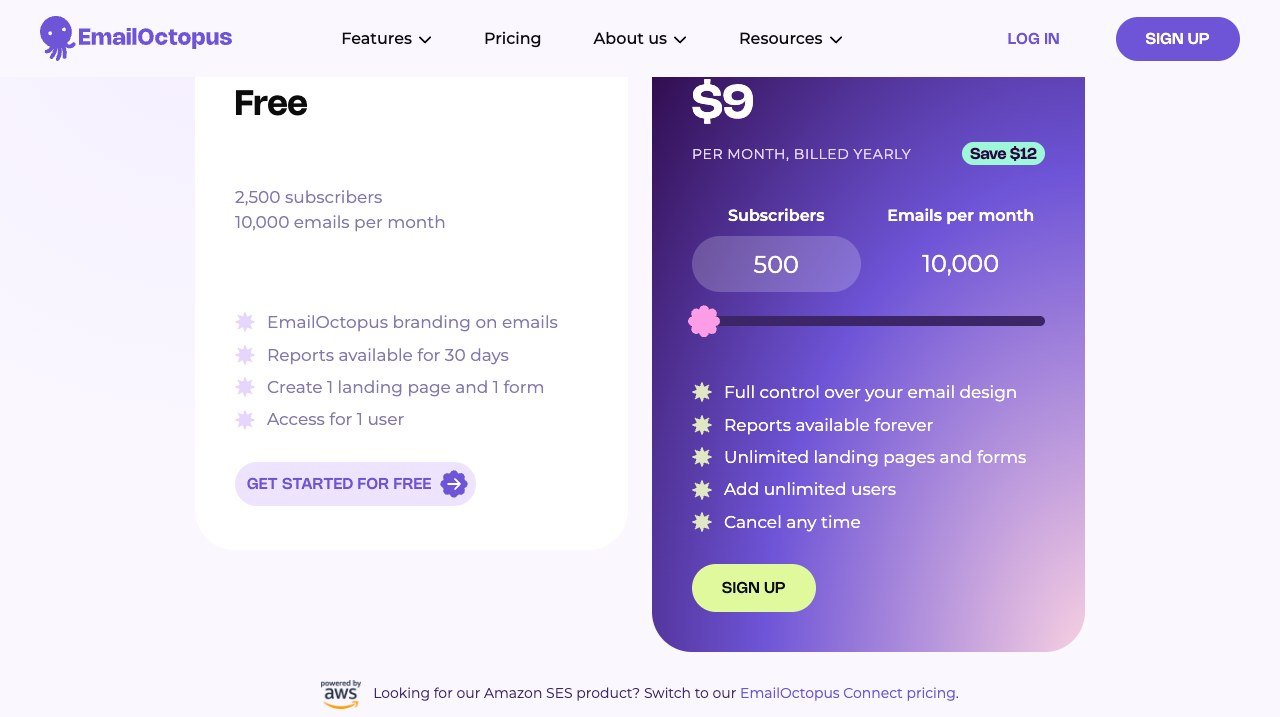
Entry price: $9 a month billed yearly. Free tier: Yes. Metered by: Subscribers.
EmailOctopus does sending and little else, and prices accordingly at $9 a month billed yearly on Pro, with a free tier underneath. The interface is deliberately plain.
It suits anyone who concluded that the automation builder they are paying for has never been opened. Reports, landing pages and forms are present; the sprawling marketing platform is not, and neither is its price.
6. Omnisend: Email and SMS for online stores
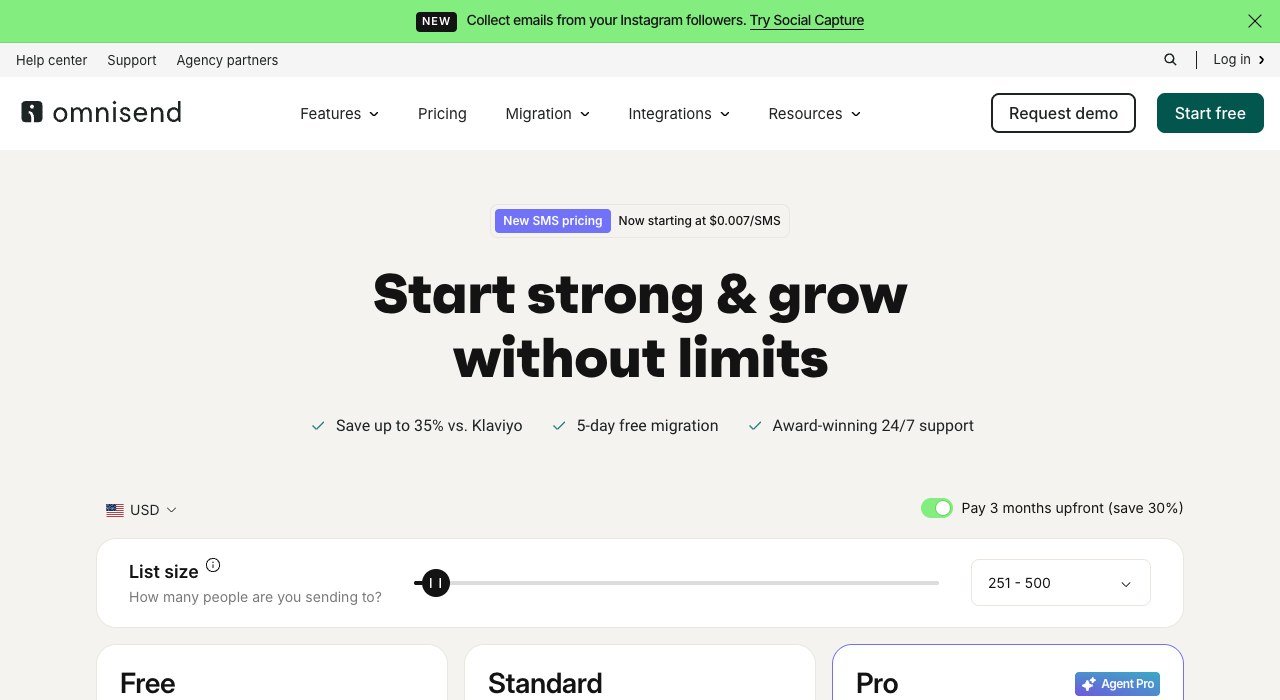
Entry price: $11.20 a month. Free tier: Yes, 500 emails a month. Metered by: Contacts and sends.
Omnisend is built for online stores, combining email with SMS and push in one account. The free plan allows 500 emails a month and the Standard tier starts at $11.20.
Abandoned cart and post-purchase flows arrive configured rather than as a blank canvas, which is where most store owners lose weeks. SMS is priced separately per message, so budget that alongside the subscription.
7. ActiveCampaign: Automation depth above all
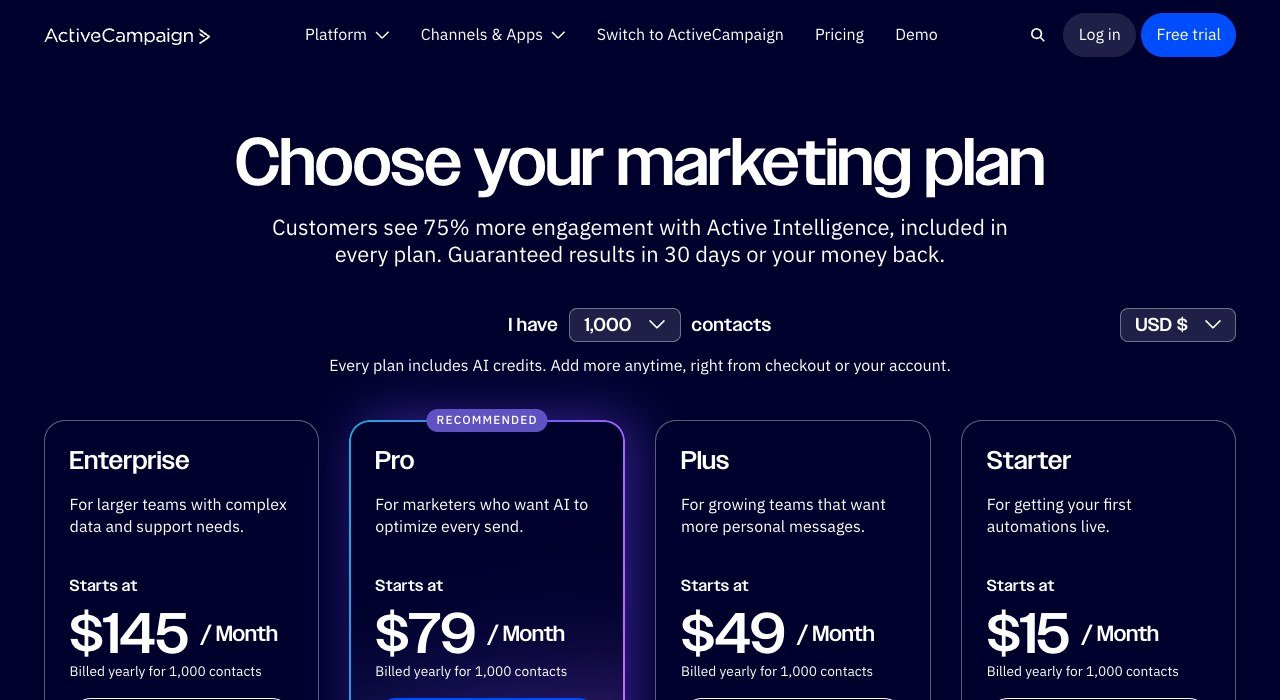
Entry price: $15 a month at 1,000 contacts. Free tier: No, free trial. Metered by: Contacts.
ActiveCampaign is the depth option. Starter is $15 a month at 1,000 contacts, Plus $49, Pro $79 and Enterprise $145, all billed yearly at that contact tier.
The automation builder is the most capable here by a clear margin, and the price climbs with contacts like Mailchimp’s does. If the reason you are leaving is cost rather than capability, this is not the move; if it is capability, nothing else on this list competes.
8. Brevo: Unlimited contacts, metered sending
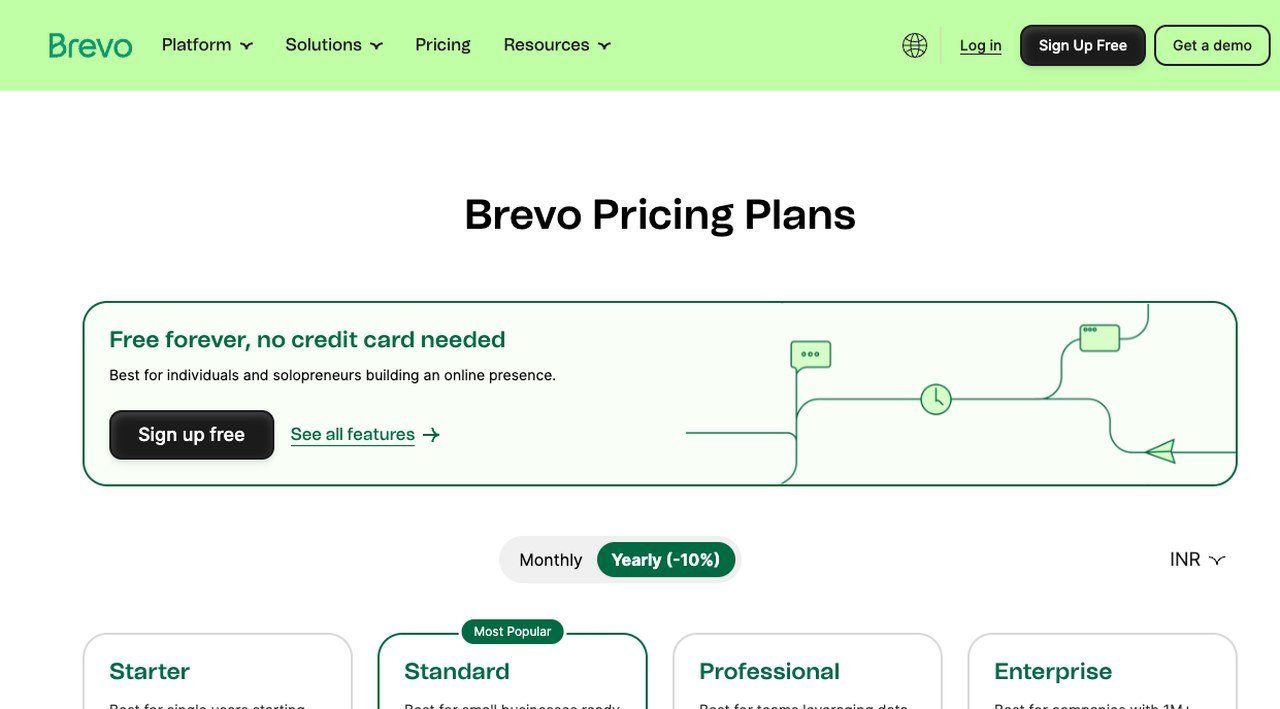
Entry price: $0, then by send volume. Free tier: Yes, 300 emails a day. Metered by: Emails sent.
Brevo charges on monthly email volume, campaigns and transactional together, rather than on how many addresses you keep. The free plan sends up to 300 emails a day with no credit card required.
Contacts are effectively unlimited, which removes the single thing that makes Mailchimp expensive as a list ages. For a business whose list grows faster than its sending does, this is the structural fix rather than a discount.
9. Kit: Creators with a large free list
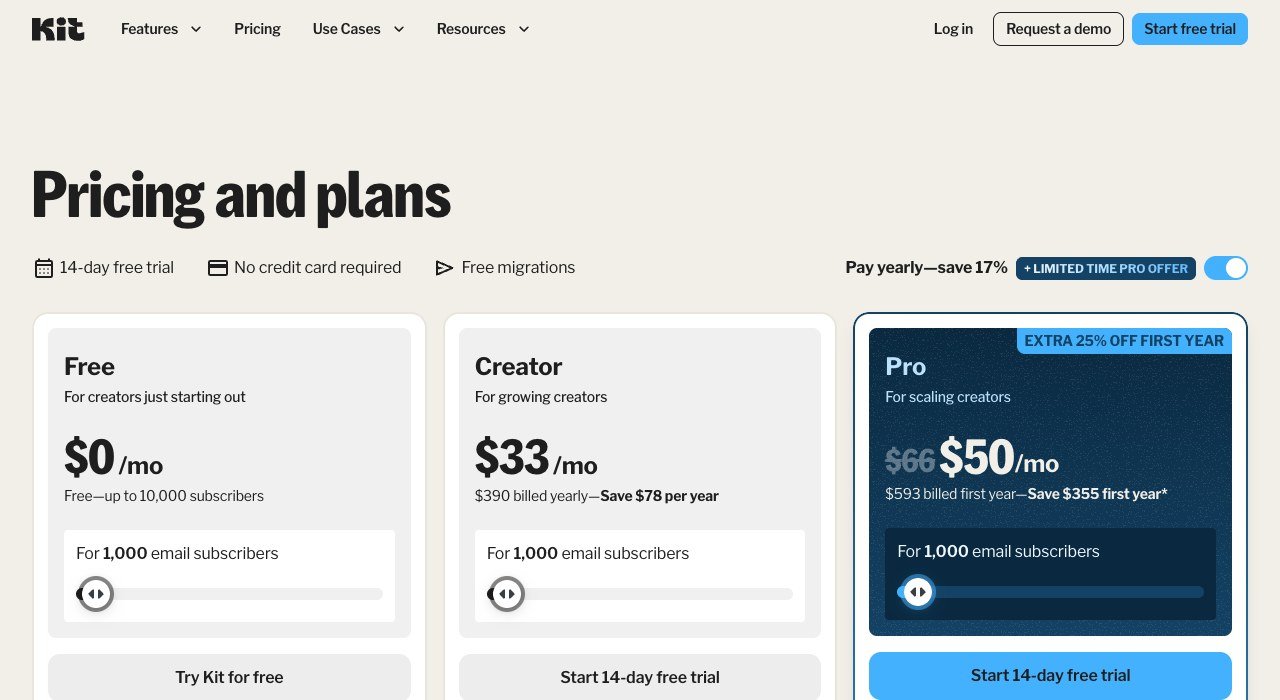
Entry price: $33 a month at 1,000 subscribers. Free tier: Yes, to 10,000 subscribers. Metered by: Subscribers.
Kit is aimed at creators and gives away more than anything else here: the free plan runs to 10,000 subscribers. Paid plans start at $33 a month at 1,000 subscribers, or $390 billed yearly.
The paid price looks high against a 1,000-subscriber comparison and the free ceiling makes that comparison misleading. Most people on Kit are on the free plan with a large list, paying only once they want automation and paid subscriptions.
10. beehiiv: Newsletters built to earn money
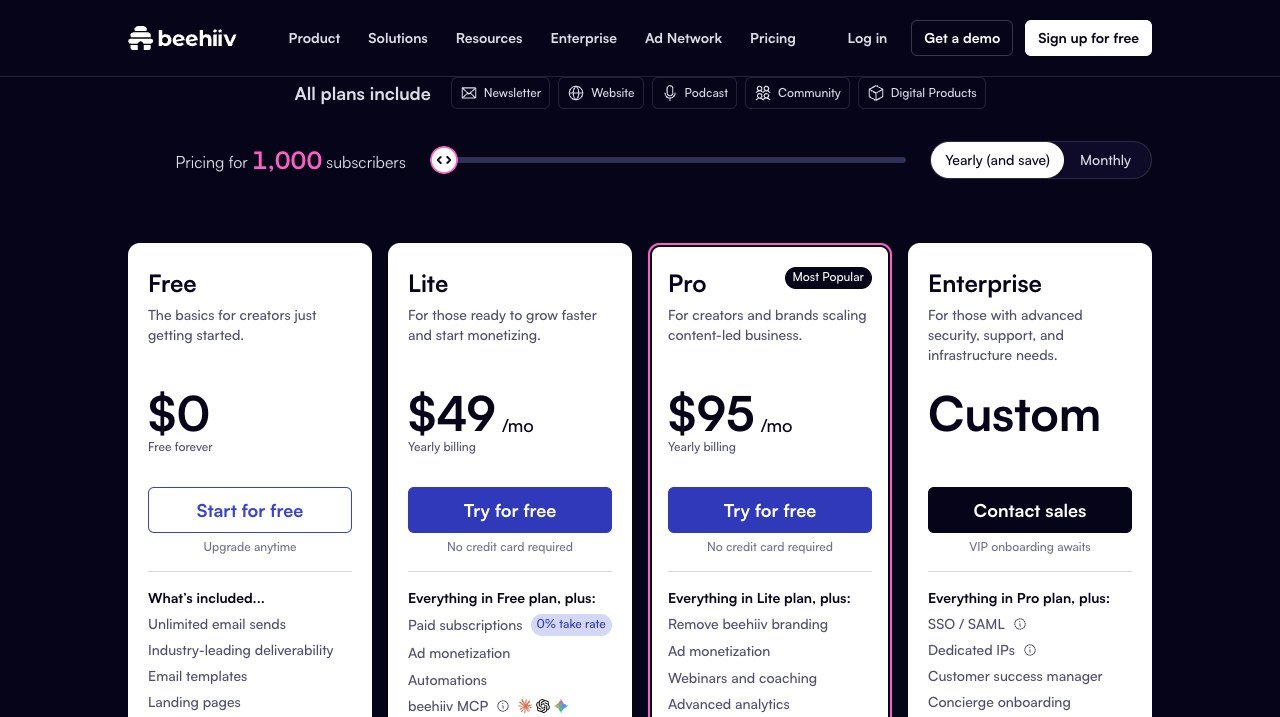
Entry price: $49 a month billed yearly. Free tier: Yes, free forever. Metered by: Subscribers.
beehiiv treats a newsletter as a business rather than a marketing channel. Free is genuinely free, Lite is $49 a month on yearly billing and Pro $95, with paid subscriptions carried at a 0 percent take rate.
An advertising network is built in, which the page quantifies at an average of $39 a month. That only matters if the newsletter is the product; for a company sending announcements it is an expensive way to buy an email tool.
Contacts Stored Against Emails Sent
This is the fork in the road. Two businesses with identical lists pay wildly different amounts depending on which model they are on, and the right answer depends on a single number: how often you actually send.
- Priced on contacts (Mailchimp, ActiveCampaign, Kit, beehiiv, EmailOctopus, Moosend): a dormant list costs the same as an active one.
- Priced on emails sent (Brevo, Mailjet): storing addresses is free and the meter only runs when you press send.
- Priced on both (Sender, Omnisend): two ceilings to check rather than one.
- Priced on neither (Listmonk): your server, your sending provider, no subscriber limit.
A company with 40,000 addresses that sends a quarterly update is paying a large monthly fee for storage on a contact-priced plan. The same company on Brevo or Mailjet pays for four sends a year. Reverse it for a daily newsletter to 2,000 people and the contact model wins easily.
The Rules That Apply Whatever You Send With
Platform choice does not change the legal position, and the obligations are stricter than most senders assume.
In the United States the CAN-SPAM Act requires accurate header and subject information, a valid physical postal address and a working opt-out honoured promptly, and it applies per message rather than per campaign. Penalties are assessed per email, which is what makes a careless send expensive.
If any recipient is in the EU or the UK, the General Data Protection Regulation governs how consent was obtained and what you must do when someone asks to be removed or to see their data. Buying a list fails both regimes, and no email tool will tell you that at signup.
- Keep proof of consent with the subscriber record, not in somebody’s inbox.
- Remove hard bounces and long-term non-openers before a migration, not after, because on a contact-priced plan you are importing a bill.
- Warm a new sending domain gradually. Moving 40,000 addresses to a fresh domain and sending on day one is how a reputation is destroyed.
- Export the list and the engagement history together. Addresses without open and click history make segmentation impossible on the new platform.
How to Choose a Mailchimp Alternative
Divide last year’s emails sent by your list size. That single ratio points at the right group faster than any feature comparison.
- Large list, infrequent sends: Brevo or Mailjet, where storage is free.
- Small list, constant sending: Moosend at $7 or EmailOctopus at $9.
- You want a free plan that lasts: Kit to 10,000 subscribers, or Sender.
- Automation is the reason you pay: ActiveCampaign.
- You sell online: Omnisend, with SMS budgeted separately.
- You have a server and a sysadmin: Listmonk.
Email rarely sits alone in the stack. If the list came from a CRM, check how the two will sync before committing, because a broken contact sync costs more time than the subscription saves. Our HubSpot competitors comparison covers that side, and the same per-unit thinking runs through the Notion alternatives as well.
One more thing worth separating: a link page is not an email list. If the real goal is collecting subscribers from social profiles, the Linktree alternatives solve a different part of the same problem and cost a fraction as much.
Frequently Asked Questions
Which Mailchimp alternative is free?
Kit is free to 10,000 subscribers, which is the most generous here. Brevo is free up to 300 emails a day, Mailjet to 6,000 emails a month, and Sender, EmailOctopus, Omnisend and beehiiv all run permanent free tiers. Listmonk is free to self-host with no ceiling.
Why does my Mailchimp bill go up when I am not sending more?
Because the price is set by the contact bracket you fall into rather than by sending. Adding addresses moves you up a bracket, and overages apply if a contact or send limit is exceeded. Inactive and unsubscribed records can sit in that count and cost money.
What is the cheapest email marketing platform?
Moosend at $7 a month on annual billing is the lowest hosted price. Sender, Mailjet and EmailOctopus all start at $9. Listmonk costs nothing beyond your own server and a sending provider, which is cheapest of all at large list sizes.
Will my subscribers and templates move across?
Subscribers and tags export as CSV and import almost everywhere. Templates rarely survive because every platform uses its own builder, and automation sequences never do. Rebuild one sequence first to see how long it takes before committing to the move.
Related Articles

Get the Fox Bulletin briefing
The stories that matter, in your inbox. No spam, unsubscribe anytime.
Newsletter signup will be available soon.
Related stories
Calendly Alternatives: 10 Scheduling Tools Compared
Calendly is free for one event type and $10 a seat beyond it. Ten Calendly alternatives compared on seat price, free tiers and one that costs $29 once.
Etsy Alternatives: 10 Places to Sell and What They Cost
Etsy charges $0.20 a listing, 6.5% a sale and up to 15% on ad orders. Ten Etsy alternatives compared on fees, cuts and who brings the buyers.
Canva Alternatives: 10 Template Design Tools Compared
Canva now sells four tiers, all priced per person. Ten Canva alternatives compared on seat price, free tiers and what each one is actually built to make.