
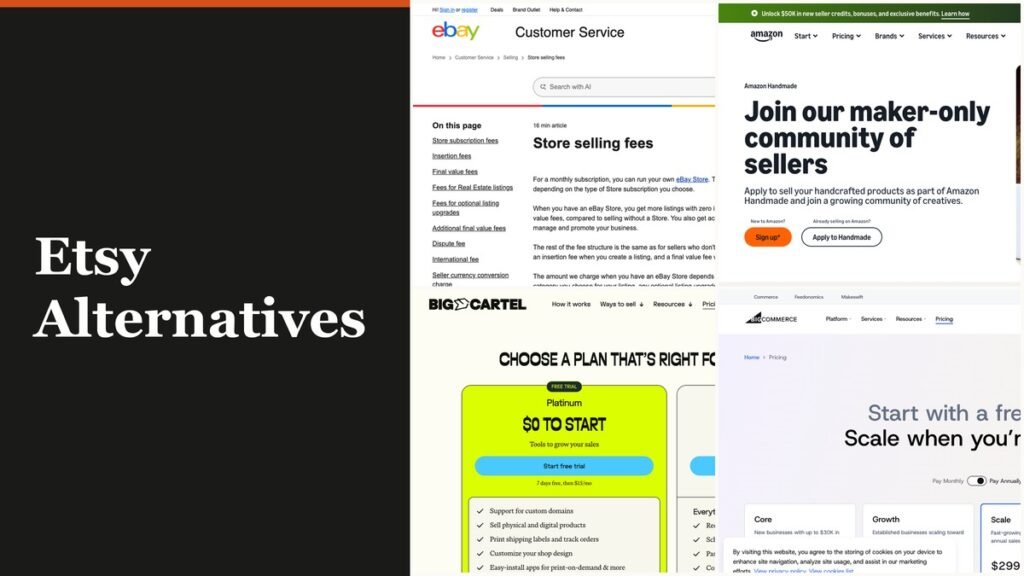
Etsy alternatives are worth pricing out properly, because Etsy charges in three places at once. There is a fee to list the item, a percentage when it sells, and a separate percentage if the buyer arrived through an Etsy advertisement.
Stack those together and the number is larger than most sellers assume. The ten options below are compared on what they take and, just as importantly, on whether they bring you any buyers in exchange.
What Etsy Takes From a $40 Sale
Etsy publishes its fees in full, and the individual numbers look small. The arithmetic is what makes the case for leaving.
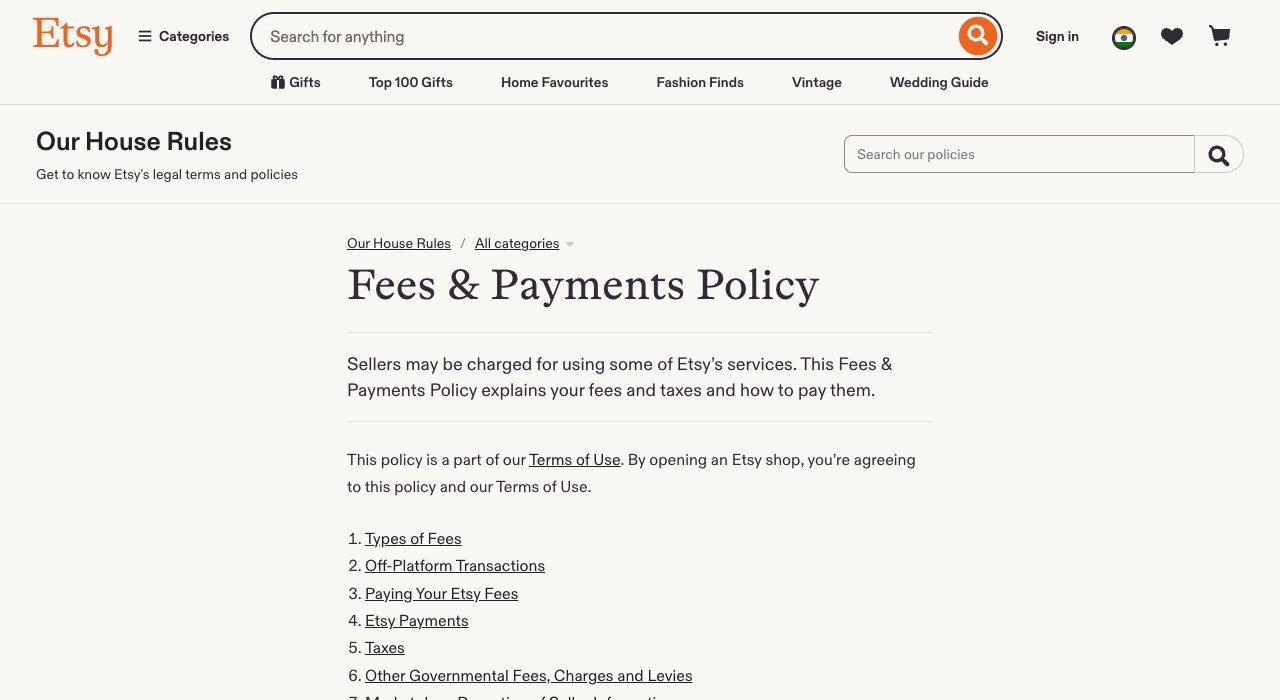
| Fee | What it costs |
|---|---|
| Listing fee | $0.20 per item, renewed at $0.20 after each sale |
| Transaction fee | 6.5% of the displayed price plus the shipping you charge |
| Offsite Ads | 15% of attributed orders, or 12% once the shop passes $10,000 in 365 days |
| Etsy Plus | $10 a month, optional |
A $40 item costs $0.20 to list and 6.5 percent when it sells, which is $2.60, so the platform takes $2.80 before payment processing. That is a shade under 7 percent, and most sellers would call it reasonable.
Now suppose the buyer clicked an Offsite Ad. The fee is 15 percent of the order for shops under $10,000 in trailing annual sales, which adds $6.00. The same $40 sale now costs $8.80, or 22 percent, and a shop below that threshold can opt out while a shop above it cannot.
Etsy Plus is a further $10 a month if you take it. None of this is hidden, and none of it is unusual for a marketplace. It is simply the price of being shown to people who were already shopping, which is the thing every option below either charges less for or does not provide at all.
Etsy Alternatives Compared on Fees and Who Brings the Buyers
All ten, cheapest first. The traffic column is the one that decides whether a lower fee is a saving or a false economy.
| # | Platform | Best for | Entry price | Cut per sale | Traffic |
|---|---|---|---|---|---|
| 1 | Gumroad | Selling with nothing fixed to pay | $0 a month | 10% + $0.50 a sale | Your own audience |
| 2 | Payhip | A free store you can grow out of | $0 a month | 5% free, 2% at $29, 0% at $99 | Your own audience |
| 3 | eBay | A marketplace with buyers already on it | $4.95 a month on a yearly Store | Final value fees by category | Marketplace |
| 4 | Big Cartel | A small shop that keeps all its revenue | $15 a month | None | Your own audience |
| 5 | Snipcart | Adding checkout to a site you already have | $20 a month minimum | 2% of sales | Your own audience |
| 6 | Sellfy | Downloads and print-on-demand merch together | $22 a month | None, revenue capped by plan | Your own audience |
| 7 | BigCommerce | A full storefront with no cut taken | $29 a month billed yearly | None | Your own audience |
| 8 | Amazon Handmade | Handmade goods in front of Amazon buyers | $39.99 a month Professional account | Referral fees by category | Marketplace |
| 9 | Podia | Digital products sold to a list | $42 a month billed yearly | 5% on the entry tier, none above | Your own audience |
| 10 | WooCommerce | Owning the shop outright | $0 platform fee | None from the platform | Your own audience |
The Ten Platforms in Detail
1. Gumroad: Selling with nothing fixed to pay
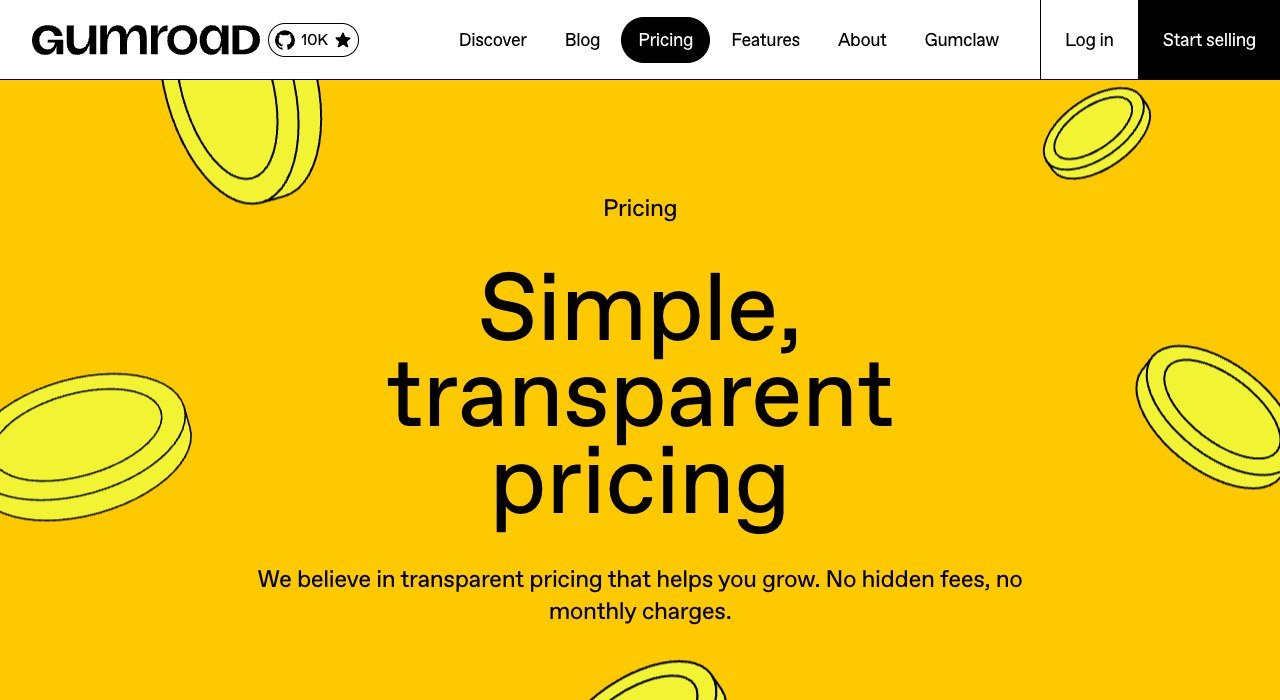
Entry price: $0 a month. Cut per sale: 10% + $0.50 a sale. Traffic: Your own audience.
Gumroad has no monthly fee and no listing fee. You pay 10 percent plus 50 cents on sales through your own links, and 30 percent when a buyer arrives through Gumroad’s own discovery.
On a $40 item that is $4.50 against Etsy’s $2.80 before ads, so it is dearer per sale and costs nothing in a quiet month. For a maker with an audience and irregular sales, that trade usually comes out ahead.
2. Payhip: A free store you can grow out of
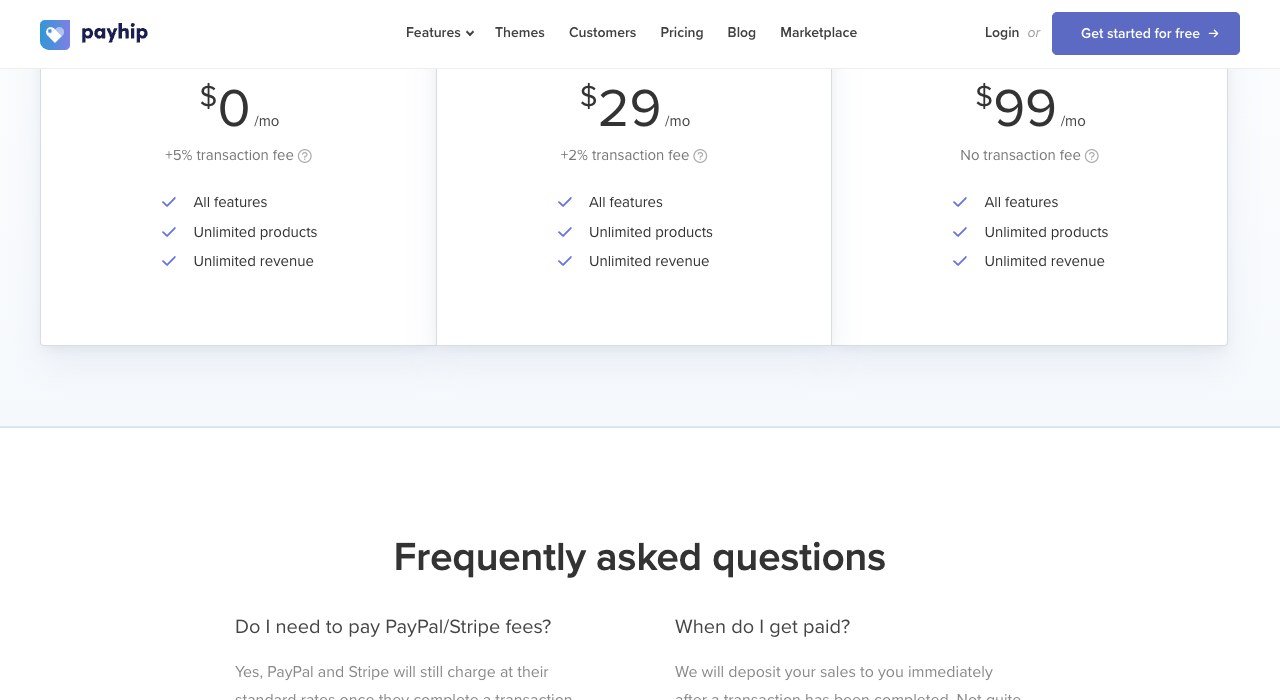
Entry price: $0 a month. Cut per sale: 5% free, 2% at $29, 0% at $99. Traffic: Your own audience.
Payhip is free with a 5 percent cut, $29 a month for 2 percent and $99 for none at all. Products and revenue are unlimited on every tier, so the only thing that changes is the rate.
The upgrade decision is pure arithmetic. At $1,000 a month in sales the free plan takes $50 and Plus costs $49, so the crossover has already happened. Work out yours and move the month you pass it rather than waiting for a prompt.
3. eBay: A marketplace with buyers already on it
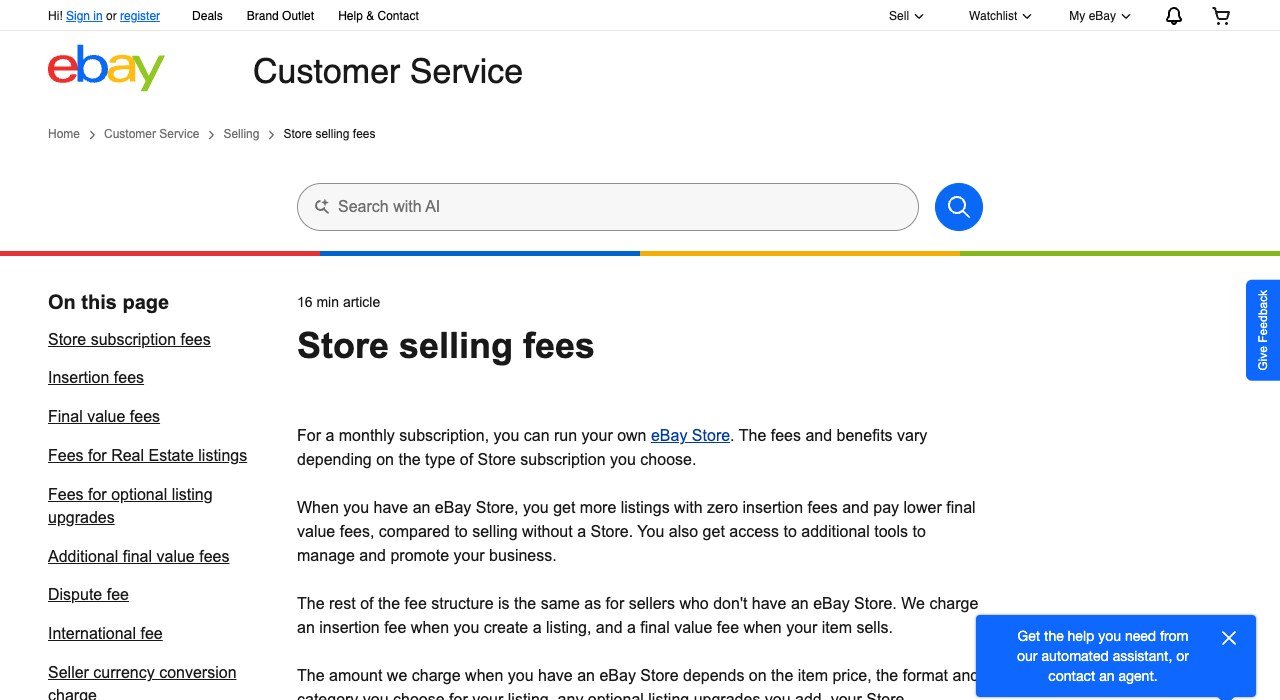
Entry price: $4.95 a month on a yearly Store. Cut per sale: Final value fees by category. Traffic: Marketplace.
eBay is the obvious marketplace answer because the buyers are already there. A Store subscription starts at $4.95 a month on yearly renewal or $7.95 monthly, rising through Basic at $21.95, Premium at $59.95 and Anchor at $299.95 on yearly terms.
Final value fees sit on top and vary by category, which is the part that needs checking against what you actually sell. The subscription buys listing allowances and lower fees, so the cheapest tier is rarely the cheapest outcome for a busy shop.
4. Big Cartel: A small shop that keeps all its revenue
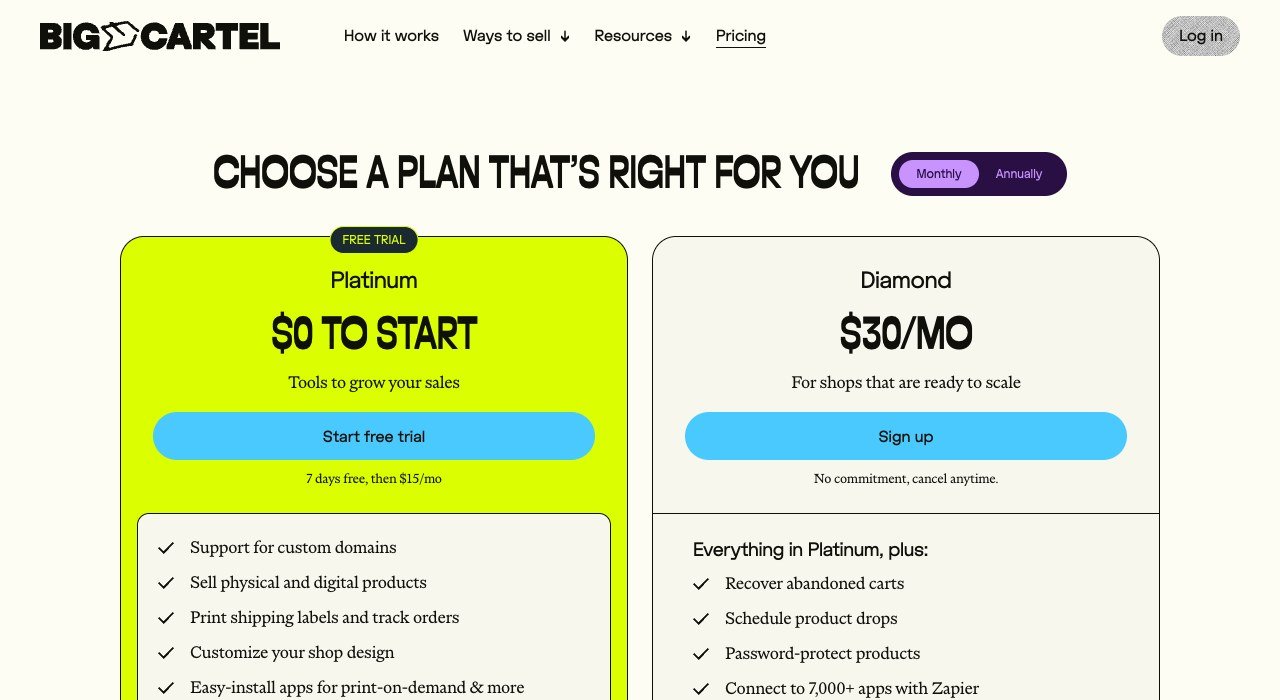
Entry price: $15 a month. Cut per sale: None. Traffic: Your own audience.
Big Cartel charges $15 a month for Platinum and $30 for Diamond and takes nothing from your sales. For a maker shipping a few hundred orders a month, that is the whole platform cost.
There is no marketplace attached, so every visitor is one you brought. That is the central trade in this whole comparison: you stop paying a percentage and start paying for attention in some other way.
5. Snipcart: Adding checkout to a site you already have
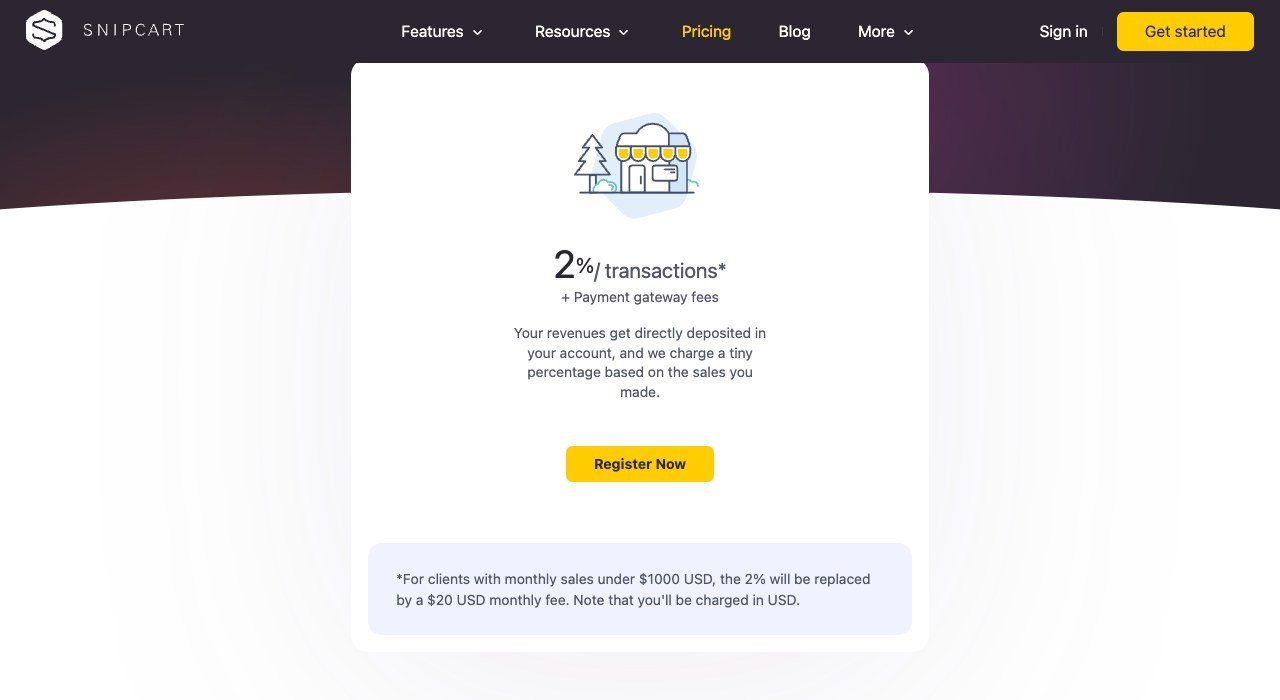
Entry price: $20 a month minimum. Cut per sale: 2% of sales. Traffic: Your own audience.
Snipcart is a checkout you add to a site that already exists, charging 2 percent of sales. For a maker who already has a portfolio or blog, it turns that site into a shop without rebuilding it.
Below $1,000 a month in sales the 2 percent is replaced by a $20 monthly minimum, so the smallest shops pay proportionally more. Above it, this is one of the cheapest ways to sell from somewhere you already own.
6. Sellfy: Downloads and print-on-demand merch together
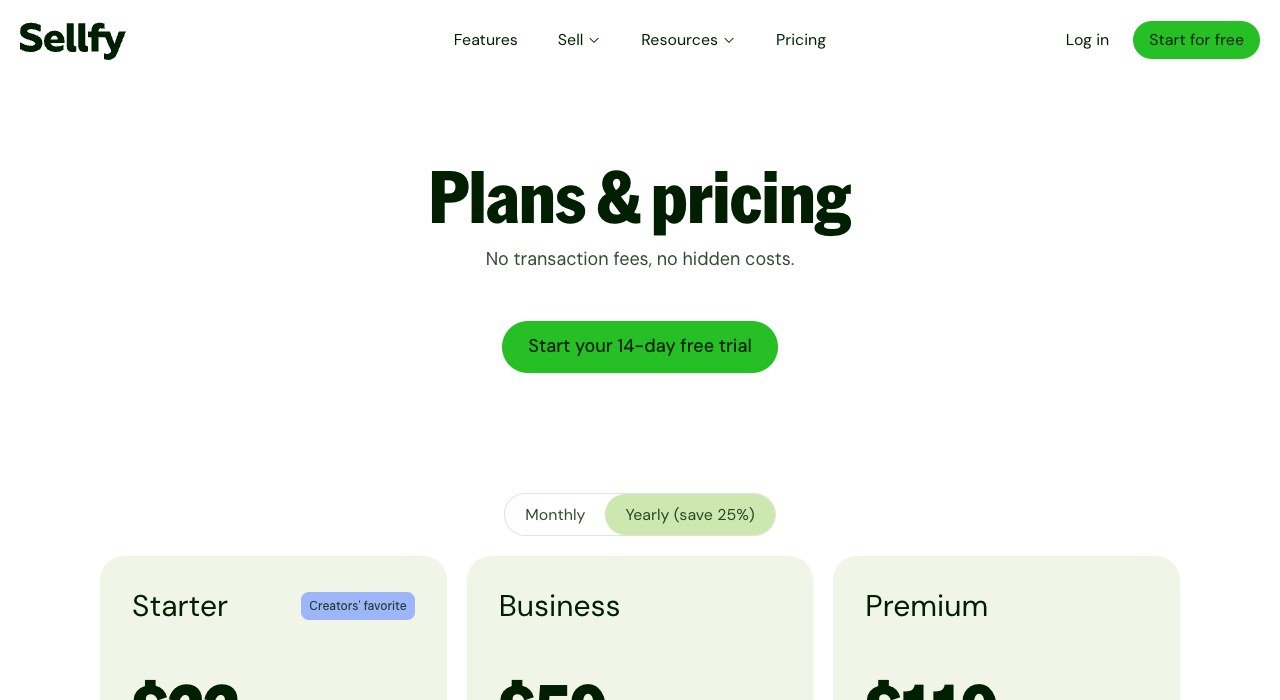
Entry price: $22 a month. Cut per sale: None, revenue capped by plan. Traffic: Your own audience.
Sellfy handles downloads, subscriptions and print-on-demand merchandise from one place, at $22 a month for Starter, $59 for Business and $119 for Premium, with no cut taken.
The constraint is a revenue ceiling rather than a percentage: $10,000 a year on Starter, $50,000 on Business and $200,000 on Premium. Your effective rate therefore steps up as you cross each one instead of climbing smoothly.
7. BigCommerce: A full storefront with no cut taken
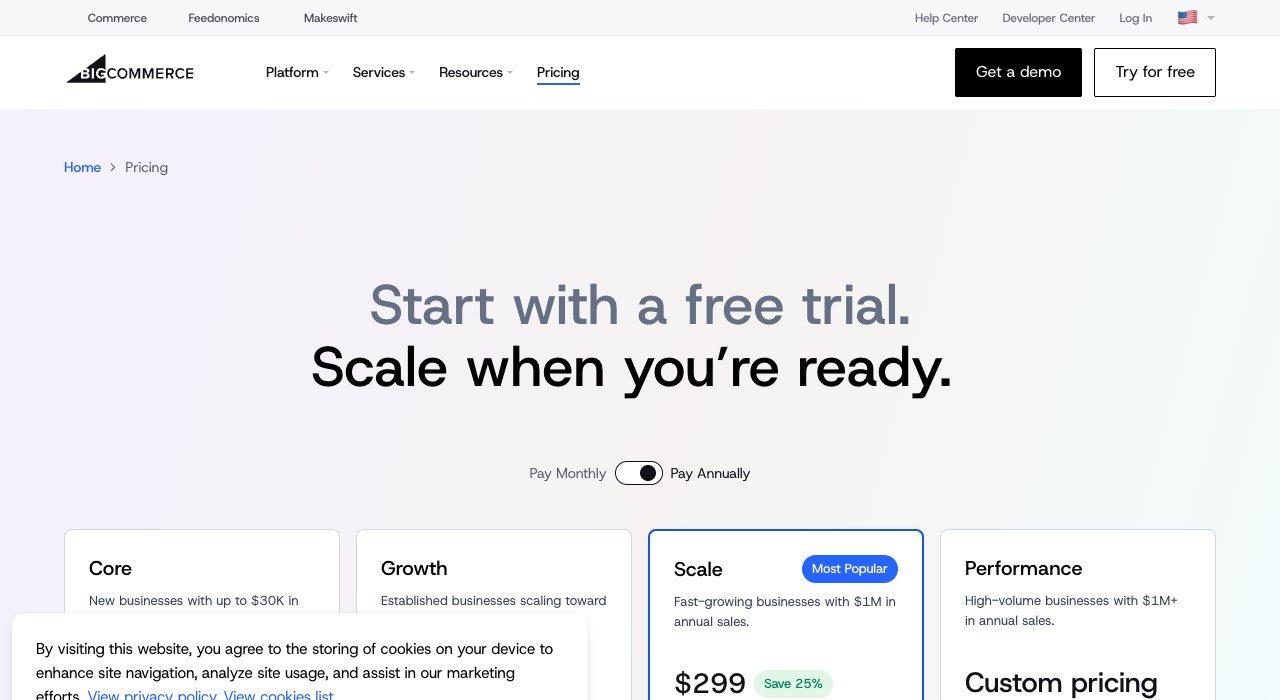
Entry price: $29 a month billed yearly. Cut per sale: None. Traffic: Your own audience.
BigCommerce is a full hosted storefront with no transaction fee of its own, at $29 a month billed annually for Core and $79 for Growth.
Plans are gated by trailing annual sales rather than by features alone, so Core covers up to $30,000 before upgrading automatically. For a maker whose Etsy shop has outgrown the fee stack, this is the straightest route to a proper shop.
8. Amazon Handmade: Handmade goods in front of Amazon buyers
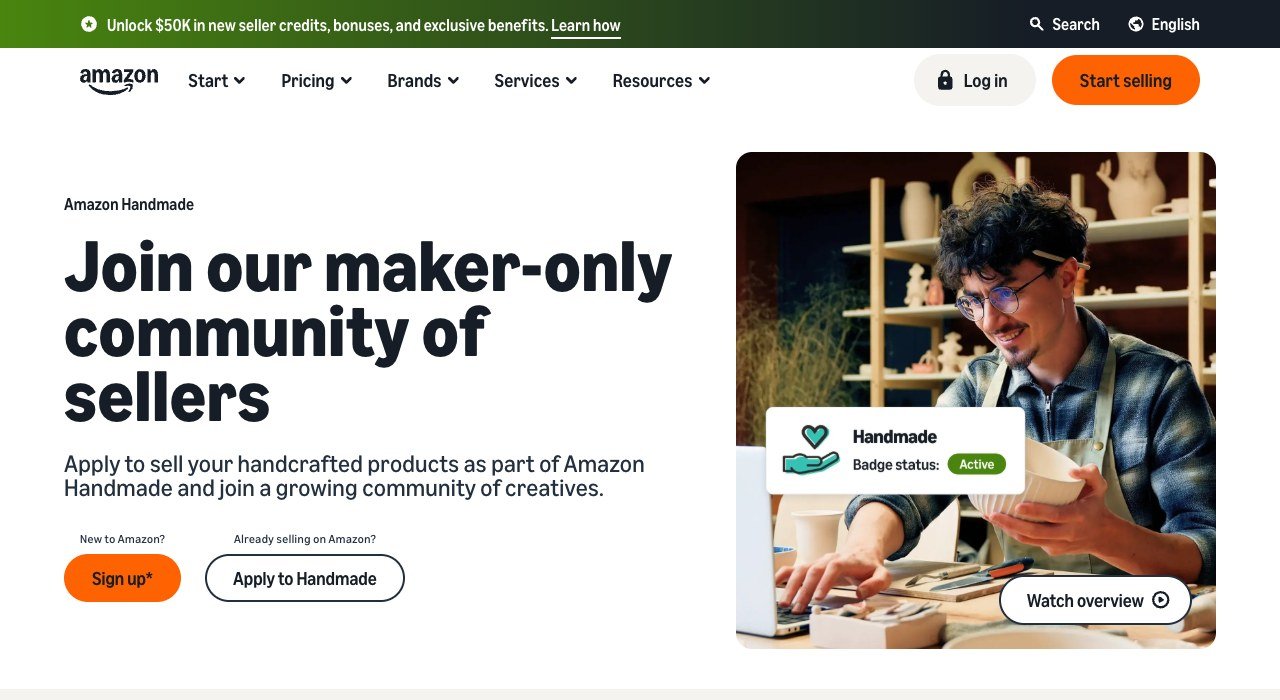
Entry price: $39.99 a month Professional account. Cut per sale: Referral fees by category. Traffic: Marketplace.
Amazon Handmade puts handcrafted goods in front of Amazon’s buyers, and the application process keeps resellers out. It requires a Professional selling account at $39.99 a month, with referral fees by category on top.
Amazon’s own page states that approved Handmade sellers can save $480 a year following a one-time first-month payment, which is the monthly account fee waived. That makes the real comparison the referral percentage rather than the subscription.
9. Podia: Digital products sold to a list
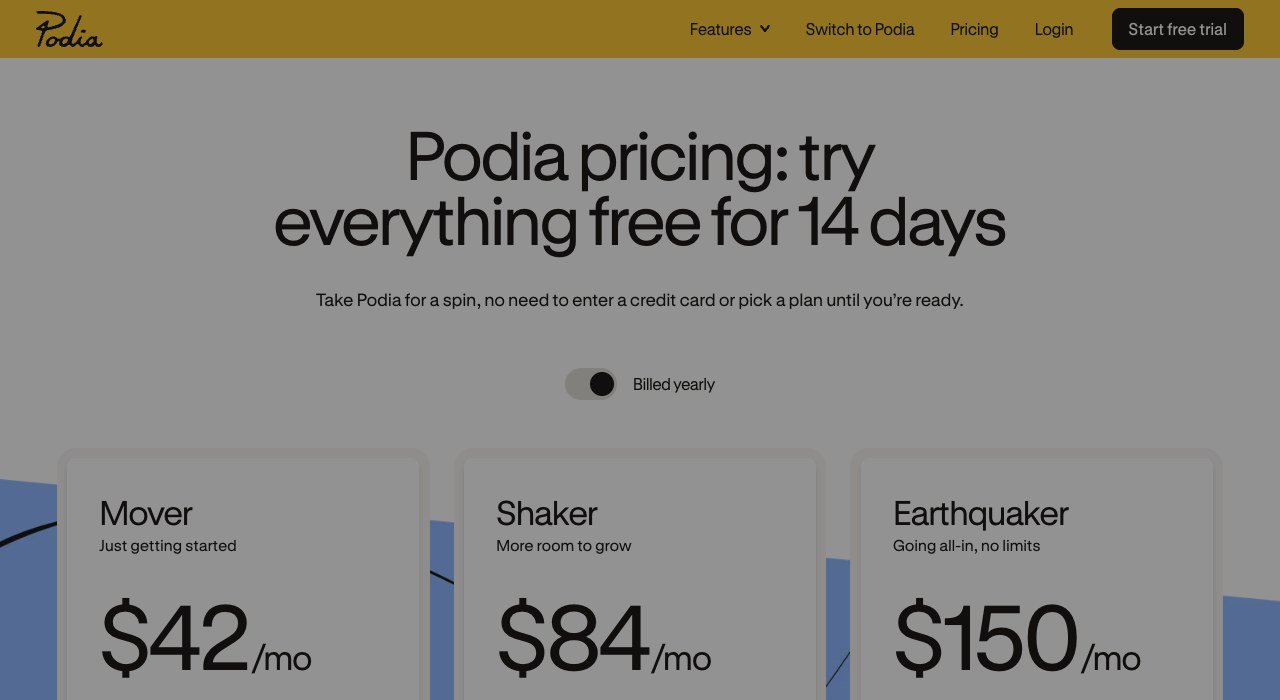
Entry price: $42 a month billed yearly. Cut per sale: 5% on the entry tier, none above. Traffic: Your own audience.
Podia suits makers whose products are digital, bundling downloads, courses and email together. Mover is $42 a month billed yearly, Shaker $84 and Earthquaker $150.
Mover carries a 5 percent fee and the tiers above remove it, so the upgrade buys the cut back. Plans are capped by email subscriber count rather than by sales, which is an unusual meter worth checking against your list.
10. WooCommerce: Owning the shop outright
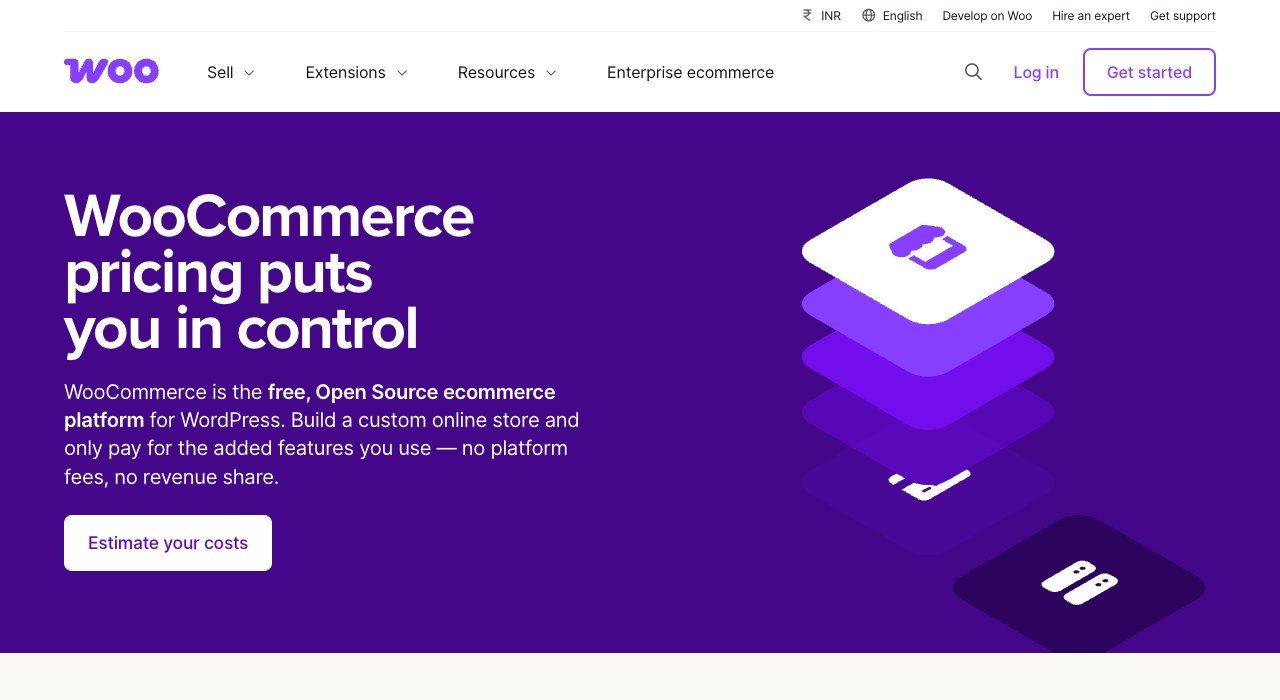
Entry price: $0 platform fee. Cut per sale: None from the platform. Traffic: Your own audience.
WooCommerce charges nothing to use. It is a WordPress plugin, so the money moves to hosting at roughly $25 to $350 a month and extensions at $29 to $299 a year each.
No platform fee, no cut and no revenue ceiling. The cost is that you are the shop’s technical owner, and a checkout that breaks on a Saturday is yours to fix rather than somebody’s support queue.
The Trade Nobody Puts in the Comparison Table
Eight of the ten above take a smaller cut than Etsy. Only two of them bring a single buyer with them. That is the whole decision, and it is usually made backwards.
- Marketplaces (Etsy, eBay, Amazon Handmade): the fee buys exposure to people already shopping. You compete on the same page as everyone else.
- Your own store (the other eight): the fee is near zero and so is the traffic. Every visitor arrives because you brought them.
- The honest middle: most established makers run both, using the marketplace for discovery and their own shop for repeat buyers.
Before moving, look at where last year’s orders actually came from. If most buyers found you through Etsy search, a $15 a month shop with no visitors is not a saving. If most came from Instagram or a mailing list and simply checked out on Etsy, you have been paying 6.5 percent for a checkout.
That second case is extremely common and is the strongest reason to leave. If it describes you, the cheapest options here are the right ones, and the comparison with a general store platform is covered in our Shopify alternatives guide.
Costs That Follow You Off the Marketplace
Two obligations belong to the seller rather than the platform, and both become more visible once you leave a marketplace that was quietly handling part of them.
Payment processors and marketplaces report sales to the tax authorities. The IRS explains the thresholds and the form in its guidance on Form 1099-K for payment card and third-party network transactions, and the figure reported is gross rather than net of refunds and fees. Running two shops means two of those forms.
Intellectual property is the other. A design you made is protected as your work, and the US Copyright Office sets out what copyright covers and who holds it. Marketplaces operate takedown processes on your behalf; on your own store, enforcement is entirely yours to pursue.
- Export your Etsy listings, customer list and order history before closing anything.
- Keep the Etsy shop open on a reduced listing count while the new store finds its feet, rather than switching off a revenue source overnight.
- Price the payment processor separately. Platform fees and card fees are different bills.
- Check whether your products are allowed. Handmade marketplaces audit, and some store platforms restrict categories outright.
How to Choose Where to Sell Next
Start from where your buyers currently come from, then from what you sell. Those two answers settle it faster than any fee table.
- Buyers find you through marketplace search: eBay or Amazon Handmade, not a standalone store.
- You already drive your own traffic: Big Cartel at $15 or Payhip free, and keep the difference.
- Sales are irregular: Gumroad or Payhip free, where a quiet month costs nothing.
- You sell digital files: Podia or Sellfy.
- You already have a website: Snipcart.
- The shop is the business: BigCommerce or WooCommerce.
Whatever you choose, the sales ledger has to reconcile at year end, and a shop that spans two platforms makes that harder rather than easier. Picking bookkeeping that imports from both is worth more than a point of fee difference, which is where the QuickBooks alternatives question meets this one.
Frequently Asked Questions
How much does Etsy actually take per sale?
A listing fee of $0.20 plus 6.5 percent of the displayed price and the shipping you charge, so roughly 7 percent of a $40 order before payment processing. If the sale came through Offsite Ads, add 15 percent of the order, or 12 percent once your shop passes $10,000 in trailing annual sales.
Can I avoid Etsy Offsite Ads fees?
Only while your shop has made less than $10,000 over the prior 365 days. Below that threshold you can opt out; once you pass it, participation is mandatory and the fee drops from 15 percent to 12 percent of attributed orders.
Which Etsy alternative is cheapest?
Payhip’s free plan and Gumroad cost nothing monthly and take 5 percent and 10 percent plus 50 cents respectively. Big Cartel at $15 a month takes no cut at all, which is cheapest once you are selling more than about $300 a month.
Should I leave Etsy or sell in both places?
Most established sellers do both, using the marketplace for discovery and their own shop for repeat customers. Leaving outright only makes sense if your orders already arrive from your own audience and Etsy is functioning as an expensive checkout.
Related Articles

Get the Fox Bulletin briefing
The stories that matter, in your inbox. No spam, unsubscribe anytime.
Newsletter signup will be available soon.
Related stories
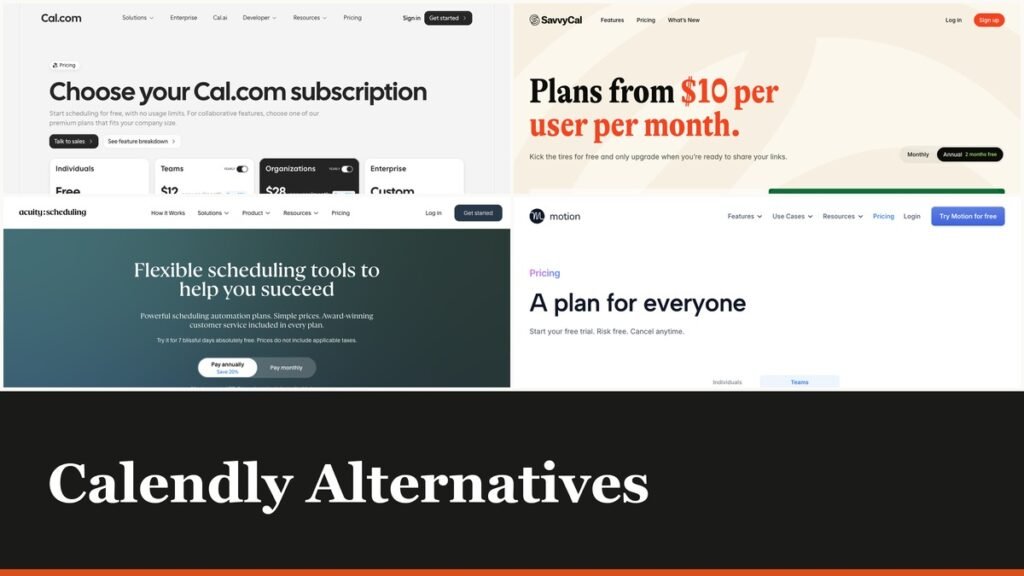
Calendly Alternatives: 10 Scheduling Tools Compared
Calendly is free for one event type and $10 a seat beyond it. Ten Calendly alternatives compared on seat price, free tiers and one that costs $29 once.
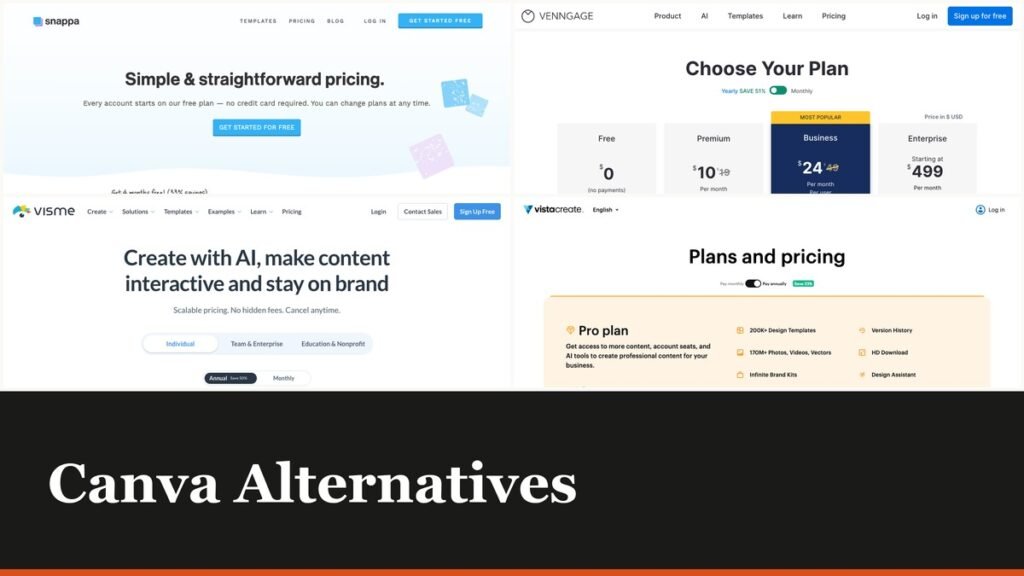
Canva Alternatives: 10 Template Design Tools Compared
Canva now sells four tiers, all priced per person. Ten Canva alternatives compared on seat price, free tiers and what each one is actually built to make.
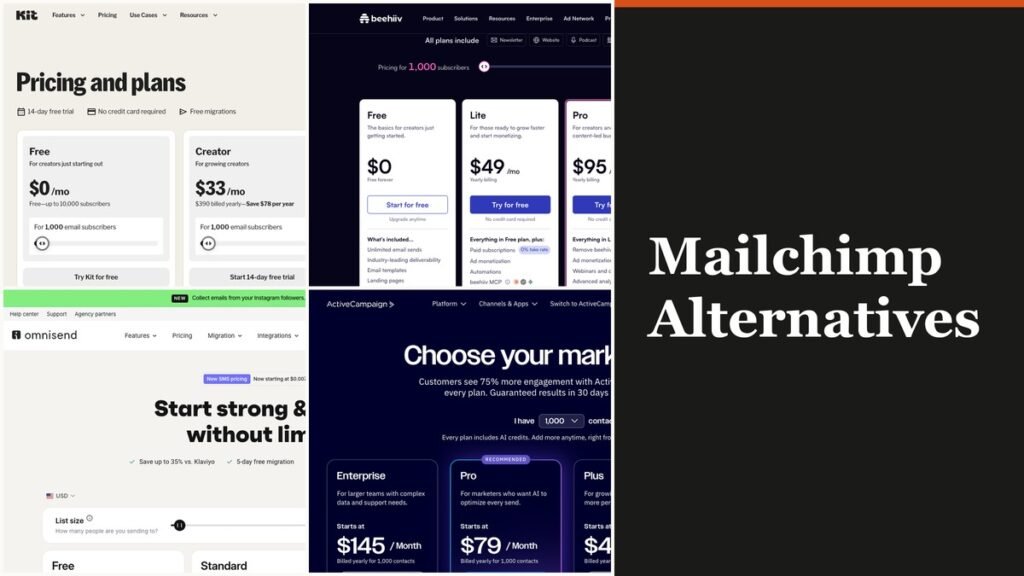
Mailchimp Alternatives: 10 Email Tools and Their Limits
Mailchimp bills by contacts stored and charges overages. Ten Mailchimp alternatives compared on what they meter, free tiers and entry price.