

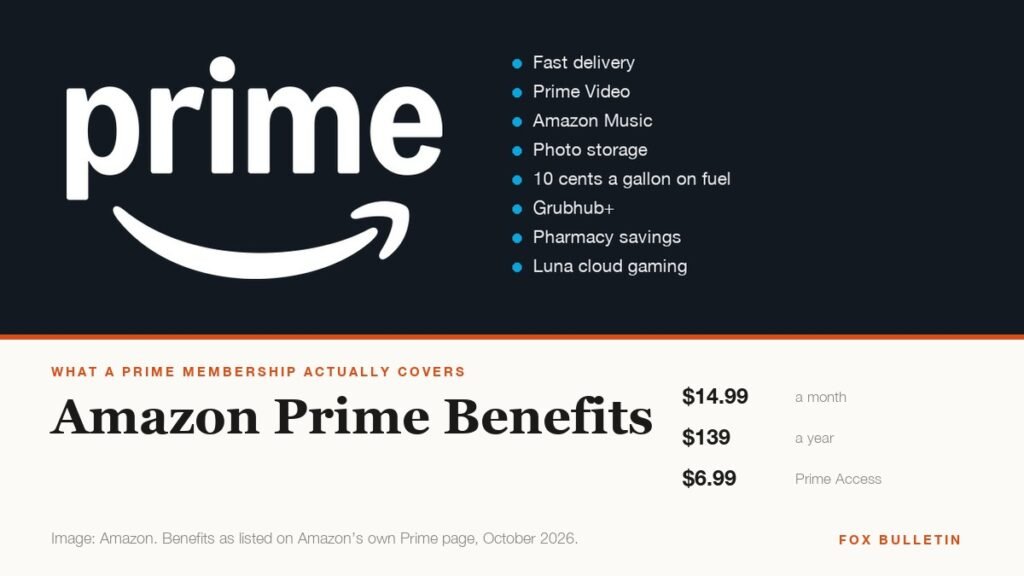
Most people buy Amazon Prime for the delivery and then use perhaps a third of what it covers. The membership now bundles video, music, cloud gaming, unlimited photo storage, a fuel discount, free Grubhub+ and prescription savings, and Amazon does a poor job of telling anyone.
At $14.99 a month or $139 a year, the question is not whether Prime is good value in the abstract but whether you are using enough of it to justify the figure. Here is the complete list as Amazon itself states it, the three cheaper rates most members never check, and an honest view of which benefits are genuinely worth something.
What Amazon Prime Costs
Four published rates for the identical membership. Two of them cut the price by roughly half, and they are listed in plain sight on the signup page.
| Plan | Price | Who qualifies |
|---|---|---|
| Prime Monthly | $14.99 a month | Anyone |
| Prime Annual | $139 a year | Anyone, about $11.58 a month |
| Prime for Young Adults | $7.49 a month | Ages 18 to 24, and students |
| Prime Access | $6.99 a month | Qualifying government assistance recipients |
Every plan opens with a 30 day free trial. The annual plan saves about $41 against twelve monthly payments, so anyone confident of keeping it past four months is losing money on monthly billing.
Everything the Membership Covers
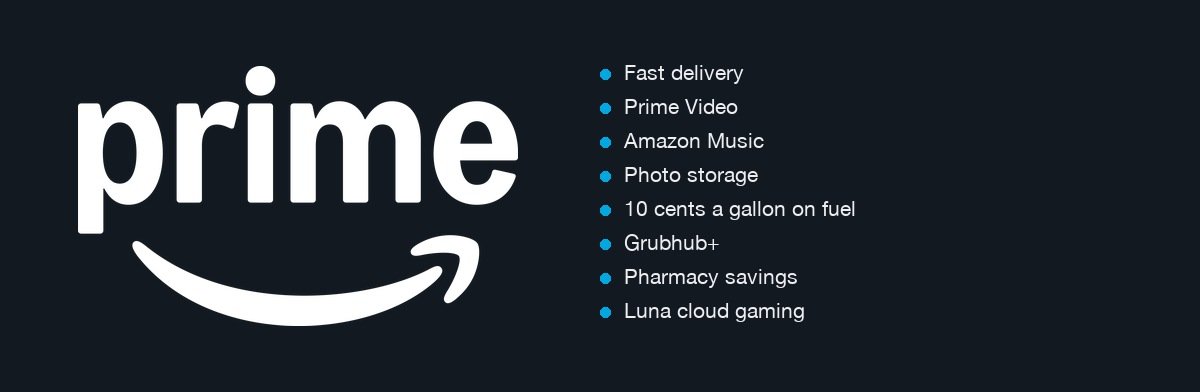
Amazon groups these loosely and most members never scroll the list. In full:
- Delivery: same-day, one-day and two-day shipping on millions of items.
- Prime Video: new releases, originals and live sports, covered in detail in our guide to the Amazon Prime Video subscription.
- Amazon Music: the full catalogue and top podcasts, ad-free.
- Photos: unlimited full-resolution photo storage plus 5GB for video.
- Grocery: free same-day delivery on grocery orders over $25 in selected areas, and Whole Foods savings.
- Deals: daily deals and member-only events such as Prime Day.
- Fuel: 10 cents a gallon off at more than 7,500 participating sites.
- Grubhub+: included at no extra cost, with $0 delivery fees and lower service fees.
- Pharmacy: prescription savings at 60,000 pharmacies including Walgreens, CVS and Amazon Pharmacy.
- Gaming: Luna cloud gaming and monthly game claims, explained in our guide to Amazon Luna.
That is ten benefit categories for one fee, and the last four are the ones almost nobody uses because they have nothing to do with buying things from Amazon.
The Benefits Members Forget They Have
Four of these can be worth more than the shipping to the right household, and all four are routinely left on the table.
- Unlimited photo storage. Full resolution, no cap. Households paying separately for cloud photo storage are paying twice, and this is the single most valuable overlooked benefit.
- Grubhub+. Sold on its own as a paid subscription and included here. Anyone ordering delivery even twice a month is covering a meaningful share of the Prime fee with this alone.
- The fuel discount. Ten cents a gallon is around $1.50 on a typical fill. Two fills a month is $3 back, a fifth of the membership, for scanning a code.
- Pharmacy savings. Applies at 60,000 pharmacies, not only Amazon’s own, and works on prescriptions you are already filling.
Add those four and a member who shops rarely can still cover the fee without ordering a single parcel. That is the argument Amazon never makes clearly, presumably because it would rather you thought of Prime as a shipping product.
Which Benefits Are Worth Little
An honest list has to include the parts that overlap something you already pay for, because that is where Prime quietly duplicates spending.
- Amazon Music is the standard tier rather than Unlimited, with a smaller on-demand catalogue than a dedicated service. Anyone already paying for Spotify or Apple Music gains little.
- Prime Video now carries advertising on the standard tiers, with 4K and ad-free behind a $4.99 Ultra upgrade.
- Grocery delivery depends entirely on your postcode being in a served area.
- Prime Reading is a rotating catalogue of about 3,000 titles, far smaller than Kindle Unlimited, and the two are often confused.
None of these are bad, but none should be the reason you subscribe. Count them as bonuses on top of a decision made on delivery, photos and the four forgotten benefits above.
Sharing Prime Without Paying Twice
A second membership in the same house is wasted money, and Amazon Household exists specifically to prevent it. Two adults can share one Prime membership, along with the delivery benefits and several of the digital ones.
- Two adults share delivery benefits, Prime Video and the deals, each keeping a separate login and order history.
- Teen accounts can be added so older children order under supervision rather than on a parent’s account.
- Child profiles sit alongside it for the content controls.
- Payment stays separate, so sharing benefits does not mean sharing a card.
Households paying for two memberships should fix that before doing any other sum here, because it is $179 a year recovered for about two minutes of setup. The same applies in reverse when a household splits up: the benefit sharing has to be unwound deliberately, or one person keeps benefits the other is paying for.
What Prime Does Not Include
The membership is wide enough that people assume it covers more than it does, and three of these catch members out regularly.
- Kindle Unlimited is separate at $11.99 a month. Prime includes Prime Reading, which is a different and much smaller catalogue.
- Amazon Kids+ is separate, although Prime members pay a reduced rate for it.
- Prime Video Channels are individual paid subscriptions billed through Amazon. They continue charging even if Prime is cancelled.
- Ad-free Prime Video and 4K require the Prime Video Ultra upgrade at an additional $4.99 a month.
That last one is the most recent change and the one most likely to surprise a long-standing member, since 4K used to be included at the standard rate before it moved behind Ultra in April 2026.
Working Out Whether You Are Getting $139 of Value
A quick audit beats an opinion, and it takes about five minutes with a bank statement.
- Count your Amazon orders over the last three months and multiply shipping by four for an annual figure.
- Add $100 or so if you genuinely use Prime Video as a main service, less if you only use it occasionally.
- Add whatever you pay separately for cloud photo storage, since Prime replaces it outright.
- Add roughly $120 a year if you order delivery regularly, which is what Grubhub+ costs on its own.
- Add two fills a month at the fuel discount, about $36 a year.
Most households that do this honestly land well above $139 and stop worrying about it. Households that land below usually find the gap is delivery, not entertainment, and the right answer for them is a cheaper tier or no membership rather than a grudging renewal. If you reach that conclusion, our guide on how to cancel Amazon Prime covers the refund rule that decides whether any money comes back.
Whatever you decide, set a reminder before the renewal date rather than discovering the charge afterwards, and see the FTC’s guidance on recurring payments if a subscription proves awkward to stop.
One structural point worth holding onto. Prime is priced as a bundle because Amazon wants the delivery habit, and everything else is there to make cancelling feel expensive. That is not a criticism, it is simply how the product works, and it means the honest test is whether you would pay for these things separately. For a household using photos, Grubhub+ and the fuel discount, the answer is clearly yes. For one that only wants faster parcels, the answer may well be no, and buying the annual plan out of guilt is the worst of both.
Frequently Asked Questions
What are the benefits of Amazon Prime?
Fast delivery, Prime Video, Amazon Music, unlimited photo storage, grocery delivery and Whole Foods savings, member-only deals including Prime Day, 10 cents a gallon off fuel, free Grubhub+, prescription savings at 60,000 pharmacies, and Luna cloud gaming with monthly game claims.
How much is Amazon Prime a month?
$14.99 a month, or $139 a year which works out at about $11.58 a month. Prime for Young Adults costs $7.49 for 18 to 24 year olds and students, and Prime Access costs $6.99 for recipients of qualifying government assistance.
Is Amazon Prime worth it?
It depends on how much of it you use rather than how much you order. Delivery alone rarely justifies $139 for an occasional shopper, but adding unlimited photo storage, Grubhub+, the fuel discount and pharmacy savings pushes most households past the fee without counting a single parcel.
Does Amazon Prime include Kindle Unlimited or Kids+?
Neither. Amazon Prime includes Prime Reading, a much smaller rotating catalogue. Kindle Unlimited and Amazon Kids+ are separate paid subscriptions, although Prime membership does reduce the Kids+ price.
Related Articles

Get the Fox Bulletin briefing
The stories that matter, in your inbox. No spam, unsubscribe anytime.
Newsletter signup will be available soon.
Related stories
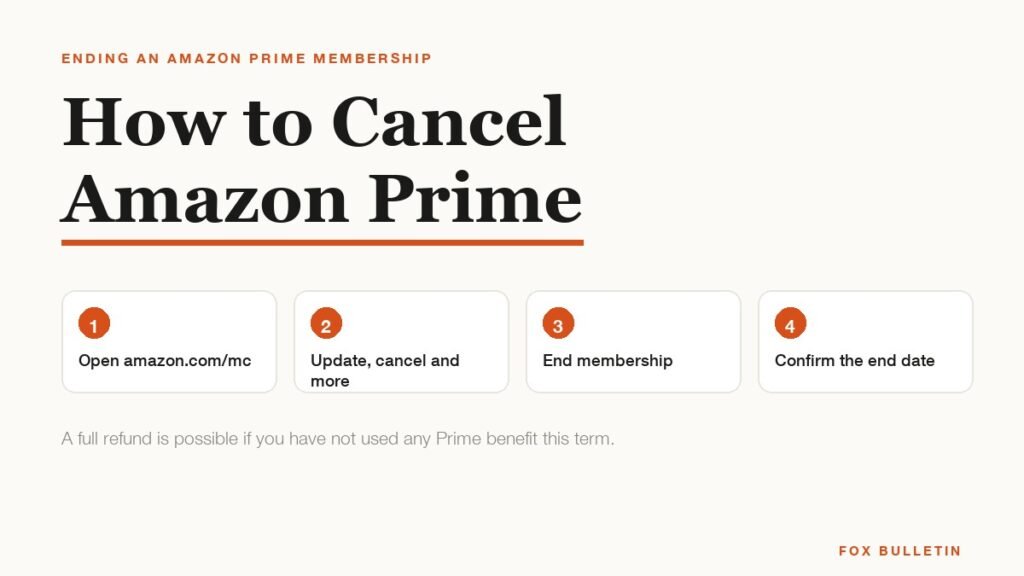
How to Cancel Amazon Prime and When You Get a Refund
Cancel Amazon Prime at amazon.com/mc in about a minute. The exact steps, when the charges stop, and the rule that decides whether you get a refund.
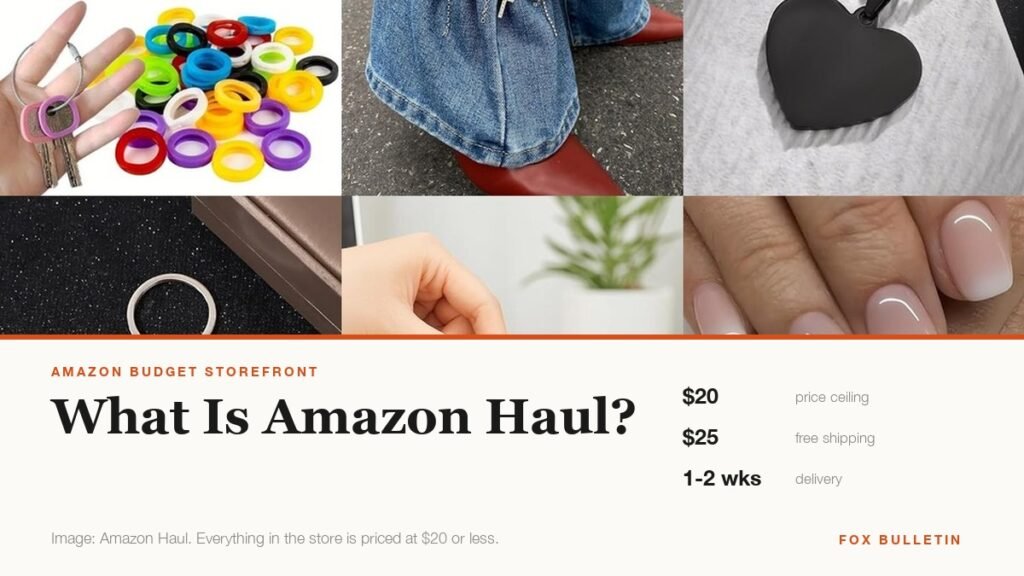
What Is Amazon Haul? Prices, Shipping and the Catch
Amazon Haul caps everything at $20, ships free over $25 and adds 10% off at $75. What it costs, how slow delivery really is, and why items under $3 cannot be returned.
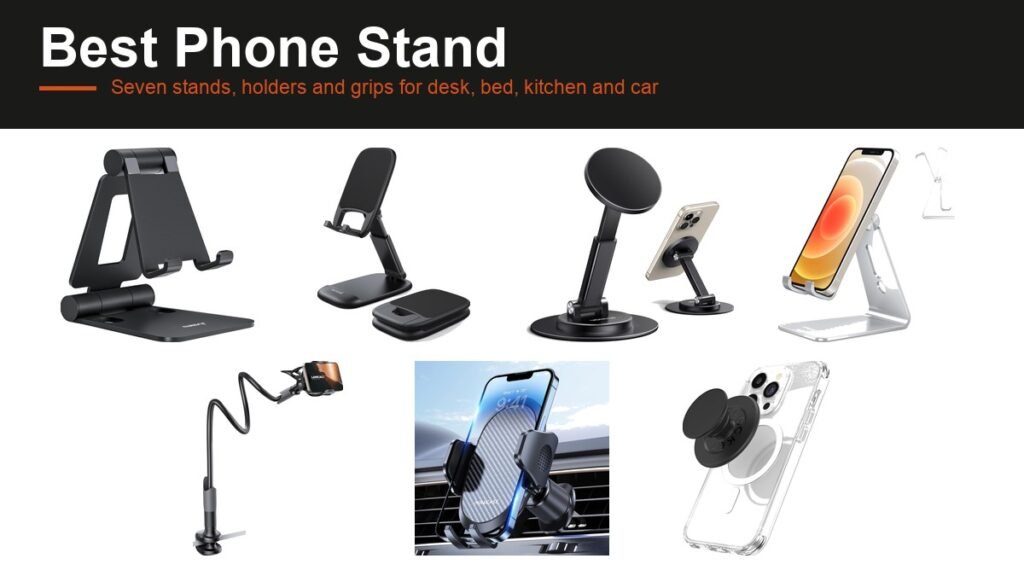
Best Phone Stand: 7 Holders for Desk, Bed, Kitchen and Car
A phone stand is a two-minute purchase that fixes a problem you have every day. The difference between them is where they live, not what they cost.