

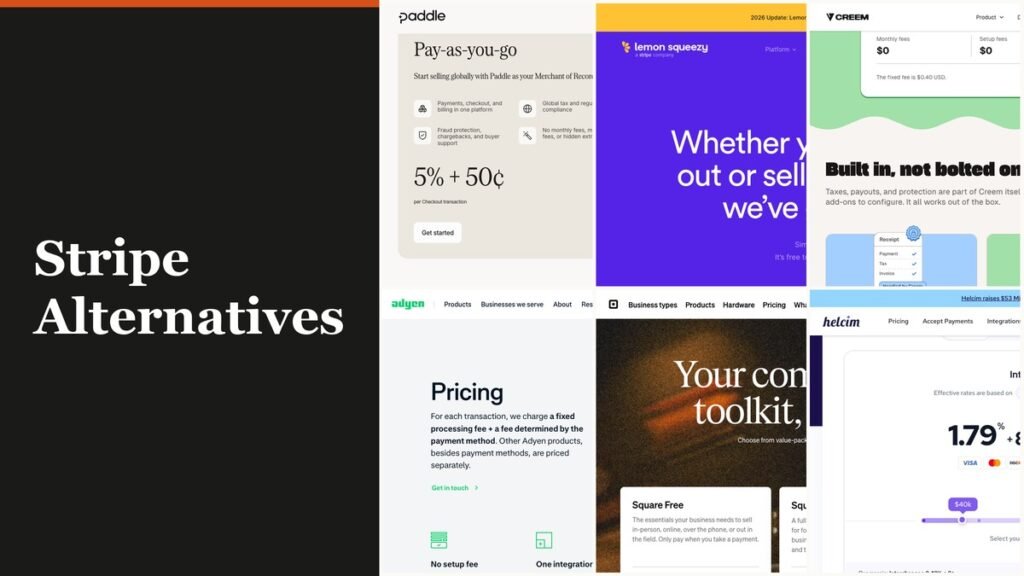
Stripe alternatives split into two groups that are rarely separated, and the difference matters more than the rate. A payment processor moves money and leaves the sales tax to you. A merchant of record becomes the seller on the invoice and takes that liability on.
Four of the ten below are merchants of record, charging roughly double a processor rate to do it. Stripe itself charges no setup fee and no monthly fee and bills per transaction, with the card rate set in the country you sell from.
Processor or Merchant of Record: The Decision Before the Rate
A payment processor is a pipe. Money moves from the buyer to your account and everything else stays your problem: registering for sales tax, filing in each jurisdiction, handling VAT on sales into the EU and issuing the right invoices.
A merchant of record sells your product on your behalf. The buyer’s contract is with them, the tax registration is theirs, and the filings are theirs. You receive a payout and a statement. That is why Paddle, Lemon Squeezy, Dodo and Creem charge 3.9 to 5 percent where a processor charges around 3.
The extra one and a half to two points is not a worse deal, it is a different purchase. For a US business selling only to US customers in one state, it is money wasted. For a developer selling a $29 tool into forty countries, it replaces a compliance function nobody on the team wants to run.
- You sell physically in one state: a processor is almost certainly right.
- You sell digital goods internationally: a merchant of record usually costs less than the alternative once filing time is counted.
- You already have a finance team: keep the processor and the margin.
- You are one person shipping software: the percentage buys back your weekends.
Stripe Alternatives Compared on Rate, Monthly Fee and Tax Liability
All ten, with the published rate, what they charge monthly, and whether they take on the seller-of-record role. The last column is the one that changes what you owe rather than what you pay.
| # | Provider | Best for | Published rate | Monthly | Merchant of record |
|---|---|---|---|---|---|
| 1 | Paddle | Merchant of record for software sellers | 5% + 50c a transaction | $0 | Yes |
| 2 | Lemon Squeezy | Digital products with tax handled | 5% + 50c a transaction | $0 | Yes |
| 3 | Dodo Payments | A cheaper merchant of record | 4% + 40c a transaction | $0 | Yes |
| 4 | Creem | The lowest merchant-of-record rate | 3.9% + 40c a transaction | $0 | Yes |
| 5 | Adyen | Interchange-plus at enterprise scale | $0.13 + Interchange++ 0.60% | $0 | No |
| 6 | Authorize.net | A gateway for an existing merchant account | 2.9% + 30c a transaction | $25 | No |
| 7 | Square | Selling in person as well as online | 3.3% + 30c online, 2.6% + 15c in person | $0 | No |
| 8 | PayPal | Checkout buyers already trust | 3.49% + fixed fee on Checkout | $0 | No |
| 9 | Helcim | No fixed fees of any kind | Interchange plus a published margin | $0 | No |
| 10 | Mollie | Selling into Europe | 1.80% + EUR 0.25 on EEA consumer cards | $0 | No |
The Ten Providers in Detail
1. Paddle: Merchant of record for software sellers
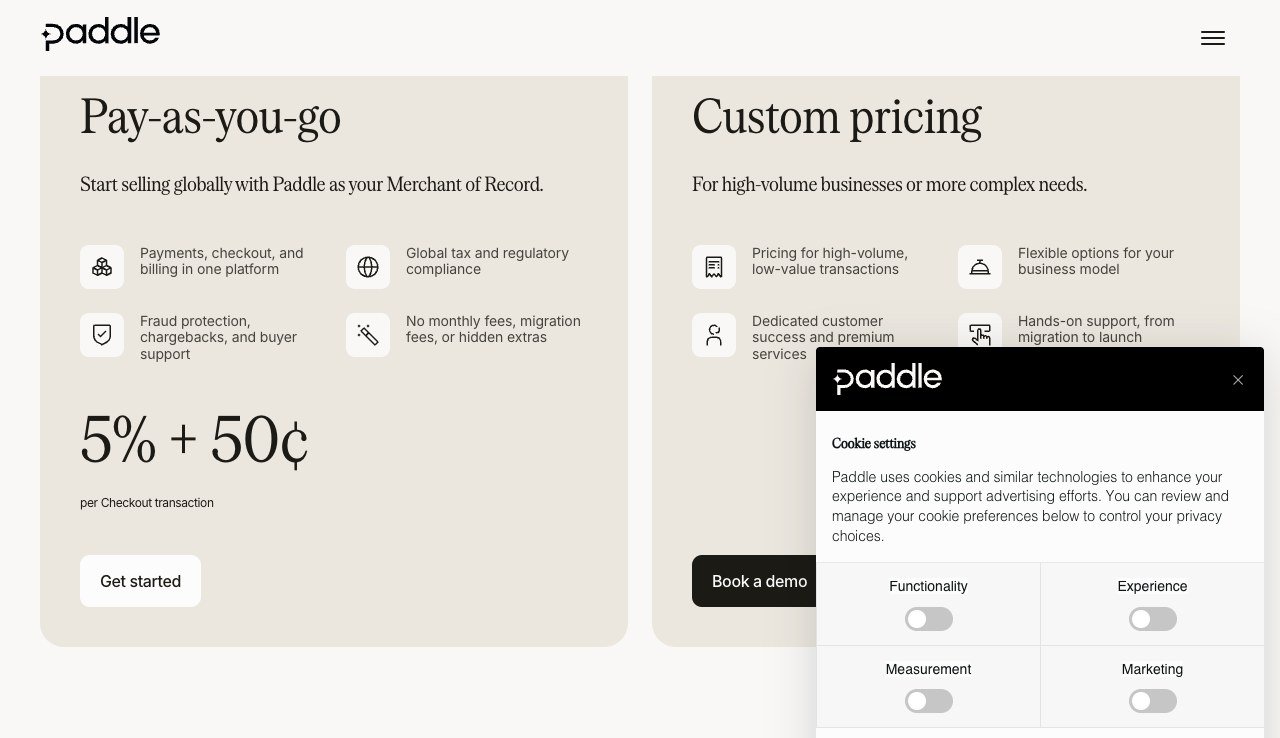
Published rate: 5% + 50c a transaction. Monthly fee: $0. Merchant of record: Yes.
Paddle is a merchant of record, which is a different product from a payment processor even though it sits in the same slot. Paddle becomes the seller of record on your invoices, so the sales tax and VAT liability is theirs rather than yours.
The rate is 5 percent plus 50 cents with no monthly fee, no migration fee and nothing for the compliance work. That is roughly double a processor’s headline rate, and the difference buys you out of registering for tax in every jurisdiction you sell into.
2. Lemon Squeezy: Digital products with tax handled
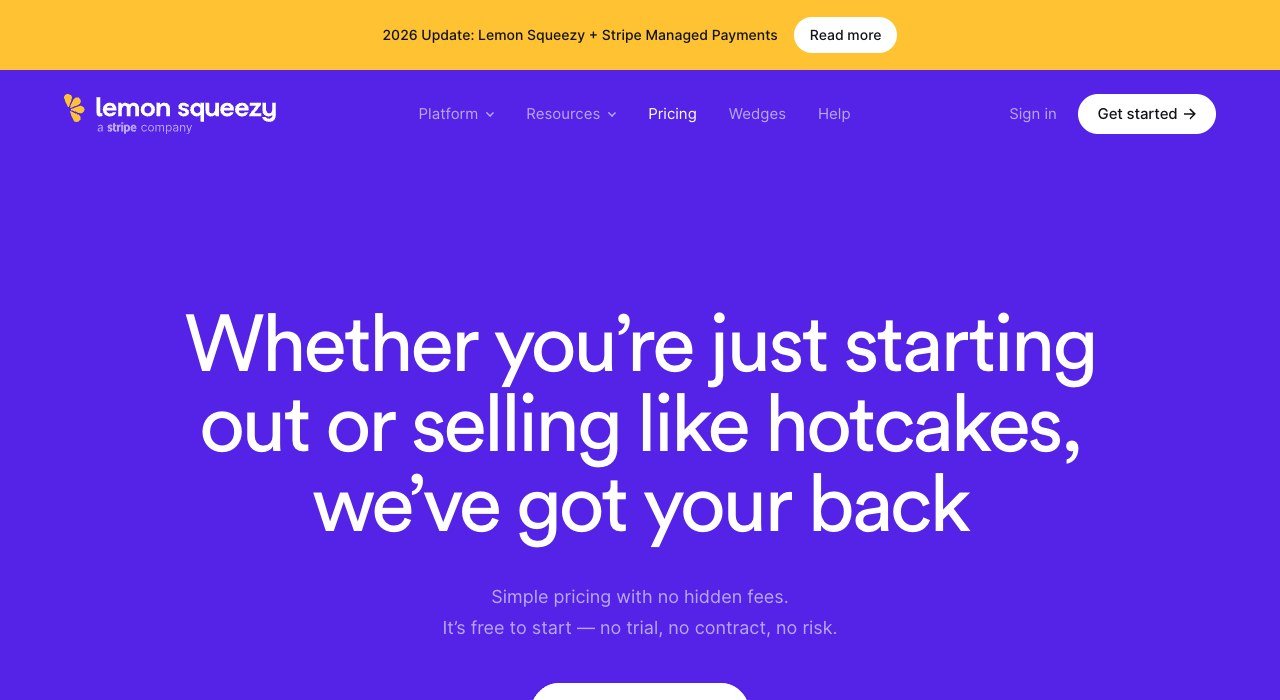
Published rate: 5% + 50c a transaction. Monthly fee: $0. Merchant of record: Yes.
Lemon Squeezy does the same job for digital products and has the same headline rate, 5 percent plus 50 cents, with no monthly charge on the ecommerce side. Email marketing features are billed separately.
It is aimed squarely at people selling software, templates and courses who do not want a finance function. The storefront, licensing and tax handling arrive together, which is the argument for paying a percentage rather than assembling the same thing from parts.
3. Dodo Payments: A cheaper merchant of record
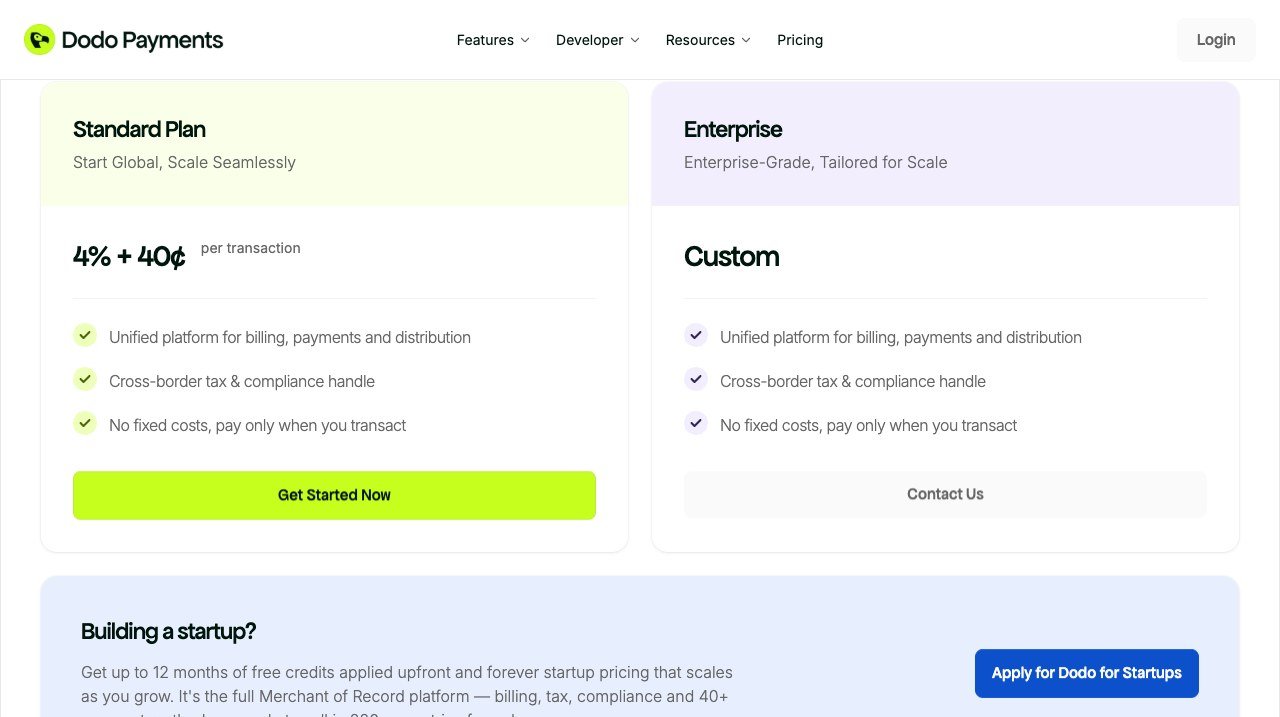
Published rate: 4% + 40c a transaction. Monthly fee: $0. Merchant of record: Yes.
Dodo Payments undercuts the established merchant-of-record rate at 4 percent plus 40 cents, with nothing monthly. Buy now pay later methods such as Klarna and Afterpay add 3 percent on top.
On $10,000 of monthly sales that one-point difference against Paddle is $100 a month, which is real money for a small software business. The trade is maturity: a newer provider means a shorter track record on payouts and disputes.
4. Creem: The lowest merchant-of-record rate
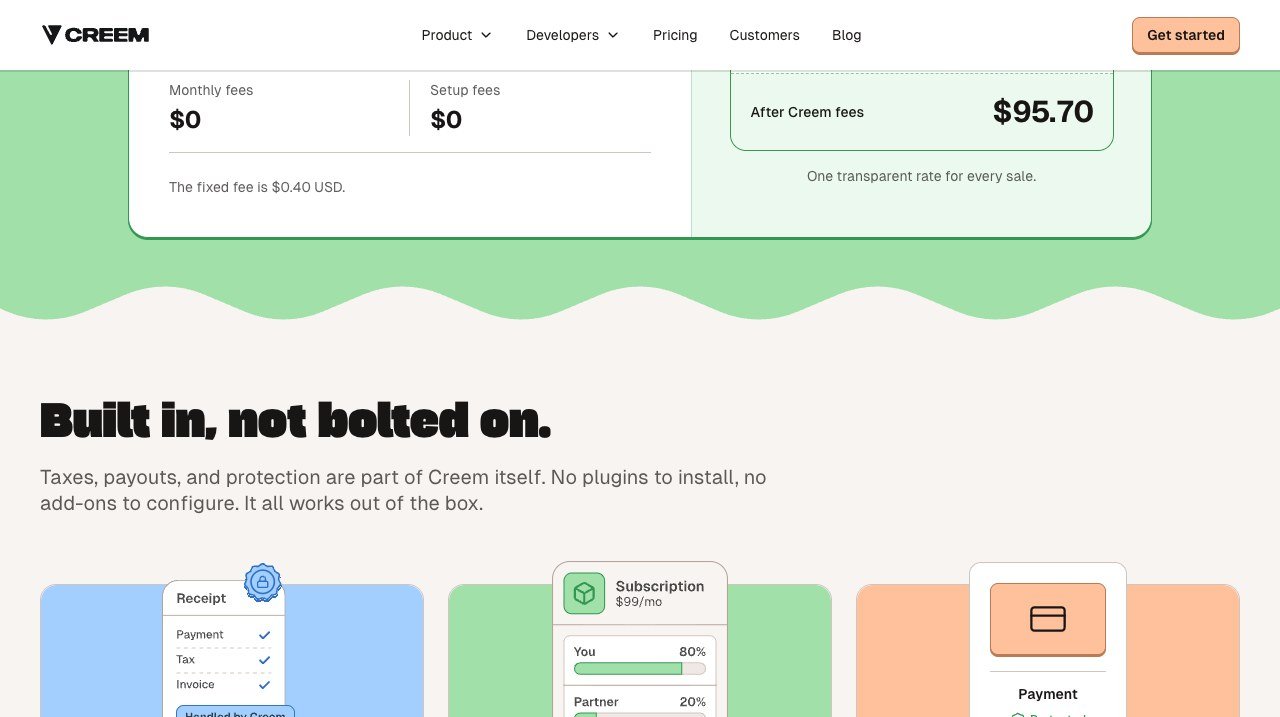
Published rate: 3.9% + 40c a transaction. Monthly fee: $0. Merchant of record: Yes.
Creem is the cheapest merchant of record here at 3.9 percent plus 40 cents, with no monthly fee and no setup fee. Its own page works the example through: a $100 sale returns $95.70 after the cut.
That transparency is worth more than it sounds in a category where effective rates are usually buried. For a developer selling a product into multiple countries, this is the lowest published price for having somebody else own the tax problem.
5. Adyen: Interchange-plus at enterprise scale
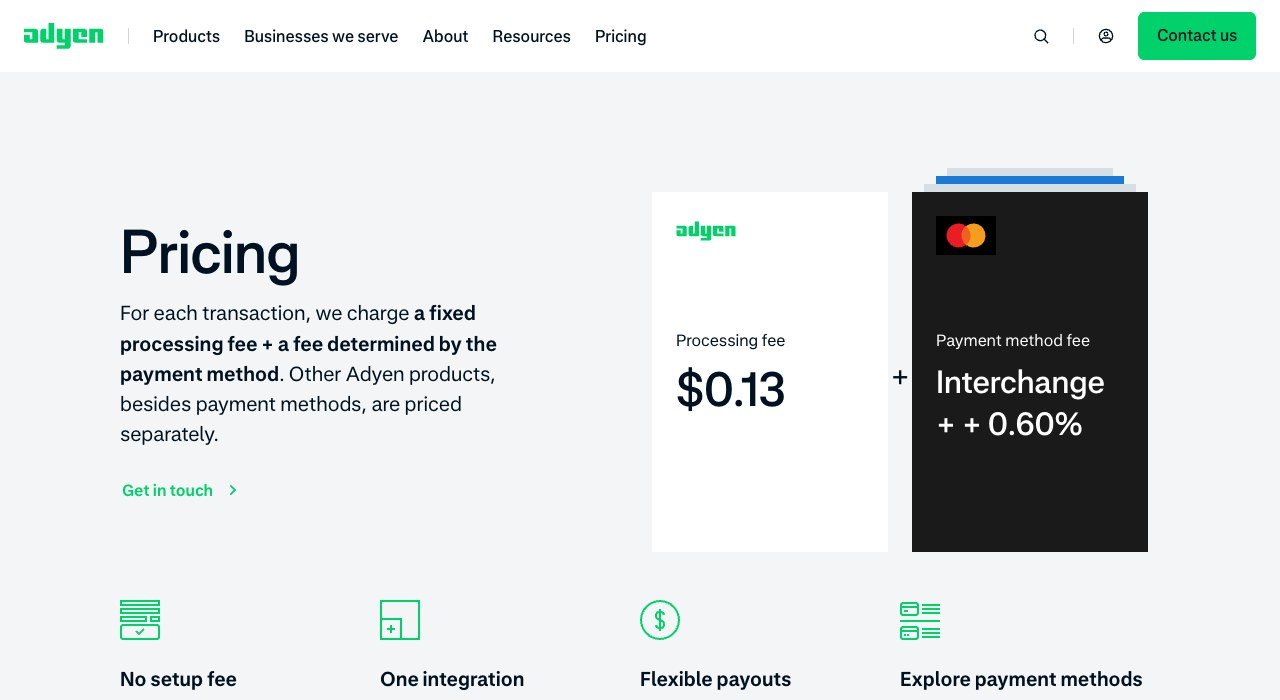
Published rate: $0.13 + Interchange++ 0.60%. Monthly fee: $0. Merchant of record: No.
Adyen is the enterprise end of straightforward processing. The structure is a fixed $0.13 processing fee plus a payment method fee, which on US cards is Interchange++ 0.60 percent, and Amex is 3.95 percent.
There is no setup fee and no monthly fee, but interchange-plus only beats a flat rate once volume is high enough for the margin to matter. Below roughly $50,000 a month the administrative overhead usually outweighs the saving.
6. Authorize.net: A gateway for an existing merchant account
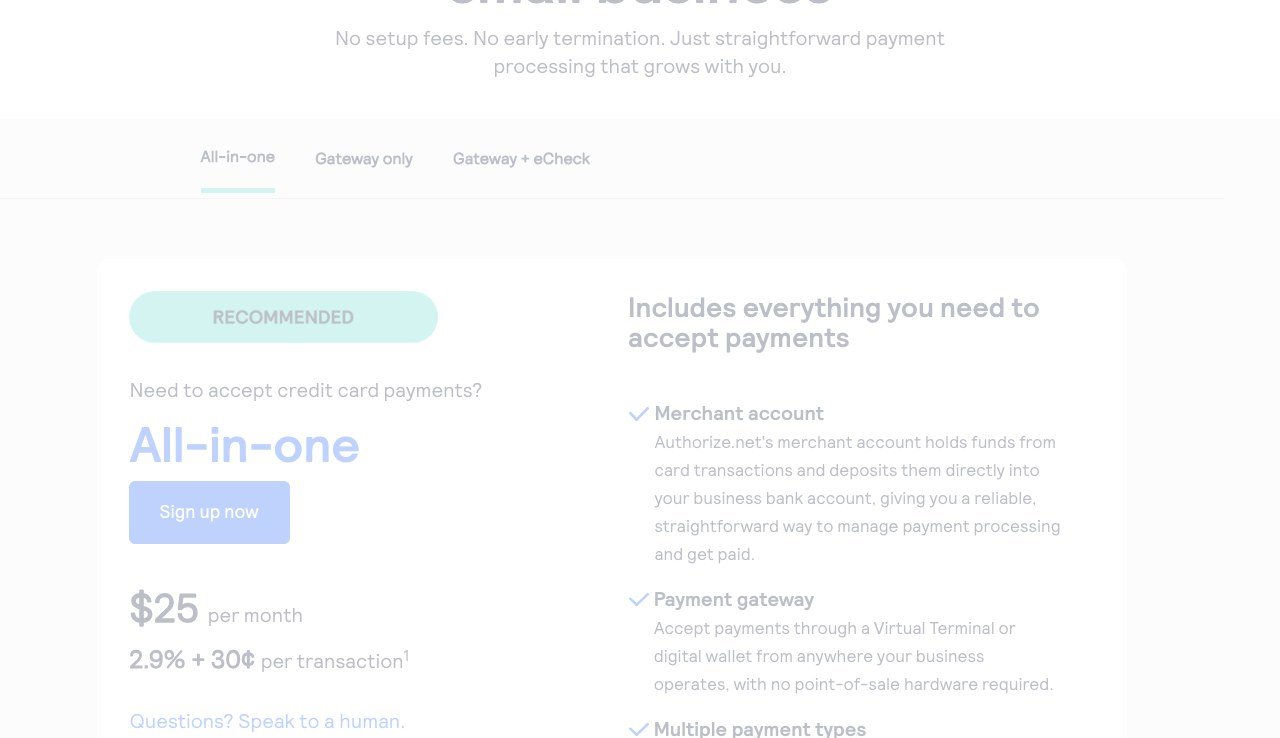
Published rate: 2.9% + 30c a transaction. Monthly fee: $25. Merchant of record: No.
Authorize.net is a gateway rather than a full processor, and it is priced accordingly: $25 a month plus 2.9 percent and 30 cents a transaction on the all-in-one plan.
The monthly fee is the point of difference. It exists because the product is designed to sit in front of a merchant account you already hold, which is a structure most newer businesses no longer use but a great many established ones still do.
7. Square: Selling in person as well as online
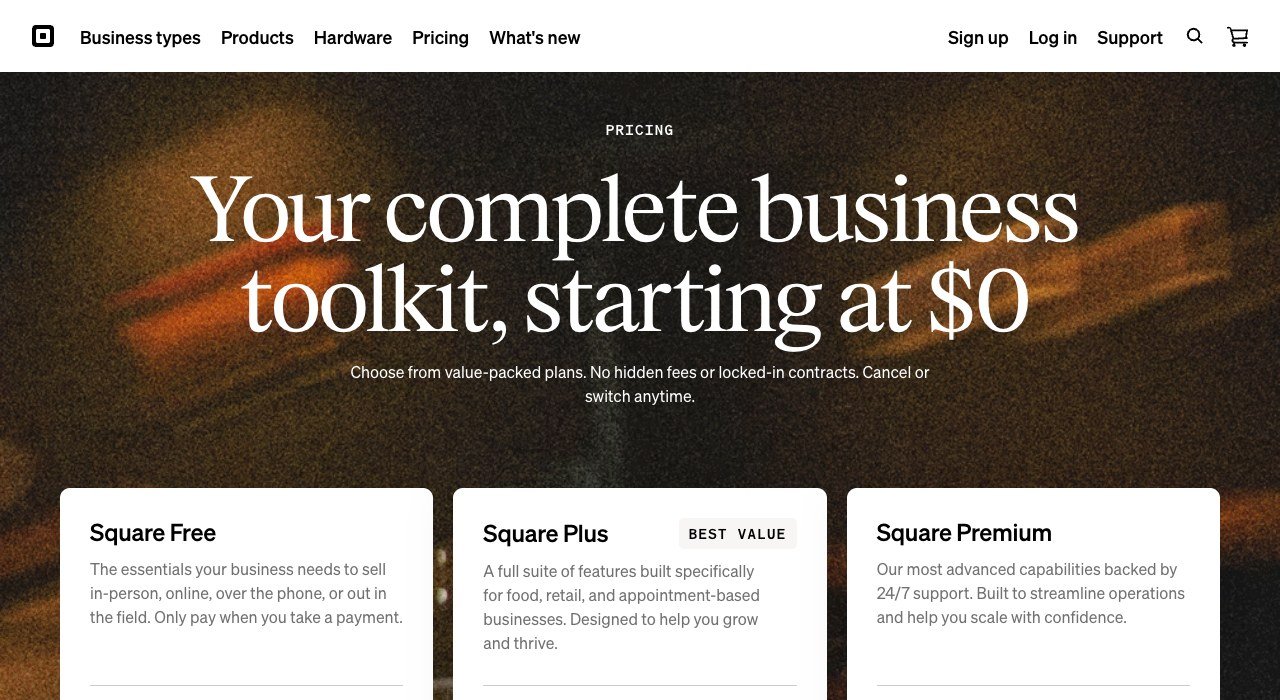
Published rate: 3.3% + 30c online, 2.6% + 15c in person. Monthly fee: $0. Merchant of record: No.
Square is the answer when some of the selling happens in a room with the customer. The software is $0 a month, with Plus at $49 and Premium at $149, and processing is 2.6 percent plus 15 cents tapped or dipped and 3.3 percent plus 30 cents online.
Online rates are higher than most dedicated processors, so Square earns its place through the in-person side and the hardware. A business selling only online is paying a premium for a capability it never uses.
8. PayPal: Checkout buyers already trust

Published rate: 3.49% + fixed fee on Checkout. Monthly fee: $0. Merchant of record: No.
PayPal remains on the shortlist because buyers recognise it. Standard Checkout is 3.49 percent plus a fixed fee, while QR code transactions drop to 2.29 percent plus a fixed fee.
The rate is among the highest here for ordinary online sales, and the counter-argument is conversion: some buyers will complete a PayPal checkout and abandon a card form. Run it alongside another processor rather than instead of one.
9. Helcim: No fixed fees of any kind
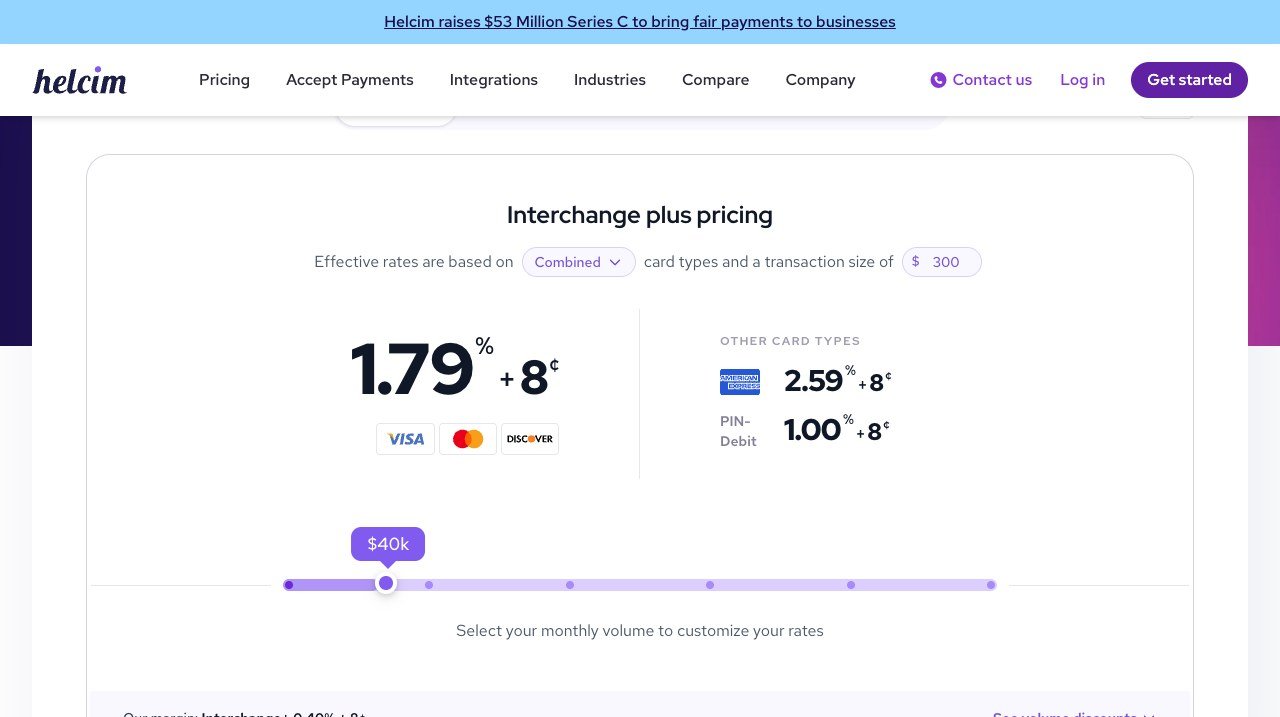
Published rate: Interchange plus a published margin. Monthly fee: $0. Merchant of record: No.
Helcim’s pricing page is a list of charges that do not exist: no monthly account fee, no minimums, no software or statement fees, no setup fee, no PCI compliance fee and no cancellation fee.
Processing itself is interchange plus a published margin, and deposits land the next business morning. For a business that has been worn down by statement fees and annual PCI charges elsewhere, the absence of them is the entire pitch.
10. Mollie: Selling into Europe
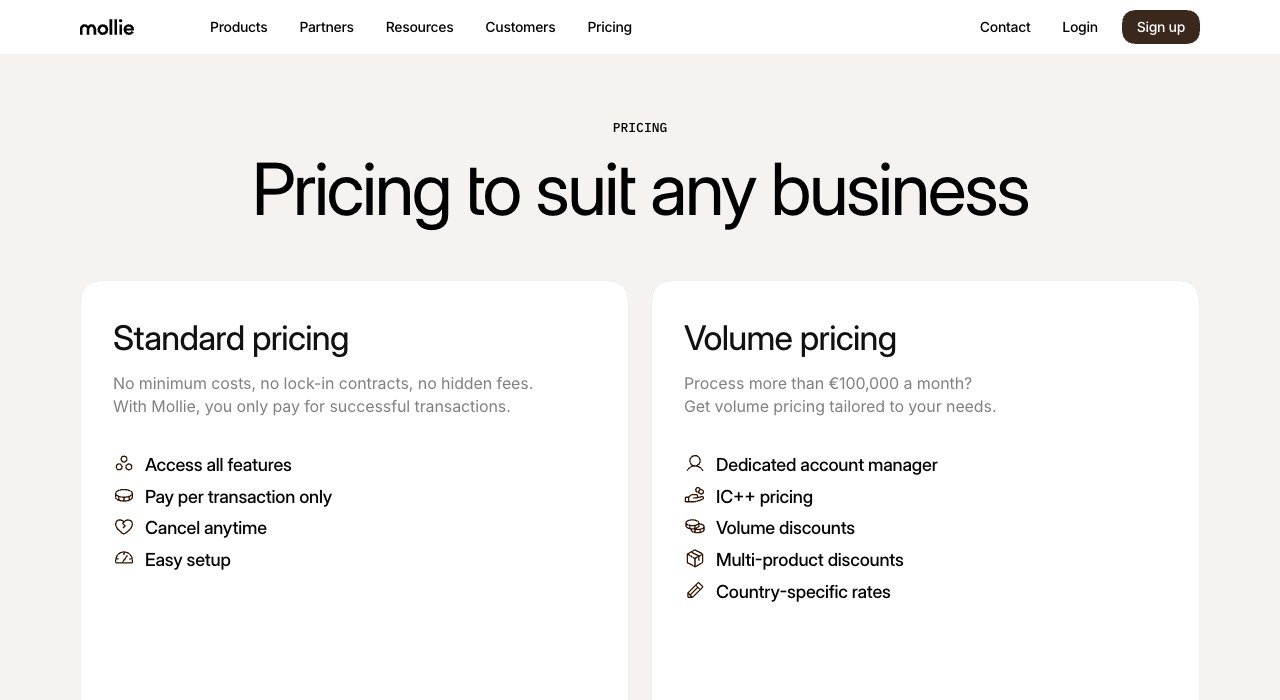
Published rate: 1.80% + EUR 0.25 on EEA consumer cards. Monthly fee: $0. Merchant of record: No.
Mollie is built for selling into Europe and prices by card origin rather than by one blended rate. European consumer cards are 1.80 percent plus 25 euro cents, commercial cards 2.90 percent plus 25 cents, and non-European cards 3.25 percent plus 25 cents.
Those figures are in euros, which is the first thing to check before comparing them with a dollar rate. For a business whose customers are mostly in the EEA, the consumer card rate is among the lowest on this page by a wide margin.
What the Merchant-of-Record Premium Actually Buys
On $10,000 of monthly sales the gap between a 3 percent processor and a 5 percent merchant of record is $200 a month, or $2,400 a year. The question is whether the compliance work it removes costs more than that.
United States sales tax is administered state by state, and the Streamlined Sales and Use Tax Agreement exists precisely because the number of separate jurisdictions makes voluntary compliance difficult for small sellers. Add EU VAT and the UK and the registration count grows quickly.
There is also reporting. The IRS sets out the thresholds under which a Form 1099-K is issued for payment card and third-party network transactions, and the figure reported is gross, before refunds, chargebacks and fees. That reconciliation lands on you with a processor and on the platform with a merchant of record.
- Count the jurisdictions you actually sell into, not the ones you could.
- Price a tax compliance service separately, then add it to the processor rate before comparing with a merchant of record.
- Check payout timing and currency. A lower rate that settles weekly in a foreign currency can cost more than a higher one that settles next day.
- Read the chargeback fee. Braintree publishes $15 a chargeback, and a run of disputes will dwarf a rate difference.
How to Choose a Stripe Alternative
Decide the liability question first, then pick on rate within the group you landed in. Mixing the two is how people end up paying 5 percent for a service they did not need.
- You want the tax handled: Creem at 3.9 percent plus 40 cents is the cheapest published merchant-of-record rate, then Dodo at 4 percent.
- You want the ecosystem: Paddle and Lemon Squeezy cost more and bring storefronts, licensing and subscription tooling.
- You process serious volume: Adyen, where interchange-plus starts to beat a flat rate.
- You sell in person too: Square.
- You sell mostly in Europe: Mollie, at 1.80 percent on EEA consumer cards.
If you are choosing a processor for a shop rather than for software, the comparison runs differently and our guide to payment processors for small business covers flat rate against interchange-plus for retail. For moving money between businesses rather than taking it from consumers, the payment management systems are a separate category again.
Whichever you pick, the payout statement has to reconcile to your books, and the gross-versus-net difference is where most of that pain lives. Choosing accounting software that imports the statement cleanly is worth more than a tenth of a point on the rate, which is where the QuickBooks alternatives decision meets this one.
Frequently Asked Questions
What is a merchant of record and why does it cost more?
A merchant of record is the legal seller on the customer’s invoice, so sales tax and VAT registration, collection and filing are its responsibility rather than yours. Paddle, Lemon Squeezy, Dodo Payments and Creem charge 3.9 to 5 percent for that, against roughly 3 percent for a plain processor.
Which Stripe alternative has the lowest fees?
Among merchants of record, Creem at 3.9 percent plus 40 cents. Among processors, Mollie at 1.80 percent plus 25 euro cents on European consumer cards, and Adyen at $0.13 plus Interchange++ 0.60 percent once volume is high enough for interchange-plus to pay off.
Do any of these charge a monthly fee?
Only Authorize.net, at $25 a month plus 2.9 percent and 30 cents, because it is a gateway designed to sit in front of an existing merchant account. Square offers paid tiers at $49 and $149 but its base plan is free. Everything else here is pay per transaction.
Can I use more than one payment provider at once?
Yes, and many sellers do. A common arrangement is a low-rate processor as the default with PayPal alongside it for buyers who prefer it, accepting the higher rate on those orders in exchange for the conversion. Reconciliation gets harder, so keep the payout statements separate.
Related Articles

Get the Fox Bulletin briefing
The stories that matter, in your inbox. No spam, unsubscribe anytime.
Newsletter signup will be available soon.
Related stories

Calendly Alternatives: 10 Scheduling Tools Compared
Calendly is free for one event type and $10 a seat beyond it. Ten Calendly alternatives compared on seat price, free tiers and one that costs $29 once.
Etsy Alternatives: 10 Places to Sell and What They Cost
Etsy charges $0.20 a listing, 6.5% a sale and up to 15% on ad orders. Ten Etsy alternatives compared on fees, cuts and who brings the buyers.
Canva Alternatives: 10 Template Design Tools Compared
Canva now sells four tiers, all priced per person. Ten Canva alternatives compared on seat price, free tiers and what each one is actually built to make.