

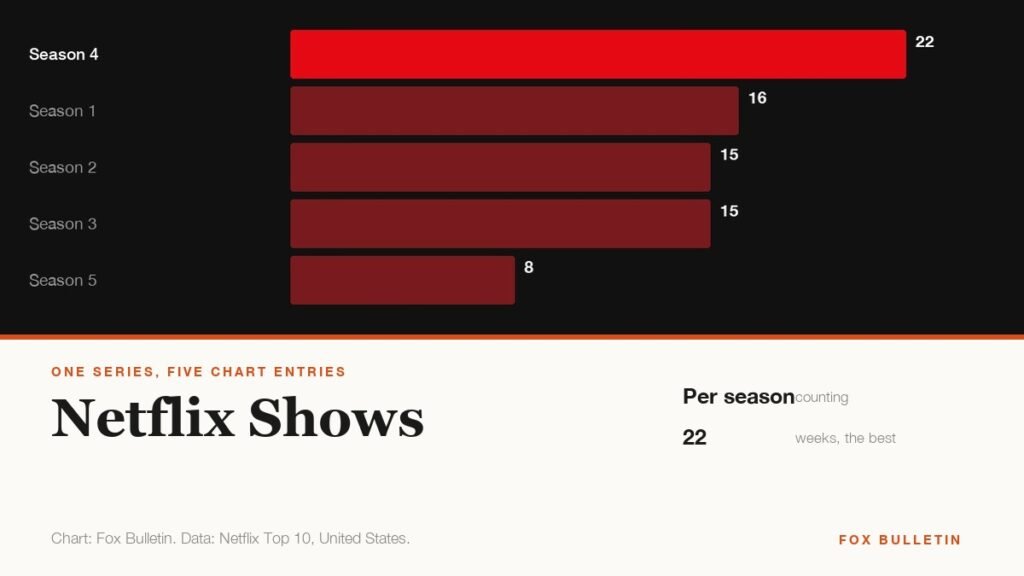
Netflix shows are ranked one season at a time. A series never competes as a whole: Stranger Things 4 and Stranger Things 3 are separate entries with separate runtimes, separate view counts and separate eligibility clocks, and they can appear on the same weekly list against each other.
That single rule explains most of what looks strange about the television chart, including why a preschool show has spent more time in the United States top ten than every prestige drama Netflix has ever made. The ranking itself uses views, which Netflix calculates by dividing the hours a season was watched that week by the total runtime of that season.
| Rule | How it works |
|---|---|
| Unit of measurement | One season, not the whole series |
| Ranking metric | Views, meaning weekly hours viewed divided by season runtime |
| Week measured | Monday to Sunday, published the following Tuesday |
| Eligibility | 91 days from the point a season becomes eligible |
| Global categories | TV (English) and TV (Non-English), ranked separately |
| Country lists | One combined television top 10 in each of 90 plus countries |
| Rounding | Figures rounded to the nearest 10,000 |
How Netflix Shows Are Measured Season by Season
Measuring seasons rather than series is what makes the numbers comparable. A season of six hours and a film of 90 minutes cannot be compared on hours viewed, but they can be compared once both are divided by their own runtime. The conversion is visible in any single week of data.
In the week ending 27 September 2026, the first season of Monster: The Lizzie Borden Story was the leading English language series worldwide with 95.9 million hours viewed. Across a season running six hours and 38 minutes, that converted to 14.5 million views. The leading English language film that week recorded barely a third of those hours, 27.4 million, yet finished ahead of the series on views because its runtime was one hour 40 minutes. Hours measure time spent. Views estimate how many times something was finished.
The practical consequences of season level measurement are easy to miss:
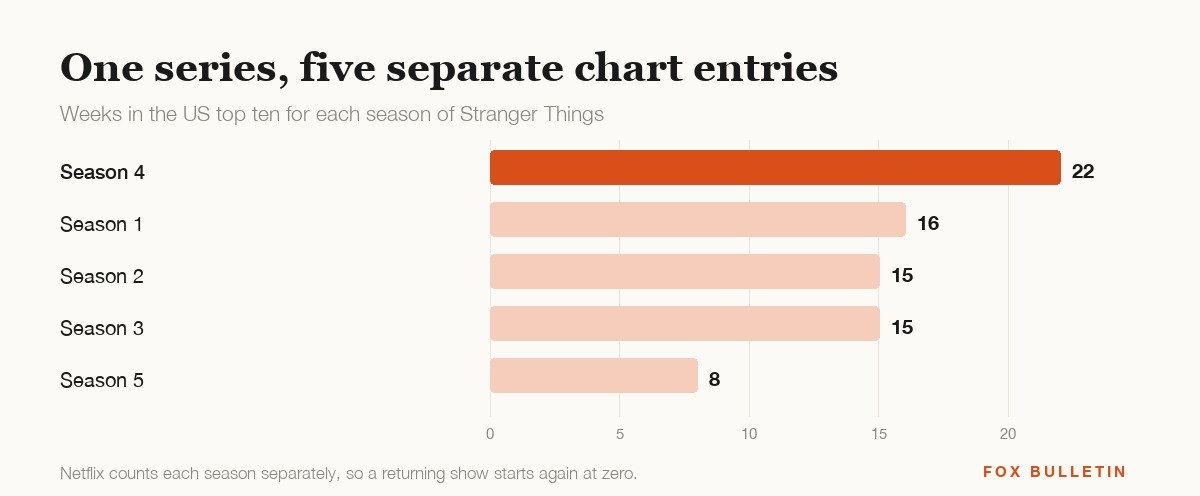
- A returning season starts from zero weeks rather than inheriting anything earlier seasons achieved.
- A long running series can hold several list places at once when old seasons are rediscovered. Netflix reported that the return of Bridgerton for a fourth season nearly tripled the viewing of every earlier season.
- A series with one enormous season outranks a series with five modest ones, even if the second has more total viewing.
- Splitting a season into two parts creates two entries, each with its own runtime and its own 91 day clock.
The Season That Has Outlasted Everything
Ranked by weeks spent in the United States television top ten since July 2021, the longest surviving entries are these:
| Series | Season | Weeks in the US top 10 |
|---|---|---|
| Ms. Rachel | Season 1 | 65 |
| Stranger Things | Season 4 | 22 |
| CoComelon | Season 3 | 16 |
| Ms. Rachel | Season 2 | 15 |
| Stranger Things | Season 3 | 15 |
| Wednesday | Season 1 | 15 |
| Squid Game | Season 1 | 15 |
| Ozark | Season 4 | 14 |
Ms. Rachel Season 1 has recorded 65 weeks, just under three times the figure for Stranger Things 4 and more than thirty times the two week median for everything that charts. It reached that total without ever spending a single week at number one. The season has simply never left, entering the list in February 2025 and still sitting in it in late September 2026.
Three of the eight longest running entries are preschool programming, and the pattern matches what happens on the film side, where animation dominates the same measure. Children watch the same episodes repeatedly, and every repeat is counted again the following week, so a title aimed at three year olds compounds in a way that a drama watched once cannot. Longevity on this chart rewards rewatching, not acclaim, which is a different thing from the staying power measured by a theatre run or a long Broadway run where every ticket is a fresh decision.
Who Actually Reaches Number One
The top of the chart turns over quickly even though the lower places are sticky:
- Bridgerton has spent 11 weeks at number one, more than any other title.
- Stranger Things has 10, Outer Banks 9, and Squid Game and Wednesday 8 each.
- Across 274 weeks, 133 different titles have reached number one on the United States television list.
- No season has held the top spot for longer than four consecutive weeks. Squid Game, Stranger Things, Wednesday and Ginny & Georgia have all reached that ceiling and none has passed it.
Bridgerton leading on weeks at number one while sitting outside the longevity table is the clearest illustration of the split. It arrives, dominates for a few weeks and goes, which is the shape of a scheduled drama release. Ms. Rachel never dominates and never leaves. Both are hits, but no single number describes both, and the most watched Netflix shows by total viewing are a third group again.
Weekly and Live Programming Breaks the Pattern
Some entries never accumulate weeks at all, by design. The wrestling programme Raw has appeared on the United States television list in 88 separate weeks since January 2025, making it the most frequent entry of any title. It has never recorded more than one cumulative week, because each broadcast is filed as its own entry, dated to that episode, and a new one replaces it seven days later.
Reading those 88 appearances as an 88 week run would be wrong. The same applies to any weekly or live format: the chart treats each instalment as a new title, so frequency and longevity measure genuinely different things. This is one of the places where streaming measurement departs most sharply from the Nielsen ratings model built for scheduled broadcast television.
The Non-English List Runs on Different Numbers
Netflix splits its global television chart into English and non-English, and the second list makes the runtime penalty unusually clear. In the week ending 27 September 2026 the Korean thriller Not a Stranger led it with 65.7 million hours across a season of six hours 47 minutes, giving 9.7 million views. Second place, Plastic Beauty, recorded 46.5 million hours, but its season ran nine hours 10 minutes, so the same arithmetic produced only 5.1 million views.
Plastic Beauty therefore collected 71 percent as many hours as the leader and finished with 53 percent as many views. Nothing about its audience changed. The gap is entirely the length of the season, and it is the clearest short demonstration of why a long season is harder to rank with than a tight one. Producers writing to this metric have an incentive to keep seasons short, which is a measurement decision quietly shaping how series are commissioned.
What the Half Year Totals Add
The weekly lists show rank but never scale. Netflix publishes a separate engagement report covering six months at a time, and for the first half of 2026 it reported more than 97 billion hours viewed across the service, the highest it has recorded for any half year. The most watched series in that period reached 104 million views, a figure no single week could reveal.
That report is also being reduced. Netflix has said it will publish the snapshot yearly from the first quarter of 2027 rather than every six months, so the ability to compare one half of a year against the next is ending. Weekly lists will continue, which means rank data is getting more plentiful while scale data gets scarcer. Anyone comparing streaming television services on viewing will be working from thinner numbers, and no two services define a view the same way to begin with, which is worth bearing in mind when weighing up the main streaming services against each other.
Frequently Asked Questions
Does Netflix rank a whole series or just one season?
One season at a time. Each season has its own runtime, its own view count and its own 91 day eligibility window, and two seasons of the same series can appear on the same weekly list simultaneously.
What is the longest running season on the Netflix top 10?
On the United States television list, Ms. Rachel Season 1 with 65 weeks. Stranger Things 4 is second with 22. Ms. Rachel reached its total without ever reaching number one.
Why do preschool shows do so well on the Netflix charts?
Because the chart counts repeat viewing. Children rewatch the same episodes, and each rewatch is counted again in the following week, so a preschool season keeps generating views long after a drama watched once has finished circulating.
Which Netflix show has spent the most weeks at number one?
Bridgerton, with 11 weeks at the top of the United States television list, ahead of Stranger Things on 10 and Outer Banks on 9. No title has held first place for more than four weeks in a row.
How long does a season stay eligible for the Netflix top 10?
Ninety one days, counted from the point the season becomes eligible, and it can drop off and return inside that window. Netflix uses a separate and stricter 28 day measure for its all time most popular rankings, so a season can run for months on the weekly lists and still never qualify for the all time one.
Related Articles

Get the Fox Bulletin briefing
The stories that matter, in your inbox. No spam, unsubscribe anytime.
Newsletter signup will be available soon.
Related stories
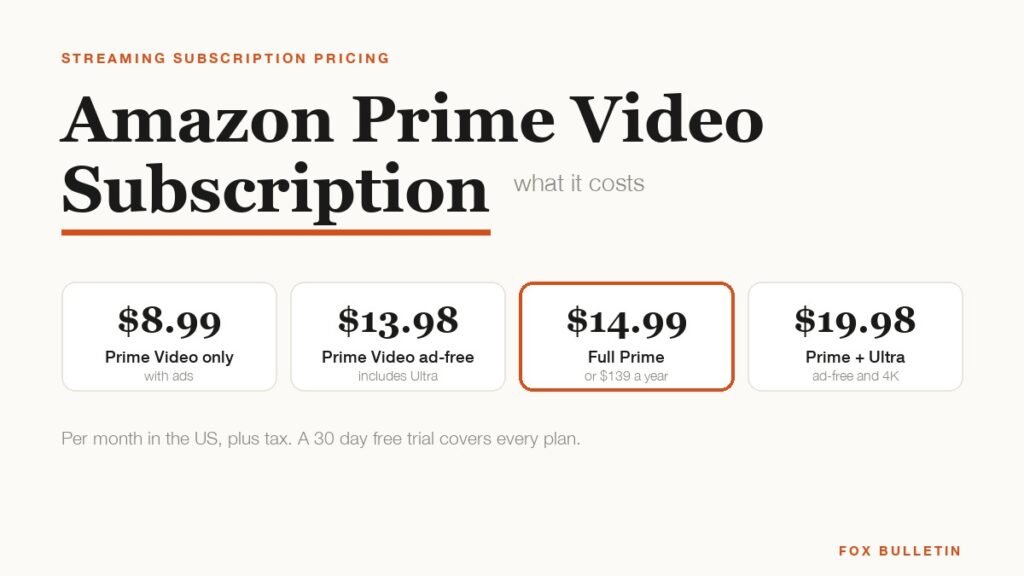
Amazon Prime Video Subscription: What It Costs and What You Get
An Amazon Prime Video subscription costs $8.99 standalone or $14.99 with full Prime, plus $4.99 for ad-free Ultra and 4K. Every plan, the discounted tiers and what the trial covers.
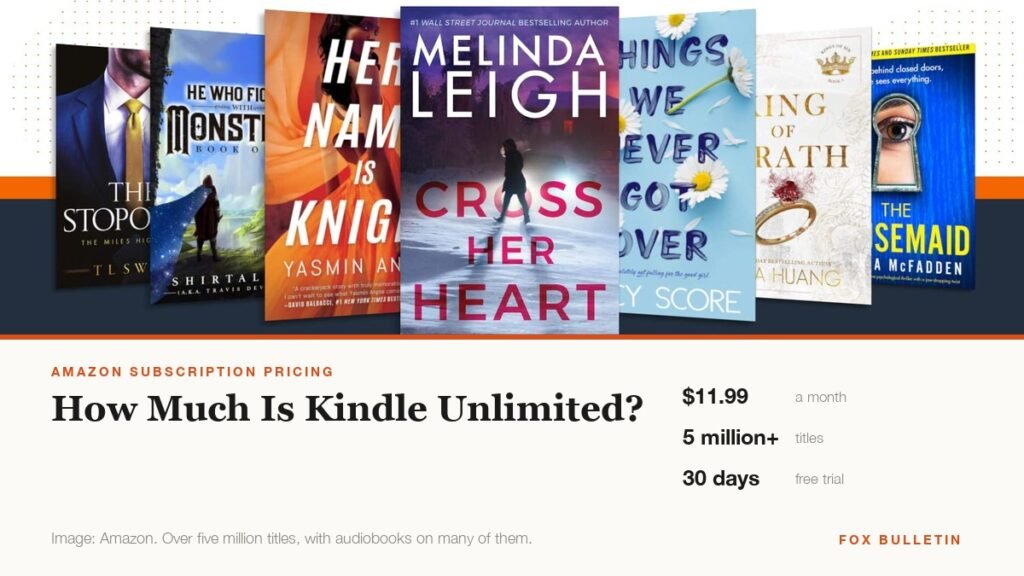
How Much Is Kindle Unlimited? Price, Trial and What You Get
Kindle Unlimited costs $11.99 a month plus tax with a 30 day free trial. What the fee covers, how it differs from Prime Reading, and how to tell whether it pays for itself.
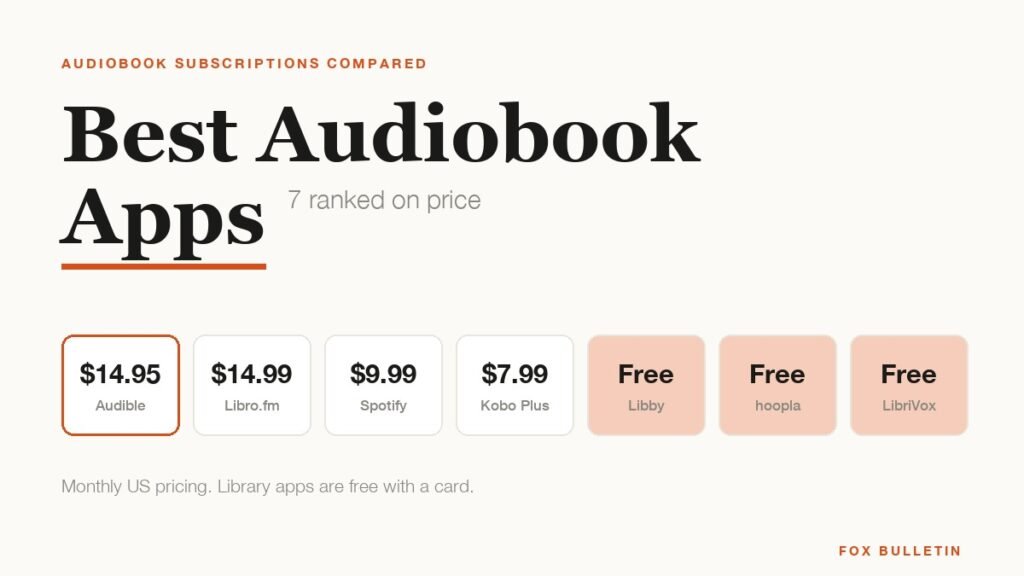
Best Audiobook Apps: 7 Compared on Price and Catalog
Audible, Libro.fm, Spotify, Kobo Plus, Libby, hoopla and LibriVox compared on monthly price, catalog size and whether the audiobook stays yours after you cancel.