


Minecraft biomes total 67 on Java Edition as of the 26.3 “Wilderness Bound” release on 15 September 2026. That is 56 in the Overworld, 5 in the Nether, 5 in the End and one more, The Void, that only exists as a superflat preset. Bedrock Edition lists 89, though 27 of those are unused leftovers from before the 1.18 world generation rewrite.
Below, every dimension gets its own section, with the biomes that are actually worth travelling to and the exact spawn or generation rule that makes each one different. The two biomes added in 2026 are covered, and Ice Caves are flagged as what they are today: a 26.4 feature that has not shipped.
How Many Minecraft Biomes Exist in Java and Bedrock
The headline number depends on the edition. Java counts what its world generator can actually produce plus one preset-only biome, while Bedrock keeps a long tail of old entries that no longer generate.
| Edition | Overworld | Nether | End | Other | Total |
|---|---|---|---|---|---|
| Java Edition | 56 | 5 | 5 | 1 (The Void, superflat preset only) | 67 |
| Bedrock Edition | 56 | 5 | 1 | 27 unused leftovers | 89 |
Two of those differences trip people up. The End is split into five biomes on Java, but on Bedrock the whole dimension is a single End biome. The Void is a Java-only biome, reachable only through a single-biome world or the Void superflat preset.
The 56 Overworld biomes break into seven families. Surface land makes up 52 of them and the four live cave biomes make up the rest.
| Family | Examples from that family | Biomes |
|---|---|---|
| Offshore | Nine oceans plus Mushroom Fields | 10 |
| Highland | Meadow, Cherry Grove, Stony Peaks, Windswept Gravelly Hills | 10 |
| Woodland | Forest, Dark Forest, Pale Garden, Jungle, Dappled Forest | 14 |
| Wetland | Swamp, Mangrove Swamp | 7 |
| Flatland | Plains, Sunflower Plains | 4 |
| Arid land | Desert, Badlands, Eroded Badlands | 7 |
| Cave | Deep Dark, Dripstone Caves, Lush Caves, Sulfur Caves | 4 |
Older lists put the total at 63 or 64. Those figures predate the two biomes of 2026, so a page quoting them is describing an earlier version of the world.
The 2026 Drops: Two New Biomes and One Still Coming
Three drops have shipped in 2026 so far, and only two of them touched the biome list.
| Version | Name | Java release | Biome added |
|---|---|---|---|
| 26.1 | Tiny Takeover | 24 March 2026 | None |
| 26.2 | Chaos Cubed | 16 June 2026 | Sulfur Caves |
| 26.3 | Wilderness Bound | 15 September 2026 | Dappled Forest |
| 26.4 | Fourth Drop 2026 | Planned for Q4 2026, not released | Ice Caves (upcoming) |
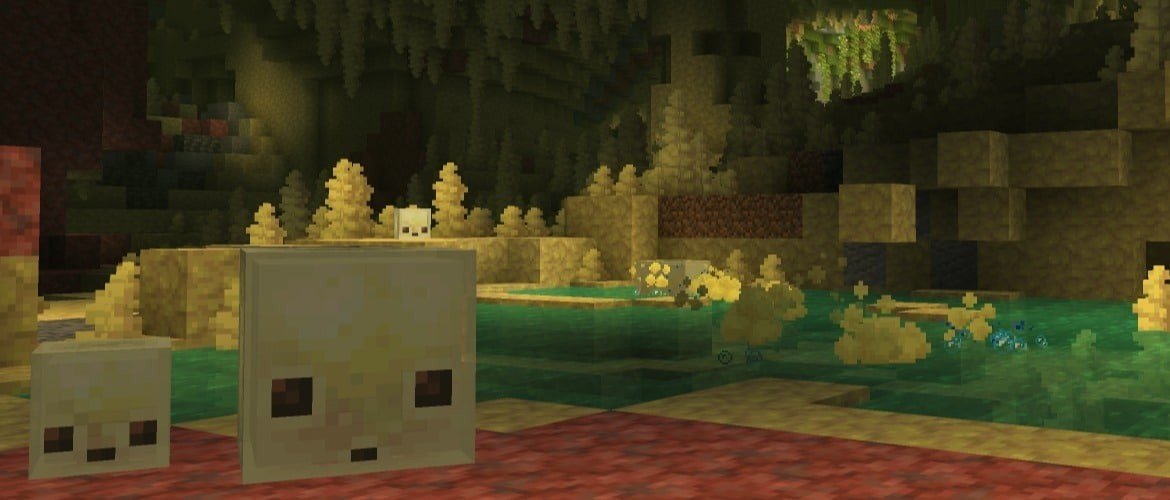
Sulfur Caves arrived with 26.2 and sit alongside the other cave biomes. They bring the sulfur cube mob, sulfur and cinnabar blocks, potent sulfur pools that inflict nausea, sulfur spikes, and sulfur springs that appear at the surface. Cave spiders spawn naturally here and nowhere else, though mineshaft spawners still produce them elsewhere.
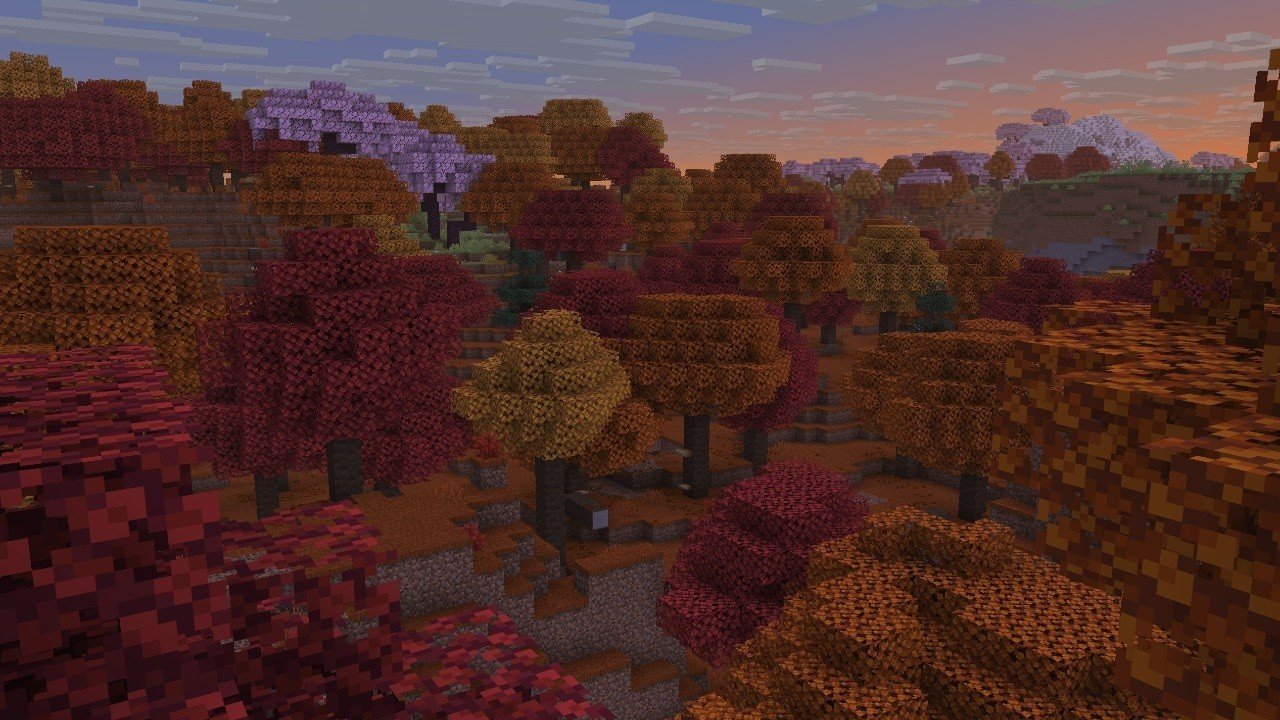
Dappled Forest followed with 26.3. It is an autumn woodland that grows near cold biomes, with poplar trees, red shrubs, shelf mushrooms and fallen trees. Foxes, rabbits and the usual cold-weather animals spawn there, and abandoned camps in the biome can drop explorer maps. At 0.445 per cent of the surface it is rarer than Mangrove Swamp at 0.515.
Ice Caves are the next biome on the schedule, and they are not live. Version 26.4 is planned for the fourth quarter of 2026 with no release date, and it has had seven snapshots so far. The cave biome comes with icicles, ice crystals, brittle ice, a calcite block set, chiseled packed ice and a Freezing effect. Treat anything you read about walking into one today as a snapshot or preview report.
To reach any of these without wandering, the /locate biome command reports the nearest match and its distance, with cheats on. It is one of many covered in our Minecraft commands guide.
Forests, Jungles and Swamps: The Woodland and Wetland Surface
Forest at 12.168 per cent of the surface and Plains at 10.212 per cent are the two biggest surface biomes by a wide margin, with Ocean at 6.973 and River at 6.214 next. Everything below them is a variant, and the variants are where the unique spawns live.
| Biome | Share or type | What makes it worth a visit |
|---|---|---|
| Plains | 10.212% of the surface | The most open ground, and the default pick for a first base |
| Sunflower Plains | A plains variant | The only place sunflowers generate naturally |
| Forest | 12.168% of the surface | The single most common surface biome |
| Flower Forest | A forest variant | Nearly every flower in one place, with a higher chance of bee nests |
| Dark Forest | Dense canopy | Woodland mansions, and mobs that spawn by day under the leaves |
| Pale Garden | 0.157% of the surface | Creaking, eyeblossoms and no music; a rarer dark forest variant on high ground |
| Dappled Forest | 0.445% of the surface | New in 26.3: autumn trees beside cold biomes |
| Jungle | Warm and wet | Ocelots, parrots, pandas, jungle pyramids, melons and cocoa |
| Bamboo Jungle | A jungle variant | Pandas spawn here far more often than anywhere else |
| Swamp | Wetland | Slimes, witch huts with a black cat, and blue orchids found nowhere else |
| Mangrove Swamp | 0.515% of the surface | Warm frogs and mud, with no witch huts |
A few of these rules save real time. Bamboo Jungle is the place to look for pandas, since their spawn chance there is far higher than in a regular jungle. Swamps produce slimes at night or in thunderstorms, and a full moon is the best time for it. Blue orchids only generate in swamps, so a flower collection is incomplete without a trip there.
Dark Forest and Pale Garden are the two woodland biomes that actively punish a careless visit. Mobs spawn by day beneath the dark forest canopy, and woodland mansions sit inside it. Pale Garden is quieter in a different way, with no music, creaking spawns and eyeblossoms as the reward for staying. Pale Garden became part of the default game in 1.21.4, after an experiment phase that began in 1.21.2.
If a build is the goal rather than a visit, the biome sets the palette before you place a block. Our guide to Minecraft house ideas shows how the same design reads in a forest, a desert and a badlands.
Highlands and Arid Lands: Meadows, Cherry Groves and Badlands

The highland and arid families hold some of the rarest ground in the game. Two windswept and mountain biomes sit below 0.11 per cent of the surface, which is why finding one by wandering takes far longer than finding a desert.
| Biome | Share or family | Headline feature |
|---|---|---|
| Meadow | Highland | Bee nests on lone trees, with sheep, donkeys and rabbits |
| Cherry Grove | 0.281% of the surface | A highland plateau of pink petals, with sheep, pigs and rabbits |
| Windswept Gravelly Hills | 0.098% of the surface | The rarest surface biome on the wiki’s list; llamas live in the windswept family |
| Stony Peaks | 0.106% of the surface | The second rarest surface biome |
| Desert | Arid land | Husks, camels, villages, pyramids and wells |
| Badlands | Arid land | Terracotta layers, red sand and extra gold ore; armadillos are the only mob |
| Eroded Badlands | 0.311% of the surface | Rare spires in the style of a canyon park |
Badlands is the biome with the most distinctive resource rule. It generates extra gold ore, and its mineshafts can sit exposed at higher altitude with dark oak planks showing. Eroded Badlands trades that for scenery, with the tall spires that make it the one badlands variant people visit for the view.
Cherry Grove arrived in Java 1.20 and Meadow is its quieter neighbour on the highland plateaus. Meadow earns a stop for a different reason: its bee nests sit on lone trees, which makes the biome an easy first apiary. Deserts, finally, are where husks, camels, villages, pyramids and wells cluster together.
Oceans and Mushroom Fields
The offshore family has 10 biomes, made up of nine ocean types and Mushroom Fields. Most of what makes the oceans interesting is decided by temperature and depth.
- Warm Ocean. The only ocean with coral reefs and sea pickles, and the home of pufferfish and tropical fish.
- Deep oceans. The biomes where ocean monuments generate, with guardians, prismarine and sponge inside.
- Mushroom Fields. A mycelium island that always sits next to deep ocean, from tens to thousands of blocks across. It forms where the world is at its lowest continentalness, so islands often cluster.
Mushroom Fields is the odd one out in every way. Only mooshrooms, bats and glow squid spawn there, and no hostile mob spawns on the surface or inside its caves and mineshafts. The exceptions are the mobs of any cave biome beneath it, and spawner blocks. At 0.140 per cent of the surface it is the third rarest surface biome.
The Overworld Cave Biomes and How Often Each Generates
Four cave biomes are live and a fifth is on the way. The percentages below are the generation probability for caves at or below Y 64, so they show how likely each type is once you are underground, not how much of the map it covers.
| Cave biome | Generation chance | Signature feature | Status on 8 November 2026 |
|---|---|---|---|
| Dripstone Caves | 17.87% | Giant copper blobs hang from the ceilings | Live |
| Lush Caves | 16.70% | Glow berries, azalea trees above, and the only natural axolotl spawns | Live |
| Deep Dark | 12.02% | Ancient cities and wardens under the mountains | Live |
| Ice Caves | 3.94% | Icicles, ice crystals and brittle ice | Upcoming in 26.4, not live |
| Sulfur Caves | 3.90% | Sulfur cubes, nausea pools and natural cave spider spawns | Live since 26.2 |
Dripstone and Lush Caves together make up more than a third of cave generation, which is why they feel routine by the time you have mined a few hundred blocks of deepslate. Lush Caves is still the only biome where axolotls spawn, and glow berries are only a ceiling away from the azalea trees growing on the surface above. Deep Dark generates under mountains, holds ancient cities and wardens, and has no natural-cycle mobs at all.
Sulfur Caves and Ice Caves are the two rarest cave types, within a hair of each other at 3.90 and 3.94 per cent. One of them you can enter today. The cave spawn rules are a good reason to read our Minecraft mobs list before descending, since several of the biome mobs behave differently below ground.
Nether Biomes and What Lives in Each
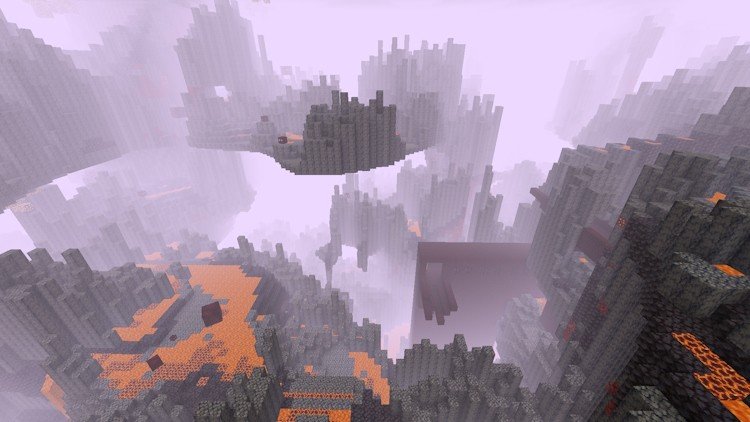
The Nether has five biomes, and the table gives the share of the dimension’s volume that each one fills. Nether Wastes is the baseline, and the other four are the destinations.
| Biome | Share of the Nether | Spawns and features |
|---|---|---|
| Nether Wastes | 36.30% | Ghasts, piglins, striders and magma cubes; the most common Nether biome |
| Crimson Forest | 22.22% | Hoglins and piglins among shroomlights |
| Soul Sand Valley | 17.08% | Fossils, ghasts and skeletons; the only place dried ghasts generate naturally |
| Basalt Deltas | 15.86% | Magma cubes, so the best magma cream farm; no bastions |
| Warped Forest | 8.54% | Only endermen and striders spawn, which makes it the safest Nether biome |
Warped Forest is the safest of the five because only endermen and striders spawn there. Basalt Deltas goes the other way. Magma cubes spawn in it constantly, which makes it the best place to farm magma cream, and no bastions generate there. Soul Sand Valley is the one to remember for a collection, as it is the only biome where dried ghasts generate naturally.
End Biomes: Five on Java, One on Bedrock
The End looks like one place, but Java divides it into five biomes. The table gives the share of the dimension’s area for each, with the central island as a small patch.
| Java biome | Share of the End | How much of the dimension it fills |
|---|---|---|
| Small End Islands | 45.81% | The largest share of the dimension by a distance |
| End Midlands | 25.70% | About a quarter of the area |
| End Highlands | 17.66% | Just under a fifth of the area |
| End Barrens | 10.82% | Roughly a tenth of the area |
| The End | A small central patch | The central island, the smallest of the five |
Bedrock does not make that split. The entire End is one biome there, which is why the Bedrock count shows a single End entry against five on Java. Small End Islands alone cover 45.81 per cent of the area, so most of what you fly over past the central island is that one biome.
Frequently Asked Questions
How many biomes are in Minecraft?
Java Edition has 67 biome types: 56 in the Overworld, 5 in the Nether, 5 in the End and one, The Void, used only for a superflat preset. Bedrock lists 89, of which 27 are unused leftovers.
Which biomes were added in 2026?
Sulfur Caves came in 26.2 “Chaos Cubed” on 16 June 2026, and Dappled Forest came in 26.3 “Wilderness Bound” on 15 September 2026. Version 26.1 added no biome. Ice Caves are in 26.4 snapshots and have not been released.
How many biomes are in the End?
Java has five: Small End Islands, End Midlands, End Highlands, End Barrens and The End. On Bedrock the whole dimension is one End biome.
What is the most common biome in the Nether?
Nether Wastes, at about 36.30 per cent of the Nether’s volume. Crimson Forest follows at 22.22 per cent and Soul Sand Valley at 17.08 per cent.
Related Articles

Get the Fox Bulletin briefing
The stories that matter, in your inbox. No spam, unsubscribe anytime.
Newsletter signup will be available soon.
Related stories

Rarest Fortnite Emotes Ranked by Last Time in the Shop
The rarest Fortnite emotes ranked by their last Item Shop date, with price, release date and years away, plus the pass-only emotes that were never for sale.

Fortnite Save the World Free: What You Get and Earn
Fortnite Save the World has been free since 16 April 2026. Here is what free players earn, what Founders still get, and how the currency rules changed.

Fortnite Stats: How to Check Yours on Any Platform
Where to see your Fortnite stats, how to switch on Public Game Stats so stat sites can read them, and what to do when the numbers show zero or disagree.