

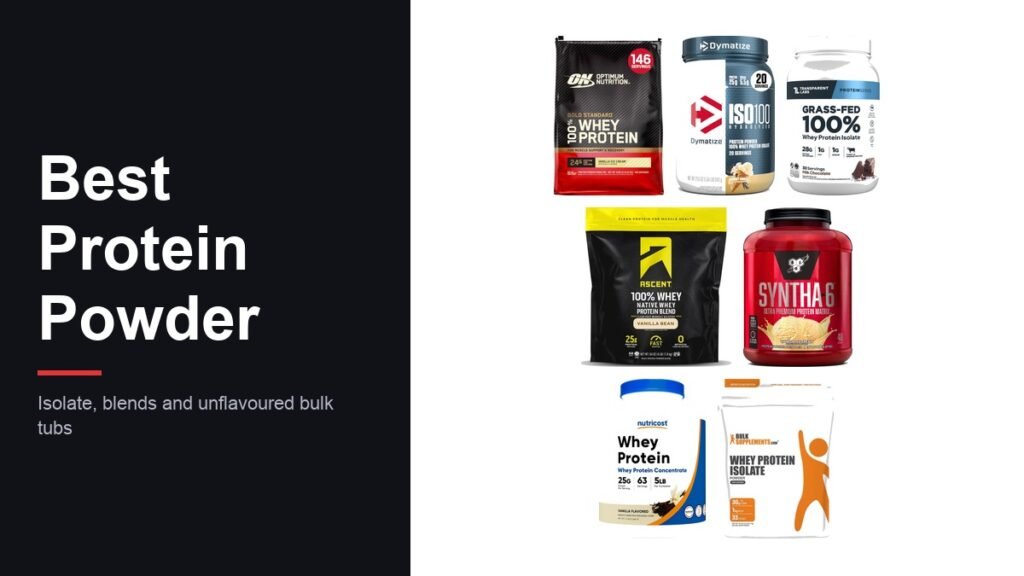
The best protein powder for you is decided by three things on the label rather than by the brand on the front: how much protein each scoop delivers, which form of whey it uses, and what else is in the tub. A concentrate, an isolate and a multi-source blend behave differently in a shaker and in your stomach, and they are priced differently for good reason.
The seven below cover each of those categories, from a 30-gram hydrolysed scoop to a single-ingredient unflavoured powder meant for baking. Every number quoted comes from the label the maker publishes for that product, and nothing here is nutrition advice.
Best Protein Powder Options Compared by Type and Protein Per Scoop
Protein per serving is the number to compare, and the type beside it explains most of the price difference.
| # | Powder | Type | Protein per serving | Suits |
|---|---|---|---|---|
| 1 | Optimum Nutrition Gold Standard | Isolate, concentrate and peptide blend | 24g | The everyday default |
| 2 | Dymatize ISO100 | 100 percent whey isolate | 25g | Low fat, low sugar, fast digesting |
| 3 | Transparent Labs Grass-Fed | Grass-fed whey isolate | 28g | Short ingredient lists |
| 4 | Ascent 100% Whey | Native whey blend | 25g | Tested-for-sport labelling |
| 5 | BSN Syntha-6 | Six-source protein matrix | 22g | Taste and a slower blend |
| 6 | Nutricost Whey Concentrate | Whey concentrate | Concentrate, 5lb tub | Cost per serving |
| 7 | BulkSupplements Whey Isolate | Unflavoured isolate | 30g serving size | Baking and no sweeteners |
1. Optimum Nutrition Gold Standard 100% Whey: The Reference Tub
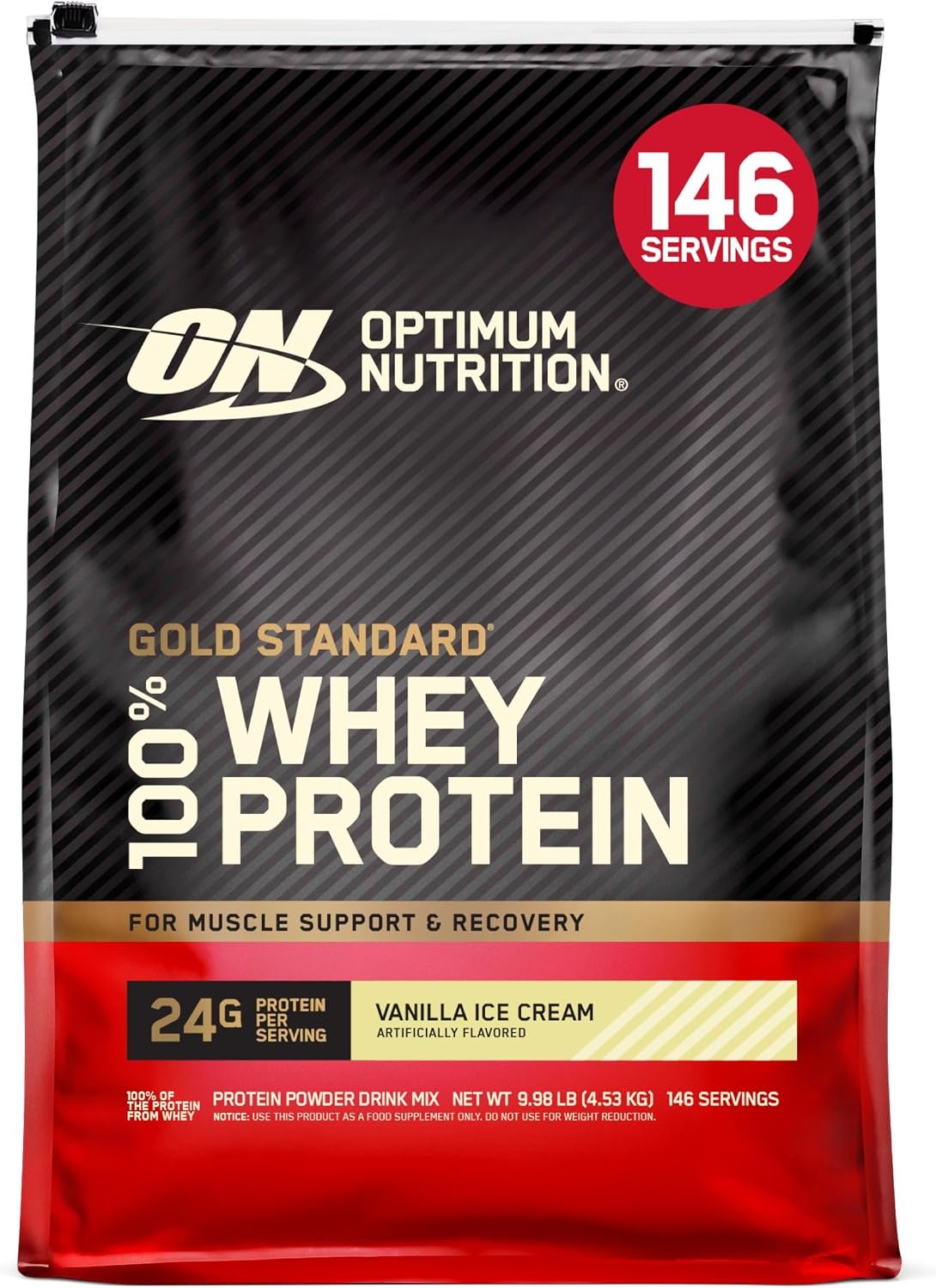
This is the powder most other powders get compared against. Each scoop lists 24 grams of protein from a blend of whey isolate, whey concentrate and whey peptides, with over 5 grams of naturally occurring BCAAs, 3 to 4 grams of carbohydrate and 1 to 3 grams of sugar depending on flavour.
The practical appeal is consistency rather than any single standout number: it mixes without clumping in a shaker, it comes in a wide flavour range, and Optimum Nutrition states that it is banned-substance tested. It is gluten free and listed without sucralose in this formulation.
What it does well
- 24g of protein per scoop from three whey forms.
- Over 5g of naturally occurring BCAAs per serving.
- Mixes cleanly with a shaker rather than needing a blender.
- Optimum Nutrition states the product is banned-substance tested.
What to know before buying
- Isolate-first powders list slightly less fat and sugar per serving.
- Flavour range is wide, so the macros shift a little between them.
- Amazon sells several sizes under one listing, so check the weight you are adding to the basket.
2. Dymatize ISO100: Whey Isolate With the Leanest Macros Here
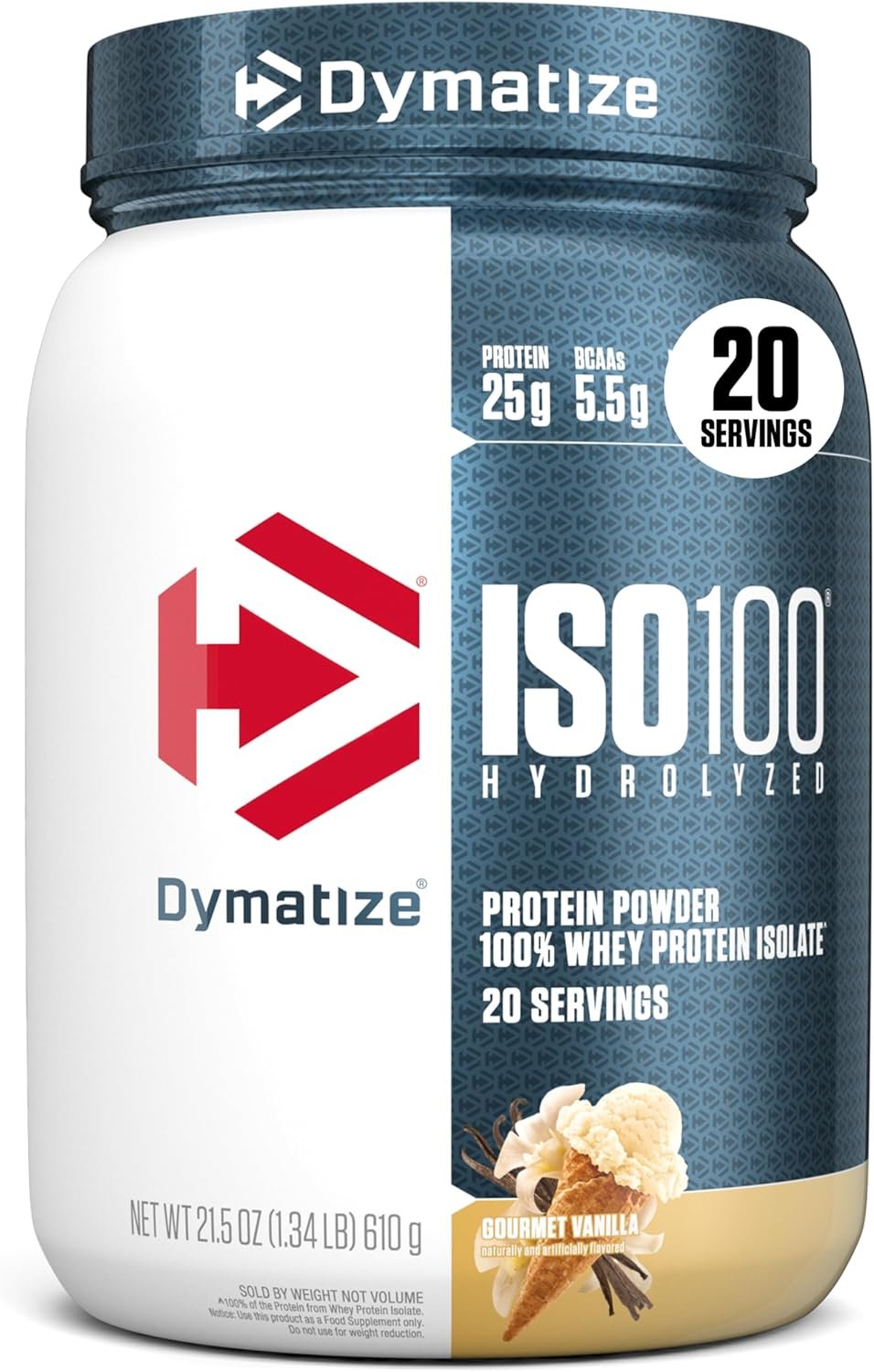
ISO100 is built on whey protein isolate, the form that has had most of the lactose and fat filtered out. Dymatize lists 25 grams of protein, 5 grams of BCAAs, 1 gram of fat and 1 gram of sugar in under 120 calories, which is the tightest macro profile in this group.
That matters most if you are counting calories closely or if whey concentrate tends to sit badly with you, since less lactose usually means an easier time of it. It is gluten free and made in the USA, and Dymatize positions it as a post-training powder on the basis of how quickly isolate digests.
What it does well
- 25g of protein in under 120 calories.
- 1g of fat and 1g of sugar per serving.
- Isolate is lower in lactose than concentrate.
- Gluten free with 5g of BCAAs listed per scoop.
What to know before buying
- Isolate costs more per gram of protein than concentrate.
- The very low fat content makes it thinner in water than a blend.
- If you tolerate concentrate fine, you are paying for filtering you may not need.
3. Transparent Labs Grass-Fed Whey: The Short Ingredient List
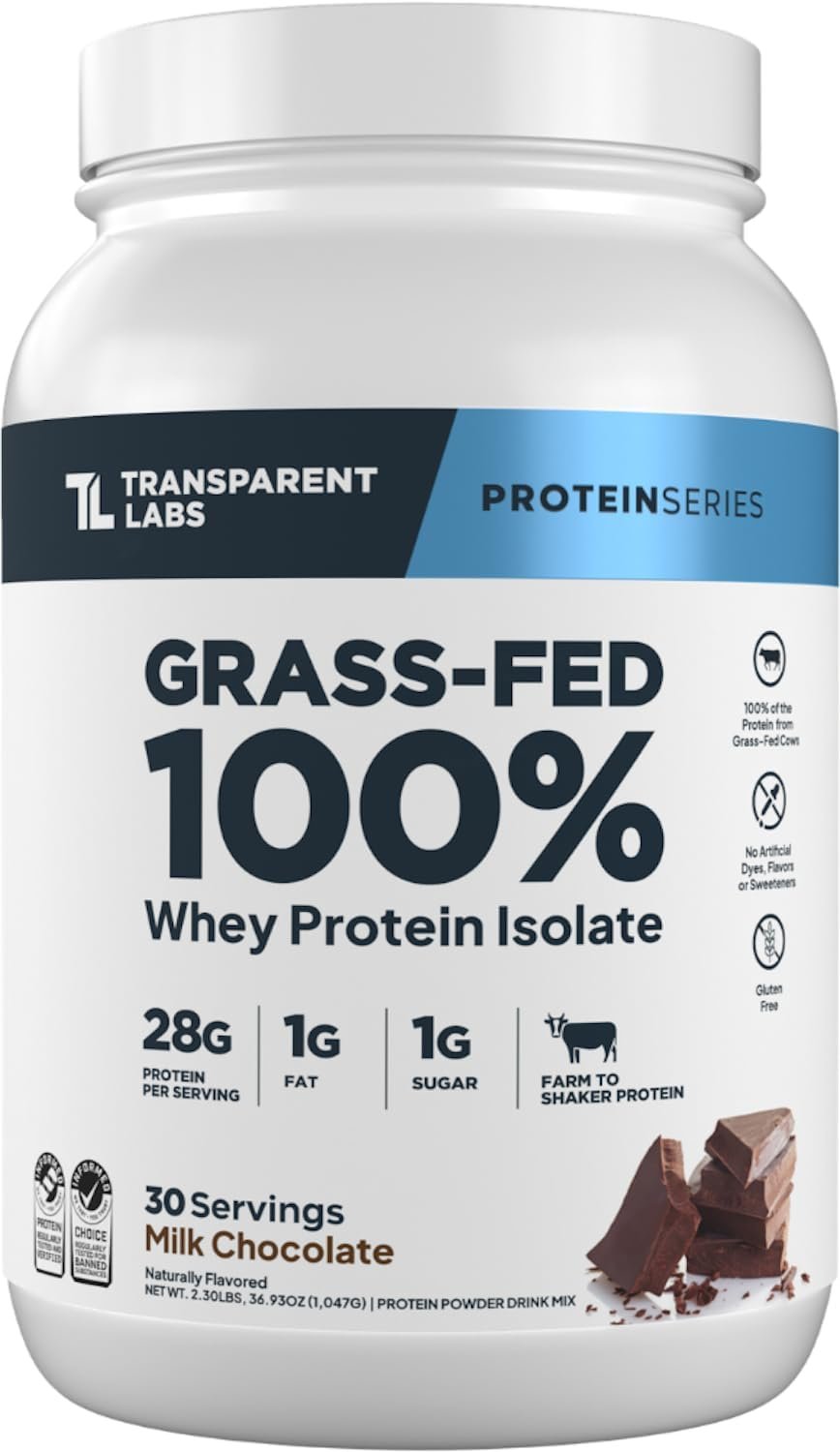
The pitch here is what is missing. Transparent Labs makes this from whey sourced from grass-fed, grass-finished American dairy cattle and leaves out artificial sweeteners, food dyes, gluten and preservatives. Each serving lists 28 grams of protein, the highest per-scoop figure among the flavoured powders on this list.
There are 30 servings per tub, and the company describes the isolate as highly bioavailable and light on the stomach. If you have been reading labels and putting tubs back because of the sweetener or colouring list, this is the one that answers that objection directly.
What it does well
- 28g of protein per serving.
- No artificial sweeteners, dyes or preservatives.
- Whey from grass-fed, grass-finished cattle.
- 30 servings per tub with all nine essential amino acids listed.
What to know before buying
- Naturally sweetened powders taste less sweet than artificially sweetened ones.
- Price per serving is at the top end of this group.
- Fewer flavour options than the mass-market brands.
4. Ascent 100% Whey: Native Whey With Informed Choice Certification
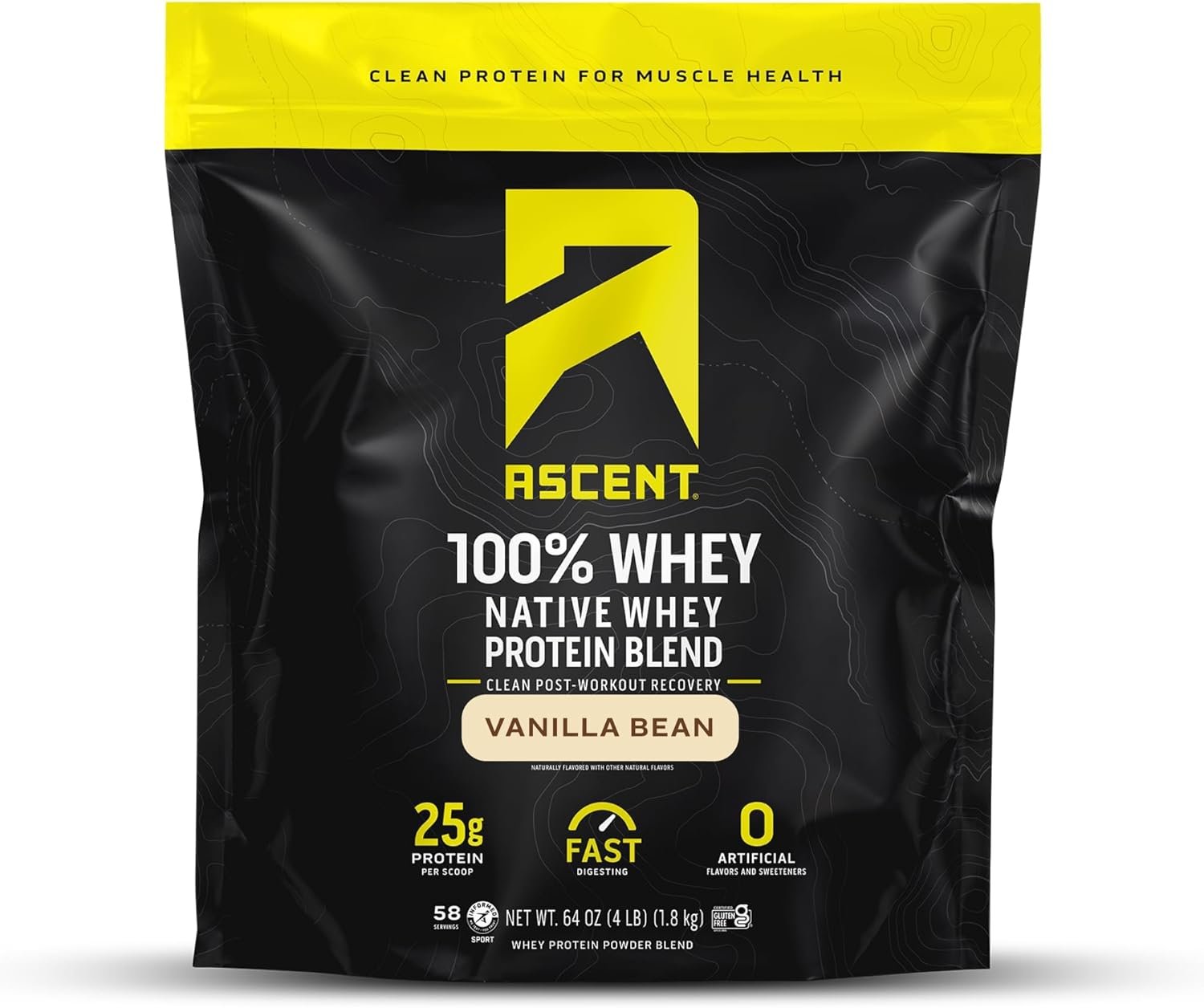
Ascent uses native whey, which is filtered directly from milk rather than recovered as a by-product of cheese making, and describes it as the least-processed whey available with naturally higher leucine. Each scoop lists 25 grams of protein and 5.5 grams of naturally occurring BCAAs.
The label is deliberately short: no added sugar, no artificial flavours or sweeteners, certified gluten free and Informed Choice certified, which is the third-party testing programme that matters if you compete in a tested sport. The 4lb bag uses collapsible packaging rather than a rigid tub, which stores more easily in a crowded cupboard.
What it does well
- 25g of protein and 5.5g of naturally occurring BCAAs.
- Informed Choice certified and certified gluten free.
- No added sugar, artificial flavours or artificial sweeteners.
- Collapsible 4lb bag stores more easily than a rigid tub.
What to know before buying
- Native whey carries a premium over standard concentrate.
- A bag is less convenient to scoop from than a wide tub.
- Low-sweetness powders taste plain to anyone used to dessert flavours.
5. BSN Syntha-6: A Six-Source Blend Built Around Flavour
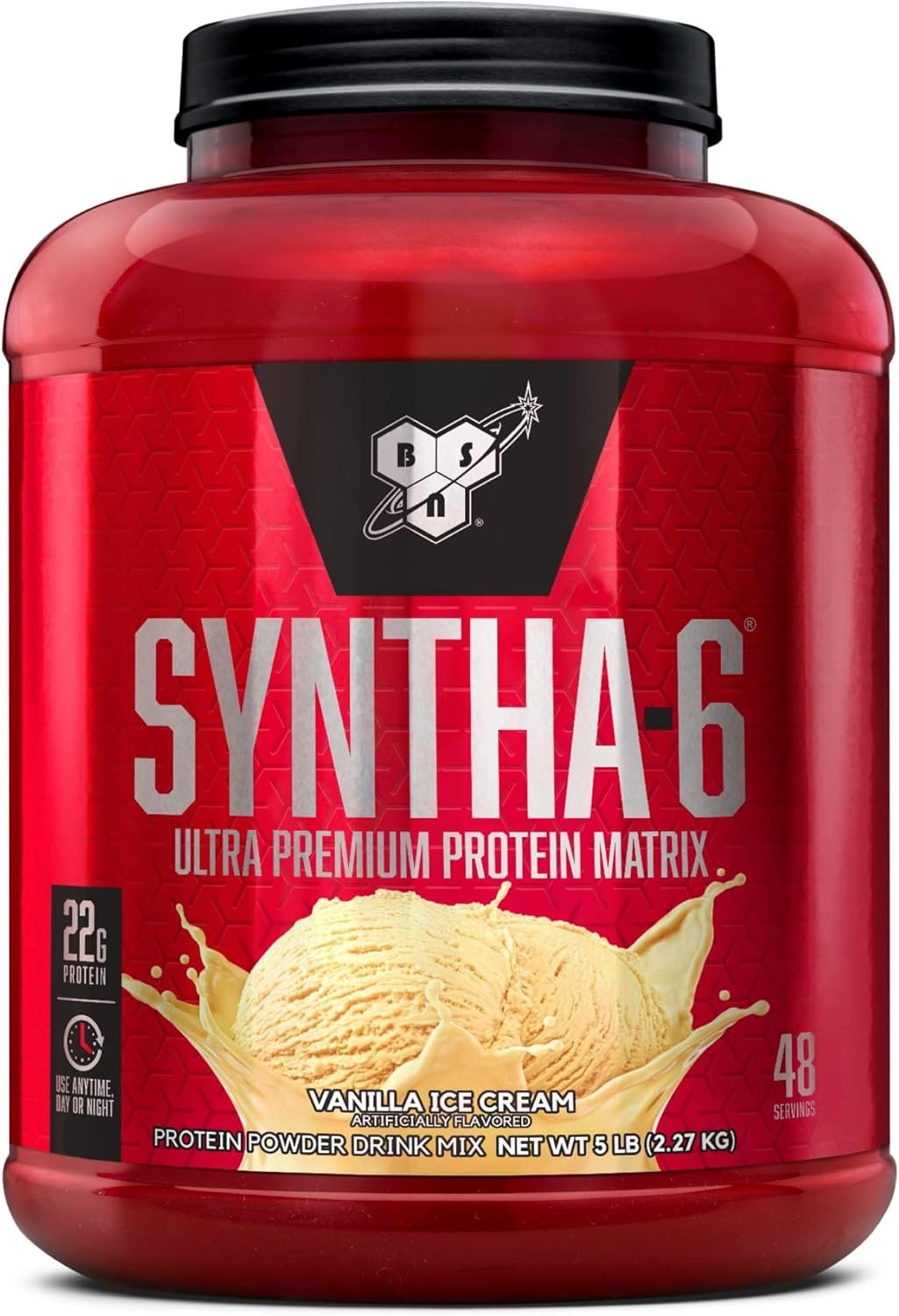
Syntha-6 is not trying to win the macro contest. Its 22 gram protein matrix combines whey concentrate, whey isolate, calcium caseinate, micellar casein, milk protein isolate and egg albumin, which digest at different rates, and it carries 6 grams of fibre with 2 to 3 grams of sugar per serving depending on flavour.
Mixed casein and whey is the reason people reach for this one between meals or in the evening rather than straight after training, and the thicker texture is part of the appeal. There are 48 servings in the 5lb tub, which is the largest serving count in this group.
What it does well
- Six protein sources digesting at different rates.
- 6g of fibre per serving.
- 48 servings in the 5lb tub.
- Thicker texture that works well in milk.
What to know before buying
- 22g of protein per serving is the lowest here.
- Casein content makes it thicker than a pure whey shake.
- Contains egg as well as dairy, which matters for allergies.
6. Nutricost Whey Concentrate: The Cost-Per-Serving Pick
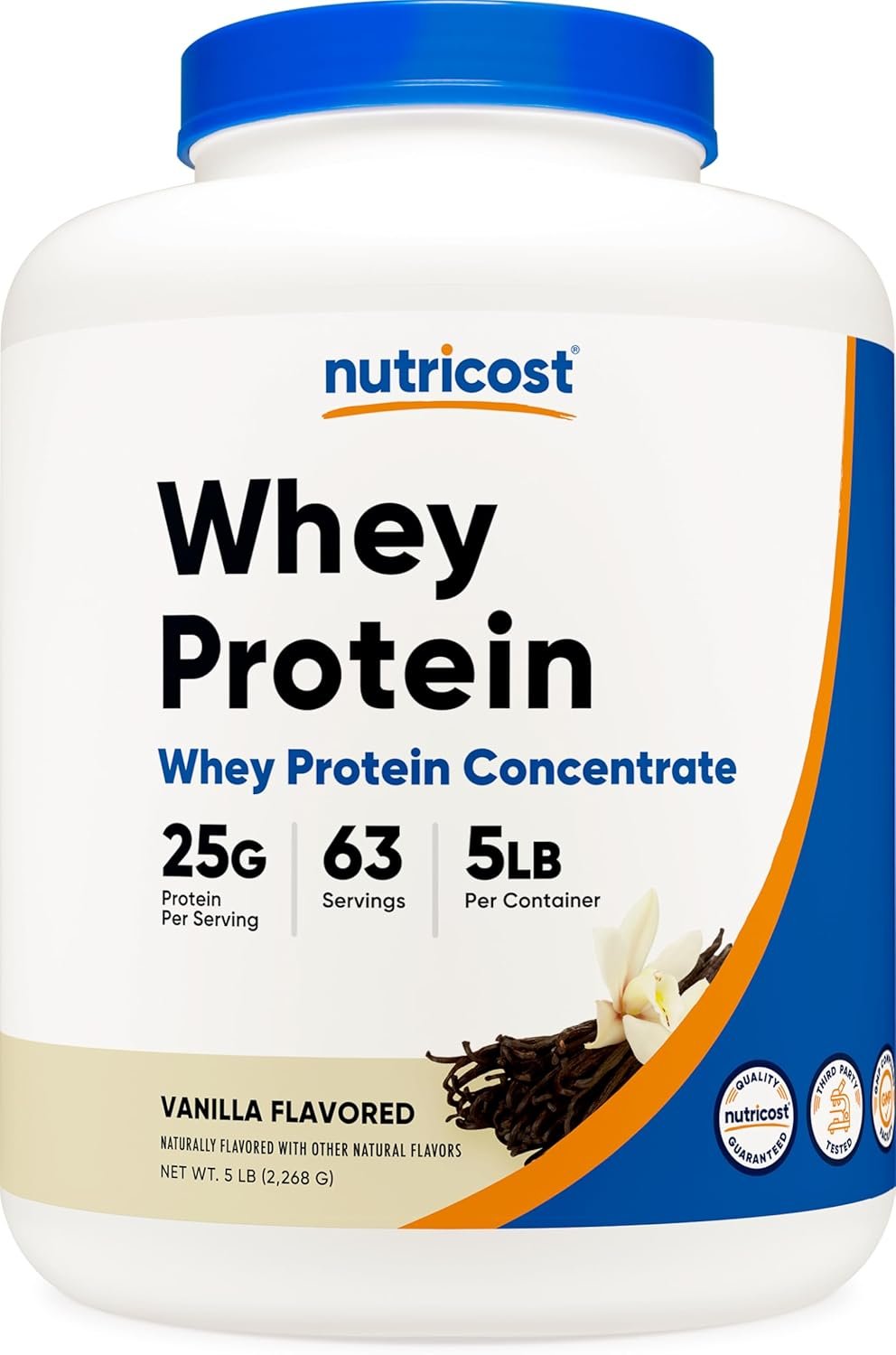
Whey concentrate is the least filtered and least expensive form of whey, and this is 5lb of it in one tub. Nutricost describes the powder as undenatured, non-GMO and gluten free, and says it is made in an NSF certified, GMP compliant, FDA registered facility.
For anyone taking a daily shake purely to raise total protein intake, concentrate at this volume is the most sensible way to do it. The trade-off is that concentrate retains more lactose and fat than an isolate, so it suits people who digest dairy comfortably.
What it does well
- 5lb tub for a low cost per serving.
- Undenatured whey concentrate, non-GMO and gluten free.
- Made in an NSF certified, GMP compliant facility.
- Plain formulation with no added extras.
What to know before buying
- Concentrate holds more lactose than an isolate.
- Higher fat and carbohydrate per gram of protein than ISO100.
- A 5lb tub takes up real cupboard space.
7. BulkSupplements Whey Isolate: Unflavoured for Cooking and Baking
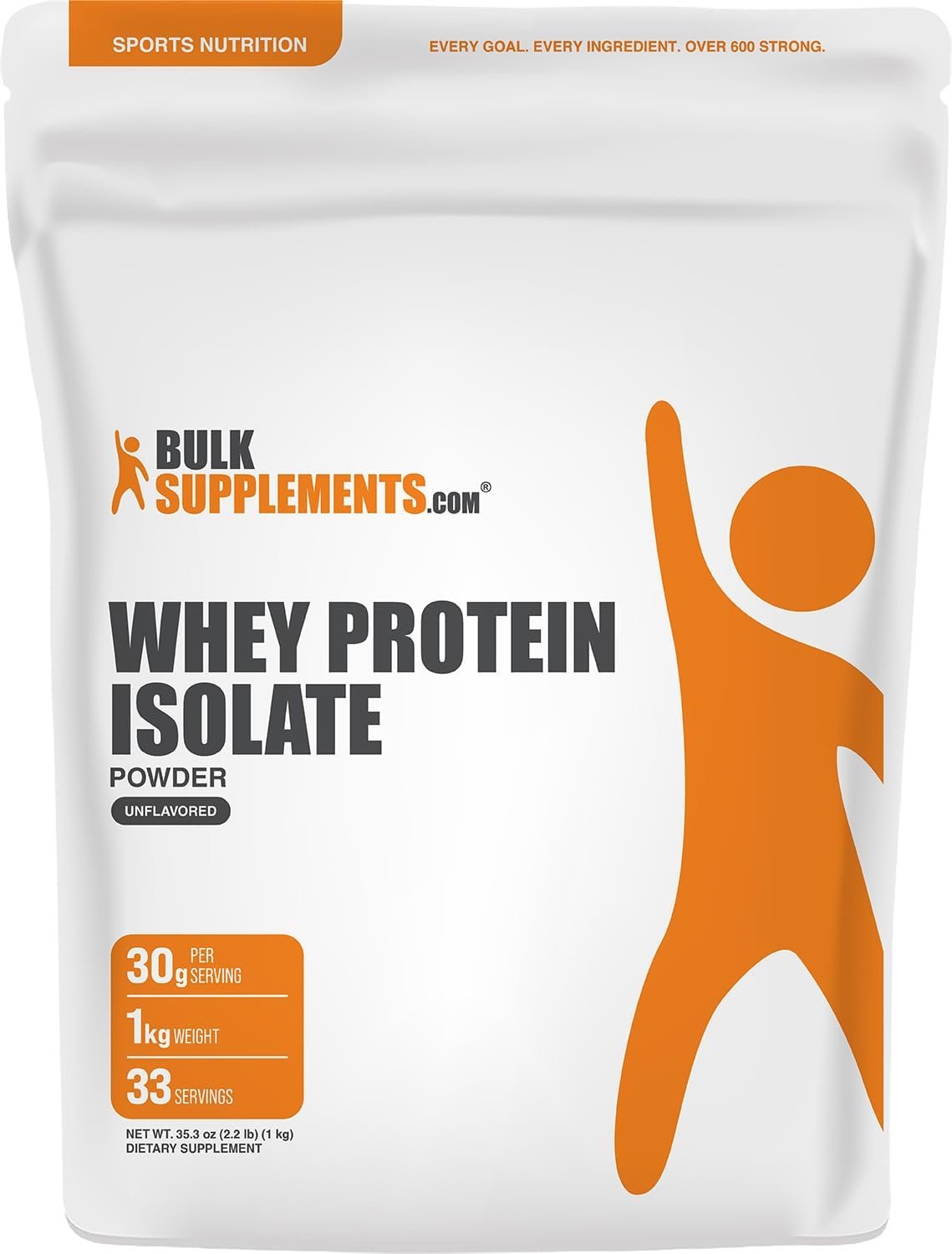
This is isolate with nothing added: no sweeteners, no flavouring and no colour, in a 30 gram serving. That makes it the one to buy if you are stirring protein into oats, yoghurt or pancake batter, where a vanilla or chocolate powder would fight the recipe.
BulkSupplements says it is produced in a cGMP-compliant facility with every batch tested. Unflavoured whey has a mild dairy taste that disappears into cooked food and is noticeable in plain water, so plan to mix it into something rather than drink it neat.
What it does well
- No added sweeteners, flavours or colours.
- 30 gram serving of whey isolate.
- Disappears into oats, yoghurt and baking.
- Produced in a cGMP-compliant facility with batch testing.
What to know before buying
- Plain in water, so it needs a recipe or a flavour of your own.
- Pouch packaging is less convenient than a scoop-friendly tub.
- No third-party sport certification listed.
Concentrate, Isolate and Hydrolysate: What the Filtering Changes
All three start as the liquid left over when milk is separated. Whey protein concentrate is filtered the least, so it keeps more lactose, fat and carbohydrate, and typically lands around 70 to 80 percent protein by weight. It is the cheapest per gram and it is what most budget tubs contain.
Isolate is filtered further, stripping most of the lactose and fat to push protein content higher, which is why ISO100 can list 25 grams of protein in under 120 calories. Hydrolysate goes one step beyond that, breaking the protein chains into shorter pieces before you ever open the tub.
Pick on digestion and budget rather than on the word itself. If dairy sits fine with you, concentrate does the same job for less; if it does not, isolate is worth the premium.
Reading a Protein Label Without Being Sold To
Start with grams of protein per serving, then check the serving size that figure refers to, because a 40 gram scoop delivering 24 grams of protein is a different product from a 30 gram scoop delivering the same. That ratio is the honest measure of how much of the tub is protein.
Third-party certification is the other line worth finding. Informed Choice and NSF programmes test finished batches for banned substances, which matters if you are drug tested, and is a reasonable quality signal even if you are not.
For how much protein a day actually makes sense, the Dietary Guidelines for Americans set the baseline, and most people reach a large part of it from food before any powder is opened.
Which Protein Powder to Buy
Optimum Nutrition Gold Standard remains the right answer for most people. It delivers 24 grams per scoop, mixes without a blender, comes in enough flavours that you will finish the tub, and it is banned-substance tested by the maker.
The rest are specialists. Choose Dymatize ISO100 if you want the leanest macros or struggle with lactose, Transparent Labs or Ascent if a short, certified ingredient list is the point, BSN Syntha-6 for taste and a slower blend between meals, Nutricost when cost per serving is what you are optimising, and the BulkSupplements unflavoured isolate for cooking. A shake pairs naturally with faster home cooking and a reliable kettle for everything else.
Frequently Asked Questions
How much protein powder should I take a day?
Powder is a convenience, not a dose. Most people use one scoop, which is 22 to 30 grams of protein depending on the product, to close the gap between what they eat and what they are aiming for. Work out your intake from food first, then let the tub cover the shortfall.
Is whey isolate better than concentrate?
It is more filtered, not automatically better. Isolate carries less lactose, fat and carbohydrate per gram of protein, which helps if dairy upsets you or if you are counting calories tightly. If concentrate digests comfortably, it delivers the same protein for less money.
What does banned-substance tested actually mean?
It means finished batches were screened by a third-party programme such as Informed Choice or an NSF scheme for substances prohibited in sport. Ascent lists Informed Choice certification here. If you compete in a tested sport, that line on the tub is the one to look for.
Can I bake or cook with protein powder?
Yes, and unflavoured isolate is the one to use. Flavoured powders fight the other ingredients, while a plain isolate such as the BulkSupplements powder stirs into oats, yoghurt and batter without changing the taste. Whey does firm up when heated, so expect a drier result in baking.
Related Articles
- Best Electric Toothbrushes
- Best Air Purifiers
- Best Robot Vacuums
- Best Oversized T-Shirts for Men: 7 Picks Compared
As an Amazon Associate, Fox Bulletin earns from qualifying purchases.

Get the Fox Bulletin briefing
The stories that matter, in your inbox. No spam, unsubscribe anytime.
Newsletter signup will be available soon.
Related stories
Best Oversized T-Shirts for Women: 7 Compared
The best oversized t-shirts for women differ from each other in three places: what the fabric is made of, where the shoulder seam sits and how the hem is shaped. Those three…
Best Oversized T-Shirts for Men: 7 Picks Compared
The best oversized t-shirts for men are not simply large t-shirts. The shape comes from where the shoulder seam sits and how much the fabric weighs, which is why a Pro Club…
Best Adjustable Dumbbells: 7 Picks by Weight Range
Seven adjustable dumbbell sets compared on weight range, adjustment mechanism and increments, from a 90lb selector pair to a plate-loaded starter set.