
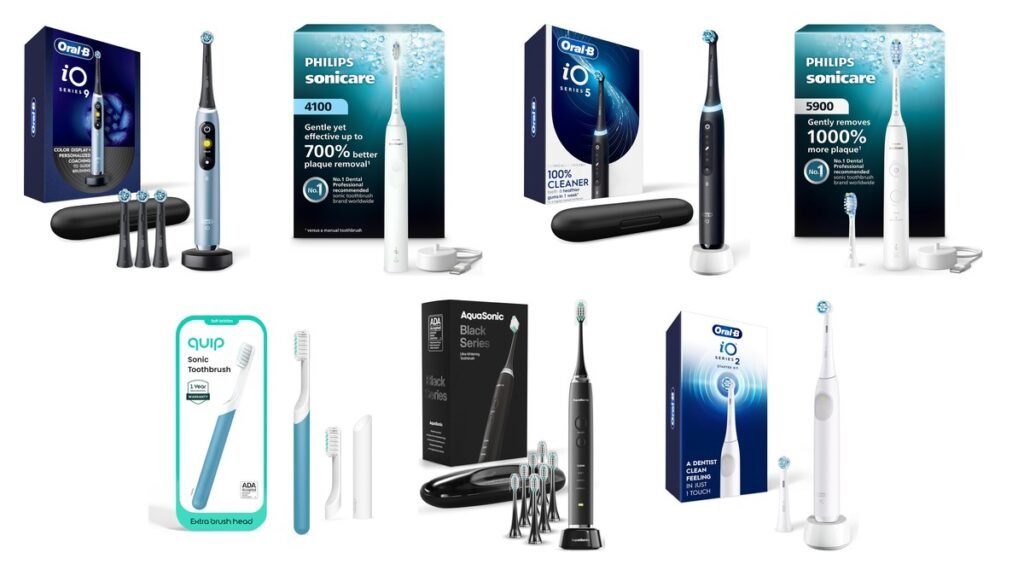
An electric toothbrush is a motor, a timer and a pressure sensor wrapped around a brush head. Only one of those three reliably changes the state of your gums, and it is not the motor. Every brush below cleans adequately. What separates them is whether the handle stops you scrubbing too hard, how many heads you get in the box, and how much you are paying for an app you will open twice.
The seven here run from a colour-screen flagship to a battery-powered brush that costs less than a restaurant meal and still carries the American Dental Association seal. Specifications are taken from each manufacturer’s own listing. Where a brand makes a plaque-removal claim, it is quoted as the brand’s claim rather than as a measured result, because those figures come from manufacturer-funded testing against a manual brush under conditions the brands set themselves. It is the same reason our air fryer roundup leans on published fan speeds rather than implied ones.
Electric Toothbrush Heads, Modes and Pressure Sensors Compared
The head shape is the first fork in the road. Oral-B uses a small round head that oscillates and rotates; Philips, Quip and Aquasonic use an elongated head that vibrates at sonic frequency. Both approaches are well supported in the literature, and the more useful column is the last one.
| Model | Head type | Cleaning modes | Pressure sensor |
|---|---|---|---|
| Oral-B iO Series 9 | Round | 7 | Yes, colour display |
| Philips Sonicare 4100 | Sonic, elongated | Not stated | Yes, handle pulse |
| Oral-B iO5 | Round | 5 | Yes, light ring |
| Philips Sonicare 5900 | Sonic, elongated | 2 modes, 3 intensities | Yes, haptic |
| Quip Sonic | Sonic, elongated | Not stated | No |
| Aquasonic Black Series | Sonic, elongated | Not stated | Not stated |
| Oral-B iO2 Starter Kit | Round | 3 | Yes, automatic |
1. Oral-B iO Series 9: The Full Feature Set, Including the Screen
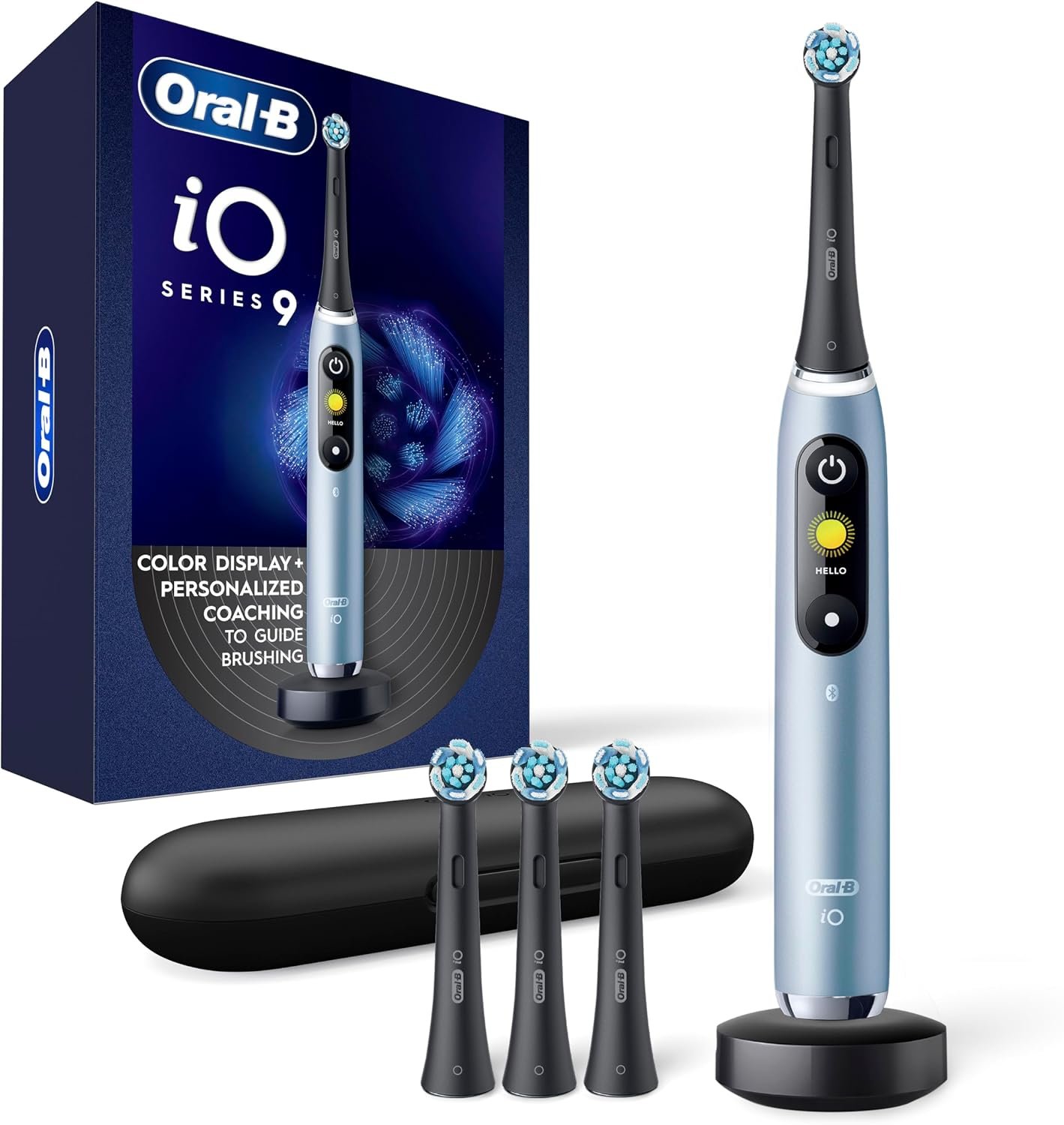
This is the version of the iO line with nothing held back. Seven cleaning settings are selectable from a colour display on the handle, which also shows brushing time, battery level and when the head needs replacing. The pressure sensor is the part worth the money: it signals three states rather than two, telling you when you are brushing too hard, too soft, or correctly. Most sensors only warn about excess force, which leaves the more common problem of brushing too gently unaddressed.
Four brush heads come in the box and the travel case charges the handle, so the fast charger stays home. Oral-B claims 100 percent more plaque removed and twice healthier gums in one week against a manual brush.
What it does well
- Seven cleaning settings chosen from an on-handle colour display.
- Three-state pressure sensor that flags brushing too softly, not just too hard.
- Four brush heads included.
- Charging travel case plus a three-hour fast charger.
What to know before buying
- The app tracks where you brush in real time, which most people stop opening after a fortnight.
- The most expensive brush here by some margin, and the cleaning it delivers is not seven times better than the iO2.
2. Philips Sonicare 4100: The One to Buy If You Only Want a Timer and a Sensor
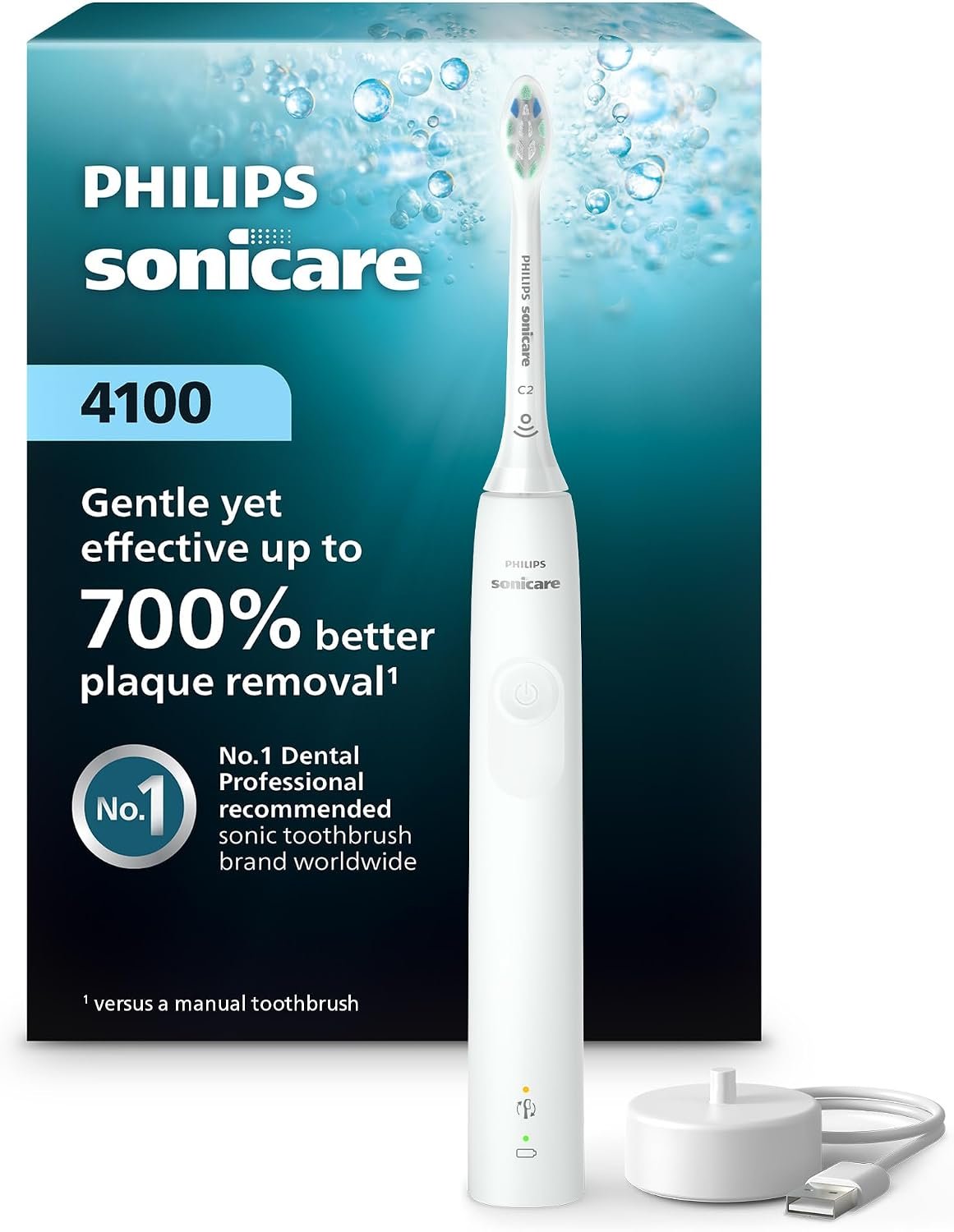
The 4100 is the cheapest brush here that still does the two things that matter. The handle pulses when you press too hard, and the QuadPacer nudges you every 30 seconds to move to a new quarter of your mouth while SmarTimer marks the full two minutes. Philips quotes up to 14 days of regular brushing per charge, which is the longest runtime in this group and makes it the easiest to live with if you travel often but not lightly.
EasyStart ramps the power up gradually over the first uses, which genuinely helps if you are moving from a manual brush and find the sensation unpleasant. Philips claims the C2 Optimal Plaque head removes up to 700 percent more plaque than a manual brush.
What it does well
- Pressure sensor that pulses the handle, at the lowest price here.
- Up to 14 days of brushing on a full charge.
- QuadPacer and SmarTimer cover pacing and the full two minutes.
- EasyStart eases you in from a manual brush.
What to know before buying
- One brush head in the box, so budget for replacements sooner.
- No cleaning-mode choice, which is fine for most people and limiting if your dentist has asked for a gum-specific setting.
3. Oral-B iO5: Five Modes and the Light Ring, Without the Screen
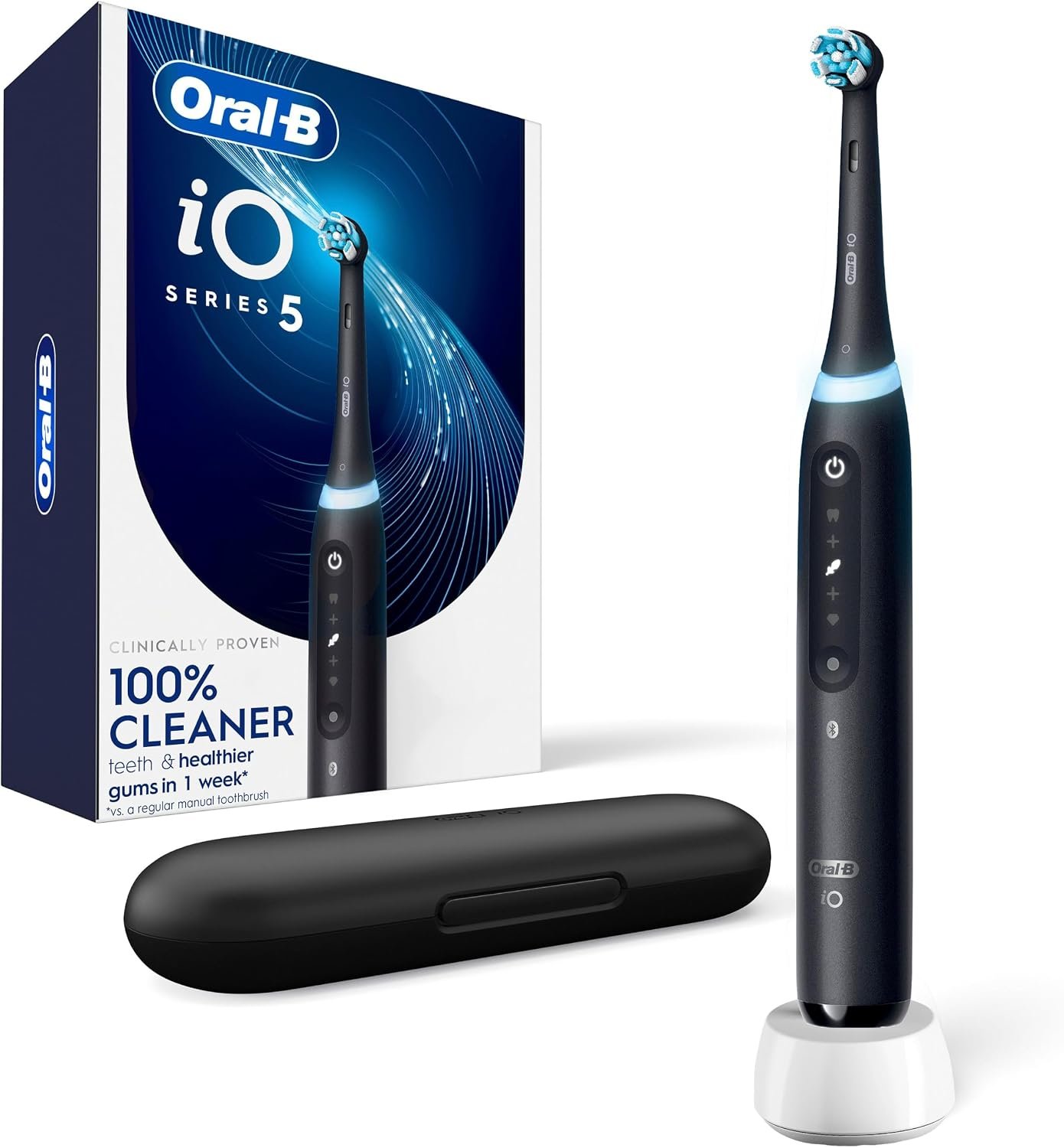
The iO5 keeps the iO magnetic drive and the pressure sensor but replaces the colour screen with a light ring around the neck of the handle. The ring doubles as the timer and the pressure indicator, which in practice is easier to read mid-brush than a screen you cannot see with the handle in your mouth. Five cleaning settings cover the range most people need.
This is the pick if you want the iO cleaning action without paying for the display. Oral-B claims 100 percent more plaque removed overall and 2.5 times more between teeth against a manual brush.
What it does well
- Light ring shows both the two-minute timer and pressure state at a glance.
- Five cleaning settings.
- Travel case included.
- Takes every Oral-B iO replacement head.
What to know before buying
- Fewer modes than the Series 9 and no on-handle display.
- iO replacement heads cost noticeably more than the older round Oral-B heads and are not interchangeable with them.
4. Philips Sonicare 5900: Built Around Gum Health and Tender Mouths
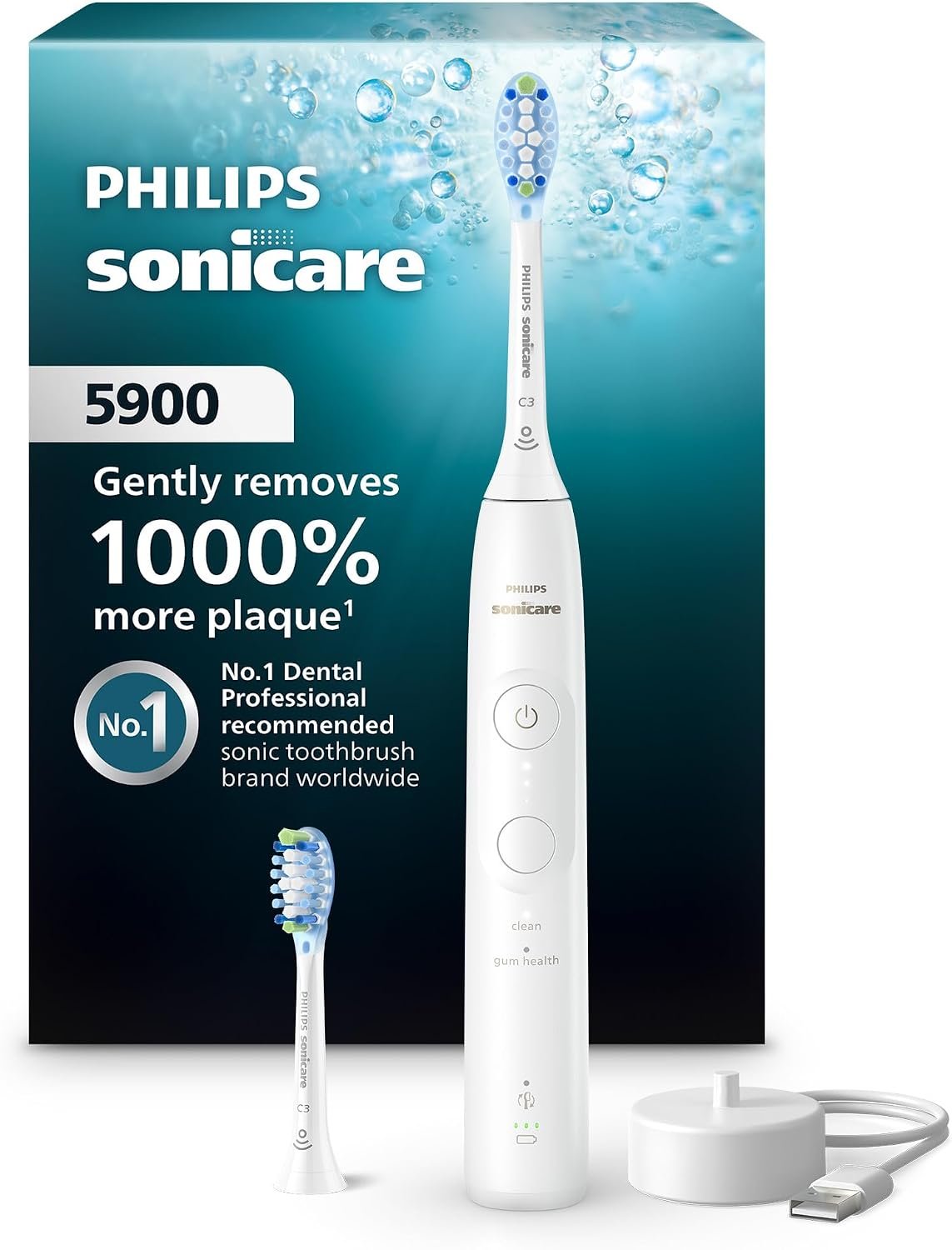
The 5900 is the one to look at if your gums are the problem rather than your teeth. It carries a dedicated Gum Health mode alongside the standard Clean mode, each with three intensity levels, so you can drop the power right down after a hygienist visit and bring it back up as things settle. The C3 head combines dense centre bristles with a separate row aimed at the gumline.
Its pressure sensor is optical rather than mechanical and responds with a haptic buzz. BrushPacer prompts a new area every 20 seconds, a shorter interval than the usual 30, which splits the mouth into six zones instead of four.
What it does well
- Gum Health mode plus Clean mode, each with three intensity levels.
- Automatic power adjustment in hard-to-reach areas.
- BrushPacer moves you on every 20 seconds.
- Two brush heads in the box.
What to know before buying
- The gum-specific features are wasted if you have no gum sensitivity, in which case the 4100 does the same core job.
- Philips quotes a 1000 percent plaque figure that is a manufacturer claim against a manual brush, not a comparison with other powered brushes.
5. Quip Sonic: The One That Packs Flat and Runs on a AAA
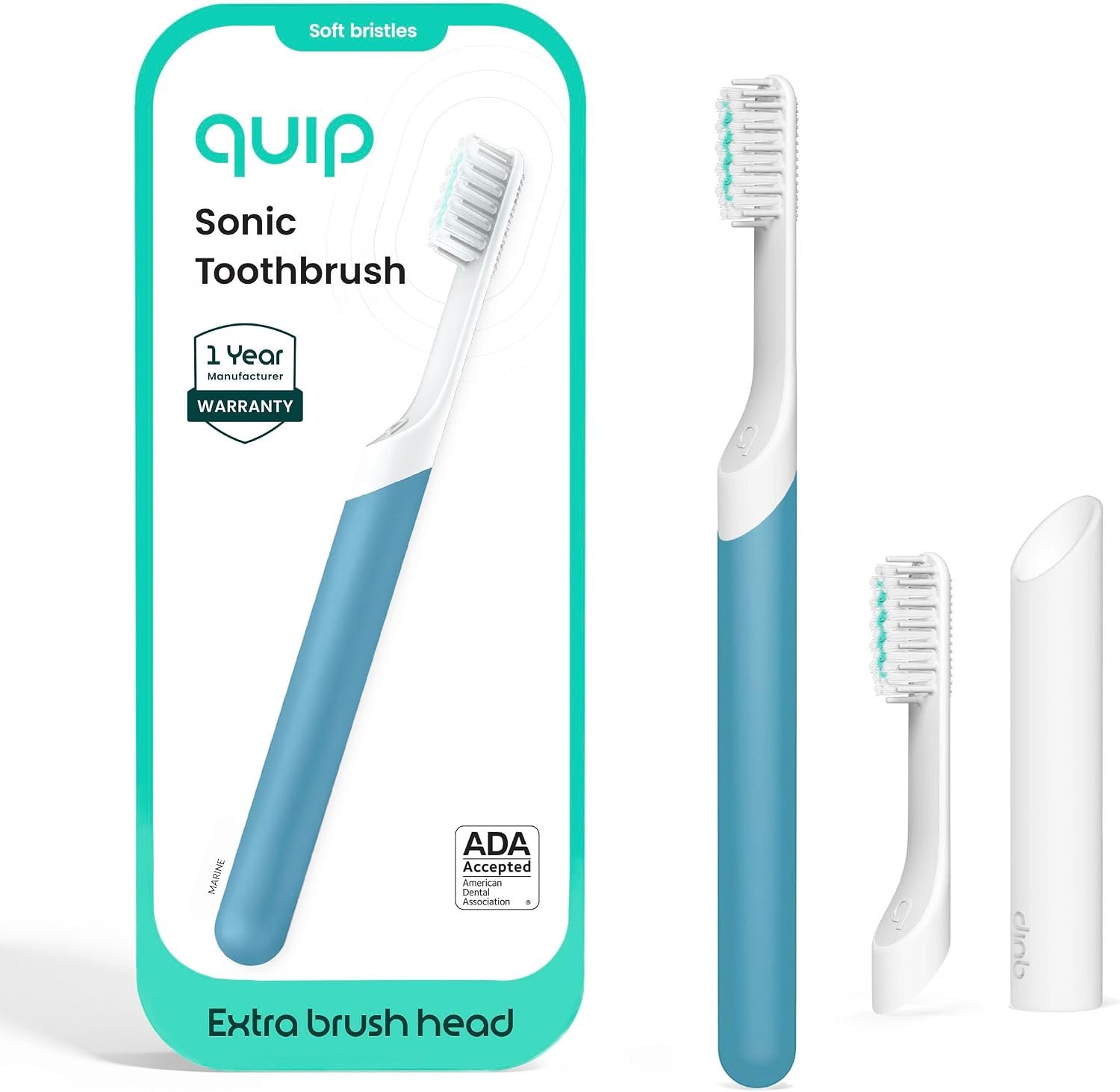
Quip solves a different problem. There is no charging base and no dock, because the handle runs on a replaceable AAA battery that lasts around three months. The cover slides over the bristles for packing and also mounts to a mirror, glass or tile, so the brush does not need counter space in a small bathroom or any space at all in a wash bag.
The trade is that you get the basics and nothing else: a two-minute timer with 30-second pacing prompts, soft bristles, gentle sonic vibration. There is no pressure sensor, which is the one omission that matters given how much of the benefit of a powered brush comes from not scrubbing.
What it does well
- No charger or stand to pack, and roughly three months per AAA battery.
- Cover mounts to a mirror or tile and seals the bristles for travel.
- Two-minute timer with 30-second pacing.
- Extra brush head included.
What to know before buying
- No pressure sensor, the single most useful feature on every other brush here.
- Buying AAA batteries indefinitely is a running cost that a rechargeable does not have.
6. Aquasonic Black Series: ADA Accepted at the Bottom of the Price Range
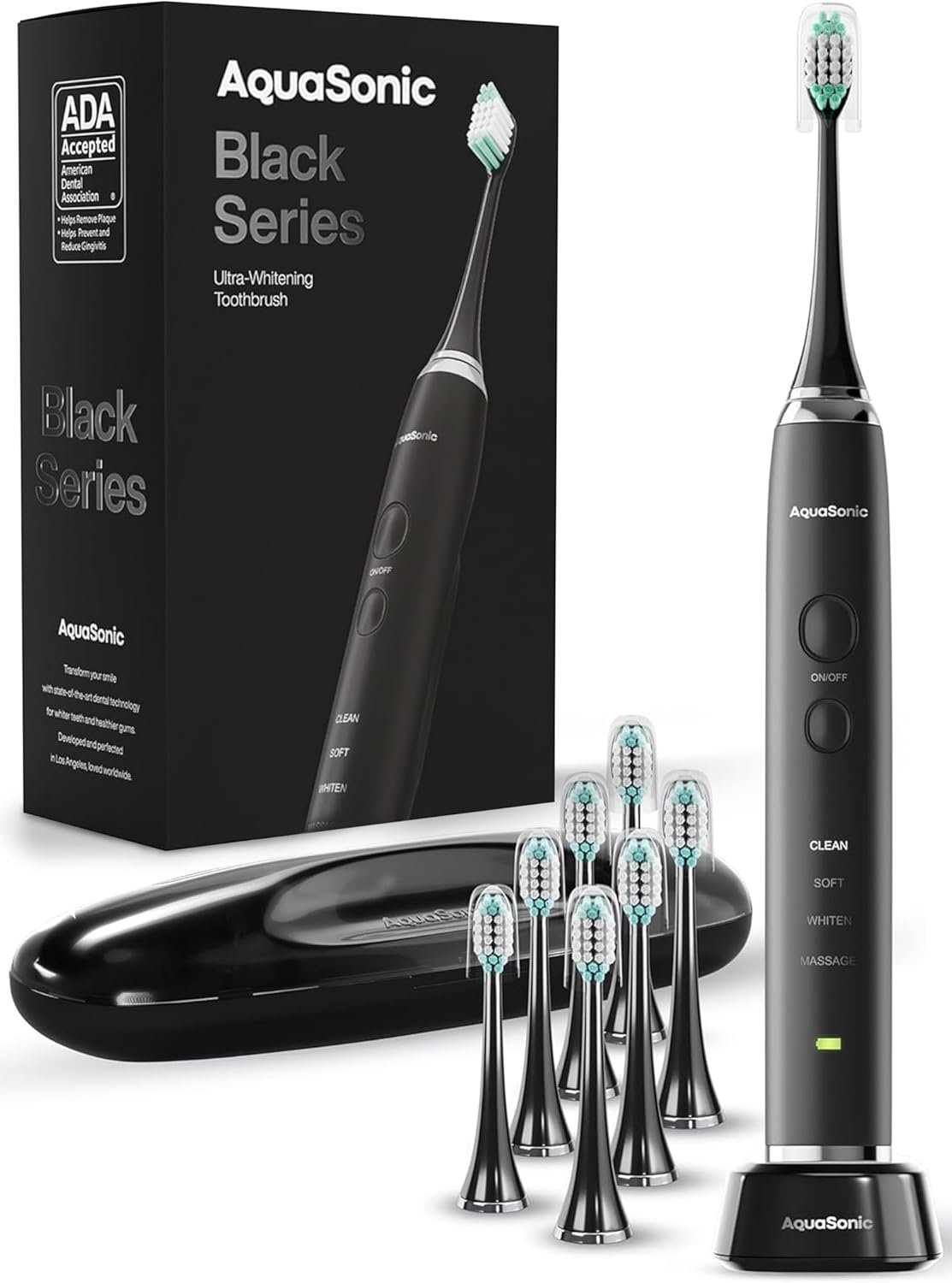
The reason this one is here rather than any of the dozens of similar budget sonic brushes is the seal. The Black Series is Accepted by the American Dental Association Council on Scientific Affairs, which means it cleared an independent review of its safety and efficacy claims rather than just its own marketing. That is rare at this price.
The motor runs at 40,000 vibrations per minute, it charges wirelessly, and the box includes eight DuPont brush heads and a travel case. At roughly three to four months per head, that is about two years of replacements bundled in, which is where the real saving sits.
What it does well
- ADA Accepted by the Council on Scientific Affairs.
- Eight DuPont brush heads included, around two years of replacements.
- 40,000 VPM motor and wireless charging.
- Travel case in the box.
What to know before buying
- No pressure sensor is listed, so technique is entirely on you.
- Cleaning modes are not specified on the listing, so treat mode claims elsewhere with caution.
7. Oral-B iO2 Starter Kit: The Gentlest Way Off a Manual Brush
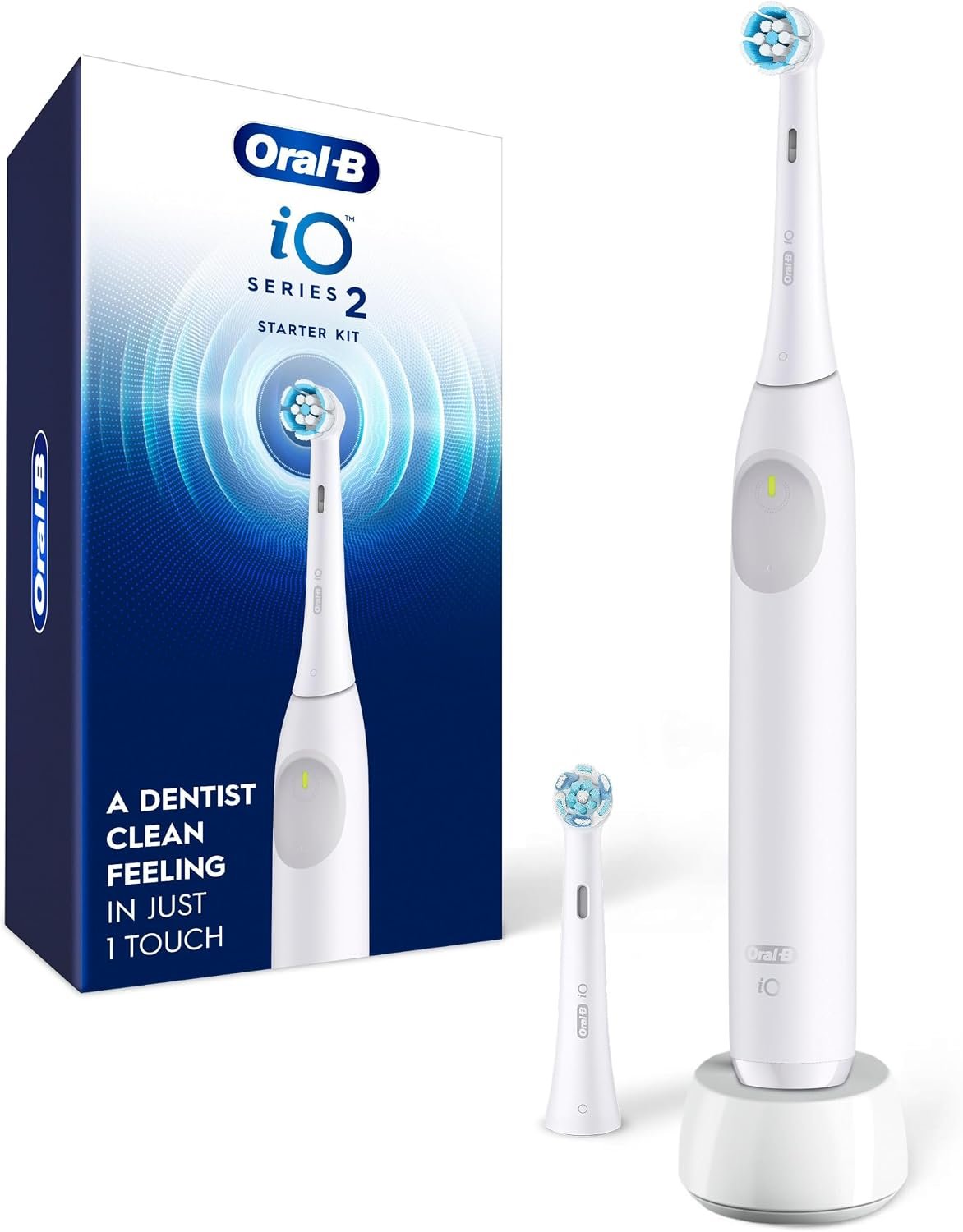
The iO2 is deliberately stripped back and is better for it if someone in the house is nervous about the switch. It starts on the super-sensitive setting by default, runs quietly, and has a single button rather than a menu. Three settings cover super-sensitive, gentle and daily clean.
Its pressure sensor does something the others do not: rather than only flashing a warning, it actively slows the motor down when you press too hard and lights up red. For a child, an older user, or anyone with a heavy hand, that is a more effective intervention than a light they can ignore.
What it does well
- Automatic pressure sensor that slows the brush down, not just a warning light.
- Defaults to the super-sensitive setting on startup.
- Two brush heads included.
- Fits every Oral-B iO replacement head.
What to know before buying
- Three settings only and no app connection.
- Still an iO handle, so it is tied to the pricier iO head ecosystem.
Round Heads and Sonic Heads Are Both Fine, and the Choice Is Comfort
Oral-B’s round heads oscillate and rotate, cupping one tooth at a time. Philips, Quip and Aquasonic drive an elongated head at sonic frequency, closer to the shape of a manual brush. Buyers spend a lot of energy on this question and the evidence does not reward it. The Cochrane review of powered versus manual brushes found powered brushes reduce plaque and gingivitis more than manual ones, and did not establish one powered design as decisively better than another for everyday use.
What does differ is the feel. A round head requires you to move tooth by tooth and hold position, which is a different habit from the sweeping motion most people bring from a manual brush. A sonic head lets you keep that motion. People who dislike electric brushes often dislike a round head specifically, and switching format solves it more often than switching brand.
One practical consequence is worth planning for. Replacement heads are the real cost of ownership, and they are not cross-compatible between the two systems or, in Oral-B’s case, even between the iO line and the older round heads. Check the price of a four-pack of heads for whichever brush you are considering before you commit, because over three years that number matters more than the handle did. Filters drive the same arithmetic in our best air purifiers guide.
The Pressure Sensor Is the Feature That Actually Protects Your Gums
Brushing too hard does not clean better. It abrades enamel at the gumline and contributes to gum recession, and it is the most common technique fault a powered brush can actually correct. That makes the pressure sensor the one specification on this page that reliably changes an outcome, which is why it is the last column of the table rather than the motor speed.
The implementations differ in how hard they are to ignore, and that difference matters more than the marketing suggests:
- A light that changes colour, as on the iO5 and Series 9, which you have to be looking at a mirror to notice.
- A haptic pulse through the handle, as on both Sonicare models, which you feel whether or not you are paying attention.
- An automatic power reduction, as on the iO2, where the brush slows itself down and removes the choice.
- Nothing at all, as on the Quip, where the timer is the only feedback you get.
If you are buying for someone whose technique you cannot supervise, a child or a parent, the iO2’s approach of slowing the motor is the most effective of the four. If you are buying for yourself and you know you press hard, a haptic buzz is harder to tune out than a light.
Which Electric Toothbrush to Buy
For most people the Philips Sonicare 4100 is the right answer and the cheapest of the serious options. It has the pressure sensor, the pacing prompts and a two-week battery, and everything above it in the range adds modes rather than cleaning. Buy it and put the difference toward replacement heads.
Choose the Oral-B iO Series 9 if you want the three-state pressure sensor and will genuinely use the display, and the iO5 if you want the same cleaning action for less. Pick the Philips Sonicare 5900 if a hygienist has told you to be careful with your gums, the Quip if the brush has to live in a bag, the Aquasonic Black Series if the budget is tight and the ADA seal reassures you, and the iO2 Starter Kit if you are buying for someone who needs the brush to stop them pressing too hard rather than merely tell them.
Frequently Asked Questions
Are electric toothbrushes actually better than manual ones?
For plaque and gum inflammation, yes. The Cochrane systematic review of powered versus manual toothbrushes found powered brushes reduce both more than manual brushing, both in the short term and over three months and beyond. The caveat is that a powered brush used badly still cleans badly, which is why the timer and pressure sensor matter more than the motor.
How often should I replace an electric toothbrush head?
Dental professionals generally advise every three months, or sooner once the bristles splay. Several brushes here track this for you: the Sonicare models and the Oral-B iO handles both flag when a head is due. The Aquasonic ships with eight heads, which at that interval is roughly two years of replacements in the box.
Do I need the app that comes with an electric toothbrush?
No. App tracking is the feature people abandon fastest, and none of the cleaning benefit depends on it. If you are choosing between two brushes and one justifies its price mainly on connectivity, that is usually the wrong one to buy. Spend the difference on replacement heads instead.
What does ADA Accepted mean on an electric toothbrush?
It means the American Dental Association’s Council on Scientific Affairs reviewed the product’s safety and efficacy claims and found the evidence supported them. It is an independent check rather than a marketing badge the brand awards itself, which is why it carries weight on a budget model like the Aquasonic Black Series.
Related Articles
- Best Coffee Makers: Top Picks Compared
- Best Drip Coffee Makers
- Best Home Espresso Machines
- How Much Liquid Can You Take on a Plane? The TSA Limits in Full
As an Amazon Associate, Fox Bulletin earns from qualifying purchases.

Get the Fox Bulletin briefing
The stories that matter, in your inbox. No spam, unsubscribe anytime.
Newsletter signup will be available soon.
Related stories
Candy Corn: The History, Recipe and Numbers Behind It
The tri-color kernel is older than the Halloween season it belongs to. Its first name was Chicken Feed, its recipe has barely moved since the 1880s, and one brand now owns most of the shelf.
Best Vacuum Cleaner: 7 Uprights and Sticks Compared
Seven vacuum cleaners compared on type, weight and filtration, with the difference between HEPA, cyclonic and washable filters explained.
Best Mattresses: 7 Boxed Queens Compared on Feel and Cooling
Seven boxed queen mattresses compared on feel, cooling and support, with the foam certifications and the federal fire rule explained.