

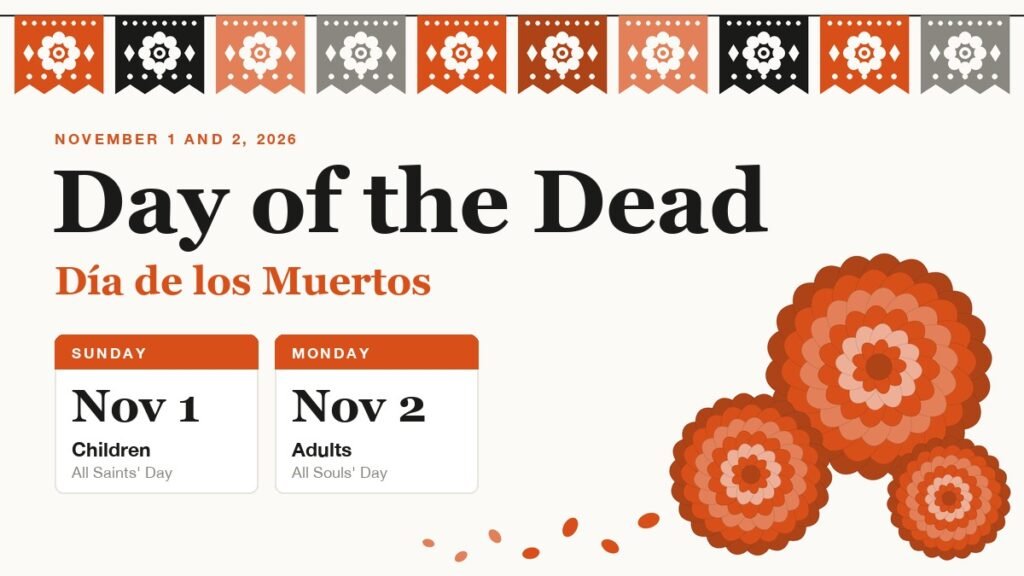
Day of the Dead (Día de los Muertos) is celebrated on November 1 and 2, when families in Mexico and Mexican communities abroad welcome back the souls of relatives who have died, with home altars, orange marigolds, their favorite food and candlelit nights in the cemetery. In 2026, November 1 falls on a Sunday and is traditionally set aside for children who have died; November 2, a Monday, is for adults.
The holiday joins Indigenous Mesoamerican rites to the Catholic feasts of All Saints’ Day and All Souls’ Day, and it has carried UNESCO recognition since 2003. Many communities start receiving souls days earlier, so the table runs from October 28. After it come the holiday’s roots, every element of a traditional ofrenda, La Catrina, regional customs in Mexico, the difference from Halloween and how the US celebrates.
| 2026 date | Who is honored | What happens |
|---|---|---|
| Wednesday, October 28 | People who died in accidents or by violence | In many communities, the first souls are welcomed |
| Thursday, October 29 | People who drowned | Part of the same folk calendar, which varies by town |
| Friday, October 30 | Lonely souls with no family left to remember them | Part of the same folk calendar |
| Saturday, October 31 | Children (angelitos) | The children’s ofrenda is laid out; Mexico City’s parade; Halloween in the US |
| Sunday, November 1 | Children (angelitos) | All Saints’ Day: the souls of children arrive |
| Monday, November 2 | Adults | All Souls’ Day: adult souls arrive; night vigils in cemeteries |
When Is Day of the Dead in 2026? November 1 and 2
The two main days of Day of the Dead are fixed on the calendar, not tied to a weekday, so they move through the week from year to year. In 2026 they fall on Sunday, November 1, and Monday, November 2. Mexico’s Secretaría de Cultura sums up the order simply: the souls of children arrive on November 1, and those of adults on November 2.
The dates line up with the Catholic calendar. November 1 is All Saints’ Day (Día de Todos los Santos), and in Mexico it is the day for the angelitos, the “little angels” who died as children. November 2 is All Souls’ Day (Día de los Fieles Difuntos), when the adult dead are received. Families usually set out the children’s offerings on October 31 so they are ready when the youngest souls arrive.
The days before November 1 vary much more by town and family. A widely followed folk calendar runs like this:
- October 28: people who died in accidents or by violence, the souls who never reached their destination.
- October 29: people who drowned.
- October 30: the ánimas solas, lonely souls with no family left to remember them.
- October 31: the children’s ofrenda goes up; some households also remember children who died before baptism on this day.
That variety is built into the tradition. The UNESCO listing for the Indigenous festivity dedicated to the dead notes that the dead are grouped by cause of death, age, sex and sometimes profession, and that each group has its own day. The festivity falls at the end of October and the start of November, when the yearly maize harvest is complete.
Indigenous and Catholic Roots of Día de los Muertos
Before the Spanish conquest, the Aztecs gave two of the twenty-day months in their ritual calendar to the dead: the ninth month for children and the tenth for adults. Curator Ruben C. Cordova argues that a memory of those months was compressed into two days inside the Catholic calendar, which is why Mexico, unlike other Latin American countries with Day of the Dead customs, dedicates All Saints’ Day to children and All Souls’ Day to adults.
Mictecacihuatl, the Aztec Lady of the Dead, was said to protect the bones of the dead so they could be returned to the land of the living. The Aztec festival closest in spirit was Quecholli, held between October 20 and November 8 for Mixcóatl, the god of war, when altars of tamales were placed near the burial grounds of warriors to help them on their journey to the afterlife.
The Spanish brought the European side. In Spain, All Saints’ Day and All Souls’ Day were kept by decorating family graves and sharing food beside them, and colonizers fused those feasts with Aztec traditions as a tool of colonial rule. UNESCO describes the result as a fusion of pre-Hispanic religious rites with Catholic feasts brought over in the sixteenth century.
Historians still argue about the balance. Elsa Malvido, a researcher at Mexico’s National Institute of Anthropology and History (INAH), traced the modern holiday almost entirely to medieval Europe, pointing to altars for the dead, skull-shaped sweets and bone-shaped bread in Spain and southern Europe. Octavio Paz, the Nobel Prize-winning poet, took the opposite view in his 1950 essay The Labyrinth of Solitude, treating the holiday as a continuation of Aztec festivals of death.
What Goes on a Day of the Dead Ofrenda
The ofrenda, or offering, is the center of the holiday: an altar built at home, in a school or beside a grave to welcome the souls back. A common format has three tiers. The top one identifies who is being invited, with photographs and often religious images; the second holds the food and objects meant to make the visitor feel at home; and the bottom one almost always carries lit candles.
Each traditional element has a job. These are the ones found on most altars and what they mean:
- Cempasúchil (Mexican marigolds): the orange flower of the holiday. Its name comes from the Nahuatl cempohualxochitl, “twenty flower”, and its petals are scattered in paths because their color and scent are believed to guide souls from the cemetery to the family home.
- Photographs: pictures of the people being honored, usually on the top tier, so the altar shows exactly who is being invited back.
- Candles: light, faith and hope. They guide the souls on their way, and four candles set in a cross stand for the four cardinal points.
- Water: a glass or jug left to quench the thirst of souls after their long journey.
- Salt: a purifying element, set out so the body is not corrupted on its journey there and back.
- Copal: resin burned as incense since pre-Columbian times (the word comes from the Nahuatl copalli, “incense”). Its smoke carries prayers and clears the space of evil spirits.
- Pan de muerto: a sweet bread decorated with bone-shaped strips of dough, offered as a fraternal gift and shared by the living.
- Calaveras (sugar skulls): molded skulls of sugar or chocolate, often with a name written across the forehead.
- Papel picado: tissue paper cut into skulls, flowers and birds. It is so light that every draft moves it, which is why it stands for the element of air.
- Favorite food and drink: whatever the person loved, from mole and tamales to a shot of tequila, mezcal or pulque for adults. Children get sweets and toys instead.
- Petate and a toy dog: a woven mat lets the souls rest, and on children’s altars a small izcuintle dog helps them cross the Chiconauhuapan river on the way to Mictlán, the land of the dead.
Together the elements also represent the four elements: candles for fire, papel picado for air, food grown in the ground for earth, and glasses of water for water. Many families believe the souls take in the essence of the food rather than eating it, so the living share the meal afterward.
Regional styles add their own pieces. Oaxacan altars are often decorated with papier-mâché alebrijes, altars on the Veracruz coast can include seashells and fish, and in Puebla mole poblano takes a central place.
Sugar Skulls, Pan de Muerto and Papel Picado
Calaveras: Skulls Made to Be Laughed With
Sugar skulls are made in molds from cane sugar, a confection known as alfeñique, and decorated with icing, colored foil and beads. The first known mention of skeletal figures being sold dates to the 1740s. They began as gifts for children to eat and only later became a fixture on ofrendas. The best-known place to buy them is the Alfeñique fair in Toluca, near Mexico City.
The skull also gives its name to calaveras literarias, short rhyming poems written as mock epitaphs for friends, co-workers and public figures, living or dead. Newspapers still print them about public figures, and many Mexican public schools have students write them in language class.
Pan de Muerto and Its Spanish Ancestor
Pan de muerto is a soft sweet bun topped with sugar and decorated with bone-shaped pieces of dough, often flavored with anise seeds, orange flower water or orange zest. It descends from the pan de ánimas, or soul bread, that was baked for November 1 and 2 in Castile, Portugal, Aragon and Sicily and left on graves. In Puebla and Tlaxcala it is still sometimes called pan de ánimas.
Papel Picado From Huixcolotla
Papel picado is cut from stacks of 40 to 50 sheets of tissue paper at a time, using a template, a small mallet and chisels. San Salvador Huixcolotla, in the state of Puebla, is considered its birthplace. The craft spread from there to other parts of Mexico around 1930, reached Mexico City in the 1960s and moved on to the United States and Europe.
La Catrina: From Posada’s Satire to Diego Rivera’s Mural
La Catrina, the elegant skeleton in a wide feathered hat, began as a zinc etching by the printmaker José Guadalupe Posada, who was born in Aguascalientes on February 2, 1852, and died in Mexico City on January 20, 1913. The image is usually dated around 1910 to 1912, and its first certain publication was a satirical broadside printed for Day of the Dead in 1913.
Posada called it La Calavera Garbancera. A garbancero was someone of Indigenous heritage who rejected those roots and tried to pass as European, and the bare skeleton wearing only a fancy hat mocked that pretense. The name it carries now comes from catrín, a word for an elegantly dressed man of the late 1800s and early 1900s.
Diego Rivera turned Posada’s hatted skull into a full-length figure in his 1946 to 1947 fresco Sueño de una tarde dominical en la Alameda Central (Dream of a Sunday Afternoon in the Alameda Central). The mural is 15.6 meters long and covers 400 years of Mexican history. Rivera placed Posada and Catrina at the center, painted himself as a boy holding her hand, and put Frida Kahlo behind them.
Rivera dressed Catrina in a simple Tehuana skirt and a feathered serpent boa that links her to the god Quetzalcoatl, turning Posada’s jab at the elite into a national emblem. The fresco was painted for the Hotel del Prado; after the 1985 earthquake forced the hotel’s demolition, it moved to the Museo Mural Diego Rivera beside Alameda Park. Today Catrina and her male partner, the Catrín, are popular Day of the Dead costumes, worn with calavera face makeup.
Mexico City’s Day of the Dead Parade Began With a Bond Film
The giant skeletons and floats on Paseo de la Reforma are a recent addition. The 2015 James Bond film Spectre opened with a Day of the Dead parade in Mexico City, but no such parade existed. Interest in the film and a push to promote Mexican culture led federal and city authorities to stage a real one on October 29, 2016, along Paseo de la Reforma and through the historic center.
The 2026 Gran Desfile de Día de Muertos, the tenth anniversary of that first parade, is set for Saturday, October 31, with Mexico City’s Secretaría de Cultura running the call for floats. Past editions have run from the Puerta de los Leones in Chapultepec Park along Paseo de la Reforma to the Zócalo. Entry is free, and the parade has become a draw in a country that ranks among the most visited countries in the world.
Regional Day of the Dead Traditions in Mexico
Customs change from town to town, and a few places are known across the country for how they keep the nights:
- Janitzio and Lake Pátzcuaro, Michoacán: in this Purépecha community the Noche de Ánimas begins on the afternoon of November 1. Families stay in the island cemetery all night praying, while fishermen light the lake with candles and butterfly-shaped nets.
- San Andrés Mixquic, Mexico City: in the southeast of the Tláhuac borough, families walk their dead back to the cemetery on the night of November 2 for the Alumbrada, lighting candles and laying marigold-petal paths to say goodbye.
- Santa Cruz Xoxocotlán, Oaxaca: on the night of October 31, families carry flowers, candles, food and mezcal to the old cemetery and keep watch at the graves through the night, with mariachis and bands playing among the tombs.
- Oaxaca’s muerteadas: on November 1 and 2, neighborhoods in many Oaxacan towns send out comparsas, costumed groups that parade and dance behind hired brass bands. When two meet in a “topada”, both keep dancing until one gives way.
- Ocotepec, Morelos: households that lost someone in the past year open their doors to visitors who bring candles, and serve them tamales and atole in return.
- Yucatán Peninsula: families prepare mukbil pollo, a large tamale of masa, pork and chicken wrapped in banana leaves and cooked for hours in an underground oven, on October 31 or November 1.
In Pátzcuaro, the customs for a child differ from those for an adult. On November 1 of the year after a child dies, the godparents set a table in the parents’ home with sweets, fruit, pan de muerto, a cross, a rosary and candles to celebrate the child’s life.
How Day of the Dead Differs From Halloween
The two holidays sit side by side on the calendar and share skulls and costumes, which is why they are so often confused. Their purpose is different:
- Who it is for: Halloween, on October 31, is the eve of the Christian feast of All Hallows’ Day, and many of its customs are thought to come from Celtic harvest festivals, Samhain in particular. Day of the Dead centers on a family’s own dead and welcomes them home.
- Mood: Halloween leans on fright and visits to haunted attractions. Day of the Dead is affectionate and often funny, as families tell stories about the people they are remembering.
- Skulls: on Day of the Dead they are personal and playful. A sugar skull carries a name, a Catrina mocks vanity, and Catrina is even held up as a Mexican answer to the jack-o’-lantern.
- Candy at the door: in larger Mexican cities, children in costume ask for a calaverita, a small gift of candy or money, much like trick-or-treating but without the threat of a trick.
- Where it happens: Halloween plays out at parties and on doorsteps. Day of the Dead plays out at the home altar and the grave.
If you are planning both, the overlap is October 31 itself: the night a US family might carve a jack-o’-lantern and pick out Halloween costumes is the same night many Mexican families finish the children’s ofrenda.
Día de los Muertos in the United States
Mexican immigrants have brought their Day of the Dead rituals to the US since at least the 1890s, and for decades these were quiet, religious observances: Mass, visits to family graves and flowers. The public festival most Americans know today took shape in the 1970s, when Chicano artists and activists used the holiday to build identity. One of the first modern celebrations was organized in East Los Angeles in 1973 by Self Help Graphics and Art, a printmaking collective that is now the oldest Chicano art center still operating.
Three long-running US celebrations show how far the holiday has spread:
- Hollywood Forever Cemetery, Los Angeles: the 27th annual Día de los Muertos takes place on Saturday, October 24, 2026, from noon to midnight, with an altar exhibition, a ceremonial procession, Aztec dancers and folklórico performances.
- All Souls Procession, Tucson: started in 1990 by artist Susan Johnson as she grieved her father, it is now a two-mile, human-powered procession that ends with the burning of an urn filled with offerings and wishes for the dead.
- Santa Ana, California: the city has held a Noche de Altares since 2002.
A family ofrenda sits at the center of the plot of Pixar’s 2017 animated film Coco. Building one at home follows the same pattern as in Mexico: photographs on top, marigolds, candles, water, salt, pan de muerto and the favorite foods of the people being remembered.
Frequently Asked Questions
What day is Day of the Dead in 2026?
The main days are Sunday, November 1, 2026, which honors children who have died, and Monday, November 2, which honors adults. Many communities begin receiving souls on October 28, and children’s ofrendas are usually set out on October 31.
Is Day of the Dead the same as Mexican Halloween?
No. Halloween, on October 31, is the eve of All Hallows’ Day, with customs often traced to Celtic harvest festivals, and it leans on fright. Day of the Dead, on November 1 and 2, welcomes the souls of a family’s own dead with altars, food and graveside vigils, and its tone is affectionate rather than scary.
Is it Día de los Muertos or Día de Muertos?
Both are correct Spanish names for the same holiday. Mexico’s government uses Día de Muertos, while Día de los Muertos is far more common in the United States. UNESCO lists it as the Indigenous festivity dedicated to the dead.
Why are marigolds used for Day of the Dead?
The cempasúchil, or Mexican marigold, is native to Mexico, and its bright orange petals and strong scent are believed to guide souls from the cemetery to their family’s altar. Petals are often scattered in a path leading up to the ofrenda.
Related Articles

Get the Fox Bulletin briefing
The stories that matter, in your inbox. No spam, unsubscribe anytime.
Newsletter signup will be available soon.
Related stories
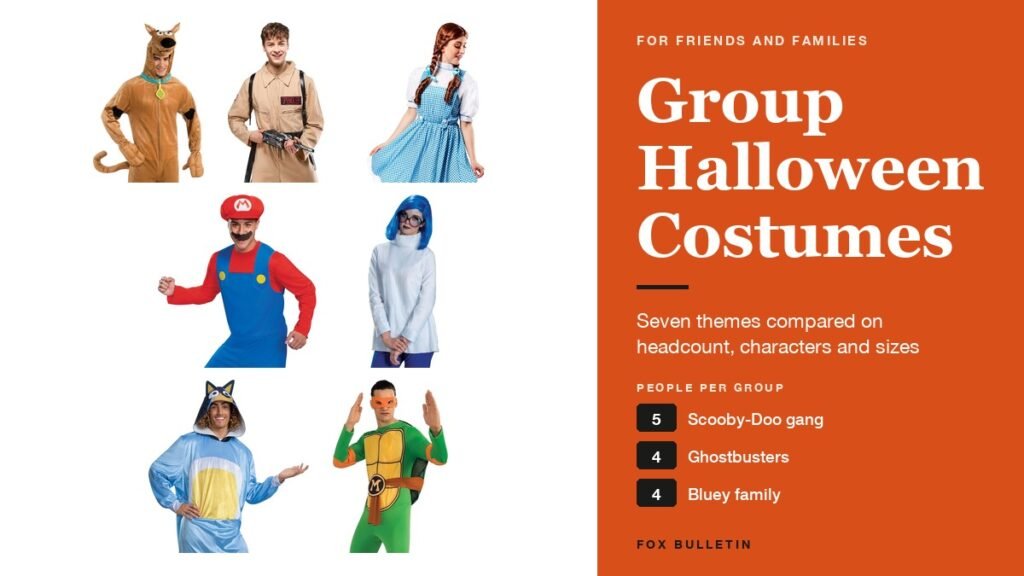
Best Group Halloween Costumes: 7 Compared on Headcount and Sizes
Scooby-Doo, Ghostbusters, The Wizard of Oz, Super Mario, Inside Out, Bluey and Ninja Turtles group costumes compared on headcount, matching characters and sizes.
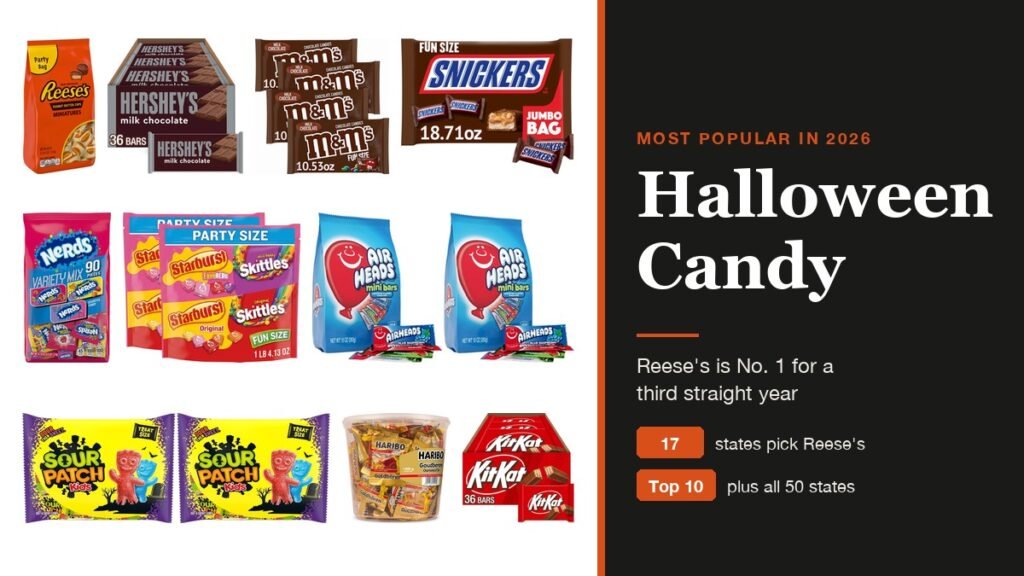
Most Popular Halloween Candy 2026: The Top Pick in Every State
Reese's Peanut Butter Cups top the 2026 Halloween candy rankings for a third year. The national top 10, the standout candy in all 50 states, and NRF's $4.1 billion candy spending forecast.

Best Halloween Inflatables: 7 Compared on Height and Setup
Seven Halloween inflatables compared on height, footprint and anchoring, from a 12 ft Gemmy ghost and a 9 ft Stay Puft to window tentacles, plus blower power draw and wind tips.