

Payment processing is one of the largest recurring costs a small business pays and one of the least examined. A business taking $30,000 a month pays roughly $9,000 a year in card fees, and the gap between the cheapest and most expensive processor is wide enough to fund an employee.
The important number is the effective rate, meaning what you actually pay across all transactions, not the headline advertised rate. Below are the six best payment processors for small business in 2026, ranked with verified effective rates and the monthly volume each one suits.
| Rank | Processor | Effective Rate | Pricing Model | Best For |
|---|---|---|---|---|
| 1 | Square | 2.65% | Flat rate | Best overall for small business |
| 2 | Helcim | 2.51% | Interchange plus | Best rates above $10K a month |
| 3 | Stripe | 2.97% | Flat rate | Best for online and developers |
| 4 | PayPal | 3.07% | Flat rate | Best for buyer trust |
| 5 | Stax | Interchange plus membership | Subscription | Best above $50K a month |
| 6 | Payment Depot | Interchange plus membership | Subscription | Best wholesale pricing |
The 6 Best Payment Processors for Small Business
1. Square: The Best Overall for Small Business
Effective Rate: 2.65% | Pricing Model: Flat rate | Best For: Most small businesses, especially in person
Square posts an effective rate of about 2.65%, the lowest of the flat-rate processors, and combines that with genuinely useful software rather than just a payment pipe. You get point-of-sale tools, invoicing, and both in-person and online payments in one account.
There are no monthly fees, so an idle month costs nothing, which matters for seasonal and part-time businesses. For a shop, salon, market stall, or any business that takes cards in person, Square is the sensible default.
2. Helcim: The Best Rates Above $10K a Month
Effective Rate: 2.51% | Pricing Model: Interchange plus | Best For: Growing businesses
Helcim is the cheapest option here at an effective 2.51%, achieved through interchange-plus pricing rather than a flat rate. In-person payments cost interchange plus 0.40% and 8 cents for businesses under $50,000 a month, while keyed and online payments cost interchange plus 0.50% and 25 cents.
It also charges no monthly fee, which is unusual for interchange-plus pricing, and ACH bank payments cost just 0.5% plus 25 cents capped at $6. Once you process around $10,000 a month, the saving over flat-rate processors typically runs into hundreds of dollars annually.
3. Stripe: The Best for Online and Developers
Effective Rate: 2.97% | Pricing Model: Flat rate | Best For: Online businesses and custom workflows
Stripe carries a higher effective rate at 2.97%, and you pay that premium for the best developer tooling in the industry. Its API and documentation are why most subscription services, marketplaces, and SaaS products are built on it.
If your payments need custom logic, such as recurring billing, split payments, or usage-based charges, Stripe handles cases that would require workarounds elsewhere. For a simple online store, though, you are paying for flexibility you may never use.
4. PayPal: The Best for Buyer Trust
Effective Rate: 3.07% | Pricing Model: Flat rate | Best For: Conversion on unfamiliar sites
PayPal has the highest effective rate on this list at 3.07%, and its value has nothing to do with price. Its advantage is brand recognition, since customers who hesitate to enter card details on a site they do not know will often complete a PayPal checkout.
For a new store without established trust, a higher conversion rate can easily outweigh the extra 0.4 percentage points in fees. Many businesses offer PayPal alongside a cheaper primary processor rather than choosing between them.
5. Stax: The Best Above $50K a Month
Effective Rate: Interchange plus membership | Pricing Model: Subscription | Best For: High-volume merchants
Stax uses a membership model, charging a fixed monthly subscription and then passing through interchange at cost rather than marking up each transaction. That structure only makes sense above a certain volume.
The crossover point is around $50,000 a month, where the subscription is spread across enough transactions to beat percentage-based pricing. Below that, the monthly fee outweighs the per-transaction saving.
6. Payment Depot: The Best Wholesale Pricing
Effective Rate: Interchange plus membership | Pricing Model: Subscription | Best For: Established high-volume businesses
Payment Depot follows the same wholesale logic as Stax, giving members interchange-cost pricing in exchange for a monthly fee. For businesses processing well above $50,000 a month, the savings become substantial.
The trade-off is commitment and complexity, since interchange-plus statements are harder to read than a single flat percentage. This is a processor for businesses with someone who will actually check the numbers.
Your Monthly Volume Decides the Answer
This is the part most comparisons get wrong. There is no single best processor, because the right choice flips at predictable revenue thresholds.
Under roughly $5,000 a month, use Square or Stripe, since flat-rate pricing with zero fixed costs beats any model with a subscription. Between about $10,000 and $50,000, Helcim’s interchange-plus pricing saves hundreds a month over flat rates. Above $50,000, membership models like Stax and Payment Depot start delivering genuine wholesale savings. Reassess whenever your volume crosses one of those lines.
Flat Rate Versus Interchange Plus
Flat-rate processors charge one percentage regardless of card type, which is simple and predictable. The catch is that they keep the difference when a customer pays with a cheap debit card, since interchange fees vary considerably by card.
Interchange-plus passes the true network cost through and adds a disclosed margin, so you benefit when customers use lower-cost cards. It produces messier statements but lower bills, which is why nearly every high-volume merchant eventually moves to it.
The Fees That Are Not in the Headline Rate
The advertised percentage is rarely the full cost. Watch for chargeback fees, typically $15 to $25 per disputed transaction, monthly minimums, PCI compliance charges, statement fees, and early termination penalties on contracts.
Currency conversion and international card surcharges add more if you sell abroad. Also confirm payout timing, since a processor holding funds for several days affects cash flow more than a fraction of a percentage point, and check whether hardware is purchased outright or leased, as leases are usually the more expensive route over time.
Four Ways to Actually Lower Your Processing Costs
Switching processors is only one lever, and often not the fastest one. The simplest saving is routing large invoices through ACH bank transfer instead of card, since Helcim charges 0.5% plus 25 cents capped at $6. On a $5,000 invoice that is $6 rather than roughly $145 on a card.
Second, avoid keyed transactions where possible, because manually entered card numbers cost more than tapped or dipped cards on every processor. Third, if you sell in person, buy hardware outright rather than leasing it, since terminal leases typically cost far more over their life than the equipment is worth. Fourth, once you consistently process above about $10,000 a month, ask your current provider for interchange-plus pricing before switching, as many will offer it to retain a growing account.
How We Ranked the Best Payment Processors
This ranking uses verified effective rates, meaning what businesses actually pay across real transaction mixes rather than advertised headline pricing. It also weighs monthly fees, included software, suitability by volume, and transparency of statements.
Rates and plans change, and your own effective rate depends on your card mix and whether transactions are in person or keyed. Treat these figures as a comparison baseline and confirm current pricing before signing anything.
How to Choose the Right Processor
Start with your monthly volume, since it eliminates most options immediately. Then consider where payments happen, because Square leads in person while Stripe leads online, and add PayPal as a secondary option if buyer trust is a barrier.
Finally, factor in the software you already use, as most processors integrate with bookkeeping tools covered in our guide to the best accounting software for small business. If you are still building the storefront itself, our comparison of the best website builders covers which platforms handle payments natively.
Frequently Asked Questions
What is the best payment processor for a small business?
Square is the best overall for most small businesses, with an effective rate around 2.65%, no monthly fees, and built-in point-of-sale and invoicing tools that cover both in-person and online sales.
Which payment processor has the lowest fees?
Helcim, at an effective rate of about 2.51%, is the cheapest for businesses processing $10,000 a month or more, using interchange-plus pricing with no monthly fee.
Is Stripe or Square better?
Square is better for in-person sales and simplicity at a lower effective rate of 2.65%. Stripe, at 2.97%, is better for online businesses needing custom billing logic, subscriptions, or marketplace payments.
Why is PayPal more expensive?
PayPal’s effective rate of 3.07% is the highest here, but it is bought for conversion rather than cost. Shoppers who will not enter card details on an unfamiliar site often complete a PayPal checkout instead.
What is interchange-plus pricing?
It passes the actual card network cost through to you and adds a disclosed margin, rather than charging one flat percentage. It produces lower bills for most businesses but harder-to-read statements.
Related Articles
- Best Accounting Software for Small Business in 2026: Top 7
- Best Website Builders in 2026: Top 7 Compared
- Best LLC Formation Services in 2026: Top 7 Compared
- Adobe Illustrator Alternative: 7 Vector Tools That Cost Less or Nothing
- Free VoIP: 8 Services Compared on Numbers, Limits and Hidden Costs
- Linktree Alternatives Compared
- Best Inventory Management Apps: 8 Compared for Small Business
- Best SUV Under 50000 in the US: 7 Compared on Price and MPG

Get the Fox Bulletin briefing
The stories that matter, in your inbox. No spam, unsubscribe anytime.
Newsletter signup will be available soon.
Related stories
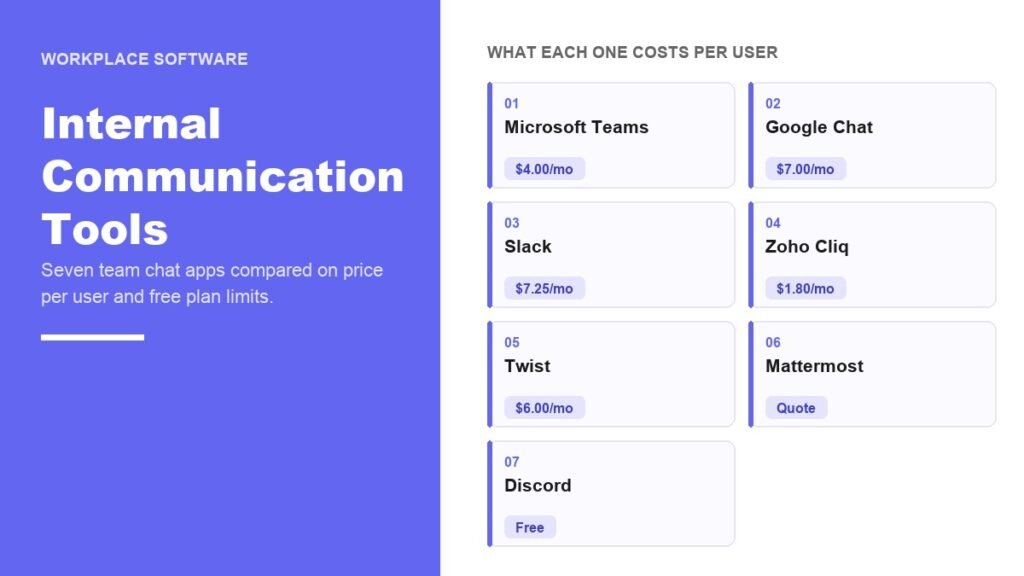
Internal Communication Tools: 7 Team Chat Apps Compared
Seven internal communication tools compared on price per user and free plan limits, starting with whether your existing subscription already includes one.
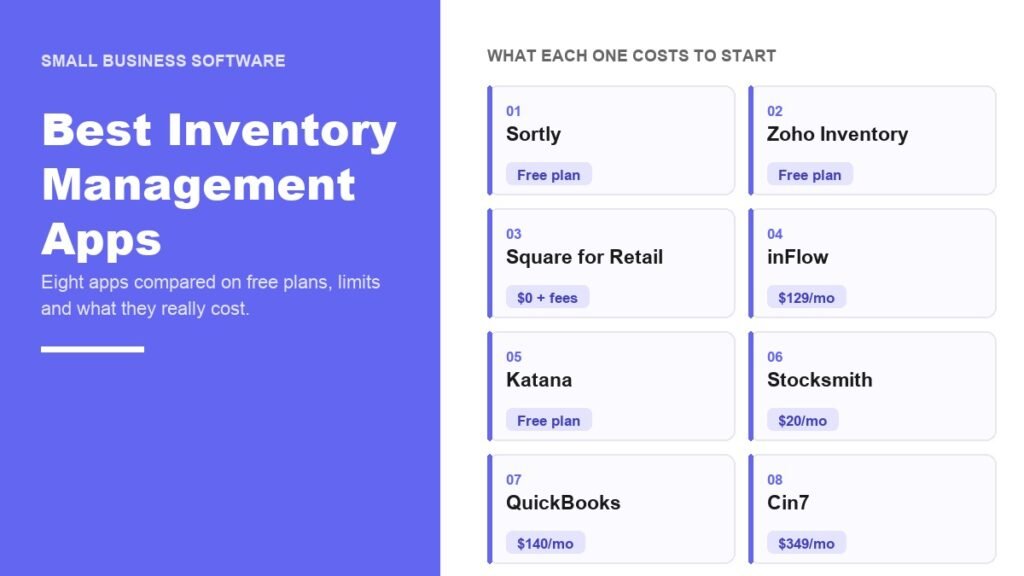
Best Inventory Management Apps: 8 Compared for Small Business
Eight inventory apps compared on free plans, item and order caps, and what each one costs once add-ons and per location charges are included.
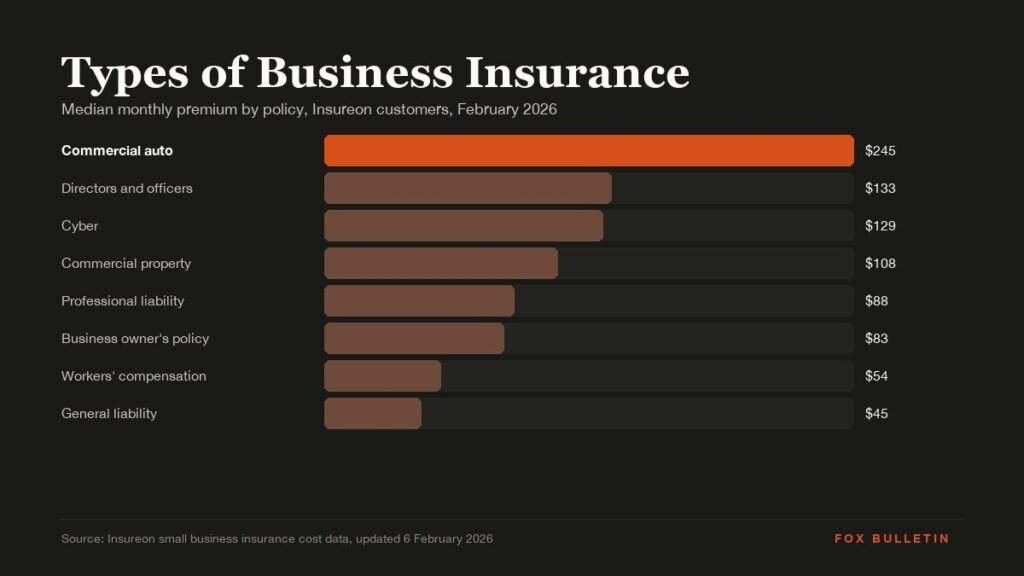
Types of Business Insurance: What Each Policy Covers and Who Must Carry It
General liability, professional liability, workers' compensation, property, BOP, cyber, commercial auto, product liability and D&O: what each covers, when the law requires it, and what small firms pay.