

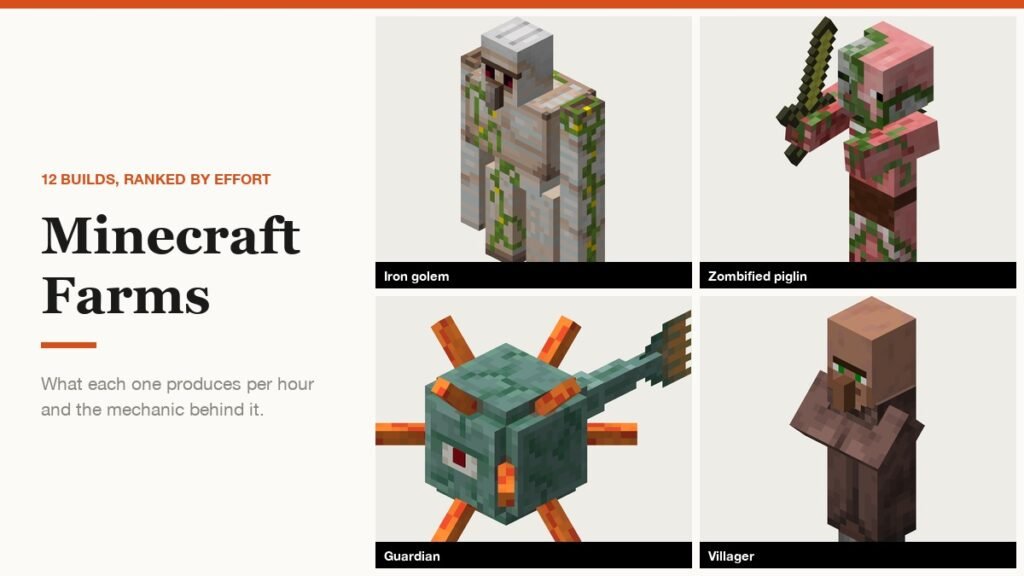
Minecraft farms fall into twelve working types, and the sensible order to build them runs from crops and sugar cane, which take an afternoon, to guardian, enderman and raid farms, which can take a whole weekend. Each one exploits a single game rule, and knowing the rule tells you what the farm can and cannot produce.
The numbers here are for Java Edition 26.3 “Wilderness Bound”, released 15 September 2026, and for Bedrock 26.60, released 27 October 2026, which has taken hotfixes up to 26.66 as of 18 November. Most of what you read about farms predates the 1.18 light change, so a few of the rules below are not the ones older guides give.
Minecraft Farms Ranked by Output for Build Effort
The ranking is a judgement of how much a farm gives back for the hours it costs to build. Rank 1 pays off almost at once, and rank 12 repays a large build only if you actually need what it makes.
| Rank | Farm | What it gives | Mechanic it exploits | Build effort | Works on Bedrock |
|---|---|---|---|---|---|
| 1 | Crop farm | Wheat, carrots, potatoes, beetroot | Hydrated farmland, one growth stage every 5 to 35 minutes on average | Easy | Yes |
| 2 | Sugar cane farm | Sugar cane for paper and books | One block per plant roughly every 18 minutes, harvested by observers and pistons | Easy to medium | Yes, but flying machines are limited on some platforms |
| 3 | Bamboo farm | Bamboo for scaffolding and fuel | One growth per plant about every 200 seconds, cut by pistons | Easy | Yes |
| 4 | Wool farm | 1 to 3 wool per shear | Sheep regrow wool by eating grass, and a dispenser with shears does the cutting | Easy | Yes |
| 5 | Honey and bee farm | Honey bottles and honeycomb | Up to 3 bees per hive, honey level 0 to 5, shears from a dispenser | Easy to medium | Yes |
| 6 | Villager trading hall | Cheaper trades and enchanted gear | Reputation and demand change prices, and a cure discount applies once per villager | Medium | Yes |
| 7 | Mob spawner XP farm | Mob drops and experience | A spawner makes 4 mobs per cycle with a delay of 200 to 799 ticks | Medium, needs a dungeon | Yes |
| 8 | Iron golem farm | Iron ingots (3 to 5 per golem) and poppies | Panicking or gossiping villagers summon golems inside a 17x13x17 box | Medium to high | Yes, different rules |
| 9 | Gold farm | Gold nuggets, ingots and experience | Zombified piglins spawn on Nether roof platforms and fall to their deaths | High | Yes |
| 10 | Guardian XP farm | Prismarine, shards, fish and experience | Ocean monument spawns, with water roofed so guardians spawn at full strength | Very high | Yes, a monument is required |
| 11 | Enderman XP farm | Ender pearls and 5 XP per kill | End platform 128 blocks clear of spawnable ground, with pads 43 or more blocks up | High | Yes |
| 12 | Raid farm | Emeralds, totems and saddles | A Raid Omen starts a raid, and the raid engine collects the drops | Very high | Yes, with different drops |
The villager trading hall sits in the table as a semi-automatic farm. You do not collect items from it, you collect discounts, but it is built and maintained in the same way as the others, with input, storage cells and an output.
The Three Spawning Rules Every Farm Depends On
Three rules decide whether any mob farm works. Ignoring them is the most common reason a finished build produces nothing.
- Block light must be 0. In Java since 1.18, released 30 November 2021, hostile mobs in the Overworld need a block light level of 0, and sky light of 7 or less. A single torch inside a spawning room now stops it.
- Nothing spawns within 24 blocks of you. Natural spawning happens in a sphere around the player, and the inner 24 blocks of that sphere are excluded.
- Nothing spawns, or survives, beyond 128 blocks. In Java, mobs spawn only inside a 128-block sphere, and a mob outside it despawns at once. Fish use 64 blocks.
Put together, those rules mean mobs appear in the shell between 24 and 128 blocks from you. Your farm has to be the only dark, spawnable space inside that shell, or the mob cap fills with mobs from caves and surface patches that your kill chamber never sees.
Guides often muddle the two distances and say mobs despawn at 24 blocks. They do not. Between 32 and 128 blocks a mob that has been idle for 30 seconds has a 1 in 800 chance per tick of despawning, and beyond 128 it goes immediately.
What Changed in 1.18: Block Light, Not Sky Light
The old advice was that light level 7 is safe. Java 1.18 did not turn that into a blanket “light 0” rule. Only block light changed, so it has to be 0, while sky light still has to be 7 or less, which on the open surface is true for 8 of the 20 minutes in a day cycle.
Bedrock reached the same rule as an experimental beta in 1.17.30, and it applied in ordinary play from 1.18.0. On Bedrock most monsters cannot spawn if sky light is 7 or more, or if block light is above 0.
Not every mob uses the same threshold. Zombified piglins in the Nether use a light threshold of 11, not 7, and witches need light level 0. Passive animals want the opposite, with light 9 or higher in Java and 7 or higher in Bedrock.
Spawners follow a threshold of their own. Since 1.18, zombie, skeleton, spider and cave spider spawners need light 12 to be disabled, which is higher than the 0 that ordinary hostile spawning asks for.
Mob Caps Set the Ceiling for Hostile Farms
Java caps natural hostile mobs at 70 for a single player. Land animals get 10, bats 15 and fish 20. Villagers and golems are in a category with no cap at all, which is why village farms are never limited this way.
Bedrock uses a global cap of 200, plus caps per region of 9×9 chunks. A surface region holds 8 monsters and a cave region 16, and creepers are capped at 5 on the surface. Mobs sitting in minecarts or boats are persistent, so they do not count against any of these limits.
Starter Farms: Crops, Sugar Cane, Bamboo and Wool
These four need little more than water, a few hoppers and some observers. They are the ones to build first because they run without any spawning rules at all.
- Crops. Wheat, carrots, potatoes and beetroot take between 5 minutes per stage on ideal farmland and 35 minutes in the worst case. Bees that pollinate a crop add an extra stage. Wheat seeds drop from grass 12.5% of the time.
- Sugar cane. A plant grows one block every 16 random ticks, which averages about one block every 18 minutes. Output scales with how many plants you place, and the plants need water beside them. Observer and piston designs come in four types: stationary, flying, sim-tick and zero-tick.
- Bamboo. One growth per plant takes about 200 seconds. Just 500 plants in an automatic farm make more than a single hopper can move, which is 2.5 items per second. That works out to a ceiling of roughly 9,000 items an hour per hopper, a figure derived from the hopper speed rather than a measured farm output.
- Wool. Shearing a sheep gives 1 to 3 wool, and neither Fortune nor Looting changes it. A sheep regrows wool at 1 in 1,000 per tick when it eats grass, so 63% are ready after 50 seconds and over 90% after 2 minutes.
If you are short on time, build the bamboo farm before the cane farm. It grows faster, and its output reaches the hopper limit. Check the biomes page first if you are unsure where flat, grassy ground for the sheep pen is nearest.
Honey Farms and Trading Halls: Slow Farms That Repay

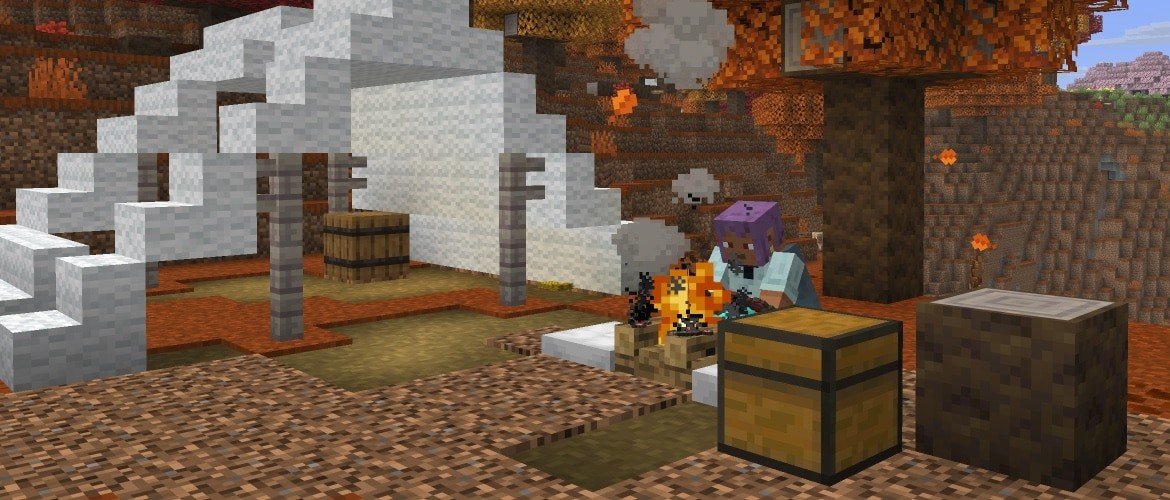
A beehive holds up to 3 bees, and nests that generate in the world start with 2 or 3. Bees stay inside for at least 2400 ticks, which is 2 minutes, and each bee carrying nectar that leaves raises the honey level by 1. At level 5 you shear the hive for honeycomb or use a glass bottle for honey. A campfire placed beneath the hive keeps the bees calm while you harvest.
A trading hall is the other slow payoff. Villagers restock twice per day, and each purchase raises that trade’s demand by 2, which pushes the price up. The Hero of the Village effect gives 30% off, plus 6.25% for each level above the first, reaching 55% at level V.
Curing a zombie villager gives a large discount, and this is where older advice is wrong. Since Java 1.20.2 and Bedrock 1.20.30, the big discount applies only the first time a villager is cured, so curing the same villager again for stacked discounts no longer works. Discounts earned before the change were kept. Cure with a Weakness potion and a golden apple, which takes 5 minutes, and see our list of villager trades for what to buy first.
Iron Golem Farms: Java and Bedrock Follow Different Rules
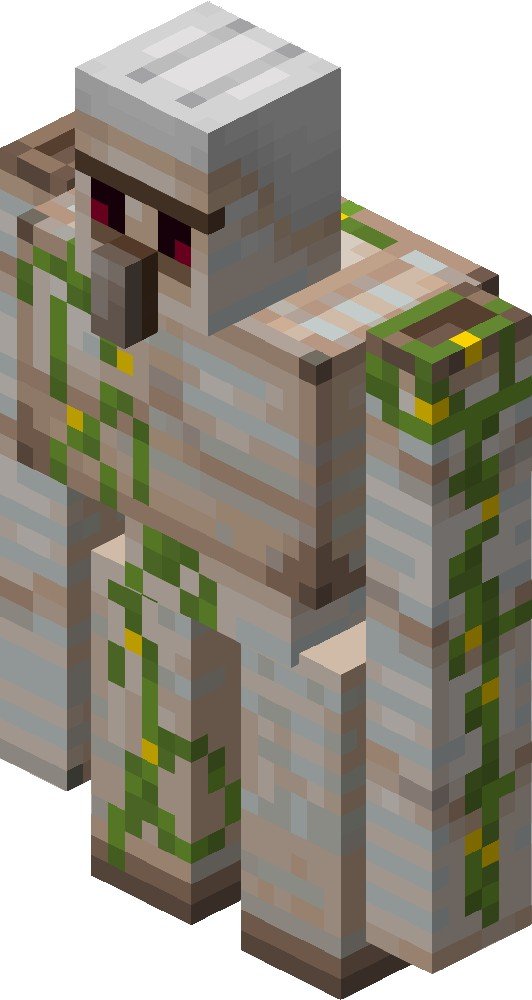
Java iron golem farms do not need beds. A villager summons a golem when it has slept within the last 20 minutes, when at least 3 villagers within 10 blocks are panicking or at least 5 are gossiping, when no golem has been detected within 16 blocks in the last 30 seconds, and when the game finds a valid spot inside a 17x13x17 box centred on the villager. Villagers do not need professions or job sites, and a zombie nearby is the dependable way to make them panic.
Bedrock is the edition that wants 20 beds and 10 villagers. It also needs 75% of villagers to have worked in the last 24,000 ticks, 100% linked to a bed, and it makes one spawn attempt at 1 in 700 per tick, about one every 35 seconds. A village adds one extra golem per additional 10 villagers.
Each golem drops 3 to 5 iron ingots, averaging 4, and Looting does not change it. It also drops 0 to 2 poppies. Bedrock gives a ceiling of 404 ingots an hour in theory and up to 200 an hour for a basic survival build. No equivalent figure exists for Java, so none is given here. On Bedrock, killing a golem lowers village popularity by 10.
Spawner, Guardian and Enderman XP Farms
A monster spawner activates when a player is within 16 blocks, and it spawns into a box measuring 9x3x9. It tries 4 mobs per cycle with a delay of 200 to 799 ticks, so the average gap is about 25 seconds. That works out to roughly 575 mobs an hour at best, derived from the mechanics and only reached if your kill chamber keeps fewer than 6 of the mob within the nearby 9x9x9 volume, since the spawner stops when it does. Breaking the spawner gives 15 to 43 experience.
The guardian farm is the famous one. A fully optimised build can reach up to 180,000 experience an hour, but that figure is the rate a player can absorb orbs, 10 per second at 5 XP each. It is a ceiling for the player, not what the farm spawns. Water open to the sky makes guardians spawn weakened, so roof it.
Enderman farms live in the End. Build them at least 128 blocks from any spawnable block, put the spawning pads 43 or more blocks above the kill platform, and expect 5 experience per kill. A sculk catalyst can also turn mob deaths within 8 blocks into experience, but it only works in the deep dark, and the warden is the only renewable source of catalysts. Both need time to set up, so read our mobs list before you build anything near them.
Gold and Raid Farms: The Late-Game Builds
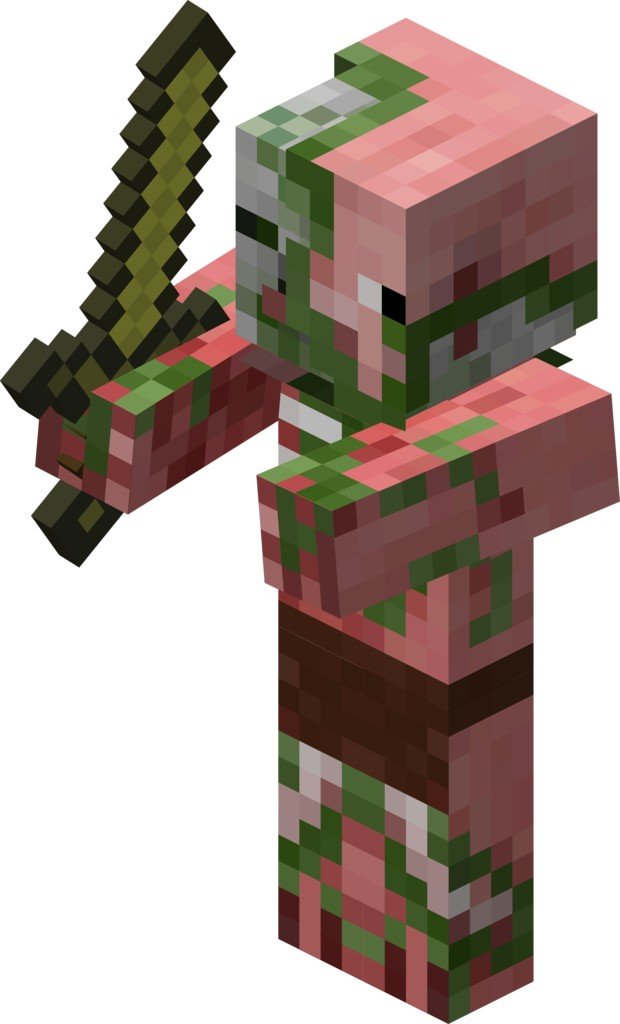
Zombified piglin farms use a light threshold of 11. They spawn naturally in Nether Wastes at a weight of 100 out of 168, which is 59.52% of that biome’s spawns, and in fortresses and crimson forests at much lower rates. Portal spawning is separate and independent of the mob cap, at 1 in 1,000 per random tick on Normal.
Each piglin drops 0 to 1 gold nuggets, averaging 0.5, or 2.00 with Looting III in Java. A gold ingot drops 2.5% of the time, rising to 5.5% with Looting III on a player kill. A three-platform design is documented at around 50,000 drops an hour with Looting III, and a 34-platform design at 1,600 gold blocks an hour.
Raid farms are the hardest build and the least certain. On Java, vindicators and evokers drop no emeralds unless a player kills them, and Bedrock adds special raid drops. Designs for 1.21 and later depend on the Raid Omen, which has a 30-second cycle, and they produce far less than the older ones. No reliable hourly rate is available, so none is printed here.
Where Java and Bedrock Farms Diverge
- Iron golems. Java uses panic and gossip with a 17x13x17 box. Bedrock uses 20 beds, 10 villagers and a 1 in 700 attempt.
- Mob caps. Java uses 70 per player. Bedrock uses a global 200 and regional caps.
- Spawn shell. Java uses 24 to 128 blocks. Bedrock uses 24 to 44 blocks at simulation distance 4, and 24 to 128 blocks at distance 6 or more, limited to about 96 horizontally.
- Villager prices. In Java, negative reputation can raise prices. In Bedrock it only cancels discounts.
- Piglin groups. Java fortress groups come in fours. Bedrock piglins spawn individually.
- Spawners. Bedrock weights mob placement differently and checks a 16x10x16 volume rather than 9x9x9.
The shell figures matter most if you play Bedrock. A low simulation distance shrinks the spawn shell to 24 to 44 blocks, and a farm that works at distance 6 can stop when the setting drops.
Frequently Asked Questions
Which Minecraft farm should you build first?
Build a crop farm or a bamboo farm. Both need only water, hoppers and a few observers, and neither depends on spawning rules. Bamboo collects faster, with one growth per plant about every 200 seconds.
Do Java iron golem farms need beds?
No. Java wants a villager that slept in the last 20 minutes, 3 panicking or 5 gossiping villagers within 10 blocks, and no golem within 16 blocks. Bedrock is the version that needs 20 beds and 10 villagers.
Did Minecraft change mob spawning from light 7 to light 0?
Only for block light. Since Java 1.18, block light must be 0 for most hostile mobs, and sky light still has to be 7 or less. Zombified piglins use 11 instead.
Can you cure a villager repeatedly for stacked discounts?
No. Since Java 1.20.2 and Bedrock 1.20.30, a villager gives the big discount only the first time it is cured. Existing stacked discounts from before that change were kept.
Related Articles

Get the Fox Bulletin briefing
The stories that matter, in your inbox. No spam, unsubscribe anytime.
Newsletter signup will be available soon.
Related stories

GTA 6 Radio Stations: All 23 With Hosts and Genres
All 23 GTA 6 radio stations in one table with genre and host, the two talk stations, the real names behind the DJs, and how The Vault Radio gets added to the wheel.

Roblox Limiteds: What RAP Means and 14 Items Priced
What a Roblox Limited is, how RAP differs from the cheapest listing, and a 14-item table of copies issued, original price and RAP, all as listed on 25 November 2026.

Roblox Avatar Ideas: 9 Styles Built Piece by Piece
Nine Roblox avatar looks built from named catalog items: Preppy, Goth, Y2K, Cottagecore, Emo, Softie, Cyberpunk, Fairycore and Minimalist, each with a total cost in Robux.