

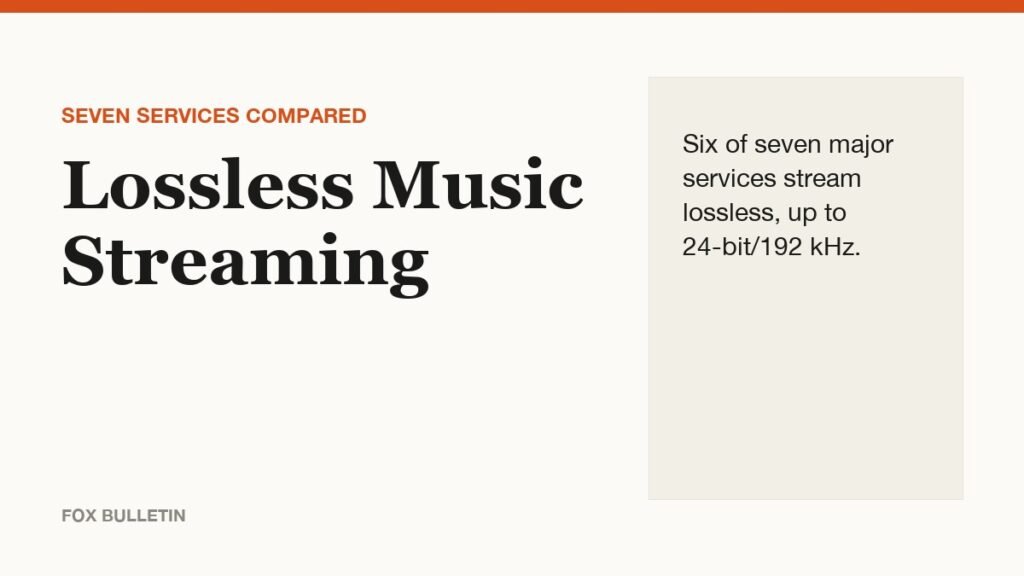
Six of the seven major music services offer lossless music streaming today: Spotify, Apple Music, Amazon Music, Tidal, Qobuz and Deezer. Their ceilings run from 24-bit/44.1 kHz at Spotify up to 24-bit/192 kHz at the rest, while YouTube Music’s quality settings top out at 256 kbps per its support documentation. Five of the six use FLAC, Apple uses its own ALAC format, and Amazon describes its HD and Ultra HD tiers as a lossless codec.
The figures below reflect each service’s published support and newsroom pages as of November 2026. The chart comes first and answers the question on its own. After it, each service gets a short section, then come plain-language explanations of bit depth and sample rate, the Bluetooth catch that affects almost every listener, and the gear that decides whether you can hear the top tier at all.
Lossless Quality at Seven Streaming Services, Compared in One Chart
| Service | Lossless format | Maximum quality | Tier placement |
|---|---|---|---|
| Spotify | FLAC | 24-bit/44.1 kHz | Included in Premium plans; not on Spotify Free |
| Apple Music | ALAC | 24-bit/192 kHz (Hi-Res Lossless) | Included with a subscription at no additional cost |
| Amazon Music | A lossless codec (not named on its pages) | 24-bit/192 kHz (Ultra HD) | A higher tier: Amazon Music Unlimited |
| Tidal | FLAC | 24-bit/192 kHz (Max setting) | Included in the Individual, Family and Student plans |
| Qobuz | FLAC | 24-bit/192 kHz | Included in the Studio plans and Sublime |
| Deezer | FLAC | 24-bit/192 kHz (HiFi) | Included for eligible paid subscribers at no additional cost |
| YouTube Music | None listed | 256 kbps AAC and Opus (High setting) | Quality settings are for Premium members |
Read the chart by two columns. If you want any lossless at all, six of the seven qualify. If you want the highest published figure, five services reach 24-bit/192 kHz, and Spotify stops at 24-bit/44.1 kHz because it does not stream sample rates above CD’s 44.1 kHz.
Lossless Music Streaming by Service, From Spotify to YouTube Music
Spotify: FLAC at 24-bit/44.1 kHz, Premium Only

Spotify streams tracks in up to 24-bit/44.1 kHz FLAC. The rollout started on 10 September 2025 in select markets and reached Premium users in more than 50 markets by 6 October 2025, with Australia, Germany, Japan, the Netherlands, Sweden, the UK and the US among the first. The quality ladder runs Low, Normal, High, Very High and Lossless, and Wi-Fi, cellular and download settings can be set separately.
Lossless is a Premium feature, and the US Premium page lists it under the Individual plan alongside Duo, Family and Student. It is not on Spotify Free, and no separate lossless add-on tier is listed. You switch it on by hand on each device under Settings and Privacy, then Media Quality. The full walkthrough is in our Spotify lossless guide, and the free tier’s limits are covered in what Spotify Free includes.
Apple Music: ALAC Up to 24-bit/192 kHz at No Extra Cost
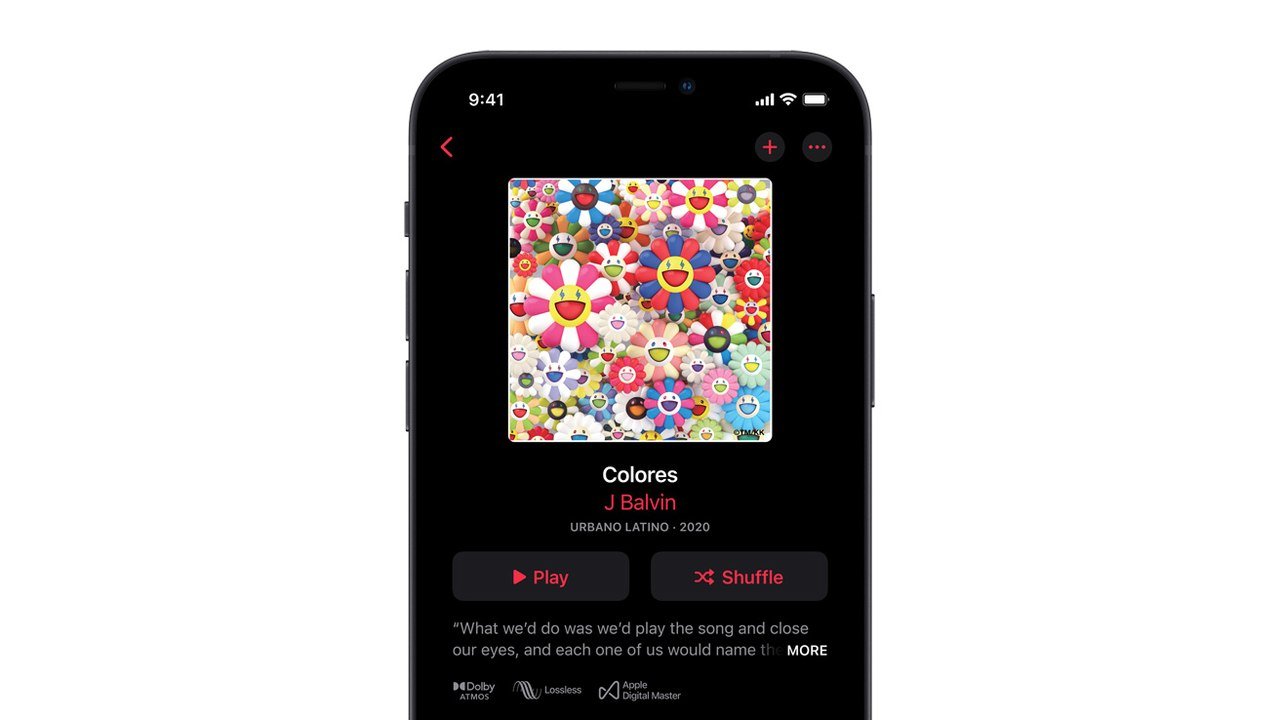
Apple Music encodes its lossless catalog in ALAC, from CD quality at 16-bit/44.1 kHz up to 24-bit/192 kHz. The setting has two levels: Lossless, which tops out at 24-bit/48 kHz, and Hi-Res Lossless, which reaches 24-bit/192 kHz. Apple announced both in May 2021 at no additional cost, with 75 million songs in Lossless at launch.
Subscribers must opt in, because lossless is off by default. Automix and Crossfade are unavailable while Hi-Res Lossless is on. On Apple TV, Hi-Res Lossless works only on the Apple TV 4K, the 3rd generation or later.
Amazon Music: HD and Ultra HD Within Amazon Music Unlimited
Amazon sells lossless as two named qualities. HD is 16-bit with a minimum of 44.1 kHz and averages 850 kbps, while Ultra HD is 24-bit from 44.1 up to 192 kHz and averages 3730 kbps. Amazon’s pages describe the codec only as a lossless codec used to deliver HD and Ultra HD audio.
Amazon Music Unlimited offers HD and Ultra HD, and Amazon Music Prime is described as a separate tier. Amazon’s pages put over 100 million songs in HD and over 7 million in Ultra HD, so the top tier covers a much smaller share of the catalog. Amazon’s FAQ page also says the Single Device Plan excludes HD, Ultra HD and spatial audio.
Tidal: HiRes FLAC Up to 24-bit/192 kHz, Chosen as a Setting
Per Tidal’s support documentation, the Max setting delivers lossless audio up to 24-bit/192 kHz as HiRes FLAC, and the High setting delivers FLAC at 16-bit/44.1 kHz. Low is AAC. HiRes FLAC is defined there as any FLAC file above 16-bit/44.1 kHz, and it streams from iOS, Android, desktop and the web.
Tidal’s pricing page lists lossless, HiRes FLAC and Dolby Atmos together in a single plan, for Individual and Family alike, so Low, High and Max are settings rather than paid tiers. You pick one separately for mobile data, Wi-Fi and downloads. Select Tidal partners support HiRes FLAC, and Chromecast defaults to High when a device lacks support.
Qobuz: FLAC Up to 24-bit/192 kHz Across Its Streaming Plans
Qobuz describes its Studio quality as lossless FLAC at 24-bit up to 192 kHz. Its catalogue holds FLAC at 16-bit/44.1 kHz and Hi-Res up to 24-bit/192 kHz, with over 185,000 Hi-Res albums available on Studio and Sublime.
The offers page lists Hi-Res in the Studio plans (Solo, Duo, Family and Student) and in Sublime, which adds discounts of up to 60% on Hi-Res purchases. No cheaper lossless-only tier appears there. The top quality you hear depends on the subscription and on the masters labels supply, and the Hi-Res option has to be selected in the app settings.
Deezer: HiFi Moved to 24-bit/192 kHz on 14 October 2026

Deezer upgraded HiFi to lossless FLAC up to 24-bit/192 kHz on 14 October 2026, at no additional cost. Before that, its HiFi tier was generally described as CD quality, 16-bit/44.1 kHz. The upgrade reaches eligible paid subscribers, subject to market, track and device availability.
Deezer’s support page lists Premium, Duo, Family and Student among its plans, with Free separate. The maximum varies by track, subscription, country, app version and device, and Hi-Fi streaming needs a minimum of 5 Mb/s. Supported devices include the desktop app, the web player, iOS and Android, selected TVs, game consoles and connected sound systems.
YouTube Music: Quality Settings Top Out at 256 kbps
YouTube Music’s quality settings top out at 256 kbps per its support documentation. Low is up to 48 kbps, Normal is up to 128 kbps and is the default, and High is up to 256 kbps, with an Always High option at 256 kbps. The codecs listed are AAC and Opus.
Premium members can choose the bitrate for streaming and downloads. The page lists no lossless or hi-res option, which is why this service sits at the bottom of the chart.
What Bit Depth and Sample Rate Mean in Lossless Audio
Lossless means the stream is compressed without discarding audio data, the way a ZIP file shrinks without changing its contents. FLAC and ALAC do this, while AAC and Opus, the formats at YouTube Music’s top setting, are lossy and remove detail to save bandwidth. The size of the gap shows in Amazon’s own averages: 850 kbps for HD and 3730 kbps for Ultra HD, against 256 kbps at YouTube Music’s High setting.
Two numbers describe how finely the sound is captured. Bit depth is how many steps of loudness each sample can record, and sample rate is how many samples are taken each second. CD quality is 16-bit at 44.1 kHz. Hi-res means above that, and Tidal’s support page defines HiRes FLAC as any FLAC file above 16-bit/44.1 kHz.
That definition explains the chart. Spotify’s 24-bit/44.1 kHz has more bit depth than a CD but the same sample rate, so it has no 96 or 192 kHz hi-res. Apple’s two levels make the same split: Lossless tops out at 24-bit/48 kHz, and Hi-Res Lossless is the one that climbs to 192 kHz.
The Bluetooth Catch: Why Wireless Listening Is Not Lossless
Most lossless listening happens on a phone with wireless earbuds, and that is where the promise breaks. Spotify says Bluetooth does not provide enough bandwidth to transmit lossless audio, so the signal is compressed, and it recommends Wi-Fi with wired headphones or speakers, or Spotify Connect. Apple says Bluetooth connections are not lossless: AirPods 3 or earlier, AirPods Pro 1, AirPods Pro 2 (Lightning), the original AirPods Max and most Beats wireless models use the Apple AAC Bluetooth codec.
Qobuz says Bluetooth compresses sound and does not reproduce Hi-Res, and that aptX HD is better than standard Bluetooth but still not lossless. Amazon’s FAQ says most wireless headphones compress audio and cannot support HD, though some devices using Qualcomm aptX, aptX HD or Sony LDAC can reach HD and Ultra HD up to 24-bit/48 kHz. Apple’s support page of 28 September 2026 adds one exception: lossless works with AirPods Max (USB-C) and AirPods Max 2 over a USB-C cable, which means a wire.
Gear That Matters: DACs, Wired Connections and Supported Devices
A digital-to-analog converter, or DAC, turns the stream into the signal your headphones play. Apple says rates above 48 kHz need an external DAC on iPhone, iPad and most Macs, while the 14-inch and 16-inch MacBook Pro play natively up to 96 kHz. Amazon makes the same point: most iPhones and iPads since 2014 handle up to 24-bit/48 kHz without extra gear, and 96 or 192 kHz needs an external DAC.
Tidal’s support page suggests a wired or Wi-Fi connection and a DAC that supports lossless 24-bit/192 kHz. For Spotify, which stays at 44.1 kHz, the basics are enough: a wired connection or a Spotify Connect speaker, which includes many Sony, Bose, Samsung and Sennheiser models. Buying a DAC for a 24-bit/192 kHz service only pays off if the headphones can reproduce the extra detail, and our best headphones picks cover wired options.
What a Published Maximum Means and Where It Stops
Tidal’s entries carry no rollout dates and no Bluetooth statement, and no Bluetooth limit is listed for Deezer.
A published maximum is a ceiling, not a guarantee. Qobuz notes that the top quality depends on the subscription and on what labels supply, and Deezer says its maximum varies by track, country, app version and device. Amazon’s 24-bit/192 kHz applies to its Ultra HD catalog of over 7 million songs, not to the 100 million in HD. Amazon’s Ultra HD rates are given as 44.1 to 192 kHz on one page and 48 kHz with 96 and 192 kHz optional on another, so the page uses the common ceiling of 24-bit/192 kHz.
How to Choose a Service for Lossless Listening
- Start with your headphones. If you listen over Bluetooth, none of the services delivers lossless to the earbuds, so the choice rests on catalog and apps.
- Check the ceiling you can use. Without an external DAC, 24-bit/48 kHz is the practical limit on a phone, which makes Spotify’s 44.1 kHz cap less of a handicap.
- Look at the tier. Apple, Tidal and Deezer place lossless inside the plan you already pay for, while Amazon puts it in Unlimited and Spotify in Premium.
- Switch it on. Spotify, Apple and Qobuz all require you to select the quality in settings, and Tidal’s Low, High and Max are settings too.
Frequently Asked Questions
Does Spotify have lossless?
Yes. Spotify streams FLAC up to 24-bit/44.1 kHz to Premium users, with the rollout starting on 10 September 2025 and reaching more than 50 markets by 6 October 2025. You must enable it in Media Quality on each device.
Does lossless cost extra on Apple Music?
No. Apple announced Lossless and Spatial Audio at no additional cost in May 2021. Lossless tops out at 24-bit/48 kHz, and Hi-Res Lossless reaches 24-bit/192 kHz.
Which services stream 24-bit/192 kHz?
Apple Music, Amazon Music Ultra HD, Tidal at the Max setting, Qobuz and Deezer all list 24-bit/192 kHz. Deezer joined them on 14 October 2026, when it upgraded HiFi from 16-bit/44.1 kHz.
Can you get lossless over Bluetooth?
Not in the services’ own support notes. Spotify, Apple and Qobuz say Bluetooth is compressed or not lossless, and Amazon says aptX and LDAC devices can support up to 24-bit/48 kHz at best. A wired or USB-C connection is the dependable route.
Related Articles

Get the Fox Bulletin briefing
The stories that matter, in your inbox. No spam, unsubscribe anytime.
Newsletter signup will be available soon.
Related stories

Music Streaming Services by Country: Coverage Chart
Spotify states 184 markets and Deezer says 185+, while Apple Music is named under 172 of the 175 countries and regions on Apple's page. This reference sets six services side by side with their counts, notable gaps and regional strengths, adds a 12-country matrix, and explains why China, India and Africa split the field.
Morse Code: The Full Chart, Timing and How It Works
Every letter, digit, punctuation mark and procedural signal in international Morse code, with the timing rules that govern them and the places the code is still working.
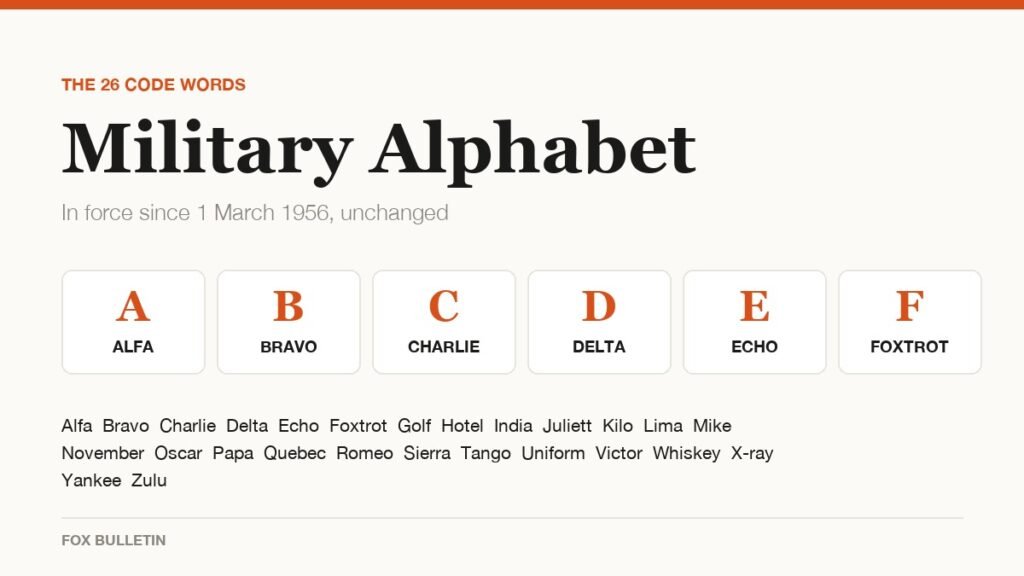
Military Alphabet: All 26 Letters, Spelled and Pronounced
Alfa, Bravo, Charlie: the military alphabet is a set of 26 code words that keep letters apart over a noisy radio. Here is every letter, how to say it, and the history behind the list.