

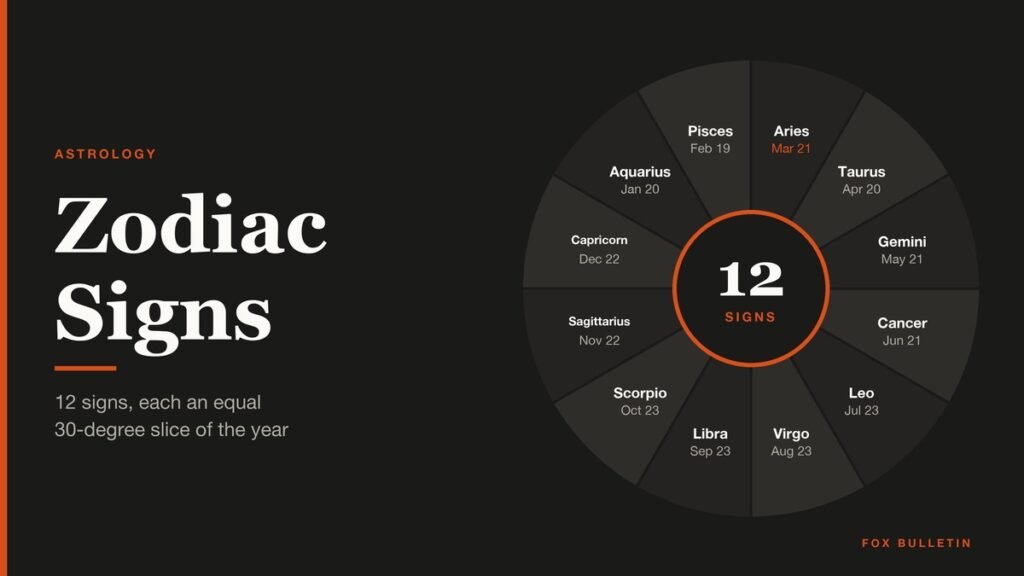
The 12 zodiac signs are Aries, Taurus, Gemini, Cancer, Leo, Virgo, Libra, Scorpio, Sagittarius, Capricorn, Aquarius and Pisces. Each covers roughly one month of the year and takes its name from a constellation on the Sun’s yearly path, a system Babylonian astronomers laid out about 2,500 years ago.
Your sign is set by your birthday, and astrologers attach an element, a modality, a ruling planet and a set of personality traits to each one. This guide lists all twelve in 2026 order with their dates and meanings, shows the real star chart behind every sign, and explains why the Sun is no longer in the constellations the dates promise, and where the so-called 13th sign fits in.
Zodiac Signs in Order: Dates, Symbols and Rulers for All 12
Dates below are the standard tropical zodiac ranges. The Sun changes signs at a slightly different moment each year, so a birthday on the first or last day of a range can fall either side depending on the year and the time of birth.
| # | Sign | Dates | Symbol | Element | Modality | Ruling planet |
|---|---|---|---|---|---|---|
| 1 | Aries | March 21 to April 19 | The Ram | Fire | Cardinal | Mars |
| 2 | Taurus | April 20 to May 20 | The Bull | Earth | Fixed | Venus |
| 3 | Gemini | May 21 to June 20 | The Twins | Air | Mutable | Mercury |
| 4 | Cancer | June 21 to July 22 | The Crab | Water | Cardinal | Moon |
| 5 | Leo | July 23 to August 22 | The Lion | Fire | Fixed | Sun |
| 6 | Virgo | August 23 to September 22 | The Maiden | Earth | Mutable | Mercury |
| 7 | Libra | September 23 to October 22 | The Scales | Air | Cardinal | Venus |
| 8 | Scorpio | October 23 to November 21 | The Scorpion | Water | Fixed | Mars (modern: Pluto) |
| 9 | Sagittarius | November 22 to December 21 | The Archer | Fire | Mutable | Jupiter |
| 10 | Capricorn | December 22 to January 19 | The Sea Goat | Earth | Cardinal | Saturn |
| 11 | Aquarius | January 20 to February 18 | The Water Bearer | Air | Fixed | Saturn (modern: Uranus) |
| 12 | Pisces | February 19 to March 20 | The Two Fish | Water | Mutable | Jupiter (modern: Neptune) |
The 12 Zodiac Signs and the Constellations Behind Them
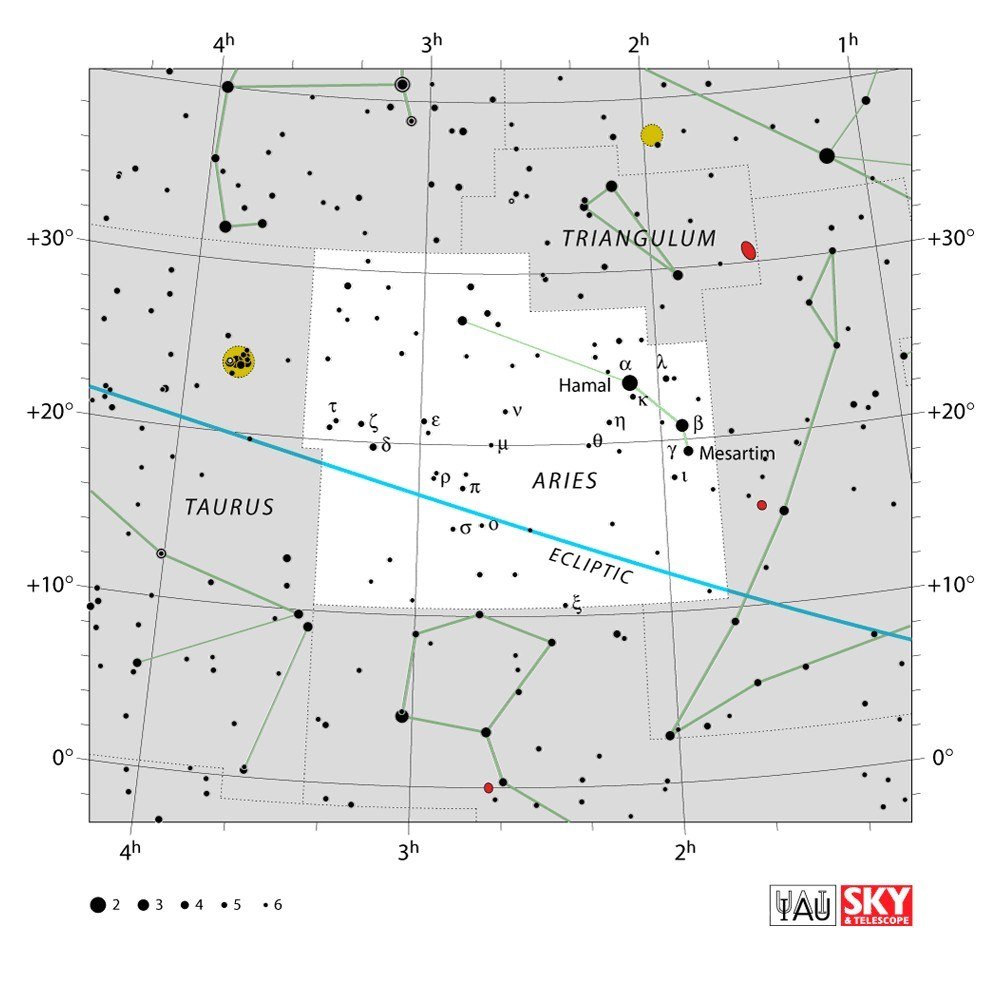
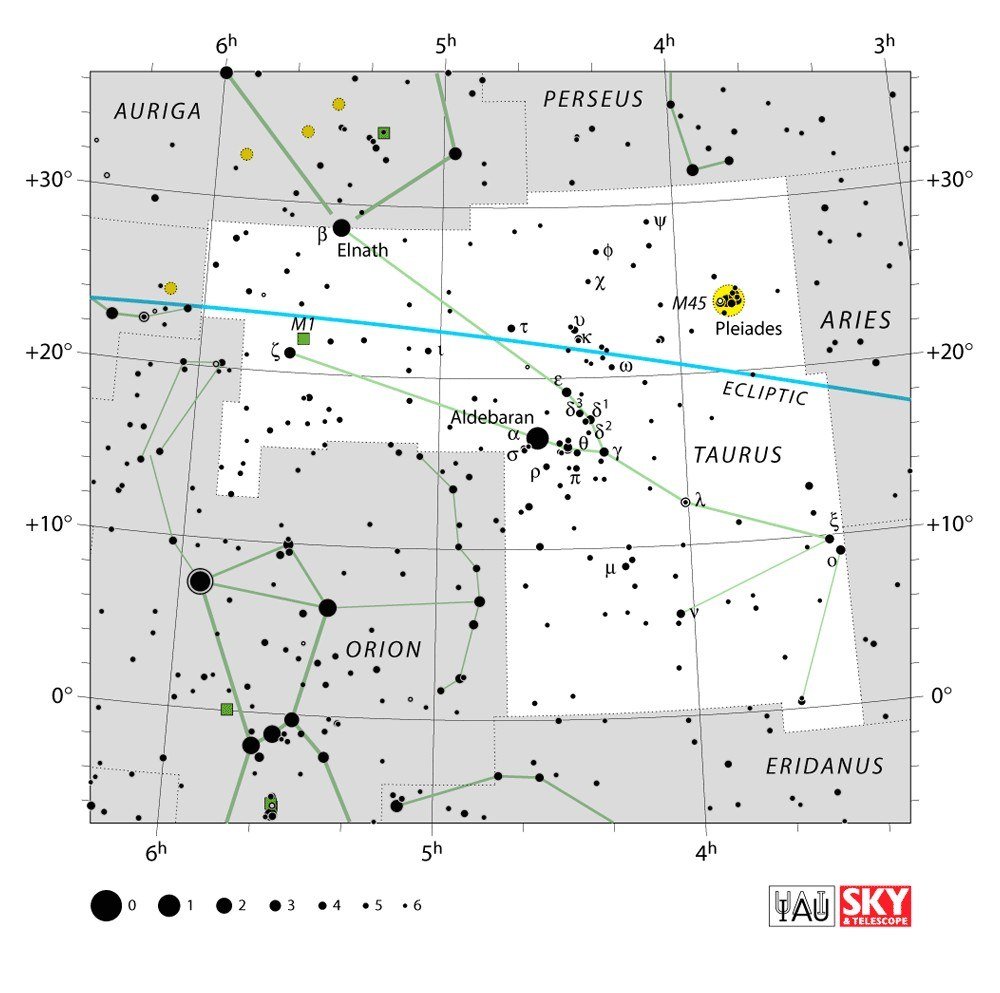
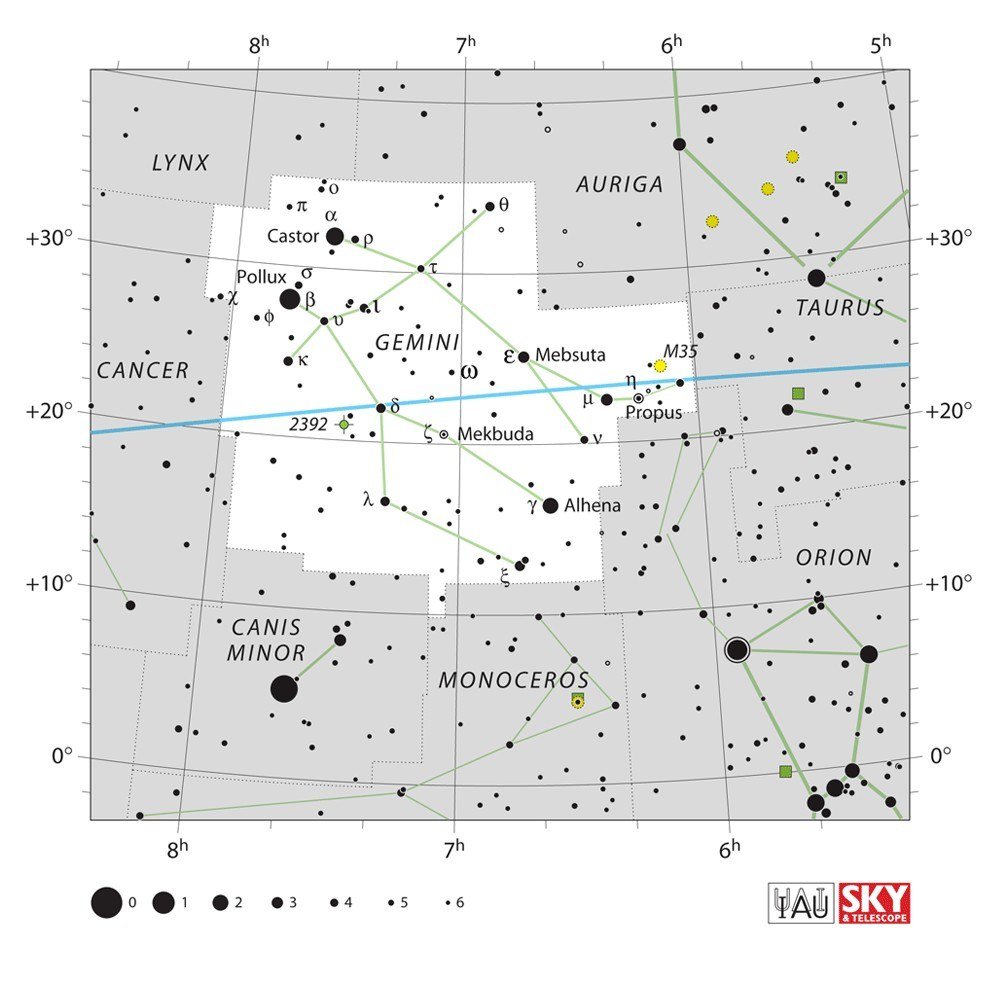
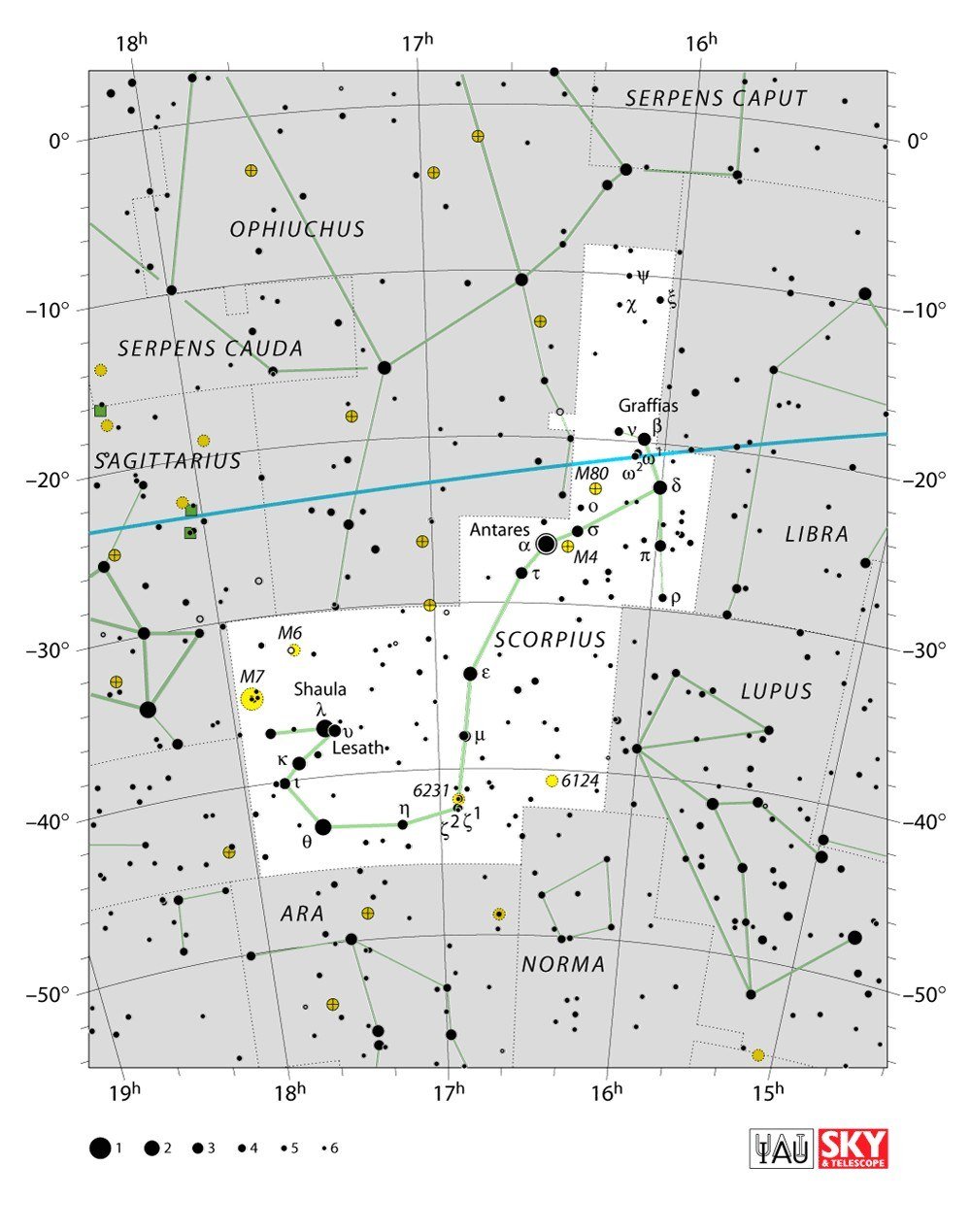
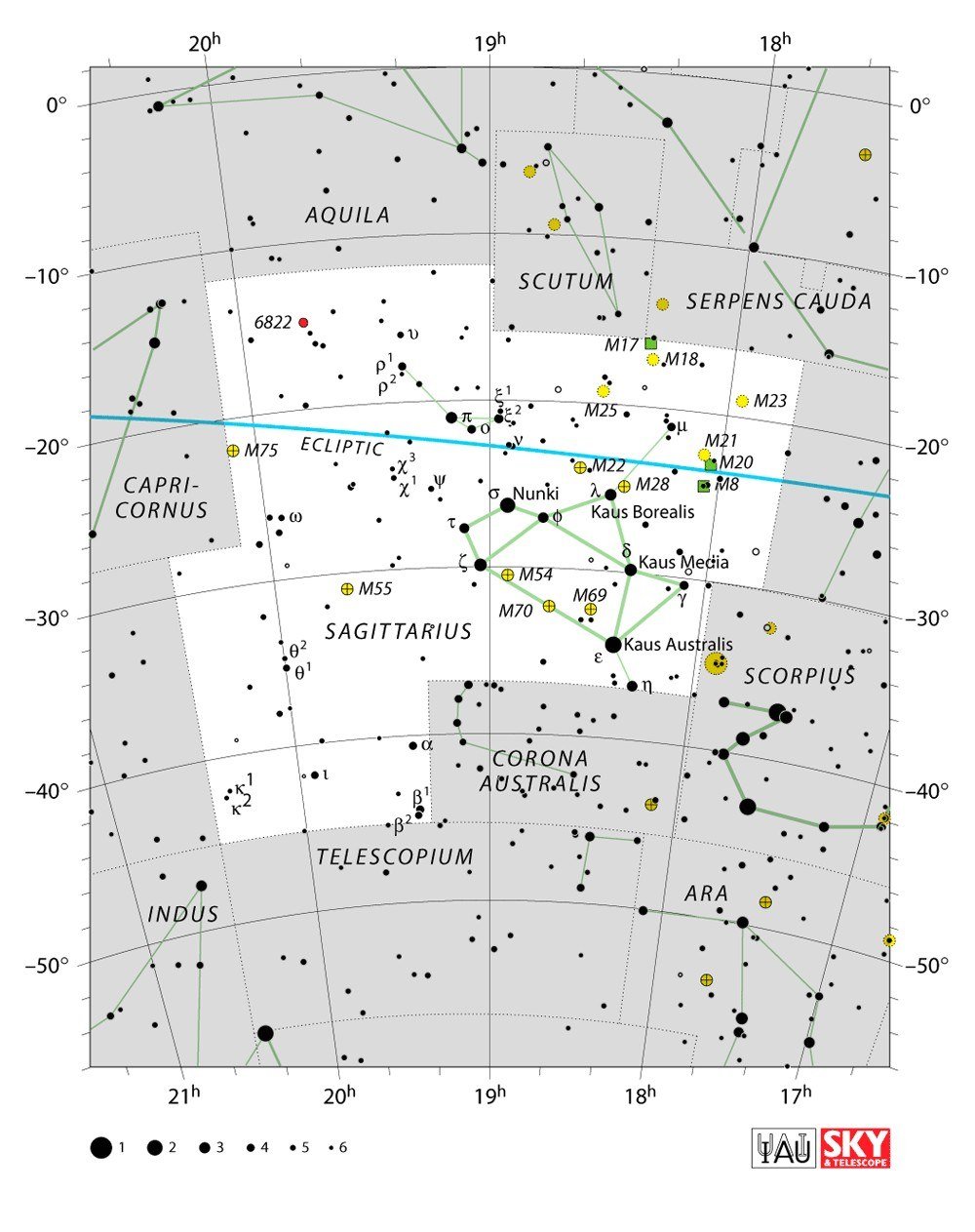
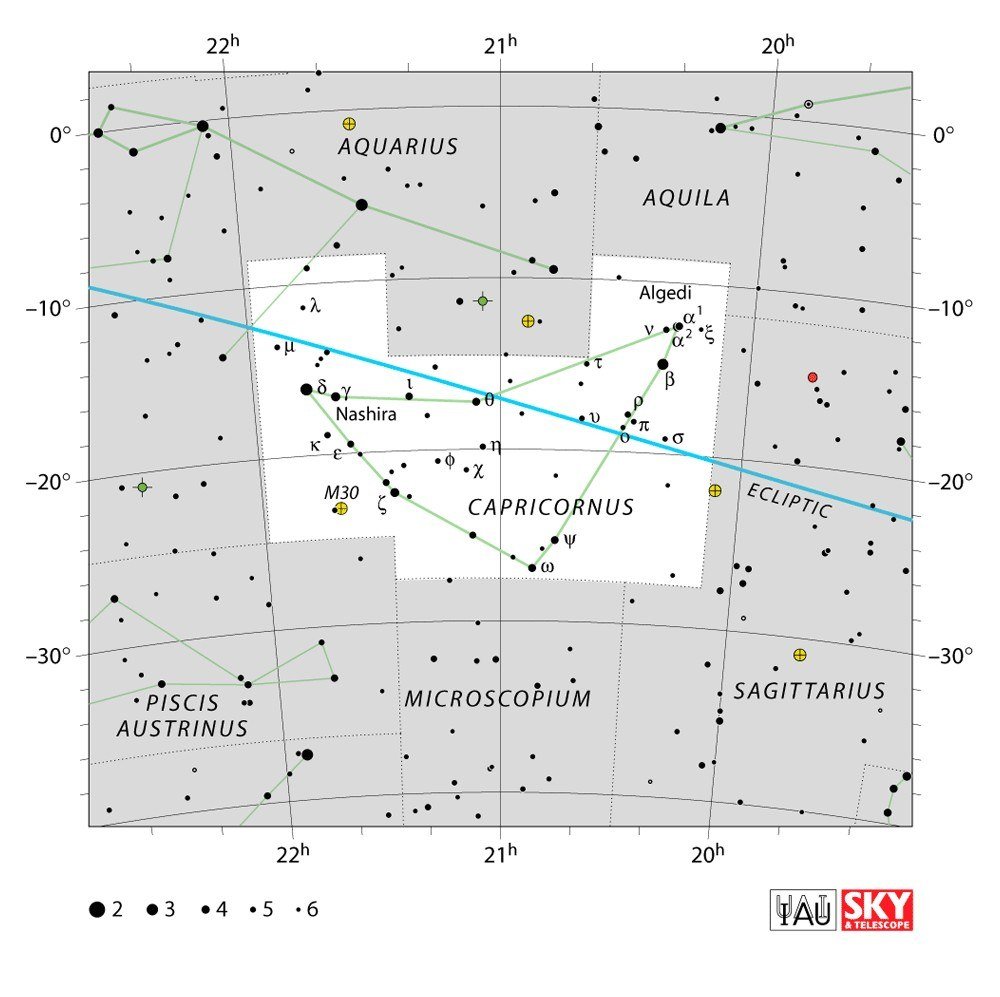
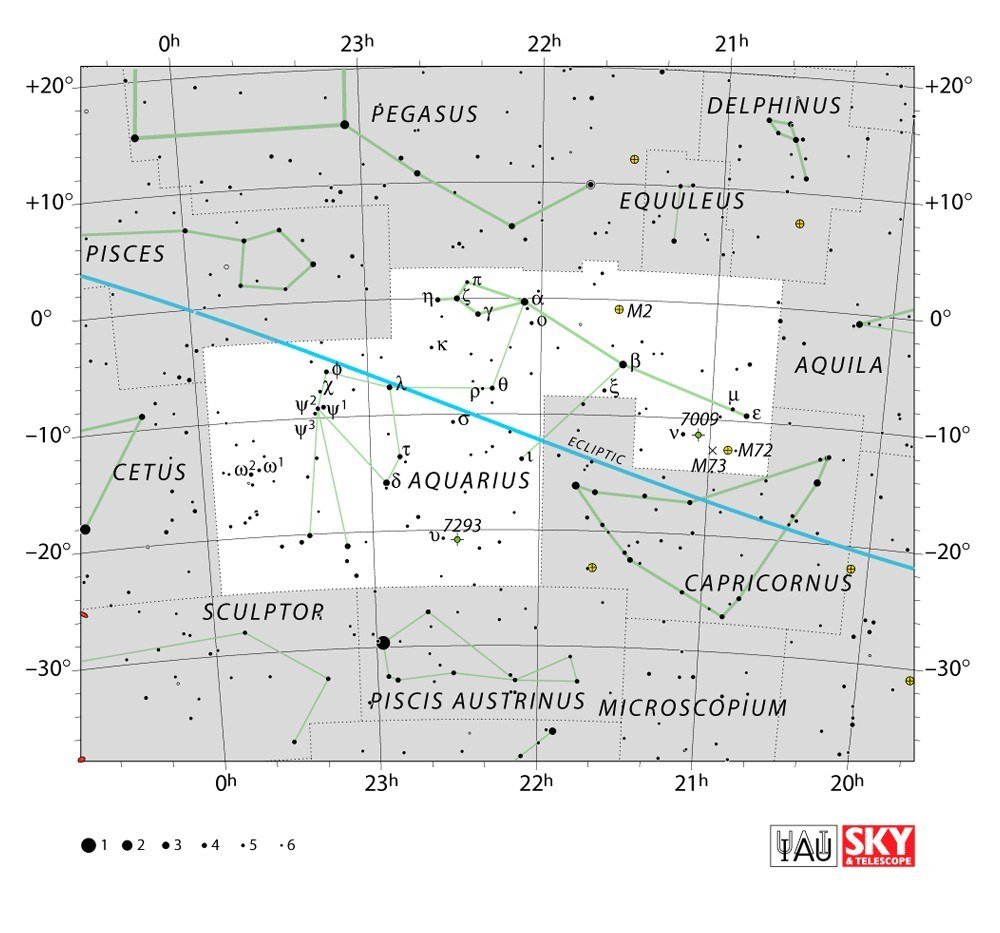
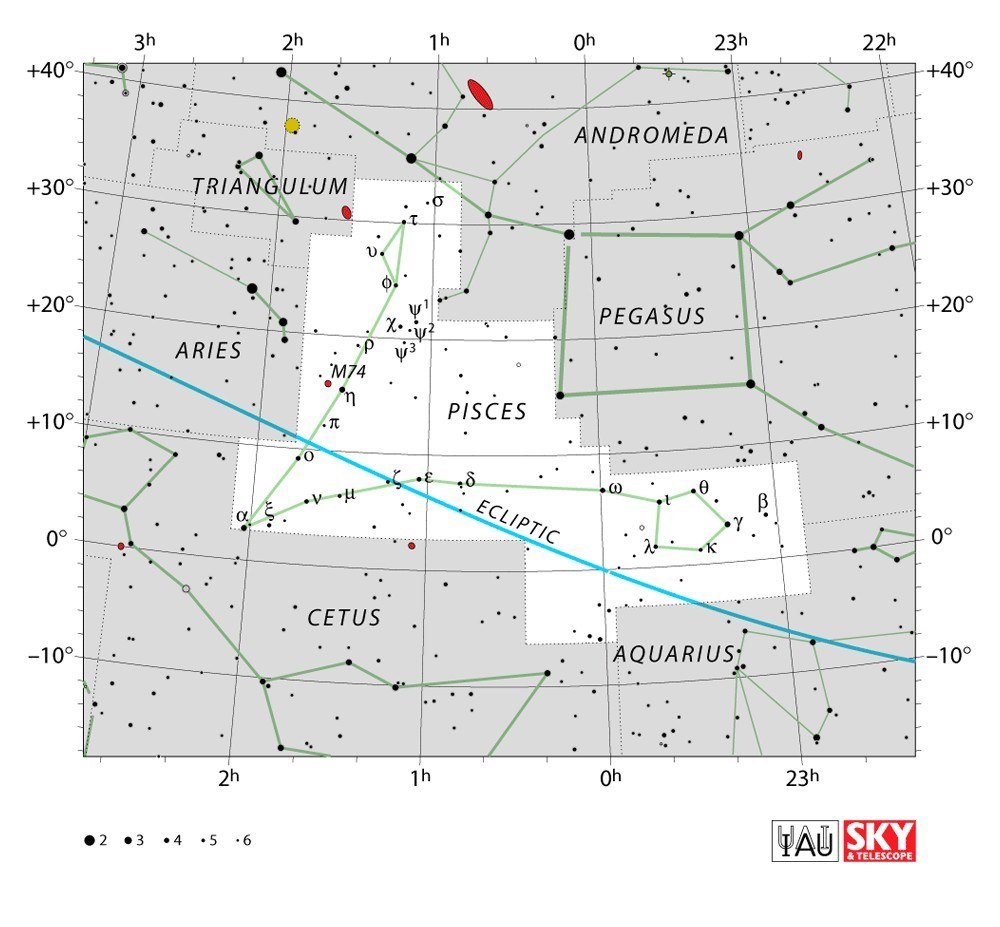
Each sign below includes the official chart of its namesake constellation, drawn for the International Astronomical Union’s 88 constellations. The white area is the constellation as the IAU defines it, and the blue line is the ecliptic, the path the Sun appears to follow through the year. Personality traits are astrological tradition, not measured findings.
1. Aries (March 21 to April 19): The Ram
Element: Fire | Modality: Cardinal | Ruler: Mars
Aries opens the astrological year, because the tropical zodiac starts its first 30-degree slice at the March equinox. Astrologers call it a cardinal fire sign ruled by Mars and describe its people as eager, dynamic, quick and competitive, as well as courageous and impulsive.
The constellation is small and plain. Its brightest star, Hamal, is an orange giant 66 light-years away at magnitude 2.0, and the IAU uses it to explain star naming: Hamal is Alpha Arietis, the alpha of Aries. In Babylonian times the figure was a “Hired Man,” later reimagined as the ram he tended.
2. Taurus (April 20 to May 20): The Bull
Element: Earth | Modality: Fixed | Ruler: Venus
Taurus is a fixed earth sign ruled by Venus, tied in astrology to the second house of money and value. The usual description is strong, dependable, sensual and creative, and it is also called reliable, practical and stubborn.
Few constellations carry more history. Ancient Sumerians saw the Bull of Heaven slain by Gilgamesh, and the Greeks saw Zeus disguised as a white bull. The figure holds orange Aldebaran, the eye of the bull, plus two famous star clusters: the Pleiades and the Hyades, the closest open cluster to Earth.
3. Gemini (May 21 to June 20): The Twins
Element: Air | Modality: Mutable | Ruler: Mercury
Gemini is a mutable air sign ruled by Mercury and linked to communication, siblings and short trips. Astrologers describe it as versatile, expressive, curious and kind, and also quick-witted and inconsistent. In some years Gemini runs through June 21.
The Twins are one of the Babylonian signs still in use today. The Greeks named its two bright stars after the brothers Castor and Pollux, though Pollux is actually brighter, at magnitude 1.14 and 34 light-years away. Gemini is also the source of the Geminid meteor shower every December.
4. Cancer (June 21 to July 22): The Crab
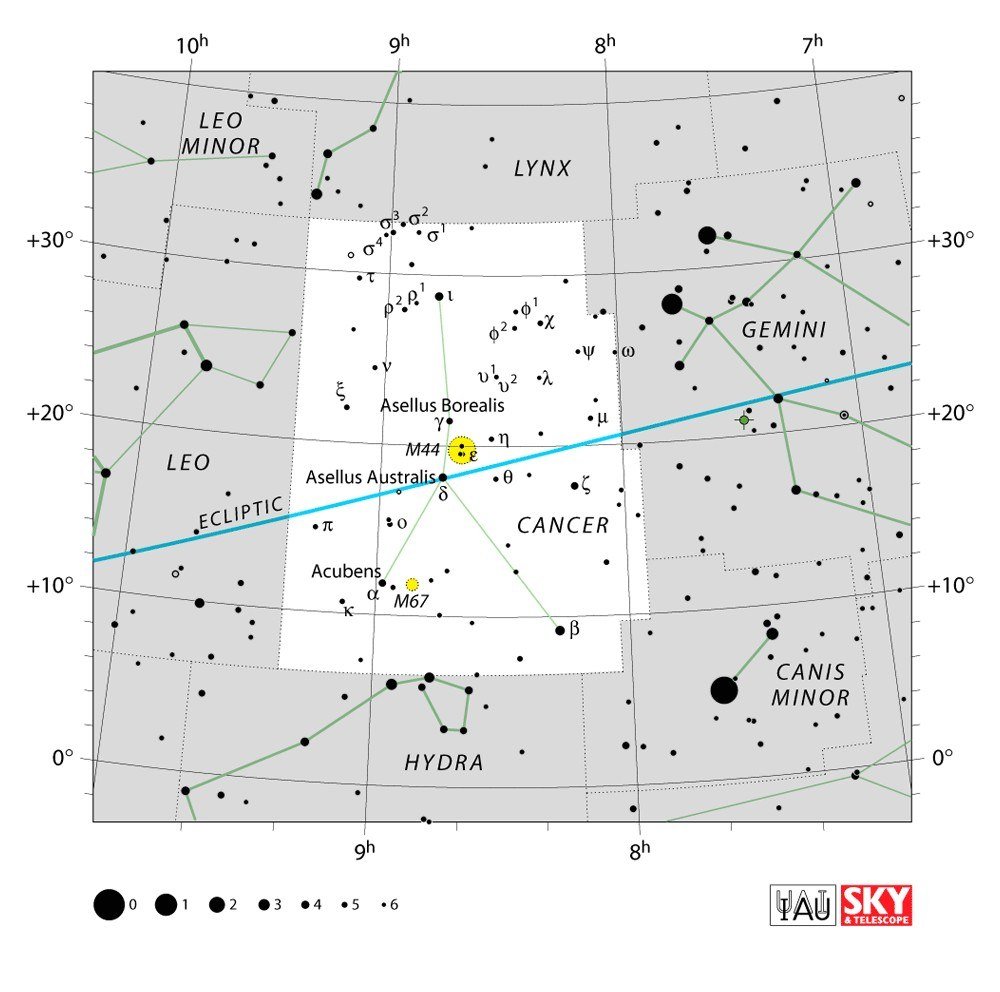
Element: Water | Modality: Cardinal | Ruler: Moon
Cancer is a cardinal water sign ruled by the Moon and associated with home and family. The traits astrologers assign are intuitive, sentimental, compassionate and protective, with a reputation for moodiness. Its start date sits on the June solstice, which falls on June 21 or June 22 depending on the year.
It is the faintest of the twelve: its brightest star shines at only magnitude 3.76. The best sight is the Beehive Cluster, M44, about 600 light-years away and visible to the naked eye from a dark site. In Greek myth the crab was crushed by Heracles and placed in the sky by Hera.
5. Leo (July 23 to August 22): The Lion
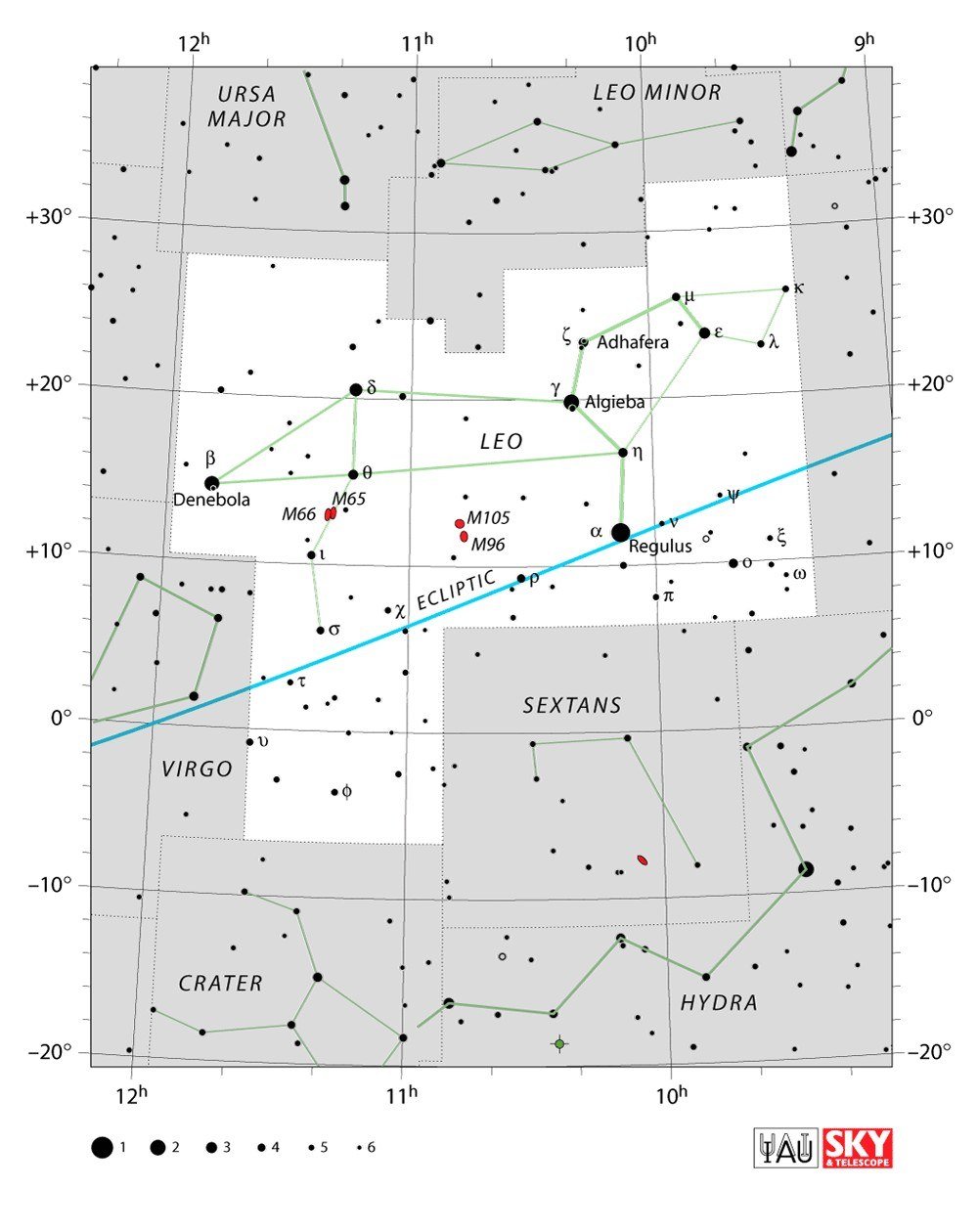
Element: Fire | Modality: Fixed | Ruler: Sun
Leo is a fixed fire sign and the only sign ruled by the Sun. Astrologers call Leos dramatic, outgoing, fiery and self-assured, as well as creative, generous and domineering.
Leo is one of the easiest constellations to spot, thanks to a backward question mark of stars called the Sickle. Regulus, at its base, is magnitude 1.34 and about 78 light-years away. NASA notes that when the Babylonians set up the signs, a July 23 to August 22 birthday really did mean being born under Leo.
6. Virgo (August 23 to September 22): The Maiden
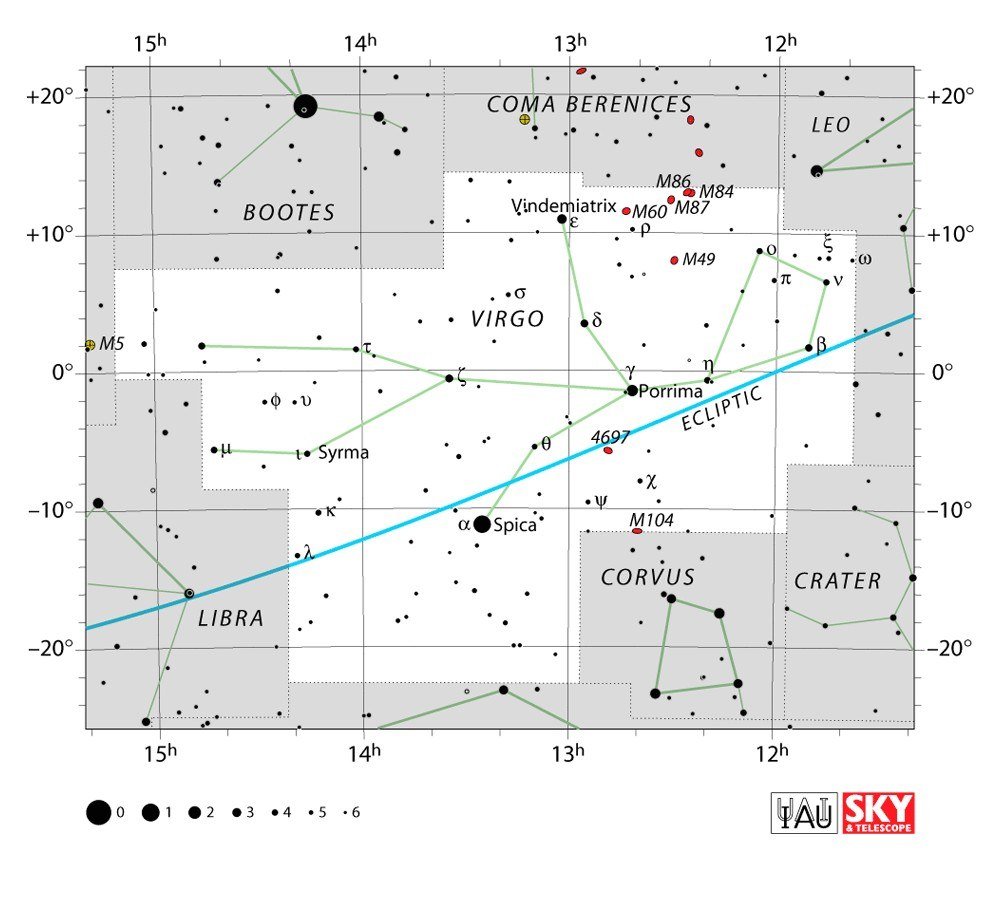
Element: Earth | Modality: Mutable | Ruler: Mercury
Virgo is a mutable earth sign ruled by Mercury and associated with work, health and routine. Astrologers describe it as practical, loyal, gentle and analytical, and also hardworking and critical.
The Sun spends longer in front of Virgo than any other zodiac constellation: 45 days, according to NASA. In Mesopotamia it was “The Furrow” with a barley stalk, which is why its brightest star is Spica, Latin for ear of grain. It became The Maiden when the zodiac was formalized in Babylon.
7. Libra (September 23 to October 22): The Scales
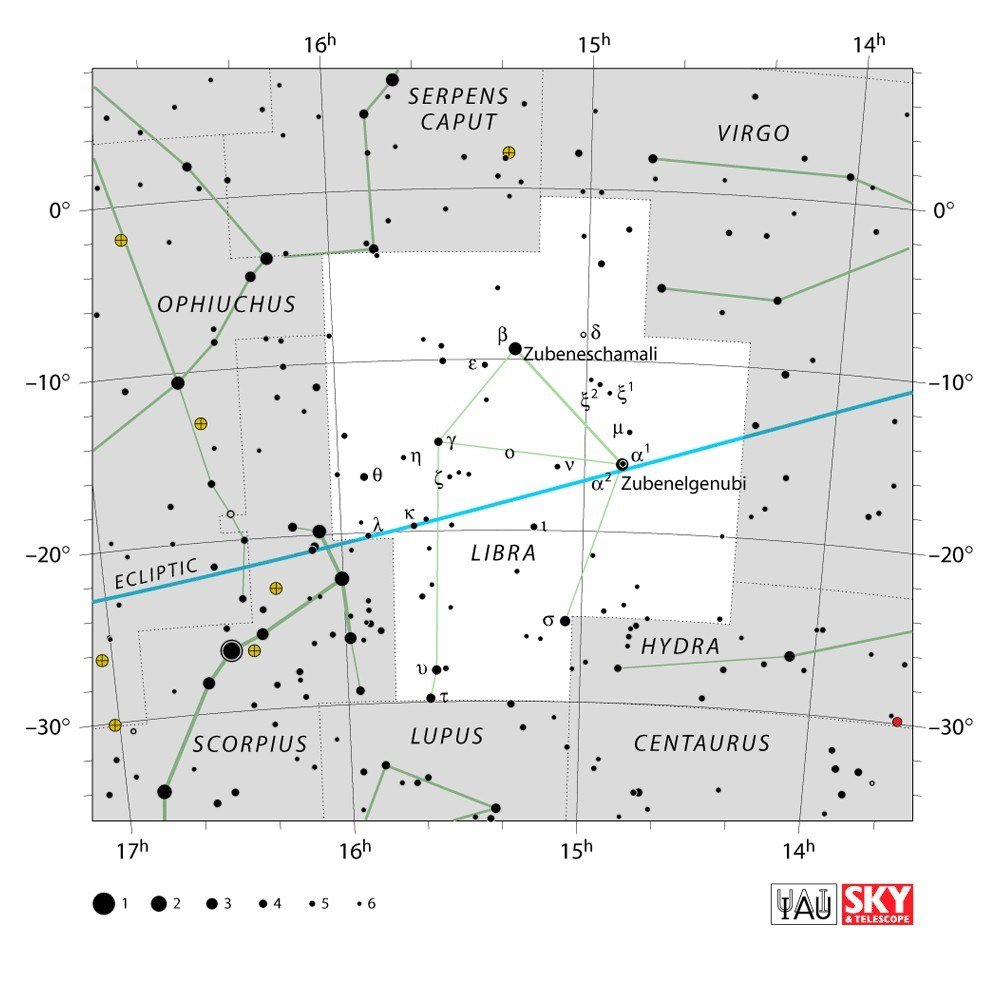
Element: Air | Modality: Cardinal | Ruler: Venus
Libra is a cardinal air sign ruled by Venus and tied to partnership and marriage. Its usual traits are social, fair-minded, diplomatic and gracious, and sometimes indecisive. Its end date varies between October 22 and October 23.
It is the only sign named for an object rather than a living figure. The Balance is another Babylonian sign that survives, and no star in Libra is brighter than second magnitude. Its alpha star splits into two in binoculars, at magnitudes 2.7 and 5.2.
8. Scorpio (October 23 to November 21): The Scorpion
Element: Water | Modality: Fixed | Ruler: Mars (modern: Pluto)
Scorpio is a fixed water sign. Tradition gives it Mars as ruler, and modern astrologers add Pluto. Its people are described as passionate, stubborn, resourceful and brave, and at times jealous.
The constellation itself is spelled Scorpius. Its heart is Antares, a red supergiant about 550 light-years away, and the Babylonians knew the figure as a giant scorpion guarding the underworld in the Epic of Gilgamesh. As the chart shows, the Sun’s path only clips its northern tip, so the Sun spends just seven days there.
9. Sagittarius (November 22 to December 21): The Archer
Element: Fire | Modality: Mutable | Ruler: Jupiter
Sagittarius is a mutable fire sign ruled by Jupiter and linked to travel and philosophy. Astrologers describe it as extroverted, optimistic, funny and generous, and also adventurous, honest and tactless.
Babylon pictured it as the god Pabilsag, part man and part winged horse; the Greeks made him a centaur archer. Sagittarius sits toward the center of the Milky Way and holds the Lagoon, Trifid and Omega nebulae. The Sun reaches it only on December 18, after passing through Ophiuchus.
10. Capricorn (December 22 to January 19): The Sea Goat
Element: Earth | Modality: Cardinal | Ruler: Saturn
Capricorn is a cardinal earth sign ruled by Saturn and associated with career and reputation. Astrologers call it serious, independent, disciplined and tenacious, and responsible. Its season begins at the December solstice.
Capricornus is Latin for horned goat, but the figure is usually a sea goat, half goat and half fish, in a region of sky sometimes called The Sea. Only one of its stars is brighter than third magnitude: Deneb Algedi, whose name comes from the Arabic for tail.
11. Aquarius (January 20 to February 18): The Water Bearer
Element: Air | Modality: Fixed | Ruler: Saturn (modern: Uranus)
Aquarius is a fixed air sign, ruled by Saturn in tradition and by Uranus in modern astrology. Common traits are deep, imaginative, original and uncompromising, as well as independent, intellectual and detached.
It is one of the oldest constellations on record, listed in Babylonian star catalogues long before Ptolemy. The figure is large but dim: its two brightest stars, Sadalsuud and Sadalmelik, are almost identical at magnitudes 2.91 and 2.94.
12. Pisces (February 19 to March 20): The Two Fish
Element: Water | Modality: Mutable | Ruler: Jupiter (modern: Neptune)
Pisces is a mutable water sign closing the zodiac, ruled by Jupiter in tradition and Neptune in modern astrology. Astrologers describe it as affectionate, empathetic, wise and artistic, with an escapist side.
In Babylon this part of the sky was The Swallow, marking the birds’ spring return; the Greeks told of Aphrodite and Eros turning into fish to escape the monster Typhon. Because of precession, the March equinox point that starts Aries now lies inside the constellation Pisces.
Zodiac Signs by Element and Modality
Astrologers sort the twelve signs two ways. The four elements come from Aristotle’s sublunar elements, adopted by ancient astrology, and each element holds three signs:
- Fire (Aries, Leo, Sagittarius): associated with passion, creativity and competitiveness.
- Earth (Taurus, Virgo, Capricorn): associated with practicality and stability.
- Air (Gemini, Libra, Aquarius): associated with ideas and communication.
- Water (Cancer, Scorpio, Pisces): associated with emotion and intuition.
The three modalities describe how a sign acts. Cardinal signs (Aries, Cancer, Libra, Capricorn) start each season and are called the pioneers. Fixed signs (Taurus, Leo, Scorpio, Aquarius) fall mid-season and are the stabilizers. Mutable signs (Gemini, Virgo, Sagittarius, Pisces) close each season and are described as the editors who adapt.
Ruling planets follow an older scheme built on the seven bodies visible to the naked eye. Pluto, Uranus and Neptune were added as modern co-rulers of Scorpio, Aquarius and Pisces after their discovery; Uranus was found in 1781, Neptune in 1846 and Pluto in 1930.
Where the Sun Really Is on Your Birthday
The sign dates were set when the Sun really did pass through each constellation on those days. Since then, a slow wobble of Earth’s axis called axial precession, with a cycle of about 26,000 years, has shifted the stars by close to a month. Using the IAU boundaries, these are the dates the Sun actually sits in front of each constellation:
| Constellation | Sign dates | Sun actually there | Days |
|---|---|---|---|
| Aries | March 21 to April 19 | April 19 to May 14 | 25 |
| Taurus | April 20 to May 20 | May 14 to June 21 | 38 |
| Gemini | May 21 to June 20 | June 21 to July 21 | 30 |
| Cancer | June 21 to July 22 | July 21 to August 10 | 20 |
| Leo | July 23 to August 22 | August 10 to September 17 | 38 |
| Virgo | August 23 to September 22 | September 17 to October 31 | 44 |
| Libra | September 23 to October 22 | October 31 to November 23 | 23 |
| Scorpio | October 23 to November 21 | November 23 to November 30 | 7 |
| Ophiuchus | Not a sign | November 30 to December 18 | 18 |
| Sagittarius | November 22 to December 21 | December 18 to January 19 | 32 |
| Capricorn | December 22 to January 19 | January 19 to February 16 | 28 |
| Aquarius | January 20 to February 18 | February 16 to March 12 | 24 |
| Pisces | February 19 to March 20 | March 12 to April 19 | 38 |
Two things stand out. The constellations are very different sizes, so the Sun spends 44 days in front of Virgo but only seven in Scorpius. And a thirteenth constellation sits on the path between Scorpius and Sagittarius.
Ophiuchus: The 13th Constellation of the Zodiac
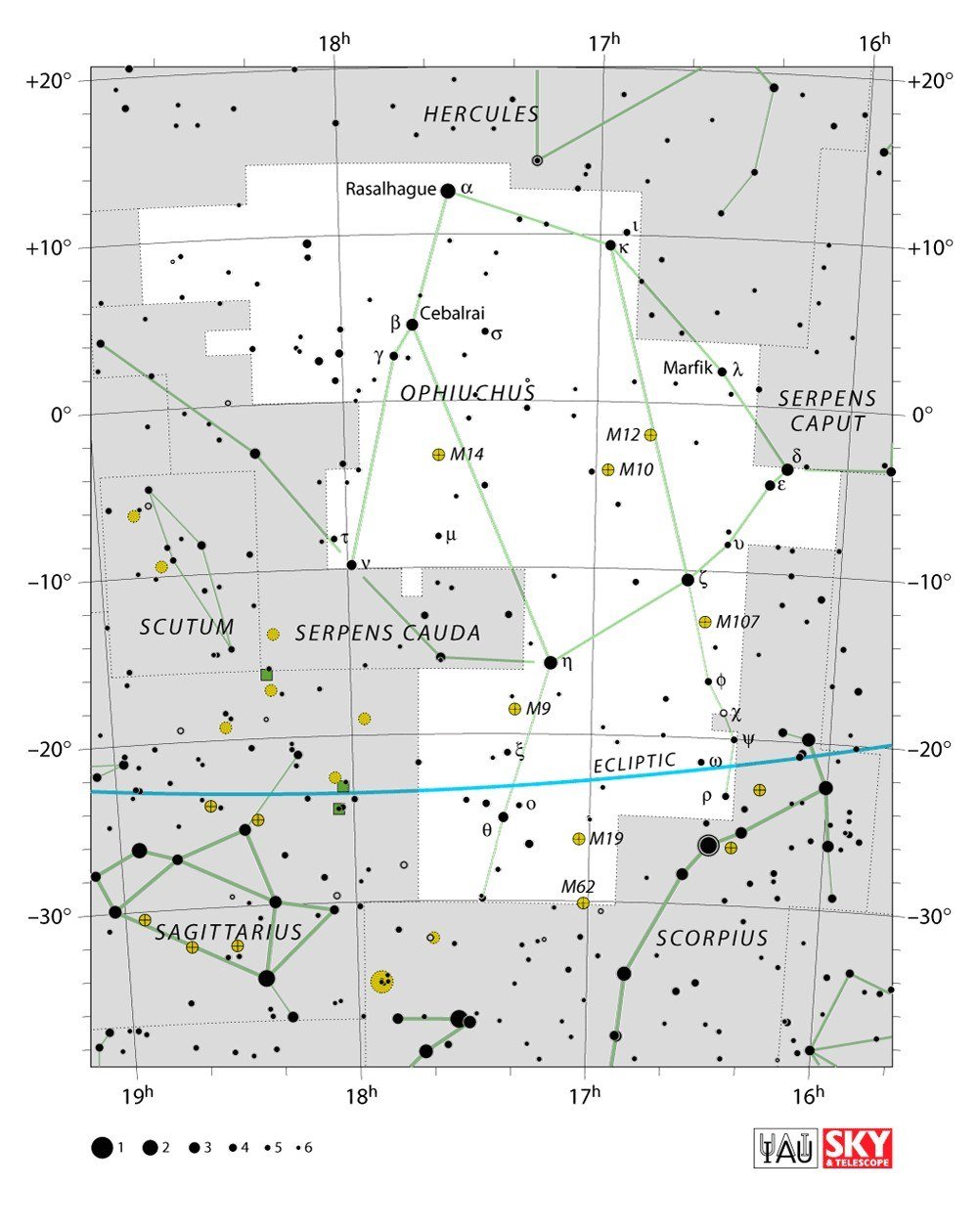
Ophiuchus, the Serpent Bearer, is a large constellation that the ecliptic crosses from about November 30 to December 18 each year. It contains Barnard’s Star, the second-nearest star system to the Sun at about 6 light-years, and was the site of Kepler’s supernova in 1604. Unicode even gives it a symbol, U+26CE.
In 2016 a NASA post explaining this went viral as “NASA changed the zodiac.” In NASA’s own words, “We didn’t change any zodiac signs, we just did the math.” NASA explained that the Babylonians knew of 13 constellations on the path and left Ophiuchus out to fit a 12-month calendar. Western astrologers do not use it, because their signs are tied to the seasons, not to the stars.
How the Zodiac Began
The word comes from the Greek zodiakos kyklos, “circle of animals.” Babylonian astronomers divided the band of sky along the ecliptic into 12 equal signs of 30 degrees around 500 BCE, matching their 12-month calendar. Their older omen texts, the Enuma Anu Enlil, date back to the 18th to 16th centuries BCE.
The Greeks inherited the system. Hipparchus discovered precession while finishing a star catalog in 129 BCE, and in the 2nd century CE Ptolemy of Alexandria wrote the Tetrabiblos, the book that shaped Western astrology for centuries. The familiar glyphs are younger than the signs; Britannica says their history is unknown, and they first appear in late medieval Greek manuscripts.
Calendars and seasons shaped many traditions that survive today, from the zodiac to the Celtic festival behind modern Halloween, covered in our history of Halloween.
Tropical vs. Sidereal Zodiac Signs
Western astrology uses the tropical zodiac, which anchors Aries to the March equinox and keeps the signs locked to the seasons. Vedic astrology in India uses the sidereal zodiac, which tracks the actual stars and corrects for precession.
The gap between the two is now about 24 degrees, so most people’s sidereal sign is one sign earlier than their tropical sign. A late February birthday that is Pisces in Western astrology, for example, falls in sidereal Aquarius, which runs to about March 12.
What Science Says About Zodiac Signs
Astronomy and astrology split long ago. In a double-blind test published in Nature in 1985, researcher Carlson asked 28 astrologers to match birth charts to personality profiles, choosing from three. They predicted they would get at least half right; they scored 34 percent, against 33 percent for pure chance.
Britannica states plainly that no correlation has been found between birth dates and personality, and NASA says astrology is not considered a science. Interest stays steady anyway. A 2025 Pew Research Center survey found 27 percent of U.S. adults believe in astrology and 28 percent consult astrology or a horoscope at least once a year, though only 1 percent rely on it a lot for major decisions.
How to Find Your Zodiac Sign
Find your birthday in the table above. If it falls on the first or last day of a range, you were born on a “cusp,” and your sign depends on the exact moment the Sun changed signs that year. Astrologers settle it with your birth date, time and place:
- Note your date, time and city of birth from your birth certificate.
- Check when the Sun entered the next sign in your birth year, since it shifts by about a day.
- Compare the two. Before the change, you are the earlier sign; after it, the later one.
Sign compatibility is a popular next step, though, like personal styles of affection in our guide to the five love languages, it describes preferences rather than anything measurable.
Frequently Asked Questions
What are the 12 zodiac signs in order?
Aries, Taurus, Gemini, Cancer, Leo, Virgo, Libra, Scorpio, Sagittarius, Capricorn, Aquarius and Pisces. The order starts with Aries because the tropical zodiac begins at the March equinox.
Is Ophiuchus the 13th zodiac sign?
Ophiuchus is a 13th constellation on the Sun’s path, from about November 30 to December 18, but it is not a sign in Western astrology. NASA has said it did not change any signs.
Why do zodiac sign dates differ by a day?
The Sun enters each sign at a slightly different time every year, so Cancer starts on June 21 in some years and others on June 22. Exact sign changes depend on the year and time of birth.
What is the difference between a zodiac sign and a constellation?
A sign is an equal 30-degree slice of the Sun’s yearly path, fixed to the seasons. A constellation is an area of sky with official IAU boundaries, and the zodiac constellations range from 7 to 44 days of Sun time.
Related Articles

Get the Fox Bulletin briefing
The stories that matter, in your inbox. No spam, unsubscribe anytime.
Newsletter signup will be available soon.
Related stories
Birthstones by Month: Every Stone, Color and Meaning
Every month's birthstone, its color and Mohs hardness, where it comes from, how to care for it, and how jewelers built the list in 1912 and kept adding to it.
When Is Thanksgiving? This Year’s Date and the Next 10 Years
Thanksgiving 2026 falls on Thursday, November 26. Here is every date through 2035, the 1941 law behind the fourth-Thursday rule, and what happens that week.
The 5 Love Languages: What Each One Means and How to Use It
Words of affirmation, quality time, gifts, acts of service and physical touch: what each love language means, how to find yours, and what the studies found.