

America’s national parks drew record crowds again in 2025, and the gap between the busiest and the rest is startling. The most visited park welcomed more than 11.5 million people, roughly double the runner-up, while the system as a whole spans 63 designated national parks.
Visitation tells you where the crowds go, but it also reveals which parks are easiest to reach and which reward the effort of getting there. Below we rank the ten most visited national parks in the US using 2025 recreation visitor data, with each park’s size, location, and what makes it worth the trip.
| Rank | National Park | 2025 Visitors | State(s) | Area (acres) |
|---|---|---|---|---|
| 1 | Great Smoky Mountains | 11,527,939 | North Carolina, Tennessee | 522,427 |
| 2 | Zion | 4,984,525 | Utah | 146,597 |
| 3 | Yellowstone | 4,762,988 | Wyoming, Montana, Idaho | 2,219,791 |
| 4 | Grand Canyon | 4,430,653 | Arizona | 1,201,647 |
| 5 | Yosemite | 4,278,413 | California | 759,000 |
| 6 | Rocky Mountain | 4,171,431 | Colorado | 265,848 |
| 7 | Acadia | 4,079,318 | Maine | 49,071 |
| 8 | Grand Teton | 3,800,648 | Wyoming | 310,044 |
| 9 | Olympic | 3,584,187 | Washington | 922,649 |
| 10 | Glacier | 3,136,557 | Montana | 1,013,126 |
The 10 Most Visited National Parks in the US, Ranked
1. Great Smoky Mountains: The Undisputed Leader
2025 Visitors: 11,527,939 | States: North Carolina, Tennessee | Area: 522,427 acres
Great Smoky Mountains National Park is not just the most visited park in America, it is more than twice as busy as any rival, drawing over 11.5 million recreation visitors in 2025. Two factors explain the dominance: it charges no entrance fee, and it sits within a day’s drive of a huge share of the eastern US population.
The park protects ancient Appalachian forest, wildflower meadows, and some of the most biodiverse terrain in the country, with black bears, elk, and more than 800 miles of trails. Knoxville serves as the main western gateway, which is one reason the city keeps appearing in our guide to the best places to live in Tennessee.
2. Zion: Utah’s Red Rock Showpiece
2025 Visitors: 4,984,525 | State: Utah | Area: 146,597 acres
Zion draws nearly five million visitors into a canyon that is remarkably compact, covering just 146,597 acres, the smallest area in the top five. That concentration is exactly why it feels crowded: almost everyone funnels into the same narrow main canyon.
The payoff is scenery few places on earth match, from the sheer sandstone walls of Angels Landing to the river hike through The Narrows. A mandatory shuttle system manages the crush during peak season, and visiting at sunrise or in winter transforms the experience.
3. Yellowstone: The World’s First National Park
2025 Visitors: 4,762,988 | States: Wyoming, Montana, Idaho | Area: 2,219,791 acres
Yellowstone was the world’s first national park and remains its most geologically extraordinary, sitting atop an active supervolcano that powers roughly half the planet’s geysers. Nearly 4.8 million people came in 2025 to see Old Faithful, the Grand Prismatic Spring, and the Lamar Valley wolves.
At 2.2 million acres it is the second largest park on this list, spanning three states, though about 96% of it lies in Wyoming. That scale means crowds disperse better here than at Zion, but wildlife jams on the main roads are a genuine feature of any summer visit.
4. Grand Canyon: The Icon
2025 Visitors: 4,430,653 | State: Arizona | Area: 1,201,647 acres
The Grand Canyon needs no introduction, carving a mile deep and up to 18 miles wide across northern Arizona and drawing more than 4.4 million visitors in 2025. Nearly all of them go to the South Rim, which stays open year-round and holds most of the lodging and viewpoints.
The North Rim sees a small fraction of the traffic and closes in winter, making it the choice for anyone wanting solitude. Hiking below the rim changes the park entirely, though the climb back out in summer heat is genuinely dangerous for the unprepared.
5. Yosemite: Granite, Waterfalls, and Giant Sequoias
2025 Visitors: 4,278,413 | State: California | Area: ~759,000 acres
Yosemite drew nearly 4.3 million visitors to a valley that helped invent the very idea of national parks, inspiring John Muir and shaping American conservation. El Capitan and Half Dome are the most recognizable granite formations in the world.
Spring is the park’s best-kept open secret, when snowmelt sends Yosemite Falls and Bridalveil Fall thundering at peak volume. The valley floor concentrates most visitors, so the high country around Tuolumne Meadows offers dramatically more space.
6. Rocky Mountain: High Peaks Close to Denver
2025 Visitors: 4,171,431 | State: Colorado | Area: 265,848 acres
Rocky Mountain National Park packs more than 4.1 million visitors into 265,848 acres, helped enormously by sitting roughly 90 minutes from Denver. Trail Ridge Road climbs above 12,000 feet, making alpine tundra accessible to anyone with a car.
The park protects more than 60 peaks above 12,000 feet along with elk herds that famously bugle through the autumn rut. Timed-entry reservations are now a fixture in peak months, so plan well ahead rather than arriving on impulse.
7. Acadia: New England’s Coastal Gem
2025 Visitors: 4,079,318 | State: Maine | Area: 49,071 acres
Acadia is the most remarkable entry on this list statistically, drawing more than four million visitors into just 49,071 acres, by far the smallest park in the top ten. That density makes it the most heavily trafficked park per acre in the country.
Its appeal is the collision of granite peaks and Atlantic coastline, with Cadillac Mountain catching the earliest sunrise in the US for much of the year. Carriage roads built by John D. Rockefeller Jr. provide 45 miles of car-free cycling and walking.
8. Grand Teton: Mountains Without the Foothills
2025 Visitors: 3,800,648 | State: Wyoming | Area: 310,044 acres
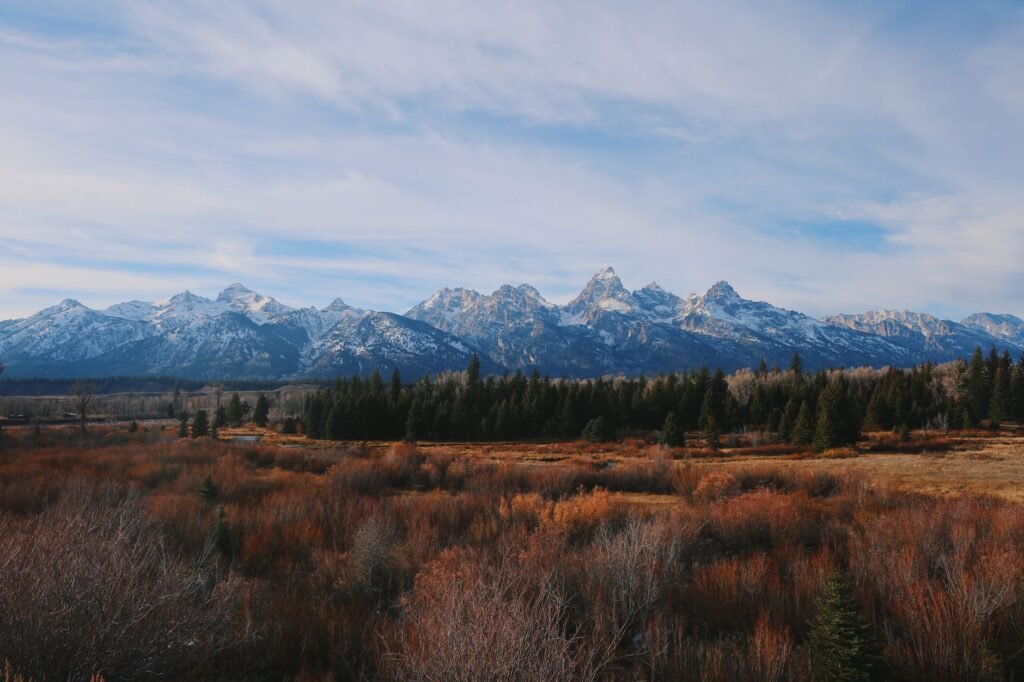
Grand Teton rises abruptly from the flat valley floor of Jackson Hole with no foothills to soften the view, producing perhaps the most dramatic mountain profile in North America. It welcomed 3.8 million visitors in 2025.
Its position just south of Yellowstone means many travelers combine the two, which boosts numbers considerably. Moose, bison, and bears are common, and the Snake River offers some of the most photographed scenery in the American West.
9. Olympic: Three Parks in One
2025 Visitors: 3,584,187 | State: Washington | Area: 922,649 acres
Olympic National Park is really three distinct environments stitched together across 922,649 acres: glaciated peaks, temperate rainforest, and 70 miles of wild Pacific coastline. Nearly 3.6 million people visited in 2025.
The Hoh Rain Forest receives up to 14 feet of rain a year, creating moss-draped forest unlike anywhere else in the country. Because no road crosses the park’s interior, seeing all three ecosystems requires real driving, which keeps crowds spread thin.
10. Glacier: The Crown of the Continent
2025 Visitors: 3,136,557 | State: Montana | Area: 1,013,126 acres
Glacier National Park closes out the top ten with more than 3.1 million visitors drawn to over a million acres of jagged peaks and turquoise lakes. Going-to-the-Sun Road is one of the great drives in America, crossing the Continental Divide at Logan Pass.
The park’s season is genuinely short, with the high road typically open only from roughly July into September because of snow. Its namesake glaciers have retreated dramatically, giving visits an added urgency that drives interest each summer.
Why Great Smoky Mountains Dominates
The Smokies’ lead is not close, and two structural advantages explain it. First, it is the only park in the top ten that charges no entrance fee, a condition of the land transfer that created it, removing the cost barrier entirely.
Second, geography is decisive: the park sits within a day’s drive of a large share of the eastern US population, while the western giants require flights or long road trips. Major highways run right past the boundary, so a significant share of its traffic is people passing through rather than making a dedicated trip.
Visitation Versus Crowding Are Not the Same Thing
Raw visitor counts can mislead, because park size determines how crowded a place actually feels. Acadia squeezes more than four million people into 49,071 acres, while Yellowstone spreads a similar number across 2.2 million acres, a difference of more than 40 times the space per visitor.
That is why compact parks like Zion and Acadia have adopted shuttles and reservation systems while larger parks manage with traffic controls alone. If solitude matters to you, park acreage per visitor is a more useful number than the headline visitation figure.
How We Ranked the Most Visited National Parks
This ranking uses 2025 recreation visitor counts, the standard measure the National Park Service uses to track park attendance. Figures cover the 63 designated national parks, excluding national monuments, recreation areas, and historic sites.
We paired each park’s visitation with its official acreage and states so you can see both popularity and scale. Because visitation shifts year to year with weather, road closures, and reservation policies, treat these figures as a current snapshot.
How to Visit the Busiest Parks Without the Crowds
Timing matters more than destination. Visiting in shoulder seasons, roughly April to May or September to October, cuts crowds sharply while often improving weather and wildlife activity, and winter turns parks like Great Smoky Mountains and Zion into genuinely quiet places.
Within any park, crowds concentrate near roads and famous viewpoints, so walking even a mile down a trail leaves most visitors behind. Check reservation requirements before you go, since Rocky Mountain, Yosemite, and several others now use timed entry during peak months.
Frequently Asked Questions
What is the most visited national park in the US?
Great Smoky Mountains National Park, straddling North Carolina and Tennessee, drew 11,527,939 recreation visitors in 2025, more than twice as many as any other national park.
Why is Great Smoky Mountains so much busier than other parks?
It charges no entrance fee and sits within a day’s drive of a large share of the eastern US population, with major highways running past its boundary, so it captures both destination travelers and passing traffic.
How many national parks are there in the US?
There are 63 designated national parks. The National Park Service manages many more sites, including national monuments, seashores, and historic parks, which are not counted in that total.
Which national park feels the most crowded?
Acadia, which packs more than four million visitors into just 49,071 acres, and Zion, whose visitors funnel into one narrow canyon, feel far busier than larger parks with similar visitation such as Yellowstone.
When is the best time to visit a popular national park?
Shoulder seasons, roughly April to May and September to October, offer thinner crowds and often better conditions. Winter is quietest of all, though high-elevation roads such as Glacier’s Going-to-the-Sun Road close with snow.
Related Articles

Get the Fox Bulletin briefing
The stories that matter, in your inbox. No spam, unsubscribe anytime.
Newsletter signup will be available soon.
Related stories

Most Expensive House in the World: Top 10, Sold or Valued
Ten of the most expensive houses in the world, split into those with a recorded or reported sale price and those valued only by estimate, with the deed, auction or accounts behind each figure.

Best Stocking Stuffers for Adults 2026: 12 Small, Useful Gadgets
The best stocking stuffers for adults are small gadgets that fix an everyday annoyance, like lost keys or a dying phone. Our top pick is the Chipolo POP, a bright Bluetooth tracker…

Self Care Gifts for Women 2026: 10 Relaxing Gift Ideas for Her
The best self care gift for a woman is one that makes an ordinary part of her day calmer, like the Himalayan Glow Salt Lamp for a soft amber glow at bedtime…