

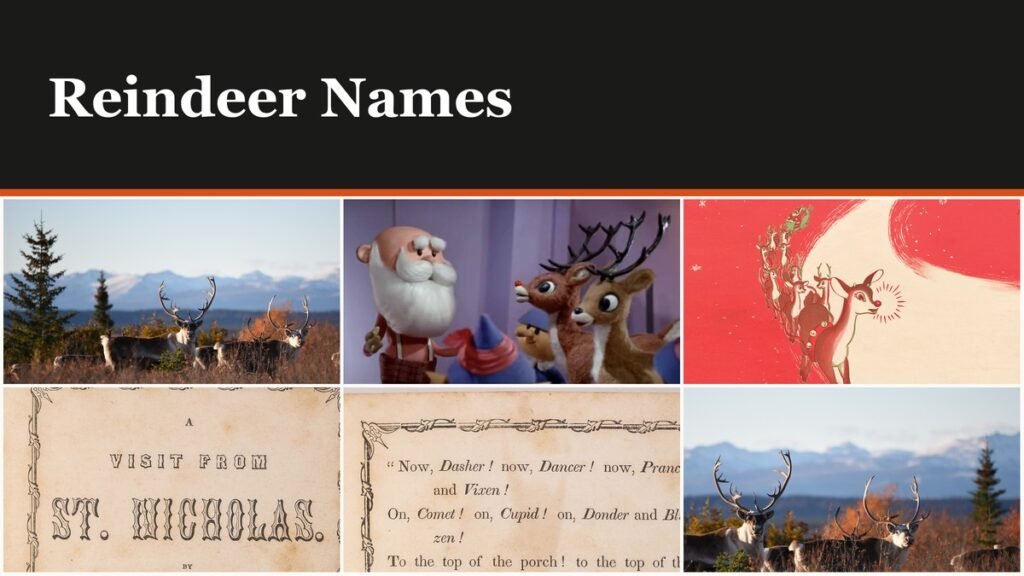
The traditional reindeer names are Dasher, Dancer, Prancer, Vixen, Comet, Cupid, Donner and Blitzen, with Rudolph as the ninth. The first eight come from a poem printed in 1823, and Rudolph joined the team in 1939 in a different story altogether.
Two of those names looked different at the start, because the poem first called the last pair Dunder and Blixem. The spellings shifted over 25 years, Rudolph arrived from a department store, and real reindeer antlers raise a question about who pulls the sleigh. Anyone planning a movie night can pair it with our ranked Christmas movies.
What Are the Reindeer Names? The Nine in Order
Santa’s reindeer are, in the order the poem calls them: Dasher, Dancer, Prancer, Vixen, Comet, Cupid, Donner and Blitzen. That makes eight. Rudolph, the red-nosed reindeer, is the ninth and was created for a department store booklet in 1939, so he is not part of the original sleigh team. The poem itself counts “eight tiny rein-deer.”
Santa’s Nine Reindeer Names and What Each Word Means
Six of the nine names are everyday words or myth, one is a personal name and two match Dutch words. The poem gives no meaning or personality for any of them, so the third column is the plain sense of the word.
| # | Reindeer name | Plain meaning | How it appears |
|---|---|---|---|
| 1 | Dasher | Someone who dashes | Called first, “Now! Dasher” |
| 2 | Dancer | Someone who dances | Called second |
| 3 | Prancer | A horse or deer that prances | Called third |
| 4 | Vixen | A female fox | Called fourth, last of the “Now” group |
| 5 | Comet | A body of ice and dust in the sky | First of the “On” group |
| 6 | Cupid | The Roman god of love | Second of the “On” group |
| 7 | Donner (Donder) | Matches the Dutch word for thunder | Dunder in 1823, Donder from 1837 |
| 8 | Blitzen | Matches the Dutch bliksem, lightning | Blixem in 1823, Blitzen from 1844 |
| 9 | Rudolph | A personal name | Created in 1939 |
The Nine Reindeer Names One by One
Santa calls the team in two lines, four names with “Now” and four with “On,” and Rudolph sits outside both.
1. Dasher: The First Name Called
Dasher opens the roll call in every version of the poem. A dasher is simply someone who dashes, and the same stanza ends with the order “Now dash away! dash away! dash away all!” as the team leaves the porch.
2. Dancer: Second in the Call
Dancer follows Dasher in the first line, and the word fits a poem that also has sugar plums dancing in the children’s heads. Nothing in the text gives Dancer a trait of its own.
3. Prancer: The Name That Matches the Hooves
Prancer comes third. When the team lands, the narrator hears “the prancing and pawing of each little hoof” on the roof, which is the closest the poem comes to showing a reindeer doing what its name suggests.
4. Vixen: A Female Fox in the Team
A vixen is a female fox, so this is the one animal name in the team that is not a reindeer word. It closes the first line of the call, and the next line switches from “Now” to “On.”
5. Comet: First Name of the Second Line
Comet starts the second line, “On! Comet, on! Cupid.” The word is the ordinary name for an icy body that crosses the night sky, which suits a team that crosses it in one night.
6. Cupid: The Roman God of Love
Cupid is the god of love in Roman myth, and the name has appeared in the sleigh team from the very first printing in 1823. It sits sixth, between Comet and the Dutch-sounding pair.
7. Donner: Thunder in Dutch Form
The 1823 text reads “Dunder,” which matches the Dutch word for thunder. The spelling became “Donder” in 1837, and the 1848 illustrated edition prints Donder as well. Donner is the spelling that appears on many modern rosters, and where that form first came from is not settled.
8. Blitzen: Lightning, After Two Spellings
In 1823 the last reindeer is “Blixem,” which matches bliksem, the Dutch word for lightning. Many 19th-century periodicals print “Blixen,” and “Blitzen” first shows up in a reprint from 1844, though it took about 20 years to become the standard.
9. Rudolph: The Ninth, Created in 1939
Rudolph stands outside the poem entirely. He comes from a 1939 children’s story written for a department store, more than a century after the other eight were named.
How the Reindeer Names Changed Between 1823 and 1848

The poem first appeared in the Troy Sentinel on December 23, 1823, on page 3, with no author named and the title “Account of a Visit from St. Nicholas.” The call to the team read: “Now! Dasher, now! Dancer, now! Prancer, and Vixen, On! Comet, on! Cupid, on! Dunder and Blixem.”
Within 25 years the last two names had moved toward the forms in use today. In 1837 the poem was reprinted in the New-York Book of Poetry with Donder in place of Dunder, and most newspapers copied the new name at once. The first fully illustrated book-length edition came out in New York in 1848, with wood engravings by Theodore C. Boyd, and its text already runs “On, Comet! on, Cupid! on, Donder and Blitzen!” Readers who want to see the pages can browse the American Antiquarian Society post on the 1848 illustrated edition.

The idea of Santa travelling by reindeer predates the poem, since an anonymous 1821 poem also published in New York already had them, but the poem gave the team its names.
Who Is the Author of the Poem That Named the Reindeer?
Historians disagree. Clement Clarke Moore put his name to the poem in 1837, nearly 15 years after it appeared, and he included it in his collected poems in 1844. He claimed he composed it for his children and read it aloud on Christmas Eve 1822.
The family of Henry Livingston Jr., a poet from Poughkeepsie who lived from 1748 to 1828, later claimed that he was the author. Livingston died before Moore stepped forward and never claimed it himself, and some modern scholars favor him. Unless new evidence turns up, the question stays open. Anyone interested can read the Library of Congress blog post on the poem’s first printing.
Rudolph, the Ninth Reindeer, Arrived in 1939
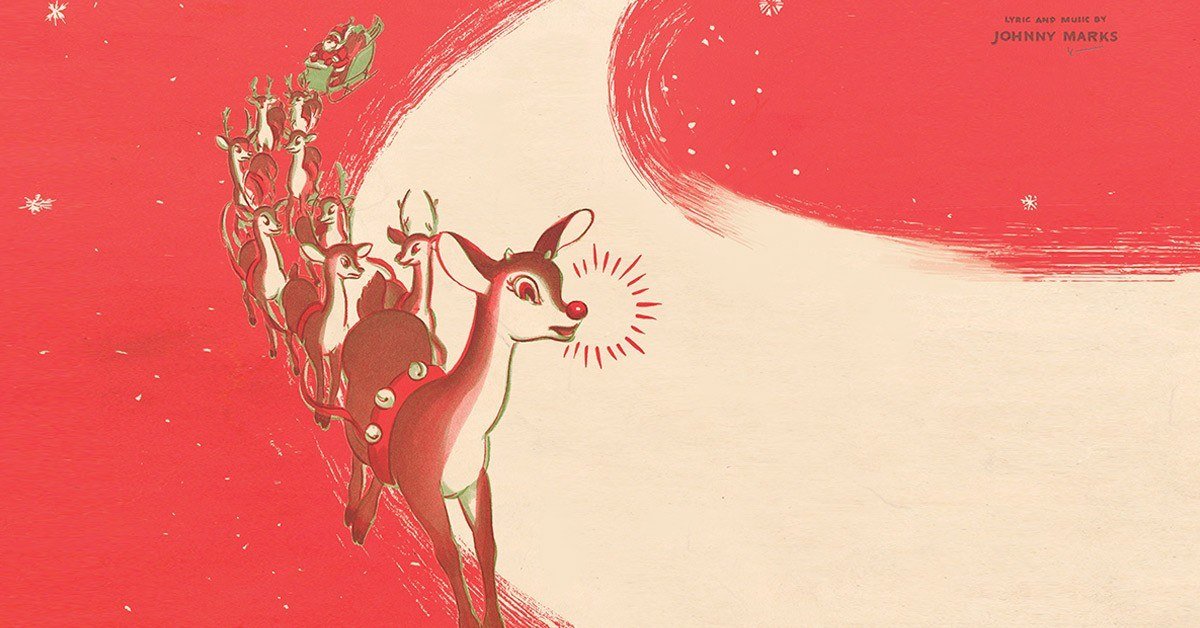
Robert Lewis May, a Dartmouth graduate of the class of 1926, created Rudolph as a copywriter for the Montgomery Ward department store in Chicago. He composed the story as a poem in the rhythm of “’Twas the Night Before Christmas” for the 1939 Christmas season, and he changed the reindeer’s name from Rollo to Rudolph before the story was approved.
More than two million copies of the 31-page booklet were handed out through Montgomery Ward’s 800 stores and catalogue offices. After wartime paper limits ended the store gave away another three million, and in January 1947 Ward’s released the copyright to May.
May’s brother-in-law Johnny Marks turned the story into a song, and Gene Autry recorded it on June 27, 1949. It sold two million copies in its first year, and the recording now sits on the National Recording Registry.

The Rankin/Bass stop-motion special premiered on December 6, 1964, with Burl Ives as Sam the Snowman. NBC aired it every year through 1972, and when the network brought it back on December 6, 2024, it was the show’s 60th anniversary. The joke about a reindeer called Olive comes from mishearing “all of the other reindeer” in the song, and Olive is not part of the team.
Real Reindeer and the Antlers on Christmas Eve

Reindeer are the semi-domesticated form of caribou, and caribou are the only members of the deer family in which both sexes grow antlers. Large bulls shed theirs in late October, small bulls and cows that are not pregnant keep them until April, and pregnant females usually keep theirs until calves arrive in late May or early June.
That timing creates a puzzle for the sleigh team. A reindeer still carrying antlers on Christmas Eve is likely to be female, unless it is a castrated male, called a steer, and most reindeer used to pull sleds are castrated males because they are more docile. Whether Santa’s team is male, female or mixed is a matter of opinion, since the poem never settles it.
How to Pick Reindeer Names for a Pet, a Party or a Shelf Elf
Most people searching for reindeer names want something to use, not just the traditional list. These ideas are suggestions, not facts about Santa’s team:
- Take a traditional name and shorten it: Dash, Danny, Prance, Vix or Cometa.
- Use the 1823 forms for a vintage feel: Dunder and Blixem make a distinctive pair.
- Pick winter words such as Snowy, Frost, Tundra, Sleet or Birch.
- Choose a themed set for a party: nine name tags, one per guest, with Rudolph kept for the guest of honor.
For a classroom or family game, the trick is to give each child one of the nine and let them call it out in the order of the poem, which is easy to memorize in two groups of four plus Rudolph. The calendar for the night the team flies is in our guide to when is Christmas.
Frequently Asked Questions
How many reindeer does Santa have?
Eight in the original poem, which counts “eight tiny rein-deer.” Adding Rudolph, who arrived in 1939, makes nine.
Is it Donner or Donder?
Both spellings are in use. The poem printed Dunder in 1823, switched to Donder in 1837, and the 1848 illustrated edition prints Donder, while Donner is common on modern rosters. The name matches the Dutch word for thunder.
Are Santa’s reindeer boys or girls?
The poem does not say. Because bulls shed antlers in autumn and the nine are pictured with them in December, they are probably female or castrated males. That is an argument from antler timing, not a fact about the story.
Who named the reindeer?
The first eight names come from “Account of a Visit from St. Nicholas,” printed anonymously in 1823. Moore claimed it later, and the Livingston family claimed it for their ancestor, so the author is still debated.
Related Articles

Get the Fox Bulletin briefing
The stories that matter, in your inbox. No spam, unsubscribe anytime.
Newsletter signup will be available soon.
Related stories

Merry Christmas in Different Languages: Say It Like a Local
Merry Christmas in different languages by region, with each greeting in its own script, a say-it-like guide and the countries where each is used.

What Stores Are Open on Christmas Day? Chain by Chain
What stores are open on Christmas Day? Walmart, Target, Home Depot and Lowe's are closed Friday, December 25, 2026, while Denny's and Waffle House stay open.

Is Starbucks Open on Christmas? Dec 24 and 25 Answers
Is Starbucks open on Christmas? Some coffeehouses open on Friday, December 25, 2026 and others close. See why hours vary and how many stores are licensed.