

The cost of living in the United States varies dramatically from state to state, and at the top end the numbers are staggering. In the most expensive states, everyday expenses run 15% to nearly 90% above the national average, driven mostly by sky-high housing but also by pricey utilities, groceries, and healthcare.
Cost of living is measured by an index where 100 equals the national average, so every state below reads well over 100. We pair each state’s index with its median home price to show where the money really goes. Here are the ten most expensive states to live in the US for 2026.
| Rank | State | Cost-of-Living Index | Median Home Price | Region |
|---|---|---|---|---|
| 1 | Hawaii | 186.9 | ~$849,000 | Pacific |
| 2 | Massachusetts | 145.9 | ~$634,000 | Northeast |
| 3 | California | 144.8 | ~$789,000 | West |
| 4 | District of Columbia | 141.9 | ~$619,000 | Mid-Atlantic |
| 5 | Alaska | 123.8 | ~$395,000 | Pacific |
| 6 | New York | 123.3 | ~$584,000 | Northeast |
| 7 | Maryland | 115.3 | ~$448,000 | Mid-Atlantic |
| 8 | New Jersey | 114.6 | ~$563,000 | Northeast |
| 9 | Vermont | 114.4 | ~$407,000 | Northeast |
| 10 | Washington | 114.2 | ~$596,000 | West |
The 10 Most Expensive States to Live In, Ranked
1. Hawaii: The Most Expensive State by Far
Cost-of-Living Index: 186.9 | Median Home Price: ~$849,000 | Region: Pacific | Why It’s Costly: Isolation and limited land
Hawaii is in a league of its own, with a cost of living index of 186.9, meaning expenses run nearly double the national average. Its median home price near $849,000 leads the nation, a result of severely limited developable land and intense demand.
The islands’ isolation compounds everything else, since most goods are shipped in, pushing groceries, gas, and utilities far above mainland prices. Paradise comes at a premium that few other states approach.
2. Massachusetts: Elite Services at a High Price
Cost-of-Living Index: 145.9 | Median Home Price: ~$634,000 | Region: Northeast | Why It’s Costly: Housing, healthcare, and wages
Massachusetts ranks second with an index of 145.9, powered by the expensive Boston metro and its concentration of top hospitals and universities. High wages support high prices across housing, healthcare, and services.
A median home price around $634,000 reflects strong demand in a state with limited housing supply. Residents pay a premium, but they also access some of the best schools and medical care in the country.
3. California: Coastal Demand Meets Tight Supply
Cost-of-Living Index: 144.8 | Median Home Price: ~$789,000 | Region: West | Why It’s Costly: Housing shortage and high demand
California places third overall but carries the second-highest home prices in the nation at about $789,000. Decades of restrictive housing policy and relentless coastal demand have made ownership out of reach for many.
Tech wealth in the Bay Area and entertainment money in Los Angeles keep prices elevated, while gas and utilities add to the burden. The climate and economy remain magnets, but affordability is a persistent challenge.
4. District of Columbia: Capital Costs
Cost-of-Living Index: 141.9 | Median Home Price: ~$619,000 | Region: Mid-Atlantic | Why It’s Costly: Dense federal hub
Washington, DC ranks fourth, with an index of 141.9 fueled by its status as the nation’s political and federal employment center. Dense urban living and strong demand keep the median home price near $619,000.
A highly educated, well-paid workforce sustains elevated prices for housing and services alike. As a compact district with limited space, DC has little room to build its way to affordability.
5. Alaska: Remoteness Drives Everyday Costs
Cost-of-Living Index: 123.8 | Median Home Price: ~$395,000 | Region: Pacific | Why It’s Costly: Shipping and utilities
Alaska is the surprise of the top five, ranking high despite a relatively modest median home price near $395,000. The reason is everything else, since its remoteness inflates the cost of groceries, fuel, utilities, and transportation.
Long supply chains and a harsh climate mean residents pay far more for daily essentials than mainland Americans. It shows that expensive living is about more than just housing.
6. New York: The Empire State Premium
Cost-of-Living Index: 123.3 | Median Home Price: ~$584,000 | Region: Northeast | Why It’s Costly: New York City and high taxes
New York ranks sixth, though the statewide figure masks the extremes of New York City, where housing costs soar. A median home price around $584,000 reflects intense demand in the nation’s largest metropolitan market.
High state and local taxes, expensive services, and premium housing all contribute to the burden. Upstate regions are far more affordable, but the New York City area drives the state’s high ranking.
7. Maryland: Wealthy and Well-Paid
Cost-of-Living Index: 115.3 | Median Home Price: ~$448,000 | Region: Mid-Atlantic | Why It’s Costly: Affluent DC suburbs
Maryland ranks seventh, boosted by its affluent suburbs surrounding Washington, DC. High household incomes support elevated housing and living costs, with a median home price near $448,000.
Proximity to federal jobs and a strong regional economy keep demand high. Maryland consistently ranks among the wealthiest states, and its cost of living reflects that prosperity.
8. New Jersey: The Property Tax Capital
Cost-of-Living Index: 114.6 | Median Home Price: ~$563,000 | Region: Northeast | Why It’s Costly: Housing and property taxes
New Jersey ranks eighth, squeezed between the expensive New York City and Philadelphia metros. A median home price around $563,000 combines with some of the highest property taxes in the entire country.
Dense development and strong commuter demand keep prices elevated statewide. Excellent schools draw families, but the property tax burden makes New Jersey a costly place to own a home.
9. Vermont: Rural but Far From Cheap
Cost-of-Living Index: 114.4 | Median Home Price: ~$407,000 | Region: Northeast | Why It’s Costly: Limited housing and utilities
Vermont ranks ninth, proving that a rural state can still be expensive. Limited housing supply, high heating and utility costs, and steady demand for its scenic communities push the median home price near $407,000.
Its small population and strict development limits keep housing tight and prices firm. Vermont pairs a high quality of life and low crime with a cost of living well above the national average.
10. Washington: Tech Boom Costs
Cost-of-Living Index: 114.2 | Median Home Price: ~$596,000 | Region: West | Why It’s Costly: Seattle housing and sales tax
Washington rounds out the list at 114.2, driven largely by the Seattle area’s technology boom. A median home price near $596,000 reflects strong demand from a high-earning tech workforce.
Notably, Washington has no state income tax, but it offsets this with high sales taxes and steep housing costs. The result is a state that is expensive to live in despite its income-tax advantage.
What Makes These States So Expensive
Housing is the single biggest driver, since the cost of living index weights it heavily and every state here has home prices well above the national median. Limited supply, geographic constraints, and strong demand combine to push prices up.
Beyond housing, utilities, groceries, transportation, and healthcare all pile on, especially in isolated Hawaii and Alaska. High wages in states like Massachusetts and California also sustain higher prices across the board, a pattern clear in the cost of living index by state.
Expensive Does Not Always Mean Bad Value
A high cost of living often comes with higher incomes, better services, and strong job markets. Massachusetts and California, for instance, pair steep prices with top universities, healthcare, and career opportunities that can justify the expense.
The key is comparing costs against local salaries, not just sticker prices. For buyers prioritizing affordability instead, our guide to the cheapest states to live in covers the opposite end of the spectrum in detail.
How We Ranked the Most Expensive States
This ranking orders states by their 2026 cost of living index, where a higher number means pricier overall living. We then paired each index with the state’s current median home price, drawn from published median home prices by state, to show how housing shapes affordability.
We focused on overall living costs rather than any single expense, which is why Alaska ranks high despite moderate home prices. The goal is a realistic picture of what your total budget looks like in each state.
How to Manage a High Cost of Living
Start by weighing salary against expenses, since a higher paycheck in an expensive state can still leave you ahead of a modest income in a cheap one. Run the real numbers on housing, taxes, and commuting before assuming a state is unaffordable.
Then consider location within the state, because costs vary widely. Upstate New York, inland California, and rural Massachusetts are far cheaper than their marquee cities, offering a middle path between prestige and affordability.
Frequently Asked Questions
What is the most expensive state to live in 2026?
Hawaii is the most expensive state to live in for 2026, with a cost of living index of 186.9, nearly double the national average, and the highest median home price in the country at around $849,000.
Why is Hawaii so expensive?
Hawaii’s isolation means most goods are shipped in, raising the cost of groceries, fuel, and utilities, while severely limited land drives home prices to the highest levels in the nation.
Which expensive state has no income tax?
Washington ranks among the most expensive states yet charges no state income tax, offsetting it with high sales taxes and steep housing costs, especially around Seattle.
Are expensive states worth the cost?
They can be, since high costs often come with higher salaries, strong job markets, and better services. The key is comparing your expected income against the local cost of living before moving.
Which region has the most expensive states?
The Northeast and Pacific dominate, with Hawaii, Massachusetts, California, New York, New Jersey, and Vermont all in the top ten, reflecting high housing costs and strong regional economies.
Related Articles

Get the Fox Bulletin briefing
The stories that matter, in your inbox. No spam, unsubscribe anytime.
Newsletter signup will be available soon.
Related stories
Happiest Countries in the World: All 10 Ranked
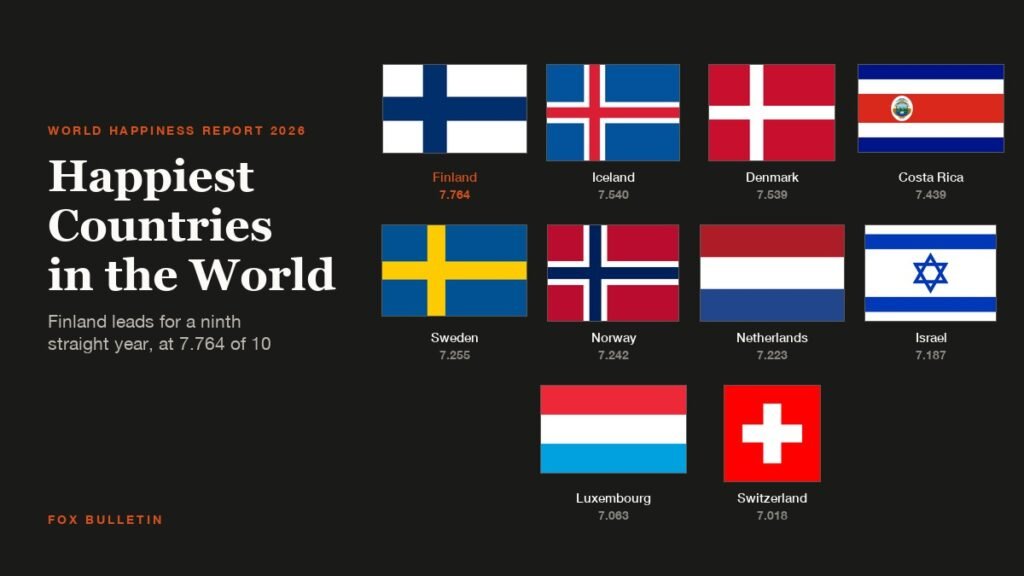
Finland tops the World Happiness Report 2026 at 7.764, its ninth consecutive year at number one. Iceland edges Denmark by 0.001 points, Costa Rica reaches fourth, and no English-speaking country makes the top 10 for a second straight year.

Best Oversized T-Shirts for Women: 7 Compared
The best oversized t-shirts for women differ from each other in three places: what the fabric is made of, where the shoulder seam sits and how the hem is shaped. Those three…

Best Oversized T-Shirts for Men: 7 Picks Compared
The best oversized t-shirts for men are not simply large t-shirts. The shape comes from where the shoulder seam sits and how much the fabric weighs, which is why a Pro Club…