

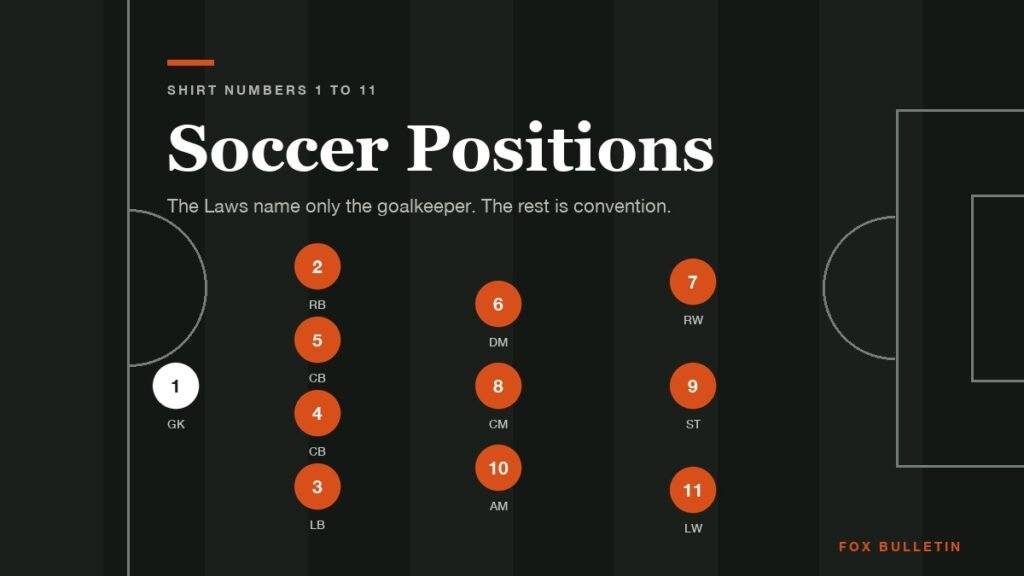
Here is the thing almost nobody mentions when explaining soccer positions: the rulebook does not contain them. Law 3 says a match is played by two teams of a maximum of eleven players, one of whom must be the goalkeeper, and then stops. Every other role on the pitch is a convention that coaches invented and then kept rewriting.
That is why position names multiply. A right back and a wing back occupy roughly the same strip of grass with completely different instructions, and a number 10 can be a player, a shirt, or a job description depending on who is talking. What follows is the full map: the traditional 1 to 11 numbering, what each position is actually asked to do now, and how formations shuffle the same eleven people into different shapes.
| No. | Position | Area of the pitch | Core job |
|---|---|---|---|
| 1 | Goalkeeper | Penalty area | Stops shots, handles the ball, starts the build up |
| 2 | Right back | Right defensive flank | Defends the touchline, overlaps in attack |
| 3 | Left back | Left defensive flank | Mirror of the right back on the other side |
| 4 | Centre back or holding mid | Central defence | Wins headers, steps out to break up play |
| 5 | Centre back | Central defence | Marks the striker, organises the back line |
| 6 | Defensive midfielder | In front of the defence | Screens the back four and recycles possession |
| 7 | Right winger | Right attacking flank | Takes on the full back, crosses or cuts inside |
| 8 | Central midfielder | Box to box | Carries the ball forward and covers ground both ways |
| 9 | Striker | Opposition penalty area | Finishes chances and occupies the centre backs |
| 10 | Attacking midfielder | Between the lines | Creates chances in the space behind the striker |
| 11 | Left winger | Left attacking flank | Width and goals from the opposite side to the 7 |
Soccer Positions by Shirt Number: The 1 to 11 System
The numbers came from an era when a team lined up in a 2-3-5 and the squad was numbered from the back. They stuck even after the shapes changed, which is why the modern map looks slightly askew: the 4 and the 6 can both be defenders or both be midfielders depending on the country.
Three habits are worth knowing before the numbers make sense:
- The number is a role, not a shirt. A commentator calling someone “a proper six” means a holding midfielder, whatever is printed on his back.
- National traditions differ. In Britain the 4 is usually a midfielder and the 5 a centre back. In parts of South America the 5 is the holding midfielder and the 4 a defender.
- Squad numbers broke the link. Since squads were numbered beyond 11, a striker can wear 27 and nothing about his job changes.
Goalkeeper: The Only Position the Laws Actually Define
The goalkeeper is the one player the Laws of the Game single out. Each team must have one, and any outfield player may swap places with them provided the referee is told first and the change happens during a stoppage. The keeper is the only player permitted to handle the ball, and only inside their own penalty area.
The job has changed more than any other in the last decade. Teams now build attacks from the goal kick, so keepers are picked partly on their passing, and the “sweeper keeper” who patrols the space behind a high defensive line is a standard requirement rather than an eccentricity.
The Laws have been pushing in the same direction. A goalkeeper who controls the ball with their hands for more than eight seconds now concedes a corner kick to the opposition, a change from the old indirect free kick that was written specifically to stop time wasting. The practical result is that keepers release the ball faster and more often start the counter attack themselves.
Defenders: Centre Backs, Full Backs and Wing Backs
A back four is two centre backs flanked by two full backs. A back three drops the full backs and pushes wing backs further up, which is the main structural difference between the two systems:
- Centre back. Defends the middle, wins aerial duels, and in possession is now expected to play the pass that breaks the first line of pressure.
- Full back. Defends the flank and overlaps the winger. In an inverted full back role they step into midfield in possession instead, giving the team an extra passer in the centre.
- Wing back. A full back without a winger in front of them. Covers the entire touchline, which is why wing backs are picked for stamina above almost anything else.
- Sweeper. A spare defender behind the line. Largely extinct in top level football, replaced by the keeper doing the sweeping.
The hardest part of defending is no longer one on one. Because attackers rotate, centre backs have to decide whether to follow a striker who drops deep or hold the line and pass them on, and that decision made at the wrong moment is what most goals look like in slow motion.
Midfielders: The 6, the 8 and the 10
Midfield is where position names are most useful, because the three jobs genuinely differ:
- The 6, a defensive midfielder. Sits in front of the defence, cuts off passes into the striker, and gives the centre backs an easy option. Rarely runs beyond the ball.
- The 8, a central midfielder. Covers the ground between both boxes, arrives late in the penalty area, and is the first player back when possession turns over.
- The 10, an attacking midfielder. Operates in the gap between the opposition midfield and defence, where there is time to turn and pick a pass.
Modern shapes often fold the 10 into the front three, which is why the role is talked about as endangered. It has really just moved: the player who used to stand between the lines now starts wide and drifts inside, so the shirt says winger and the job is still playmaker. The players at the top of the list for most Ballon d’Or wins have mostly done their damage from exactly that in-between space.
Forwards: Strikers, Wingers and the False Nine
A front line is some combination of a central striker and wide attackers. The variations matter more than the labels:
- Centre forward or number 9. Plays on the shoulder of the last defender, attacks crosses, and keeps both centre backs occupied so others can run past.
- Winger. Starts wide. A traditional winger goes outside the full back and crosses; an inverted winger is left footed on the right, or right footed on the left, and cuts inside to shoot.
- Second striker. Plays just off the main forward, closer to goal than a 10 and with fewer defensive duties.
- False nine. A forward who deliberately drops into midfield, dragging a centre back out of position or leaving the defence with nobody to mark.
The false nine is the clearest proof that positions are instructions rather than locations. Nothing about the player changes; the opposition defenders simply have to choose between following him into midfield and leaving a hole, or staying put and giving him the ball. The leading names on the list of the most goals in football history include players who scored from all three of these roles across one career.
How Formations Move the Same 11 Players Around
A formation is written from the back, excluding the goalkeeper. The four most common:
- 4-4-2. Two banks of four and two strikers. Simple to defend with, outnumbered in central midfield against a three.
- 4-3-3. A midfield triangle behind two wingers and a centre forward. The default shape for teams that want to press high.
- 4-2-3-1. Two holding midfielders, a band of three attackers behind one striker. Gives the full backs licence to join the attack.
- 3-5-2. Three centre backs, wing backs supplying the width, two strikers. Strong centrally and dependent on the wing backs covering the whole flank.
Teams no longer hold one shape for 90 minutes. A side that defends in a 4-4-2 may attack in something closer to a 2-3-5 as the full backs push up, which is why formation notation describes a starting arrangement rather than a plan. The substitution rules support that flexibility: competitions may allow up to five substitutes, but each team only gets three opportunities to use them plus the half time interval, so changes are made in batches rather than one at a time.
One more number is worth remembering. A match cannot start or continue if either team has fewer than seven players on the pitch, so a side reduced by red cards is abandoned at the moment the eighth leaves the field. That floor, not the formation, is the only squad shape the Laws insist on.
Frequently Asked Questions
How many players are on a soccer team on the field?
Eleven per side, one of whom must be the goalkeeper. If a team drops below seven players, through red cards or injuries with no substitutes left, the match cannot continue.
What does the number 10 mean in soccer?
Traditionally the creative attacking midfielder who plays between the opposition midfield and defence. The number is now a description of the role rather than a guarantee of the shirt, and many teams field no orthodox 10 at all.
What is a false nine?
A centre forward who drops deep into midfield instead of staying on the last defender. It forces a centre back to choose between following him out of the defensive line or leaving him unmarked in space, and both answers create problems.
Which soccer position is the hardest?
Goalkeeper is the usual answer, because it is the only position where a single error is almost always a goal and there is no teammate behind to cover. Among outfield roles, the defensive midfielder carries the most responsibility for structure.
Related Articles

Get the Fox Bulletin briefing
The stories that matter, in your inbox. No spam, unsubscribe anytime.
Newsletter signup will be available soon.
Related stories
How Long Is a Soccer Game? Halves, Stoppage and Extra Time
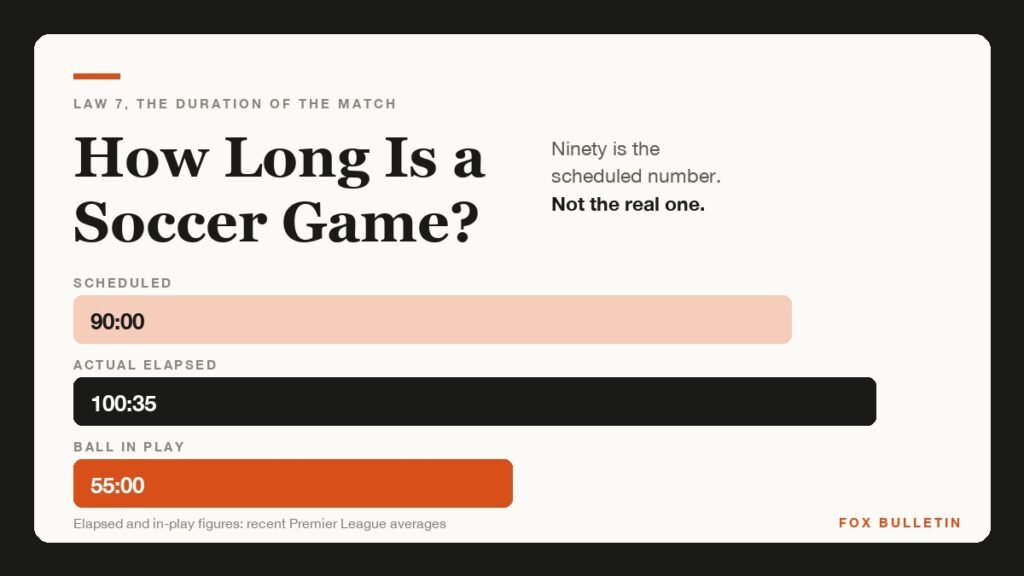
Ninety minutes is the scheduled figure, not the real one. What the referee adds, when extra time applies, and how much of a match is actually live football.
NFL Salary Cap: How It Works, Dead Money and Franchise Tags
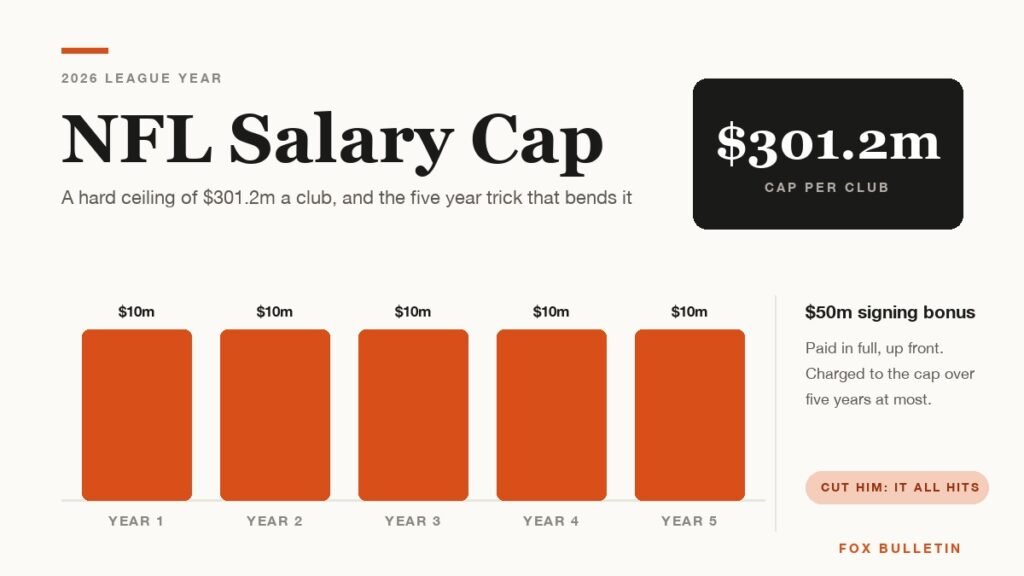
The cap is a cash flow puzzle, not a spending limit. Proration, dead money, void years and the 89 percent floor, with the current numbers.
Football Positions: What All 22 Players on the Field Do
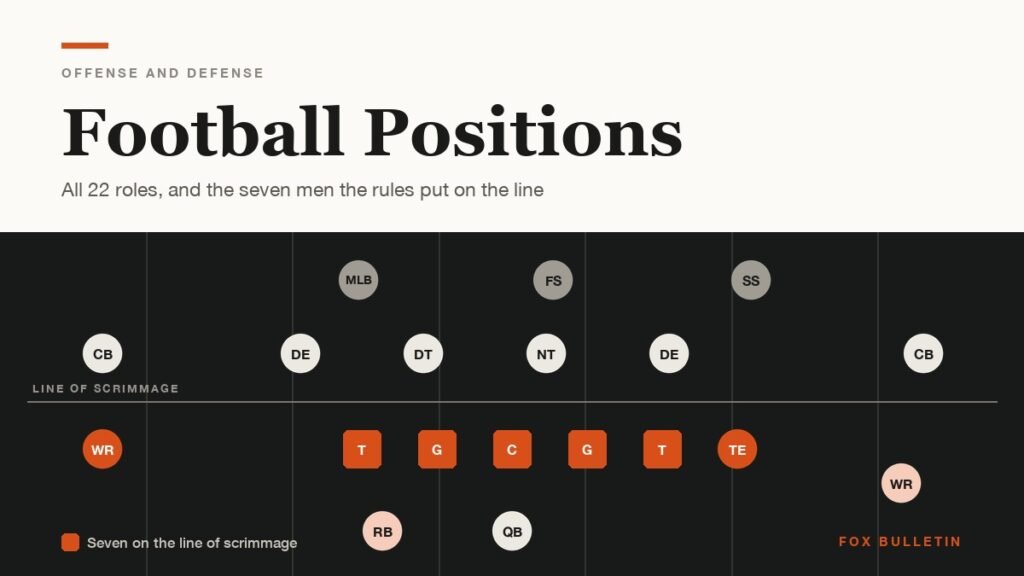
Quarterback to long snapper, with the rulebook detail most guides skip: the seven men on the line, the number ranges by position, and how a 53 man roster is split.