

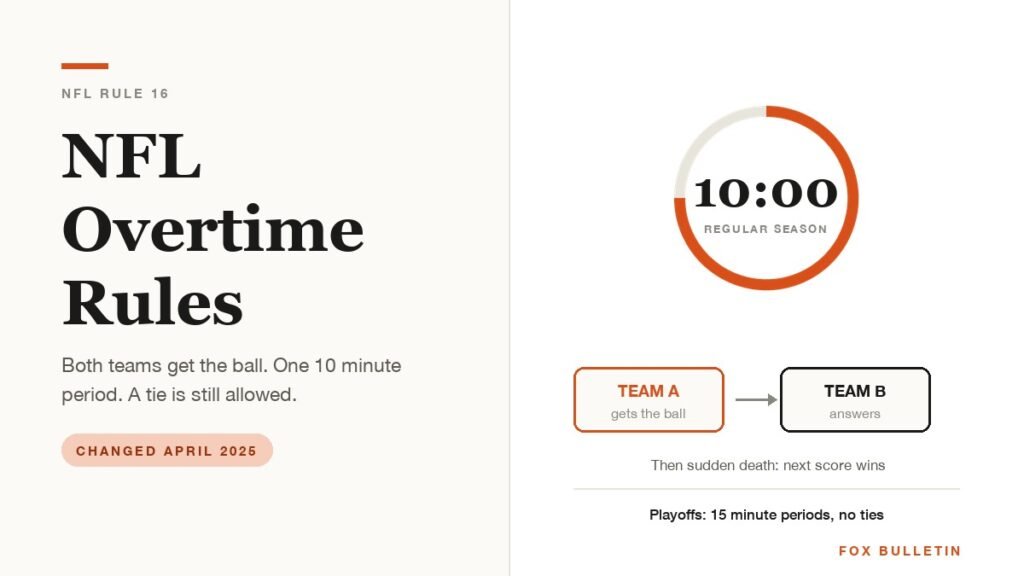
The NFL overtime rules changed in a way that settled an argument fans had been having for a decade. A team can no longer win a regular season game by scoring a touchdown on the opening possession. Both sides get the ball, the way the playoffs have worked since 2022.
Overtime still runs on two different clocks, and that is where most of the confusion starts. A regular season game gets one 10 minute period and is allowed to finish level. A playoff game gets 15 minute periods and keeps playing them until somebody leads. Everything below follows Rule 16 of the league rulebook, from the coin toss to the one score that can end the game before the second team touches the ball.
| Rule | Regular season | Playoffs |
|---|---|---|
| Overtime length | One 10 minute period | 15 minute periods until a winner |
| Both teams get a possession | Yes, since 2025 | Yes, since 2022 |
| Game can end in a tie | Yes | No |
| Timeouts per team | Two | Three per two overtime periods |
| Sudden death begins | After both teams have possessed | After both teams have possessed |
NFL Overtime Rules in the Regular Season: 10 Minutes, Two Possessions
When regulation ends level, the teams get a three minute intermission. The referee then tosses a coin at the center of the field and the visiting captain calls it. The winner chooses to receive, to kick, or which goal to defend.
The period that follows is 10 minutes and does not stretch. There is no second overtime in the regular season, so whatever the scoreboard says when the clock hits zero is the final result.
The sequence once play starts:
- The receiving team takes its possession. It can score a touchdown, kick a field goal, or give the ball up.
- The other team then gets its own possession regardless of what just happened.
- If it trails after that possession ends, the game is over.
- If the scores are level once both teams have possessed, the game becomes sudden death and the next points of any kind win it.
- If 10 minutes expire first, the game ends there, tie included.
Each team carries two timeouts into overtime rather than a fresh set of three. The timing rules that govern the end of a quarter switch on at the five minute mark, which brings a two minute warning and clock stoppages on most penalties. Coaches cannot throw a challenge flag in overtime either; replays are started by the replay assistant.
What Ends an Overtime Game Before Both Teams Touch the Ball
The possession guarantee has two real exceptions, and both of them end games:
- A safety. If the kicking team scores a safety during the receiving team’s first possession, the game ends immediately and the kicking team wins. It is the one defensive score that cuts overtime short.
- The clock. If the first team grinds the whole 10 minutes off the clock and scores at the end of it, the second team never gets its guaranteed possession. The result still stands.
That second case is the quiet consequence of a fixed 10 minute period. A long opening drive is now worth more than it looks, because eating clock is a way of taking the other team’s possession away without ever stopping them. Sudden death still exists, but it only begins after both teams have had their turn.
Playoff Overtime Lasts 15 Minutes and Cannot End in a Tie
Postseason overtime keeps the possession guarantee and throws out the time limit. Periods run 15 minutes and repeat as often as needed, with teams getting three timeouts for every two periods and a fresh set again if a game reaches a third. A playoff game cannot finish level, so the clock is not an escape route.
Only two Super Bowls have gone to overtime. New England beat Atlanta 34 to 28 in Super Bowl LI, and Kansas City beat San Francisco 25 to 22 in Super Bowl LVIII, the first title game played under the possession guarantee. San Francisco kicked a field goal on the opening drive, Kansas City answered with a touchdown, and the game was over. Both franchises appear high on the list of teams with the most Super Bowl wins, and those two nights are a large part of why the rule exists in its current shape.
Coin Toss Strategy: Why Some Coaches Now Want to Kick
Before 2025, winning the regular season toss and taking the ball was close to free value, because a touchdown ended the game on the spot. That edge is gone. Receiving first now means showing your hand: the opponent gets the ball knowing exactly what it needs.
Kicking first hands you that information instead. If the opening drive produces a field goal, your offense plays with a clear target and can go for the touchdown that wins rather than the one that ties. The trade is risk: if the first team scores a touchdown and you answer with one of your own, the decision about a two point try lands on you, not on them.
There is also a procedural trap. A coach who wins the toss and says “defer” is deferring to a second half of overtime that does not exist in the regular season. Teams that want the second possession have to elect to kick.
Two-Point Conversion Math After an Overtime Touchdown
Conversion attempts are now required in overtime any time the result could turn on them, which creates decisions that regulation never asks for. The common ones:
- First team scores a touchdown and the extra point. The second team needs a touchdown to stay alive, then chooses between the extra point to tie and continue, or a two point try to win on the spot.
- First team scores a touchdown and misses the extra point. A touchdown plus an extra point now wins the game for the second team outright.
- First team kicks a field goal. The second team wins with any touchdown and does not need to gamble at all.
- Both teams end up level. Sudden death starts, and in the regular season the clock may run out before anyone scores again.
A team trailing by one after a touchdown faces the sharpest version of this. Kick and the game continues with the clock as a third opponent. Go for two and the season-long argument about conversion rates gets settled in one snap. The same arithmetic shapes payrolls across the league, where the quarterbacks making those calls sit among the highest paid athletes in world sport.
From 1974 Sudden Death to the 2025 Possession Guarantee
Overtime is younger than most of the league’s traditions, and it has been edited repeatedly:
- 1974. The NFL adopts sudden death overtime for regular season and preseason games. One extra period, first score of any kind wins.
- 2017. The regular season period shrinks from 15 minutes to 10 on player safety grounds. Playoff periods stay at 15.
- 2021. Preseason overtime is dropped entirely.
- 2022. After Kansas City beat Buffalo 42 to 36 in an AFC divisional game where Buffalo never touched the ball in overtime, owners guarantee both teams a possession in the playoffs.
- 2025. Owners extend that guarantee to the regular season at the Annual League Meeting in Palm Beach, Florida, on April 1. The approved wording drops the old exception for a first possession touchdown.
The current text sits in Rule 16 of the official NFL rulebook, which is where the procedural details live: the intermission, the toss, the timeout counts and the handling of a safety. Rule 16 is short, and almost every overtime argument on a Sunday comes down to one of the two exceptions above.
College Overtime Works Nothing Like the NFL Version
Anyone switching between Saturday and Sunday football is watching two different games once the scores are level. College football has no overtime clock and no ties. Teams trade possessions until one of them finishes a round ahead.
The NCAA procedure starts with a coin toss at the 50 yard line, with up to four captains per team and the visiting field captain calling it. The winner picks offense or defense, or which end of the field both possessions will use, and the decision cannot be deferred. From there:
- Through the first two periods, each team gets one possession on offense starting at the opponent’s 25 yard line, and may place the ball anywhere on or between the hash marks.
- A team keeps the ball until it scores or fails to make a first down.
- From the second overtime, a touchdown must be followed by a two point try rather than a kick.
- From the third overtime, the drives stop entirely and the teams alternate two point plays until one converts and the other does not.
- Each team gets one timeout per overtime period. Unused regulation timeouts do not carry over, and an unused overtime timeout does not roll into the next period.
The two point rules are recent. The NCAA Playing Rules Oversight Panel moved the mandatory two point try forward to the second overtime in 2021, and in the same batch of changes replaced the fifth-overtime trigger for alternating two point plays with the third. Overtime itself arrived in the 1995-96 bowl season, with the 1995 Las Vegas Bowl the first game to use it, Toledo beating Nevada 40 to 37. Regular season college games got overtime the following autumn. The practical effect of the newer rules is shorter marathons: the format now forces a resolution instead of letting teams trade touchdowns for six rounds.
Frequently Asked Questions
Can an NFL game still end in a tie?
Yes, but only in the regular season. If the 10 minute overtime period ends with the scores level, the game is recorded as a tie. Playoff games keep adding 15 minute periods until one team leads, so a postseason tie is not possible.
Does the second team get the ball if the first team scores a touchdown?
In almost every case, yes. Since 2025 that applies in the regular season as well as the playoffs. The exceptions are a safety scored by the kicking team during the first possession, and the clock running out before the second team can take its turn.
How long is overtime in the Super Bowl?
Fifteen minutes, and it repeats. The Super Bowl follows postseason rules, so if the first overtime period ends level the teams play another one. Super Bowl LI and Super Bowl LVIII are the only two that have needed overtime at all.
Do teams get new timeouts in overtime?
Not a full set. Regular season overtime gives each team two timeouts. In the postseason each team gets three to cover two overtime periods, and the count resets if the game reaches a third.
Related Articles

Get the Fox Bulletin briefing
The stories that matter, in your inbox. No spam, unsubscribe anytime.
Newsletter signup will be available soon.
Related stories

Best Soccer Players of All Time: Top 10 Ranked
Pele won three World Cups, a feat no other player has matched. Lionel Messi holds eight Ballon d'Or awards. This ranking of the ten greatest players is built on countable honours rather than highlight reels.
How Long Is a Soccer Game? Halves, Stoppage and Extra Time
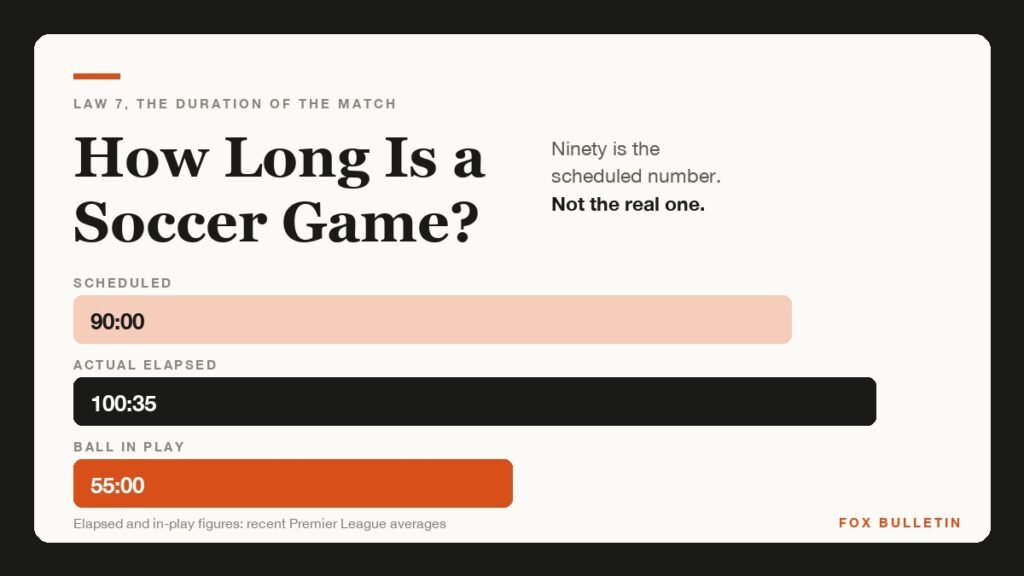
Ninety minutes is the scheduled figure, not the real one. What the referee adds, when extra time applies, and how much of a match is actually live football.
NFL Salary Cap: How It Works, Dead Money and Franchise Tags
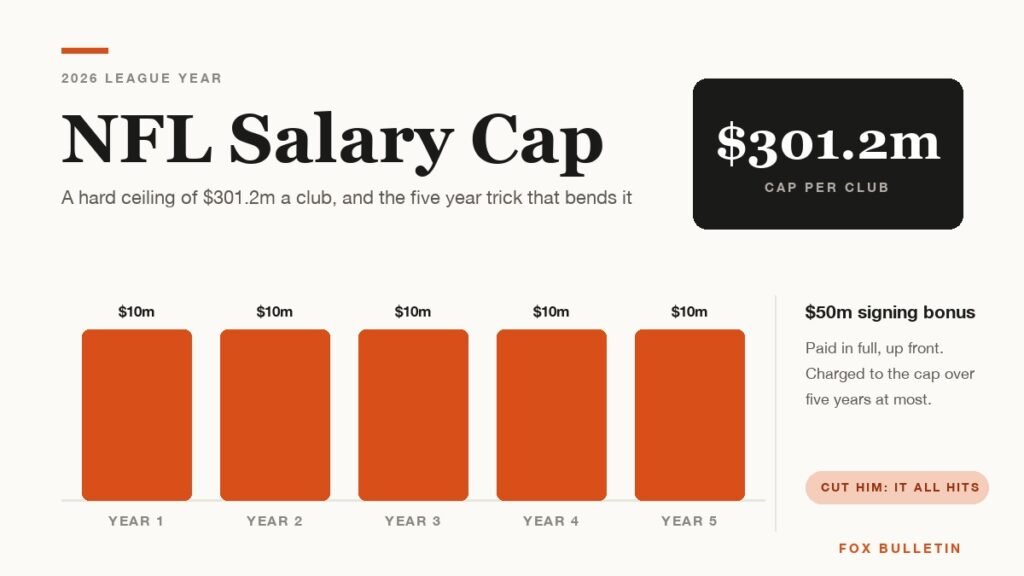
The cap is a cash flow puzzle, not a spending limit. Proration, dead money, void years and the 89 percent floor, with the current numbers.