
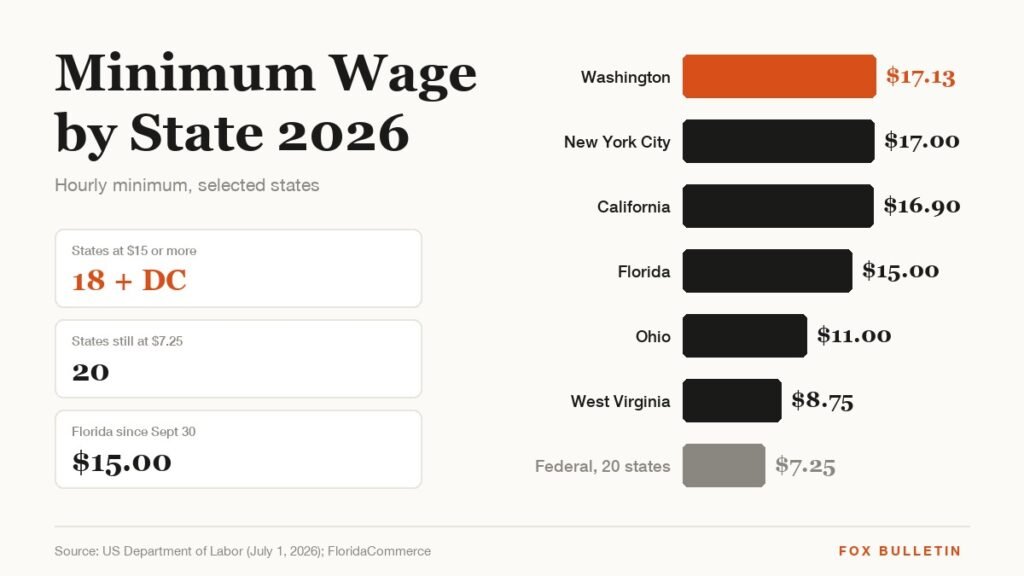
The federal minimum wage is $7.25 an hour in 2026, but minimum wage by state varies widely: 30 states and the District of Columbia set a higher rate, from $8.75 in West Virginia to $17.13 in Washington, the highest of any state. Twenty states still effectively pay the federal $7.25, and 18 states plus DC now pay $15 or more.
Florida reached $15.00 an hour on September 30, 2026, the last step of a raise its voters approved in 2020. The table lists every state’s minimum wage and the minimum cash wage employers must pay tipped workers, using the US Department of Labor’s tables revised July 1, 2026 and Florida’s September increase.
| State | Minimum wage (per hour) | Tipped minimum cash wage |
|---|---|---|
| Alabama | No state law; Federal $7.25 applies | $2.13 |
| Alaska | $14.00 | $14.00 |
| Arizona | $15.15 | $12.15 |
| Arkansas | $11.00 | $2.63 |
| California | $16.90 | $16.90 |
| Colorado | $15.16 | $12.14 |
| Connecticut | $16.94 | $6.38 (bartenders $8.23) |
| Delaware | $15.00 | $2.23 |
| District of Columbia | $18.40 | $10.30 |
| Florida | $15.00 (from Sept 30, 2026) | $11.98 |
| Georgia | $5.15 state rate; Federal $7.25 applies | $2.13 |
| Hawaii | $16.00 | $14.75 |
| Idaho | $7.25 | $3.35 |
| Illinois | $15.00 | $9.00 |
| Indiana | $7.25 | $2.13 |
| Iowa | $7.25 | $4.35 |
| Kansas | $7.25 | $2.13 |
| Kentucky | $7.25 | $2.13 |
| Louisiana | No state law; Federal $7.25 applies | $2.13 |
| Maine | $15.10 | $7.55 |
| Maryland | $15.00 | $3.63 |
| Massachusetts | $15.00 | $6.75 |
| Michigan | $13.73 ($15.00 on Jan 1, 2027) | $5.49 |
| Minnesota | $11.41 | $11.41 |
| Mississippi | No state law; Federal $7.25 applies | $2.13 |
| Missouri | $15.00 | $7.50 |
| Montana | $10.85 | $10.85 |
| Nebraska | $15.00 | $2.13 |
| Nevada | $12.00 | $12.00 |
| New Hampshire | $7.25 | $3.27 |
| New Jersey | $15.92 | $6.05 |
| New Mexico | $12.00 | $3.00 |
| New York | $17.00 (NYC, Long Island, Westchester); $16.00 elsewhere | Varies by region and industry |
| North Carolina | $7.25 | $2.13 |
| North Dakota | $7.25 | $4.86 |
| Ohio | $11.00 | $5.50 |
| Oklahoma | $7.25 | $2.13 |
| Oregon | $15.55 standard; $16.80 Portland metro; $14.55 nonurban | Same as minimum |
| Pennsylvania | $7.25 | $2.83 |
| Rhode Island | $16.00 | $3.89 |
| South Carolina | No state law; Federal $7.25 applies | $2.13 |
| South Dakota | $11.85 | $5.93 |
| Tennessee | No state law; Federal $7.25 applies | $2.13 |
| Texas | $7.25 | $2.13 |
| Utah | $7.25 | $2.13 |
| Vermont | $14.42 | $7.21 |
| Virginia | $12.77 | $2.13 |
| Washington | $17.13 | $17.13 |
| West Virginia | $8.75 | $2.62 |
| Wisconsin | $7.25 | $2.33 |
| Wyoming | $5.15 state rate; Federal $7.25 applies | $2.13 |
The Federal Minimum Wage Is Still $7.25
Congress last raised the federal minimum wage on July 24, 2009, to $7.25 an hour. That is the longest stretch without an increase since the federal minimum was created in 1938; the previous record, between 1997 and 2007, lasted about ten years.
The federal rate is a floor, not a ceiling. Under the Fair Labor Standards Act, a worker covered by both federal and state law is owed whichever rate is higher, which is why the state figures in the table matter far more than the federal one in most of the country.
Federal law also allows a youth minimum wage of $4.25 an hour for workers under 20, but only during their first 90 consecutive calendar days with an employer, and employers may not displace existing staff to use it. Some states add their own training or student rates, which the main state tables leave out.
Highest Minimum Wages by State in 2026
The highest rates sit in the West and the Northeast. The top of the list for 2026:
- District of Columbia: $18.40, adjusted every July 1 by formula
- Washington: $17.13, the highest of any state, adjusted each year
- New York: $17.00 in New York City, Long Island and Westchester, and $16.00 elsewhere
- Connecticut: $16.94, indexed annually
- California: $16.90, adjusted annually by a set formula
- Rhode Island and Hawaii: $16.00
Two states set different rates by region. Oregon’s standard rate is $15.55, with $16.80 in the Portland metro area and $14.55 in nonurban counties, all reset every July 1. New York splits downstate and upstate. Many cities and counties also set local minimums above their state’s rate, which the federal tables do not list, so check your city before relying on the state figure.
Eighteen states pay at least $15: Arizona, California, Colorado, Connecticut, Delaware, Florida, Hawaii, Illinois, Maine, Maryland, Massachusetts, Missouri, Nebraska, New Jersey, New York, Oregon, Rhode Island and Washington.
The 20 States Where $7.25 Still Applies
Twenty states pay no more than the federal minimum, for three different reasons:
- No state minimum wage law: Alabama, Louisiana, Mississippi, South Carolina and Tennessee, where employers covered by federal law must pay $7.25
- A state rate below the federal one: Georgia and Wyoming set $5.15, which only matters for the few jobs federal law does not cover
- A state rate equal to $7.25: Idaho, Indiana, Iowa, Kansas, Kentucky, New Hampshire, North Carolina, North Dakota, Oklahoma, Pennsylvania, Texas, Utah and Wisconsin
Eighteen of those 20 states are also on our list of right-to-work states; New Hampshire and Pennsylvania are the exceptions. Oklahoma voters had a chance to change their state’s place on this list in June 2026, when State Question 832 proposed raising the minimum to $15 by 2029. It failed with about 55% voting no.
Small employers in a few states face lower state floors when federal law does not reach them. Montana allows $4.00 for businesses outside federal coverage with sales of $110,000 or less, Oklahoma $2.00 for the smallest employers, and Ohio’s rate drops to $7.25 for employers with gross receipts under $405,000.
Florida Minimum Wage: $15.00 Since September 30, 2026
Florida’s minimum wage rose from $14.00 to $15.00 an hour on September 30, 2026, completing the one-dollar annual steps set by the constitutional amendment voters approved on November 3, 2020. According to FloridaCommerce, the $15.00 rate applies from September 30, 2026 through December 31, 2027.
Tipped workers in Florida must receive at least $11.98 an hour in cash wages, because the state caps the tip credit at $3.02. If tips do not bring a worker up to $15.00 for the hours worked, the employer has to make up the difference.
Tipped Minimum Wage by State
Federal law lets employers pay tipped workers a cash wage of $2.13 an hour and count up to $5.12 of tips toward the $7.25 minimum. States split into three groups on the Department of Labor’s tipped wage table:
- Full minimum wage before tips: Alaska, California, Minnesota, Montana, Nevada, Oregon and Washington allow no tip credit at all
- A cash wage above $2.13: most other states with their own rate, led by Hawaii at $14.75, Arizona at $12.15, Colorado at $12.14 and Florida at $11.98
- The federal $2.13: the states with no law or a $7.25 rate, plus Nebraska and Virginia, which pay higher standard minimums but keep the $2.13 cash wage
In every state the tip credit only works if the worker actually earns enough in tips. When tips plus the cash wage fall short of the full minimum for a pay period, the employer owes the gap.
When State Minimum Wages Change
Most increases take effect on January 1, but not all. The Labor Department’s state table shows these patterns:
- January 1: the usual date for scheduled and inflation-indexed increases, including Michigan’s move to $15.00 on January 1, 2027
- July 1: Oregon and the District of Columbia reset their rates by formula each July
- September 30: Florida’s date, which now holds at $15.00 until the end of 2027
- Annual indexing: California, Connecticut, Maine, Minnesota, Montana, New Jersey, Ohio, South Dakota, Vermont, Virginia and Washington adjust each year by a set formula
No statewide minimum wage measure is on the November 2026 ballot after Oklahoma’s failed in June, so the next round of changes arrives with the indexed increases on January 1, 2027.
A few states also pair their minimum wage with stricter overtime rules than the federal 40-hour week. California pays time and a half after eight hours in a day and double time after 12, Alaska pays overtime after eight hours in a day, Nevada does the same for workers earning under one and a half times its minimum wage, and Colorado pays it after 12 hours in a day.
What a Full-Time Minimum Wage Job Pays in a Year
At 40 hours a week for 52 weeks, or 2,080 hours, the gap between states adds up quickly:
- $7.25: $15,080 a year before tax
- $12.00 (Nevada, New Mexico): $24,960
- $15.00 (Florida, Illinois, Maryland and others): $31,200
- $17.13 (Washington): $35,630
Higher wage floors tend to come with higher living costs, so the $7.25 states are not as far behind as the paycheck suggests; our ranking of the cheapest states to live in shows how far a dollar stretches in each. For most workers, though, the bigger lever is the occupation rather than the state, as the highest-paying jobs in the US show.
Frequently Asked Questions
What is the federal minimum wage in 2026?
$7.25 an hour, unchanged since July 24, 2009. Tipped workers can be paid a cash wage of $2.13 under federal law as long as tips bring their pay up to at least $7.25 an hour.
Which state has the highest minimum wage?
Washington, at $17.13 an hour in 2026. The District of Columbia is higher at $18.40, and New York City, Long Island and Westchester are at $17.00.
Which states have no minimum wage?
Alabama, Louisiana, Mississippi, South Carolina and Tennessee have no state minimum wage law, so the federal $7.25 applies to covered employers. Georgia and Wyoming have laws, but their $5.15 rate is below the federal one.
What is the minimum wage in Florida?
$15.00 an hour since September 30, 2026, with a $11.98 minimum cash wage for tipped workers. The rate is set to stay at $15.00 through December 31, 2027.
Related Articles

Get the Fox Bulletin briefing
The stories that matter, in your inbox. No spam, unsubscribe anytime.
Newsletter signup will be available soon.
Related stories
States With No Property Tax: Why None Exist, Plus Property Tax by State
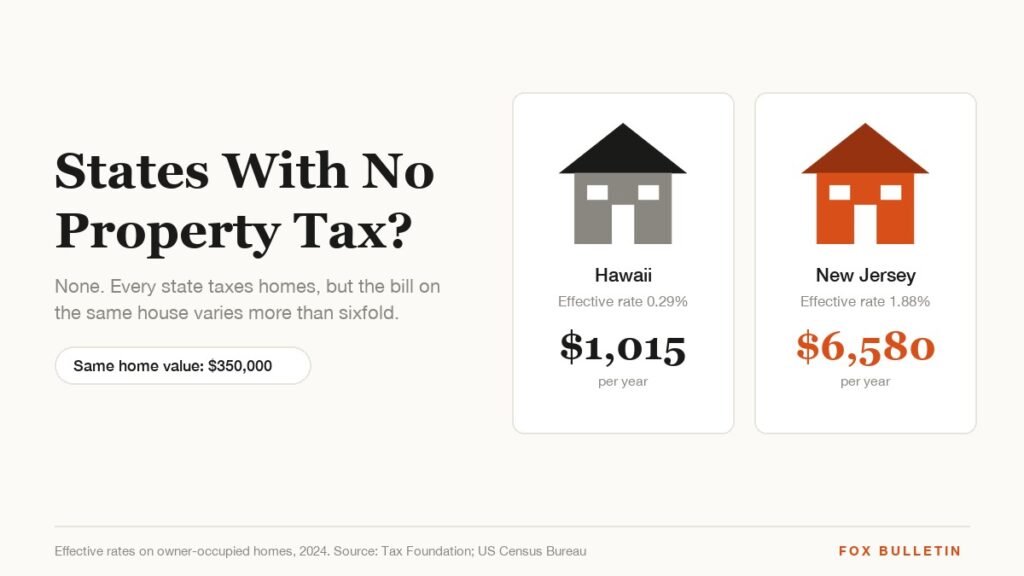
There are no states with no property tax. Effective rates run from 0.29% in Hawaii to 1.88% in New Jersey and Illinois. Every state's rate, and the exemptions that can cut a bill to zero.
States With No Sales Tax: All 5, Plus Sales Tax by State
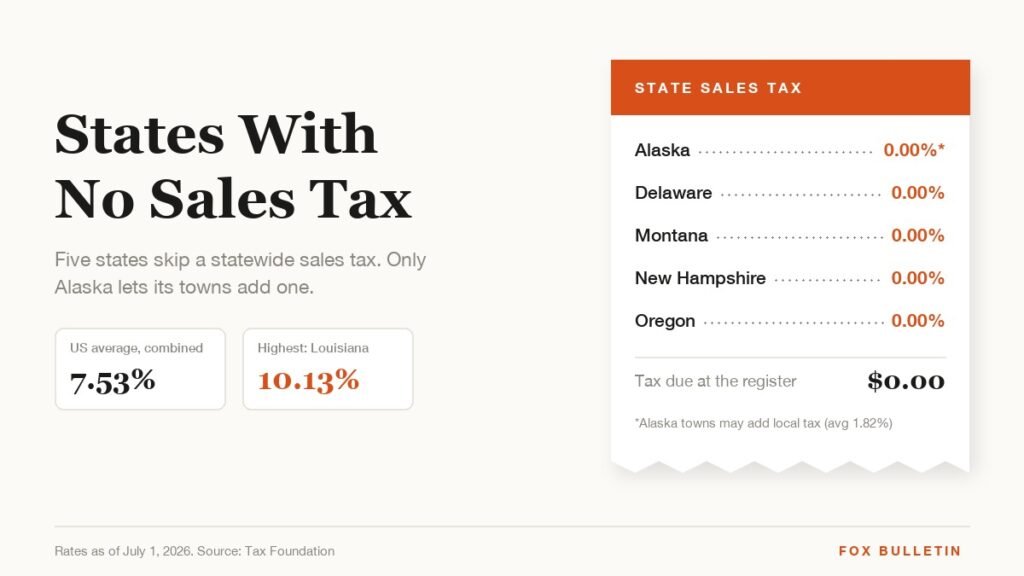
Alaska, Delaware, Montana, New Hampshire and Oregon have no statewide sales tax. What each one taxes instead, and the 2026 sales tax rate in every other state.

Tallest Buildings in the World: Top 10 Ranked by Height
The Burj Khalifa has been the tallest building in the world since 2010, and 16 years later nothing has come close.