

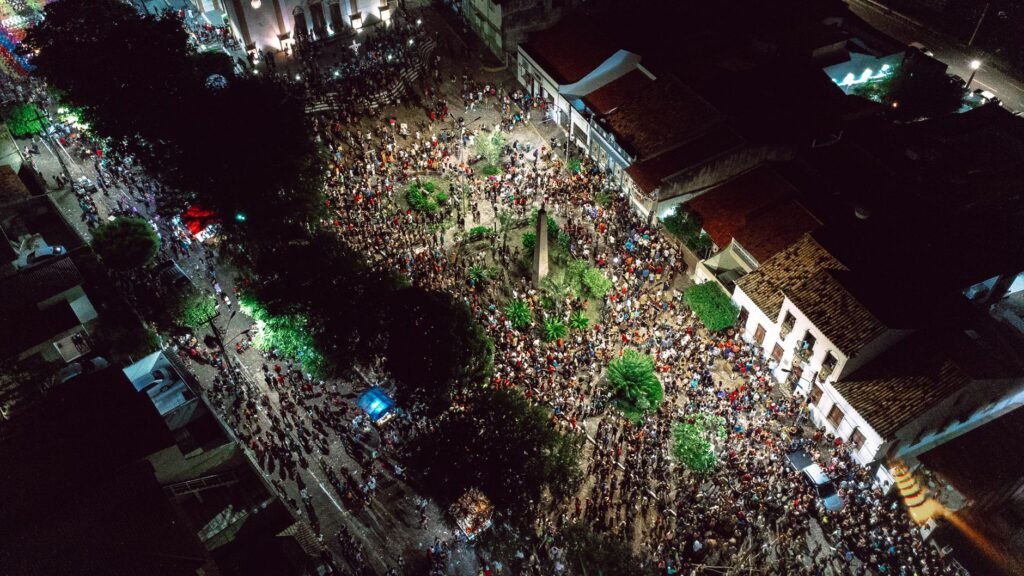
India and China are the only countries on Earth with more than a billion people, and together they account for over a third of humanity. India passed China in 2023 and now leads by roughly 24.5 million.
The drop after those two is the most striking thing on this list. China has more than a billion people more than the United States in third place, a gap larger than the population of every country except India and China themselves. Here are the 10 most populous countries in the world.
| Rank | Country | Population | Share of World | Region |
|---|---|---|---|---|
| 1 | India | 1,429,404,000 | 17.4% | Asia |
| 2 | China | 1,404,890,000 | 17.1% | Asia |
| 3 | United States | 341,784,857 | 4.2% | Americas |
| 4 | Indonesia | 288,315,089 | 3.5% | Asia |
| 5 | Pakistan | 241,499,431 | 2.9% | Asia |
| 6 | Nigeria | 223,800,000 | 2.7% | Africa |
| 7 | Brazil | 213,421,037 | 2.6% | Americas |
| 8 | Bangladesh | 169,828,911 | 2.1% | Asia |
| 9 | Russia | 146,028,325 | 1.8% | Europe |
| 10 | Mexico | 131,150,866 | 1.6% | Americas |
The 10 Most Populous Countries
1. India: 1.43 Billion
India holds 17.4% of the world’s people on about 2.4% of its land area. It overtook China in 2023, ending a period of Chinese demographic leadership that had lasted for centuries.
Its fertility rate has already fallen to roughly replacement level, so the population is still growing mainly because a large share of the country is of childbearing age. The median age is around 28, which is why India is expected to keep growing for another two decades.
2. China: 1.40 Billion
China’s population is now falling. It began declining in 2022 for the first time since the famine years of the early 1960s, and the drop has continued each year since.
The one-child policy ran from 1980 to 2015 and reshaped the age structure permanently. Restrictions were lifted and then replaced with incentives, but birth rates have not recovered, a pattern seen in every country that has reached this stage.
3. United States: 341.8 Million
The United States is third with 341.8 million people, and the gap to China above it is more than a billion. It is the only wealthy Western country in the top 10.
Its fertility rate is below replacement, so growth now comes almost entirely from immigration. That makes American population trends far more sensitive to policy decisions than to birth rates, which is unusual among large countries.
4. Indonesia: 288.3 Million
Indonesia is the largest country that most people cannot place on a map, spread across roughly 17,000 islands and holding 3.5% of the world’s population.
It is also the most populous Muslim-majority nation by a wide margin. Java alone holds more than half the national population, making it one of the most densely settled large islands anywhere.
5. Pakistan: 241.5 Million
Pakistan has 241.5 million people and one of the highest growth rates of any large country. It is projected to keep climbing the rankings over the coming decades.
Its fertility rate remains well above replacement, unlike neighbouring India and Bangladesh, both of which have completed that transition. That difference is why Pakistan is gaining on countries currently ahead of it.
6. Nigeria: 223.8 Million
Nigeria is the only African country in the top 10 and the fastest-growing nation on this list. It holds 2.7% of the world’s population today.
Projections place it among the top three countries globally before the end of the century. Nigeria is the clearest single example of the shift in global population growth toward sub-Saharan Africa.
7. Brazil: 213.4 Million
Brazil is the largest country in South America by both population and area, with 213.4 million people. Its growth has slowed sharply over the past two decades.
Fertility fell from around six children per woman in the 1960s to below replacement today, one of the fastest such declines ever recorded in a large country, and it happened without a coercive population policy.
8. Bangladesh: 169.8 Million
Bangladesh has 169.8 million people in an area smaller than the American state of Iowa, making it the most densely populated large country in the world.
Its fertility decline is often cited as a development success, falling from more than six children per woman in the 1970s to around replacement level, driven largely by family planning programmes and rising female education rather than economic growth alone.
9. Russia: 146.0 Million
Russia is the largest country on Earth by land area but ranks only ninth by population, giving it one of the lowest population densities of any major nation.
Its population has been broadly flat or falling since the 1990s, combining low fertility with lower life expectancy than other developed countries. Most Russians live in the western fifth of the country.
10. Mexico: 131.2 Million
Mexico completes the top 10 with 131.2 million people and is the most populous Spanish-speaking country in the world, ahead of Spain itself by a factor of roughly three.
Its fertility rate has fallen below replacement, and net migration to the United States has slowed considerably from its early-2000s peak. Mexico is now closer to demographic stability than growth.
Ten Countries Hold More Than Half the World
These 10 countries contain about 4.59 billion people, roughly 55.8% of the global total of 8.23 billion. Every other country on Earth, nearly 185 of them, divides the remaining 44%.
India and China alone account for 34.4%, meaning two countries hold more than a third of humanity. That concentration is even sharper than economic output, where the top two produce around 43% of global GDP, as our ranking of the largest economies in the world shows.
The Gap After China Is Larger Than Any Country
China has 1.40 billion people and the United States has 341.8 million. The difference between them is more than 1.06 billion, which is larger than the entire population of every country in the world except India and China.
That is why the top two feel like a separate category. Nothing is realistically going to join them either, since no third country is on a path to a billion people this century apart from Nigeria, and its projections extend well past 2100.
Asia Holds Five of the Top 10
India, China, Indonesia, Pakistan, and Bangladesh give Asia half the list. The Americas hold three with the United States, Brazil, and Mexico, while Africa and Europe have one each in Nigeria and Russia.
The regional balance is shifting rather than fixed. Nigeria is the only entry growing quickly, and demographers expect several more African countries to enter the top 10 during this century while European and East Asian populations shrink. Today’s list reflects the twentieth century’s growth patterns more than the twenty-first’s.
Most of These Countries Have Stopped Growing
China, the United States, Brazil, Russia, and Mexico all have fertility below the replacement rate of about 2.1 children per woman, and India has essentially reached it. Only Pakistan and Nigeria are growing quickly.
The demographic transition explains the pattern. As countries get richer and child mortality falls, families have fewer children, and every country on this list except the two fastest growers has already been through it. Populations keep rising for decades afterward because of age structure alone, which is why India continues to grow despite a fertility rate at replacement level.
Land Area Tells You Almost Nothing
Bangladesh has 169.8 million people and Russia has 146.0 million, so Bangladesh holds 23.8 million more people than the largest country on Earth by land area. Bangladesh would fit inside Russia more than a hundred times over.
The same disconnect runs through the whole list. India holds 17.4% of the world’s population on a small fraction of its land, while Russia spans eleven time zones and ranks ninth. Nigeria sits sixth on an area smaller than several countries that do not appear here at all.
What actually drives these numbers is arable land, water, climate, and history rather than territory. Populations concentrated around river deltas and fertile plains centuries ago, and those settlement patterns still shape the ranking today far more than borders drawn on a map.
How We Ranked the Most Populous Countries
Countries are ranked by total population using United Nations estimates, current as of mid-2025, the most recent complete figures available. Share of world population is calculated against the UN global total of 8.232 billion.
Only sovereign states are counted, so dependencies and territories are excluded and their populations are attributed to the governing country. Figures for large countries carry meaningful uncertainty, since several have not completed a recent census, and estimates from different agencies can differ by several million. Travel patterns follow different rules entirely, as our ranking of the most visited countries shows.
Frequently Asked Questions
What is the most populous country in the world?
India, with about 1.43 billion people, or 17.4% of the global total. It overtook China in 2023 and leads by roughly 24.5 million.
When did India overtake China?
In 2023. China’s population has been falling since 2022, while India’s continues to rise, so the gap between them is widening rather than closing.
How many countries have over a billion people?
Two: India and China. No other country is close, and the third-placed United States has fewer than 350 million.
Which country is growing fastest on this list?
Nigeria, the only African country in the top 10. Projections place it among the three most populous countries in the world before the end of this century.
What share of the world lives in these 10 countries?
About 55.8%, or 4.59 billion of the world’s 8.23 billion people. The remaining 44% is spread across nearly 185 other countries.
Related Articles
- Largest Economies in the World: Top 10 by GDP
- Most Visited Countries in the World: Top 10 Ranked
- Tallest Buildings in the World: Top 10 Ranked by Height
- Largest Employers in the World: Top 10 by Headcount
- Most Spoken Languages in the World: Top 10 Ranked
- Busiest Airports in the World: Top 10 by Passengers

Get the Fox Bulletin briefing
The stories that matter, in your inbox. No spam, unsubscribe anytime.
Newsletter signup will be available soon.
Related stories

Types of Business Insurance: What Each Policy Covers and Who Must Carry It
General liability, professional liability, workers' compensation, property, BOP, cyber, commercial auto, product liability and D&O: what each covers, when the law requires it, and what small firms pay.
TurboTax Alternative: 3 Ways to File Free or Close to It
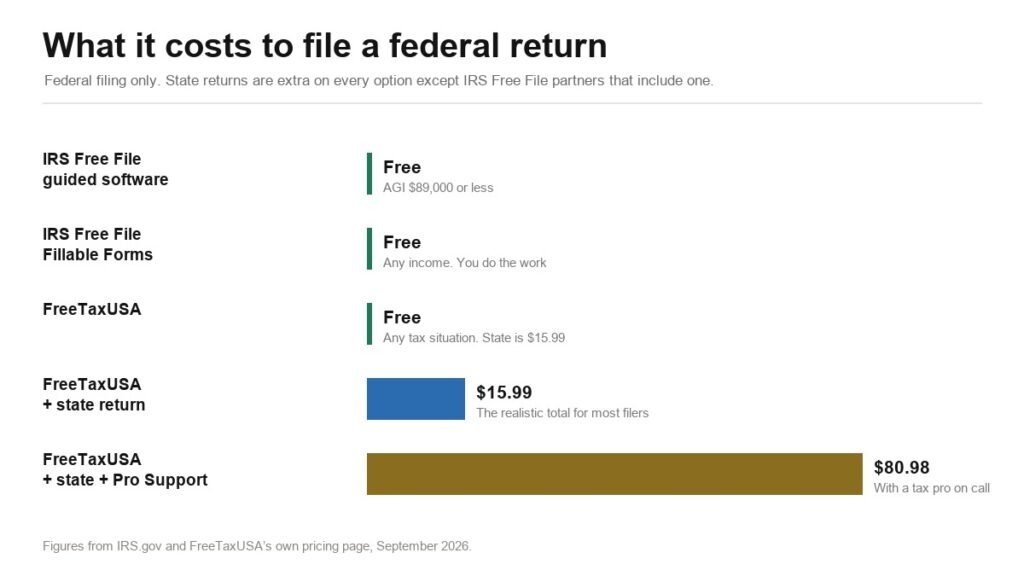
IRS Free File, Fillable Forms and FreeTaxUSA compared against TurboTax, including the $89,000 income threshold and the upsell rules the IRS bans inside Free File.
ZoomInfo Alternatives: 5 Competitors Compared on Real Pricing
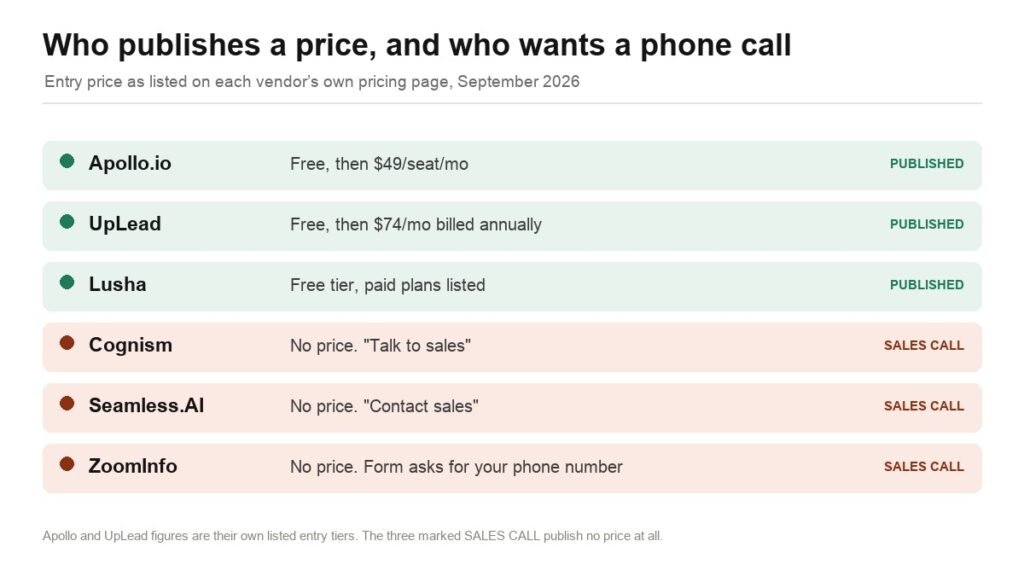
Apollo, UpLead, Lusha, Cognism and Seamless.AI compared against ZoomInfo on what each actually publishes, plus the credit model that makes sales intelligence pricing hard to compare.