

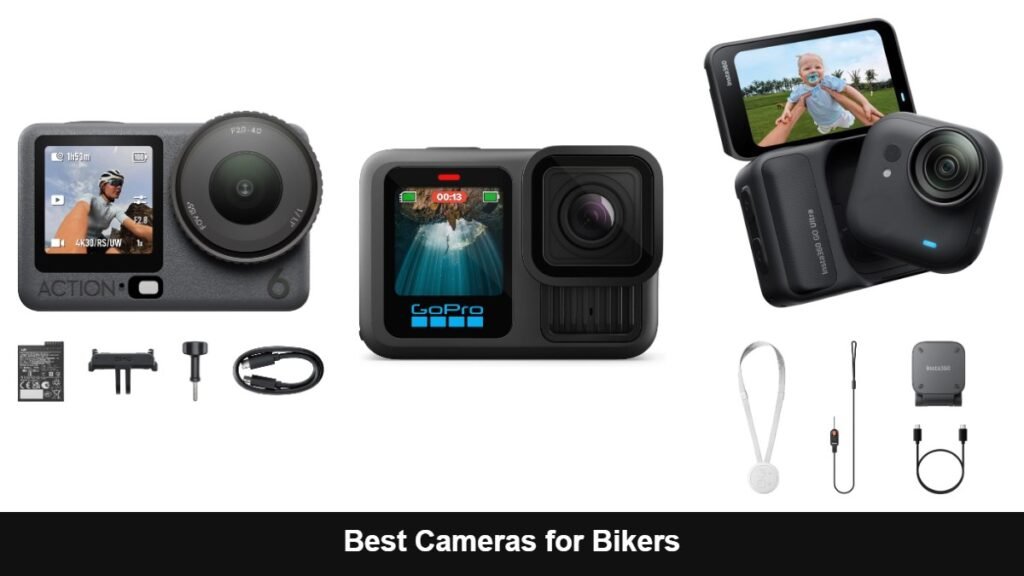
The best camera for bikers depends on what you want the footage for. A motorcyclist filming a canyon road wants an action camera with strong stabilisation and a battery that lasts the ride; a commuter wants a wired dash cam that records every trip without being touched; a cyclist wants a rear camera that also warns about cars. The eight cameras below cover all three, from a 53-gram helmet camera to a two-channel dash cam that hardwires to the bike.
Resolutions, waterproof ratings, battery claims and box contents come from each maker’s site and listing, checked on 29 September 2026. If you are looking at aerial footage as well, our DJI alternatives guide covers camera drones.
Best Cameras for Bikers at a Glance
Check the type column first. Action cameras and helmet cameras run on batteries and need charging; motorcycle dash cams wire to the bike and never need it; the Garmin Varia is a cyclist’s rear light with a camera inside.
| Camera | Type | Max video | Waterproof | Battery claim | Weight |
|---|---|---|---|---|---|
| DJI Osmo Action 6 | Action camera | 8K30, 4K120 | 20 m without case | Up to 240 min | 149 g |
| GoPro HERO13 Black | Action camera | 5.3K60, 4K120 | 10 m without case | Enduro battery | 154 g |
| Insta360 Ace Pro 2 | Action camera | 8K30, 4K60 HDR | 12 m without case | Up to 180 min | 177 g |
| Insta360 X6 | 360 camera | 8K50 360, 5K60 flat | 20 m without case | 140 min at 8K | 195 g |
| Insta360 GO Ultra | Helmet camera | 4K60 | 10 m, camera unit | 70 min alone, 200 min with pod | 53 g |
| INNOVV K7 | Motorcycle dash cam | 2K + 2K at 30fps | IP67 | Wired to the bike | Not stated |
| Garmin Varia RCT715 | Rear radar camera for cyclists | 1080p30 | Not stated | Up to 6 hours | 148 g |
| AKASO Brave 8 Lite | Budget action camera | 4K60 | 10 m without case | 140 min per battery at 4K30, two included | About 113 g |
1. DJI Osmo Action 6: Best Camera for Bikers Overall
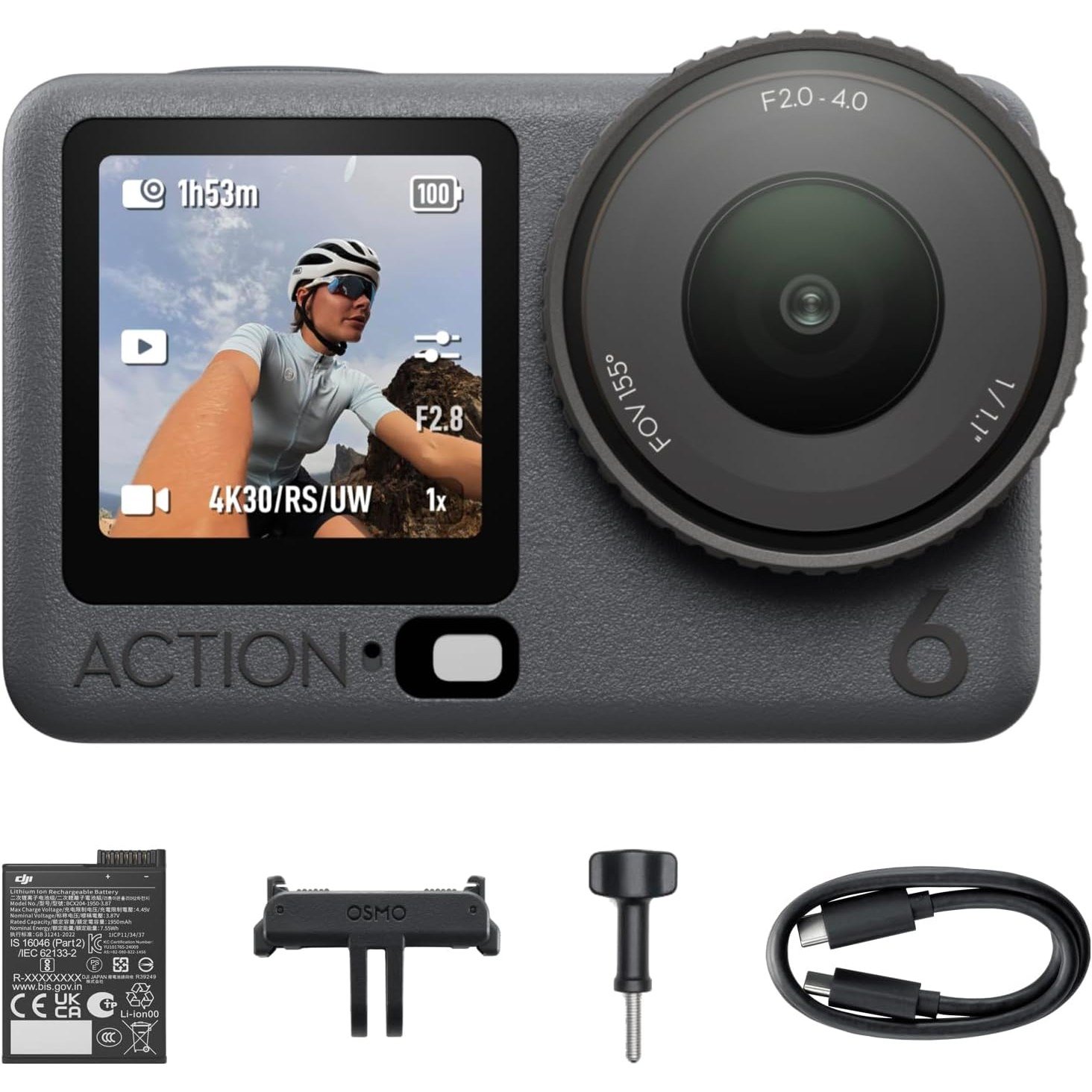
Max video: 8K30, 4K120 · Sensor: 1/1.1 in with f/2.0 to f/4.0 aperture · Waterproof: 20 m · Battery: 1950 mAh, up to 240 min
The Osmo Action 6 is the action camera to put on a motorcycle because of two things nobody else offers at this size: a variable aperture and a battery that lasts a ride. The 1/1.1-inch square sensor and f/2.0 to f/4.0 aperture let it hold detail in a bright sky and a shaded road at once, and a dedicated night mode records up to 4K60. RockSteady 3.0 smooths bar and helmet vibration, and 360-degree HorizonSteady keeps the horizon level through lean angles, up to 4K60.
DJI rates the battery at 240 minutes and says it is cold-resistant, with a working range from -20 to 45 degrees Celsius, which covers early-morning rides. It is waterproof to 20 metres with no case, carries 50GB of built-in storage in case you forget the card, and accepts two DJI wireless mic transmitters directly for helmet audio. The magnetic quick-release mount makes it easy to move between a chin mount and a tank mount. Full specifications are on DJI’s site.
What it does well
- Variable aperture and strong low-light mode.
- 240-minute battery claim and cold resistance.
- Horizon levelling through corners, 20 m waterproof.
What to know before buying
- 8K needs a fast microSD card.
- Stock was low at the time of writing.
2. GoPro HERO13 Black: Best Action Camera for Bikers Who Want Lens Options
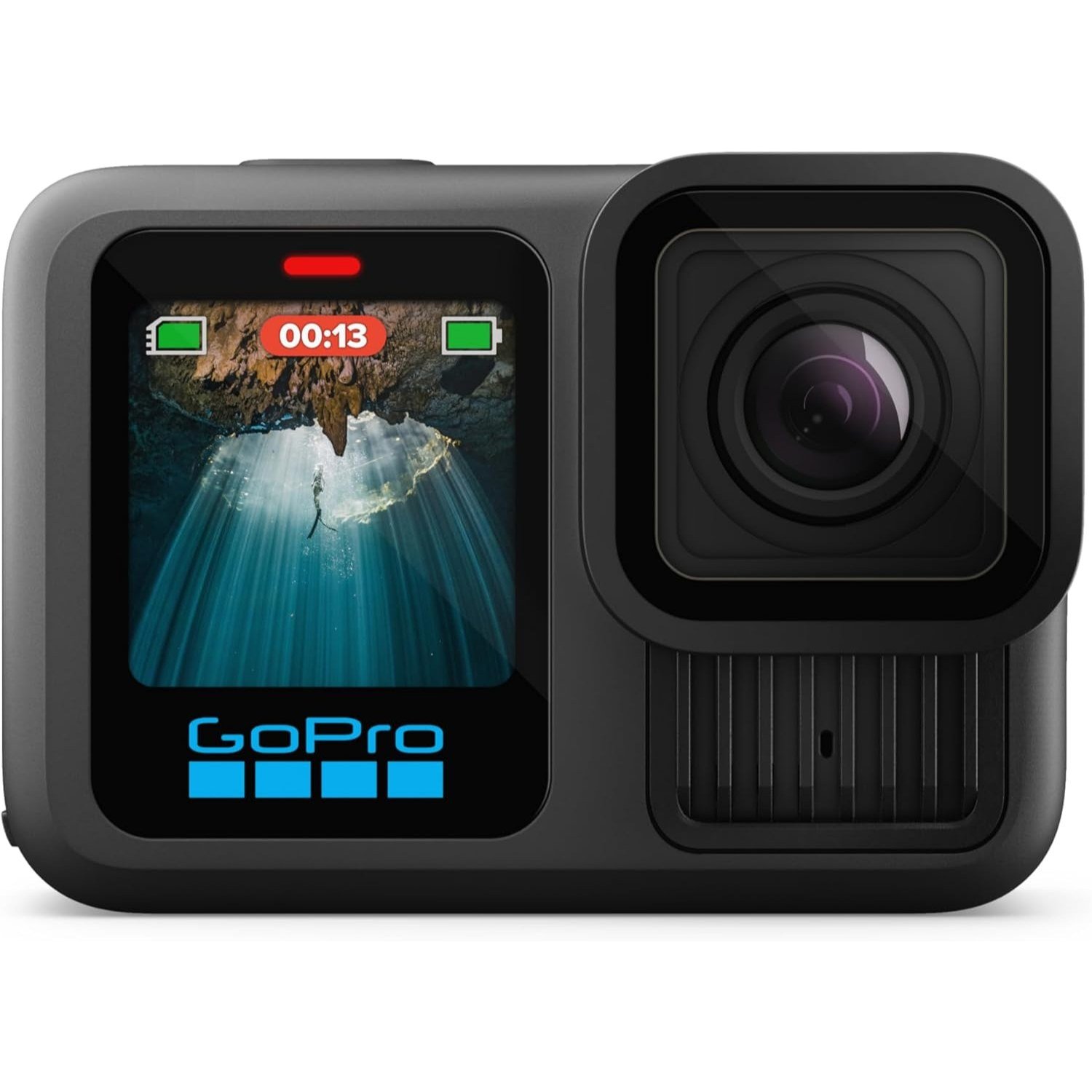
Max video: 5.3K60, 4K120 · Waterproof: 10 m · Battery: Enduro · Mount: folding fingers, curved adhesive mount included
The HERO13 Black is still the camera with the biggest ecosystem of motorcycle mounts and the most flexible lens system. Its HB-series lens mods clip on and are detected automatically: the Ultra Wide for a full first-person road view, the Macro for detail, and neutral density filters that add the motion blur that makes fast footage look smooth rather than jittery. It records 5.3K60 and 4K120, with a 13x slow-motion mode for replaying a corner.
It ships with the Enduro battery, a curved adhesive mount, a mounting buckle and a USB-C cable, and it is waterproof to 10 metres with a water-repelling lens cover. It records while charging over USB-C, which is how many riders run it from the bike on long days. The one thing it lacks is a dedicated night video mode, so for dusk rides the DJI or Insta360 Ace Pro 2 do better.
What it does well
- Ultra Wide, Macro and ND lens mods with auto detection.
- 5.3K60 and 13x slow motion.
- Largest choice of motorcycle mounts.
What to know before buying
- No dedicated low-light video mode.
- Lens mods are sold separately.
3. Insta360 Ace Pro 2: Best Camera for Bikers in Low Light
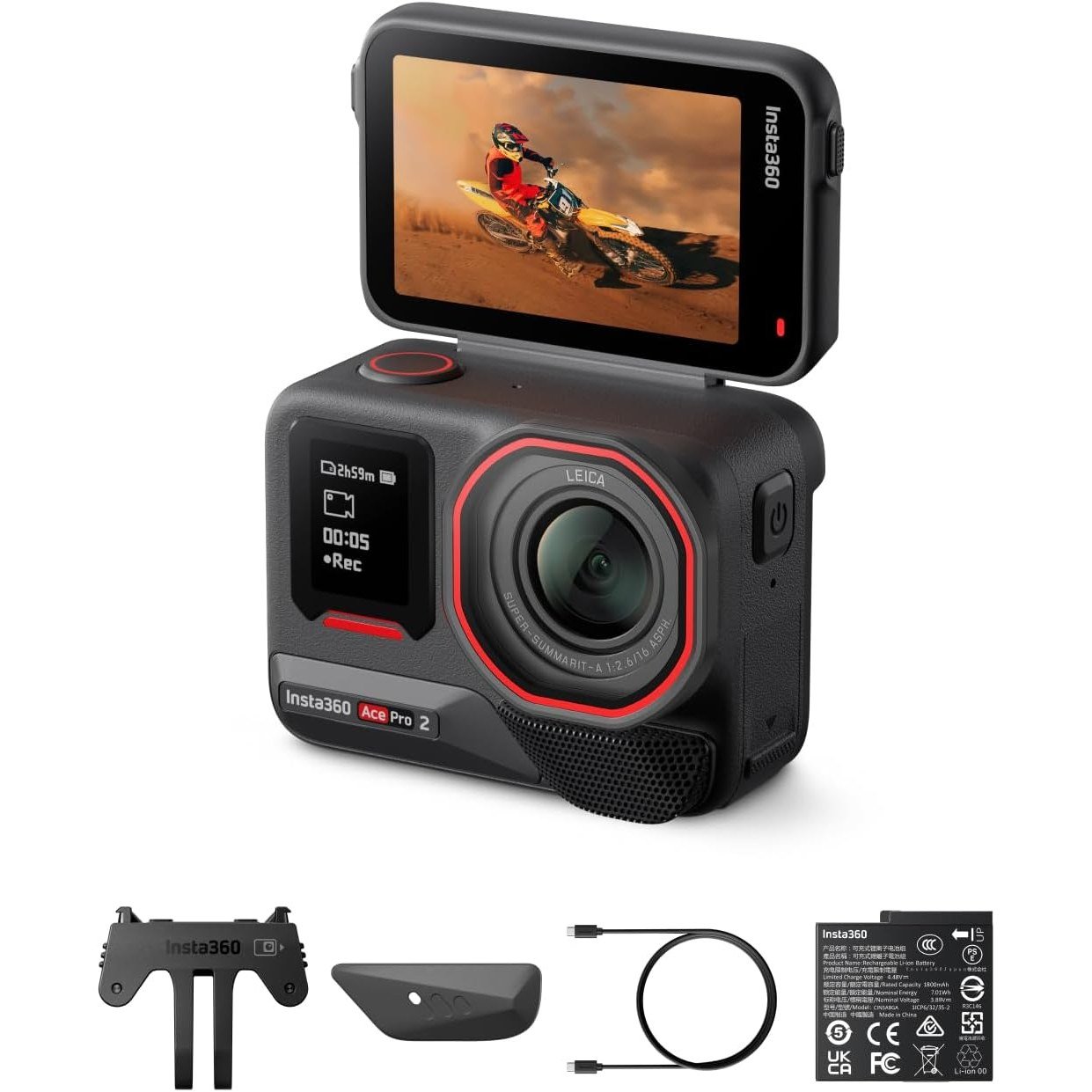
Max video: 8K30, 4K60 Active HDR · Sensor: 1/1.3 in with Leica lens · Waterproof: 12 m · Field of view: 157 degrees
The Ace Pro 2 pairs a 1/1.3-inch sensor and a Leica Summarit lens with a separate imaging chip whose job is noise reduction, and the result is the best night footage of the action cameras here. PureVideo mode runs up to 4K60 and brightens dark roads without the smeared look cheaper cameras produce, and Active HDR at 4K60 handles tunnel exits. Insta360 lists motorcycling among the uses it built it for.
The flip-up screen lets you frame a chin-mount shot while wearing the helmet, a new snap-on wind guard cuts wind noise at speed, and FlowState stabilisation with horizon lock keeps the picture level. It is waterproof to 12 metres and rated to -20 degrees Celsius. This single-battery bundle is the entry point; the dual-battery bundle is the one for all-day rides.
What it does well
- Dedicated low-light mode up to 4K60.
- Flip screen for framing on a helmet.
- Snap-on wind guard for cleaner audio.
What to know before buying
- Heavier than the DJI at 177 g.
- Waterproof rating is lower than the DJI’s 20 m.
4. Insta360 X6: Best 360 Camera for Bikers
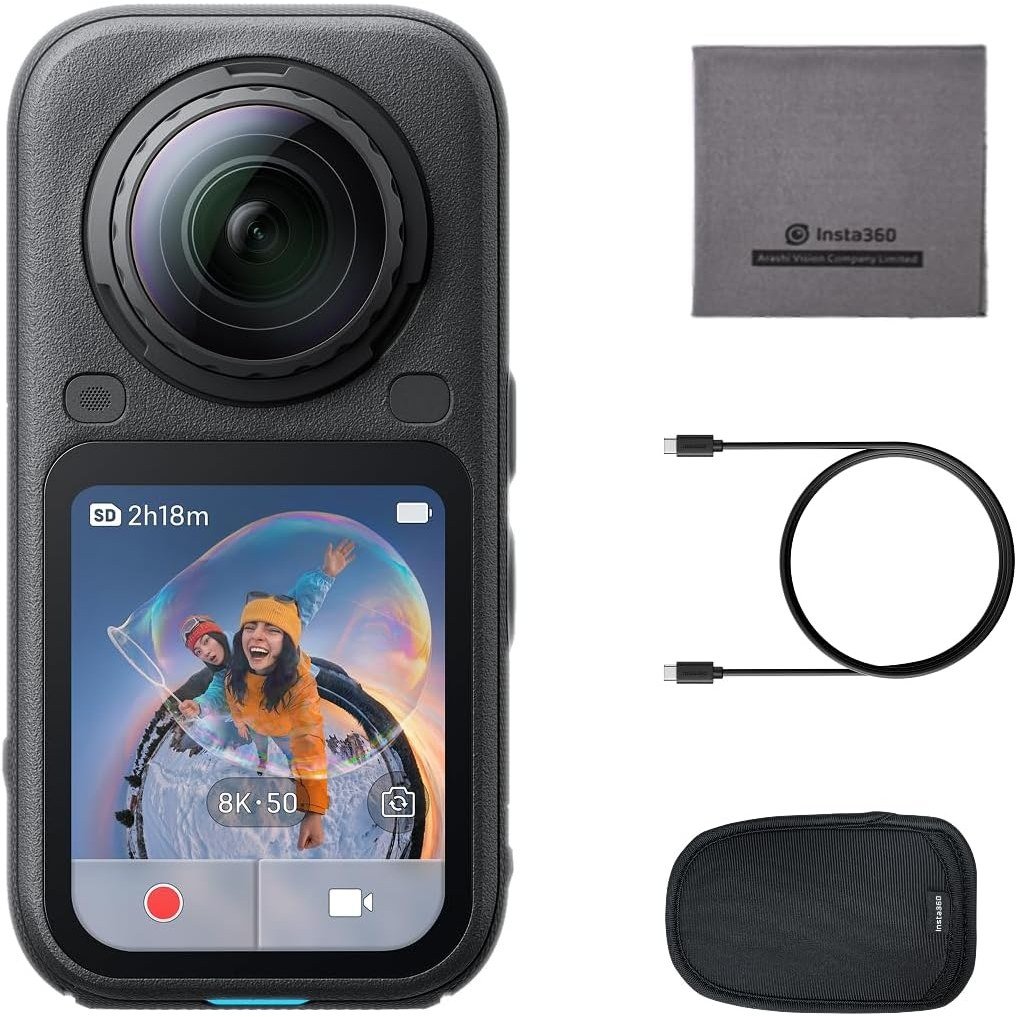
Max video: 8K50 360, 5K60 single lens · Sensors: dual 1/1.1 in · Waterproof: 20 m · Battery: 140 min at 8K
A 360 camera on a pole behind the seat is how riders get the third-person shot where the bike appears to be filmed by a chase vehicle, and the X6 is the current benchmark. Dual 1/1.1-inch square sensors record 8K at 50 frames per second, so a reframed flat clip still looks sharp, and 10-bit colour gives room to grade. The lenses are replaceable, which matters when one meets a stone at 70 mph.
You do not have to edit 360 footage to use it. InstaFrame 2.0 delivers a flat 4K clip alongside the 360 file, with tracking that follows the bike, and the AI Director cuts a highlight reel while the camera charges. It also works as a normal ultra-wide action camera at 5K60 or 4K120. Waterproof to 20 metres, it runs 140 minutes at 8K on a charge.
What it does well
- 8K50 360 video with replaceable lenses.
- Flat 4K clip output without editing.
- Doubles as a 5K60 ultra-wide action camera.
What to know before buying
- Needs an invisible selfie stick or bike mount for the chase-cam look.
- Large files and a heavier body at 195 g.
5. Insta360 GO Ultra: Best Helmet Camera for Bikers
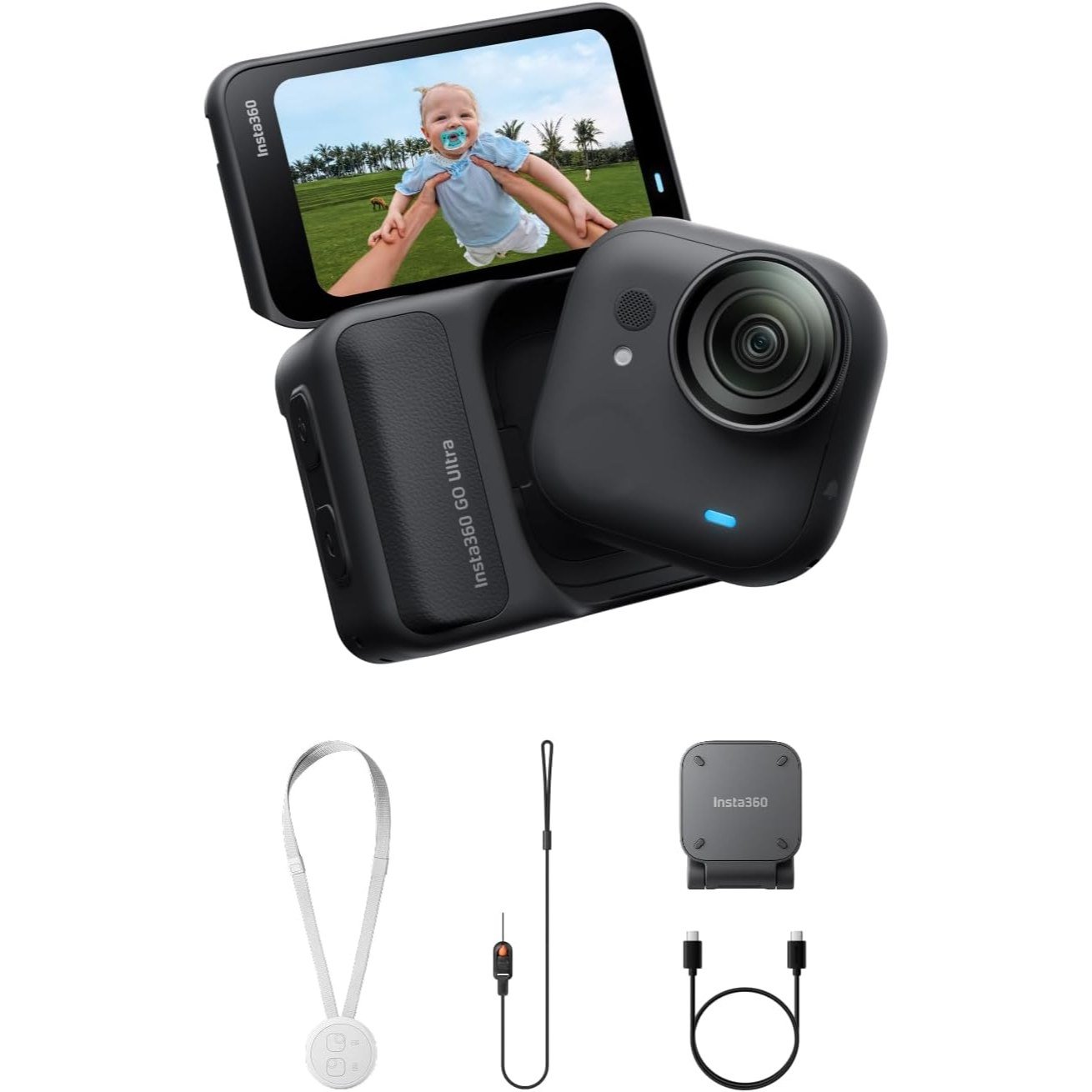
Max video: 4K60 · Sensor: 1/1.28 in · Weight: 53 g camera · Battery: 70 min alone, 200 min with the Action Pod
At 53 grams the GO Ultra is the camera you forget is on the helmet, and that is its case for motorcyclists and road cyclists. The camera unit is magnetic and clips to the included Easy Clip or pendant, while the Action Pod adds a screen and a bigger battery when you want it. It records 4K60 with Active HDR through a 156-degree lens, and a 1/1.28-inch sensor with PureVideo mode handles dusk better than any camera this small has a right to.
Run time is 70 minutes on the camera alone and up to 200 minutes docked in the pod, and a 12-minute charge takes it to 80 percent. The camera unit is waterproof to 10 metres. The box has the pendant, safety cord, Easy Clip and lens guard, but no microSD card, and there is a cycling bundle that adds a helmet mount.
What it does well
- 53 g magnetic camera with 4K60.
- Fast charging and 200-minute run time with the pod.
- Low-light mode on a tiny camera.
What to know before buying
- 70 minutes alone means carrying the pod on long rides.
- Card sold separately.
6. INNOVV K7: Best Motorcycle Dash Cam
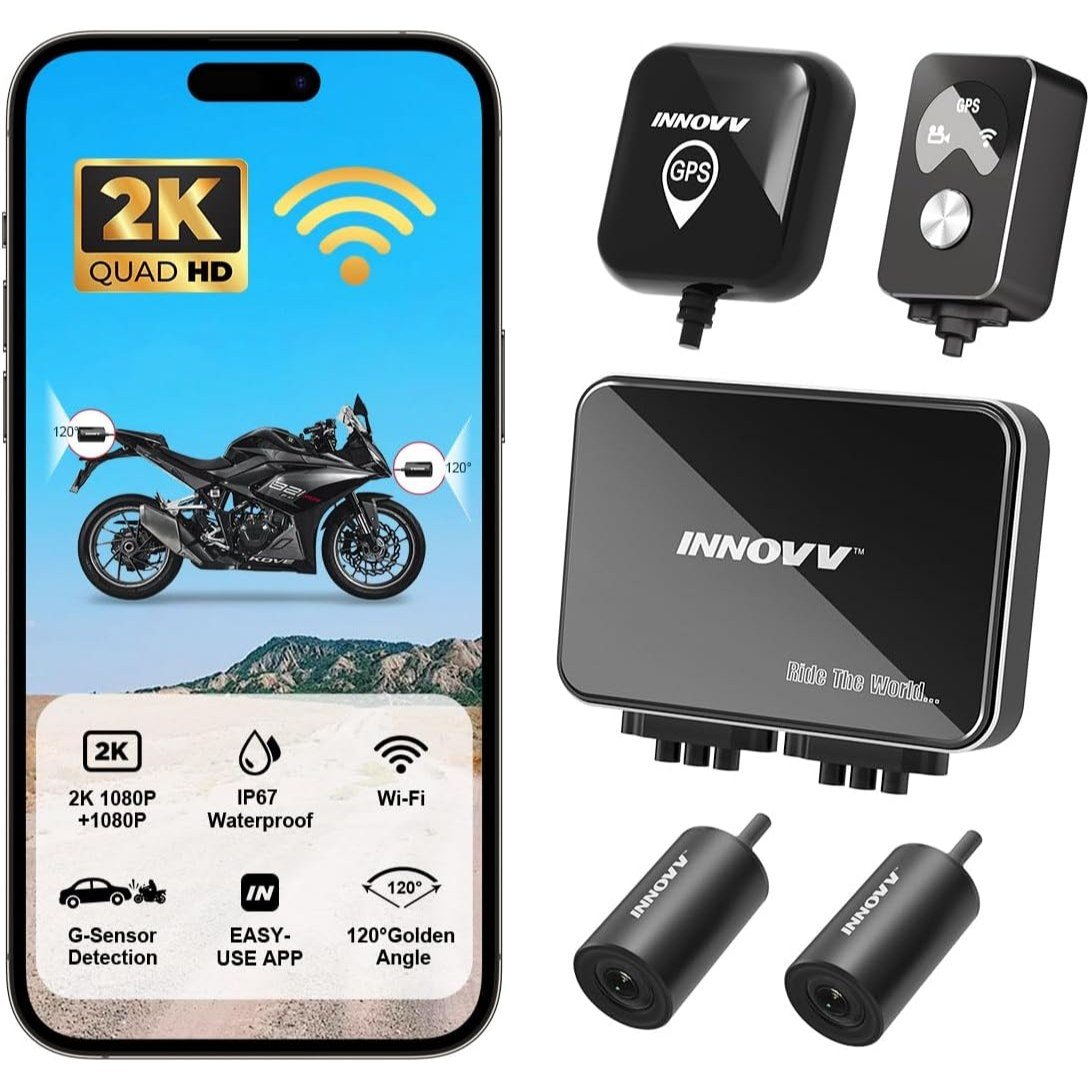
Cameras: front and rear, 2K at 30fps each · Waterproof: IP67, aluminium bodies · Power: wired to the bike, 9 to 16V · Max card: 512GB
An action camera is for the ride you want to remember; a dash cam is for the one you would rather forget. The INNOVV K7 is a two-channel motorcycle dash cam that wires to the bike’s switched power, starts with the ignition, and records front and rear at 2K with electronic stabilisation without you touching it. The cameras are IP67 aluminium units rated from -30 to 70 degrees Celsius, and a wired remote saves a clip or takes a photo with one button.
A G-sensor locks the file in a crash, and a 24-hour sentry mode records 30 seconds when the parked bike is knocked. A 10Hz GPS logs position and speed, and 5.8GHz Wi-Fi feeds the INNOVV app for playback and settings. Mounts, 3M tape and screws are included; a memory card is not. Installation means routing two camera cables and a power lead, which most owners give to a shop. INNOVV’s page lists it as a current model.
What it does well
- Records every ride front and rear with no charging.
- Crash lock and parked-bike sentry mode.
- IP67 cameras and 10Hz GPS.
What to know before buying
- Needs wiring to the bike.
- 2K at 30fps, so not a replacement for an action camera.
7. Garmin Varia RCT715: Best Camera for Cyclists
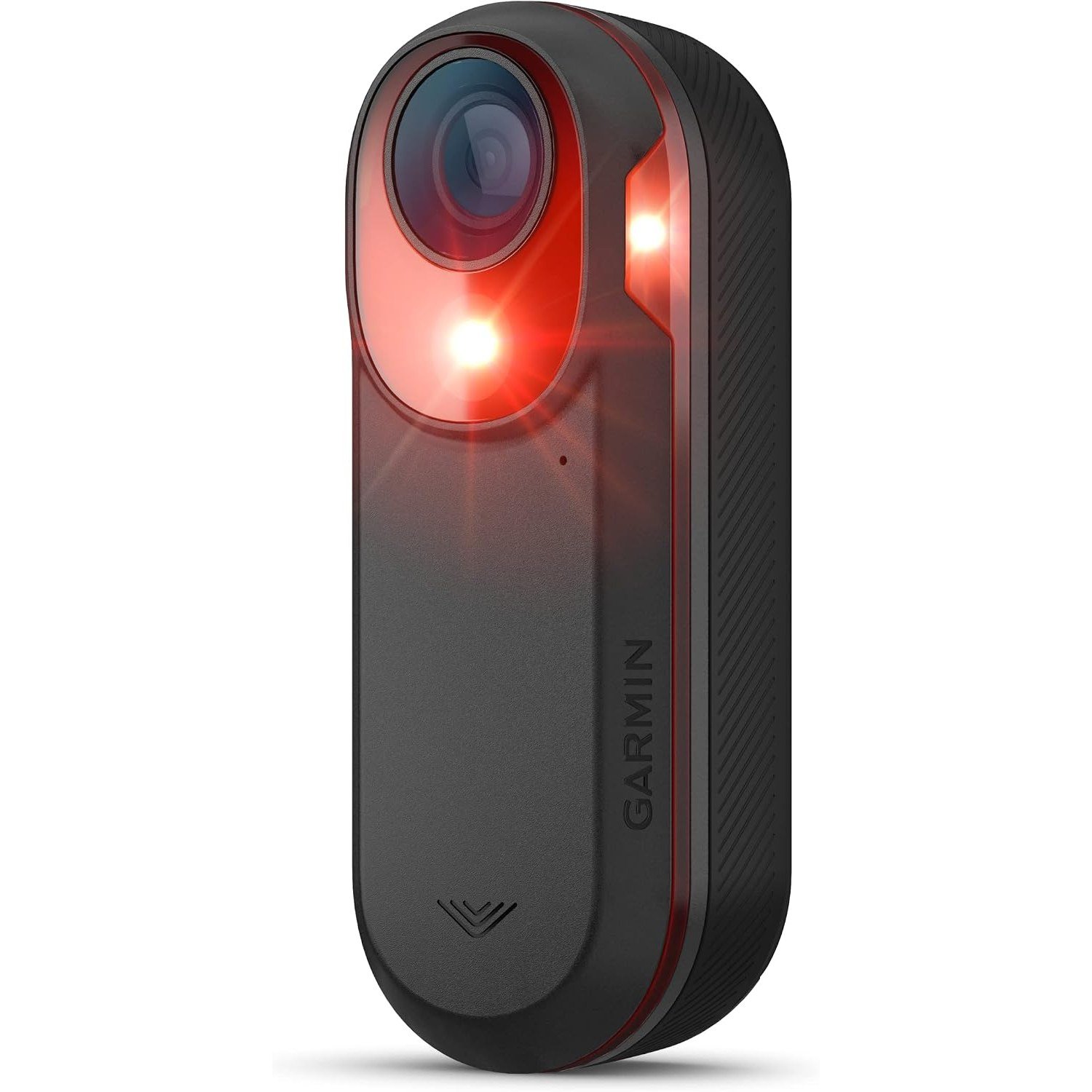
Video: 1080p30 or 720p · Radar: detects vehicles up to 140 m behind · Light: built-in tail light · Battery: up to 6 hours
For a road cyclist the camera that matters points backwards, and the Varia RCT715 combines it with the thing cyclists already buy: a rear radar. It detects cars approaching from up to 140 metres away and shows them on a Garmin Edge computer, a Garmin watch or the Varia phone app, while the tail light warns the driver. The camera records 1080p at 30 frames per second, or 720p to stretch the battery, and saves footage automatically before, during and after a detected incident.
Three modes trade recording for run time: always on, lights and radar only, or radar-activated, which switches the camera on when a car appears. It mounts to the seat post with a quarter-turn mount and shims in the box, and the Varia app handles playback. It is not a helmet camera and not for filming the descent; it is evidence and warning in one unit.
What it does well
- Radar warnings and a tail light in one unit.
- Incident detection saves the clip automatically.
- Works with Edge computers and Garmin watches.
What to know before buying
- 1080p rear view only.
- Always-on recording shortens the 6-hour claim.
8. AKASO Brave 8 Lite: Best Budget Camera for Bikers
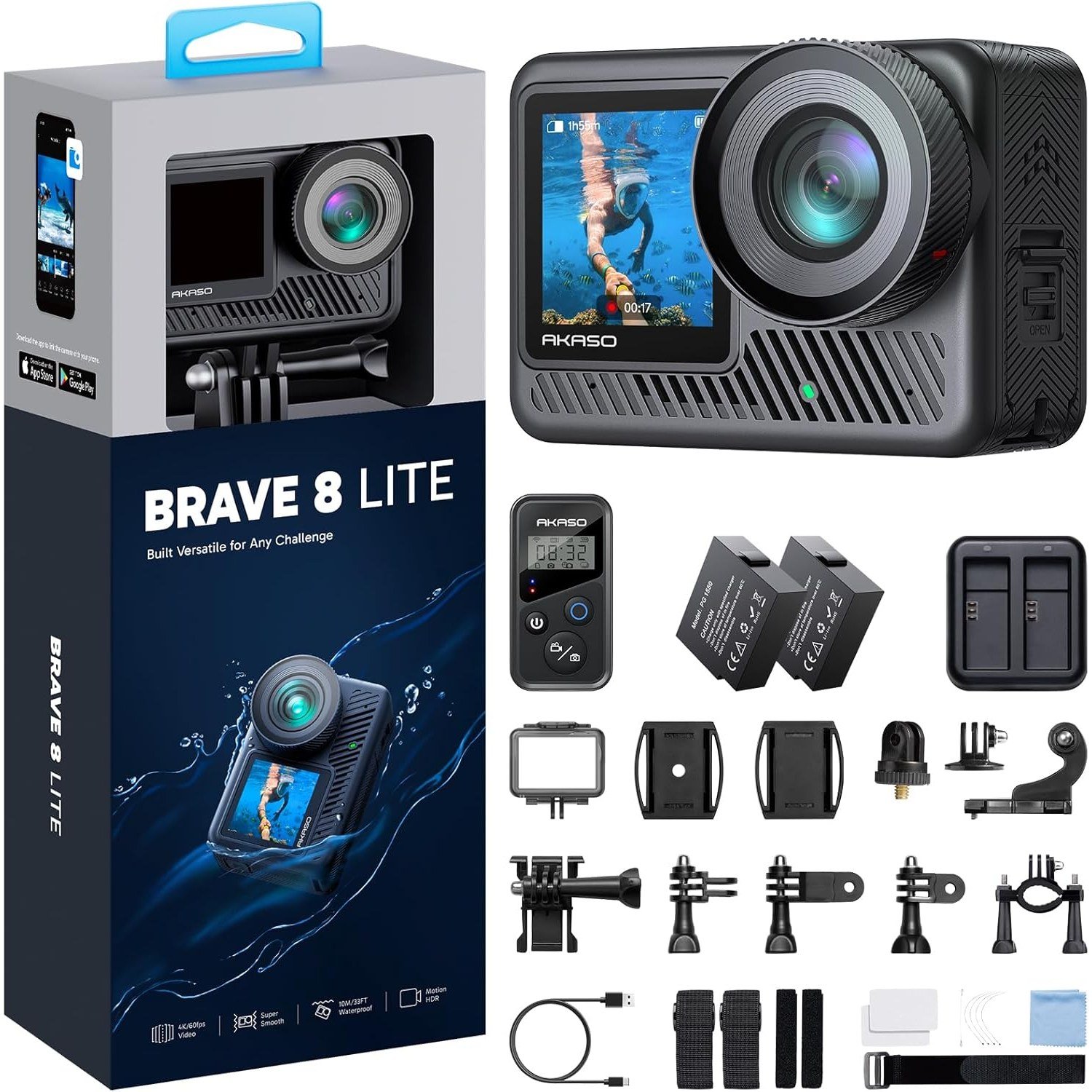
Max video: 4K60 · Sensor: 1/2 in · Waterproof: 10 m · Batteries: two 1550 mAh, about 140 min each at 4K30
The Brave 8 Lite is the camera to buy if you want to try helmet footage before spending action-camera money. It records 4K60 with HDR from a 1/2-inch sensor, has front and rear screens, and its stabilisation combines an in-camera component with smoothing in the app. It is waterproof to 10 metres without a case.
The box is the reason it is here: two batteries, a charger, a wrist remote, a bike handlebar clamp and a helmet accessory kit that uses the standard GoPro-style mount, so any motorcycle chin mount fits. AKASO rates each battery at about 140 minutes of 4K30. It will not match the DJI or Insta360 at night or in stabilisation, but for daytime rides it does the job for a fraction of the price.
What it does well
- Two batteries, remote, handlebar clamp and helmet kit included.
- 4K60 with HDR and dual screens.
- GoPro-compatible mounting.
What to know before buying
- Weaker stabilisation and low-light performance.
- Smaller 1/2-inch sensor.
Action Camera vs Motorcycle Dash Cam: Which Do You Need?
An action camera gives you the best picture and the most freedom, but you have to mount it, charge it and press record, and most ride for two to four hours on a battery. A motorcycle dash cam like the INNOVV K7 is wired in, starts with the bike and records every mile at a lower resolution with no input from you. Riders who commute in traffic usually want the dash cam; riders who tour or film want the action camera. Plenty run both: the dash cam for evidence, the action camera for the good bits.
Is It Safe to Mount a Camera on a Motorcycle Helmet?
The safety bodies are cautious. The Snell Memorial Foundation says in its FAQ that it only certifies helmets as they leave the factory and that installing after-market accessories can invalidate the certification, and it advises having any such work done by knowledgeable professionals. Federal helmet standard FMVSS 218 limits rigid projections on the shell, which is one reason riders favour chin mounts and adhesive mounts rather than anything that drills or bolts through the shell.
In practice, use an adhesive mount on the chin bar, add a tether so the camera cannot leave at speed, keep it as light as you can, and never modify the shell or liner. The 53-gram GO Ultra and the DJI at 149 grams are the easiest to live with on a helmet; the X6 belongs on the bike.
How Do You Stop Vibration Ruining Motorcycle Footage?
Engine vibration reaching the sensor produces the wavy, jelly-like distortion that stabilisation cannot fix. Mount to the rider rather than the machine where you can, since a helmet or chest mount isolates the camera from the engine. If it must go on the bike, mount to a rigid part of the frame or tank rather than a mirror stalk or bar end, put a strip of rubber between clamp and bar, and keep the mount short. Then let the camera’s stabilisation handle what is left; the DJI, GoPro and both Insta360 action cameras have horizon levelling that also covers lean.
Which Camera for Bikers Should You Buy?
For most motorcyclists the DJI Osmo Action 6 is the one: the longest battery claim, a variable aperture for changing light, and horizon levelling through corners. Pick the GoPro HERO13 Black if you want the widest choice of mounts and lens mods, the Insta360 Ace Pro 2 if you ride at dusk, and the Insta360 X6 for the chase-camera shot. The GO Ultra is the helmet camera you will forget is there.
Commuters should wire in the INNOVV K7 and stop thinking about it. Road cyclists should get the Garmin Varia RCT715 for radar and rear footage in one unit, and anyone unsure whether they will use a camera at all should start with the AKASO Brave 8 Lite. If you track rides on your wrist too, our smartwatch guide has the current picks.
Frequently Asked Questions
What is the best camera for bikers?
The DJI Osmo Action 6 for motorcyclists who film their rides, the INNOVV K7 for commuters who want a wired dash cam, and the Garmin Varia RCT715 for cyclists who want radar and a rear camera together.
Is a 360 camera good for motorcycles?
Yes, for the third-person chase shot. The Insta360 X6 on a pole behind the seat hides the pole and lets you reframe any angle afterwards, and it outputs a flat 4K clip without editing.
How long do action camera batteries last on a motorcycle?
DJI claims up to 240 minutes for the Osmo Action 6 at 1080p, Insta360 up to 180 for the Ace Pro 2 and 140 at 8K for the X6. Wind, cold and higher resolutions cut that, so carry a spare or run the camera from the bike’s USB port.
Can a motorcycle dash cam record when the bike is parked?
The INNOVV K7 has a 24-hour sentry mode that records 30 seconds when its G-sensor detects a knock, drawing power from the bike’s battery.
Are helmet cameras legal?
No US state bans helmet cameras outright, but a modified helmet can fall outside its safety certification. Use adhesive or chin mounts, never drill the shell, and check local rules if you ride abroad.
Do I need a waterproof camera for cycling?
Every camera here is at least rain-proof: the action cameras are waterproof to 10 metres or more, the INNOVV K7 is IP67, and the GO Ultra’s camera unit is rated to 10 metres.
Related Articles

Get the Fox Bulletin briefing
The stories that matter, in your inbox. No spam, unsubscribe anytime.
Newsletter signup will be available soon.
Related stories
Best Mobile Cooler for Gaming: 7 Phone Coolers Compared on Power and Noise
The best mobile cooler for gaming is a magnetic Peltier cooler that plugs into a wall charger and chills the back of your phone below room temperature, because that is what stops…

Best Samsung Galaxy Z Fold8 Ultra Cases: Top 8 Picks
The 6 best Samsung Galaxy Z Fold8 Ultra cases, from Spigen to official Samsung, plus why Fold8 cases will not fit the Ultra.

Best Samsung Galaxy Z Fold8 Cases: Top 8 Picks
The 6 best Samsung Galaxy Z Fold8 cases, from Spigen to official Samsung and dbrand, plus why Fold8 Ultra cases will not fit.