
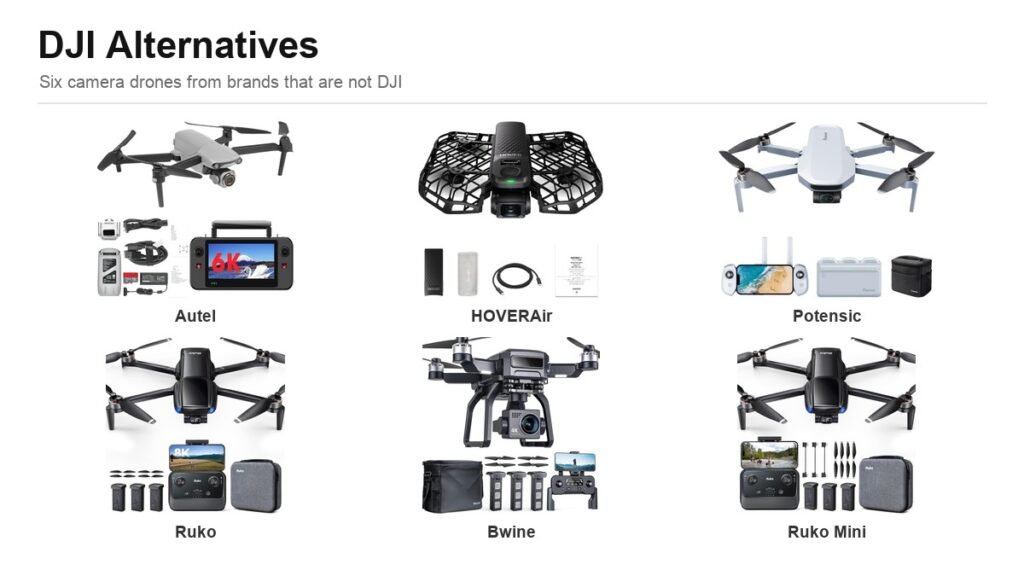
DJI makes the drones most people compare everything else against, and for years the honest advice was that the alternatives were worse. That is no longer automatically true, and the reasons people go looking for a non-DJI drone have shifted from picture quality to procurement rules, supply worries and a wish not to depend on one company.
The six below are the credible alternatives you can actually buy, ranging from a 1-inch-sensor enterprise machine down to a 192-gram flying camera that skips FAA registration entirely. Every specification quoted is the manufacturer’s own claim, and the regulatory rules come straight from the FAA.
The Six at a Glance
Weight is the specification to read first, because it decides whether you register the aircraft at all. Flight times quoted by manufacturers are usually the total across all supplied batteries, not a single flight.
| Drone | Camera | Gimbal | Flight time (as claimed) |
|---|---|---|---|
| Autel EVO Lite 6K Enterprise | 6K, 1-inch CMOS | 3-axis | 40 minutes |
| HOVERAir X1 PRO | 4K | 2-axis with EIS | Short, by design |
| Potensic ATOM | 4K/30fps, 12MP Sony CMOS | 3-axis | 96 minutes across 3 batteries |
| Ruko F11 series | 4K/30fps, 48MP 1/2-inch CMOS | 3-axis | 96 minutes across 3 batteries |
| Bwine F7GB2 Pro | 4K UHD | 3-axis | 75 minutes |
| Ruko U11MINI | 4K video, 8K photo | 3-axis | 96 minutes across 3 batteries |
1. Autel Robotics EVO Lite 6K Enterprise: The Closest Thing to a Straight Swap
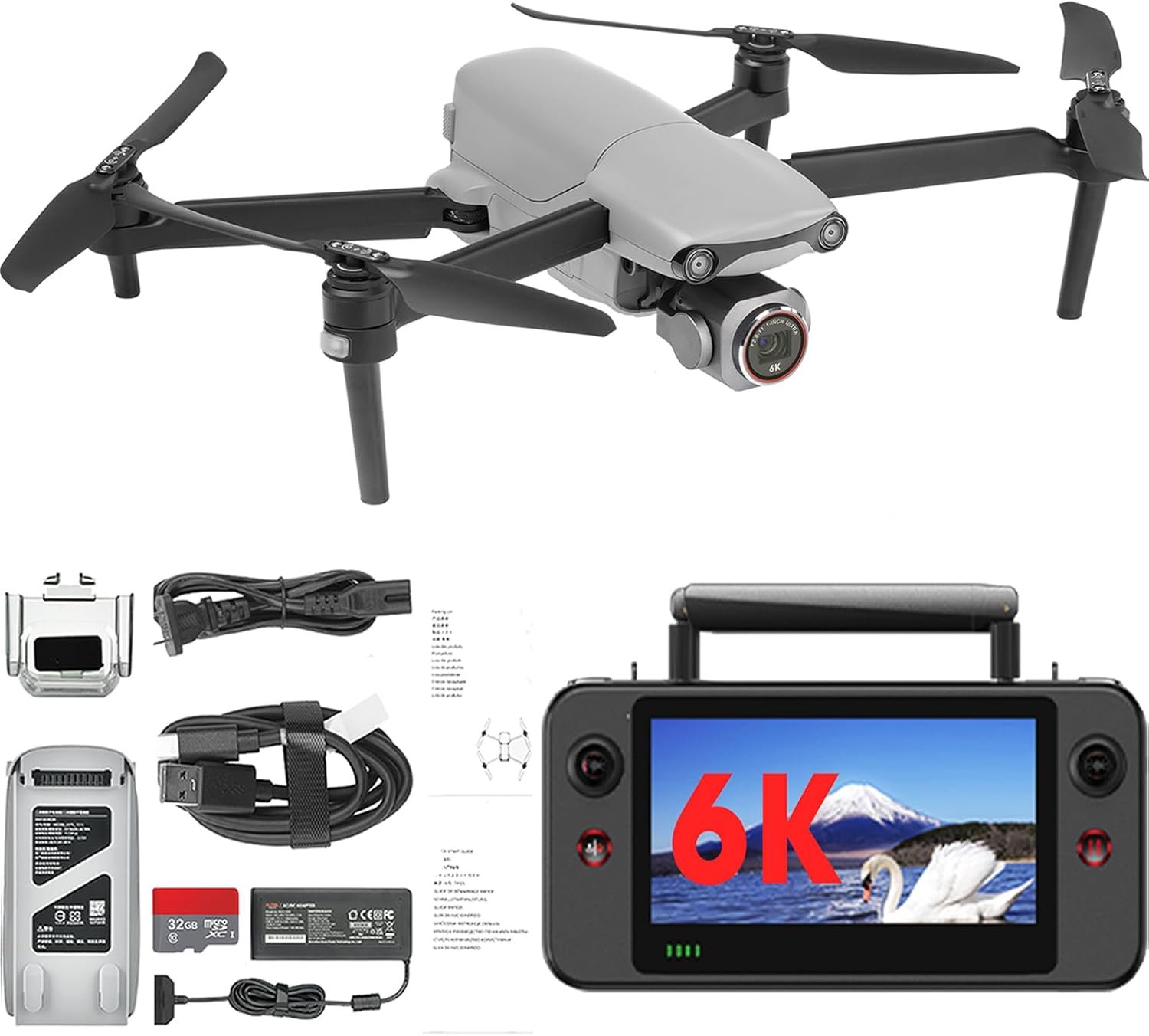
Autel is the only company on this list that competes with DJI at the top rather than underneath it, and the EVO Lite 6K Enterprise is the model aimed squarely at buyers who cannot or will not use DJI hardware.
The camera is a 6K sensor on a 1-inch CMOS, which is a genuinely large sensor for a drone of this size and the single biggest factor in low-light performance. There is 16x digital zoom, AI target recognition and a claimed 40 minutes of flight. Wide-angle vision sensors sit at the front, rear and underside for obstacle awareness. Autel positions this against its own EVO 2 Pro V3 and EVO II Enterprise line as the more affordable entry to the enterprise range, and it runs Autel Enterprise flight software built for public safety and emergency workflows rather than consumer filming.
What it does well
- 1-inch 6K sensor, the largest in this group by a wide margin.
- Front, rear and downward vision sensors.
- 40 minutes of claimed flight on a single battery.
- Enterprise software aimed at public safety operations.
What to know before buying
- Priced as enterprise equipment, not a consumer drone.
- Well over 250g, so registration and Remote ID apply.
- Enterprise app is more complex than a consumer flight app.
2. HOVERAir X1 PRO: 192 Grams, and the FAA Does Not Want to Know
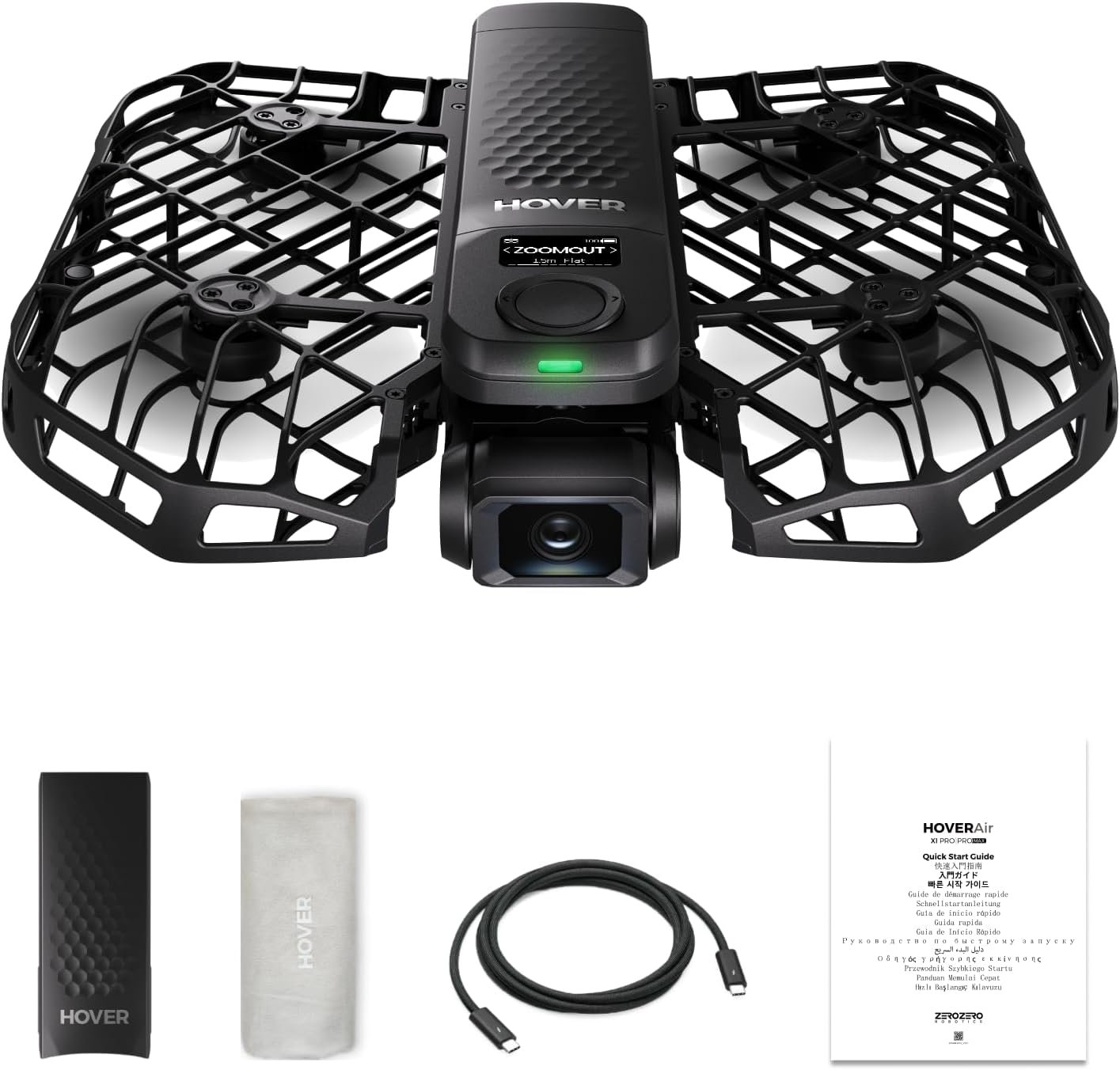
This is the most interesting drone here and the least like a DJI. It weighs 192 grams, which puts it under the FAA’s 250-gram registration threshold, and HOVERAir is explicit that it therefore requires no FAA registration and is FCC certified.
It also abandons the controller. The X1 PRO takes off from your palm on a click or a voice command and flies itself along one of more than fifteen automatic flight paths, following at up to 42 km/h. Stabilisation comes from a two-axis gimbal with electronic image stabilisation and horizon levelling rather than a full three-axis mechanical gimbal. That is a real compromise against every other drone on this list, and it is the trade you accept for something that fits in a jacket pocket and needs no setup.
What it does well
- 192g, under the FAA registration threshold.
- Palm takeoff and voice control, no controller needed.
- More than 15 automatic flight paths, follows at up to 42 km/h.
- FCC certified.
What to know before buying
- Two-axis gimbal rather than a full three-axis.
- Built for following people, not for surveying or long-range flying.
- Short flight time compared with conventional drones.
3. Potensic ATOM: A Sony Sensor and a Real Three-Axis Gimbal
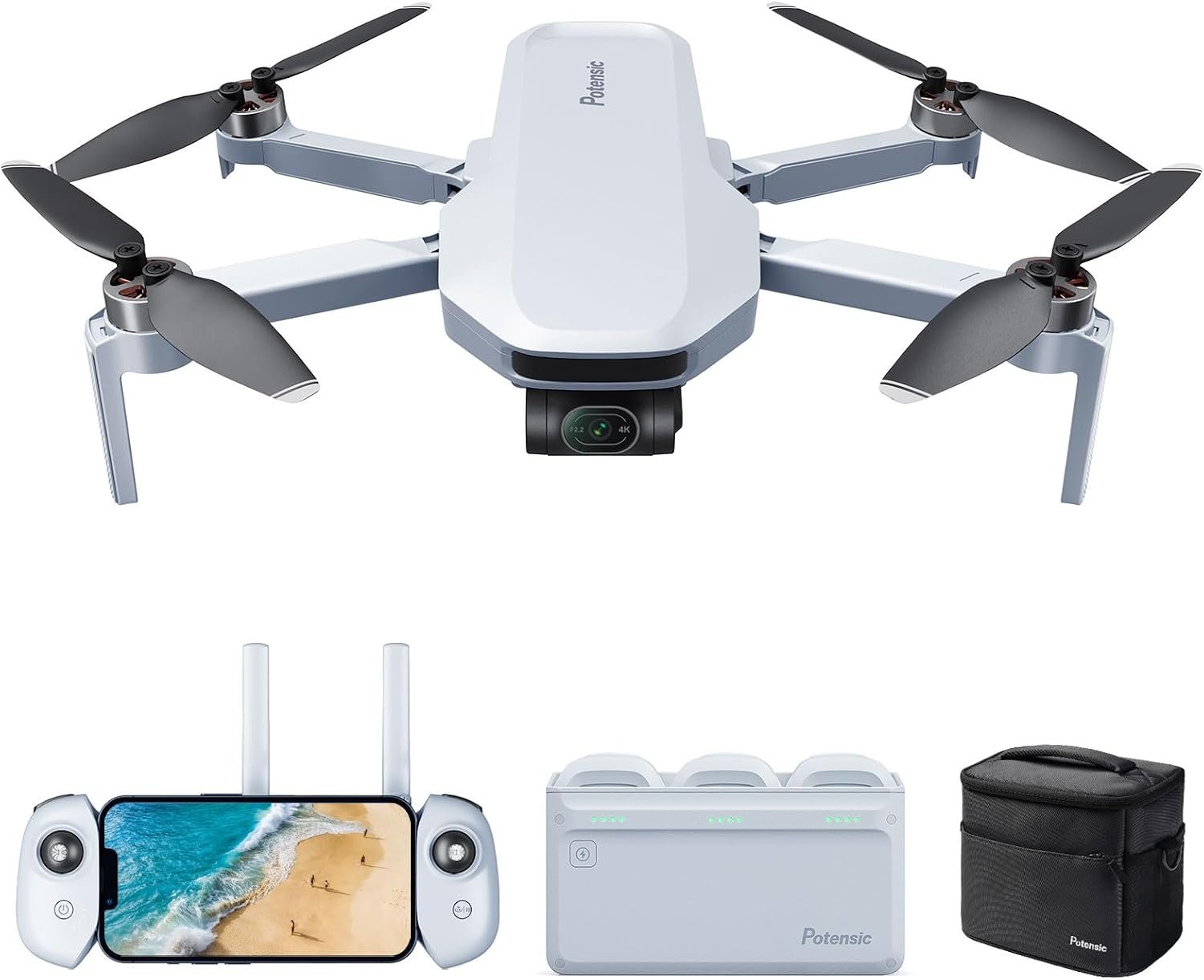
Potensic has become the default answer for people who want DJI-style stabilised footage without DJI prices. The ATOM pairs a Sony CMOS sensor and a 12MP camera shooting 4K at 30fps with a mechanical three-axis gimbal, which is the part that separates usable aerial video from shaky footage.
Transmission is the other specification worth noting. Potensic quotes up to 6km, or roughly 20,000 feet, using its PixSync 3.0 system, which it says improves resistance to interference. The Fly More Combo includes three batteries and a parallel charging hub that Potensic rates at 60W, charging all three in about 1.3 hours for a claimed 96 minutes of total flight.
What it does well
- True three-axis mechanical gimbal at this price.
- Sony CMOS sensor shooting 4K at 30fps.
- Up to 6km transmission range claimed.
- Three batteries and a fast parallel charging hub.
What to know before buying
- Over 250g, so registration and Remote ID apply.
- 12MP is modest next to the 48MP sensors here.
4. Ruko F11 Series: The Biggest Sensor Outside the Autel
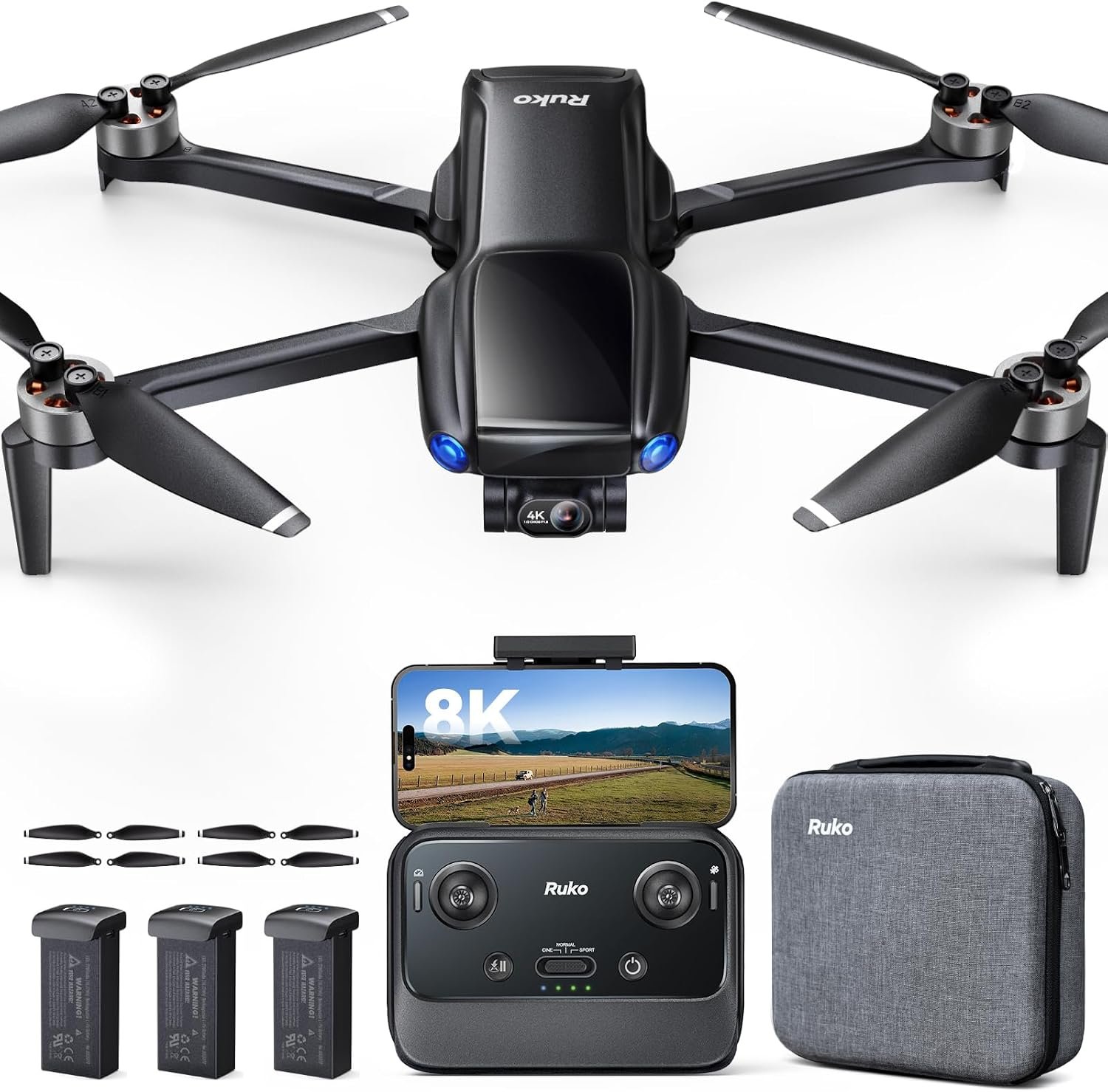
Ruko puts a 1/2-inch 48MP CMOS sensor in this one, which is the second-largest sensor on the list and produces 8K stills alongside 4K/30fps video. Sensor size matters more than megapixels for image quality, and a 1/2-inch chip gathers considerably more light than the small sensors typical at this price.
The headline number is range. Ruko quotes 20,000 feet, around 6km, through its R2 digital transmission system. Three batteries at 32 minutes each give the 96-minute total figure, and the camera sits on a mechanical three-axis gimbal. It is the most conventional drone here, in the sense that it does exactly what a DJI Mini-class drone does without trying to be clever about it.
What it does well
- 1/2-inch 48MP CMOS, the largest sensor here after the Autel.
- 8K stills as well as 4K/30fps video.
- 20,000 feet of claimed transmission range.
- Three batteries at 32 minutes each.
What to know before buying
- Over 250g, so registration and Remote ID apply.
- Ruko has a shorter support history than Autel or DJI.
5. Bwine F7GB2 Pro: The One That Publishes Its FAA Compliance
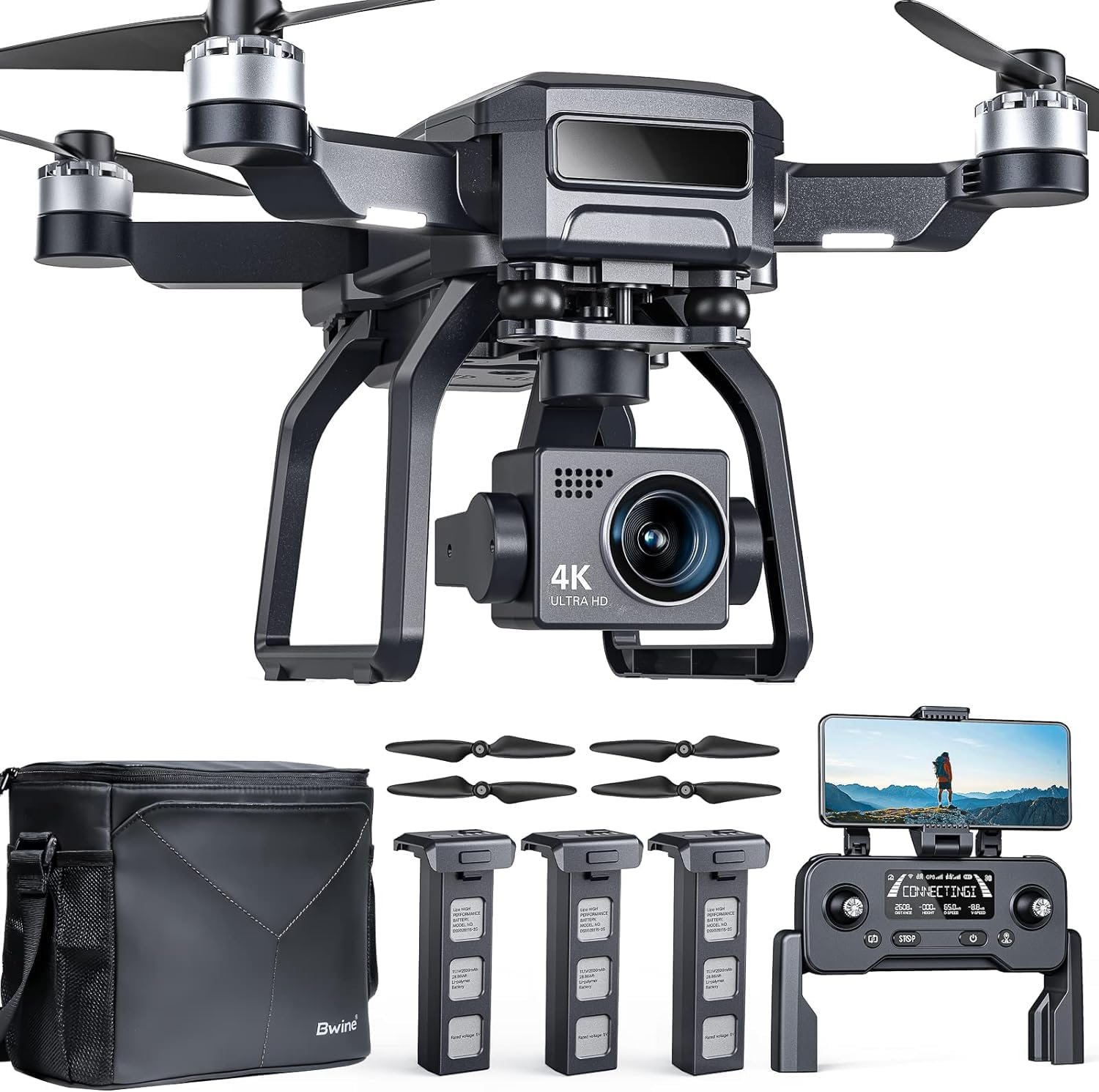
Most budget drone listings say nothing about regulation, which leaves the buyer to discover the Remote ID requirement afterwards. Bwine states directly that the F7GB2 Pro has completed Remote ID certification and complies with the FAA Declaration of Compliance, which is exactly the thing you want in writing before ordering.
The flying specifications are competitive: a three-axis gimbal, 4K UHD video, a claimed 10,000 feet of control range and 75 minutes of total flight. GPS handles automatic return to home when the battery runs low, the signal drops or you press the return key, and the app can stream the FPV view directly to social platforms.
What it does well
- Remote ID certification and FAA Declaration of Compliance stated up front.
- Three-axis gimbal with 4K UHD video.
- Automatic return home on low battery or signal loss.
- 75 minutes of claimed total flight time.
What to know before buying
- 10,000 feet of range is half what the Potensic and Ruko claim.
- Over 250g, so registration applies.
6. Ruko U11MINI: Palm-Sized, With the Gimbal Kept In
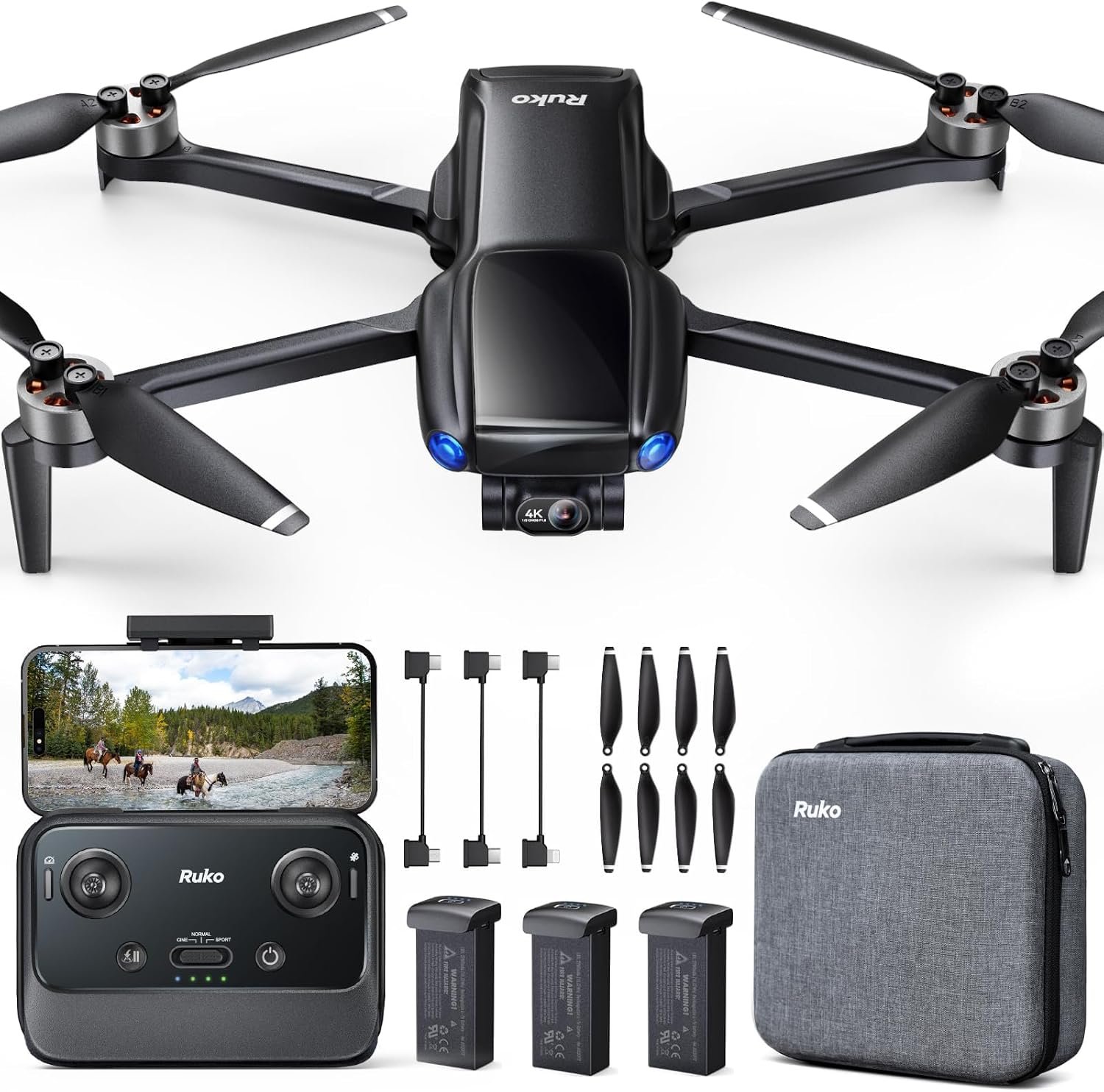
Shrinking a drone usually means losing the mechanical gimbal, because it is the bulkiest part. The U11MINI keeps a three-axis gimbal in a body Ruko describes as palm-sized and pocketable, shooting 4K/30fps video and 8K stills.
It is aimed at travel and family use rather than professional work, with three smart batteries adding up to a claimed 96 minutes and PD 3.0 fast charging. If the HOVERAir is too automated for you and the full-size drones are too much to carry, this sits between them.
What it does well
- Three-axis mechanical gimbal in a palm-sized body.
- 4K video and 8K photo.
- Three batteries for 96 claimed minutes.
- PD 3.0 fast charging.
What to know before buying
- Small airframes handle wind worse than larger ones.
- Check the weight against the 250g threshold before assuming it is exempt.
The FAA Rules That Decide Which Drone You Should Buy
Before comparing cameras, understand the weight rule, because it changes the paperwork completely. The FAA states that all drones must be registered except those weighing 0.55 pounds or less, meaning under 250 grams, and flown under the Exception for Limited Recreational Operations.
That single line is why the 250-gram mark appears in so much drone marketing, and why the HOVERAir X1 PRO at 192 grams is the only aircraft here you can take out of the box and fly without registering it.
If your drone does need registering, the rules are specific and worth knowing in advance.
- Registration costs $5 and lasts three years. Under Part 107 that is $5 per drone; under the recreational exception one $5 registration covers every drone you own.
- Any drone that is required to be registered must also comply with Remote ID, which broadcasts identification and location during flight.
- You need the manufacturer’s Remote ID serial number to complete registration, which is why Bwine advertising its Remote ID certification is genuinely useful information.
- You must be 13 or older and a US citizen or legal permanent resident to register.
- You must carry the registration certificate when flying and show it to law enforcement on request, and label the drone with the registration number.
A registration made under the recreational exception cannot be used for Part 107 commercial work, and the FAA does not allow transferring between the two. Decide which you are before you register.
What You Give Up Leaving DJI, and What You Do Not
Gimbals have caught up. A mechanical three-axis gimbal used to be the dividing line between DJI and everyone else. Four of the six drones here have one, including the palm-sized Ruko. This is no longer a reason to pay the DJI premium.
Sensor size still separates them. The Autel’s 1-inch sensor and the Ruko’s 1/2-inch chip are the two that will hold up in poor light. Most budget drones use far smaller sensors and the difference shows at dusk, which is exactly when aerial footage looks best.
Transmission range claims deserve scepticism. Figures of 6km and 20,000 feet are measured in ideal conditions with clear line of sight and no interference. In a town with buildings and competing 2.4GHz traffic, expect a fraction of that. Treat the number as a comparison between drones, not a promise.
Software polish is the real remaining gap. DJI’s app and flight logic are more refined than most of what is here. If you have flown a DJI, budget a few flights to get used to a less predictable interface. Autel is the only maker on this list with a comparable software organisation behind it.
Which One to Buy
For most people the Potensic ATOM is the right pick. It has the three-axis gimbal, a Sony sensor and long total flight time, at a price that makes the DJI comparison genuinely awkward for DJI.
Buy the Autel EVO Lite 6K Enterprise if you need a DJI-class machine for work and specifically cannot use DJI, because the 1-inch sensor and enterprise software are in a different class from everything else here. Buy the HOVERAir X1 PRO if what you actually want is a flying camera that follows you and never needs registering, and accept the two-axis gimbal as the price of that. Take the Ruko F11 if sensor size and range matter most, the Bwine F7GB2 Pro if you want its FAA compliance documented before you order, and the Ruko U11MINI if it has to fit in a pocket without losing the gimbal.
Whichever you choose, check the take-off weight on the listing against the 250-gram line before you buy, because that number decides whether you are registering an aircraft with the federal government or simply going flying. If the footage is destined for a big screen, our guide to projectors covers what to play it back on, and the smartwatch comparison covers the other category where sensor size quietly decides quality.
Frequently Asked Questions
Do I have to register a drone that is not a DJI?
The rule is about weight, not brand. The FAA requires registration for all drones except those weighing 0.55 pounds or less, under 250 grams, flown under the Exception for Limited Recreational Operations. Registration costs $5 and lasts three years.
What is Remote ID and does my drone need it?
Remote ID broadcasts your drone’s identification and location while it flies. The FAA requires it for any drone that is required to be registered, including recreational, business and public safety flights. You need the manufacturer’s Remote ID serial number to complete your registration.
Is Autel a real alternative to DJI?
It is the only brand here competing at the same level rather than below it. The EVO Lite 6K Enterprise uses a 1-inch sensor, three-direction vision sensors and enterprise flight software. It is priced accordingly, so it suits organisations that need DJI capability without DJI hardware rather than hobbyists.
Are cheaper drones worse at video?
Less than they used to be. A mechanical three-axis gimbal, which is what makes footage usable, now appears on drones costing a fraction of a DJI. Where budget drones still fall behind is sensor size in low light and the polish of the flight software.
Related Articles
- Best Camera for Bikers: 8 Picks for Motorcycles and Bicycles
- Best Dash Cam for Cars: 8 Picks Compared on Night Video and Parking Mode
- Best Gaming Consoles Compared
- Best Keyboard for Mac: 7 Picks With Proper macOS Layouts
- Best Wireless Earbuds Compared
As an Amazon Associate, Fox Bulletin earns from qualifying purchases.

Get the Fox Bulletin briefing
The stories that matter, in your inbox. No spam, unsubscribe anytime.
Newsletter signup will be available soon.
Related stories

Apps Gone Free for Mac Today: October 8, 2026
Which paid Mac apps are free in the US Mac App Store today, why Mac price cuts are so much rarer than iPhone ones, and the Apple apps that went free for good.

Apps Gone Free for iPhone and iPad Today: October 8, 2026
Every paid iPhone and iPad app that is free in the US App Store today, with the price it normally costs, what it does, who it suits, and whether it carries in-app purchases.
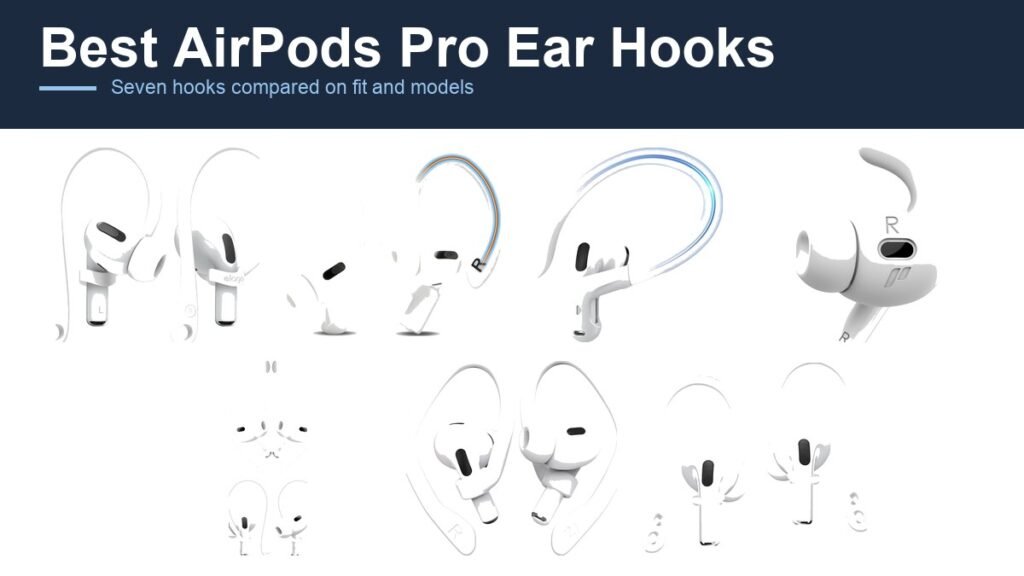
Best AirPods Pro Ear Hooks: 7 Compared on Fit and Models
Seven AirPods Pro ear hooks compared on fit, material and model compatibility, including which ones work with the Pro 3 and why none of them charge.