

Types of Business Insurance Explained, Business insurance isn’t a one‑size‑fits‑all product; it’s a suite of policies that protect a company from specific risks. In essence, each policy transfers the financial fallout of a defined loss from the business to an insurer, letting owners focus on growth instead of catastrophe. How it works varies: a property policy pays for damaged walls, a liability policy covers legal fees, and a business‑interruption policy replaces lost revenue while the shop gets back on its feet. We think the most effective coverage strategy pairs a solid core bundle with targeted add‑ons, because that combo keeps cash flow steady when the unexpected hits. See also: best Business Phone Systems Compared
How does business interruption insurance actually work?
Business interruption (BI) insurance, sometimes called business income insurance, kicks in after a covered disaster forces a company to shut down or operate at reduced capacity. The policy calculates lost profit based on historical financial statements, then adds fixed operating costs that keep the lights on, like rent and utilities. If the insurer also covers extra expenses-such as renting a temporary location or paying for expedited repairs-the payout can keep the payroll intact while the building is rebuilt. The coverage period starts the day the loss event occurs and ends when the property is restored to its pre‑loss condition, as defined in the policy.
For a concrete example, a restaurant in New York suffered a kitchen fire on March 1. Its property insurer covered the $250,000 in structural repairs, while its BI policy paid $45,000 in lost sales and $12,000 in rent for the month it operated out of a temporary space. The combined payout let the owner keep staff on payroll and avoid a cash‑flow crisis. See also: best Payment Processors for Small Business: Top 6
Sources such as the Wikipedia entry on business interruption insurance and the Insurance Information Institute outline these mechanisms in detail. See also: best Accounting Software for Small Business in 2026: Top 7
Do you need general liability insurance if you already have a business owner’s policy?
A Business Owner’s Policy (BOP) bundles property, general liability, and business interruption coverage into a single package for small‑to‑mid‑size firms. The general liability portion protects against third‑party bodily injury, property damage, and advertising claims. If a company purchases a stand‑alone general liability policy in addition to a BOP, it usually results in duplicate coverage and higher premiums without added benefit.
However, certain industries-like construction or manufacturing-face higher risk exposures that exceed the limits typical in a BOP. In those cases, a separate, higher‑limit general liability policy can fill the gap. For instance, a landscaping firm with a $1 million BOP limit might add a $5 million commercial general liability endorsement to meet a client’s contract requirement.
Regulatory guidance from the NAIC Consumer Alert advises businesses to compare policy limits carefully before layering coverage.
Where does workers’ compensation stop applying?
Workers’ compensation (WC) covers medical expenses and lost wages when an employee is injured on the job, regardless of fault. The coverage ends when the injury is unrelated to employment duties or occurs off‑site during non‑work activities. For example, a delivery driver who slips on an icy sidewalk while making a delivery is covered, but the same driver who breaks an arm while snowboarding on a weekend is not.
Some states allow “extended coverage” for occupational diseases that develop over time, like repetitive‑strain injuries. Yet, the policy still requires a demonstrable link to job duties. Employers who mistakenly classify independent contractors as employees may find WC claims denied, leading to costly penalties.
According to the U.S. Small Business Administration, clear job descriptions and proper classification help keep WC claims within the policy’s scope.
How does commercial property insurance differ from business interruption coverage?
| Aspect | Commercial Property | Business Interruption |
|---|---|---|
| Primary focus | Physical damage to buildings, equipment, inventory | Lost revenue and ongoing expenses after a covered loss |
| Typical triggers | Fire, wind, vandalism, theft | Same triggers plus government‑ordered closures |
| Payment basis | Actual cash value or replacement cost of damaged assets | Projected net income minus fixed costs, based on past statements |
| Policy limits | Often a percentage of the building’s insured value | Usually a multiple of the property limit (e.g., 3×) |
| Example payout | $200,000 for a broken furnace | $75,000 for three months of lost sales while repairs occur |
The two policies complement each other. Property insurance restores the physical assets; business interruption bridges the cash‑flow gap until those assets generate income again. Insurers often require the underlying property loss to be covered before the BI component activates, so the two policies must be synchronized.
What is contingent business interruption insurance and when is it worth buying?
Contingent business interruption (CBI) steps in when a supplier, customer, or partner suffers a covered loss that prevents them from fulfilling contracts with you. Imagine a small electronics assembler that relies on a single chip manufacturer in Taiwan. If an earthquake shuts that factory for two months, the assembler’s production line stalls, and revenue drops sharply. A CBI policy would compensate for that indirect loss.
CBI is most valuable for businesses with high supply‑chain concentration or those that depend on a limited number of key clients. The policy typically mirrors a standard BI structure-covering lost profit, fixed costs, and extra expenses-but the trigger is the third‑party loss, not a direct hit to the insured’s premises.
Industry surveys, such as the Airmic Property Damage and Business Interruption Benchmarking Report 2012, show that firms with CBI coverage recover 30 % faster after a supply‑chain disruption.
Common Misunderstandings about Business Insurance
Myth 1: “All my risks are covered under a single policy.” Many owners assume a BOP or a “comprehensive” package eliminates the need for additional policies. In reality, BOPs have caps on liability limits and often exclude cyber risk, professional errors, and high‑value equipment. Adding a cyber liability endorsement or a separate professional liability policy can close those gaps.
Myth 2: “If I have property insurance, I don’t need business interruption.” Property insurance reimburses repair costs, but it doesn’t replace the cash flow needed to pay staff, rent, or utilities while the site is out of service. Without BI, a month‑long shutdown can exhaust reserves even if the building is fully covered.
Myth 3: “My small home‑based business doesn’t need workers’ comp.” Even a freelance graphic designer who hires a part‑time assistant must consider WC if the assistant is an employee. Some states mandate coverage regardless of size, and failure to comply can trigger fines and lawsuits.

FAQs
Can I add business interruption coverage to an existing property policy?
Yes. Insurers often allow BI as a rider on a property or BOP policy. The rider activates only if the underlying loss is covered, so the property policy’s exclusions also apply to the BI component.
What documentation does an insurer need to calculate a BI payout?
Typically, insurers request at least three months of profit‑and‑loss statements, a detailed list of fixed operating expenses, and evidence of the loss event (e.g., fire report, police record). They may also ask for invoices for temporary relocation costs.
Do cyber liability policies cover ransomware payments?
Most cyber policies reimburse ransom costs, data restoration, and legal fees, but they often exclude direct payments to criminals unless a ransom‑payment endorsement is added. Review the policy language carefully.
Is professional liability the same as errors‑and‑omissions insurance?
They are interchangeable terms. Both protect against claims that professional advice or services caused financial harm to a client. The coverage is essential for consultants, architects, and accountants.
How often should I review my insurance limits?
At least annually, or whenever you experience significant growth, open a new location, or add high‑value equipment. A mismatch between coverage limits and actual exposure can leave you under‑insured.
Will a higher deductible lower my premium?
Generally, yes. Raising the deductible reduces the insurer’s risk, which translates into lower premium payments. Just ensure you have enough cash reserves to cover the deductible if a claim arises.
The Bottom Line
Match each risk to the right policy, keep limits in step with your growth, and layer targeted endorsements where a core bundle falls short. That approach safeguards cash flow and keeps your business resilient when the unexpected strikes.
Related on Fox Bulletin

Get the Fox Bulletin briefing
The stories that matter, in your inbox. No spam, unsubscribe anytime.
Newsletter signup will be available soon.
Related stories
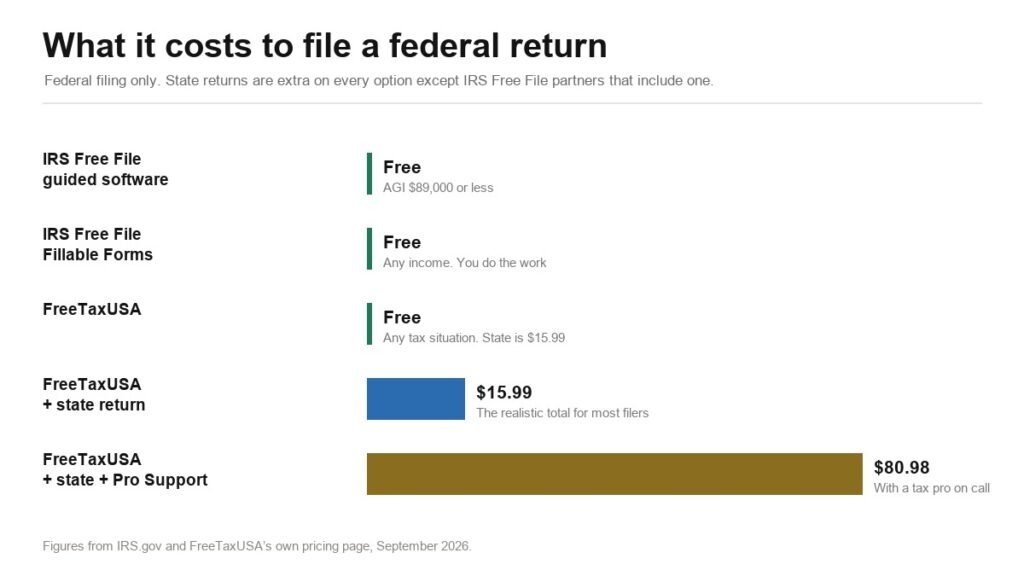
TurboTax Alternative: 3 Ways to File Free or Close to It
IRS Free File, Fillable Forms and FreeTaxUSA compared against TurboTax, including the $89,000 income threshold and the upsell rules the IRS bans inside Free File.
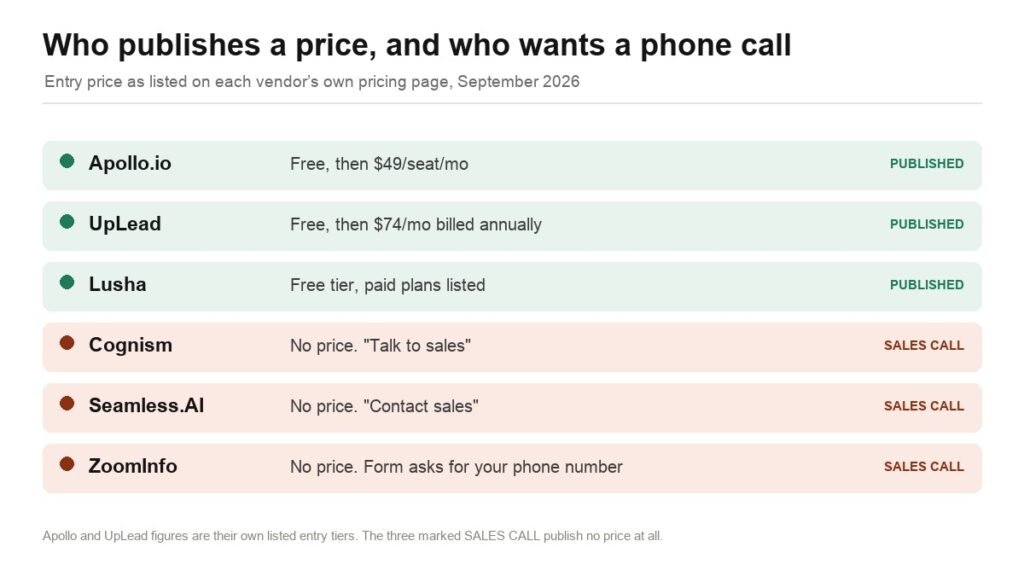
ZoomInfo Alternatives: 5 Competitors Compared on Real Pricing
Apollo, UpLead, Lusha, Cognism and Seamless.AI compared against ZoomInfo on what each actually publishes, plus the credit model that makes sales intelligence pricing hard to compare.
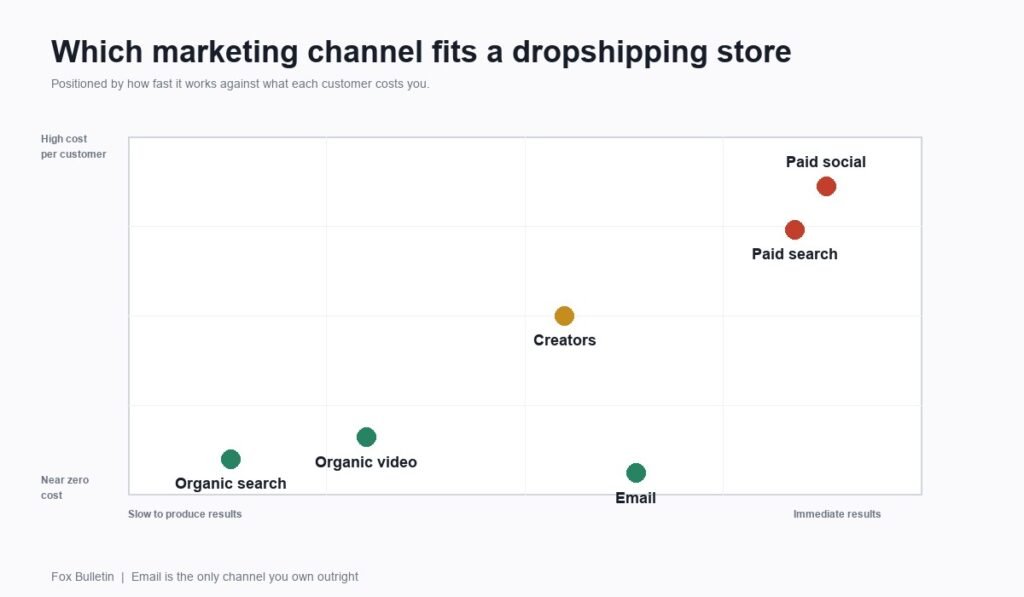
Dropshipping Marketing: The Numbers That Decide Every Channel
Dropshipping marketing is arithmetic, not creativity. The two numbers that decide everything, what each channel costs and delivers, and why scaling is usually an order-value problem.