

Jakarta is the biggest city in the world in 2026, home to 41.9 million people, ahead of Dhaka at 36.6 million and Tokyo at 33.4 million. These are the biggest cities in the world, ranked from the latest UN estimates, with 2025 populations, projections to 2050 and each city’s rank change since the previous revision.
The table uses the 2025 revision of the UN World Urbanization Prospects, published in November 2025. It measures every city by one rule, a continuous built-up area counted from satellite population grids, so a city’s size no longer depends on where its administrative boundary happens to fall. Nine of the 10 biggest cities are in Asia, and Cairo is the only exception.
Biggest Cities in the World by UN Population Estimate, Top 15 With 2030 Projections
| # | City | Country | Population 2025 | Projected 2030 | Rank in 2018 revision |
|---|---|---|---|---|---|
| 1 | Jakarta | Indonesia | 41.9 million | 44.6 million | 30th |
| 2 | Dhaka | Bangladesh | 36.6 million | 40.8 million | 9th |
| 3 | Tokyo | Japan | 33.4 million | 33.0 million | 1st |
| 4 | New Delhi | India | 30.2 million | 31.3 million | 2nd |
| 5 | Shanghai | China | 29.6 million | 31.3 million | 3rd |
| 6 | Guangzhou | China | 27.6 million | 28.4 million | 22nd |
| 7 | Cairo | Egypt | 25.6 million | 27.2 million | 6th |
| 8 | Manila | Philippines | 24.7 million | 25.5 million | 17th |
| 9 | Kolkata | India | 22.5 million | 23.0 million | 16th |
| 10 | Seoul | South Korea | 22.5 million | 22.6 million | 34th |
| 11 | Karachi | Pakistan | 21.4 million | 23.6 million | 12th |
| 12 | Mumbai | India | 20.2 million | 21.1 million | 7th |
| 13 | São Paulo | Brazil | 18.9 million | 19.0 million | 4th |
| 14 | Bangkok | Thailand | 18.2 million | 19.0 million | 33rd |
| 15 | Mexico City | Mexico | 17.7 million | 17.8 million | 5th |
Beijing is 16th at 17.0 million, just outside the table, followed by Lahore (15.2 million), Istanbul (15.0 million) and Moscow (14.5 million). The last column is each city’s rank in the earlier 2018 revision.
Biggest Cities in the World, Ranked
1. Jakarta: From 30th Place to First

2025: 41.9 million · 2035: 47.0 million · 2050: 51.8 million · Rank vs 2018 revision: up 29 places
Jakarta is the largest city in the 2025 revision at 41.9 million, up from 25.6 million in 2000, when it ranked second. The 2018 revision placed it 30th, at about 12 million for 2025, because official statistics for the Jakarta metropolitan area left out many dense communities that touch the centre.
The urban area covers 4,883 km2 of land, of which 1,162 km2 is built up, or about 8,600 people per km2 of land. The UN projects 44.6 million in 2030 and 47.0 million in 2035, then expects Dhaka to pass Jakarta by 2050, leaving it second.
2. Dhaka: Set to Become the Largest by 2050
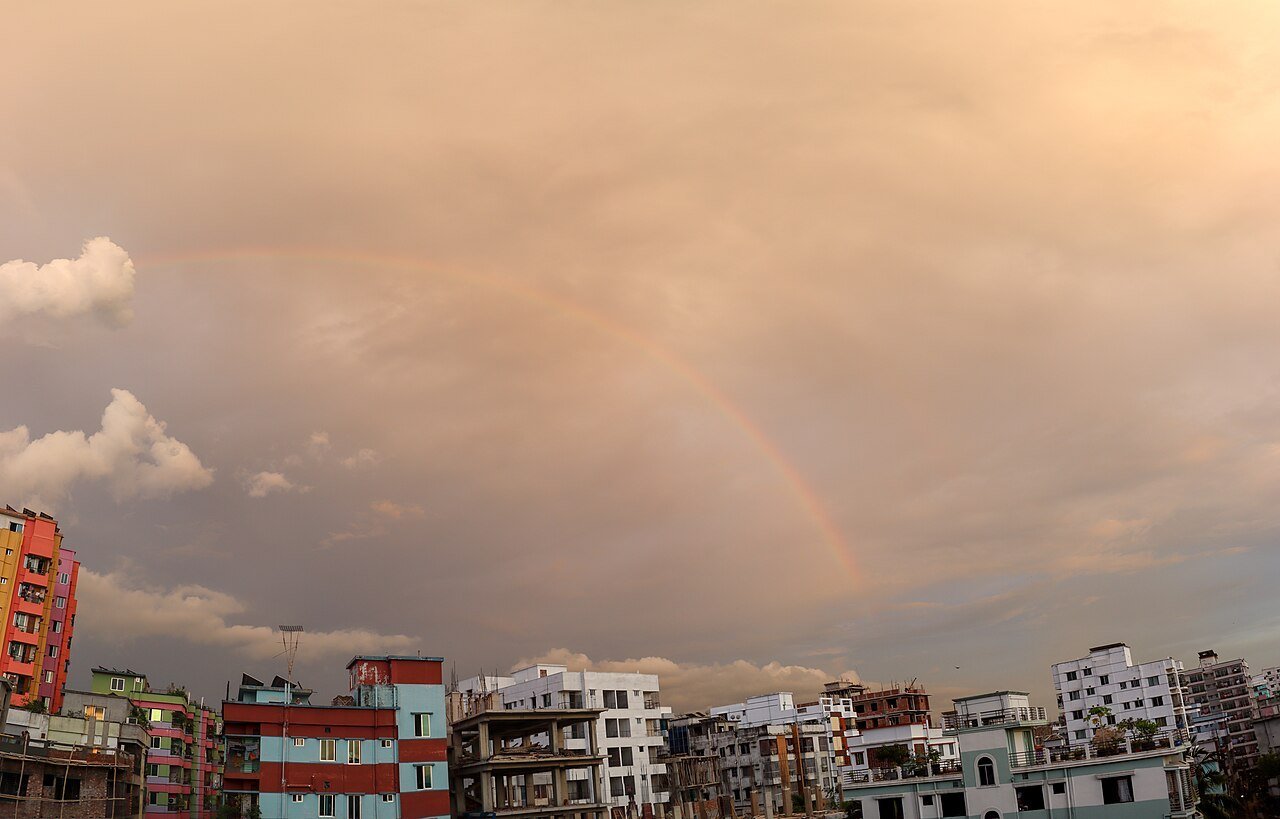
2025: 36.6 million · 2035: 44.4 million · 2050: 52.1 million · Rank vs 2018 revision: up 7 places
Dhaka is second at 36.6 million, more than double its 17.4 million of 2000, when it ranked ninth. The 2018 revision also had it ninth, at 19.6 million. The 2025 revision projects 40.8 million for 2030.
By 2050 Dhaka is projected to reach 52.1 million and overtake Jakarta, which is at 51.8 million. A margin of 0.3 million is small enough that the order could flip, and the UN rates its confidence in Dhaka’s estimates as moderate.
3. Tokyo: Still Growing, but No Longer First
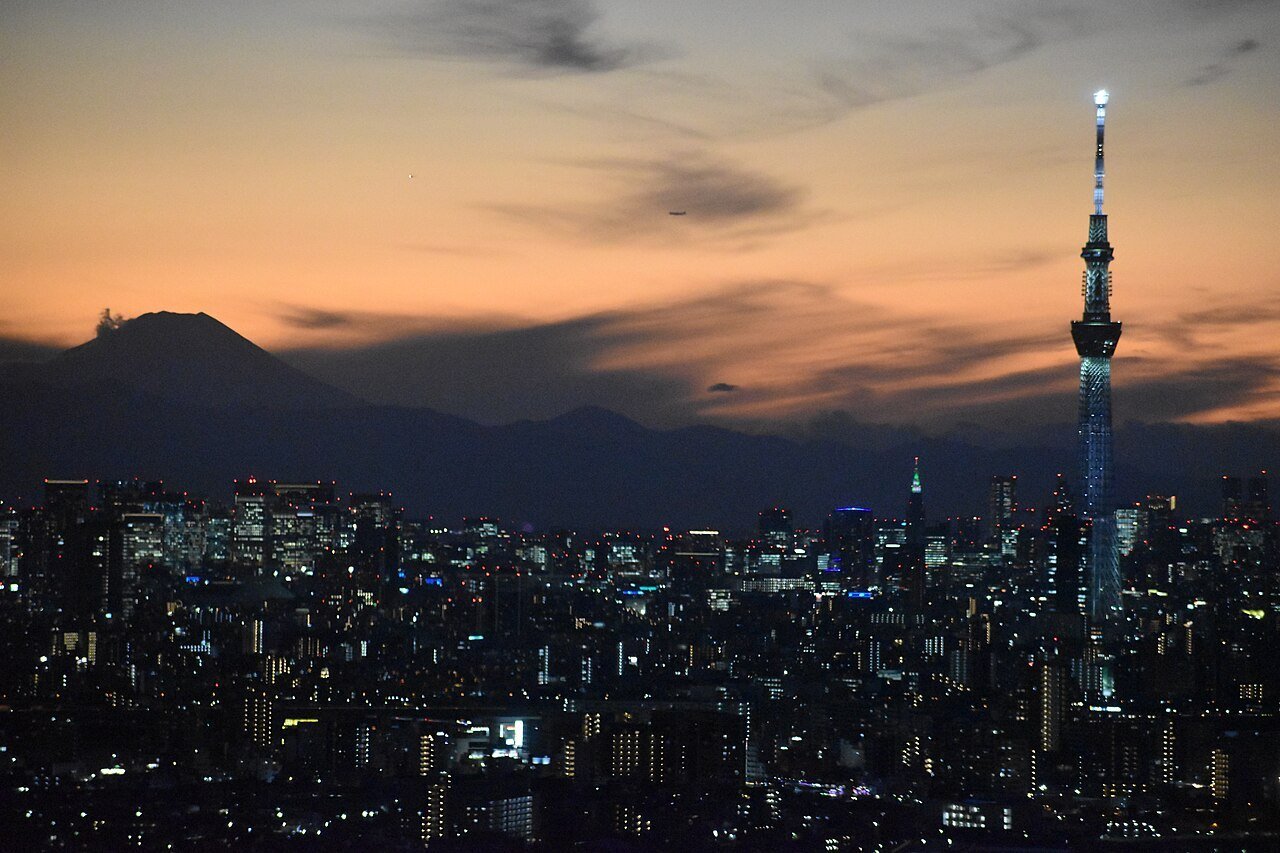
2025: 33.4 million · 2035: 32.5 million · 2050: 30.7 million · Rank vs 2018 revision: down 2 places
Tokyo is third at 33.4 million. It was the largest city in 2000 at 30.3 million, and the 2018 revision had it first at 37.5 million. It now sits two places lower.
The UN projects 33.0 million in 2030, 32.5 million in 2035 and 30.7 million in 2050, when Tokyo ranks seventh. With Seoul, it is the only city in the top 10 expected to lose population by 2050. Its built-up area of 1,521 km2 is the largest of the 10.
4. New Delhi: The Densest of the Top Five
2025: 30.2 million · 2035: 32.2 million · 2050: 33.9 million · Rank vs 2018 revision: down 2 places
The UN lists the Indian capital’s urban area as New Delhi, at 30.2 million. The 2018 revision called it Delhi, ranked it second at 28.5 million and projected 38.9 million for 2030, which would have made it the largest. The 2025 revision projects 31.3 million.
Under the 2018 revision’s boundaries the 2025 estimate would have been 35 million and second place. The density rule gives 30 million and fourth. The city covers 2,101 km2 of land, about 14,400 people per km2, the densest of the top five.
5. Shanghai: Rising to Third by 2035
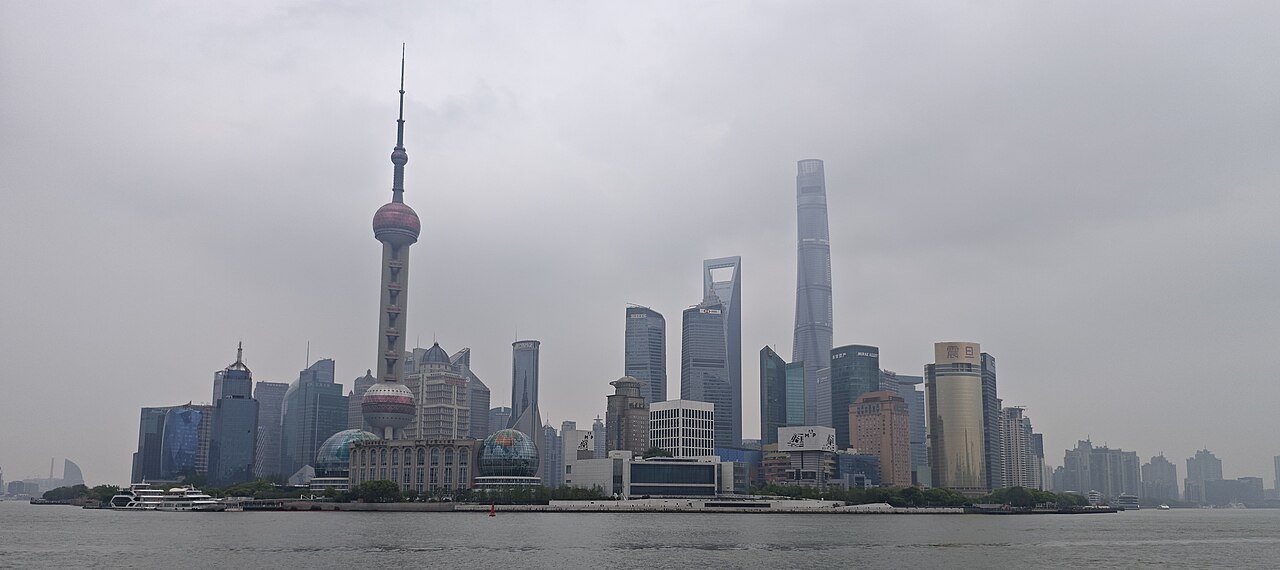
2025: 29.6 million · 2035: 32.6 million · 2050: 34.9 million · Rank vs 2018 revision: down 2 places
Shanghai is fifth at 29.6 million, up from 14.0 million and 14th place in 2000. The 2018 revision had it third at 25.6 million.
The UN projects 31.3 million in 2030, 32.6 million in 2035 and 34.9 million in 2050. The city has 803 km2 built up.
6. Guangzhou: Twice the Size on the Density Rule

2025: 27.6 million · 2035: 28.9 million · 2050: 29.2 million · Rank vs 2018 revision: up 16 places
Guangzhou is sixth at 27.6 million, after ranking third in 2000 at 19.0 million. The 2018 revision listed it 22nd at 12.6 million. On that revision’s boundaries the 2025 estimate would have been 15 million and 20th place, so the density rule roughly doubles the figure.
The UN projects 28.4 million in 2030 and 29.2 million in 2050, when Guangzhou ranks eighth. Beijing, Guangzhou, Shanghai and Shenzhen each grew faster than 0.8 percent a year from 2015 to 2025, against 0.1 percent for China as a whole.
7. Cairo: The Only Top 10 City Outside Asia
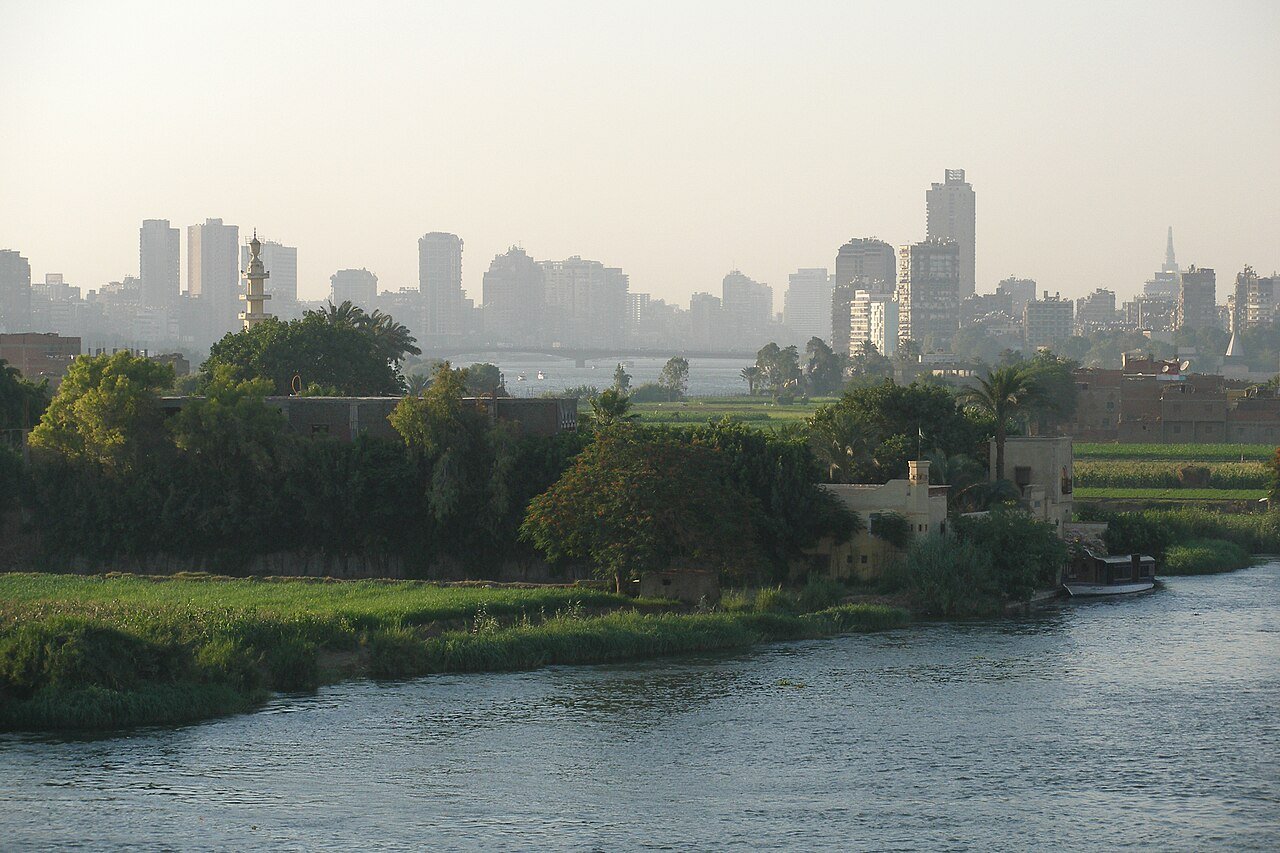
2025: 25.6 million · 2035: 28.7 million · 2050: 32.4 million · Rank vs 2018 revision: down 1 place
Cairo is seventh at 25.6 million, up from 15.7 million and 12th place in 2000. The 2018 revision had it sixth at 20.1 million, counting Greater Cairo as the Cairo governorate plus surrounding districts of Giza and Qalyubia.
Mexico City and São Paulo were both in the top 10 in 2000, and Cairo and Shanghai had displaced them by 2010. Cairo covers 1,645 km2 of land at about 15,500 people per km2, the densest of the top 10. The UN projects 27.2 million in 2030 and 32.4 million in 2050, when it ranks sixth.
8. Manila: Up Nine Places to Eighth
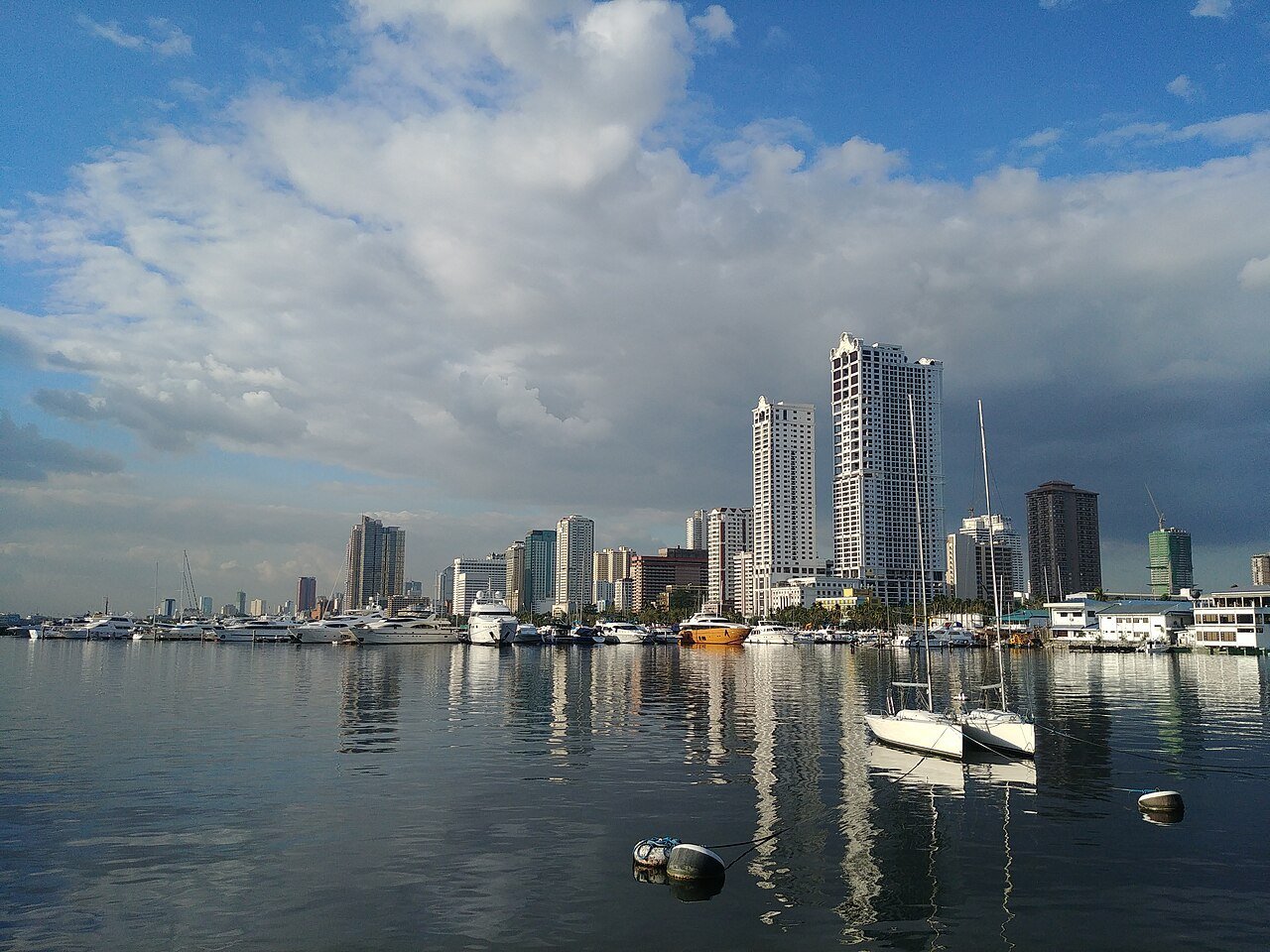
2025: 24.7 million · 2035: 26.2 million · 2050: 27.1 million · Rank vs 2018 revision: up 9 places
Manila is eighth at 24.7 million, up from 17.8 million in 2000, when it ranked seventh. The 2018 revision had it 17th at 13.5 million. On that revision’s boundaries the 2025 estimate was 15 million and 19th, against 25 million and eighth on the density rule.
The UN projects 25.5 million in 2030, 26.2 million in 2035 and 27.1 million in 2050, when Manila ranks ninth. The city covers 2,438 km2 of land, about 10,100 people per km2.
9. Kolkata: Ninth Now, Tenth From 2030

2025: 22.5 million · 2035: 23.5 million · 2050: 23.8 million · Rank vs 2018 revision: up 7 places
Kolkata is ninth at 22.5 million, after ranking fifth in 2000 at 18.4 million. The 2018 revision had it 16th at 14.7 million. On that revision’s boundaries the 2025 estimate was 16 million and 17th, against 23 million and ninth now.
Karachi moves ahead of Kolkata by 2030, which drops it to 10th at 23.0 million. The projections reach 23.5 million in 2035 and 23.8 million in 2050, still 10th. The UN rates its confidence in the 2025 estimate as moderate.
10. Seoul: 22.5 Million and Falling After 2035

2025: 22.5 million · 2035: 22.6 million · 2050: 21.2 million · Rank vs 2018 revision: up 24 places
Seoul is 10th at 22.5 million, which is only 60,000 fewer than Kolkata. The 2018 revision used Seoul Special City and counted 10.0 million, ranking it 34th. The density rule covers the whole built-up area and gives 22 million.
Seoul was fourth in 2000 at 19.0 million. The UN projects 22.6 million in 2030 and 2035, then a fall to 21.2 million by 2050, when Seoul ranks 12th. With Tokyo it is the only top 10 city expected to shrink.
Why Tokyo Is No Longer First: One Rule Replaced Many National Boundaries
In the 2018 revision Tokyo led at 37.5 million and Delhi followed at 28.5 million. Applied to 2025, those boundaries would have given Tokyo 37 million and first place. The density rule gives 33.4 million and third, while Jakarta moves from about 12 million to 41.9 million and Dhaka from 25 million to 36.6 million.
Growth explains the rest. Under the 2025 rule Tokyo was already first in 2000, at 30.3 million. Since then it has added 3.1 million people, Jakarta 16.3 million and Dhaka 19.2 million.
33 Megacities Today and 37 by 2050: Where Cities of 10 Million Are
A megacity has 10 million or more inhabitants. There are 33 in 2025, up from 20 in 2000 and 8 in 1975. Nineteen are in Asia, including 5 in India and 4 in China, with 5 in Latin America, 4 in Africa, 3 in Europe and 2 in Northern America. Together they hold 625.4 million people.
The UN projects 34 megacities in 2030 and 2035 and 37 in 2050, when Addis Ababa, Dar es Salaam, Hajipur and Kuala Lumpur pass 10 million. Not every large city is growing: Mexico City fell from 19.0 million in 2015 to 17.7 million in 2025.
The US and UK appear further down. New York City is 22nd at 13.9 million and Los Angeles is 27th at 12.7 million, which is the context for the fastest growing cities in the US. London is 33rd at 10.4 million, the last of the 33 megacities.
45 Percent of People Live in Cities and 58 Percent in Urban Areas: Two Measures
Of the 8.2 billion people alive in 2025, 45 percent live in cities as the density rule defines them, up from 20 percent of 2.5 billion in 1950. Towns hold 36 percent and rural areas 19 percent, so cities and towns together hold 81 percent.
Under national definitions 58 percent live in urban areas, up from 29 percent in 1950. The two figures measure different things and should not be swapped: 58 percent counts the places each country calls urban, while 45 percent counts only contiguous high-density clusters of at least 50,000 people.
Most city dwellers do not live in a megacity. The 2025 revision covers 12,140 cities, 96 percent of them under 1 million people, and more people live in small and medium cities than in megacities. By 2050, India, Nigeria, Pakistan, DR Congo, Egypt, Bangladesh and Ethiopia add over 500 million of the 986 million new city residents, which is why the most populous countries shape the next ranking.
What the UN Counts as a City: Satellite Grids and 1,500 People per Square Kilometre
The ranking comes from the World Urbanization Prospects 2025 revision of the UN Department of Economic and Social Affairs. A city is a contiguous cluster of 1 km2 grid cells with at least 1,500 inhabitants per km2 and at least 50,000 people in total, built from satellite-derived population grids instead of administrative boundaries. The earlier minimum was 300,000.
The 2018 revision let each country supply its own boundary, so the list mixed definitions: Tokyo was the Kanto Major Metropolitan Area, Seoul was Seoul Special City and Jakarta was a functional urban area. One rule now applies everywhere. A city proper stops at the administrative limit and leaves out suburbs, and a metropolitan area adds lower-density commuter belts. This measure sits between them, closest to a continuous built-up area.
The figures are mid-year estimates for 1 July, and the 2030, 2035 and 2050 values are modelled projections rather than census counts. Estimates for Dhaka, Cairo, Kolkata, Seoul, Karachi and Mumbai carry moderate plausibility ratings. Mainland China is listed without Hong Kong, Macao and Taiwan.
How to Read a City Population Before Comparing It With Another Number
A city can have several correct populations, so check four things before comparing two figures:
- Check the boundary. New Delhi is 30 million on the density rule and was 35 million on the 2018 revision’s boundaries.
- Check the year. These are mid-2025 estimates, and the 2018 revision’s figures are mid-2018.
- Read the gap, not the rank. Kolkata and Seoul are 60,000 people apart, and Dhaka and Jakarta are 0.3 million apart in 2050.
- Treat projections as modelled. Karachi’s 2050 projection of 32.6 million carries a low plausibility rating.
Frequently Asked Questions
What is the biggest city in the world?
Jakarta, with 41.9 million people in 2025. Dhaka follows at 36.6 million and Tokyo at 33.4 million.
Is Tokyo still the largest city in the world?
No. Tokyo is third at 33.4 million in the 2025 revision and is projected to fall to seventh by 2050. The 2018 revision had it first at 37.5 million because it used each country’s own boundary for the largest urban area.
How many megacities are there?
There are 33 cities of 10 million or more in 2025, 19 of them in Asia. The UN projects 37 by 2050.
Which city will be the biggest in 2050?
Dhaka, at a projected 52.1 million, just ahead of Jakarta at 51.8 million. Shanghai (34.9 million), New Delhi (33.9 million) and Karachi (32.6 million) complete the top five.
Related Articles

Get the Fox Bulletin briefing
The stories that matter, in your inbox. No spam, unsubscribe anytime.
Newsletter signup will be available soon.
Related stories
Types of Pasta: 25 Shapes and What Each One Suits
Long strands, tubes, twists and soup shapes: 25 types of pasta shown and named, with the cooking time for each and the kind of sauce its surface is built to hold.
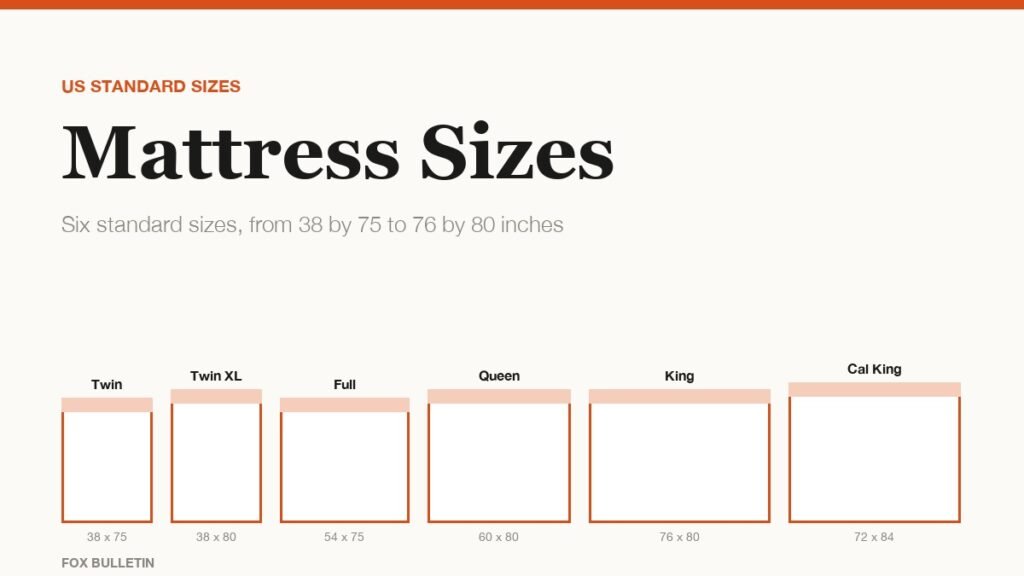
Mattress Sizes: All Six Standard Beds, Measured
Twin through California King, measured in inches and square feet, with the room each size needs and the gap between the size on the label and the mattress that turns up.

ASL Alphabet: All 26 Hand Signs and How to Form Them
The ASL alphabet is 26 handshapes made with one hand. This guide shows every letter, explains the six that are all variations of a fist, and covers the two that need movement.