

The interesting thing about AirPods 5 is not what they added but where they added it. Active Noise Cancellation, which Apple has reserved for the Pro line since 2019, is now included on the $129 standard AirPods. Apple’s own pre-order page states it plainly: Active Noise Cancellation included on both models.
That single change reshuffles the whole range. AirPods Pro 3 cost $249 and keep the health sensors, the longer battery and the sealed fit, but the feature most people upgraded for has moved down to the entry model. This guide covers what AirPods 5 cost, the difference between the two versions Apple sells, the full specification, and exactly what the extra $120 for the Pro still buys.
AirPods 5 Price and the Two Models
Apple sells AirPods 5 in two configurations, and the difference is not only the charging case. Both were listed as available starting 18 September 2026.
| Model | Price | What it adds |
|---|---|---|
| AirPods 5 | $129.00 | Active Noise Cancellation, USB-C charging case |
| AirPods 5 with Wireless Charging Case | $149.00 | Force sensor with volume swipe, longer battery life, wireless charging |
That second row is worth reading twice. The $20 upgrade is usually described as buying wireless charging, but Apple’s own listing says it also includes a force sensor with volume swipe and longer battery life. You are paying for a control method and more runtime, not just the convenience of putting the case on a pad. For most buyers that makes $149 the sensible configuration rather than the upsell.
AirPods 5 Full Specifications
Every figure below is from Apple’s published technical specifications.
| Specification | AirPods 5 |
|---|---|
| Chip | H2 headphone chip |
| Listening time, one charge | Up to 4 hours with Active Noise Cancellation enabled |
| Total with charging case | Up to 20 hours with Active Noise Cancellation enabled |
| Charging | USB-C, Apple Watch charger, or Qi-certified chargers |
| Noise control | Active Noise Cancellation, Adaptive Audio, Transparency |
| Audio features | Personalized Spatial Audio with dynamic head tracking, Adaptive EQ |
| Voice features | Conversation Awareness, Voice Isolation |
| Sensors | Dual beamforming microphones, inward-facing microphone, optical in-ear sensor, motion and speech-detecting accelerometers, force sensor |
| Water resistance | IP57 |
| Price | $129, or $149 with wireless charging case |
The charging flexibility deserves a note. Being able to top the case up from an Apple Watch charger is a small thing that solves a real problem, because it means one travel charger covers a watch and a set of earbuds rather than two.
Noise Cancellation Without a Sealed Ear Tip
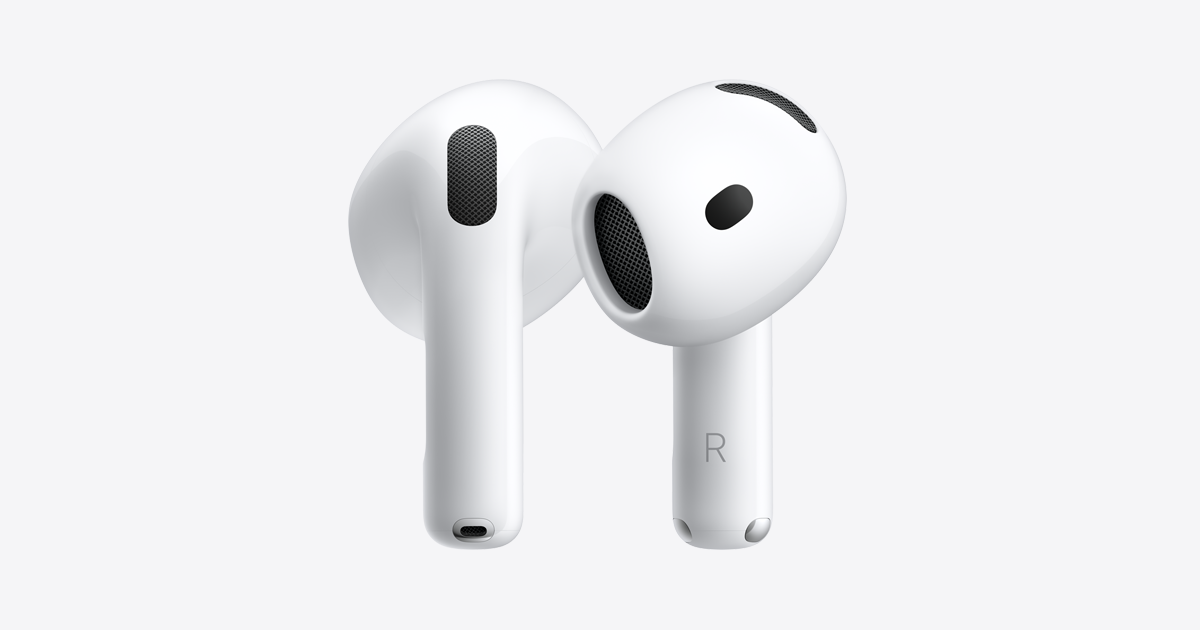
AirPods 5 use the open fit that the standard AirPods have always used. They rest in the ear rather than sealing it with a silicone tip, which is why some people find them comfortable for hours and others cannot keep them in at all.
That fit is central to understanding the noise cancellation. Sealed in-ear designs like AirPods Pro block a great deal of sound passively, before any electronics are involved, and the active system then cancels what gets through. An open design has no passive seal, so the electronics are doing all the work. Apple has clearly done that work well enough to ship the feature, but the physics have not changed: expect it to reduce steady low-frequency noise such as an aircraft cabin or a train, and expect it to do less with sharp, sudden sounds or voices nearby.
If you already know that sealed tips bother you, this is a significant release, because it is the first time that preference has not meant giving up noise cancellation entirely.
AirPods 5 vs AirPods Pro 3
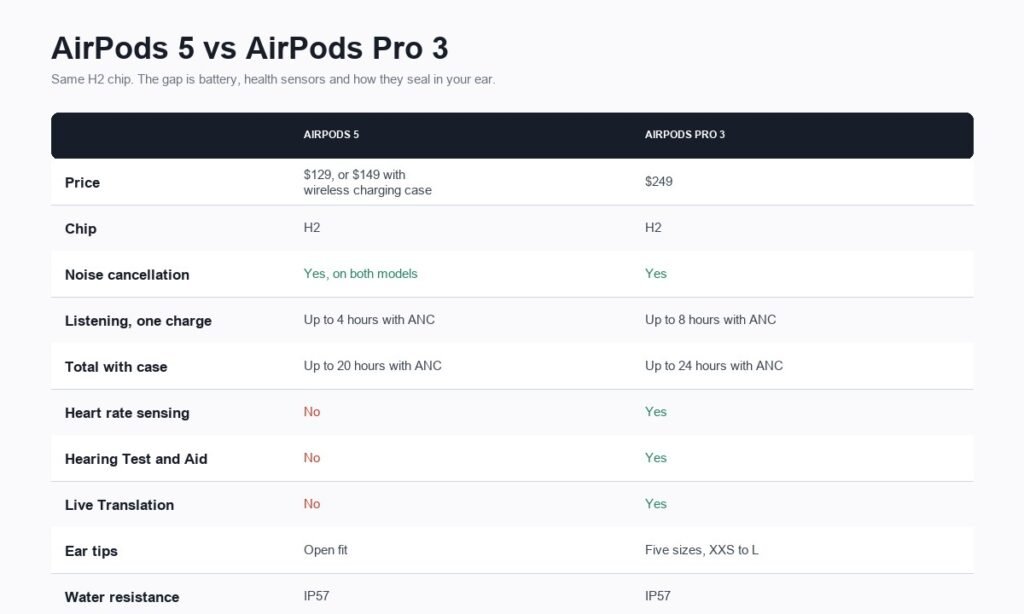
Both models use the same H2 chip, so the processing and the spatial audio are on equal footing, and Apple’s Pro 3 specifications confirm the rest. The differences are elsewhere.
| AirPods 5 | AirPods Pro 3 | |
|---|---|---|
| Price | $129, or $149 | $249 |
| Chip | H2 | H2 |
| Noise cancellation | Yes, both models | Yes |
| Listening, one charge | Up to 4 hours with ANC | Up to 8 hours with ANC |
| Total with case | Up to 20 hours with ANC | Up to 24 hours with ANC |
| Heart rate sensing | No | Yes |
| Hearing Test and Hearing Aid | No | Yes |
| Live Translation | No | Yes |
| Ear tips | Open fit | Five sizes, XXS to L |
| Water resistance | IP57 | IP57 |
The battery gap is the one most people will feel. Four hours on a charge is enough for a commute or a gym session but not a long-haul flight, and the Pro doubles it. The health features are the other genuine separation: heart rate sensing during workouts, a clinically oriented Hearing Test, and a Hearing Aid function are not small additions, and none of them appear on the standard model.
What the Extra $120 Actually Buys
- Twice the listening time. Eight hours against four on a single charge, and 24 against 20 with the case.
- Health hardware. Heart rate sensing, the Hearing Test and the Hearing Aid feature, which turn the earbuds into something closer to a health device.
- Live Translation. Useful if you travel or work across languages, absent on the standard model.
- A sealed fit in five sizes. Better passive isolation, better bass, and a fit that stays put during exercise, at the cost of the in-ear sensation some people dislike.
What it does not buy is a better chip or better spatial audio, both of which are shared. If you do not want the health features and you find open-fit earbuds more comfortable, the case for spending $249 is much weaker than it was a generation ago.
Battery Life in Practice
Apple’s figures are measured with noise cancellation switched on, which is the honest way to quote them, and they still deserve translating into ordinary use.
- Four hours per charge covers most commutes, a gym session, a couple of films’ worth of podcasts, or a working morning. It does not cover a transatlantic flight without a return to the case.
- Twenty hours total means charging the case roughly once a week for typical daily use, rather than nightly.
- The $149 model claims longer battery life than the base version, which is the second reason to prefer it.
- Three charging routes exist: USB-C, an Apple Watch charger, or any Qi-certified pad on the wireless model.
What Adaptive Audio and Conversation Awareness Actually Do
Three features on the specification sheet get listed as though they were the same thing. They are not, and knowing which is which changes how you set the earbuds up.
- Active Noise Cancellation uses microphones to generate a signal that cancels incoming sound. It is the blunt instrument, and it is what you want on a train.
- Transparency does the opposite, deliberately passing outside sound through so you can hear traffic or a conversation without removing the earbuds.
- Adaptive Audio sits between the two and moves automatically, dialling cancellation up or down as your surroundings change rather than forcing you to choose a mode and stick with it.
- Conversation Awareness is narrower still. It detects that you have started speaking, lowers the volume and lifts voices in front of you, then returns to normal when you stop.
On top of those, Adaptive EQ adjusts the sound to the shape of your ear, and Personalized Spatial Audio with dynamic head tracking positions audio in space so it stays anchored when you turn your head. Voice Isolation works on the other side of the equation, cleaning up your voice on calls rather than what you hear.
Where AirPods 5 Sit in Apple’s 2026 Audio Range
Apple now sells three AirPods lines, and the gaps between them are less about sound quality than about category.
- AirPods 5, $129 or $149. Open fit, noise cancellation, four hours a charge.
- AirPods Pro 3, $249. Sealed fit, eight hours, heart rate sensing, Hearing Test and Hearing Aid, Live Translation.
- AirPods Max 2, $549. Over-ear headphones with a Digital Crown and Loud Sound Reduction, for people who want a different physical product rather than better earbuds.
The pattern is that the entry model now covers the features most buyers actually use, and the money above it buys health hardware and endurance. That is a meaningful change from previous years, when the gap was noise cancellation itself.
Who Should Buy Which
- Buy AirPods 5 at $149 if you want noise cancellation, prefer an open fit, and want the force sensor and extra battery. This is the default recommendation for most people.
- Buy AirPods 5 at $129 only if you genuinely never charge wirelessly and do not care about the volume swipe control.
- Buy AirPods Pro 3 at $249 if you want the health features, need more than four hours at a stretch, or prefer the isolation of a sealed tip.
- Consider AirPods Max 2 at $549 only if you want over-ear headphones, which is a different product category rather than a better version of the same thing.
If you are comparing across brands rather than within Apple’s range, our roundups of the best wireless earbuds and the best noise cancelling headphones cover the alternatives at each price.
Frequently Asked Questions
How much do AirPods 5 cost?
$129 for the standard model and $149 for the version with the wireless charging case. Apple also lists monthly instalments of $21.50 and $24.83 respectively over six months. Both were listed as available starting 18 September 2026.
Do AirPods 5 have noise cancellation?
Yes, and on both models. Apple’s pre-order page states that Active Noise Cancellation is included on both, which is the first time the feature has appeared on the standard AirPods line rather than only the Pro. Because the design is open fit rather than sealed, expect it to handle steady low-frequency noise better than sudden or nearby sounds.
What is the difference between the $129 and $149 AirPods 5?
More than the charging case. Apple lists the $149 model as including a force sensor with volume swipe and longer battery life in addition to wireless charging. The $20 therefore buys a control method and extra runtime, not just the ability to charge on a pad.
Are AirPods 5 or AirPods Pro 3 better?
They share the same H2 chip, so the difference is fit, battery and health features. AirPods Pro 3 last up to eight hours on a charge against four, add heart rate sensing, a Hearing Test and Hearing Aid function and Live Translation, and seal the ear with tips in five sizes. AirPods 5 cost $100 to $120 less and suit anyone who finds sealed tips uncomfortable.
How long do AirPods 5 last on one charge?
Up to four hours of listening with Active Noise Cancellation enabled, and up to 20 hours in total with the charging case. The case can be topped up over USB-C, from an Apple Watch charger, or on a Qi-certified wireless charger on the $149 model.
Related Articles

Get the Fox Bulletin briefing
The stories that matter, in your inbox. No spam, unsubscribe anytime.
Newsletter signup will be available soon.
Related stories
iPhone 18 Pro Max Cases: 8 MagSafe and Rugged Picks, Plus Apple’s Own
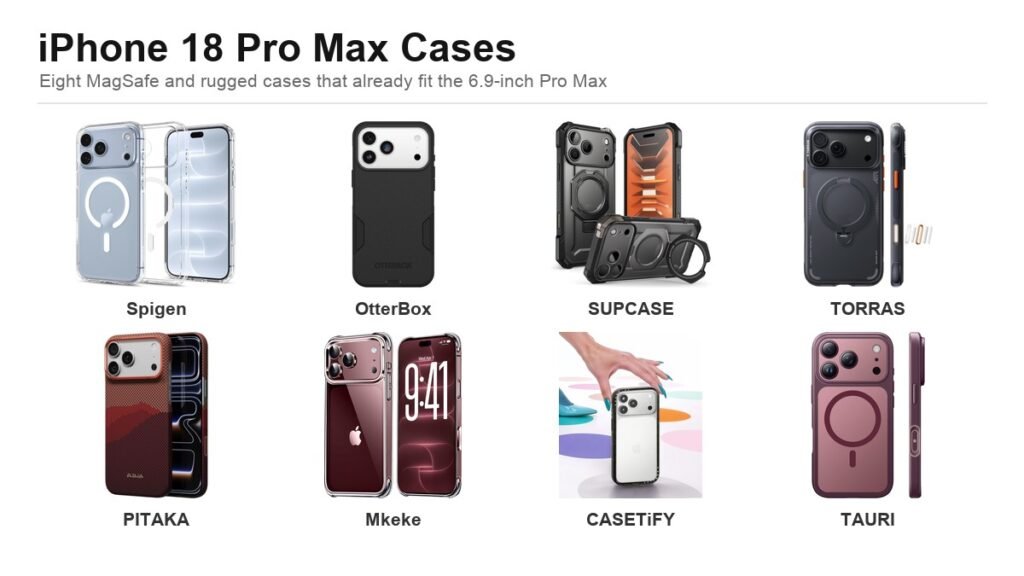
Eight iPhone 18 Pro Max cases you can buy now, from Spigen and OtterBox to PITAKA and CASETiFY, plus Apple’s own three and why your 17 Pro Max case probably still fits.
Foldable iPhone: The iPhone Duo’s Price, Specs and Release Date
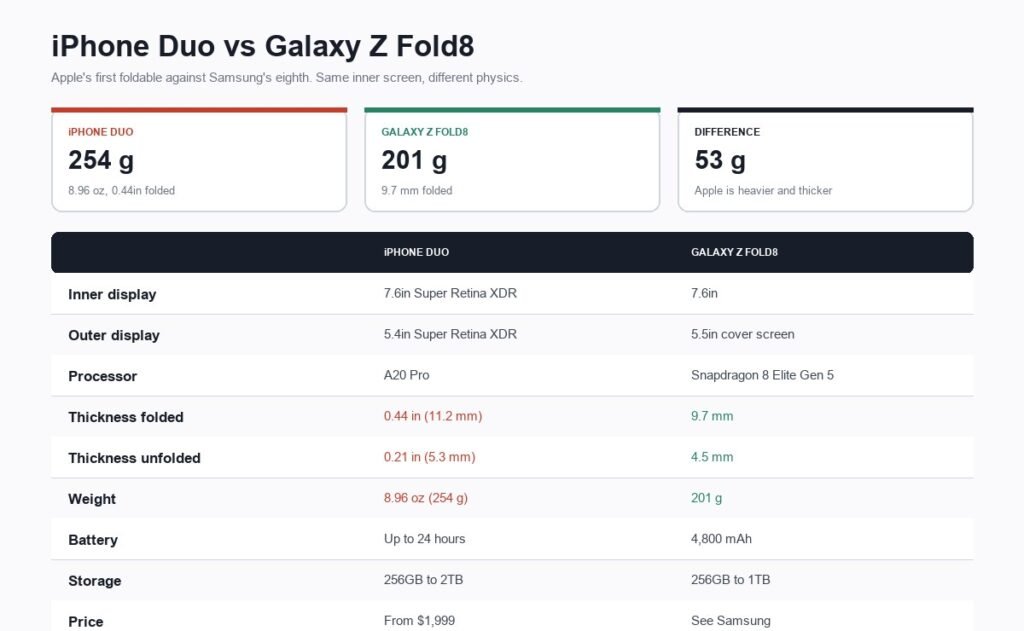
Apple's foldable iPhone is the iPhone Duo, $1,999, on sale 23 October 2026. Full specs, the 3D-printed titanium hinge, and how it measures up against the Galaxy Z Fold8.
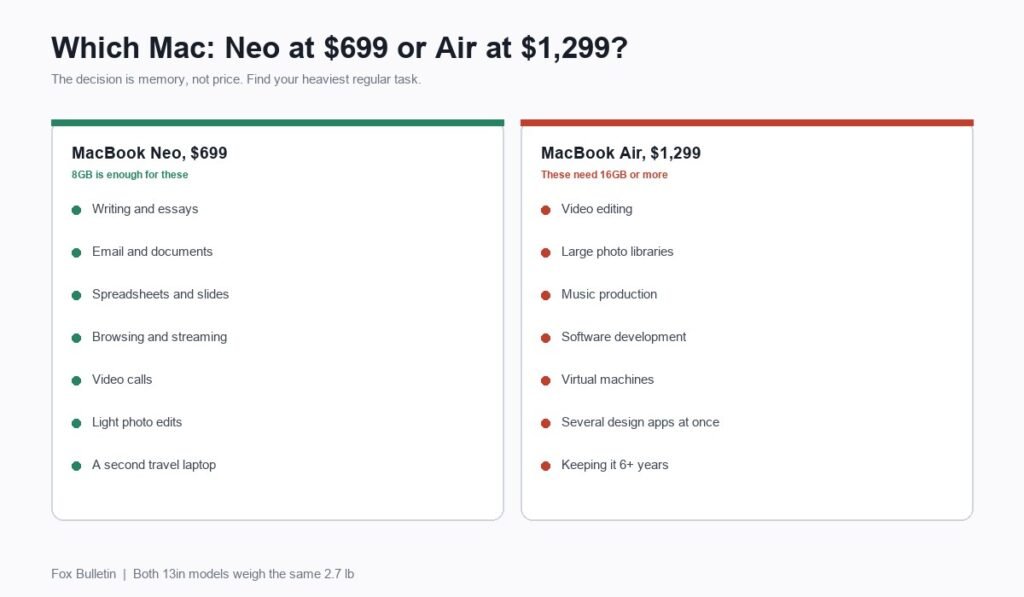
MacBook Neo vs MacBook Air: Which Mac Should You Actually Buy?
MacBook Neo costs $699 and MacBook Air $1,299, and both 13-inch models weigh the same. The comparison comes down to memory. Which to buy, worked through by workload.