
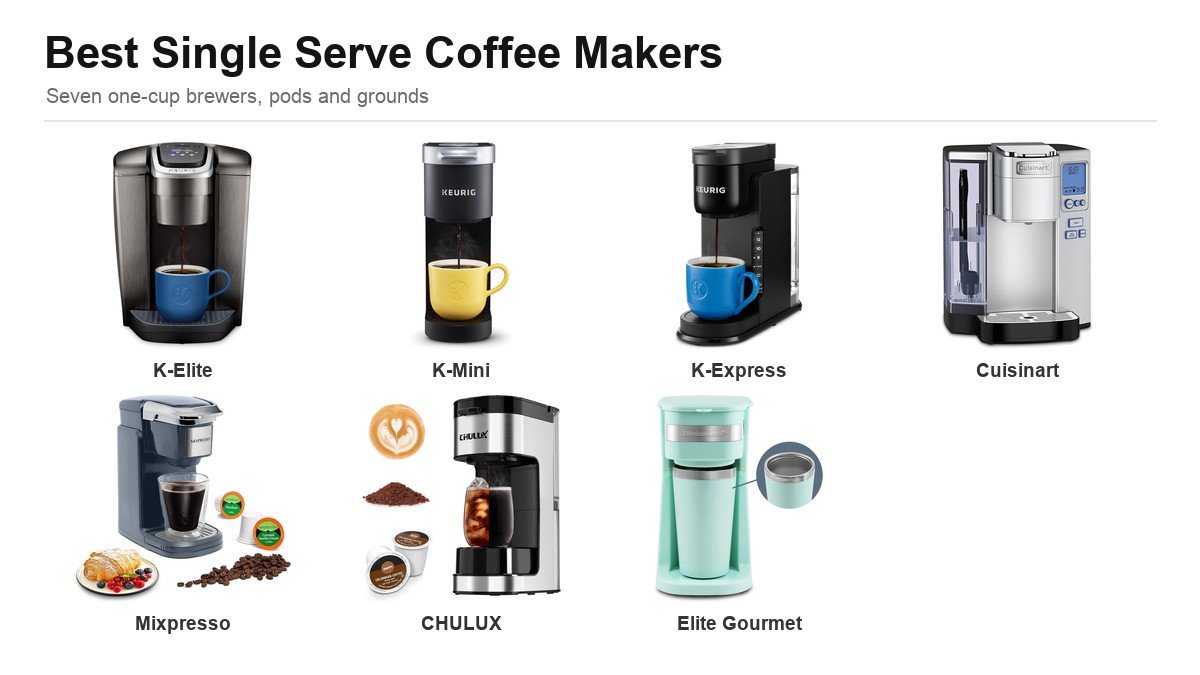
A single serve coffee maker solves a specific problem: one person wants one cup, and brewing a twelve-cup pot to get it wastes coffee, water and time. Every machine below brews into a mug in roughly a minute and then stops.
The market is dominated by Keurig, and four of the seven machines here are theirs. That is not brand loyalty, it is that the K-Cup format has the widest coffee selection by a distance. The other three exist for people who do not want to buy pods at all, and that distinction, pods versus grounds, is the first decision to make.
Fox Bulletin is an Amazon Associate. We earn from qualifying purchases made through links on this page, at no extra cost to you. Prices and availability change often, so check the listing before you buy.
The Seven Machines Compared
Reservoir size determines how often you refill. A single-cup machine with no reservoir is filled by the mug every time, which is fine at a desk and tedious in a kitchen.
| Machine | Reservoir | Brew sizes | Takes loose grounds |
|---|---|---|---|
| Keurig K-Elite | 75 oz | 4, 6, 8, 10, 12 oz | With a separate reusable pod |
| Keurig K-Mini | Single cup | 6 to 12 oz | With a separate reusable pod |
| Keurig K-Express | 42 oz | 8, 10, 12 oz | With a separate reusable pod |
| Cuisinart SS-10 | 72 oz | Multiple | Yes, reusable filter included |
| Mixpresso 2-in-1 | Single cup | One size | Yes, included |
| CHULUX SoloBrew | 14 oz removable | 3 sizes | Yes, ground filter included |
| Elite Gourmet EHC113M | Single cup | Up to 14 oz | Yes, grounds only |
1. Keurig K-Elite: The One With Temperature Control
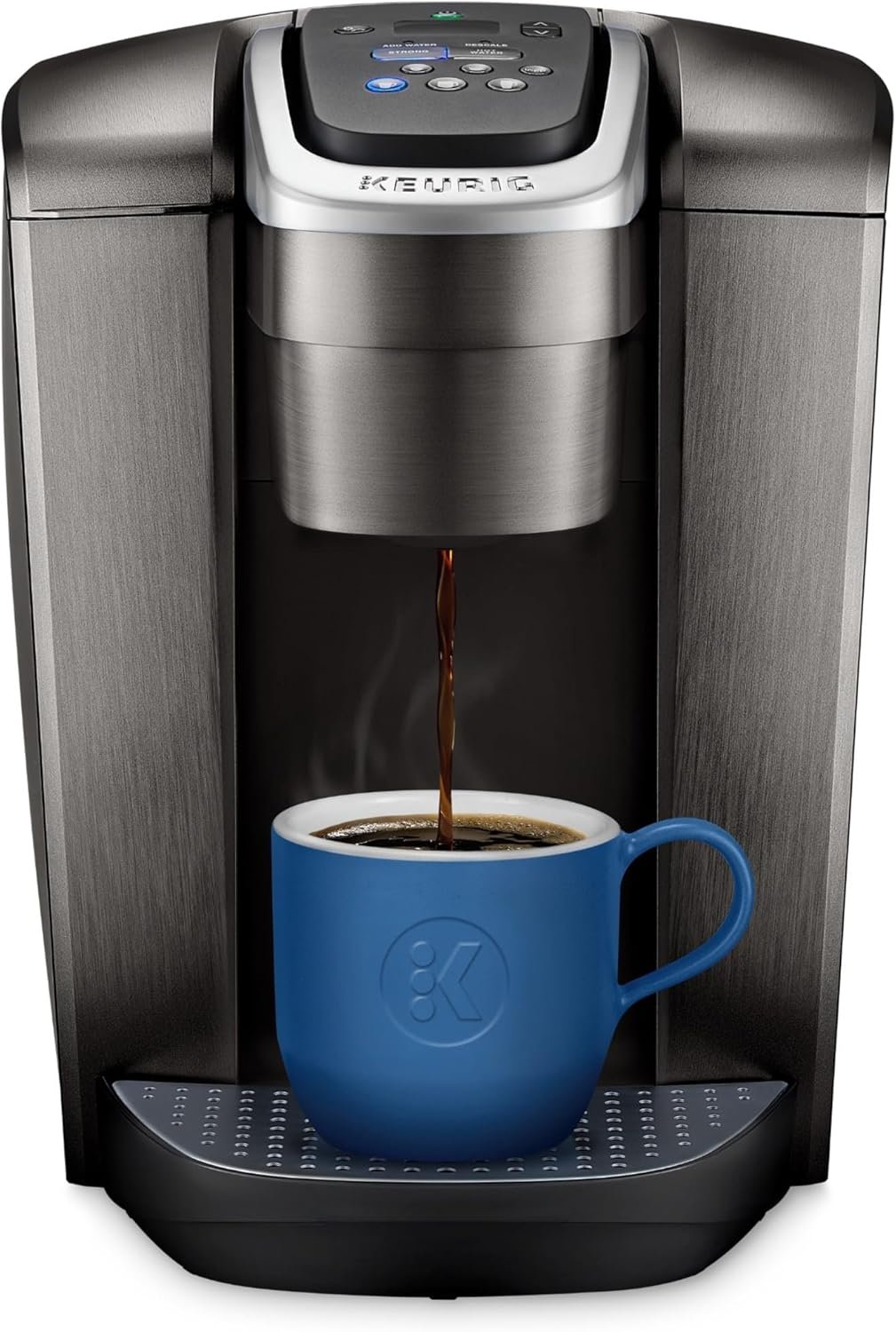
Most pod machines give you a size button and nothing else. The K-Elite adds two controls that actually change the cup: brew strength and brew temperature. Temperature control is the rarer one, and it matters because pod machines are otherwise a fixed system where the only variable you can touch is volume.
It brews 4, 6, 8, 10 and 12 ounce cups from a 75-ounce reservoir, which is roughly six to eight cups between refills. There is a dedicated iced setting that brews hot over ice at a strength calculated to survive the dilution, and a hot water on demand button for tea, soup or oatmeal. A water filter handle and filter are in the box.
What it does well
- Adjustable brew temperature, which almost no pod machine offers.
- Strength control alongside five cup sizes.
- 75-ounce reservoir means fewer refills than most.
- Hot water on demand for things that are not coffee.
What to know before buying
- The largest machine here, and it needs the counter space.
- Loose grounds require buying a reusable pod separately.
2. Keurig K-Mini: Under Five Inches Wide
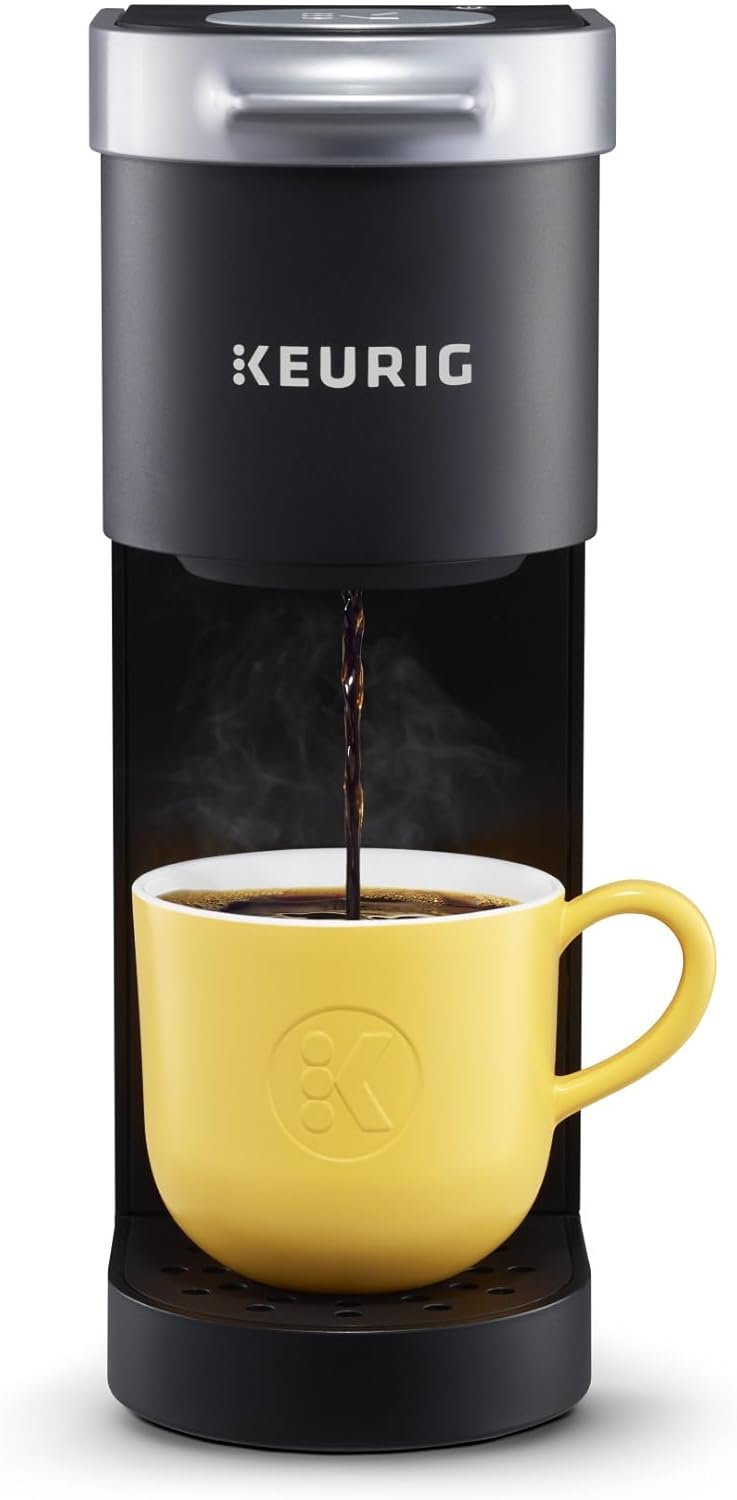
The K-Mini is less than five inches wide, which is the entire proposition. It fits in the gap beside a kettle, on a dorm shelf, or in an office drawer, and there is no reservoir because you pour the exact amount of water you want to drink into the machine each time.
That design has a real consequence worth understanding: every brew uses all the water you added, so the cup size is set by how much you pour, anywhere from 6 to 12 ounces. Nothing sits in a tank going stale. The drip tray comes off for travel mugs up to seven inches, and auto-off kills the power 90 seconds after brewing.
What it does well
- Under five inches wide, the smallest footprint of any Keurig.
- No standing water in a reservoir between brews.
- Cup size set by how much water you pour, from 6 to 12 oz.
- Auto-off after 90 seconds.
What to know before buying
- Refilling for every single cup gets old in a busy kitchen.
- Slower than reservoir machines because it heats from cold each time.
3. Keurig K-Express: Reservoir and Strong Button, Little Else
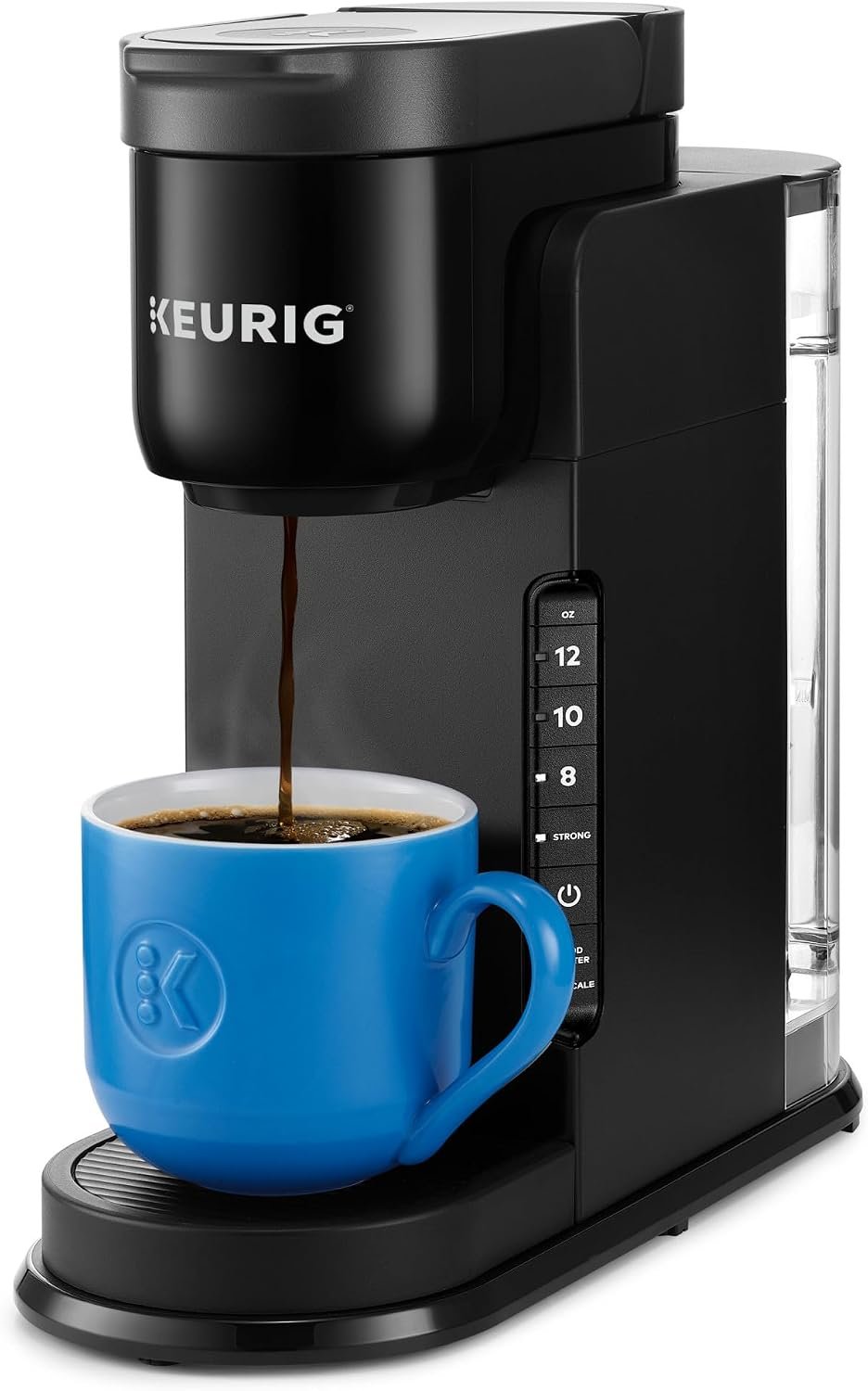
The K-Express is the middle of the Keurig range and the one most people should probably buy. It has the 42-ounce removable reservoir the K-Mini lacks, good for about four 8-ounce cups before refilling, and a Strong button that extends the brew for a bolder cup.
Beyond that it is deliberately plain: three cup sizes at 8, 10 and 12 ounces, one button each. There is no temperature control, no iced mode and no screen. For a machine whose job is to put coffee in a mug on a weekday morning, the absence of a menu is not a drawback.
What it does well
- 42-ounce removable reservoir, roughly four cups between refills.
- Strong button for a bolder brew.
- Three cup sizes, each on its own button.
- Noticeably cheaper than the K-Elite.
What to know before buying
- No temperature control and no iced setting.
- Reservoir is smaller than the K-Elite or the Cuisinart.
4. Cuisinart SS-10: Pods and Grounds Without an Adapter to Buy
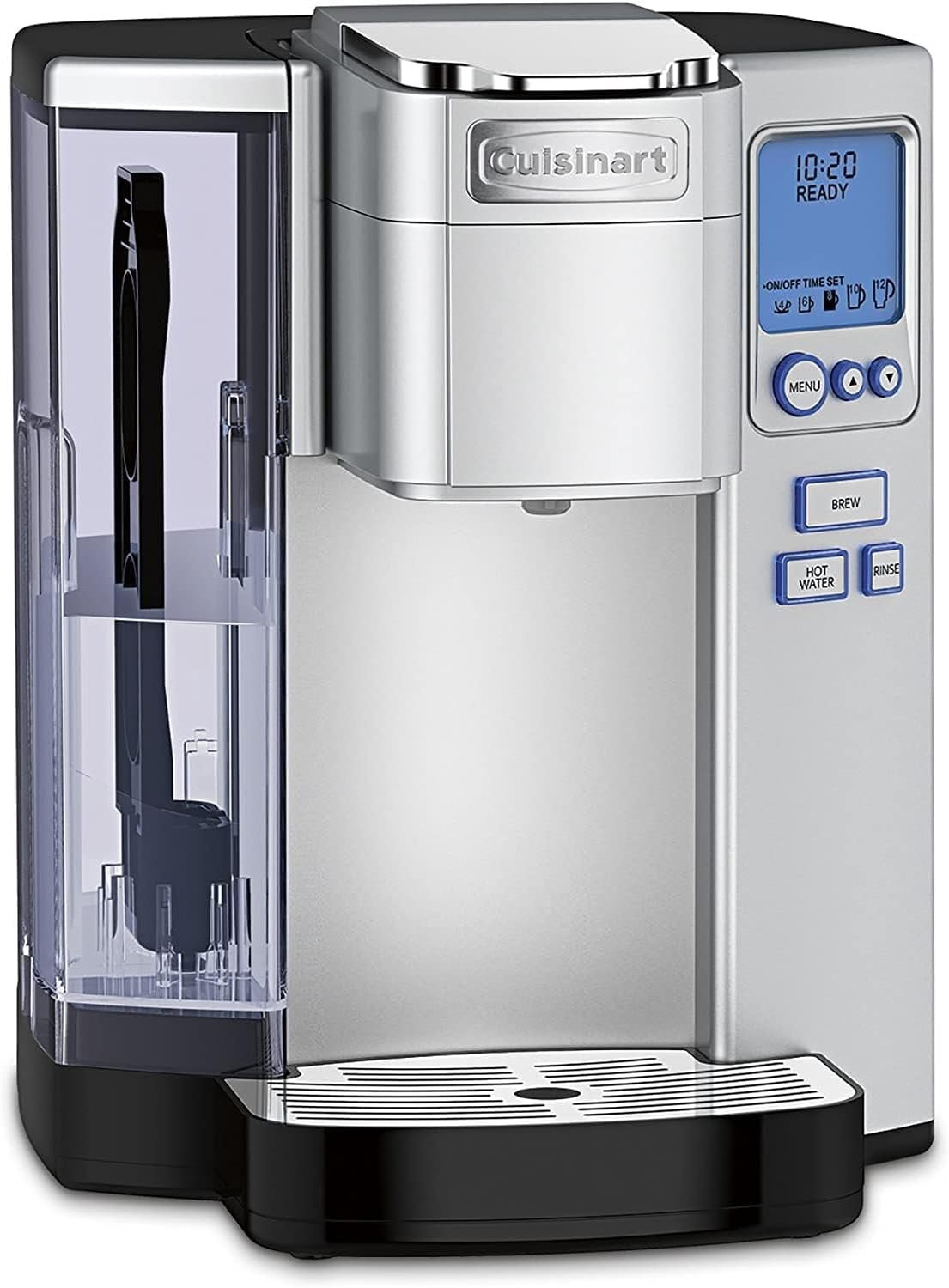
Keurig machines will brew loose grounds only if you buy a reusable pod separately. The Cuisinart includes one in the box, alongside a built-in charcoal water filter, which makes it the most flexible machine here for someone who wants pods on weekdays and their own beans at the weekend.
It is also the most configurable. A backlit LCD handles auto on and off, adjustable temperature control and an auto-rinse cycle that flushes the brew path between uses, which is the part of any pod machine that gets least attention and most residue. The 72-ounce reservoir is second only to the K-Elite, and it dispenses hot water on its own.
What it does well
- Reusable ground coffee filter included, no extra purchase needed.
- Adjustable temperature control and programmable auto on and off.
- Auto-rinse cycle cleans the brew path between uses.
- Built-in charcoal water filter and a 72-ounce reservoir.
What to know before buying
- The most complicated machine here to set up.
- Large footprint for a single-cup brewer.
5. Mixpresso 2-in-1: The Cheapest Way to Escape Pods
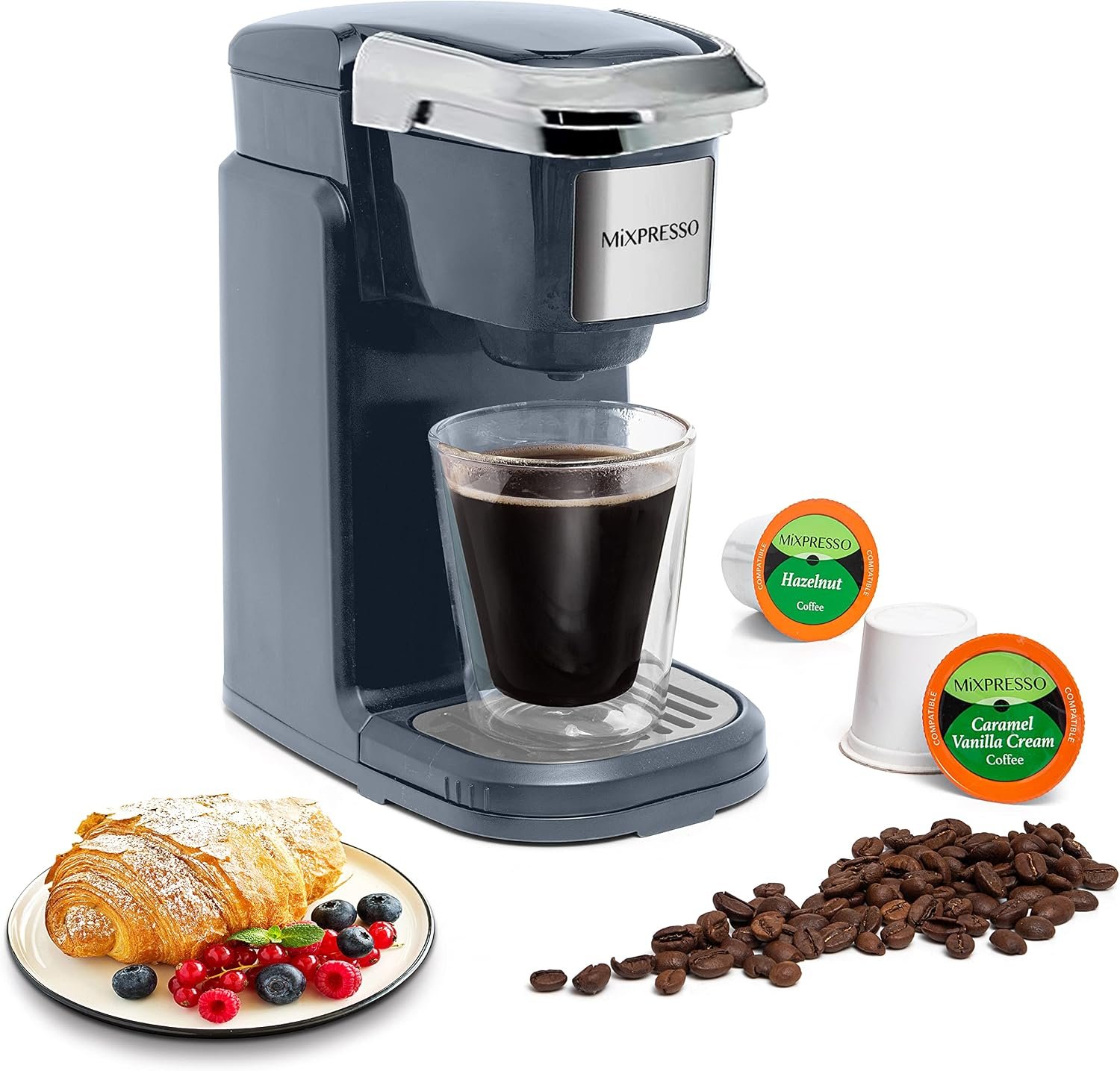
Pods cost several times more per cup than loose coffee, and the case for a cheap dual-format machine is simply arithmetic. The Mixpresso takes K-Cups and ground coffee in the same slim 800-watt body and costs a fraction of the Cuisinart.
Preheating takes about two minutes, which is slower than a reservoir machine and about what you would expect at this price. The pod drawer pulls out and rinses under a tap, and holding the button drains residual water for storage. This is a basic machine, and the honest reason to buy it is the price of the second format rather than the quality of the first.
What it does well
- Takes both K-Cups and loose grounds out of the box.
- Slim body designed for a narrow gap on a counter.
- Drawer pulls out and rinses under a tap.
- The cheapest dual-format option on this list.
What to know before buying
- Two-minute preheat before every cup.
- One cup size only, with no strength control.
6. CHULUX SoloBrew: Three Brew Styles in a Five-Inch Body
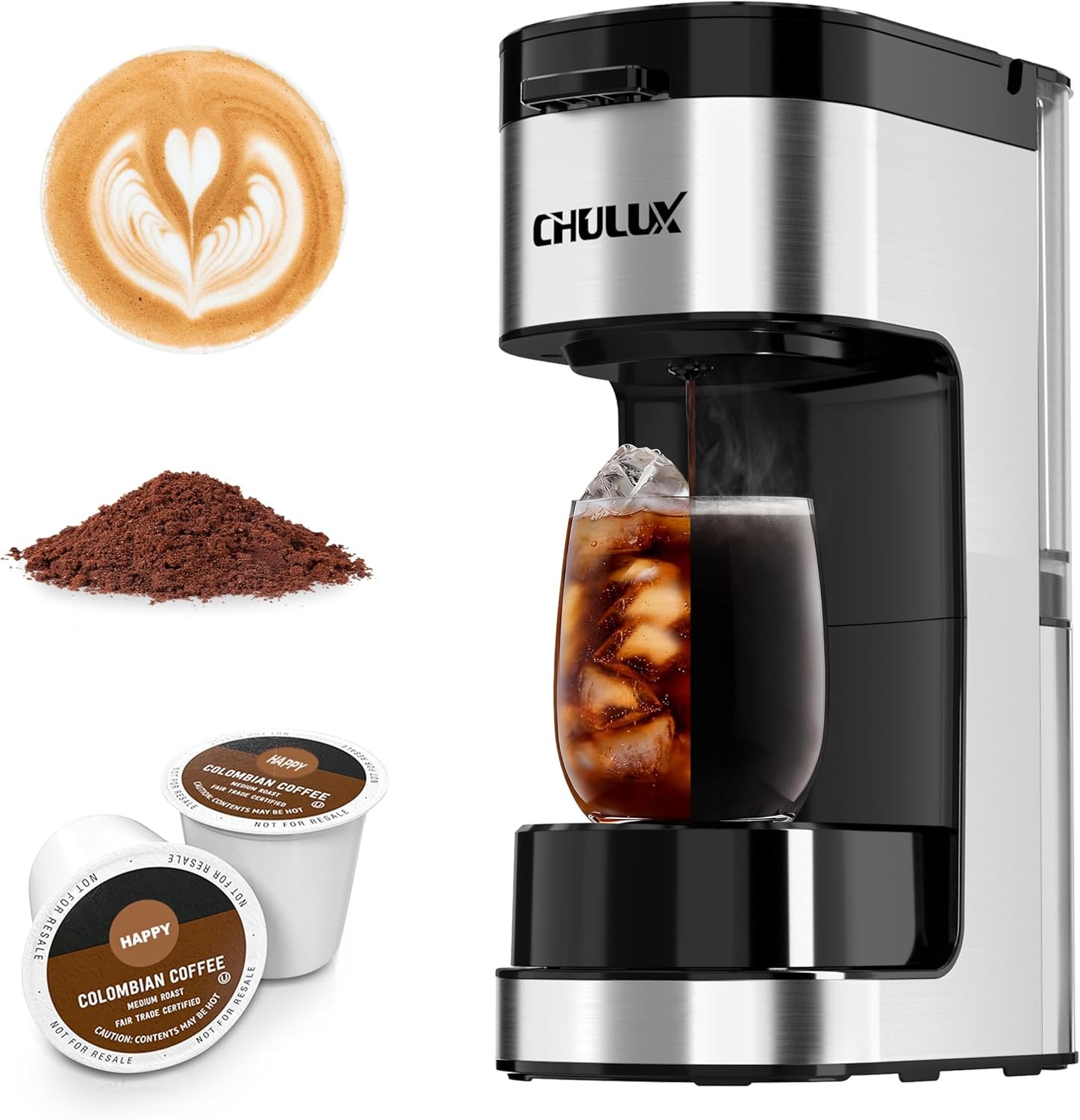
The SoloBrew matches the K-Mini on footprint, under five inches wide, but adds the things the K-Mini leaves out. Three brew styles rather than one: Strong for an intense cup, Over Ice for iced coffee, and Classic for a balanced one. A ground coffee filter is included, so pods are optional.
It runs at 1000 watts and brews 14 ounces in about two minutes, with an NTC sensor holding brewing temperature rather than letting it drift as the tank empties. The reservoir is removable and sized at 14 ounces, so water is not left standing overnight. Stainless steel housing rather than painted plastic.
What it does well
- Strong, Over Ice and Classic modes in a compact machine.
- Ground coffee filter included, no pods required.
- Removable 14-ounce reservoir, no stale standing water.
- Stainless housing under five inches wide.
What to know before buying
- 14 ounces is one large cup, so it refills constantly.
- A smaller brand than Keurig, with a correspondingly smaller support network.
7. Elite Gourmet EHC113M: Grounds Only, With the Mug Included
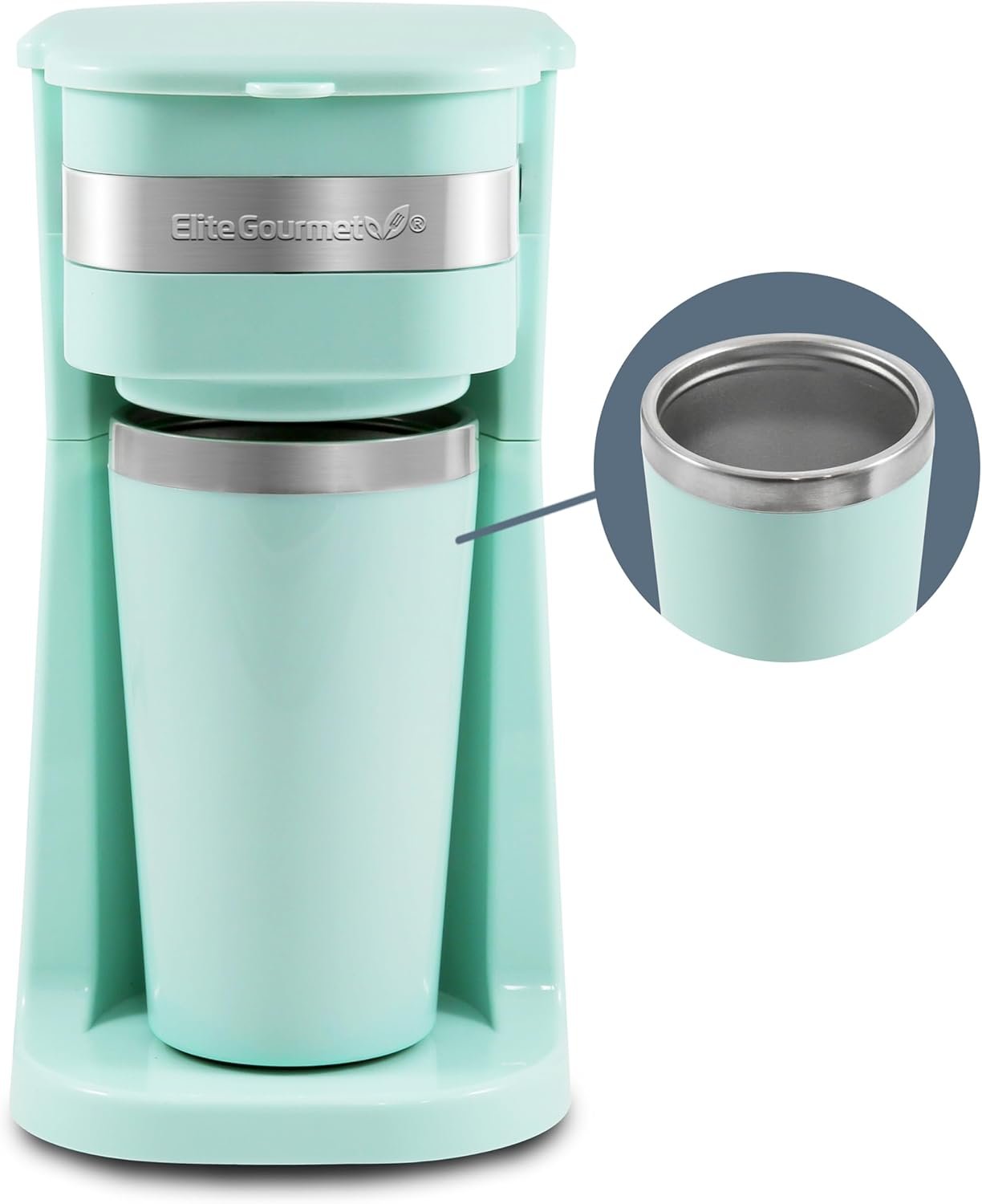
This one refuses pods entirely, and that is the point. There is a permanent reusable filter for loose grounds and loose-leaf tea, no paper, no plastic cups, and a 14-ounce stainless steel insulated travel mug in the box that is sized to sit under the dispenser.
It brews in under sixty seconds at 600 watts with a single button. For a desk at work, a small kitchen or anyone who has looked at the bin after a month of pods and felt uneasy, it is the most direct answer here. It also comes in colours rather than the usual black plastic.
What it does well
- No pods and no paper filters, ever.
- 14-ounce insulated travel mug included and sized for the machine.
- Brews in under a minute with one button.
- Takes loose-leaf tea as well as coffee.
What to know before buying
- No pod compatibility at all, so no K-Cup selection.
- 600 watts is the lowest here, and it is a small single cup.
What a Pod Actually Costs You
The convenience is real and so is the price. A K-Cup holds somewhere around 9 to 12 grams of coffee, and buying that coffee in pod form costs several times what the same weight costs as beans. Over a year of one cup a day the difference is not trivial, which is the strongest argument for any of the machines here that accept loose grounds.
Waste is the other consideration, and Keurig is more specific about it than most brands. The company states on its own recycling page that every K-Cup pod has been recyclable since the end of 2020, and its sustainability page confirms the pods are made from #5 plastic, polypropylene. The caveat is in Keurig’s own wording: you have to peel the lid, empty the grounds and check that your local programme accepts #5. Acceptance is not universal, and the steps are easy to skip. A reusable pod sidesteps the question entirely.
None of this makes pods indefensible. If the alternative is a pot of coffee where two thirds goes down the sink, the pod may well be the lower-waste option. It is simply worth doing the arithmetic on your own habits rather than assuming.
Choosing Between Pods and Grounds
Pods win on selection and consistency. The K-Cup catalogue runs to hundreds of roasts and every cup is identical, which is exactly what some people want at 6am.
Grounds win on cost and on coffee quality. Fresh beans ground that morning will beat any pod, because the coffee in a pod was ground months earlier and sealed. If you already own a grinder, the case is one-sided.
Dual-format machines let you stop choosing. The Cuisinart, Mixpresso and CHULUX all take both, and the Elite Gourmet takes only grounds. The Keurigs take grounds only via a reusable pod bought separately, which works but is an extra purchase.
Reservoir size is the daily annoyance. This is the specification people underrate. A 42 or 72-ounce tank gets refilled every few days. A single-cup machine gets filled every single time, which is fine at a desk and grating in a household.
Which Single Serve Machine to Buy
For most people the Keurig K-Express is the right machine: a real reservoir, a strong brew button, three sizes and none of the complication. It does the job a pod machine exists to do and costs less than the flagship.
Step up to the K-Elite if you want to adjust brew temperature and drink iced coffee properly, because those two controls are genuinely rare in this category. Take the K-Mini if counter space is the binding constraint and you accept refilling each time. Take the Cuisinart SS-10 if you want pods and your own coffee with no extra accessories to buy, and it is the only machine here with an auto-rinse cycle. The CHULUX is the small machine that still gives you three brew styles and a ground filter. The Mixpresso is the budget route to both formats. The Elite Gourmet is for anyone who wants nothing to do with pods at all.
If a single cup at a time is not really your problem, our guide to drip coffee makers covers batch brewing, including the two machines on Amazon with third-party brewing certification, and the overview of coffee maker types compares pods against everything else.
Frequently Asked Questions
Can you use regular ground coffee in a Keurig?
Yes, but only with a reusable K-Cup pod, which Keurig and several third parties sell separately and which is not included with the machines here. The Cuisinart SS-10, CHULUX SoloBrew and Mixpresso all include a ground coffee filter in the box instead.
Are K-Cups recyclable?
Keurig states that all K-Cup pods have been recyclable since the end of 2020 and that they are made from #5 polypropylene. The practical catch is in the instructions: peel the lid, empty the grounds, and confirm your local programme accepts #5, which not every kerbside service does. A reusable pod avoids the issue entirely.
How long does a single serve coffee maker take to brew?
Reservoir machines that keep water hot brew in under a minute. Machines without a reservoir, such as the K-Mini or the Mixpresso, heat from cold each time and take roughly one to two minutes.
Do single serve coffee makers need descaling?
Yes, and more often than people expect because the water sits hot in a small tank. Scale slows the brew and cools the water, which shows up as weak coffee before it shows up as a fault. Every three to six months is the usual guidance, sooner in hard water areas.