“Best coffee maker” is a question with no single answer, because the machines competing for it are not doing the same job. A pod brewer and a Chemex are as different as a microwave and an oven. Before comparing models, it is worth deciding which of the six types you actually want, because that choice determines far more than which brand you buy inside it.
This guide takes one strong machine from each type, explains what that type does well and badly, and then sets them against each other. If you already know you want drip or pods or espresso, the linked guides go deeper into each category.
Fox Bulletin is an Amazon Associate. We earn from qualifying purchases made through links on this page, at no extra cost to you. Prices and availability change often, so check the listing before you buy.
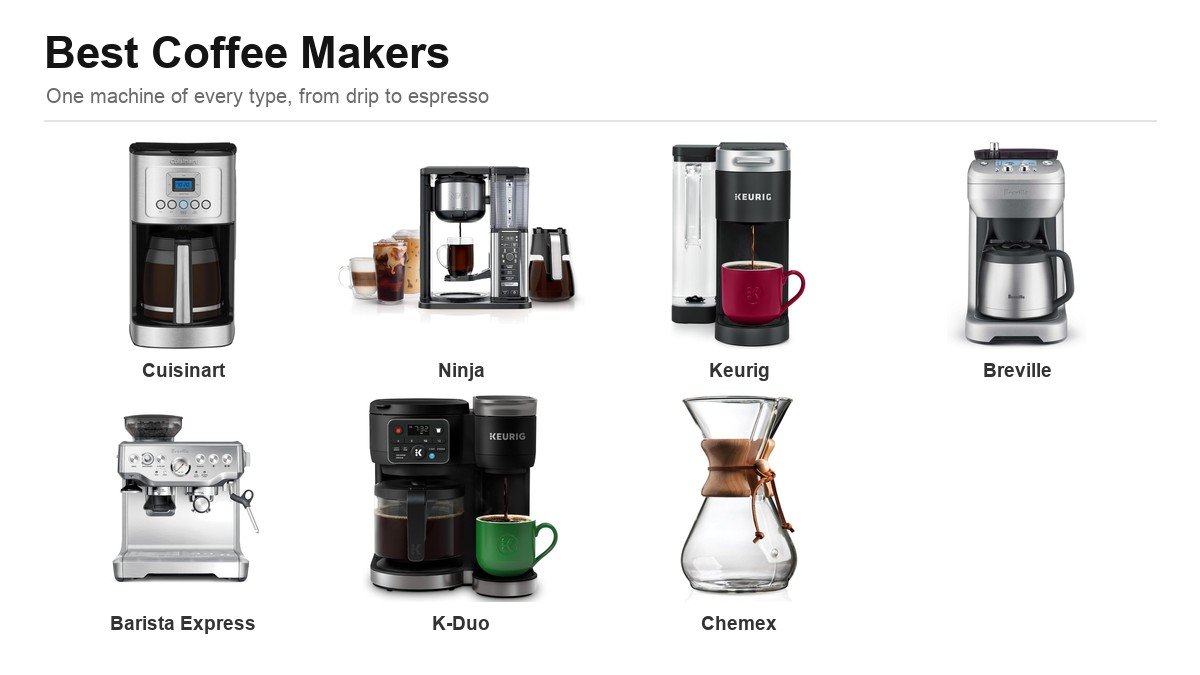
Six Types of Coffee Maker, One Machine Each
Cost per cup below is about the coffee, not the machine. It is the number most buying guides leave out, and over a few years it usually exceeds the price of the machine itself.
| Type | Machine here | Effort per cup | Coffee cost per cup |
|---|---|---|---|
| Classic drip | Cuisinart DCC-3200 | Low | Lowest |
| Drip with milk frother | Ninja CM401 | Low | Lowest |
| Pod | Keurig K-Supreme | Lowest | Highest |
| Pod and carafe hybrid | Keurig K-Duo | Lowest | Mixed |
| Grind and brew | Breville Grind Control | Low | Low |
| Espresso | Breville Barista Express | High | Low |
| Manual pour over | Chemex 8-Cup | Highest | Low |
1. Cuisinart DCC-3200: The Classic Drip Machine Done Properly
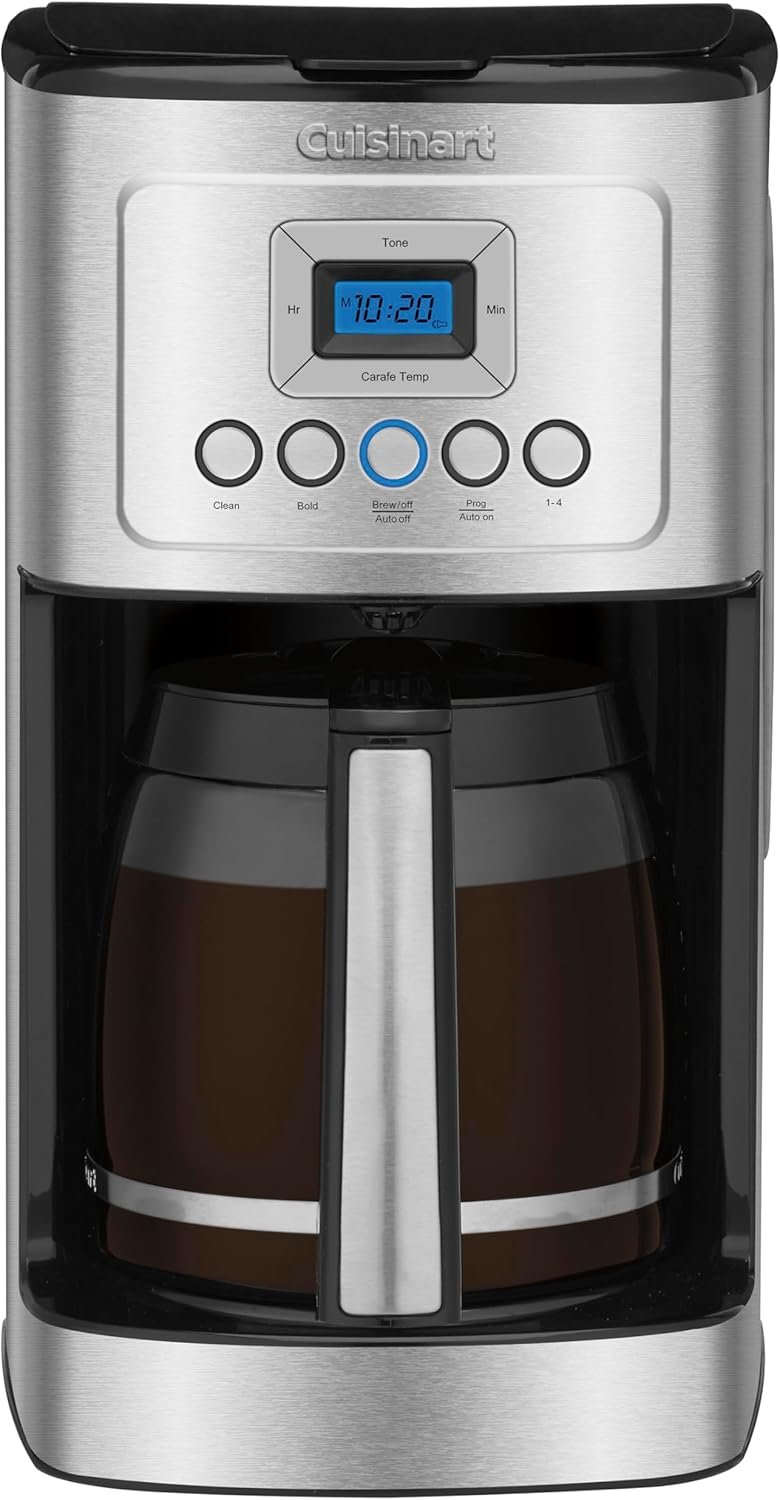
Drip is the default for a reason. It brews a large batch unattended, the coffee costs less per cup than any other method here, and a decent machine costs less than a month of pods. The DCC-3200 is the version of that idea most households should look at first.
It brews 14 cups, roughly 70 ounces, with adjustable warming plate temperature at low, medium or high, brew strength switching between regular and bold, and a 1-to-4-cup setting that adapts the cycle for small batches instead of just using less water. Programming runs 24 hours ahead with auto-off between zero and four hours, and brew pause lets you take a cup mid-cycle.
What it does well
- Adjustable warming plate temperature, which most drip machines lack.
- Brew strength control and a dedicated small-batch mode.
- 14 cups covers a household or a small office.
- 24-hour programming with adjustable auto-off.
What to know before buying
- Glass carafe on a warming plate will stew coffee left for an hour.
- No built-in grinder.
2. Ninja CM401: Drip That Also Makes Coffeehouse Drinks
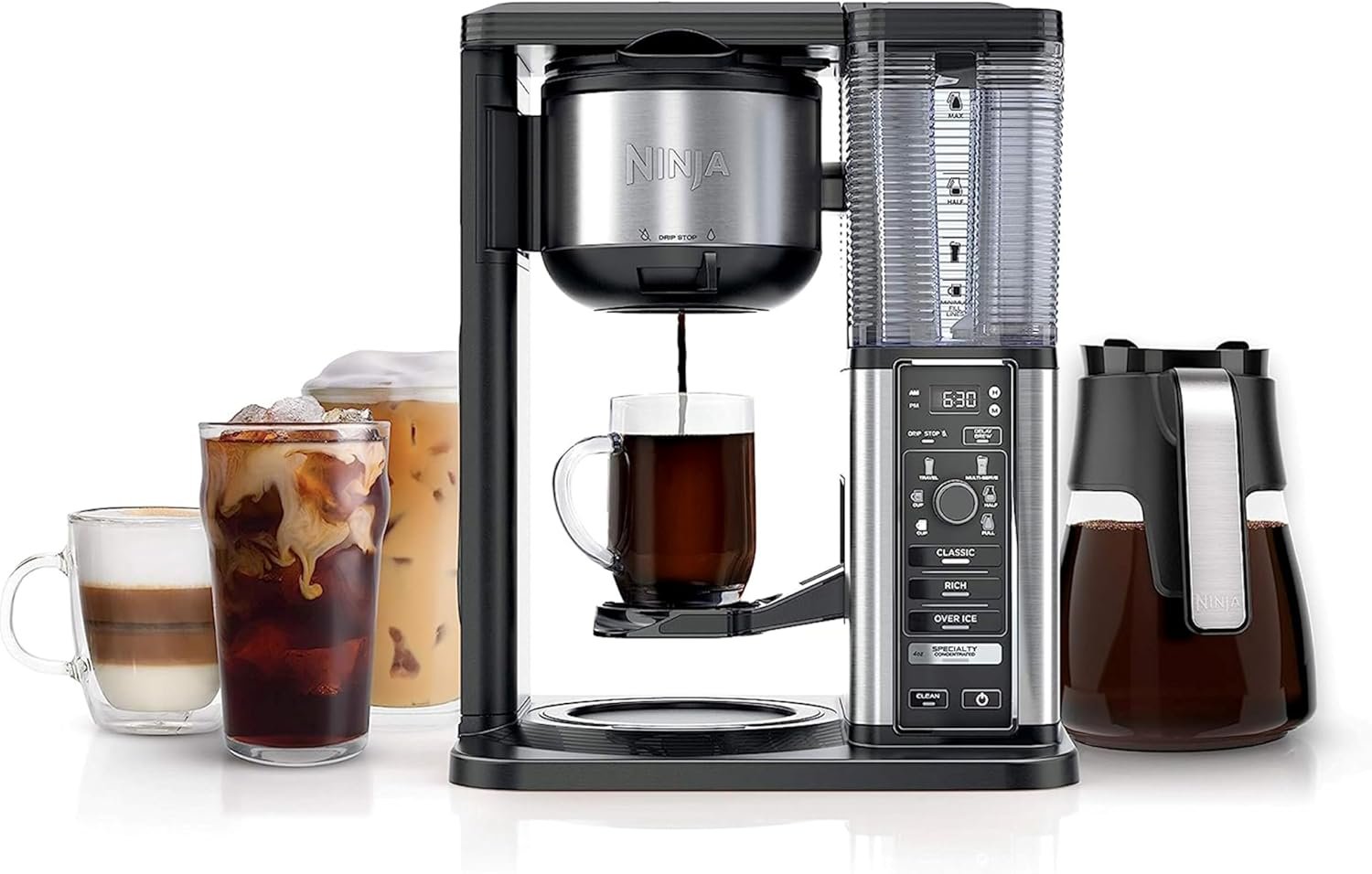
The gap between a drip machine and a cafe is not really espresso, it is milk. The CM401 closes it with a fold-away frother built into the side, plus a Specialty Brew setting that produces a concentrated coffee strong enough to stand up to steamed milk in a latte or macchiato.
It also solves the other drip limitation, which is that one machine usually brews one size. There are six sizes here, from a single cup through travel mug and multi-serve travel mug to half and full carafe, and four brew styles including Over Ice that brews stronger so melting ice does not dilute it. No pods are needed for the single-cup function, unlike the Keurigs.
What it does well
- Built-in fold-away frother for lattes and cappuccinos.
- Six brew sizes from one cup to a full carafe.
- Specialty Brew makes a proper concentrate for milk drinks.
- Single-serve brewing from ordinary grounds, no pods or reusable pod required.
What to know before buying
- The frother makes foam, not true steamed microfoam.
- More settings to learn than a plain drip machine.
3. Keurig K-Supreme: Pods Without the Weak Cup
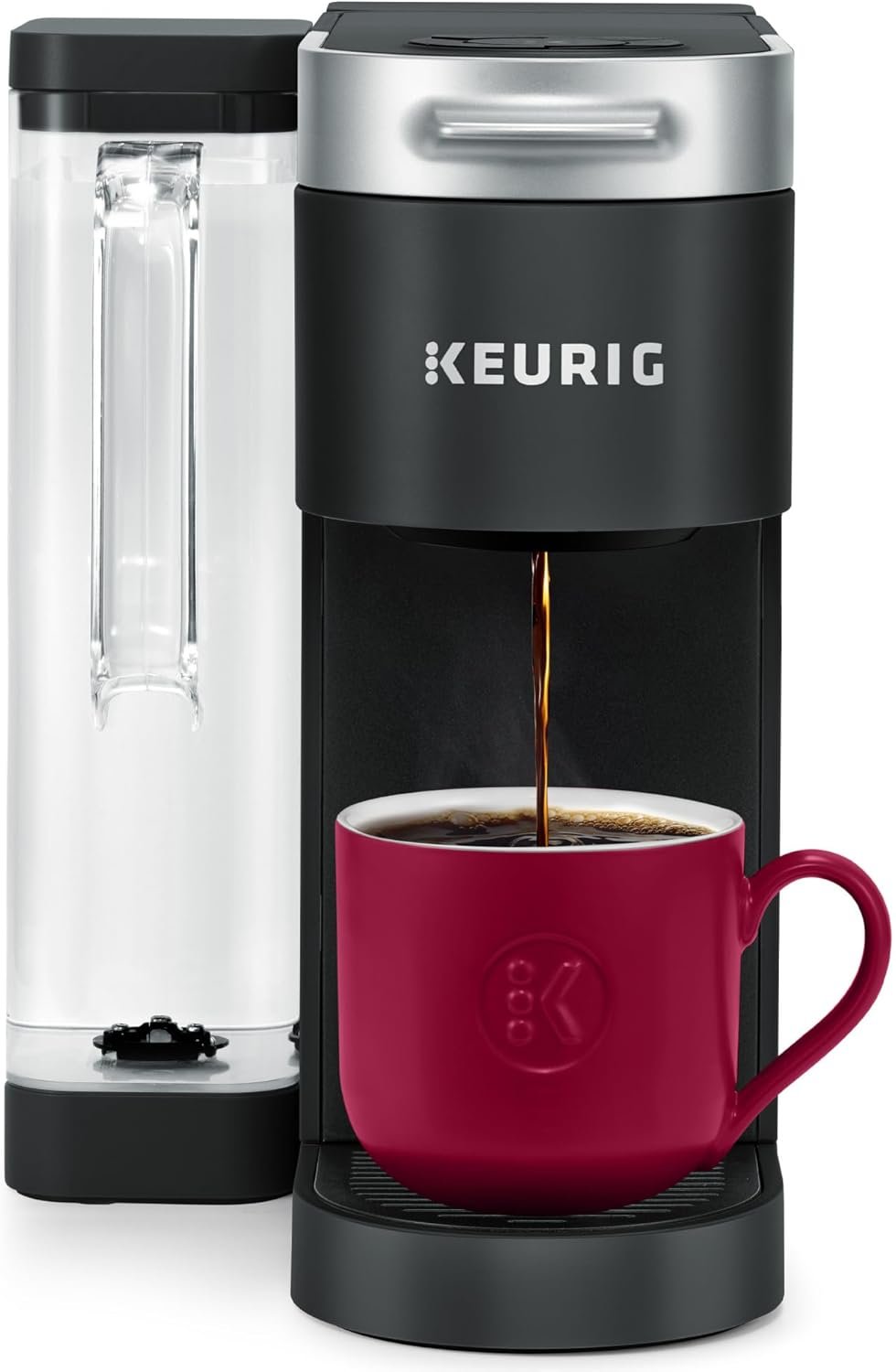
The long-standing complaint about pod coffee is that it tastes thin. Keurig’s answer is MultiStream Technology, which replaces the single central needle stream with multiple streams that wet the grounds more evenly, and the company benchmarks it against its own older K-Classic rather than against rivals.
The practical strengths are elsewhere though. A 66-ounce dual-position removable reservoir lets you sit the tank where the counter allows rather than where the machine dictates. Back-to-back brewing means a second cup with no reheat wait, which matters in a household of two. Four brew sizes, a stronger setting, an over-ice setting, and clearance for travel mugs up to seven inches.
What it does well
- MultiStream Technology wets the grounds more evenly than a single needle.
- 66-ounce reservoir that can sit in two positions.
- Back-to-back brewing with no reheating pause.
- Strong and over-ice settings alongside four cup sizes.
What to know before buying
- Pods cost several times more per cup than loose coffee.
- Loose grounds need a reusable pod bought separately.
4. Keurig K-Duo: One Machine for the Household That Cannot Agree
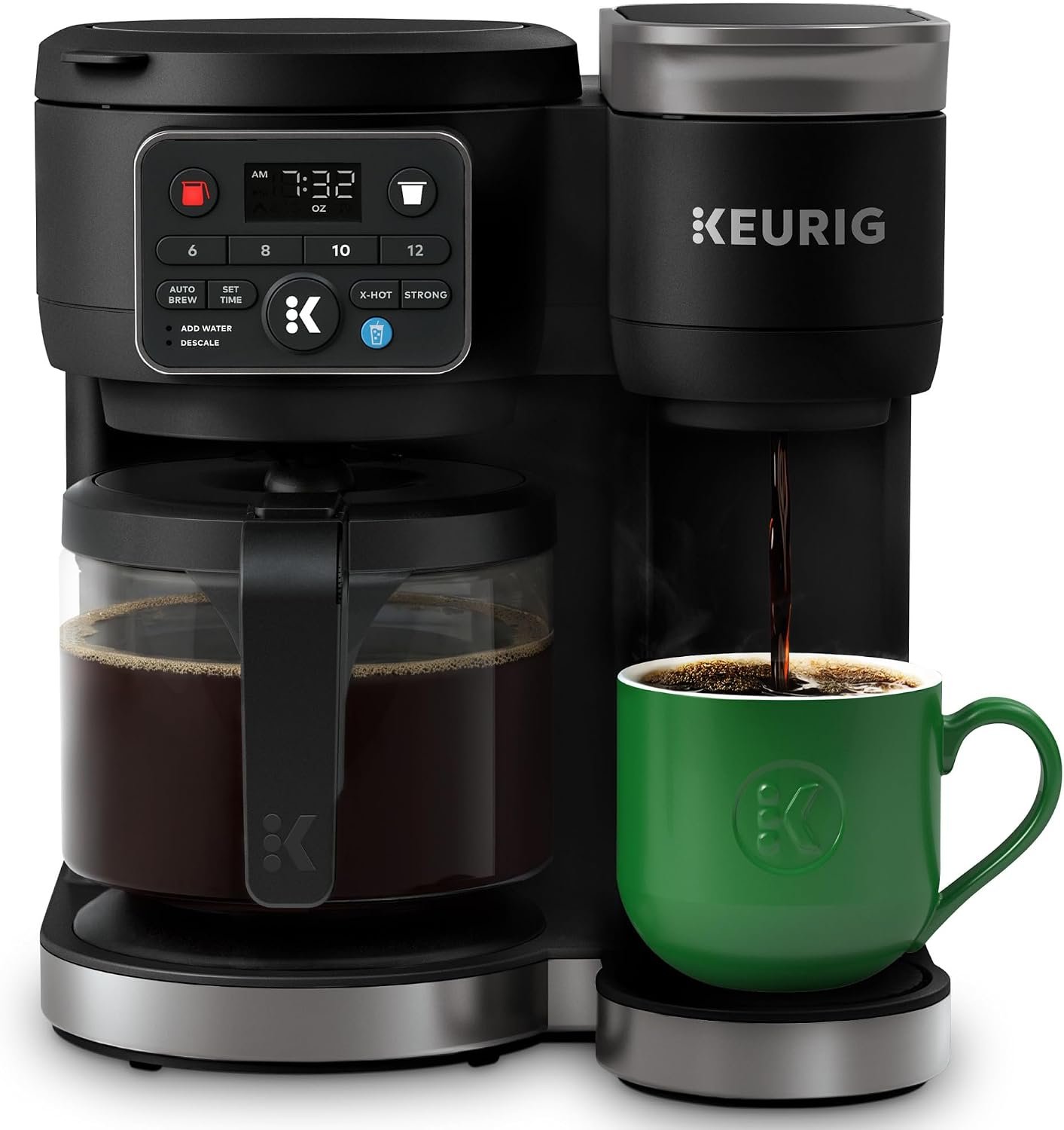
Two-coffee households are a real problem. One person wants a mug on the way out of the door, the other wants a pot to work through. The K-Duo brews both from one machine: K-Cup pods for single cups and ordinary ground coffee for a 12-cup carafe.
Cup sizes run 6, 8, 10 or 12 ounces, carafe sizes 6, 8, 10 or 12 cups, from a shared 72-ounce reservoir. MultiStream saturation applies to both sides. There is a Strong Brew setting and an Extra Hot function for single cups, plus a brew-over-ice mode that adjusts temperature to limit melt. The glass carafe is shaped specifically to stop the dribbling that ruins most carafe pours.
What it does well
- Pods and ground coffee from a single machine.
- 12-cup carafe alongside four single-cup sizes.
- Strong Brew and Extra Hot for the single-cup side.
- 72-ounce shared reservoir.
What to know before buying
- Larger than a plain pod machine and it needs the depth.
- The carafe side sits on a warming plate, with the usual consequences.
5. Breville Grind Control: Whole Beans to Carafe Without a Second Machine
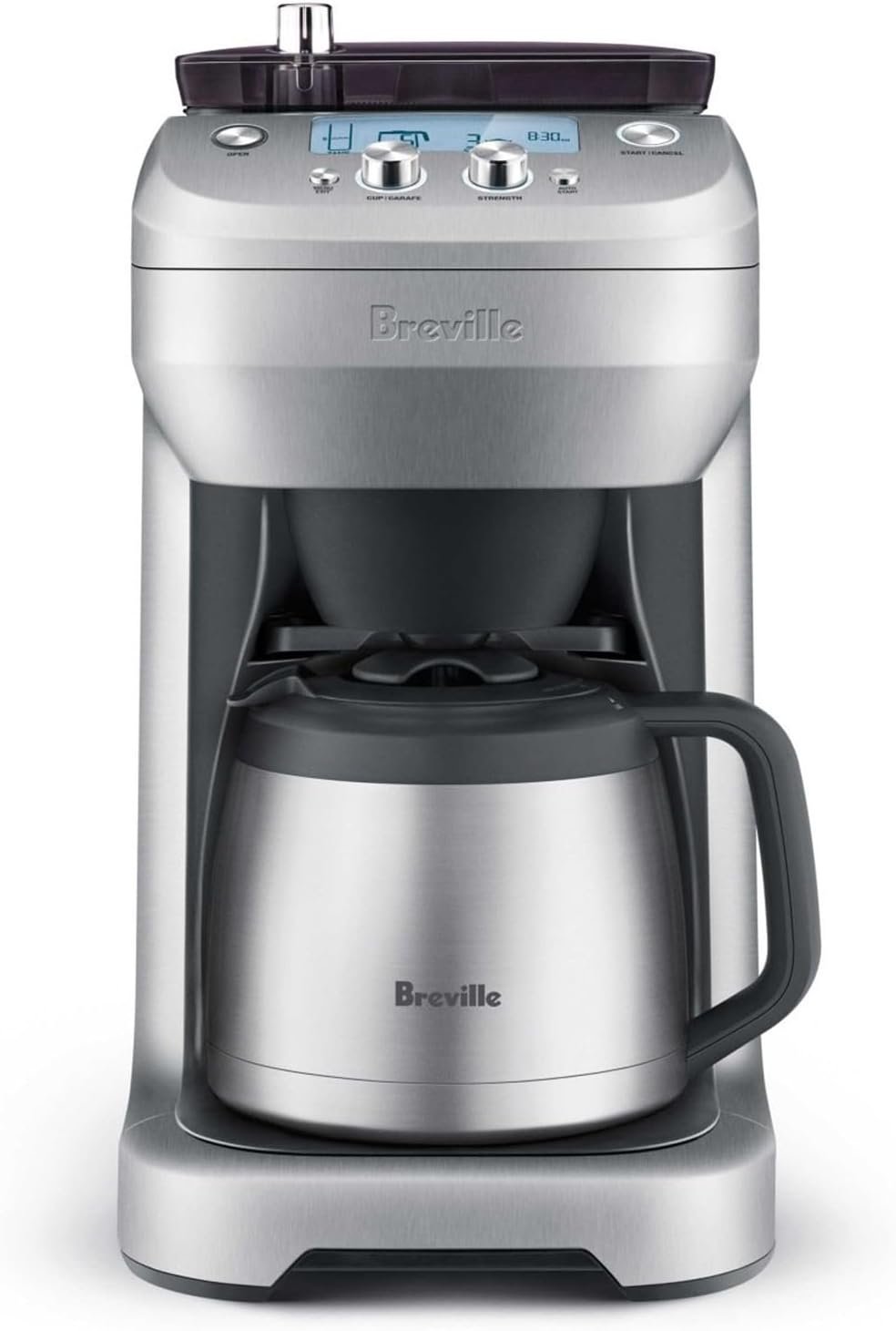
Coffee starts losing aroma within minutes of grinding, which is why pre-ground coffee in a good machine still tastes flat. A grind-and-brew machine removes the gap entirely by grinding directly into the basket at the start of the cycle.
Breville’s version has an adjustable grinder so you can match grind size to the bean and to your taste rather than accepting one factory setting, and Steep and Release technology that holds water in contact with the grounds before releasing it, which is closer to immersion brewing than standard drip. It brews into a 12-cup dual-wall stainless thermal carafe, a tall cup or a travel mug, so there is no warming plate anywhere in the system. A gold tone filter and cleaning brush are included.
What it does well
- Built-in adjustable grinder, so beans are ground at brew time.
- Steep and Release holds water in contact with the grounds.
- Thermal carafe, no warming plate to stew the coffee.
- Brews into a carafe, a tall cup or a travel mug.
What to know before buying
- Built-in grinders need regular cleaning or oils go rancid.
- More expensive than a drip machine and a separate grinder together.
6. Breville Barista Express: The All-in-One Espresso Setup
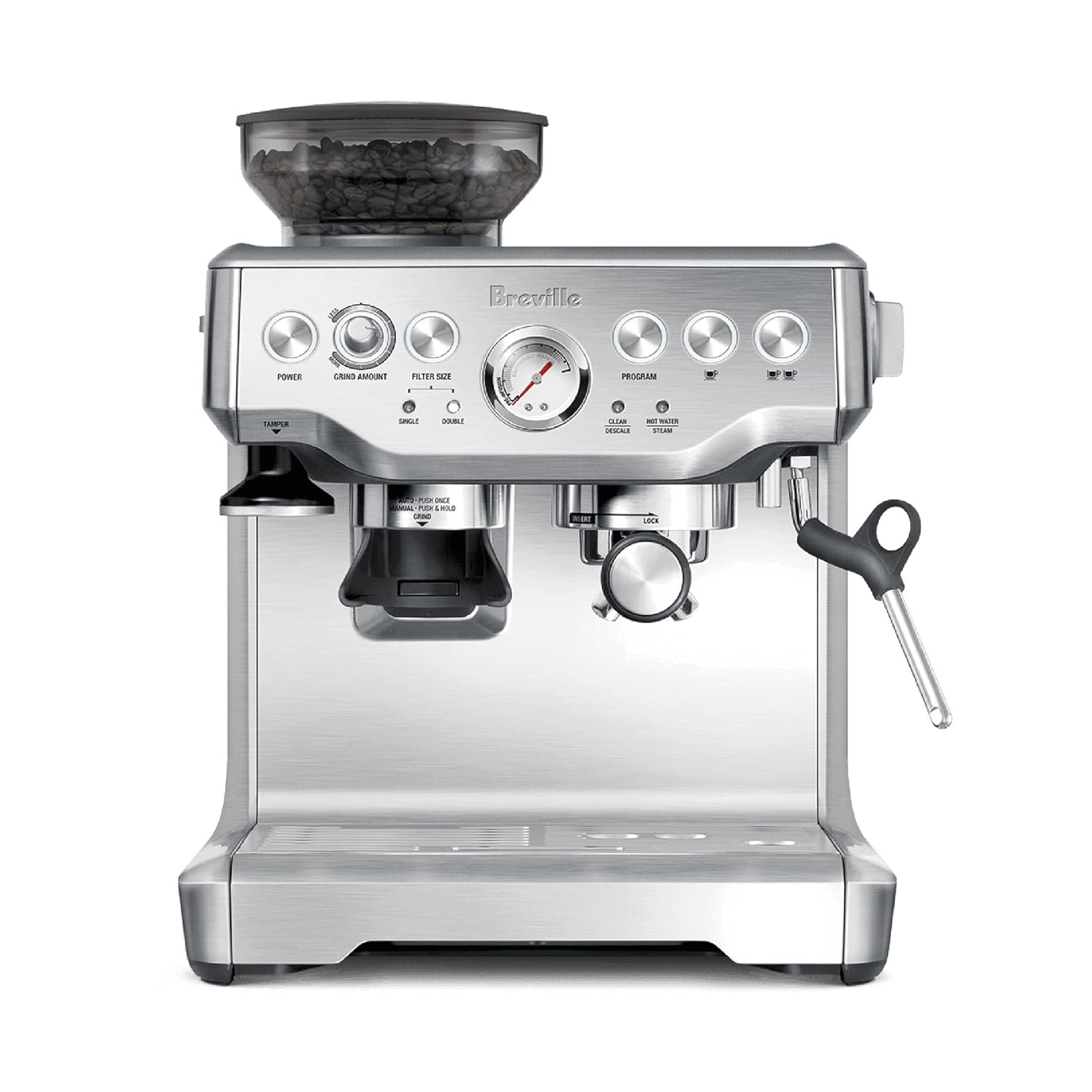
Espresso is the one method where a machine alone is not enough, because it needs a burr grinder with fine adjustment and that is a substantial separate purchase. The Barista Express is the machine that made the all-in-one answer mainstream, with a conical burr grinder dosing straight into the portafilter.
The two features that matter most are less visible. Digital temperature regulation, a PID controller, holds the water at a set temperature rather than letting a thermostat swing around it, and low pressure pre-infusion ramps pressure gradually at the start so the puck saturates evenly before full extraction. The steam wand is manual, which means you can make real microfoam and latte art, and also that you have to learn how.
What it does well
- Integrated conical burr grinder doses directly into the portafilter.
- PID temperature control for a genuinely stable shot.
- Low pressure pre-infusion for even extraction.
- Manual steam wand capable of real microfoam and latte art.
What to know before buying
- A real learning curve. Expect poor shots for the first week or two.
- The largest and most expensive machine in this comparison.
7. Chemex 8-Cup: No Electricity, No Moving Parts
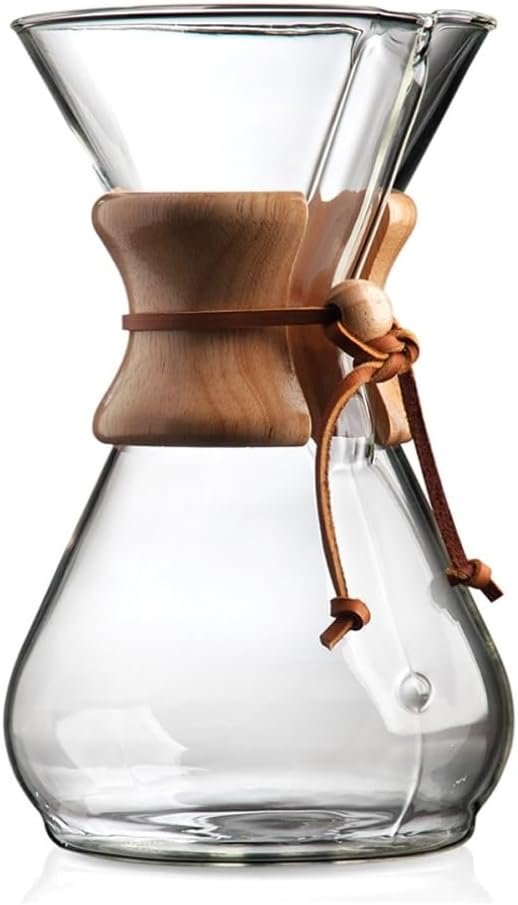
The Chemex is a single piece of borosilicate glass with a wooden collar, designed by Peter Schlumbohm in 1941 and now held in the permanent collection of the Museum of Modern Art. There is no pump, no element and no board, which means there is nothing to fail and nothing to descale.
The glass is non-porous, so it absorbs no odours or chemical residue, and the patented design lets you cover and refrigerate brewed coffee in the same vessel and reheat it later without the flavour falling apart. Chemex bonded filters are much thicker than standard cones and strip out more oils and fines, producing the cleanest cup of anything in this comparison. Note that Chemex counts a cup as 5 ounces, so 8 cups is 40 ounces.
What it does well
- No electronics, nothing to break, nothing to descale.
- Thick bonded filters produce an exceptionally clean cup.
- Non-porous glass holds no odours or residue.
- Brew, refrigerate and reheat in the same vessel.
What to know before buying
- You supply the hot water, the timing and the pour, every time.
- Proprietary filters that have to be kept in stock.
- Glass with no handle, and it breaks.
Cost Per Cup Over Three Years
The machine price is the smaller number. What you feed it usually costs more, and the gap between formats is wide enough to change which machine is genuinely cheapest.
A K-Cup contains roughly 9 to 12 grams of coffee. Buying coffee in pod form costs several times what the same weight costs as whole beans, so a pod machine that looked cheap on the shelf becomes the most expensive option here within the first year for anyone drinking two cups a day. This is the single strongest argument for the K-Duo over a pure pod machine, or for a reusable pod.
Filters are the smaller ongoing cost but not zero, and they vary. Standard #2 and #4 cones are inexpensive and sold everywhere. Chemex bonded filters cost noticeably more and are proprietary. Permanent gold-tone and steel filters, like the one included with the Breville Grind Control, cost nothing after the machine.
Then there is waste. Keurig states on its recycling page that all K-Cup pods have been recyclable since the end of 2020, and that they are made from #5 polypropylene. The conditions are in the instructions though: peel the lid, empty the grounds, and check that your local programme takes #5, which not all do.
What Separates a Good Machine From a Bad One
Brew temperature. The target is roughly 197 to 205F. Under it, coffee is sour and thin. Most manufacturers do not publish the figure at all, which is why the Specialty Coffee Association runs a third-party certification programme for home brewers, testing them against measured standards instead of marketing claims.
How water reaches the grounds. A single central spout drills through the middle of the bed and leaves the edges dry. Every manufacturer has a branded name for its answer, whether that is a showerhead, MultiStream or a bloom cycle, and they are all solving the same real problem.
Grind freshness. Ground coffee loses aroma quickly. This is what a grind-and-brew machine is buying you, and if you already own a burr grinder it is what you already have.
Carafe type. A glass carafe on a warming plate is fine for twenty minutes and steadily worse after that. Thermal costs more and is harder to clean, and it is the right answer for anyone who drinks a pot slowly.
Choosing Your Type in Four Questions
- How many cups at a time? One means pods, a single-serve machine or a small pour over. A pot means drip, grind and brew, or a carafe hybrid.
- Do you drink milk drinks? If lattes are the point, you want espresso or at least a frother, which rules out plain drip.
- How much effort at 7am? Pods ask for none, drip asks for almost none, espresso and pour over both ask for real attention.
- What will the coffee cost you? Pods are convenient and expensive. Beans are cheap and need a grinder. Over three years this decides more than the machine price does.
Which of These Seven to Buy
For most households the Cuisinart DCC-3200 is the sensible answer, and it is not a compromise. It brews a large batch at a low cost per cup, the brew strength and small-batch settings mean it is not weak when you want less, and the warming plate is adjustable rather than fixed on high.
Take the Ninja CM401 instead if milk drinks matter but espresso does not, because the built-in frother and Specialty Brew cover most of what people actually order in a cafe. Take the Keurig K-Supreme if convenience outranks cost outright, or the K-Duo if your household genuinely needs both a pot and single cups. Take the Breville Grind Control if you buy whole beans and want them ground at brew time without owning a separate grinder, and the Barista Express if you want real espresso and are willing to learn. Take the Chemex if you want the best cup from the simplest object and do not mind making it yourself.
Each of these categories goes deeper in its own guide. The drip coffee maker guide covers eight machines including the only two on Amazon with third-party brewing certification, the single serve guide compares pods against machines that take loose grounds, the pour over guide runs from the Hario V60 to the Chemex, and the home espresso guide explains why the bar rating on the box means less than you think.
Frequently Asked Questions
What type of coffee maker makes the best coffee?
Manual pour over gives the most control and, in careful hands, the best cup. A drip machine brewing in the correct 197 to 205F window comes very close with none of the attention. Pod machines trade quality for convenience, and espresso is a different drink rather than a better one.
How many cups does a 12-cup coffee maker make?
About 60 ounces, which is roughly five standard mugs. Coffee makers count a cup as 5 ounces rather than the 8 ounces used in recipes, so the number on the box is not the number of mugs you get.
Are pod coffee makers more expensive to run?
Considerably. A pod holds around 9 to 12 grams of coffee and costs several times what the same weight costs as whole beans. At two cups a day the difference over a year is larger than the price of most machines on this page.
Do I need a coffee maker with a built-in grinder?
Only if you buy whole beans and do not already own a grinder. Ground coffee loses aroma quickly, so grinding at brew time is a real improvement, but a separate burr grinder plus a good drip machine usually costs less than a combined unit and is easier to clean.