

Olympic medal tables reveal more about a country than almost any other sporting statistic, and the gap at the top is enormous. The United States has won more than three times as many medals as any other nation, and its gold medals alone outnumber the entire medal haul of every other country.
The figures below combine Summer and Winter Games and are current through the 2026 Winter Olympics. Below we rank the ten countries with the most Olympic medals in history, and what each total actually reflects.
| Rank | Country | Gold | Silver | Bronze | Total |
|---|---|---|---|---|---|
| 1 | United States | 1,231 | 1,012 | 885 | 3,128 |
| 2 | Great Britain | 313 | 345 | 361 | 1,019 |
| 3 | Germany | 326 | 327 | 328 | 981 |
| 4 | France | 289 | 328 | 360 | 977 |
| 5 | Italy | 281 | 250 | 298 | 829 |
| 6 | China | 330 | 262 | 227 | 819 |
| 7 | Sweden | 224 | 238 | 247 | 709 |
| 8 | Japan | 211 | 198 | 233 | 642 |
| 9 | Australia | 191 | 201 | 233 | 625 |
| 10 | Norway | 231 | 199 | 188 | 618 |
The 10 Countries With the Most Olympic Medals
1. United States: In a Category of Its Own
Total Medals: 3,128 | Gold: 1,231 | Strength: Summer Games dominance
The United States has won 3,128 Olympic medals, more than three times the total of any other nation. Its 1,231 golds alone exceed the complete medal count of every other country on this list.
That dominance is concentrated in the Summer Games, particularly swimming and track and field, where the US collegiate system funnels enormous numbers of athletes into elite competition. No other country has anything comparable as a talent pipeline.
2. Great Britain: The Consistent Presence
Total Medals: 1,019 | Gold: 313 | Strength: Cycling, rowing, athletics
Great Britain ranks second with 1,019 medals, becoming only the second nation to pass a thousand. It has competed at every modern Olympics since 1896, one of just a handful of countries to do so.
Its medal profile is unusual in being weighted toward silver and bronze rather than gold. A targeted funding programme introduced in the late 1990s transformed British performance in cycling, rowing, and sailing.
3. Germany: Complicated History, Consistent Results
Total Medals: 981 | Gold: 326 | Strength: Balanced Summer and Winter
Germany sits third with 981 medals and one of the most evenly distributed hauls in Olympic history, with gold, silver, and bronze totals within two of each other. That balance is genuinely rare.
Its record is complicated by decades of division, when East and West Germany competed separately, and the state doping programme that inflated East German results. Modern Germany remains strong across both Summer and Winter sports.
4. France: A Founding Nation
Total Medals: 977 | Gold: 289 | Strength: Fencing, cycling, judo
France has won 977 medals, sitting just four behind Germany. As the home of Pierre de Coubertin, who founded the modern Olympic movement, it has competed since the beginning.
French strength has traditionally centred on fencing, cycling, and judo, and hosting the Games has repeatedly boosted its totals. The gap between France, Germany, and Great Britain is small enough to shift within a single Olympics.
5. Italy: Fencing’s Powerhouse
Total Medals: 829 | Gold: 281 | Strength: Fencing, cycling, shooting
Italy has collected 829 medals, with an unusually strong record in fencing where it is among the most decorated nations ever. Cycling and shooting have also been consistent sources.
Its Winter Games contribution comes largely from Alpine skiing in the northern regions. Italy’s totals have grown steadily rather than through any single dominant era.
6. China: The Fastest Riser
Total Medals: 819 | Gold: 330 | Strength: Diving, table tennis, gymnastics
China’s 819 medals are the most remarkable figure on this list, because it has accumulated them in far fewer Games than everyone above it. The country did not compete regularly until 1980.
Its 330 golds represent about 40% of its total, the highest gold ratio in the top ten, reflecting a state programme that targets sports where medals are winnable. Diving, table tennis, weightlifting, and gymnastics account for a large share.
7. Sweden: Small Country, Long Record
Total Medals: 709 | Gold: 224 | Strength: Cross-country skiing, shooting
Sweden has won 709 medals despite a population of roughly ten million, an extraordinary return by any per-capita measure. It has competed since the earliest modern Games.
Its haul is split between strong Summer performances in shooting and wrestling and sustained Winter success in cross-country skiing. Few countries have been competitive across both for so long.
8. Japan: Asia’s Established Power
Total Medals: 642 | Gold: 211 | Strength: Judo, gymnastics, wrestling
Japan has won 642 medals, built heavily on judo, which it introduced to the Olympic programme, alongside gymnastics and wrestling. It is the most decorated Asian nation after China.
Hosting the Games multiple times has reinforced domestic investment in elite sport. Japanese performance has trended upward in recent Olympics, particularly in skateboarding and surfing.
9. Australia: Swimming Above Its Weight
Total Medals: 625 | Gold: 191 | Strength: Swimming
Australia has 625 medals from a population of around 27 million, one of the strongest per-capita records among large medal-winning nations. Swimming accounts for a remarkable share of the total.
A national culture built around water sports, combined with strong institutional funding, sustains that dominance. Australia is one of only a few countries to have attended every modern Summer Olympics.
10. Norway: The Winter Superpower
Total Medals: 618 | Gold: 231 | Strength: Winter Games, cross-country skiing
Norway completes the top ten with 618 medals from a population of roughly 5.5 million, making it comfortably the most successful Olympic nation per head anywhere. Its 231 golds exceed those of Australia, Japan, and Sweden.
Almost all of it comes from the Winter Games, where Norway leads the all-time table by a wide margin thanks to cross-country skiing and biathlon. It is the clearest example of a country dominating a specific Olympic tradition.
Why the United States Is So Far Ahead
The American lead is not a matter of a few strong Games. Its 3,128 medals are more than triple Great Britain’s 1,019, and its gold count alone would rank first overall against any other nation’s full total.
Three structural factors explain it: a population large enough to produce depth in every sport, a university system that functions as a publicly subsidised elite training network, and disproportionate strength in swimming and athletics, which award more medals than almost any other sports at the Olympic Games.
Population Changes the Picture Completely
Raw totals reward large countries, so the more interesting comparison is medals per head. On that basis Norway is the most successful Olympic nation in history, winning 618 medals with about 5.5 million people.
Sweden and Australia perform similarly well relative to size, while China’s 819 medals come from the world’s largest population. Total medals measure national scale and investment as much as sporting culture.
Summer and Winter Are Different Competitions
Combining both Games obscures how specialised some countries are. Norway’s total is overwhelmingly earned at the Winter Olympics, where it leads the all-time table, yet it barely registers in the Summer standings.
The reverse applies to China, Japan, and Australia, whose records are almost entirely Summer-based. Climate and geography shape these patterns far more than funding does, since a country without snow will never build a cross-country skiing programme.
How We Ranked Olympic Medal Totals
This ranking orders countries by total medals across all Summer and Winter Olympic Games, current through the 2026 Winter Olympics. Note that official Olympic standings traditionally rank by gold medals first, which produces a different order.
Historical totals carry complications. Germany’s figures span periods of division, and Russia’s record is separate from the Soviet Union’s, which is why Russia sits lower than its sporting history might suggest.
Frequently Asked Questions
Which country has won the most Olympic medals?
The United States, with 3,128 medals including 1,231 golds across Summer and Winter Games. That is more than three times the total of second-placed Great Britain.
Which country is most successful per capita?
Norway, with 618 medals from a population of about 5.5 million. Almost all come from the Winter Olympics, where it leads the all-time medal table.
Why is China so high despite competing for less time?
China did not compete regularly until 1980 yet has 819 medals, with 330 golds representing roughly 40% of its total, the highest gold ratio in the top ten. A state programme targets sports where medals are most winnable.
Do these totals include both Summer and Winter Games?
Yes. All figures combine Summer and Winter Olympics through the 2026 Winter Games, which is why winter specialists like Norway and Sweden rank so highly.
Why is Russia ranked lower than expected?
Russia’s modern totals are counted separately from the Soviet Union’s, which competed as a different entity. Combining the two would place it far higher in the all-time table.
Related Articles

Get the Fox Bulletin briefing
The stories that matter, in your inbox. No spam, unsubscribe anytime.
Newsletter signup will be available soon.
Related stories

Best Soccer Players of All Time: Top 10 Ranked
Pele won three World Cups, a feat no other player has matched. Lionel Messi holds eight Ballon d'Or awards. This ranking of the ten greatest players is built on countable honours rather than highlight reels.
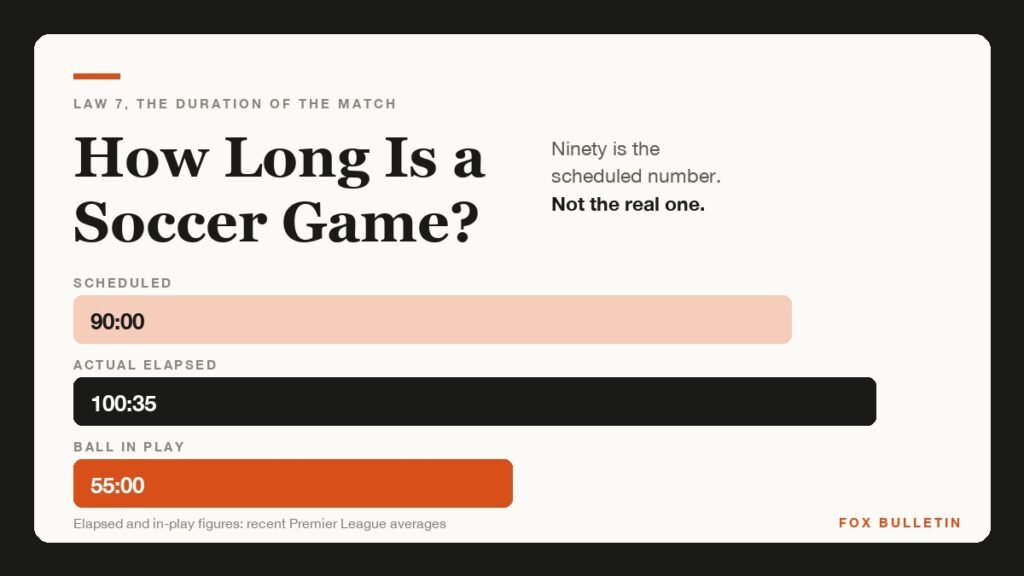
How Long Is a Soccer Game? Halves, Stoppage and Extra Time
Ninety minutes is the scheduled figure, not the real one. What the referee adds, when extra time applies, and how much of a match is actually live football.

NFL Salary Cap: How It Works, Dead Money and Franchise Tags
The cap is a cash flow puzzle, not a spending limit. Proration, dead money, void years and the 89 percent floor, with the current numbers.