

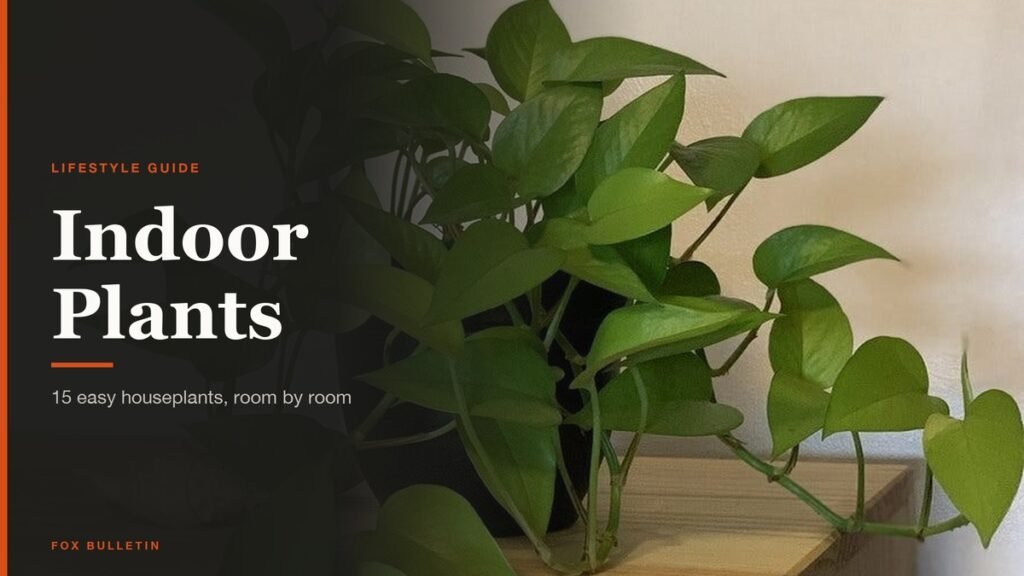
The easiest indoor plants are the ones that forgive dim rooms and missed waterings: snake plant, ZZ plant, pothos and cast iron plant top that list. Most houseplants are understory plants from tropical forests, which is why they cope with indoor light at all, and the 15 below cover every room from a dark hallway to a sunny south window.
For each plant you get the light level, the watering rhythm Extension horticulturists recommend, the size it reaches indoors and whether the ASPCA lists it as safe for cats and dogs. After the list come the three things that decide whether a plant lives: light, water and pot size.
Indoor Plants Compared: Light, Water, Size and Pet Safety for All 15
| # | Plant | Light | Water | Size indoors | Cats and dogs |
|---|---|---|---|---|---|
| 1 | Snake plant | Low to bright indirect | Every 2-4 weeks | Up to 2 ft | Toxic |
| 2 | Pothos | Low to bright indirect | Top 1.5-2 in dry | 6-8 ft vines | Toxic |
| 3 | ZZ plant | Low to bright indirect | 1-2 times a month | 2-4 ft | Toxic |
| 4 | Spider plant | Bright indirect | Top 1-2 in dry | 1-1.5 ft | Non-toxic |
| 5 | Peace lily | Low to bright indirect | Moist, not soggy | 1-4 ft | Toxic |
| 6 | Monstera | Moderate indirect | Top quarter dry | 6-8 ft | Toxic |
| 7 | Heartleaf philodendron | Very low to medium | Slightly moist | About 4 ft | Toxic |
| 8 | Rubber plant | Bright, adapts to lower | Dry slightly | 6-10 ft | Toxic |
| 9 | Chinese evergreen | Low to moderate | Top 1-2 in dry | 1-3 ft | Toxic |
| 10 | Cast iron plant | Low | 2-3 in down dry | About 2 ft | Non-toxic |
| 11 | Aloe vera | Bright, some direct sun | Dry completely | 1-2 ft | Toxic |
| 12 | Jade plant | 4+ hours direct sun | Dry between in winter | 18-30 in | Toxic |
| 13 | Parlor palm | Low to bright indirect | Dry slightly | About 4 ft | Non-toxic |
| 14 | Boston fern | Bright indirect | Constantly moist | 2-3 ft | Non-toxic |
| 15 | Prayer plant | Bright indirect | Evenly moist | 12-15 in | Non-toxic |
15 Easy Indoor Plants for Beginners
The plants run roughly from the most forgiving to the most demanding. Each care line comes from university Extension growing guides, and each pet note from the ASPCA plant database or NC State.
1. Snake Plant: The Plant Built for Neglect
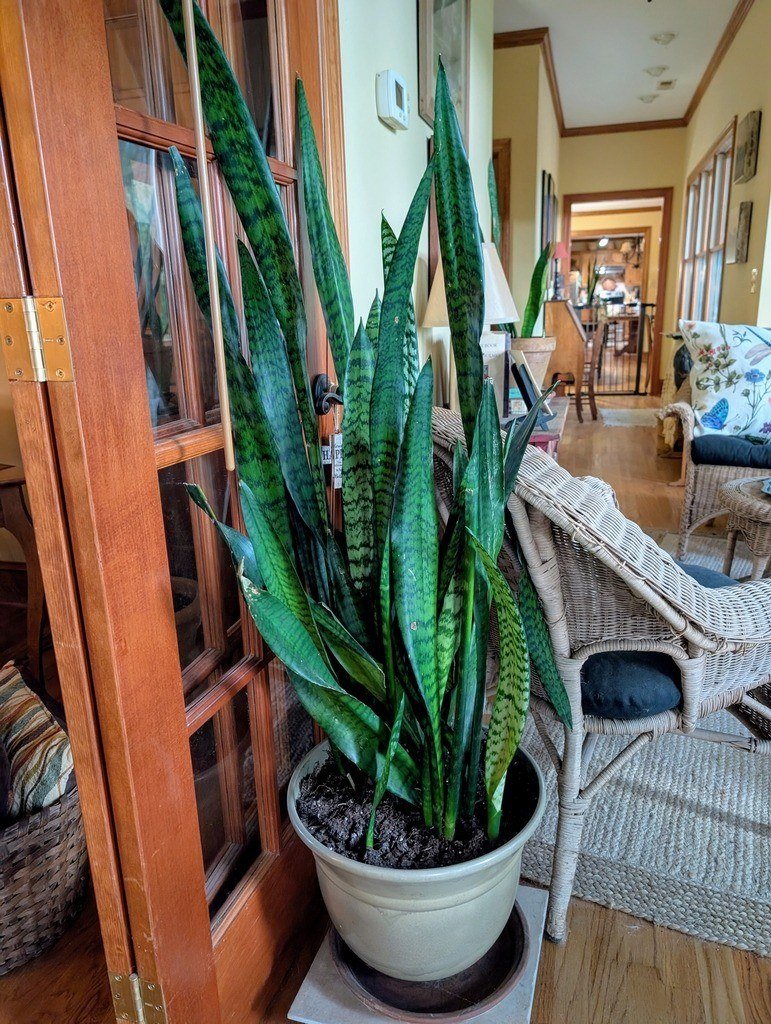
Dracaena trifasciata | Light: low to bright indirect | Water: every 2 to 4 weeks | Pets: toxic
NC State Extension calls the snake plant “quite durable, easily grown, and difficult to kill,” and that is why it heads nearly every beginner list. Its stiff, upright leaves are banded in gray-green, and indoors it usually reaches about 2 feet. Botanists moved it from Sansevieria into Dracaena in 2017 after DNA analysis.
Clemson Extension suggests watering every 2 to 4 weeks in the growing season and every 4 to 6 weeks in fall and winter, and warns it is one of the plants most prone to rot from overwatering. Never pour water into the center of the rosette. The ASPCA lists it as toxic to cats and dogs because of saponins.
2. Pothos: The Trailing Vine for Shelves
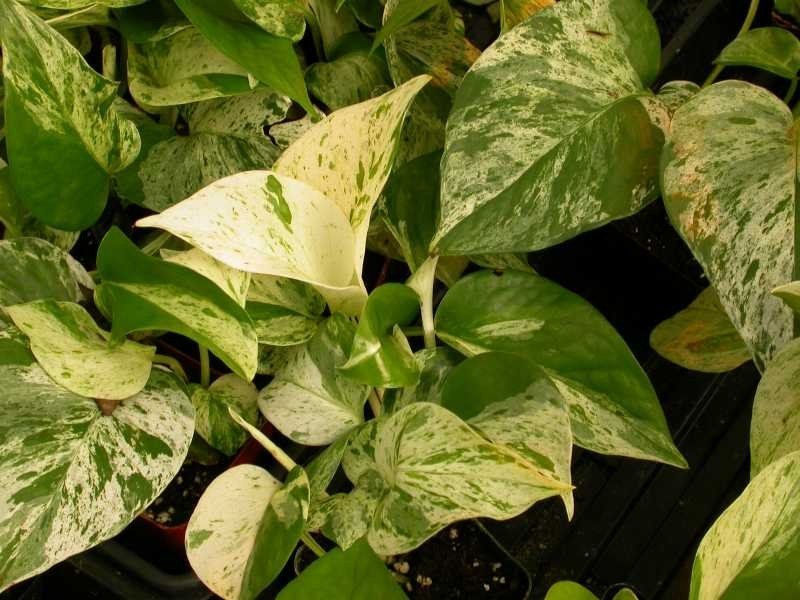
Epipremnum aureum | Light: low to bright indirect | Water: when the top 1.5 to 2 in are dry | Pets: toxic
Pothos is the trailing vine with heart-shaped leaves splashed in yellow or cream, and as a houseplant it usually runs 6 to 8 feet. It takes low light, although variegated forms lose some of their color and new leaves come in smaller. Stem cuttings root in a glass of water as long as each one has a node.
Water thoroughly once the top 1.5 to 2 inches of soil are dry. Clemson gives 70 to 85 degrees Fahrenheit by day and 60 to 70 at night as ideal. Pothos is easy to confuse with heartleaf philodendron, but its leaf stalks are grooved. It contains insoluble calcium oxalates and is toxic to cats and dogs.
3. ZZ Plant: Stores Its Own Water
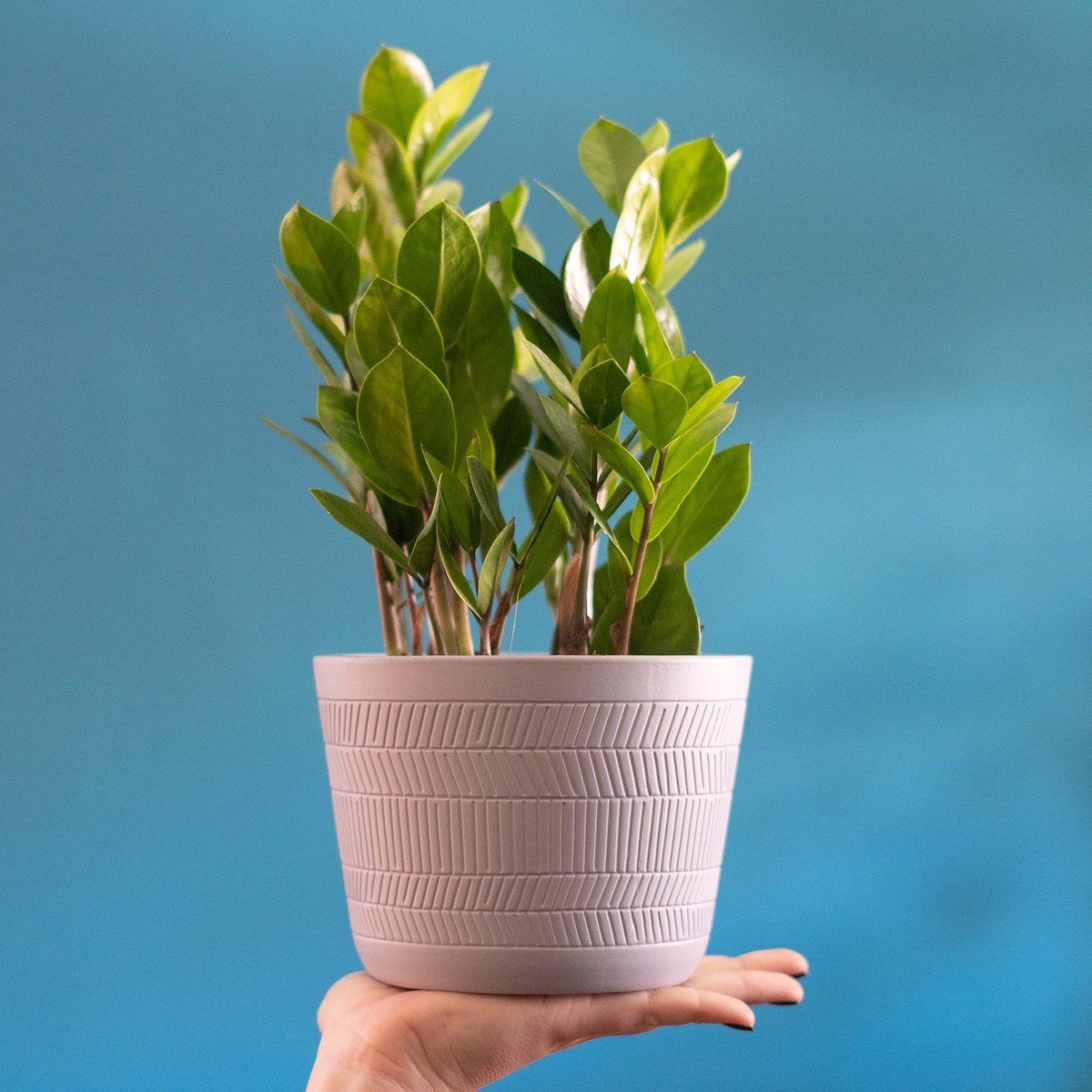
Zamioculcas zamiifolia | Light: low to bright indirect | Water: 1 to 2 times a month | Pets: keep away
The ZZ plant grows from thick underground rhizomes that store water, which makes it one of the most drought tolerant plants you can keep indoors. Each stem carries six to eight pairs of glossy leaflets, and it reaches 2 to 4 feet tall and wide. NC State notes it survives in very low light, even in rooms lit only by fluorescent tubes.
Water it once or twice a month, and only after the potting mix has dried completely. Keep it above 60 degrees. Its leaves contain calcium oxalate, and NC State rates its toxicity as medium for cats and dogs, causing vomiting and diarrhea if eaten.
4. Spider Plant: The Pet-Safe Hanging Basket
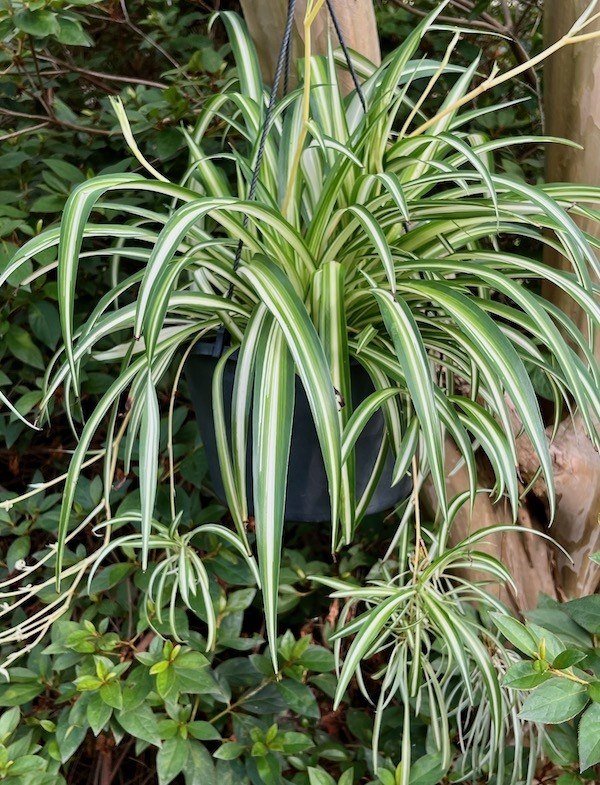
Chlorophytum comosum | Light: bright indirect | Water: when the top 1 to 2 in are dry | Pets: non-toxic
Spider plants send out long stems tipped with baby plantlets, which is why they look best in a hanging basket. NC State notes the plantlets form after at least three weeks of short days, under 12 hours of light, and that too much fertilizer cuts the number you get.
Brown leaf tips are common and usually come from chlorine and fluoride in tap water. Clemson gives 65 to 75 degrees by day and 50 to 55 at night as ideal. The ASPCA lists the spider plant as non-toxic to cats and dogs, though heavy chewing can still upset a cat’s stomach.
5. Peace Lily: Flowers in Low Light
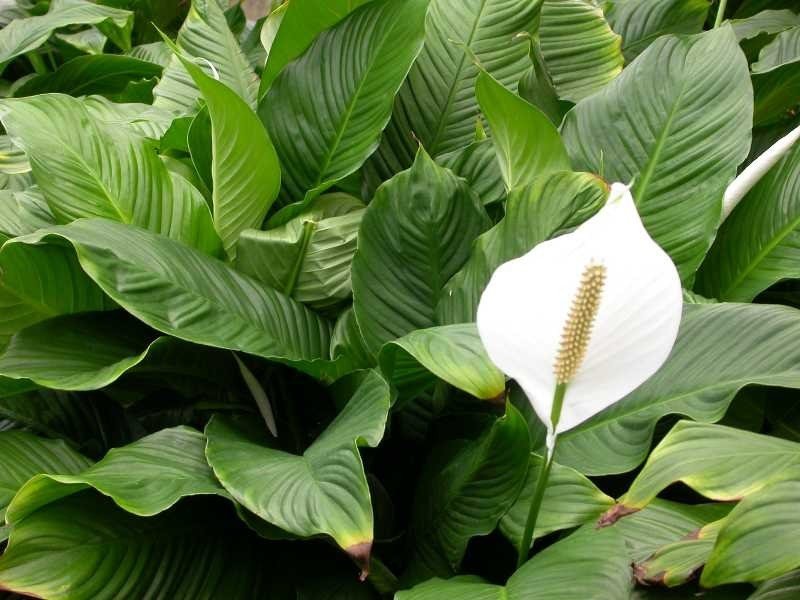
Spathiphyllum | Light: low to bright indirect, no direct sun | Water: moist, not soggy | Pets: toxic
The peace lily is one of the few foliage plants that will bloom in low light, according to Clemson Extension. Its white flowers are really spathes, and NC State notes they turn pale green after about 10 days and stay attractive for at least another month. Most plants reach 1 to 4 feet.
Keep the soil evenly moist and let it dry slightly between waterings, and avoid temperatures below 60 degrees. When roots push through the drainage holes, move it into a pot only 1 to 2 inches wider, because it likes being slightly root-bound. It is toxic to cats and dogs.
6. Monstera: The Split-Leaf Statement Plant
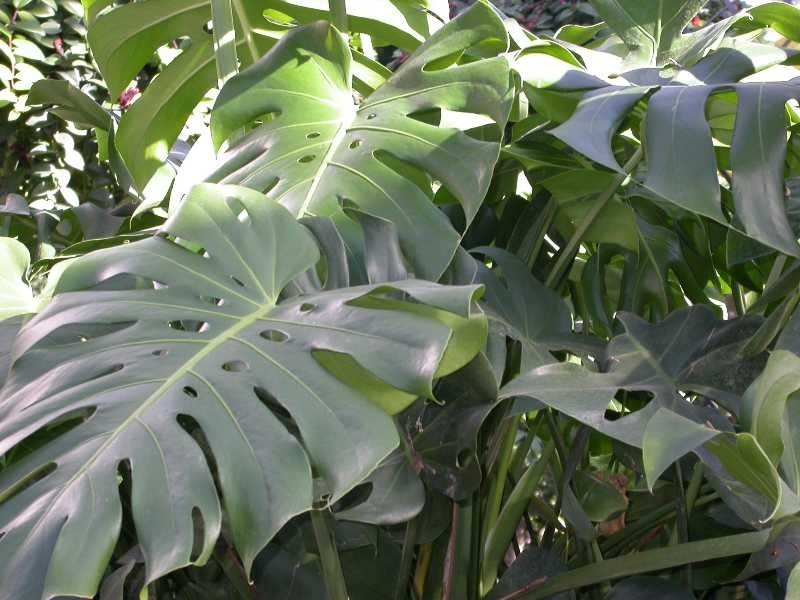
Monstera deliciosa | Light: moderate, no direct sun | Water: when the top quarter of the soil is dry | Pets: toxic
Monstera can climb 70 feet in the forests of Mexico and Central America, but it stays 6 to 8 feet in most homes. Only mature leaves develop the famous splits and holes, and Clemson warns they will not appear at all if the light is too low.
Give it moderate brightness, high humidity and a sturdy support, or it sprawls sideways. Water thoroughly, then let the top quarter to third of the soil dry. Like most aroids it carries calcium oxalates and is toxic to pets.
7. Heartleaf Philodendron: The Lowest-Light Vine
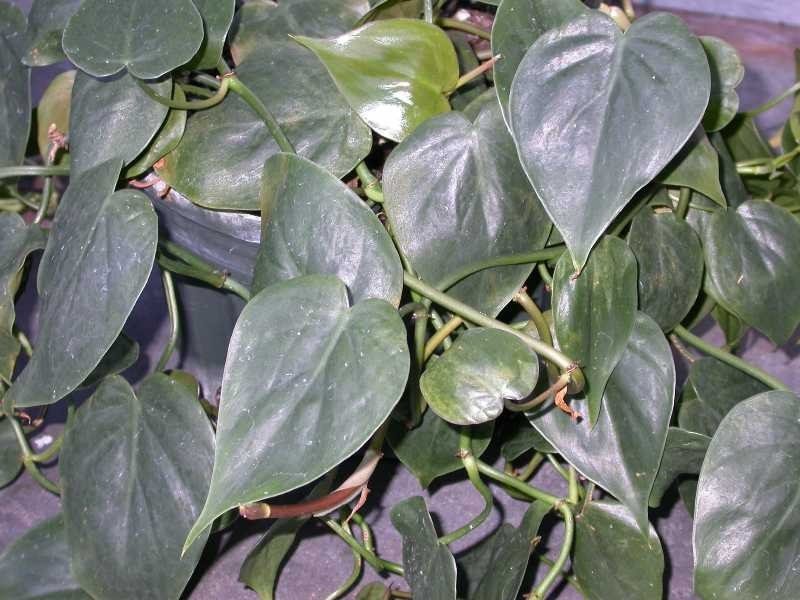
Philodendron hederaceum | Light: very low to medium | Water: keep slightly moist | Pets: toxic
NC State says heartleaf philodendron can survive long periods in extremely low light, making it a good pick for a north window or an office lit by ceiling panels. Indoors it usually trails to about 4 feet, with leaves 2 to 4 inches long.
Keep the soil slightly moist and water less in winter. Spindly stems mean it needs more light, and yellow lower leaves mean too little light or too much water. You can tell it from pothos by the papery sheath on each new leaf. It is toxic to cats and dogs.
8. Rubber Plant: A Tree for a Bright Corner
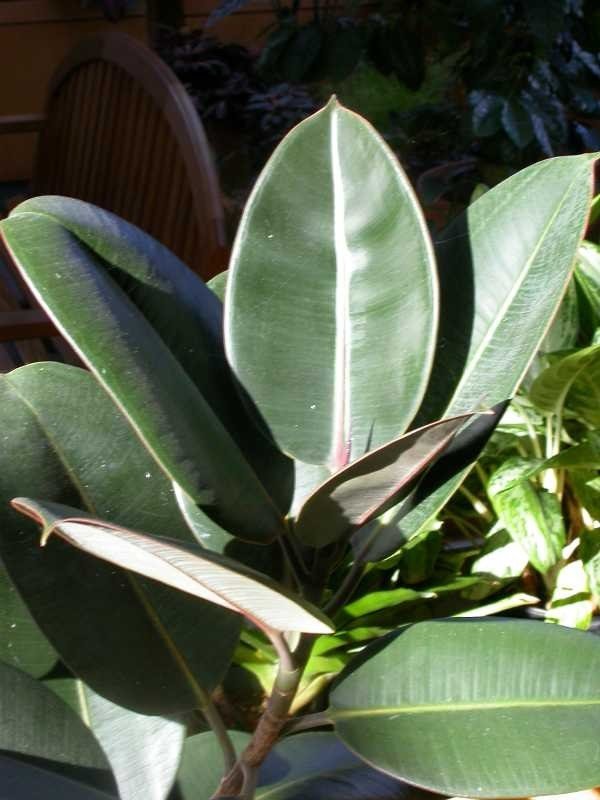
Ficus elastica | Light: bright, adapts to lower | Water: let the soil dry slightly | Pets: keep away
Clemson calls rubber plants “excellent plants for beginners.” The thick, glossy leaves grow 8 to 12 inches long, and with good light the plant can reach 6 to 10 feet or more indoors. An east window with morning sun suits it best.
Yellow leaves usually mean the soil is staying wet. Drafts, cold below 55 degrees and sudden temperature drops make it shed leaves. Its milky sap can irritate skin and stomachs, and NC State flags it as a problem for cats and dogs.
9. Chinese Evergreen: Color Without Sun
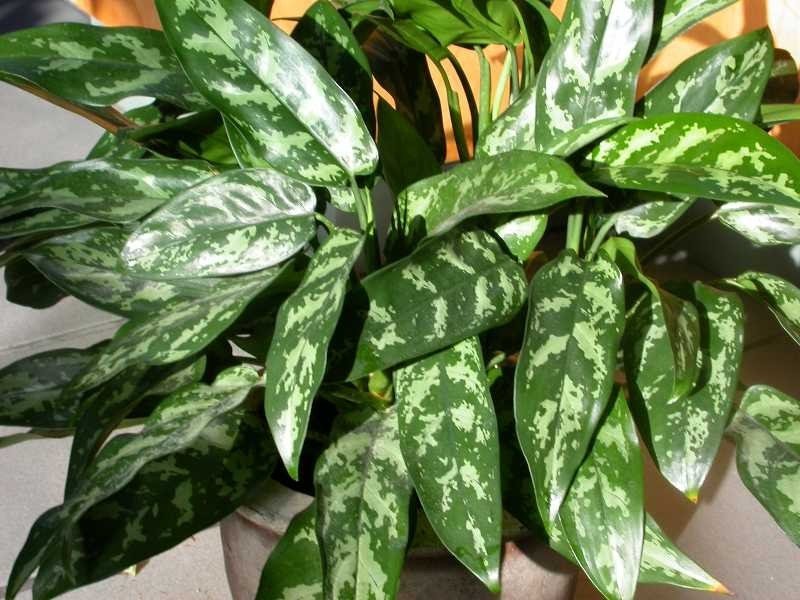
Aglaonema | Light: low to moderate indirect | Water: when the top 1 to 2 in are dry | Pets: toxic
NC State calls Aglaonema one of the easiest houseplants to grow. Clemson adds that it tolerates poor light, dry air, air conditioning and drought, with solid green types handling the darkest spots and variegated ones needing a little more light.
It is sensitive to cold, so keep it between 68 and 80 degrees and away from drafts and cold water. Plants grow 1 to 3 feet tall and wide. Chinese evergreen was one of the plants in NASA’s 1989 chamber tests, and it is toxic to cats and dogs.
10. Cast Iron Plant: The Victorian Barroom Survivor
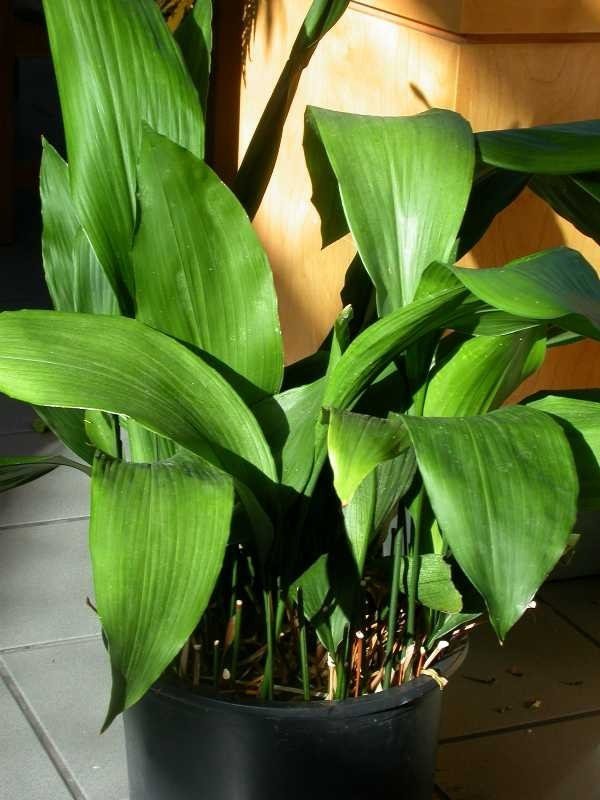
Aspidistra elatior | Light: low, north window | Water: when 2 to 3 in down is dry | Pets: non-toxic
The cast iron plant earned its nickname, and the older one of barroom plant, by surviving barroom conditions and neglect. Its broad, dark leaves reach about 2 feet, it grows slowly, and it does not need humid air.
Clemson recommends a north-facing window or any low-light spot away from south windows, since direct sun bleaches the leaves. Water when the soil is dry 2 to 3 inches down and never leave water in the saucer. The ASPCA lists it as non-toxic to cats and dogs.
11. Aloe Vera: The Sunny Windowsill Succulent
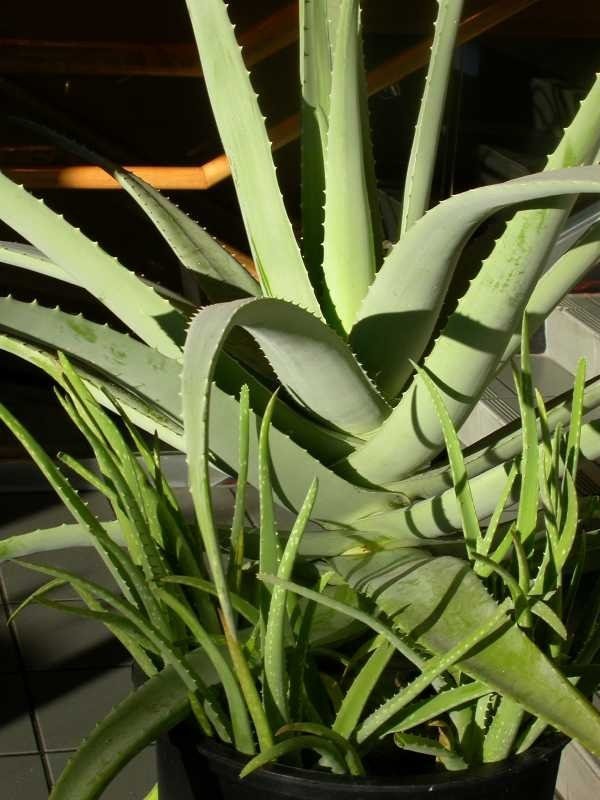
Aloe vera | Light: bright, some direct sun | Water: let the soil dry completely | Pets: toxic
Aloe is a succulent, so it wants the opposite of most plants on this list: bright light and a pot that dries out fully between waterings. NC State recommends a clay pot with several drainage holes and less water in winter. It tolerates dry indoor air and grows 1 to 2 feet.
A flower stalk appears only once a plant is at least three years old and getting strong light. New plants come from the offsets around the base. The ASPCA lists aloe as toxic to cats and dogs because of saponins and anthraquinones.
12. Jade Plant: A Succulent That Lives for Decades
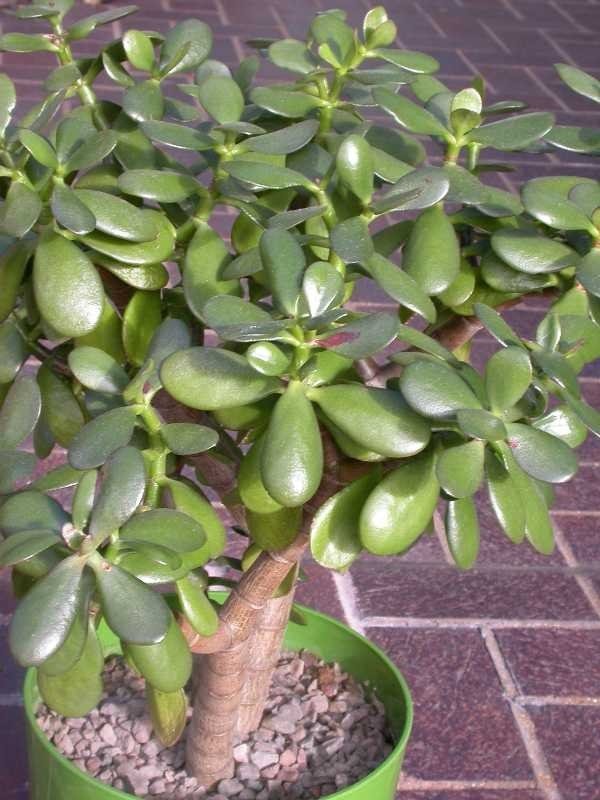
Crassula ovata | Light: 4+ hours of direct sun | Water: dry between waterings in winter | Pets: toxic
Jade plants grow a thick trunk and round, fleshy leaves, and Clemson notes they can live a very long time. Indoors they usually stay 18 to 30 inches, though old plants can reach 5 feet. They need at least four hours of direct sun, ideally in a south window.
Keep the soil moist but not wet in spring and summer, and let it dry between waterings in winter. Mealybugs are the most common pest: wipe them off with rubbing alcohol rather than insecticidal soap, which damages jade. It is toxic to cats and dogs.
13. Parlor Palm: A Pet-Safe Palm for Dim Rooms
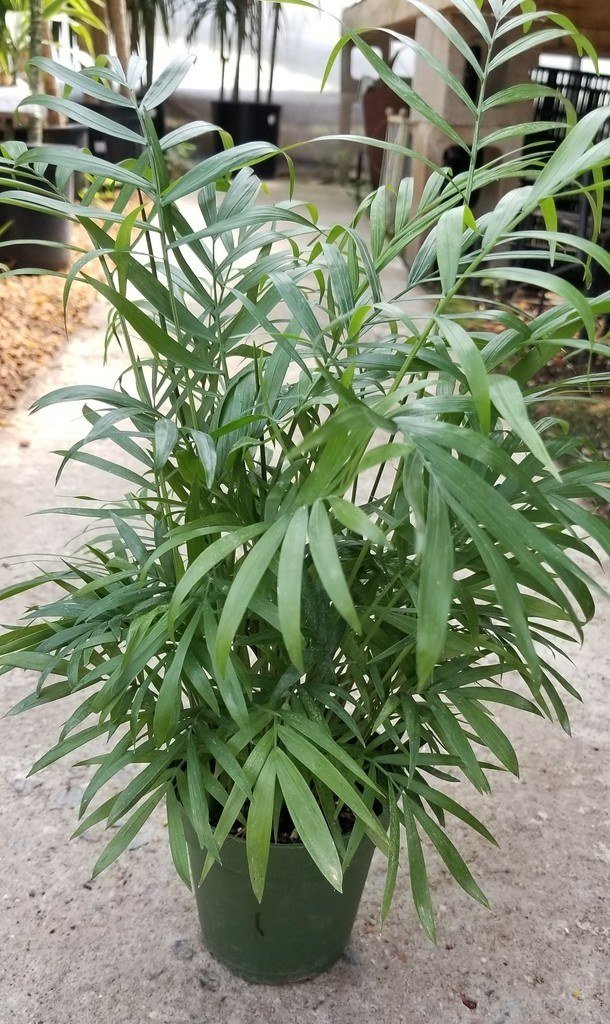
Chamaedorea elegans | Light: low to bright indirect | Water: let the soil dry slightly | Pets: non-toxic
The parlor palm was the classic palm of Victorian parlors, and it still handles lower light better than most palms. NC State suggests a north- or east-facing window. As a houseplant it usually reaches about 4 feet, and growers often put three or more in one pot for a fuller look.
Let the soil dry slightly between waterings and keep it above 60 degrees in winter. Palms like being root-bound, so repot only every two to three years, and skip leaf-shine products, which can injure the fronds. It is non-toxic to cats and dogs.
14. Boston Fern: For Humid Rooms and Bathrooms
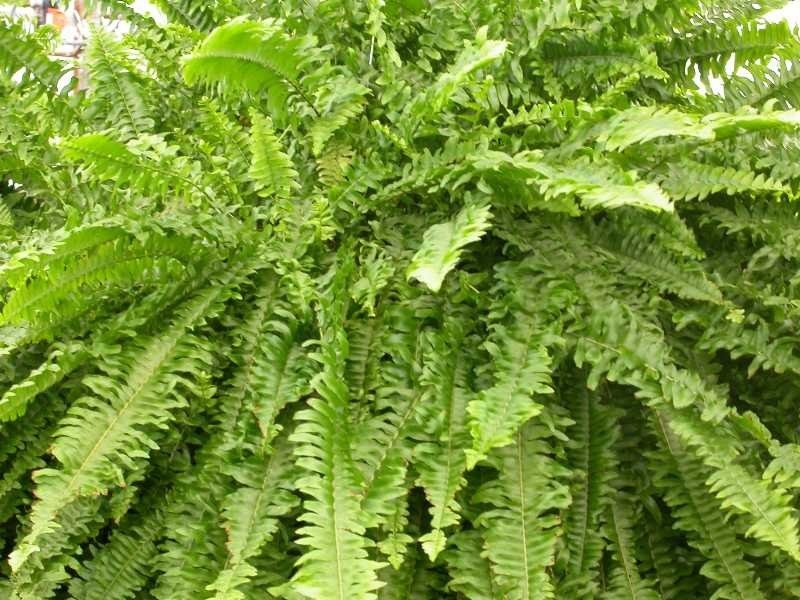
Nephrolepis exaltata ‘Bostoniensis’ | Light: bright indirect | Water: keep constantly moist | Pets: non-toxic
Boston fern needs what dry homes lack: high humidity and soil that never dries out. Give it bright indirect light and temperatures around 60 to 70 degrees, and it forms an arching mound 2 to 3 feet across.
If the soil dries and the fronds brown, Missouri Botanical Garden says you can cut them back to about 2 inches and let the plant regrow. Dark dots under the fronds are spores, not pests. The ASPCA lists it as non-toxic to cats and dogs.
15. Prayer Plant: Leaves That Fold at Night
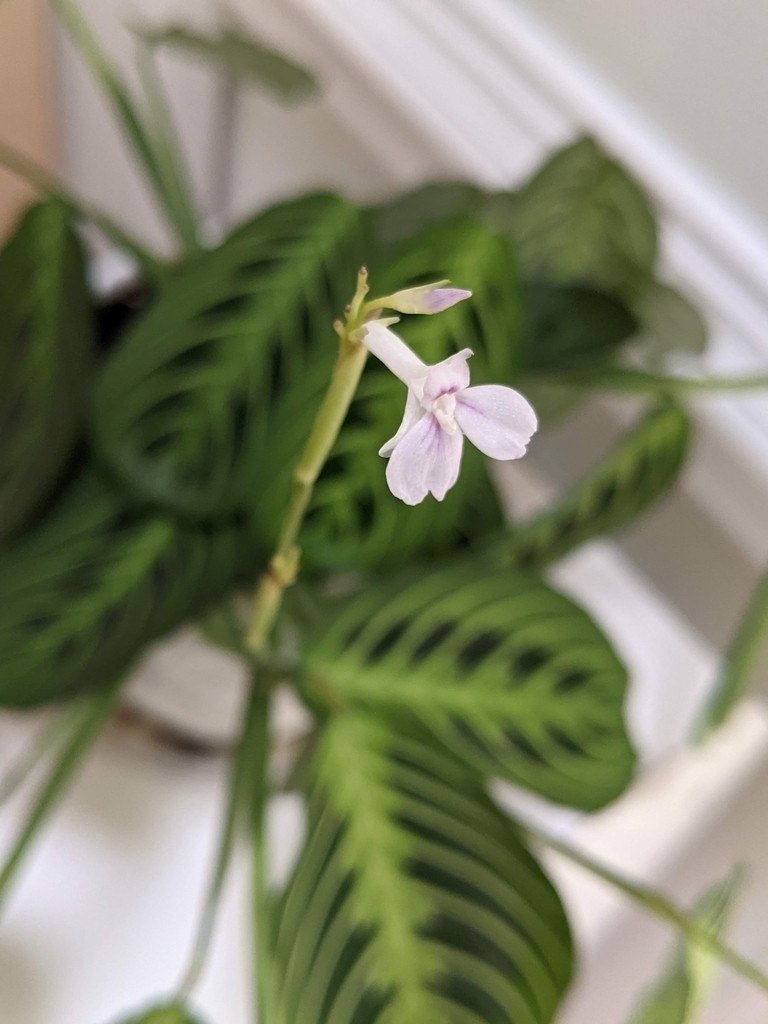
Maranta leuconeura | Light: bright indirect, no direct sun | Water: evenly moist | Pets: non-toxic
The prayer plant gets its name from the way its patterned leaves fold upward at night like praying hands. It comes from Brazil, stays small at 12 to 15 inches, and needs high humidity, which makes it harder than the others here.
Direct sun bleaches its leaves, and too much fertilizer or fluoride in water burns their edges. Keep it evenly moist in the growing season, a little drier in winter, and above 60 degrees. The ASPCA lists Maranta as non-toxic to cats and dogs.
How Much Light Indoor Plants Need, in Foot-Candles
Light is measured in foot-candles, the light a candle casts on a surface 1 foot away. Your eyes adjust too well to judge it, so a free light-meter phone app is worth using. A well-lit room is often under 100 foot-candles, while full sun outdoors reaches about 10,000.
NC State Extension’s container gardening chapter sorts houseplants into three groups:
- Low light: 25 to 74 foot-candles keeps the plant alive, 75 to 300 lets it grow. That means more than 8 feet from a window, north rooms and hallways.
- Medium light: 75 to 149 to survive, 150 to 1,500 to grow. Directly in front of a north window is a typical medium spot.
- High light: 150 to 999 to survive, 1,000 to 3,000 or more to grow. Within 4 feet of a large south, east or west window.
A plant that gets too little light grows small, pale leaves on long, leggy stems. Too much light shows up as yellowing and scorched patches. Cleaning the windows and taking out screens can raise the light reaching a plant by as much as 30 percent, and if you cannot add light, water and feed less.
Watering: The Mistake That Kills Most Indoor Plants
Clemson Extension puts it plainly: the main cause of death of potted plants is overwatering. Roots need oxygen as well as water, and soil that never dries out suffocates them. Illinois Extension adds that more houseplants die in winter from too much water than too little.
- Test before you pour. Push a finger into the mix to the first joint. If it is dry at the tip, water; if it is damp, wait.
- Water thoroughly. Pour until water runs out of the drainage holes, then empty the saucer.
- Use pots with drainage. NC State says drainage holes are necessary in every container to prevent root rot.
- Slow down in winter. Shorter days mean less growth and less water used.
- Check the roots of a wilting plant. Healthy roots are firm and pliable; rotted ones are brown, mushy and may smell. Watering a plant with rotted roots makes it worse.
Overwatering and underwatering look alike at first, because both make leaves wilt. Yellowing across the whole plant points to too much water. For the small flies that gather around a kitchen, see our guide on how to get rid of fruit flies.
Do Indoor Plants Clean the Air? What NASA Actually Tested
The air-purifying claim traces back to NASA Technical Memorandum 101766, Interior Landscape Plants for Indoor Air Pollution Abatement, published September 15, 1989 and funded jointly with the Associated Landscape Contractors of America. Researchers sealed single plants, including golden pothos, peace lily, Chinese evergreen and spider plant, inside small Plexiglas chambers and measured how much benzene, trichloroethylene or formaldehyde disappeared over 24 hours.
The report itself found the soil and root zone did much of the work, and it recommended pairing plants with fan-driven activated carbon filters. A 2019 Drexel University review of 12 chamber studies found that a home would need 10 to 1,000 plants per square meter of floor to match ordinary building ventilation. Keep plants for how they look and feel, and use an air purifier or open windows to clean the air.
Pet-Safe Indoor Plants for Homes With Cats and Dogs
Ten of the 15 plants here can make a pet sick. Most of them, including pothos, philodendron, monstera, peace lily and Chinese evergreen, contain insoluble calcium oxalate crystals that cause mouth irritation, drooling, vomiting and trouble swallowing. The ASPCA lists these five as non-toxic to both cats and dogs:
- Spider plant
- Cast iron plant
- Parlor palm
- Boston fern
- Prayer plant
If a pet chews a toxic plant, the ASPCA Animal Poison Control line is (888) 426-4435, and a consultation fee may apply.
How to Choose the Right Indoor Plant for Each Room
- Dark hallway or north room: cast iron plant, ZZ plant, Chinese evergreen or heartleaf philodendron.
- Office with ceiling lights: ZZ plant or heartleaf philodendron.
- Bathroom with a window: Boston fern or prayer plant, which want the humidity.
- Sunny south window: jade plant or aloe vera.
- Bright living room corner: rubber plant or monstera for height.
- Home with pets: spider plant, parlor palm or cast iron plant.
Repot in early spring, moving up just one pot size, when roots poke out of the drainage holes or the plant wilts soon after watering. Heating and air conditioning leave homes at an average of 10 to 15 percent humidity, while many houseplants prefer 40 to 60, so grouping plants together or setting them on a tray of wet pebbles helps more than misting.
Frequently Asked Questions
What is the easiest indoor plant to keep alive?
The snake plant is the usual answer: NC State describes it as difficult to kill, and it needs water only every few weeks. The ZZ plant and cast iron plant are close behind, and both handle low light.
How often should you water indoor plants?
There is no fixed schedule, because light, pot and season all change it. Check the soil with a finger and water only when the top inch or two is dry for most plants. Succulents such as aloe and jade want the soil to dry out completely.
What indoor plants grow in low light?
Snake plant, ZZ plant, pothos, Chinese evergreen, cast iron plant, parlor palm and heartleaf philodendron all cope with low light, around 100 foot-candles. They grow slowly there, so water and feed them less than you would in a bright room.
Why are my plant’s leaves turning yellow?
Yellowing across the whole plant is most often a sign of overwatering, according to Clemson Extension. Too little light, cold drafts and old lower leaves dropping naturally are the other common causes.
Related Articles

Get the Fox Bulletin briefing
The stories that matter, in your inbox. No spam, unsubscribe anytime.
Newsletter signup will be available soon.
Related stories

Birthstones by Month: Every Stone, Color and Meaning
Every month's birthstone, its color and Mohs hardness, where it comes from, how to care for it, and how jewelers built the list in 1912 and kept adding to it.

When Is Thanksgiving? This Year’s Date and the Next 10 Years
Thanksgiving 2026 falls on Thursday, November 26. Here is every date through 2035, the 1941 law behind the fourth-Thursday rule, and what happens that week.

Zodiac Signs: All 12 Dates, Meanings and Constellations
The 12 zodiac signs from Aries to Pisces: dates, elements, modalities and rulers, the constellation behind each sign, and why the Sun is no longer where the signs say.