

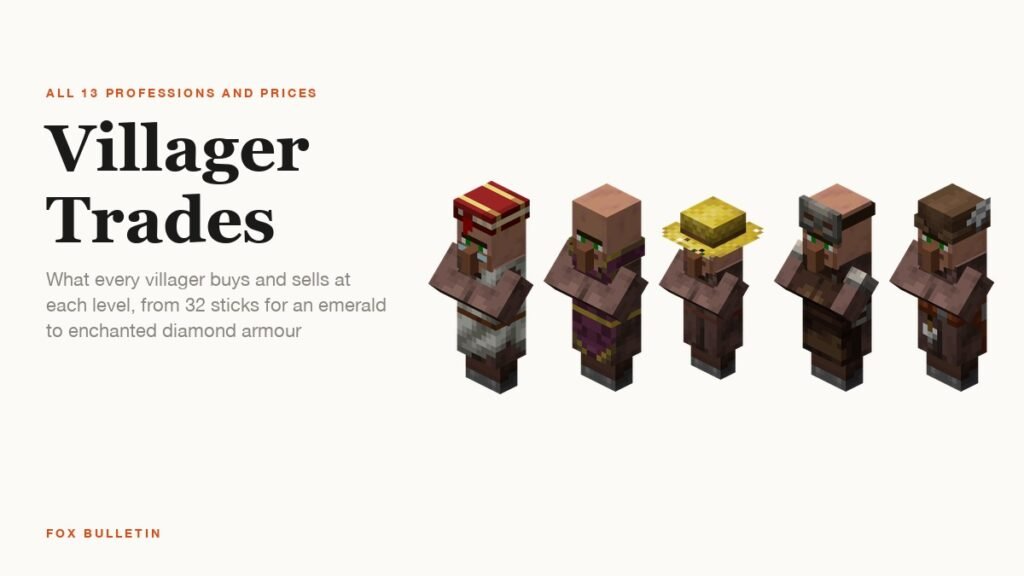
Villager trades are Minecraft’s economy: 13 professions, each claimed by placing a job block near an unemployed villager, each with up to ten trades unlocked across five levels from novice to master. Emeralds are the currency, every profession buys some raw materials for emeralds and sells finished goods for them, and the prices move with demand and with how the village feels about you.
This guide lists what every profession buys and sells at each level in Java Edition, the job block that creates it, how villagers level up and restock, and the two discounts that make a trading hall cheap to run. The figures are from the game’s trade tables as of Java Edition 26.3.
| # | Profession | Job block | Buys from you | Sells to you |
|---|---|---|---|---|
| 1 | Armorer | Blast furnace | Coal, iron, lava bucket, diamond | Iron and chainmail armour, shield, enchanted diamond armour |
| 2 | Butcher | Smoker | Raw meat, coal, dried kelp blocks, sweet berries | Rabbit stew, cooked chicken and porkchop |
| 3 | Cartographer | Cartography table | Paper, glass panes, compass | Empty and explorer maps, item frame, banner, globe pattern |
| 4 | Cleric | Brewing stand | Rotten flesh, gold, rabbit’s foot, scute, bottles, nether wart | Redstone, lapis, glowstone, ender pearl, bottle o’ enchanting |
| 5 | Farmer | Composter | Wheat, potato, carrot, beetroot, pumpkin, melon | Bread, pie, apple, cookie, cake, golden carrot |
| 6 | Fisherman | Barrel | String, coal, raw fish, boat | Cooked fish, campfire, enchanted fishing rod |
| 7 | Fletcher | Fletching table | Sticks, flint, string, feathers, tripwire hooks | Arrows, bow, crossbow, enchanted bows, tipped arrows |
| 8 | Leatherworker | Cauldron | Leather, flint, rabbit hide, scute | Leather armour, horse armour, saddle |
| 9 | Librarian | Lectern | Paper, books, ink sacs, book and quill | Enchanted books, bookshelf, lantern, glass, compass, clock |
| 10 | Mason | Stonecutter | Clay, stone, granite, andesite, diorite, nether quartz | Bricks, chiselled and polished stone, terracotta, quartz |
| 11 | Shepherd | Loom | Wool, dyes | Shears, wool, carpet, bed, banner, paintings |
| 12 | Toolsmith | Smithing table | Coal, iron, flint, diamond | Stone tools, bell, enchanted iron and diamond tools |
| 13 | Weaponsmith | Grindstone | Coal, iron, flint, diamond | Iron axe, bell, enchanted iron and diamond swords and axes |
How Villager Trades Work
A villager with no job wanders until it finds an unclaimed job block within reach, then takes the matching profession. In Java it searches a 48-block sphere and must get within two blocks of the block; in Bedrock the village keeps a shared list of job sites and any unemployed villager with a bed claims the first free one. Break the block before the villager has traded and it goes back to unemployed, which is how players reroll a librarian’s first enchanted book.
Once you complete a single trade the profession and its current offers lock permanently. Each level adds two trades in Java, drawn at random from that level’s pool when the pool holds more than two, and the trading page lists every pool with its odds. Trading fills the villager’s experience bar, and each level-up briefly grants it Regeneration.
| Level | Villager experience | Badge on the belt |
|---|---|---|
| Novice | 0 to 9 | Stone |
| Apprentice | 10 to 69 | Iron |
| Journeyman | 70 to 149 | Gold |
| Expert | 150 to 249 | Emerald |
| Master | 250 and up | Diamond |
Each trade has a stock limit, typically 12 or 16 uses for ordinary goods and 3 for enchanted items. Sold-out trades restock when the villager works at its job block, up to twice per in-game day, and every restock raises the trade’s maximum uses by a random 2 to 12.
The 13 Villager Professions and What They Trade
1. Armorer: Iron for Enchanted Diamond Armour
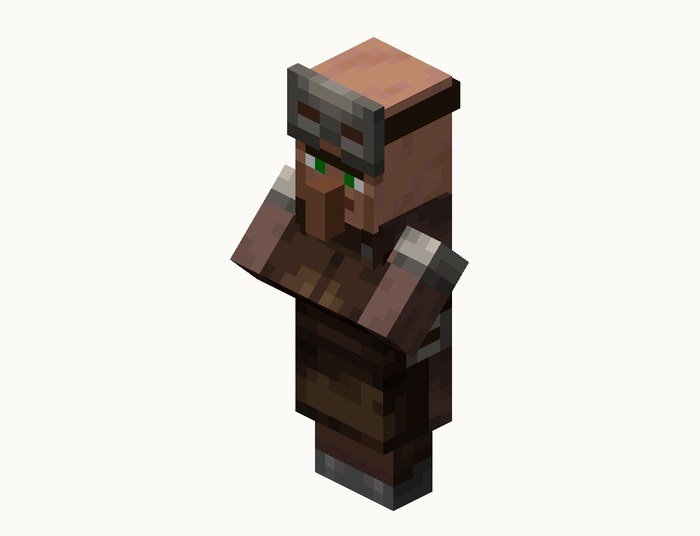
The armorer works at a blast furnace and buys 15 coal for an emerald at novice, then 4 iron ingots, a lava bucket or a diamond for an emerald each as it levels. It sells iron armour at 4 to 9 emeralds a piece from the start, chainmail at apprentice and journeyman, a shield for 5 emeralds and a bell for 36.
The reason to level one is the top tier. Expert and master armorers sell enchanted diamond leggings, boots, helmet and chestplate for 13 to 35 emeralds each, with the enchantment chosen at random.
2. Butcher: Meat In, Cooked Food Out
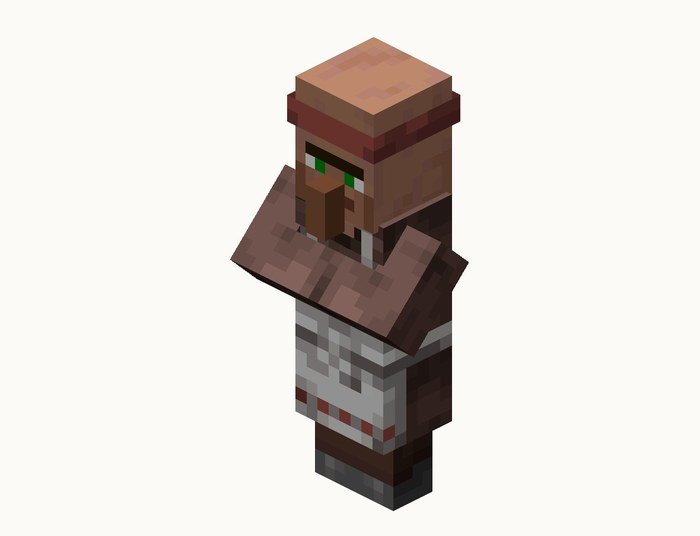
Working at a smoker, the butcher buys raw chicken, rabbit and porkchop at novice, 15 coal at apprentice, raw beef and mutton at journeyman, then 10 dried kelp blocks at expert and 10 sweet berries at master, each for an emerald. It sells rabbit stew for an emerald, and 8 cooked chicken or 5 cooked porkchop for an emerald at apprentice.
For a farm that produces more meat than it can eat, the butcher is the easiest emerald income in the game, and the kelp and berry trades turn two renewable crops into currency.
3. Cartographer: Maps to Mansions and Monuments
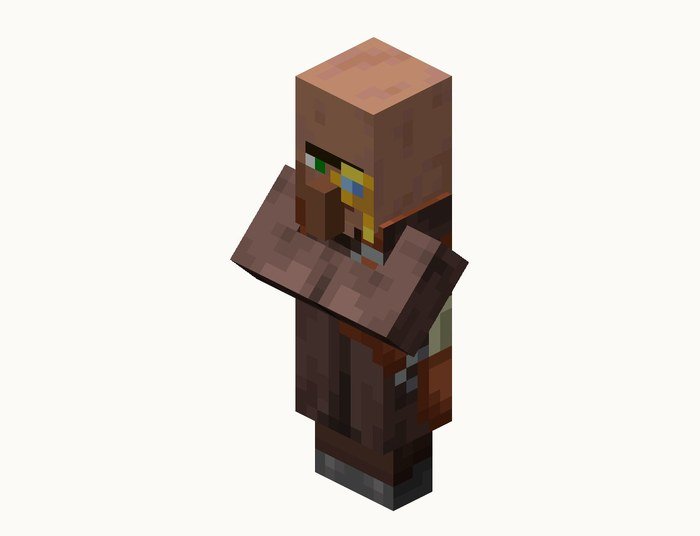
At a cartography table, the cartographer buys 24 paper for an emerald and sells an empty map for 7. From apprentice it sells a village map for 8 emeralds and a compass, from journeyman an ocean monument map or a buried trial chambers map for 12 to 13 emeralds and a compass, and at master a woodland mansion map for 14 emeralds and a compass.
Along the way it buys glass panes and a compass, and sells item frames, banners and the globe banner pattern for 8 emeralds, the only way to get that pattern.
4. Cleric: Rotten Flesh for Ender Pearls
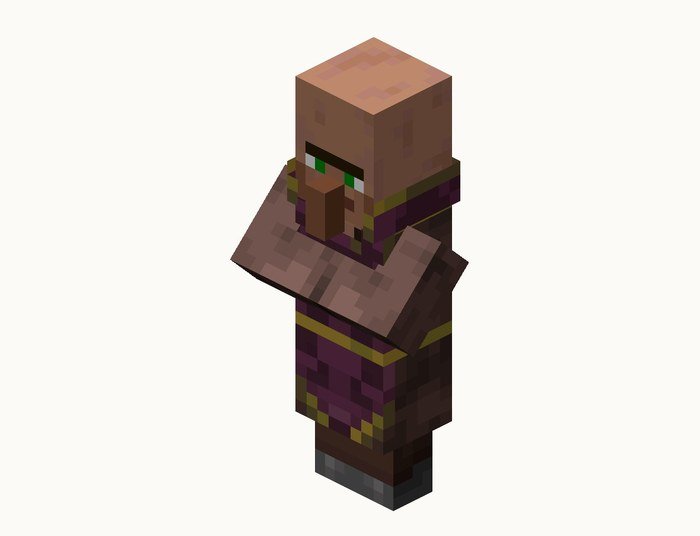
The cleric’s brewing stand turns junk into rare items. It buys 32 rotten flesh for an emerald at novice, 3 gold ingots at apprentice, 2 rabbit’s feet at journeyman, scute or 9 glass bottles at expert and 22 nether wart at master. It sells 2 redstone dust for an emerald, lapis lazuli for an emerald, glowstone for 4, an ender pearl for 5 and a bottle o’ enchanting for 3.
A zombie farm feeding a cleric is a standard early-game emerald engine, and the ender pearl trade is the safest route to the twelve pearls a stronghold portal needs.
5. Farmer: Crops for Golden Carrots
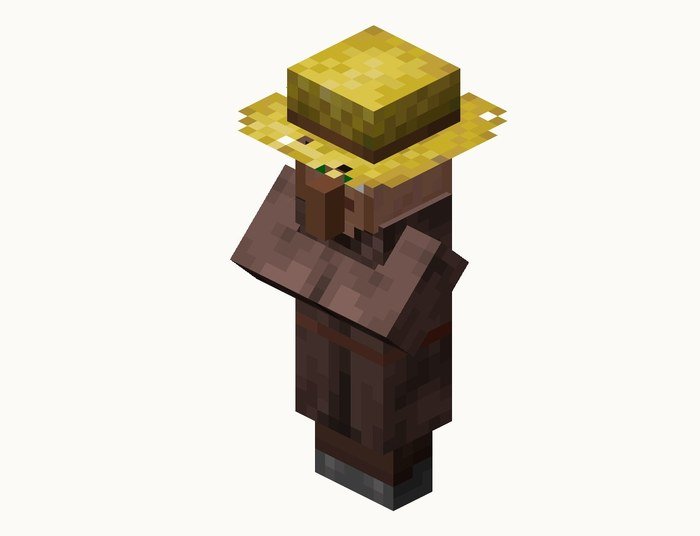
The farmer, at a composter, buys 20 wheat, 26 potatoes, 22 carrots or 15 beetroot for an emerald at novice, 6 pumpkins at apprentice and 4 melons at journeyman. It sells 6 bread for an emerald, pumpkin pie and apples at apprentice, 18 cookies for 3 emeralds, suspicious stew and cake for an emerald each at expert, and 3 golden carrots or 3 glistering melon slices at master.
Farmers also harvest crops themselves and share food with other villagers, which is what keeps a village breeding, so one is worth keeping even without trading.
6. Fisherman: String, Fish and an Enchanted Rod
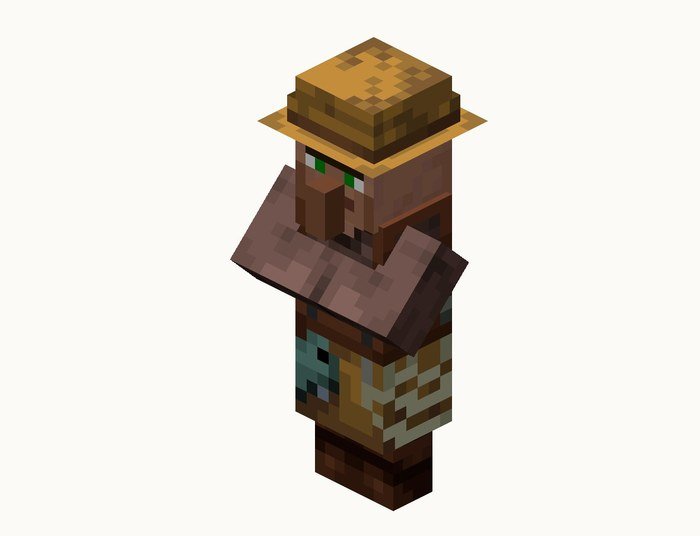
At a barrel, the fisherman buys 20 string or 10 coal for an emerald at novice, 15 raw cod at apprentice, 13 raw salmon at journeyman, 6 tropical fish at expert and 4 pufferfish or a boat at master. It sells a bucket of cod for 3 emeralds, cooks your cod and salmon for an emerald, sells a campfire for 2 and, at journeyman, an enchanted fishing rod for 8 to 22 emeralds.
The string trade pairs with a spider farm, and the salmon trade with any cold river, which makes the fisherman one of the easier professions to level without a dedicated farm.
7. Fletcher: Sticks for Emeralds
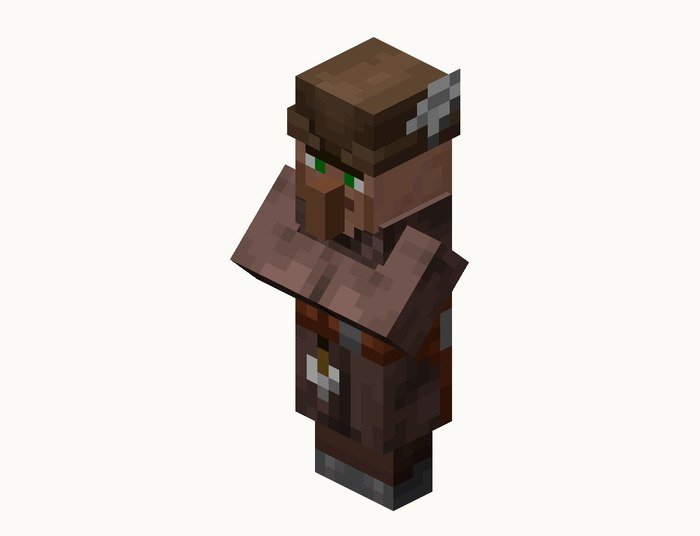
The fletcher at a fletching table buys 32 sticks for an emerald at novice, the cheapest emerald trade in the game, then 26 flint, 14 string, 24 feathers and 8 tripwire hooks as it levels. It sells 16 arrows for an emerald, converts 10 gravel and an emerald into 10 flint, and sells a bow for 2 emeralds and a crossbow for 3.
Expert and master fletchers sell enchanted bows for 7 to 21 emeralds and enchanted crossbows for 8 to 22, plus 5 tipped arrows for 2 emeralds and 5 arrows. A sapling farm feeding sticks to a row of fletchers is the classic emerald farm.
8. Leatherworker: Leather Armour and the Saddle
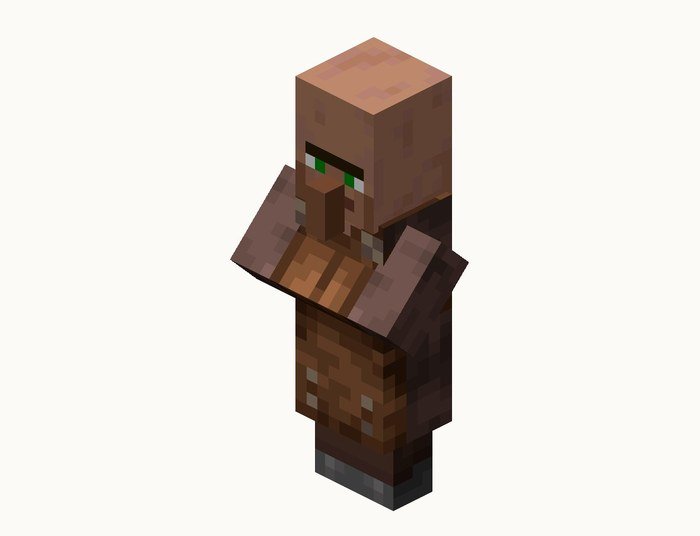
At a cauldron, the leatherworker buys 6 leather for an emerald at novice, 26 flint at apprentice, 9 rabbit hide at journeyman and 4 scute at expert. It sells randomly dyed leather armour for 3 to 7 emeralds, leather horse armour for 6 at expert, and a saddle for 6 emeralds at master.
The saddle is the trade that matters, since saddles otherwise come only from loot chests and fishing. Everything else the leatherworker sells can be crafted from the leather it buys.
9. Librarian: Enchanted Books at Every Level
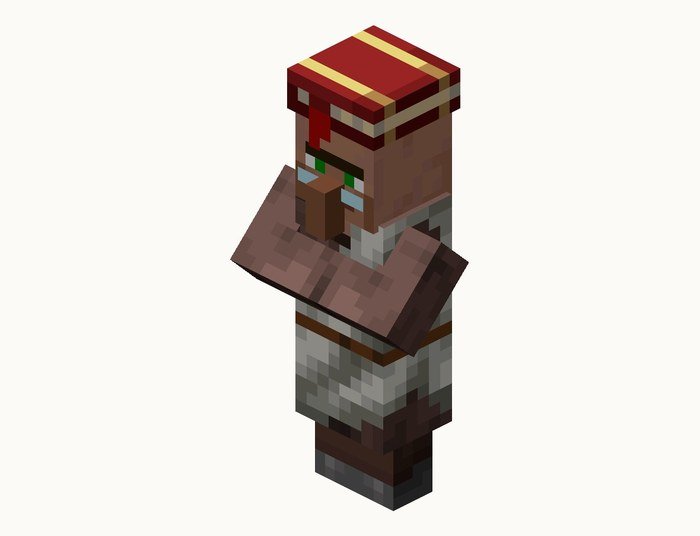
The librarian at a lectern is the most valuable villager. From novice onward it can offer an enchanted book for 5 to 64 emeralds plus a book, with the price scaling with the enchantment’s level, and a new book trade can appear at novice, apprentice, journeyman and expert. It buys 24 paper, 4 books, 5 ink sacs and a book and quill as it levels, and sells a bookshelf for 9, a lantern, 4 glass, a compass, a clock and candles.
Because the novice book is rolled when the villager claims the lectern, players break and replace the lectern until the book they want appears, such as Mending or Silk Touch, then lock it with a single trade. The villager page records the enchantments that can appear and the price formula.
10. Mason: Stone Blocks by the Stack
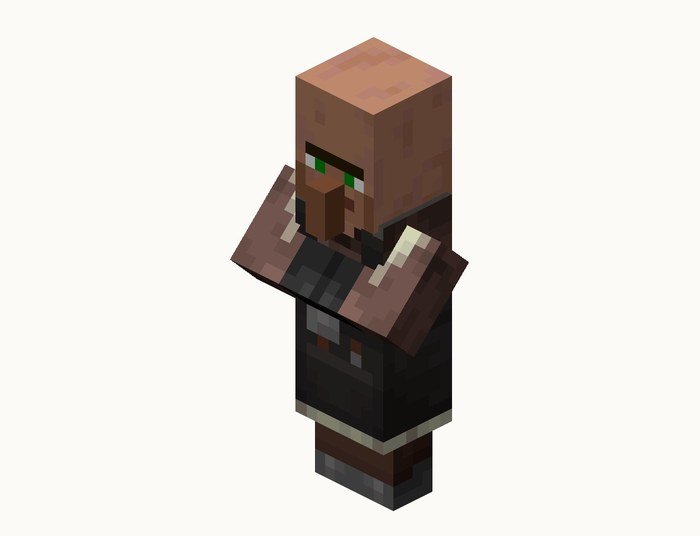
The mason, called a stone mason in Bedrock, works at a stonecutter. It buys 10 clay balls, 20 stone, 16 granite, andesite or diorite, and 12 nether quartz for an emerald each as it levels. It sells 10 bricks or 4 chiselled stone bricks for an emerald, 4 polished granite, diorite, andesite or dripstone blocks for an emerald, stained or glazed terracotta at expert and quartz pillars or blocks at master.
For builders the terracotta trades are the draw: every colour of glazed terracotta for a single emerald, without the dye and smelting.
11. Shepherd: Wool, Dyes, Beds and Paintings
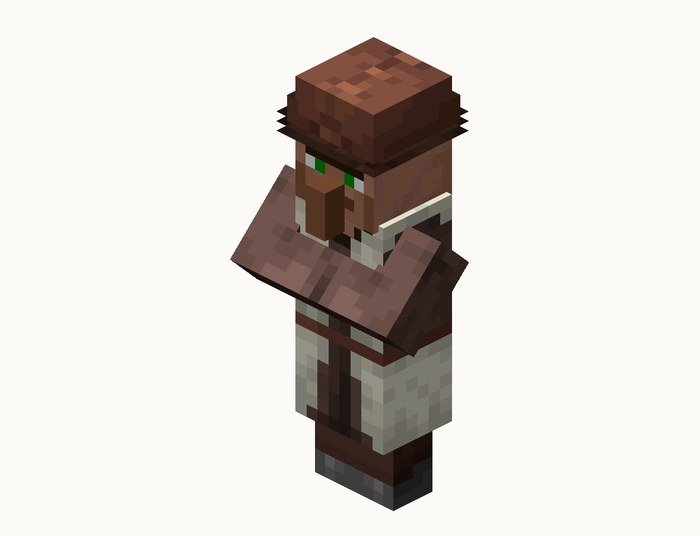
At a loom, the shepherd buys 18 wool in white, brown, black or grey for an emerald at novice and 12 of a given dye for an emerald from apprentice upward, with the colours it wants changing by level. It sells shears for 2 emeralds, any colour of wool or 4 carpets for an emerald, a bed of any colour for 3 emeralds at journeyman, a banner for 3 at expert and 3 paintings for 2 emeralds at master.
A sheep pen and a few flowers cover its whole shopping list, and the bed trade is a quick way to furnish a trading hall.
12. Toolsmith: Enchanted Diamond Pickaxes
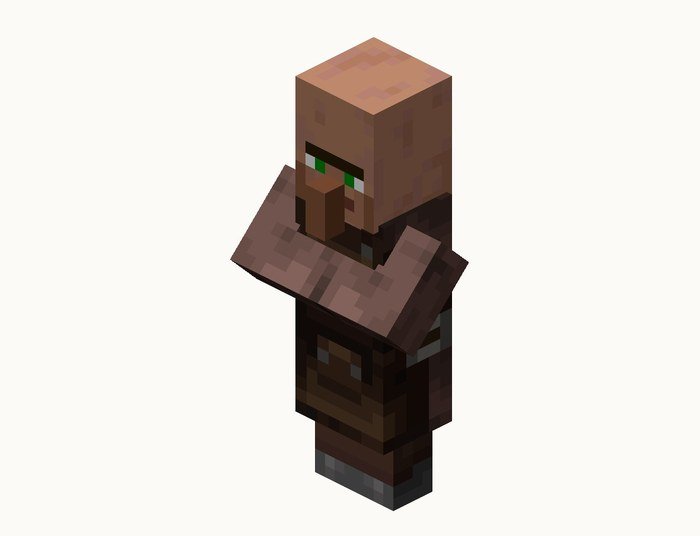
The toolsmith at a smithing table buys 15 coal, 4 iron ingots, 30 flint and a diamond for an emerald each as it levels. It sells stone tools for an emerald at novice, a bell for 36 at apprentice, enchanted iron tools for 6 to 22 emeralds and a diamond hoe for 4 at journeyman, enchanted diamond axes and shovels for 10 to 31 at expert, and an enchanted diamond pickaxe for 18 to 32 at master.
The enchanted item prices follow a formula of a base cost plus a random 5 to 19, so two master toolsmiths can quote very different prices for the same pickaxe.
13. Weaponsmith: Swords and Axes
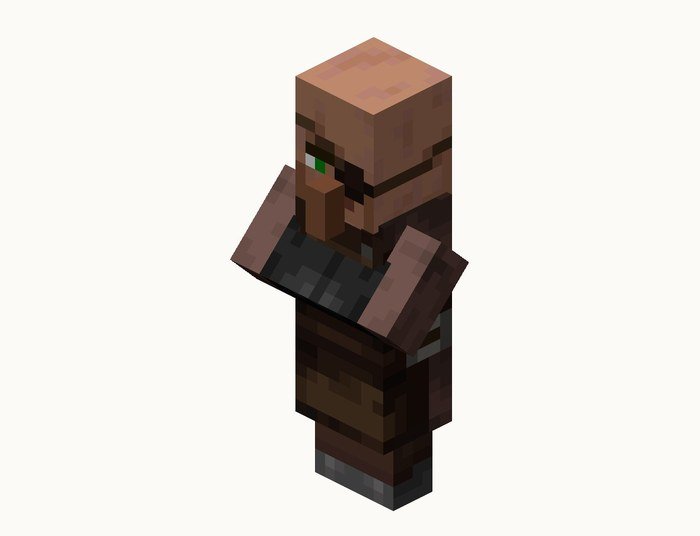
At a grindstone, the weaponsmith buys 15 coal, 4 iron ingots, 24 flint and a diamond for an emerald each. It sells an iron axe for 3 emeralds and an enchanted iron sword for 7 to 21 at novice, a bell for 36 at apprentice, an enchanted diamond axe for 17 to 31 at expert and an enchanted diamond sword for 13 to 27 at master.
It is the thinnest trade list of the 13, which makes it the quickest to level: every tier has a cheap buy trade, and the diamond-for-emerald trade at expert is a two-way bargain.
Nitwits, the Unemployed and the Wandering Trader
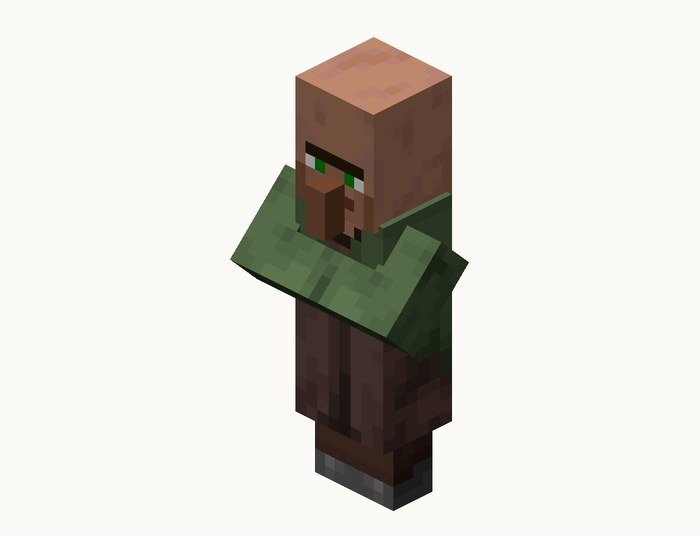
Two kinds of villager never trade. Nitwits, in green robes, cannot take a profession, trade or gather at the bell, and breed like any other villager, so a trading hall needs a way to filter them out. Unemployed adults have no job block yet and will take any profession you place a block for.
The wandering trader is a separate mob that appears near the player with a fixed menu: two purchasing trades, two special selling trades and five ordinary ones, drawn at random and listed in that order. It sells saplings, dyes, coral and other blocks for emeralds and never levels. Commands such as /summon wandering_trader bring one on demand in worlds with cheats, as our Minecraft commands guide explains.
Prices, Demand and the Two Discounts
Prices drift with demand. Each item tracks how often it was bought; sell out a trade and its price rises on restock, leave it alone and the price falls back. In Java the price you see also depends on your reputation with that particular villager, built through gossip that villagers exchange when they meet, with positive gossip from trading and curing and negative gossip from hitting or killing villagers.
The large discount is for curing. Convert a zombie villager with a splash potion of weakness and a golden apple and the cured villager, if employed, discounts most of its trades permanently; since Java 1.20.2 the bonus applies once per villager rather than stacking with repeat cures. The Hero of the Village effect, earned by winning a raid, discounts every villager in the village while it lasts.
- Trading: small, temporary positive reputation with that villager
- Curing a zombie villager: a large, permanent discount on most trades, once
- Hero of the Village: a village-wide discount for the effect’s duration
- Hitting or killing a villager: higher prices, which fade over time
Bedrock replaces per-villager gossip with a village-wide popularity score that rises when you trade or cure and falls when you attack. Mojang’s official overview is the starting point for the edition differences; the full trade lists in both editions are in the wiki tables linked above. Minecraft’s sales make it the best-selling video game of all time, and this trading loop is a large part of why it keeps players for years.
Setting Up a Trading Hall
- Breed villagers with beds and food, then separate the adults into one-block cells
- Place the job block each cell needs; a lectern for librarians, a composter for farmers
- Check the novice trades and break and replace the block until the offer is right
- Lock the profession with one trade, then level by buying the cheapest items repeatedly
- Cure a zombie villager in each cell for the permanent discount
- Leave the job block reachable so the villager can restock twice a day
A hall of a dozen librarians, a cleric and two fletchers covers most of a long survival game, and the same mechanics scale down to a single lectern beside a bed. The players most likely to need it are the ones running modded worlds, where our list of the best Minecraft mods includes map and inventory mods that make a large hall manageable.
Frequently Asked Questions
How do you get a villager to trade?
Place a job block near an unemployed adult villager, wait for it to claim the block and change outfit, then right-click it to open the trade screen. Nitwits in green robes never trade.
Which villager trade is the best?
The librarian’s enchanted books, especially Mending, Silk Touch and Fortune, which otherwise depend on luck. For emeralds, the fletcher’s 32 sticks for an emerald and the farmer’s crop trades are the fastest income.
How do you reset villager trades?
Only before the first trade. Break the job block, let the villager become unemployed, and place the block again to roll new offers. After one completed trade the profession and offers are locked.
Why are villager prices going up?
Demand: buying out a trade raises its price on restock until it is left alone. Prices also rise if you have hit or killed villagers nearby, and fall after curing a zombie villager or winning a raid.
Related Articles

Get the Fox Bulletin briefing
The stories that matter, in your inbox. No spam, unsubscribe anytime.
Newsletter signup will be available soon.
Related stories

Anime Apocalypse Codes (October 2026)
The Anime Apocalypse codes that still pay Coins, spins and raid tickets, the retired list, and why a private server is the reliable place to redeem them.

Midnight Chasers Codes (October 2026)
The Midnight Chasers code that pays Cash, how the one-live-code milestone system works, the retired ladder and the Store route to the code box.
Retro Tower Defense Codes (October 2026)
The Retro Tower Defense codes that still pay Tix and a Revive, the ones the developer prints in the game description, the retired seasonal list and the Inventory route to the code box.